
Bluebirds eat almost exclusively insects and mealworms, making them one of the pickiest backyard visitors you can attract. A dedicated bluebird feeder solves the core problem: it offers a safe, accessible mealworm station that larger birds, squirrels, and rain cannot easily compromise. Without the right design, your costly mealworms vanish before the bluebirds ever find them.
I’m Mo Mahin — the founder and writer behind Furric. I specialize in analyzing owner feedback and specification sheets for outdoor gear, cross-referencing hundreds of verified reviews to identify which design choices actually keep bluebirds feeding and squirrels frustrated.
Whether you’re new to bluebirding or upgrading from a tray feeder, finding a reliable bluebird feeder means balancing cage-bar spacing, weatherproof materials, and cleaning convenience — all without overpaying for decorative features that don’t help the birds.
How To Choose The Best Bluebird Feeder
A bluebird feeder is fundamentally different from a general seed feeder. Bluebirds are insectivores, not seed-eaters, so the feeder must hold live or dried mealworms while excluding aggressive jays, starlings, and squirrels. The four specs below separate functional feeders from frustrating decorations.
Cage Bar Spacing: The 1.5-Inch Rule
Bluebirds are cavity-nesters and feel safest when they can escape quickly. An ideal cage uses 1.5 x 1.5-inch or 1.3 x 1.8-inch openings — large enough for a bluebird to enter but too narrow for a squirrel or blue jay. Tighter gaps exclude bluebirds entirely; wider gaps let in every unwanted visitor. Measure the bar spacing before buying, not the overall feeder size.
Material: Recycled Plastic vs. Metal
Recycled plastic feeders resist cracking, fading, and warping from UV and freeze-thaw cycles, and they don’t absorb moisture. Metal feeders with powder-coated enamel or stainless steel can last decades but add significant weight (up to 10 pounds). Cheaper thin-gauge steel rusts quickly — check for anti-rust coatings and stainless hardware if you choose metal. Glass bowls shatter in sub-freezing weather unless replaced with durable acrylic.
Cleaning Access: Removable Parts Matter
Old mealworm debris can grow mold that sickens bluebirds. A feeder with removable roof panels, detachable cups, or slide-out trays makes weekly brushing possible without disassembling the entire cage. Fixed designs trap debris in corners. Look for “easy-clean” as a functional requirement, not a marketing claim — check whether the feeding tray lifts out or the roof comes off.
Mounting and Weight Capacity
Bluebird feeders can weigh 2 to 10 pounds when filled. Hanging models require sturdy branches or poles rated for the weight; flimsy hooks cause constant swinging that deters birds. Some premium feeders support pole-mounting via included brackets, which is preferable for windy regions. Verify the mounting method matches your yard setup before buying.
Quick Comparison
On smaller screens, swipe sideways to see the full table.
| Model | Category | Best For | Key Spec | Amazon |
|---|---|---|---|---|
| Kettle Moraine Recycled Mealworm Feeder | Premium | Reliable daily bluebird visits | Made in USA, recycled milk jug plastic | Amazon |
| Mosloly Caged Heavy Metal Feeder | Premium | Large capacity, heavy-duty build | 7 lbs capacity, 13x13x19.5 inches | Amazon |
| Gbekery Caged Bluebird Feeder | Mid-Range | Squirrel-proof small-bird feeding | 2.2 lbs, metal cage, glass bowl | Amazon |
| Kingsyard Platform Caged Feeder | Mid-Range | Excluding large birds, fly-through design | 1.5-inch openings, recycled plastic | Amazon |
| Kingsyard Recycled Plastic Tray Feeder | Budget | Entry-level, open-tray feeding | 5 oz glass dishes, recycled plastic | Amazon |
In‑Depth Reviews
1. Kettle Moraine Recycled Bluebird Mealworm Feeder
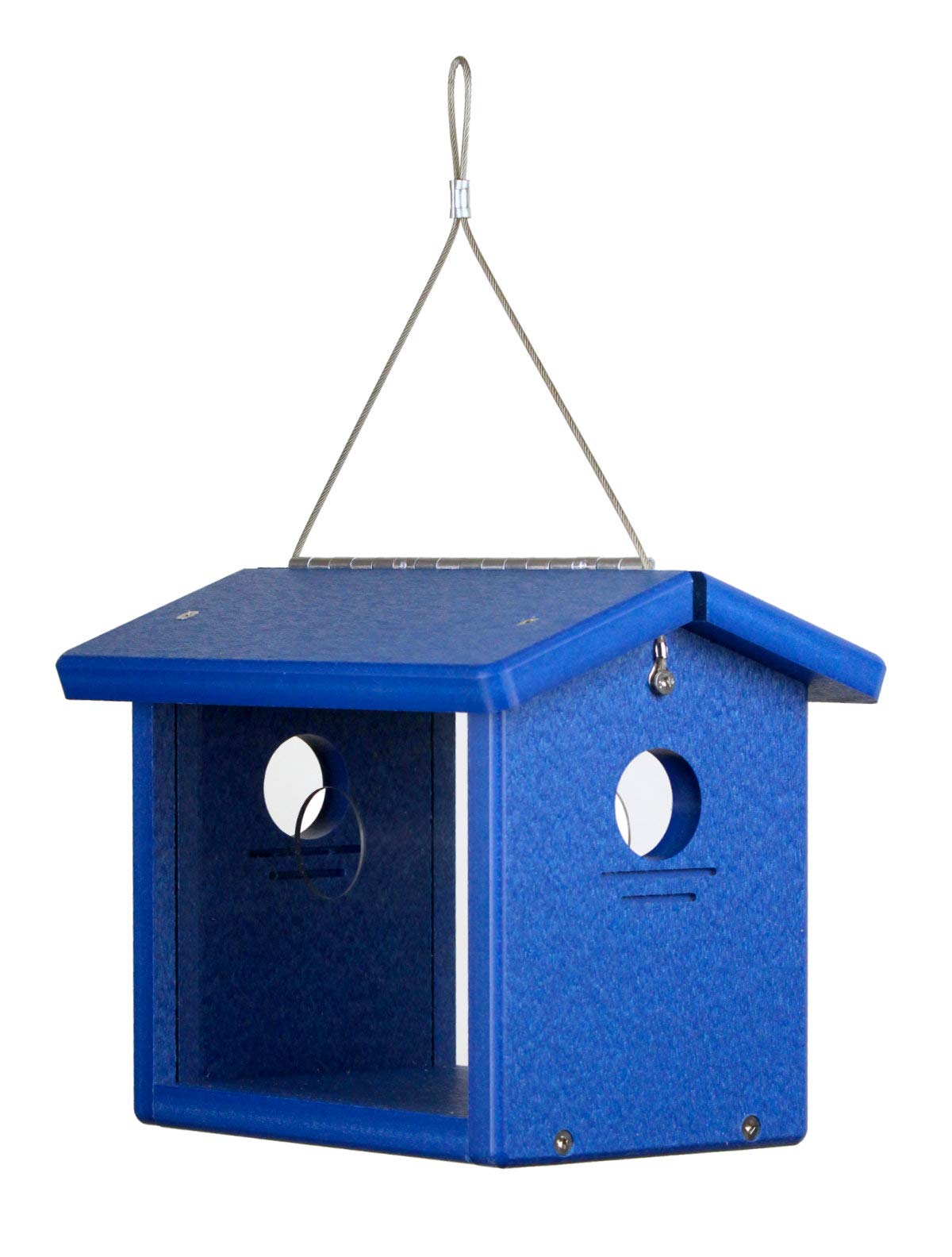
This feeder is manufactured in the USA from recycled milk jugs and carries a no-crack, no-split, no-fade guarantee that reflects serious material confidence. The heavy acrylic viewing windows offer a clear line of sight to mealworm activity, which helps both birds and birdwatchers. Stainless steel hardware and a braided hanging cable eliminate rust concerns — a rare detail at any price point.
Owner reports confirm that blackbirds and starlings cannot access the mealworms, while bluebirds learn to enter and exit through the four openings within a single day. In colder months, a filled refill lasts around two weeks, reducing the chore of daily topping. The 3.6-pound weight adds stability in wind, though it requires a robust hook or branch.
A recurring note mentions that the acrylic side panels feel slightly thin relative to the dense plastic body, and a small number of owners have reported hairline cracking after heavy use. Despite this, the combination of effective bird exclusion, USA manufacturing, and a lifetime-style warranty makes this the most trusted pick for dedicated bluebirders.
Why we love it
- Bluebirds adapt to it within hours
- Guaranteed against cracking, fading, and peeling
- Stainless steel hardware will not rust
- Excludes blackbirds, starlings, and squirrels
Good to know
- Acrylic viewing panels feel less durable than the body
- Heavier than most hanging feeders at 3.6 pounds
2. Mosloly Bluebird Feeder Squirrel-Proof, 7 lbs
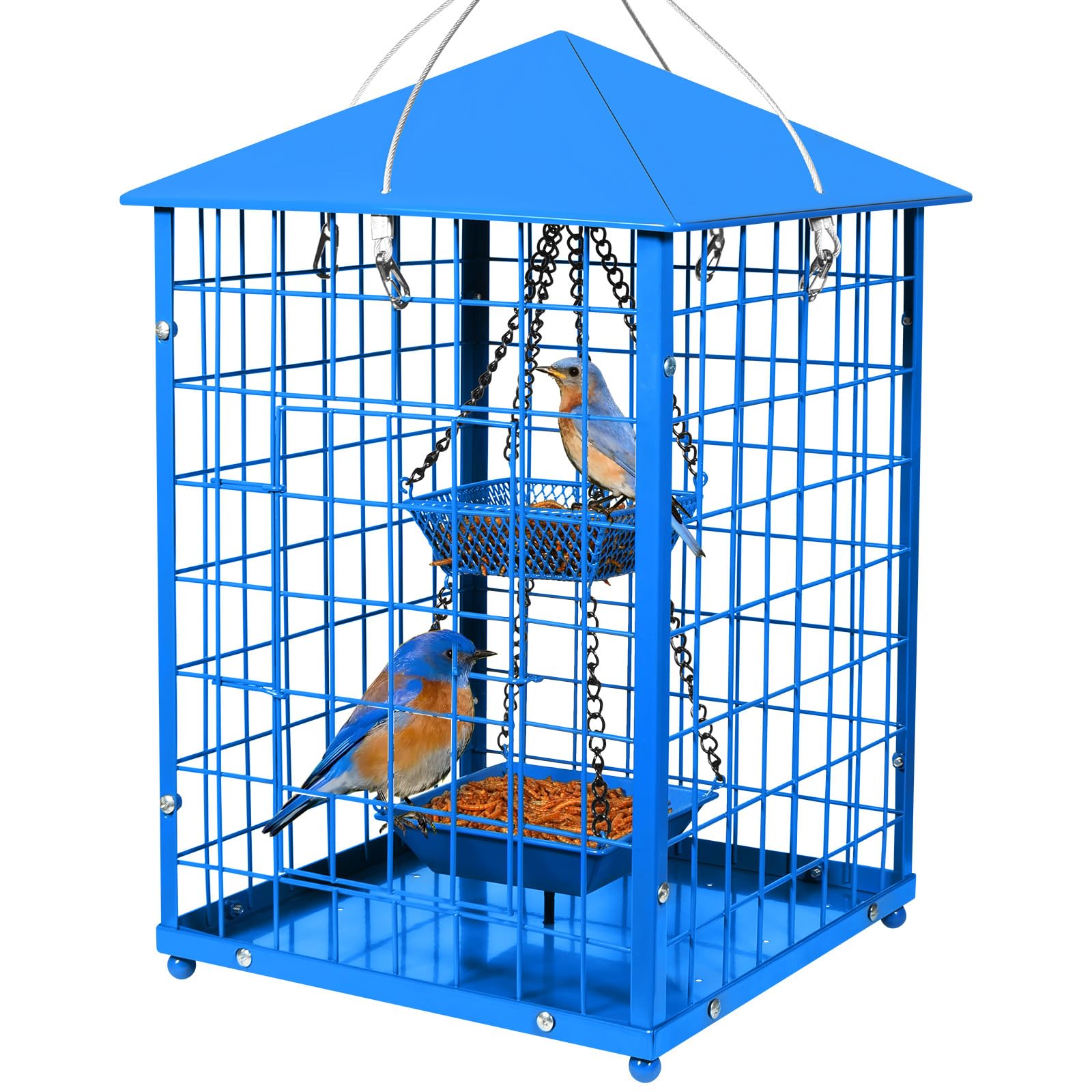
This feeder is physically the largest in the lineup — 13 inches wide and 19.5 inches tall — and it weighs roughly 10 pounds when fully loaded with 7 pounds of mealworms or seed. The heavy metal construction uses a thick powder-coated enamel that resists rust, and owner accounts confirm no corrosion issues after two years outdoors. The cage openings measure 1.3 x 1.8 inches, which excludes blue jays, grackles, and adult squirrels.
Two removable cups sit inside the cage on hanging baskets, providing tiered feeding stations that prevent overcrowding. The roof is thick enough to deflect rain, and drain holes stop standing water. The feeder ships disassembled but the instructions are clear, and extra screws are included. Many owners report daily visits from goldfinches, chickadees, wrens, and bluebirds once the birds acclimate.
Some feedback points out that larger cowbirds can squeeze through the bottom rectangular openings, and the door latch may not be squirrel-proof without a paper clip or clamp. Assembly is required, and the feeder’s weight demands a sturdy hanging point. For those who want maximum capacity and heavy-duty metal construction, this is the most rugged choice.
Why we love it
- Holds 7 pounds of feed, reducing refill frequency
- Powder-coated enamel resists rust and weathering
- Two-level feeding cups prevent crowding
- Excludes large birds and squirrels effectively
Good to know
- Requires a very sturdy branch or pole to hang
- Bottom openings may need modification to exclude cowbirds
3. Gbekery Caged Bluebird Feeder for Mealworms
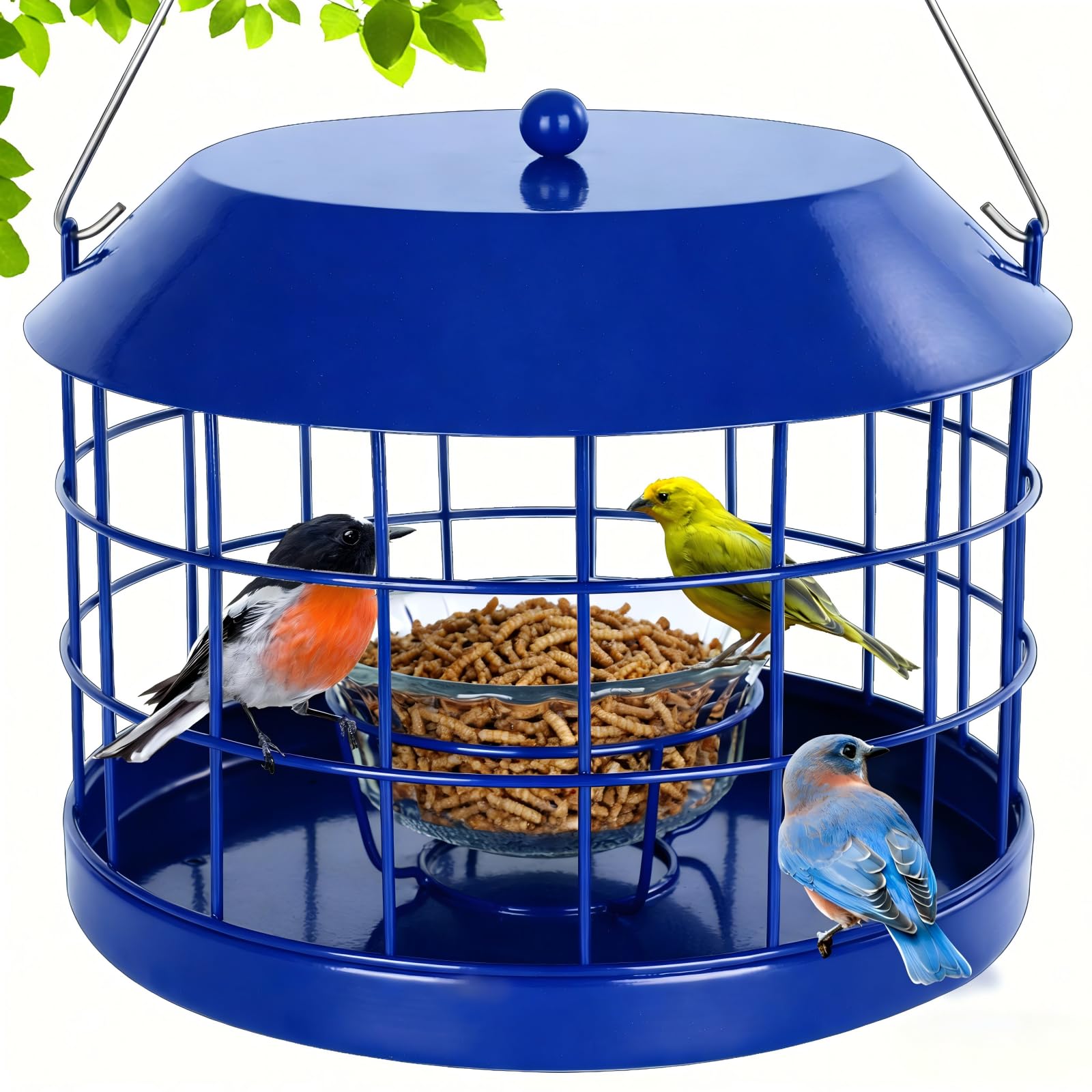
The Gbekery caged feeder uses an all-metal construction with a powder-coated blue finish and a mesh spacing of 1.5 x 1.5 inches — the exact dimension recommended for excluding squirrels and larger birds while admitting bluebirds. A removable glass bowl sits inside the cage, which can hold mealworms, jelly, water, or fruit depending on your local birds’ preferences. The detachable hook and removable roof simplify filling and weekly cleaning.
Owner reports indicate that bluebirds typically discover the feeder within two days, and squirrels abandon attempts after repeated failures. The compact 9.06 x 9.06 x 12.05-inch footprint fits easily under eaves or on smaller tree branches. The 2.2-pound weight is light enough for standard hooks while still feeling substantial in hand.
One potential issue: the interior cage space is snug — only one bluebird can fit inside at a time, which may cause turn-taking if the local population is large. A single reviewer noted that their birds never fully trusted the narrow entry. Still, for most backyards, this feeder offers a well-balanced combination of squirrel resistance, easy maintenance, and a price that sits solidly in the mid-range.
Why we love it
- 1.5-inch bar spacing excludes squirrels and jays
- Removable roof and bowl make cleaning fast
- Light enough for standard hanging hooks
- Versatile bowl holds mealworms, jelly, or water
Good to know
- Interior space fits only one bluebird at a time
- Glass bowl can break in freezing temperatures
4. Kingsyard Squirrel Proof Platform Bird Feeder, Recycled Plastic
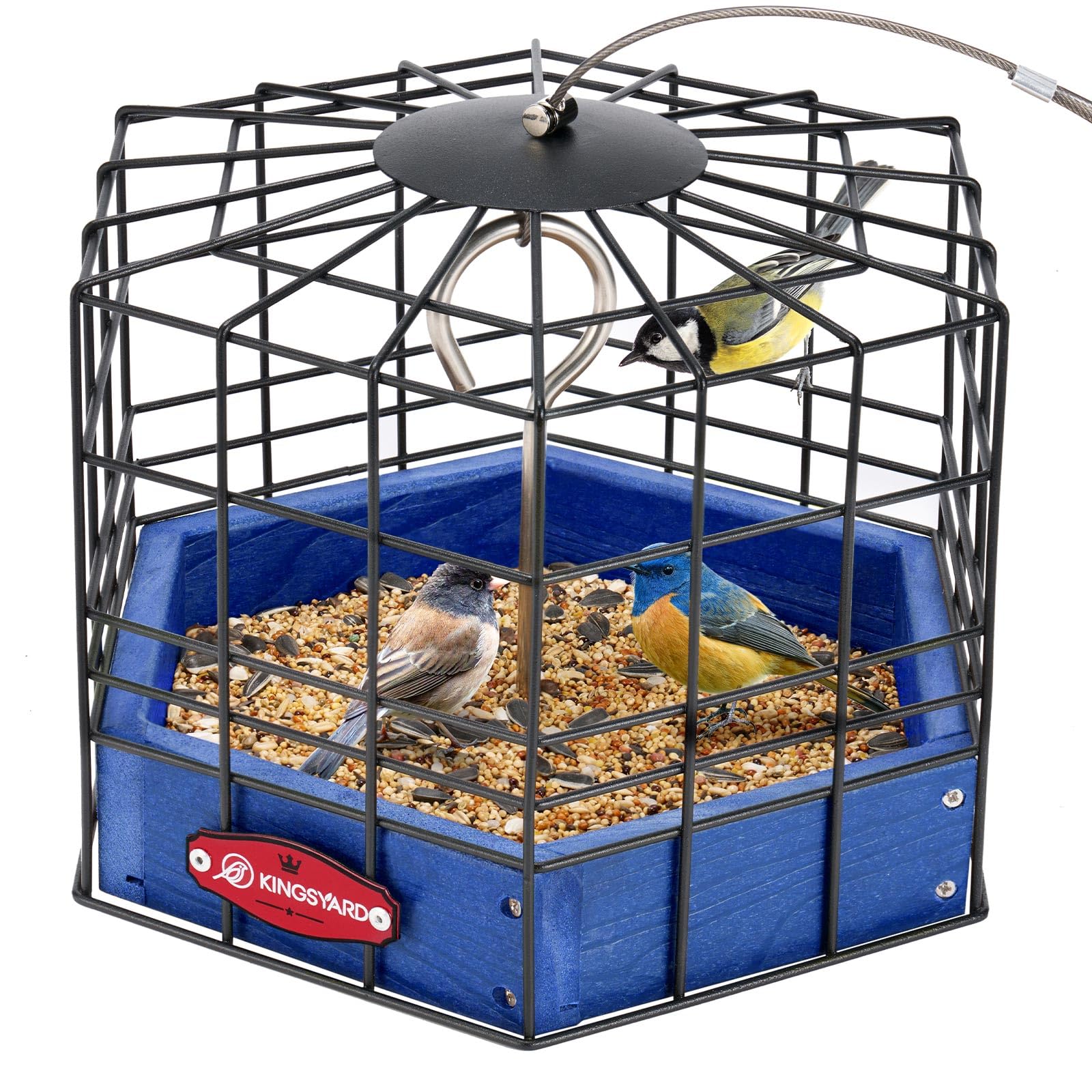
Kingsyard’s platform-style caged feeder takes a different approach: instead of a hanging enclosure, it uses a flat recycled plastic tray with a metal mesh cage on top. The 1.5 x 1.5-inch openings allow bluebirds, chickadees, nuthatches, and other small birds to land and feed comfortably while keeping out pigeons, doves, starlings, and cowbirds. The mesh bottom tray provides ventilation that keeps mealworms from spoiling in humid weather.
The 10 x 9 x 6.5-inch body is made from recycled plastic that resists denting and UV damage, paired with a rust-free metal mesh. Owners consistently note that the feeder handles rain, snow, and direct sun without warping. The fly-through design means birds can enter from any side and exit quickly, which reduces the trapped feeling some caged feeders create.
Some users have added a separate rain cover over the top, as the open mesh roof offers limited overhead protection. A few determined squirrels have still managed to access the tray, though chipmunks are the more common bypass threat. The feeder is slightly harder to refill with the cage attached, but removing the cage completely for refilling addresses this. Overall, it is an excellent choice for those who prefer a platform feeding style with large-bird exclusion.
Why we love it
- Platform design allows multiple small birds to feed together
- Metal mesh bottom keeps mealworms dry and ventilated
- Recycled plastic withstands weather and UV
- Excludes pigeons, doves, and starlings
Good to know
- No roof cover — may need a separate rain shield
- Determined squirrels and chipmunks may still reach the tray
5. Kingsyard Recycled Plastic Bluebird Feeder, Two Dishes

Kingsyard’s entry-level bluebird feeder uses an open-tray design with two removable 5-ounce glass dishes, making it the most straightforward option for those new to bluebird feeding. The tray itself features a decorative scalloped edge, while the recycled plastic body resists rain, snow, and sunlight without cracking or fading. A large overhanging roof shelters both dishes and feeding birds from direct precipitation.
Owner feedback highlights the feeder’s sturdiness — the recycled plastic feels denser than typical budget plastic feeders — and the blue color appears to visually attract bluebirds. The cable hanger is adequate for moderate wind, and the removable dishes simplify cleaning and refilling. This feeder works best for mealworms, but the dishes can also hold jelly or fruit for orioles if desired.
The main trade-off is the complete lack of any squirrel or large-bird exclusion. Since the dishes sit fully exposed on an open tray, jays, starlings, doves, and squirrels can all access the mealworms freely. Some owners have also noted that the glass dishes are smaller than expected and may need refilling twice daily during peak visits. Replacement votive candle cups (2.5-inch top diameter) fit the tray perfectly when the originals break. This feeder is a solid, low-cost starting point if you do not have squirrel pressure.
Why we love it
- Very affordable entry point for bluebird feeding
- Sturdy recycled plastic construction
- Removable glass dishes simplify cleaning
- Attractive blue color appeals to bluebirds
Good to know
- No protection from squirrels, jays, or starlings
- Glass dishes are small and may crack in freezing weather
FAQ
Will a bluebird feeder attract predators to the birds?
How long does it take bluebirds to find a new feeder?
Can I use live mealworms in a caged bluebird feeder?
Why are the bluebirds ignoring my feeder?
Final Thoughts: The Verdict
For most gardeners, the bluebird feeder winner is the Kettle Moraine Recycled Mealworm Feeder because it pairs reliable bluebird exclusion with US-made recycled plastic that will not fade or crack. If you want maximum capacity and a heavy-duty metal cage, grab the Mosloly Heavy Metal Feeder. And for a budget-friendly entry point without squirrel pressure, nothing beats the Kingsyard Recycled Plastic Tray Feeder.