
Watching a cockatiel pick through a bowl of mixed seeds, tossing aside every pellet and vegetable piece while hoarding sunflower seeds, is one of the most frustrating daily battles for owners. That selective feeding habit is exactly why the debate between seed diets, pellet diets, and blended mixes remains the central tension in this category. Choosing the wrong food package doesn’t just waste your money — it can lead to fatty liver disease, obesity, and a shorter lifespan in a bird whose average age should reach 15 to 20 years.
I’m Mo Mahin — the founder and writer behind Furric. After analyzing dozens of cockatiel food formulas, cross-referencing guaranteed analysis sheets against avian veterinary guidelines, and reading hundreds of verified owner reports on palatability and transition success rates, I have a clear picture of what actually works for these small parrots and what is just clever marketing on the bag.
Transitions can be stressful, and many owners give up too early. This guide breaks down the five strongest contenders on Amazon for the best food for cockatiels by examining ingredient integrity, species-specific formulation, and real-world acceptance by actual picky birds.
How To Choose The Best Food For Cockatiels
Not all bird foods are created equal, and the bag art featuring a happy cockatiel on a limb is not a nutritional guarantee. The biggest mistake owners make is treating seed mix like a complete diet when it is actually a high-fat, low-calcium base that needs supplementation. Focus on three pillars that separate effective cockatiel food from filler-heavy mixes.
Pellet vs. Seed: Which Should Dominate The Bowl?
Avian nutritionists broadly agree that a balanced diet should be at least 70 to 80 percent formulated pellets, with the remaining portion being fresh vegetables and occasional fruit or seeds. Pellets prevent selective feeding because every bite contains a fixed ratio of protein, fat, and calcium. Pure seed mixes often hover around 8 to 10 percent fat, whereas a quality pellet keeps fat below 5 percent while delivering 15 percent or more protein. Seed-heavy foods also lack the calcium-to-phosphorus ratio that cockatiels need to avoid egg-binding and low bones.
Ingredient Transparency And Additive Red Flags
Scan the guaranteed analysis and the ingredient list before the brand name. Avoid foods that list artificial colors (like Yellow 5 or Red 40), BHA, BHT, or ethoxyquin as preservatives. Ethoxyquin was originally developed as a rubber stabilizer and is used in many lower-tier pet and bird foods as a cheap antioxidant. Quality options rely on natural preservatives such as rosemary extract, mixed tocopherols, Rose Hips, lemon peel, or orange peel. Also check for added sugar or high-fructose corn syrup — cockatiels have no biological need for sweeteners and excess sugar can trigger bacterial overgrowth.
Pellet Size And Bird Acceptance
A cockatiel’s beak is smaller than a conure’s but larger than a budgie’s. Pellets that are too large — typically any cylindrical piece exceeding a quarter inch in diameter — cause the bird to break them into pieces, which increases waste and frustration that can lead to refusal. The ideal pellet diameter for cockatiels falls between 3/32 inch and 1/8 inch. Mini-sized extruded pellets or crumbles are overwhelmingly accepted faster than large chunks. If a food is advertised for “large parrots,” keep moving. Also note the shape: star-shaped, curvilinear, or ring-shaped pellets tend to be picked up more eagerly by cockatiels than flat discs.
Quick Comparison
On smaller screens, swipe sideways to see the full table.
| Model | Category | Best For | Key Spec | Amazon |
|---|---|---|---|---|
| TOP’s Mini Pellets | Organic Pellet | Lowest additive risk | 3/32″ pellet, 95% organic | Amazon |
| Psittacus Mini | Low Fat Pellet | Weight management | 4.5% max crude fat | Amazon |
| Kaytee Forti-Diet Egg-Cite | Seed & Chunk Mix | Picky eaters in transition | Added real egg + honey | Amazon |
| Higgins Mayan Harvest | Fortified Seed Mix | Enrichment variety | Whole bee pollen + probiotics | Amazon |
| Mazuri Small Bird | Complete Pellet | Veterinary-style simplicity | Multi-sized particles, no dyes | Amazon |
In‑Depth Reviews
1. TOP’s Parrot Food Mini Pellets
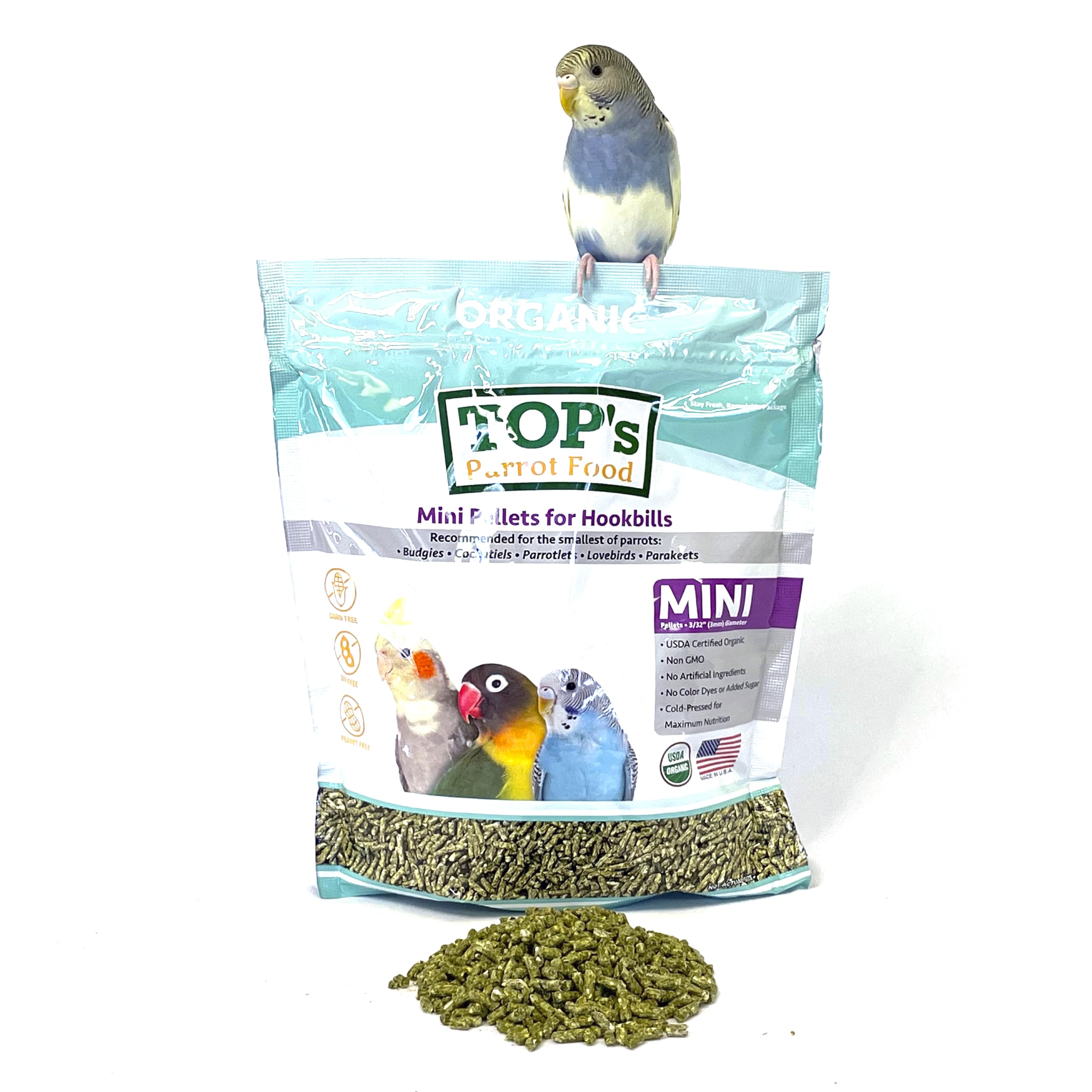
TOP’s Mini Pellets are the most ingredient-stringent option in this lineup, carrying a USDA Organic certification and a no-corn, no-soy, no-peanut formula that sets them apart from virtually every pellet competitor in the theri bird aisle. The base relies on human-grade grains like organic hulled millet, organic oat groats, and organic brown rice, combined with dehydrated greens such as organic kelp and organic alfalfa. That green-rich formulation also provides a natural source of vitamins A, D, and E without any synthetic fortification pool.
At 3/32 inch in diameter, these pellets measure smaller than most mini pellets on the market. Several owners of lovebirds and parakeets still found the size slightly large for the smallest birds, but cockatiels handle this dimension well with minimal waste. The cold-pressing process keeps the natural nutrition intact without the high heat that can break down heat-sensitive enzymes in extruded kibble. The result is a dense, firm pellet that holds its shape in the bowl and doesn’t turn into powder at the bottom of the bag.
One trade-off is the learning curve during transition. Owners report that birds accustomed to sugary or corn-heavy foods may resist the neutral, green-forward smell and taste initially. Mixing with a small amount of warm water to soften the pellet and releasing the aroma from the greens helps. Once accepted, birds eat less volume because the nutrient density is significantly higher than seed or corn-based alternatives. A single 1-pound bag stretches further than its size suggests, especially for a single cockatiel.
Why we love it
- USDA Organic with zero fillers (no corn, soy, or peanuts) — the cleanest ingredient panel among the five reviewed
- Cold-pressed production retains natural enzymes and nutrients without heat degradation
- Dense nutrition means birds eat less volume, extending bag life well beyond its physical weight
Good to know
- The green-heavy smell and taste can trigger initial refusal; a short transition with warm water mash is often necessary
- 1-pound bag is small; the 4-pound option delivers better value for multi-bird households
2. Psittacus Mini 1 lb Pellet

Psittacus developed this extruded pellet specifically for small to medium hookbills that consume mainly seeds in the wild — cockatiels, sun conures, and Galah cockatoos — and engineered the macronutrient profile to reflect low-fat seed consumption rather than high-fat palm fruit diets. The guaranteed analysis targets a maximum of 4.5 percent crude fat, which is significantly leaner than most all-life-stage bird pellets that can reach 6 to 8 percent. For a cockatiel already carrying extra weight from a seed-heavy diet, that reduction alone can tip the scale toward a healthier plumage and liver condition.
The most notable sensory characteristic is the fruity aroma, which multiple owners describe as apple-like. That scent is a product of natural flavoring that helps bridge the gap for birds transitioning from sugary seed mixes. The pellet diameter sits at roughly 3 to 4 millimeters, which falls within the ideal size window for cockatiels — not so large that they struggle to crack it, but large enough that they don’t inhale it whole without chewing. The shape is a uniform short cylinder that birds can hold with one foot and nibble the edges.
European manufacturing brings a regulatory framework that bans certain additives allowed in the US market. The Psittacus formula is 100 percent non-GMO and contains no artificial coloring or synthetic antioxidants. One consistent note from owners is the smaller bag size relative to price; a 450-gram bag goes quickly in a two-bird household. Owners using it as the sole food source rather than a seed supplement report that the low fat content maintains their bird’s weight without the need for portion control.
Why we love it
- Crude fat below 5 percent makes it one of the leanest complete pellets suitable for cockatiels, directly supporting healthy liver function
- Natural fruity aroma improves acceptance during the pellet transition period — birds that rejected other pellets often accept this one
- European manufacturing standards with EU-grade non-GMO compliance and no synthetic antioxidants
Good to know
- Bag weight (450 grams / 1 lb) is small for multi-bird flocks; owners with two or more cockatiels should order multiple bags
- Designed specifically for inactive maintenance periods — active breeding birds may require a higher fat supplement
3. Kaytee Forti-Diet Egg-Cite Cockatiel Food

Kaytee’s Egg-Cite blend is the only product among the five reviewed that uses real egg and honey as primary flavor drivers. The egg provides a high-quality animal protein source with a complete amino acid profile, while the honey offers a natural sugar that cockatiels find almost irresistible. This is the food owners turn to when their bird has refused every pellet on the shelf. The inclusion of added omega-3 fatty acids rounds out the nutritional profile to support heart and brain health in a way that pure seed mixes cannot match.
The form is a chunk-and-seed mixture rather than uniform pellets. That means the bird will naturally forage, kick out pieces, and eat selectively — this is not a guaranteed balanced bite like a pellet would be. But as a transition tool or a supplemental diet alongside fresh vegetables, it bridges the gap between 100 percent seed diets and 100 percent pellet diets. Many owners report that their birds go after the egg-coated chunks first and then consume the seeds second, which trains the beak toward the fortified pieces over time.
Reducing the selective feeding potential is the main challenge with any mix that contains distinguishable ingredients. One owner noted that the product raw looks and feels similar to cornbread mix, which has led to accidental confusion. The real egg content may not sit well with birds that have existing yeast or fungal sensitivities. For healthy adult cockatiels, the extra protein and fat from the egg is a benefit, but it pushes the overall fat content higher than the pure pellets on this list.
Why we love it
- Real egg inclusion provides high-quality animal protein with a complete amino acid profile that seed alone lacks, supporting feather regeneration
- Omega-3 supplementation targets brain and heart health in adult cockatiels, a rare addition in seed-based blends
- The honey and egg coating produces an unusually high acceptance rate even among birds that reject standard seed mixes
Good to know
- Chunk-and-seed form allows selective feeding — the bird can eat around the egg pieces, defeating the nutritional balance
- Fat content is significantly higher than pellet-only options, making it less suitable for overweight or sedentary birds
4. Higgins Mayan Harvest Yucatan Mix

Higgins Mayan Harvest Yucatan Mix is not a pellet — it is a fermented-style seed blend that incorporates whole bee pollen, encapsulated probiotics, and DHA omega-3 into a botanical framework that includes star anise, juniper berries, and spearmint. The aroma is the first signal that this is not ordinary bird food; it carries a black licorice scent from the anise that many cockatiels find stimulating. The company positions this as an ancestral-style formula inspired by the Yucatan region’s natural foraging ingredients, and the ingredient list reflects that exotic positioning without resorting to artificial flavors.
The whole bee pollen is the standout ingredient. Bee pollen contains over 250 biologically active substances including enzymes, carotenoids, and flavonoids that support immune function and feather pigmentation. The encapsulated probiotics are designed to survive stomach acid and colonize the lower gut, which improves digestive efficiency. These features make this mix a functional food rather than a basic seed blend. However, because it is still a seed-plus-grain mix, it does not prevent selective feeding the way a uniform pellet does, and several owners noted that their birds pick out the anise pods and leave the smaller grains behind.
Portion management is important here. The blend includes a small number of sunflower seeds, which are high in fat. Using this as the entire diet rather than treating it as a portion-controlled mix component can lead to gradual weight gain. Many owners report best results when they serve the Yucatan Mix as 30 to 40 percent of the daily bowl alongside a plain pellet like the TOP’s or the Psittacus. Storing the bag in the refrigerator after opening preserves the freshness of the probiotics and the volatile oils in the spices, which degrade quickly at room temperature after the seal is broken.
Why we love it
- Whole bee pollen delivers immune-supporting flavonoids and natural carotenoids for feather brightness — a unique functional ingredient not found in standard mixes
- Encapsulated probiotics and DHA omega-3 genuinely support gut health and cognitive function in a seed blend format
- Distinctive anise, juniper, and citrus aroma provides mental enrichment that reduces stereotypical feather-plucking behavior
Good to know
- Selective feeding is common because birds will pick the high-fat sunflower seeds and aromatic anise pods while rejecting smaller grains
- Fast oil oxidation after opening requires refrigerator storage to maintain probiotic viability and aroma intensity
5. Mazuri Small Bird Nutritionally Complete

Mazuri’s small bird formula is a no-frills veterinary-style pellet that skips the marketing gimmicks entirely. The bag lists “Nutritionally Complete for Small Birds” with no flavor gimmicks, no exotic spice blends, and no premium positioning. It is formulated by Land O’ Lakes Inc. — a company with deep agricultural science roots — and is often the pellet recommended by avian veterinarians who want a consistent, repeatable nutritional profile without ingredient fluctuations batch to batch. The particle sizing is multi-textured on purpose: some pellets are fine crumbles while others are larger rectangular shapes, which encourages natural foraging sifting behavior even though every piece has the same nutritional composition.
The ingredient list features ground flaxseed, which provides a plant-based source of omega-3 fatty acids, and vitamin E as the primary antioxidant preservative. There are no artificial colors, flavors, or preservatives. The pellet is uniformly tan, so birds cannot color-select as they might with rainbow-colored pellets. This is a deliberate design choice to combat selective feeding at the bowl. The lack of strong aroma can be both a positive and a negative — birds that are driven by smell may take longer to accept it, but owners sensitive to strong feed odors will prefer the neutrality.
One real limitation surfaced repeatedly in owner feedback: the size variability means that some pellets in the bag are too large for a cockatiel to comfortably crack. While the smaller crumbles are eagerly consumed, the larger rectangular pieces often end up at the bottom of the bowl uneaten. Birds that are persistent will break the large pieces eventually, but this can mean higher waste. Mazuri is a solid entry-level pellet for owners who want a straightforward, veterinarian-backed product without paying for packaging flash or marketing margin, though it may not be the first choice for a bird that already exhibits strong food selectivity.
Why we love it
- Veterinary-formulated by Land O’ Lakes with a clean ingredient panel — no artificial colors or flavors, with vitamin E as the primary antioxidant
- Ground flaxseed provides a plant-based omega-3 source that supports feather condition and joint mobility
- Multi-sized particle design encourages natural foraging behavior even though every piece is nutritionally identical
Good to know
- Larger rectangular pellets in the mix are too big for many cockatiels to crack, resulting in higher food waste at the bottom of the bowl
- Minimal aroma and plain pellet appearance can lead to slower initial acceptance, especially in birds accustomed to flavored or colored foods
FAQ
Can I feed my cockatiel only seeds?
What pellet size is best for a cockatiel?
Should I buy organic bird food?
Why does my cockatiel throw food out of the bowl?
Final Thoughts: The Verdict
For most owners seeking a nutritionally complete daily diet, the best food for cockatiels is the TOP’s Parrot Food Mini Pellets because it combines USDA Organic certification, a corn-free and soy-free formula, and cold-pressed preservation into a pellet size that cockatiels handle with minimal waste. If you are specifically managing an overweight bird or one coming off a high-seed diet and need a low-fat formula, grab the Psittacus Mini. And for enrichment and immune-boosting variety alongside a pellet base, nothing beats the Higgins Mayan Harvest Yucatan Mix used as a supplement.