
The daily grind of scooping clumps, scrubbing plastic, and chasing the lingering smell of ammonia is the single biggest wear-and-tear on the cat-owner relationship. A proper system replaces that chore with engineered mechanics that separate waste, lock in odor, and reduce your interaction with the box to a weekly bag swap. The difference isn’t just convenience—it’s the end of a specific, sensory-driven frustration that standard pans create.
I’m Mo Mahin — the founder and writer behind Furric. I’ve spent months comparing the internal mechanisms, sensor arrays, waste-bin capacities, and material quality of dozens of self-cleaning and sifting systems to understand which design actually delivers on its promise of hands-off hygiene.
Whether you need a sifting system for pellet litter or a fully automatic unit with app tracking, the right pick depends on your cat’s size, your household’s odor tolerance, and how much maintenance you want to eliminate. This guide cuts through the noise to help you find the very best cat litter box system for your specific setup.
How To Choose The Best Cat Litter Box System
Not all systems work the same way. The choice between a manual sifting pan and a motorized automatic unit comes down to your tolerance for daily interaction, the type of litter you prefer, and the number of cats sharing the box. Here are the three factors that separate a good system from a frustrating one.
Waste Separation Mechanism: Sifting vs. Raking vs. Rotating
Manual sifting systems require you to lift a slotted tray—the urine and broken-down litter fall through while solid waste stays on top. This works best with non-clumping pellet litter (pine or paper) that turns to sawdust when wet. Raking systems use a motorized comb that drags clumps into a sealed compartment; these require clumping clay litter to form solid blocks. Rotating systems (like a planetary gear design) flip the entire drum through a comb that scrapes waste into a bin below. The rotating design is quieter and less prone to mechanical jams than raking arms, but the drum footprint is often larger.
Material and Odor Control: Stainless Steel vs. Plastic
Standard plastic pans absorb urine odors into microscopic scratches over months, creating a permanent smell that no cleaning solution can fully remove. Stainless steel boxes are non-porous and non-stick—urine slides off, and the material doesn’t retain odors. For automatic units, the outer housing is typically polypropylene or ABS plastic. Here, the odor-sealing mechanism matters more: look for units with a gasketed waste drawer, a carbon filter, or a separate aromatherapy pod to trap smells in the bin, not the room.
Safety Sensors and Cat Weight Limits
An automatic system that doesn’t detect your cat is dangerous. The safest units combine infrared beams that sense movement inside the opening with weight sensors on the base platform. When either sensor is triggered, the cleaning cycle must pause immediately. Some budget models omit the weight sensor and rely on IR alone—this can fail if a cat is tall enough to reach inside without breaking the beam. Also check the maximum weight rating: most units cap at 15-22 pounds. A 25-pound cat may not trigger the scale, or may jam the rotating drum.
Quick Comparison
On smaller screens, swipe sideways to see the full table.
| Model | Category | Best For | Key Spec | Amazon |
|---|---|---|---|---|
| CATLINK Open-X | Self-Cleaning | Health monitoring & long trips | 12L waste bin, dual-band Wi-Fi | Amazon |
| PetPivot AS12 | Self-Cleaning | Simple, sensor-safe operation | 22 lb weight capacity, 32 dB | Amazon |
| Mimfam AS11 | Self-Cleaning | Multi-cat households | 10L waste bin, 4 IR sensors | Amazon |
| suzzipaws Sifting Box | Manual Sifting | Pellet litter users | 23.6″ x 16″ stainless pan | Amazon |
| LUODIER CH-ICB024 | Self-Cleaning | Budget-conscious automation | Open top, 15-day waste bin | Amazon |
| Mintakawa CAST-LB500C | Self-Cleaning | Kittens & small cats | 3.5-15 lb weight range, 35 dB | Amazon |
| BCHARYA Auto Box | Self-Cleaning | Premium odor control | Aromatherapy pod, sensor delay | Amazon |
In‑Depth Reviews
1. CATLINK Self Cleaning Cat Litter Box Open-X
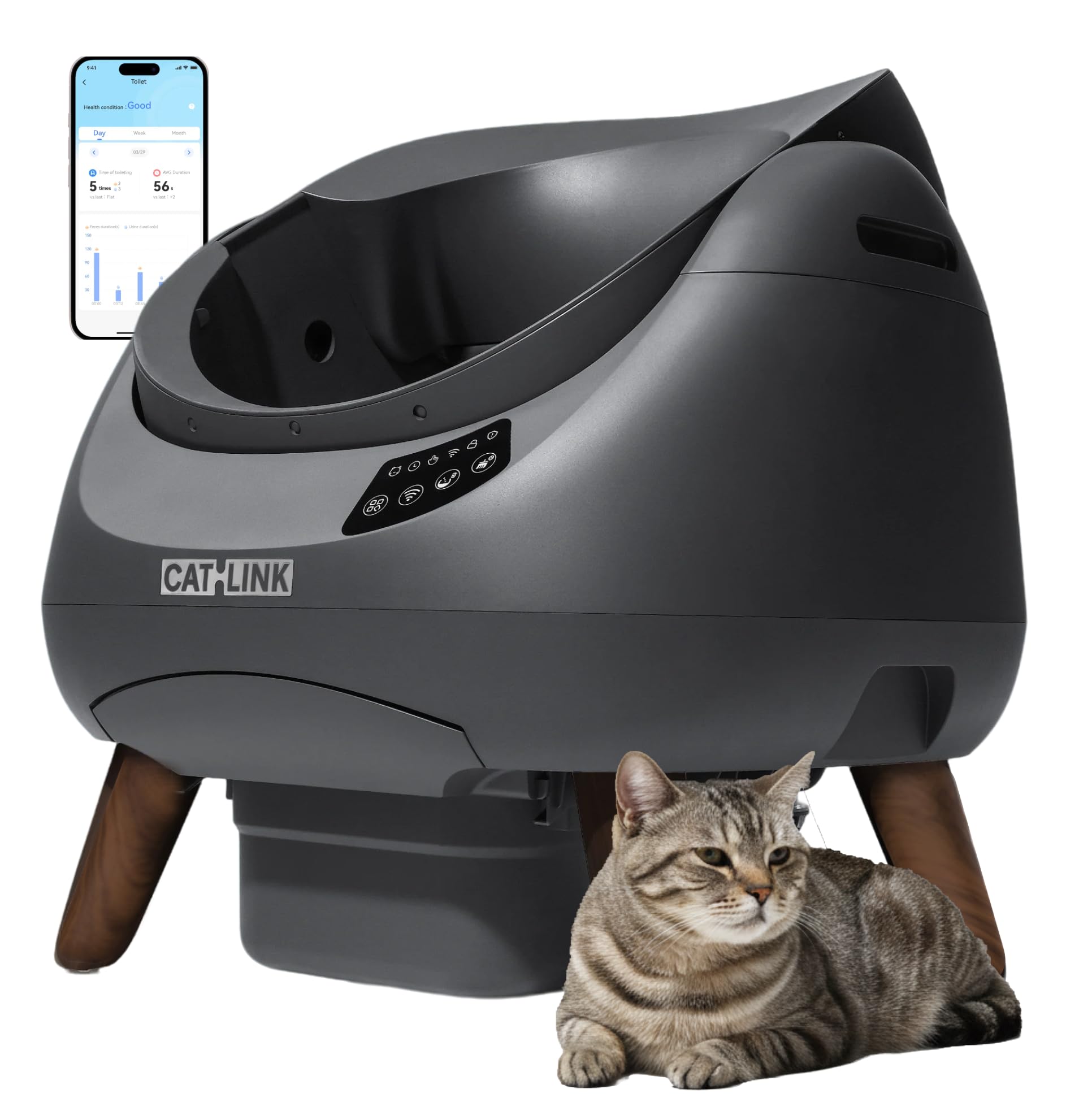
The CATLINK Open-X is the most technologically complete unit in this roundup. It runs on a rotating drum that stays open at all times—no cat gets trapped—and uses a combination of weight sensors, infrared beams, and anti-pinch switches to ensure the cycle stops the moment a cat re-enters. The 12-liter waste bin is the largest here, rated for up to 15 days of waste for a single cat, which is a genuine relief for frequent travelers or anyone who hates daily bag changes.
What sets this system apart is the AI health monitoring that distinguishes between urine and solid waste. The app tracks your cat’s weight, visit frequency, and elimination patterns, then generates weekly reports. For a single-cat household (multi-cat recognition is a one-time paid feature), this gives you early warning signs of urinary issues or irregular bowel habits before they become emergencies. The unit supports both 5GHz and 2.4GHz Wi-Fi, which solves a common connectivity headache many cheaper automatics suffer from.
On the practical side, the waste drawer seals odors well thanks to the included odor eliminator cubes, and the half-auto trash bag system makes disposal a single-pull motion. The unit is relatively large—23 inches cubed—so measure your space. Some users note that the height encourages cats to leap out, scattering litter. The cleaning cycle runs at a quiet hum that won’t wake a sleeping household, and the drum interior is easy to deep-clean every few weeks.
Why we love it
- AI waste analysis provides early health alerts for single-cat owners
- 15-day waste bin capacity is genuinely hands-off for weeks
- Always-open entrance eliminates any pinch or trap risk
Good to know
- Wi-Fi setup requires letters-only network name, no special characters
- Multi-cat health tracking is a paid add-on feature
2. PetPivot Automatic Litter Box AS12
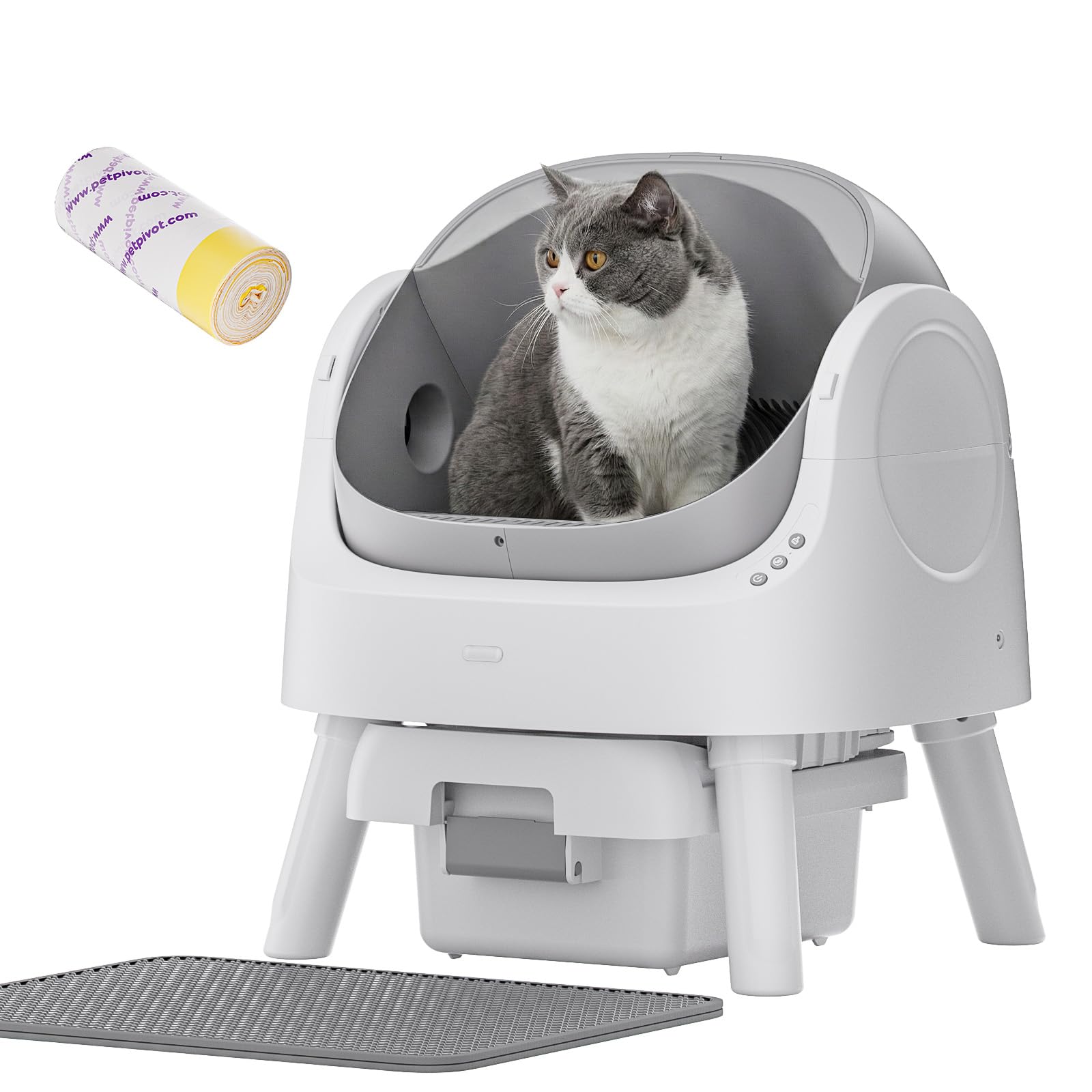
The PetPivot AS12 is designed for owners who want reliable automation without the complexity of app pairing or constant firmware updates. It operates out of the box—no assembly required—and runs its cleaning cycle using precision sensors that pause immediately when a cat enters the open-top entryway. The unit is rated for cats up to 22 pounds, and customer reports confirm it comfortably handles a 25-pound Bengal without triggering jams, though the weight sensor may not register at the very top of that range.
Odor control is handled by a sealed waste drawer that locks in smells during bag changes. Users consistently report that the drawer stays nearly odor-free between weekly swaps, even with two cats. The cleaning mechanism uses a shuffle mode that periodically stirs the litter to prevent clumps from settling at the bottom, which reduces waste and stretches litter refills. At 32 dB, the motor is genuinely quiet—loud enough to hear in a silent room, but not enough to wake a light sleeper.
The trade-off for the simple operation is the lack of app integration: you cannot schedule cleaning times or monitor usage remotely. The top lid also lacks a sensor—a user report notes that a curious cat lifted the lid during a cleaning cycle. The bottom sensors are effective, but the oversight means the unit isn’t fully sealed against cat intervention. For most households, the straightforward physical buttons and the included litter mat make this a set-and-forget solution.
Why we love it
- Zero assembly required, works immediately out of the box
- Quiet 32 dB operation suitable for bedrooms
- Shuffle mode prevents waste from sinking into clean litter
Good to know
- Top lid lacks a sensor to stop cycle during cat intervention
- No app control or cleaning schedule customization
3. Mimfam Automatic Self Cleaning Litter Box AS11
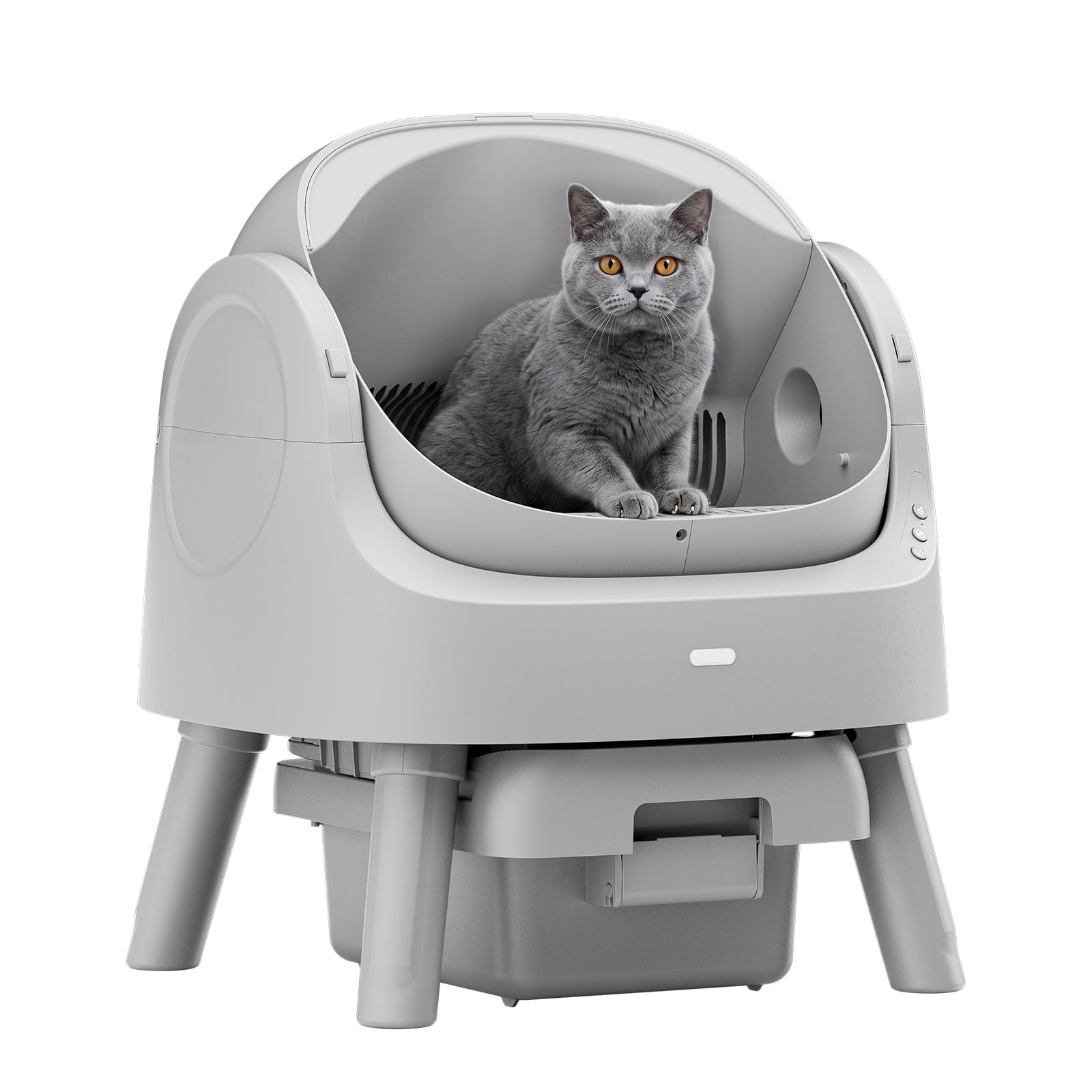
The Mimfam AS11 prioritizes safety with a sensor array that includes four pairs of infrared beams and three hall-effect sensors. This means the unit scans the entry zone from multiple angles—a cat that sticks its head in while its body is outside still triggers a pause. The open-top design measures 16.33 by 15.35 inches, which accommodates larger cats easily, and the 10-liter waste bin is practical for multi-cat homes, rated at 10-14 days for a single cat and roughly 5-7 days for two.
Customer feedback highlights how quickly cats adapt to this unit, largely because the open top eliminates the startle factor of a dark enclosed space. The cleaning mechanism is quiet at 32 dB, and the sealed waste compartment does an excellent job of containing odors between swaps. Assembly is straightforward, and the unit requires no app to function—it runs on a simple timer-based cleaning schedule that you set via physical buttons.
The most notable durability concern comes from a user whose unit broke after six months—the plastic gear inside the rotating mechanism snapped. The company replaced the unit under warranty, which suggests decent customer service, but the failure points toward potential longevity issues in the gear train. Also, the box explicitly warns against use with kittens under six months old, though it can be run in manual mode. The sensor system does not reliably detect very lightweight kittens during the tilt phase, which is a genuine safety gap for kitten owners.
Why we love it
- Quadruple IR sensors provide comprehensive cat detection
- 10L bin reduces emptying frequency for multi-cat homes
- Cats adapt quickly due to the wide, open entry
Good to know
- Plastic gear failure reported after ~6 months in some units
- Not safe for kittens under 6 months in automatic mode
4. suzzipaws 23.6″x16″x12″ Stainless Steel Sifting Litter Box
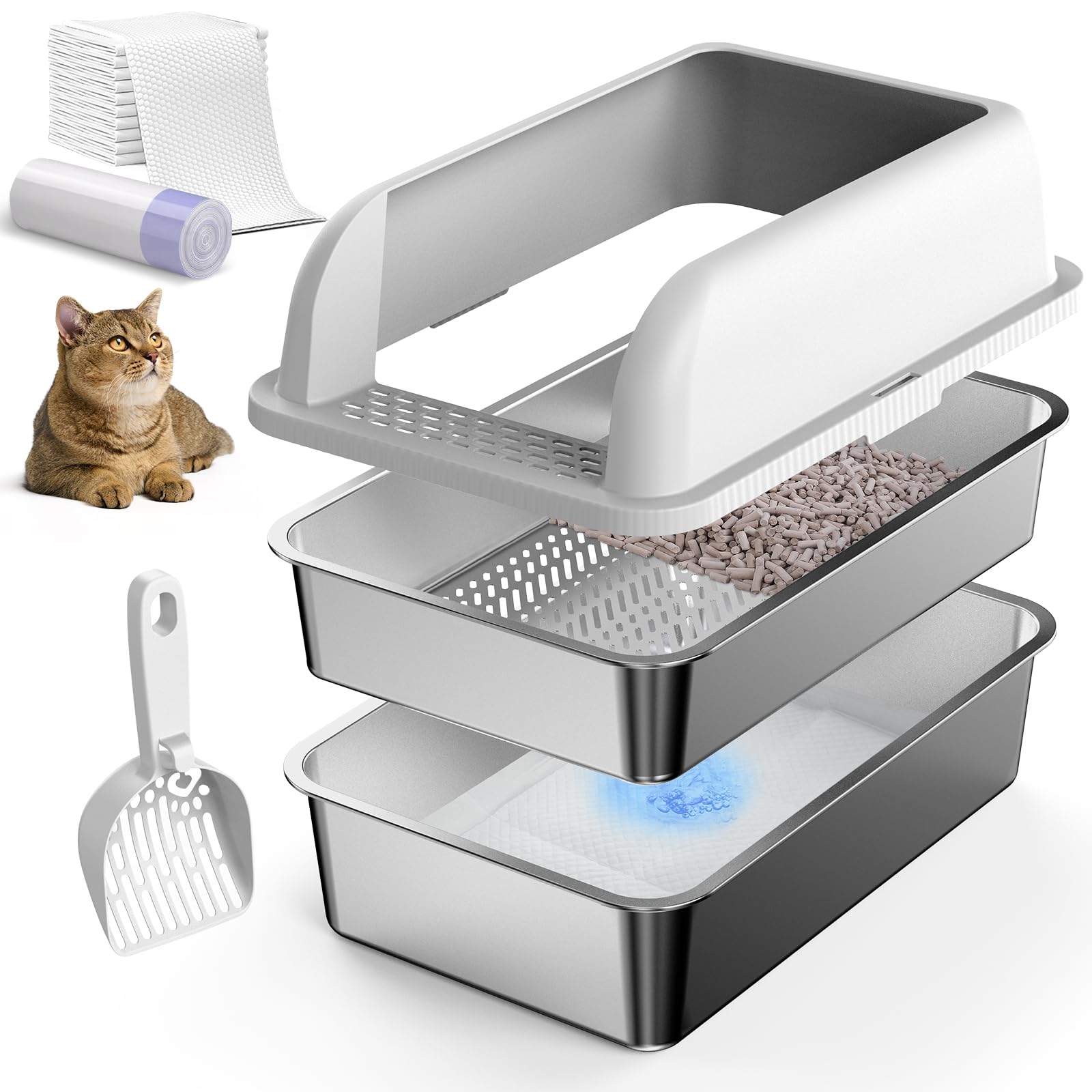
This manual sifting system is the best option for owners committed to pine or paper pellet litter. The box consists of three plastic frames holding two stainless steel pans and a sifting tray. Because the pans are stainless, they don’t absorb urine odors the way plastic does—multiple buyers report using the Tidy Cats Breeze system for years and switching to this model specifically because their old plastic box permanently stank. The 23.6-by-16-inch footprint with 12-inch-high sides is spacious enough for larger cats and contains splashing from high pee-ers.
The sifting mechanism is simple: lift the top pan, the elliptical sieve holes filter the sawdust and urine down to the bottom pan (which sits on a pee pad and litter liner), leaving solid waste in the top tray for disposal. The whole process takes about a minute. Users with multiple cats appreciate that the system works with horse bedding pellets at per 40-pound bag—a fraction of the cost of branded litter. The included accessories (scoop, liners, pee pads, anti-slip mats) mean you have everything to start immediately.
Two limitations: the system only works with non-clumping pellet litter. Clay or clumping crystal litter will fall through the sifting holes and make a mess. Second, the pee pads and liners use an unusual size (roughly 15.7 x 23.6 inches), so standard 22×22 pads don’t fit perfectly. Some users trim them, but it’s an extra step. The lid clips onto the middle sifting layer, not the base, which can feel less secure than a full-enclosure system.
Why we love it
- Stainless steel pans eliminate the odor absorption problem of plastic boxes
- Works with ultra-cheap horse bedding pellets for major cost savings
- One-minute sifting process is faster than scooping a standard box
Good to know
- Only compatible with non-clumping pellet litter, not clay or clumping litter
- Pee pads require an unusual size, not a standard 22×22 fit
5. LUODIER Automatic Litter Box CH-ICB024
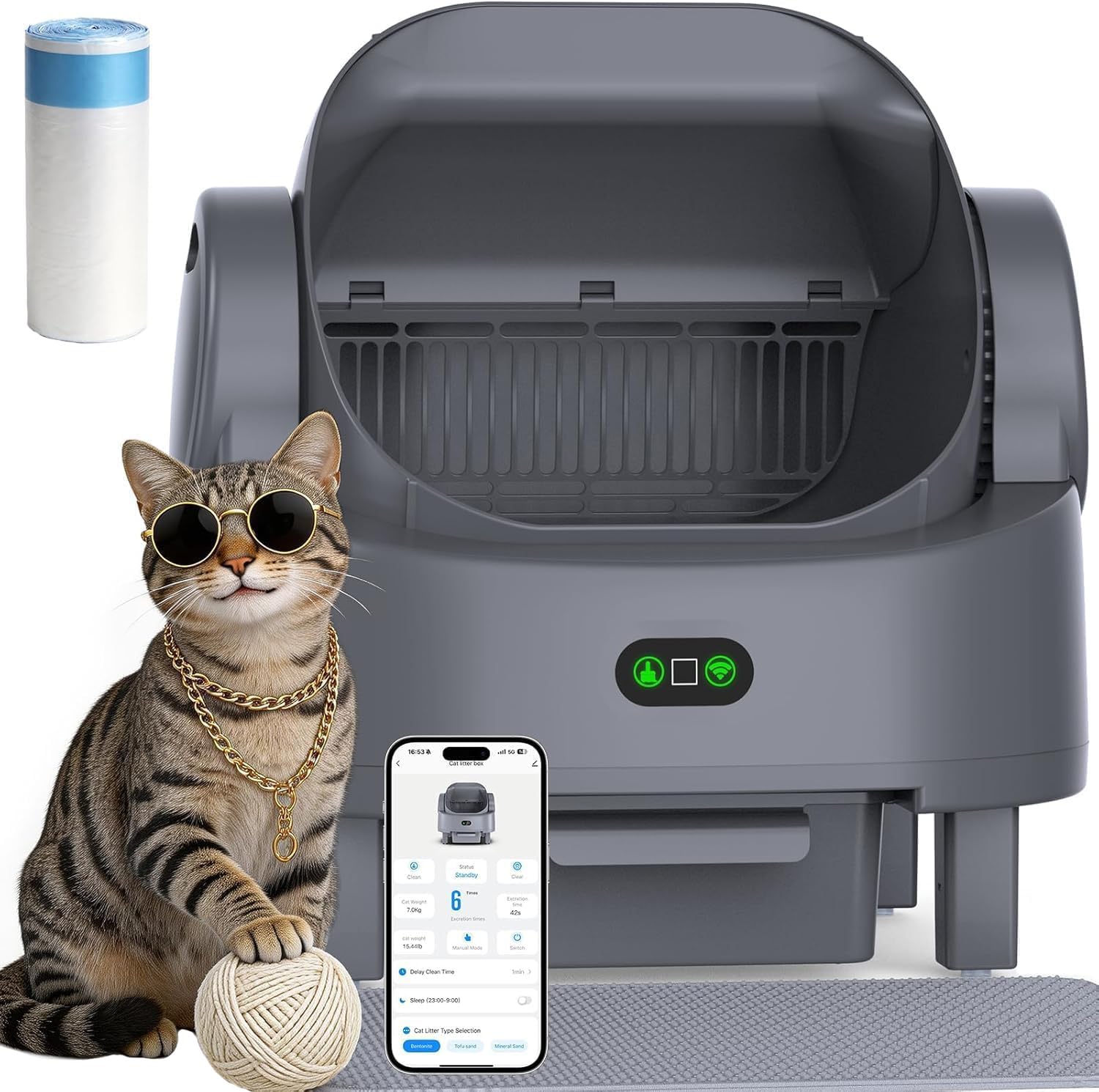
The LUODIER CH-ICB024 is the most affordable automatic box in this lineup, and it delivers solid performance for a single-cat or two-cat household. The open-top design uses infrared and weight sensors to detect cat presence and pause the cleaning cycle. The waste drawer is large, and owners report that a single cat can go up to 15 scoop-free days before needing a bag change—two cats bring that down to about every three days. The app tracks weight and visit frequency per cat, which is a surprising amount of data for this price tier.
Setup is straightforward: the unit arrives mostly assembled, and the app pairs via Bluetooth for quick configuration. The cleaning cycle is quiet enough to run overnight without waking anyone. Users note that the mat included with the unit is small and the power cord is short, so you may need an extension cord and a separate larger mat to fully contain litter scatter. The system works with clumping or mineral litter, which is the standard for most cat owners.
Durability reports are mixed. One user is on their second unit—the first worked for five months without issue before a sensor problem. Another reviewer notes that tiny litter pieces occasionally pass through the grate and end up in the waste bin, meaning more dust than ideal. The biggest trade-off relative to pricier units is the sensor coverage: a single IR beam can leave blind spots. A slim cat entering from a low angle might not break the beam in time, though the weight sensor adds a secondary layer of protection.
Why we love it
- Strong value with 15-day waste capacity and app tracking
- Works with standard clumping litter, no proprietary products
- Quiet operation suitable for any room in the house
Good to know
- Sensor blind spots may leave a small gap in coverage
- Included mat is small; a larger aftermarket mat is recommended
6. Mintakawa Automatic Cat Litter Box CAST-LB500C
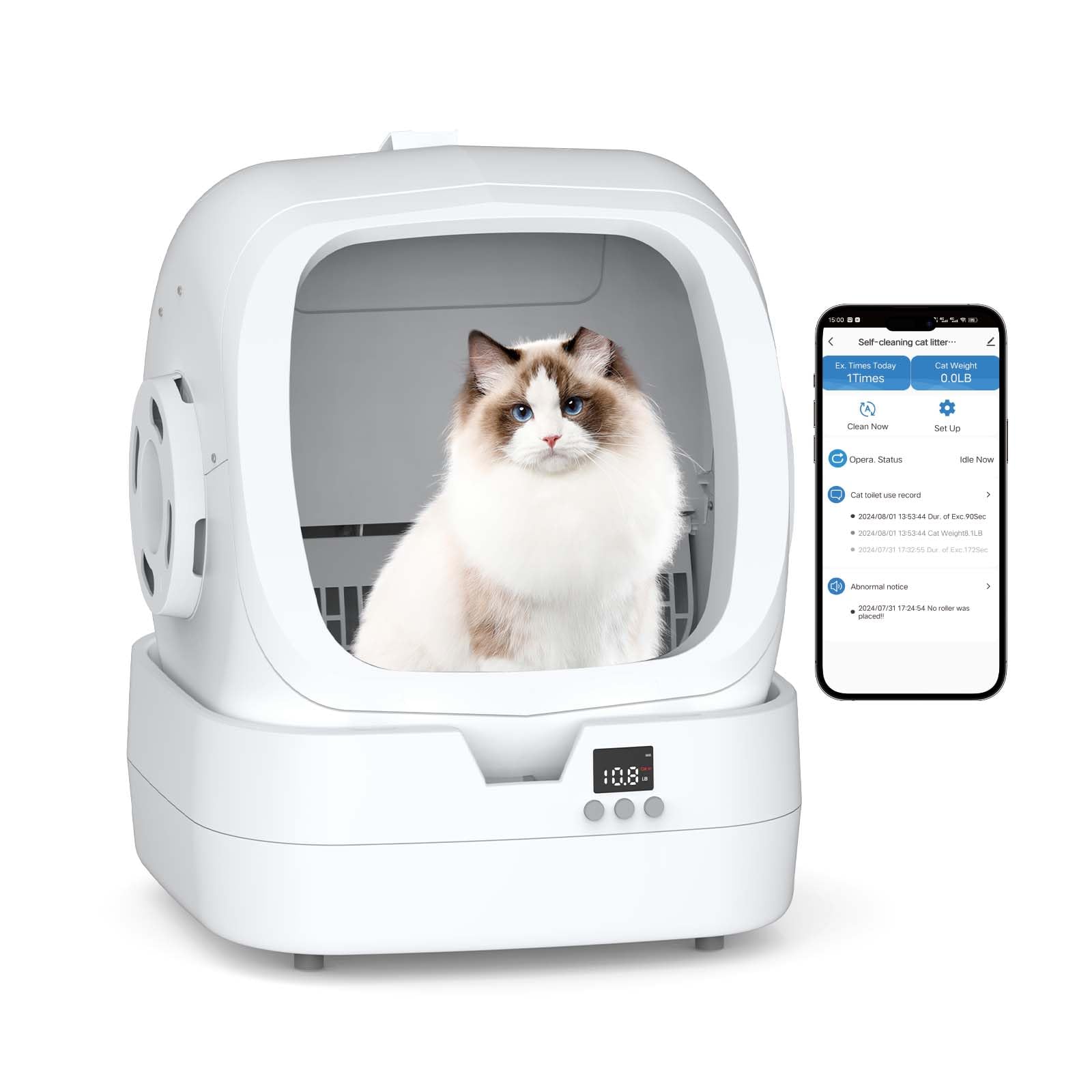
The Mintakawa CAST-LB500C is specifically engineered for smaller cats and kittens, with a recommended weight range of 3.5 to 15 pounds. The interior drum is proportionally smaller than the other automatics here, which means it fits tighter spaces but also means a large cat will feel cramped. Assembly takes about 20-30 minutes and involves eight screws—the instructions are clear, and a YouTube video is available for visual guidance. At 35 dB, it’s among the quietest units tested, operating at a level comparable to a soft whisper.
The app connects via 2.4GHz Wi-Fi or Bluetooth and provides real-time data on your cat’s weight, visit duration, and frequency. Users report that the app is simple to navigate, and the cleaning delay is adjustable—you can set it to run 10 minutes after the cat exits, which gives clumps time to solidify. The unit works with any standard clumping litter, and the waste drawer uses standard small trash bags rather than proprietary liners, which keeps ongoing costs low.
Reliability is a split bag: several users report excellent long-term performance and easy maintenance, while one notable negative review describes both of their units failing within weeks with a “roller not placed” error. The same reviewer warned that the waste formed an unremovable concrete-like paste. This suggests a potential quality-control issue—your experience may depend on which batch you receive. The waste drawer is also smaller than the 10L-plus competitors, requiring more frequent emptying, which is the main functional limitation for multi-cat households.
Why we love it
- Quietest unit at 35 dB, ideal for noise-sensitive spaces
- Adjustable cleaning delay helps clumps set before cycling
- No proprietary bags required, works with standard trash bags
Good to know
- Weight range caps at 15 lbs, not suitable for larger cats
- Quality-control issues reported with roller error on some units
7. BCHARYA Self Cleaning Cat Litter Box
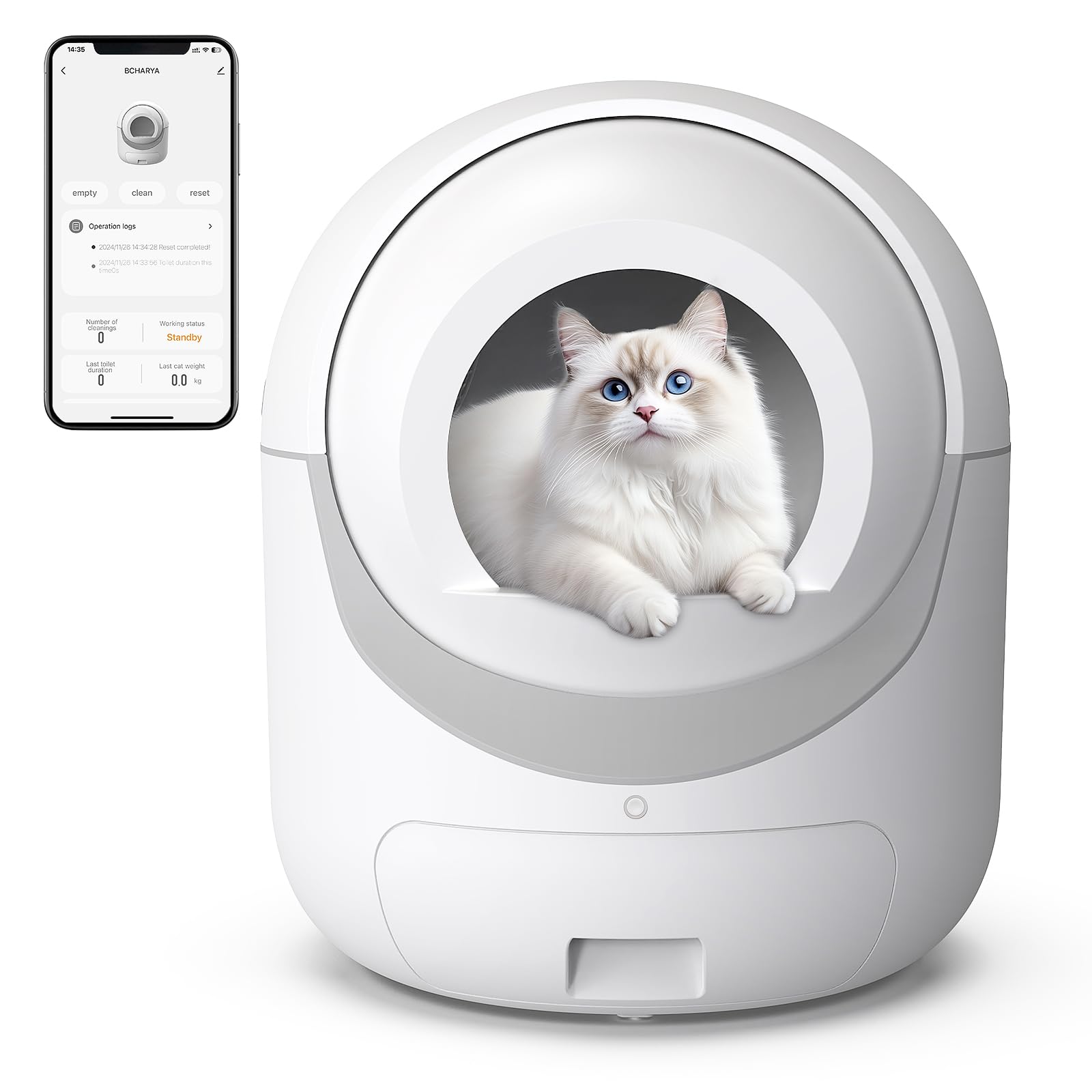
The BCHARYA automatic system differentiates itself with an integrated aromatherapy box that actively neutralizes odors rather than just containing them. The scent pod sits in the top housing and slowly releases fragrance, which users confirm keeps the surrounding area fresh between bag changes. The self-cleaning mechanism uses a delay sensor—it waits a preset period after the cat exits before starting the cycle, which prevents startling the animal and gives clumps time to fully harden before being dragged into the bin.
Setup is simple, with removable components that make deep cleaning straightforward. The unit works with clumping litter and includes litter box liners that fit the waste drawer perfectly. The eco-friendly pitch here is genuine: because the system separates waste efficiently and only cycles when needed, you use less litter overall. The sensor suite includes both presence detection and a physical delay, adding redundancy for safety. The motor operates quietly, and the compact design blends into home decor without dominating the room.
The trade-off for the premium odor system is that the buyer reviews currently lack volume—the product appears to be newer to market, and customer reports lean heavily toward positive but are relatively few in number. The aromatherapy pod will need periodic replacement, which adds an ongoing consumable cost. For owners who are particularly sensitive to litter-box smells and want an extra layer of active odor defense, this system makes a strong case, but the long-term reliability data is thinner than for the more established models in this list.
Why we love it
- Active aromatherapy system neutralizes odors, not just masks them
- Sensor delay prevents cycle start while cat is still near the box
- Eco-friendly design reduces litter waste over time
Good to know
- Newer product with limited long-term reliability data
- Aromatherapy pods are a recurring consumable expense
FAQ
Can I use clay clumping litter in a sifting box designed for pellets?
How do I transition my cat from a standard pan to an automatic self-cleaning box?
What causes an automatic litter box to smell even after a clean cycle?
Are stainless steel litter boxes worth the higher upfront cost compared to plastic?
How often should I fully replace the litter in a self-cleaning box?
Final Thoughts: The Verdict
For most cat owners, the best cat litter box system is the CATLINK Open-X because it combines a 15-day waste capacity, AI health monitoring, and the safest always-open entrance in a single package that requires minimal user interaction. If you want a simpler, no-app setup with robust sensor coverage, the PetPivot AS12 is your unit. And for pellet-litter loyalists who want zero motor noise and the lowest ongoing cost, nothing beats the suzzipaws stainless steel sifting system.