
Bringing home a new kitten means navigating a minefield of kibble and can claims. Every brand promises complete nutrition, but the real difference comes down to ingredient sourcing, DHA levels, and whether the texture matches what a growing 8-week-old mouth can manage. The formula you choose in the first year directly impacts bone density, digestive stability, and how readily your cat accepts food later in life.
I’m Mo Mahin — the founder and writer behind Furric. I spend my time cross-referencing AAFCO nutrient profiles, analyzing guaranteed analysis panels, and studying owner-reported palatability data across hundreds of kitten food batches to separate marketing fluff from biologically appropriate nourishment.
Whether you are weaning a litter or switching a rescue to solids, finding the best rated kitten food means balancing protein density, calcium-to-phosphorus ratios, and a texture that tiny teeth can actually break down.
How To Choose The Best Rated Kitten Food
Kittens grow faster than any other life stage, doubling their birth weight within the first week. This rapid development demands a diet rich in animal-based protein, essential fatty acids, and precisely balanced minerals. Not all kitten formulas are created equal, and the wrong choice can lead to digestive upset, poor coat condition, or stunted growth.
Protein Source and Content
A growing kitten needs at least 30% protein on a dry-matter basis, with the first ingredient being a named meat source like chicken, fish, or duck. Avoid generic “meat meal” or “by-product” entries if you want reliable amino acid profiles. Real chicken or salmon listed as the #1 ingredient signals a higher biological value for muscle and organ development.
DHA for Brain and Vision
Docosahexaenoic acid, a type of omega-3 fatty acid, is critical for retinal and neural development during the first year. Formulas that explicitly list DHA from fish oil or marine sources support better cognitive function and sharper vision. Check the guaranteed analysis or ingredient list — if DHA is absent, the formula is incomplete for a kitten’s brain wiring.
Texture and Kibble Size
Kittens have small jaws and developing teeth. Wet food should come in soft shreds, smooth pate, or tender chunks that require minimal chewing. Dry kibble must be small enough to fit between tiny incisors — typically under 0.3 inches in diameter. The wrong texture can discourage eating entirely, leading to dehydration and missed nutrients.
Quick Comparison
On smaller screens, swipe sideways to see the full table.
| Model | Category | Best For | Key Spec | Amazon |
|---|---|---|---|---|
| Tiki Cat Baby Shreds Variety Pack | Wet Shred | Picky eaters & variety seekers | 4 recipes, non-GMO, DHA added | Amazon |
| Hill’s Science Diet Ocean Fish & Brown Rice | Dry Kibble | Budget-friendly dry rotation | 3.5 lbs, DHA from fish oil | Amazon |
| Sheba Perfect Portions Chicken | Wet Pate | Portion-controlled single servings | 2.6 oz twin-tray, 48 servings | Amazon |
| Blue Buffalo Baby Blue Healthy Growth | Wet Pate | High-protein, low-filler diet | 3 oz cans, real chicken #1 | Amazon |
| Hill’s Science Diet Chicken Stew Pouches | Wet Stew | Vet-recommended picky-eater fix | 2.8 oz pouches, easy-open foil | Amazon |
In‑Depth Reviews
1. Tiki Cat Baby Wet Cat Food for Kittens, Shreds Variety Pack

This 12-can variety pack delivers four distinct shred recipes — Chicken & Salmon, Chicken Tuna & Chicken Liver, Chicken Duck & Duck Liver, and Chicken & Egg — giving you a rotating menu that prevents flavor fatigue. Each 2.4-ounce can is free of grains, vegetables, fruit, and carrageenan, focusing entirely on animal protein at roughly 12% crude protein on an as-fed basis. Owners report that kittens as young as 8 weeks old transition to these soft shreds without hesitation.
The inclusion of DHA from marine sources supports retinal and brain development during the critical 8-to-16-week window. Prebiotics aid digestion, and the moisture content helps kittens who are still learning to drink enough water. The shredded texture mimics whole prey mouthfeel better than pate, which explains why even exceptionally picky 12-week-olds finish the entire portion.
Some flavors in the variety pack may be less popular than others — the Chicken & Egg recipe tends to be the crowd-pleaser, while the Duck & Duck Liver can be polarizing. The small can size is ideal for single kitten meals but means you will go through the box quickly with multiple cats or a growing Maine Coon. Overall, the ingredient transparency and high acceptance rate make this a standout for kittens 8 weeks and older.
Why we love it
- Four distinct recipes keep meals interesting for picky kittens
- Non-GMO, grain-free formula with no fillers or carrageenan
- Soft shredded texture is easy on tiny teeth and gums
Good to know
- 2.4 oz cans are small — multi-kitten households will burn through the pack fast
- Duck-based recipes may be rejected by flavor-sensitive kittens
2. Hill’s Science Diet Kitten Dry Cat Food, Ocean Fish & Brown Rice, 3.5 lb. Bag
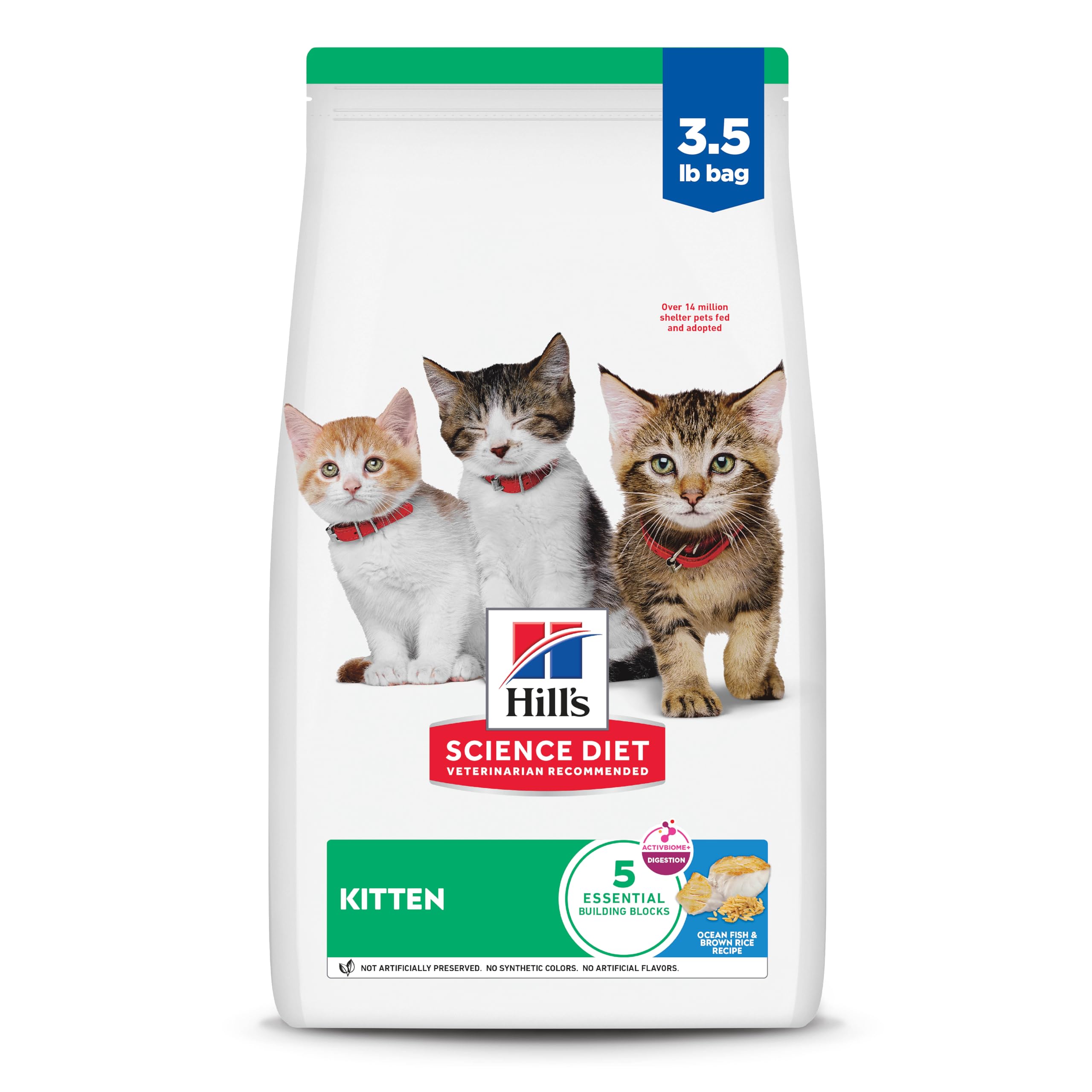
As the US veterinarians’ #1 recommended brand, Hill’s Science Diet brings decades of formulated research to this Ocean Fish & Brown Rice dry kibble. The 3.5-pound bag is entry-level but delivers balanced minerals for growing bones and teeth, DHA from fish oil for brain development, and an antioxidant blend to support the developing immune system. The kibble size is notably small — roughly 0.2 inches in diameter — making it easier for tiny jaws to crunch without choking.
The protein comes from ocean fish, which provides natural omega-3 fatty acids beyond the added DHA. Brown rice serves as a digestible carbohydrate source that stabilizes energy levels between meals. Owners consistently report that kittens maintain silky coats and firm stools after transitioning to this formula. The dry format is especially useful for free-feeding during the day when wet food would spoil in the bowl.
Fish-based dry foods can sometimes cause a fishy breath odor, though most owners consider it a minor trade-off for the nutritional density. The bag is resealable but not air-tight — storing it in a separate container preserves freshness longer. If your kitten has shown signs of fish sensitivity, the chicken variant of the same line is a safer alternative. This is a solid dry-food anchor for households that mix wet and dry meals.
Why we love it
- Vet-recommended with proven AAFCO nutrient profiles for growth
- Extra-small kibble diameter suits kittens with tiny teeth
- DHA and antioxidants support brain, eye, and immune development
Good to know
- Fish-based formula may cause stronger breath odor
- 3.5 lb bag is compact — large litters will need frequent reordering
3. Sheba Perfect Portions Kitten Wet Food, Pate, Chicken Recipe, 24 Count

Sheba Perfect Portions solves the two most common pain points of wet kitten food: spoilage and portion guesswork. Each twin-pack tray holds two 1.3-ounce servings that peel apart individually, meaning you never have to refrigerate a half-eaten can. The chicken pate is smooth enough for kittens transitioning from milk to solid food, with a protein-and-fat ratio designed to fuel the high-energy play sessions that build muscle coordination.
This formula includes DHA for brain development, vitamin E for immune support, and all essential amino acids including taurine. The absence of corn, wheat, and soy reduces the risk of food sensitivities that manifest as loose stools or itchy skin. Owners consistently note that kittens who ignored other pate brands will finish Sheba’s chicken recipe, likely because of the finer emulsion that delivers a creamier mouthfeel.
The 24-count box provides 48 total servings, making it a cost-effective option for households with multiple kittens. Some kittens reject the beef flavor variant, so starting with the chicken-only set reduces trial-and-error waste. The foil seal on each portion requires a clean peel — occasional tearing can leave sharp edges, so inspect before serving. Overall, the portion-control design alone makes this a practical pick for busy owners.
Why we love it
- Portion-controlled twin trays eliminate food waste and spoilage
- Smooth pate texture is ideal for weaning kittens onto solid food
- Corn-free, grain-free, and soy-free for sensitive stomachs
Good to know
- Beef flavor variant has lower palatability — stick with chicken
- Foil seal can tear unevenly if opened too quickly
4. Blue Buffalo Baby Blue Natural Kitten Wet Cat Food, Chicken Recipe, 24 Cans
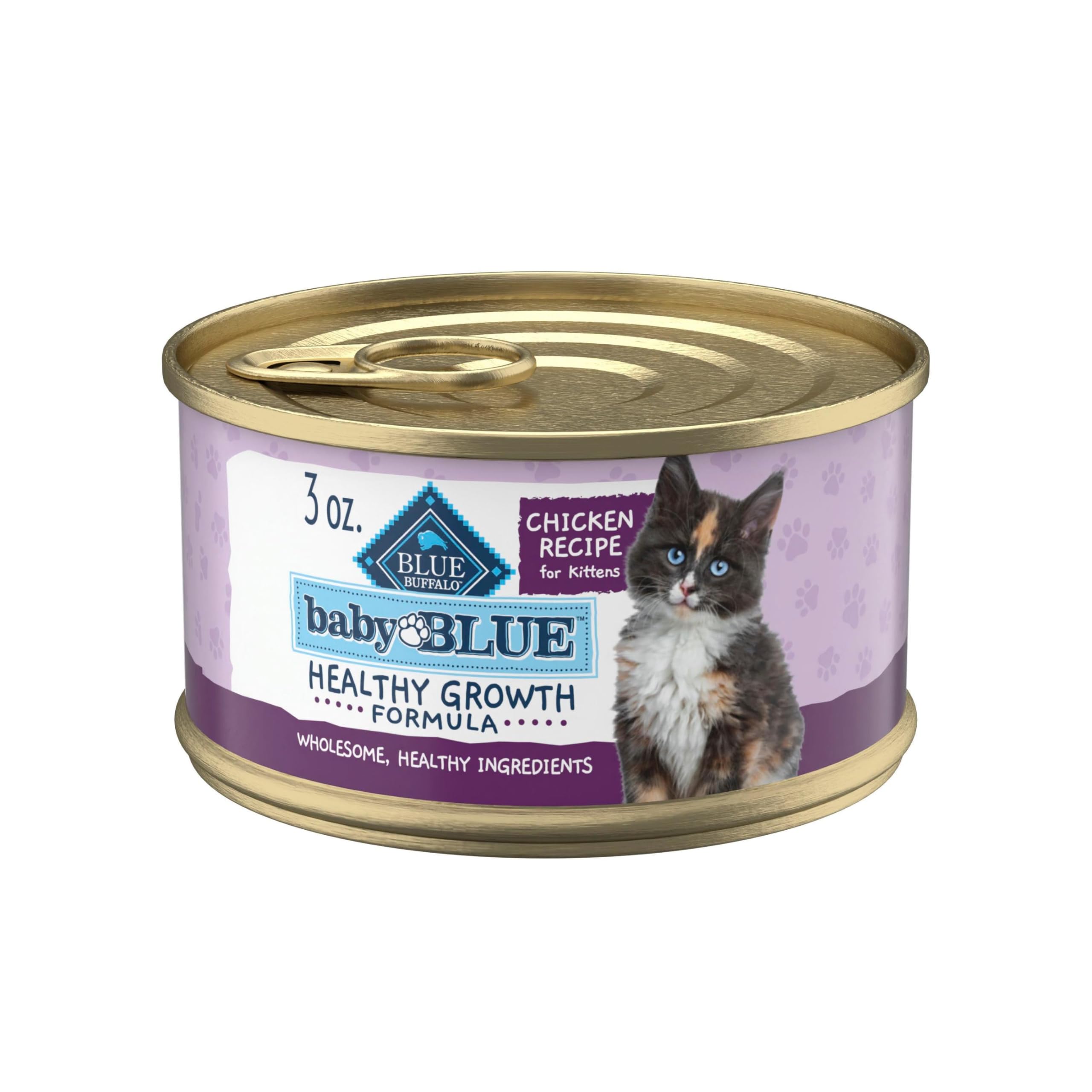
Blue Buffalo’s Baby Blue line leads with real deboned chicken as the number one ingredient, delivering a high-protein pate that mirrors the amino acid profile kittens would get from whole prey. Each 3-ounce can provides extra moisture for hydration — a legitimate concern for kittens who don’t drink enough water independently. The formula is free of poultry by-product meals, corn, wheat, and soy, targeting owners who prioritize clean-label sourcing.
The pate texture is denser than Sheba’s but softer than budget cans, requiring minimal mashing for young kittens. Owners report that kittens show visible enthusiasm — the “happy dance around the feet” is a recurring observation — which typically correlates with higher palatability. The 24-count case gives you roughly 72 ounces of food, enough to feed a single growing kitten for two to three weeks when supplemented with dry food.
A minority of kittens reject the pate consistency, finding it too dry compared to shreds or chunks. Adding a splash of warm water or mixing in a small amount of omega oil can improve acceptance, but some cats simply prefer chunkier textures. The cans are standard 3-ounce size without portion dividers, so leftover pate must be covered and refrigerated. For kittens that accept pate, this is one of the cleanest ingredient profiles in its price tier.
Why we love it
- Real deboned chicken is the #1 ingredient with no by-product meals
- High moisture content supports daily hydration needs
- 24-can case offers extended supply for single-kitten households
Good to know
- Pate texture may be rejected by kittens who prefer shreds or chunks
- Leftover portions require refrigeration — no built-in portion control
5. Hill’s Science Diet Kitten Wet Cat Food, Chicken, 2.8 oz Pouches, 24-Pack
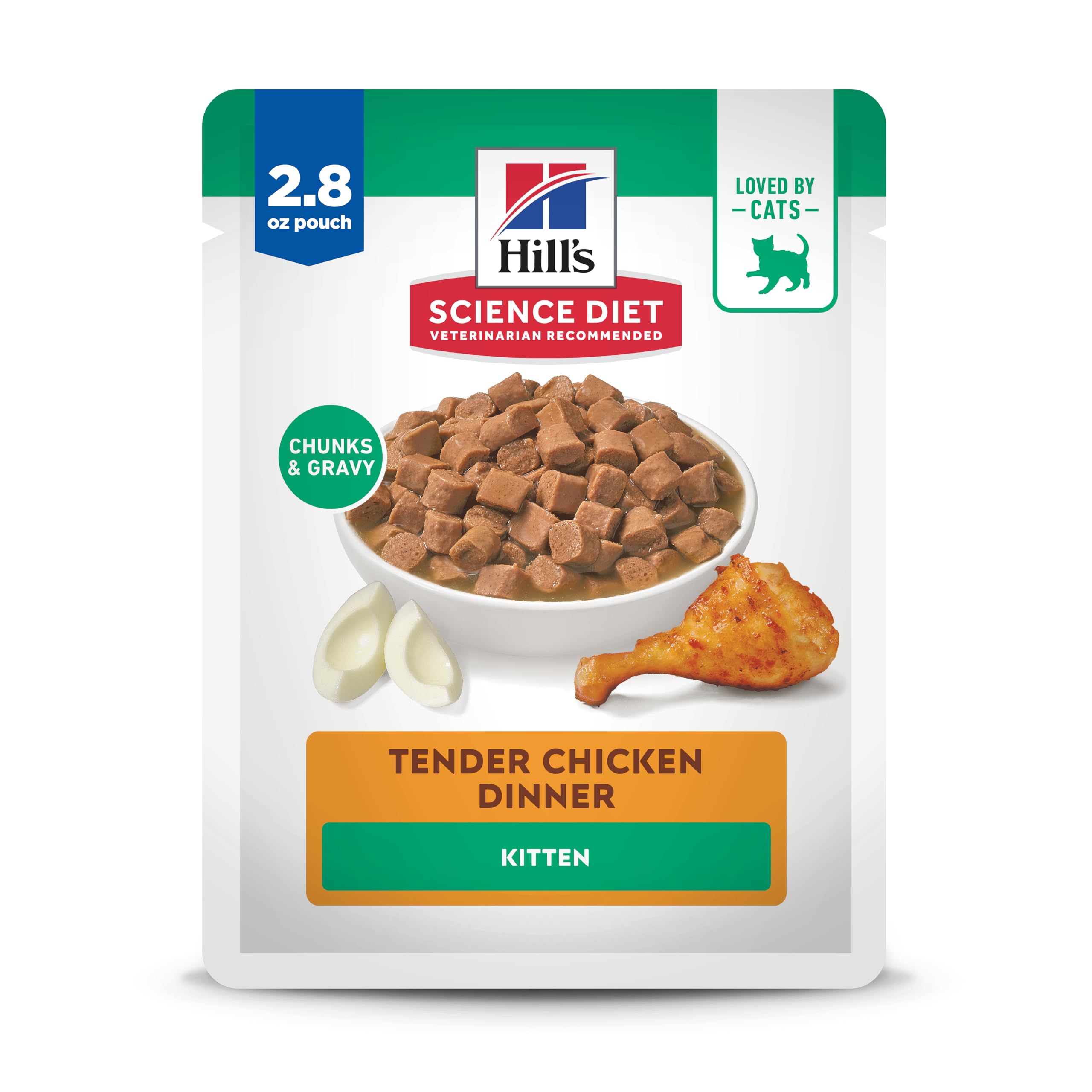
Hill’s Science Diet wet pouches offer a middle ground between premium ingredient sourcing and the reliability of a clinically tested formula. Each 2.8-ounce single-serve pouch peels open without scissors — a small but meaningful convenience when you are juggling a hungry kitten at 6 AM. The Chicken Stew texture is finer than chunk-style wet foods but more substantial than thin gravy, making it one of the most universally accepted textures across picky eaters.
This formula is fortified with added vitamins, minerals, and amino acids to meet AAFCO kitten growth requirements. The natural ingredient base avoids artificial colors, flavors, and preservatives. Hill’s position as the #1 veterinarian-recommended brand gives owners confidence that the calcium-to-phosphorus ratio and DHA content are backed by feeding trials rather than marketing claims. Kittens transition to this food with minimal digestive upset, according to owner reports.
The 24-pack provides sufficient volume for a month of daily wet meals, but the pouch format creates more packaging waste than cans. Some kittens can be picky about stew-style textures that include small vegetable pieces — though this formula is primarily chicken-based, the presence of visible broth pieces may confuse cats accustomed to uniform pate. If your kitten shows preference for smooth textures, mixing this with a pate or shred product can ease the transition.
Why we love it
- Easy-open pouches require no can opener or scissors
- Natural ingredients with added DHA, vitamins, and minerals
- #1 vet-recommended brand with clinically tested growth profiles
Good to know
- Stew texture with visible broth pieces may not suit all kitten preferences
- Pouch format generates more plastic waste compared to cans
FAQ
Can I feed my kitten only wet food for all meals?
How much DHA does a growing kitten actually need?
When should I switch my kitten from growth formula to adult cat food?
What does “chicken by-product meal” mean and should I avoid it?
Final Thoughts: The Verdict
For most kitten owners, the best rated kitten food winner is the Tiki Cat Baby Shreds Variety Pack because it combines high-quality non-GMO protein with DHA fortification and a soft shred texture that almost every kitten accepts from the first serving. If you want the convenience of portion-controlled trays with zero spoilage, grab the Sheba Perfect Portions Chicken Pate. And for a vet-backed dry kibble that pairs perfectly with wet meals, nothing beats the Hill’s Science Diet Ocean Fish & Brown Rice.