
Eastern bluebirds have a finicky palate and a shy demeanor, which means a generic seed feeder sitting in the open will likely be ignored in favor of a specialized setup that delivers mealworms in a space they feel safe. The wrong feeder geometry — too open, too closed, or with a perch size that favors starlings — can turn your yard into a no-fly zone for the very species you are trying to attract.
I’m Mo Mahin — the founder and writer behind Furric. I’ve spent years cross-referencing supplier material data sheets, analyzing feeder ingress geometry for predator exclusion, and studying verified owner feedback to separate the bluebird-ready designs from the marketing fluff.
Whether you want a hanging tray for mealworms or a caged fortress that keeps grackles at bay, finding the right bird feeders for bluebirds comes down to matching the feeder type to the specific feeding behaviors of this cavity-nesting thrush.
How To Choose The Best Bird Feeders For Bluebirds
Selecting a bluebird feeder requires understanding that these birds are ground-foraging insectivores by nature. They rarely cling to vertical seed tubes. Instead, they prefer a broad, stable platform where they can perch while eating mealworms or other soft foods. Size, material, and access control are your three critical filters.
Mealworm Delivery vs. Seed Storage
Bluebirds will ignore most seed blends; they are drawn almost exclusively to live or dried mealworms. A feeder with a deep tray or cup design that allows easy picking and offers a stable landing pad will see daily use, while a hopper designed for sunflower seeds will likely sit untouched. Prioritize models specifically advertised for mealworms or bluebirds.
Entry Geometry and Bully Bird Exclusion
The single most common complaint across bluebird feeder reviews is that starlings, grackles, or blue jays overwhelm the feeder. Look for a feeder with a cage grid spacing of roughly 1.3 x 1.8 inches — wide enough for bluebirds and small songbirds to pass through but narrow enough to block larger, aggressive species. Adjustable roofs and mesh bowls add another layer of control.
Material Longevity and Weather Resistance
High-quality recycled plastic (often from milk jugs) resists cracking, fading, and water absorption, making it a top choice for year-round outdoor use. Powder-coated metal cages add heft and durability but can weigh 10 pounds or more when full — check your mounting point. Stainless steel hardware and fadeproof acrylic windows signal a long-term investment.
Quick Comparison
On smaller screens, swipe sideways to see the full table.
| Model | Category | Best For | Key Spec | Amazon |
|---|---|---|---|---|
| Kettle Moraine Recycled Bluebird Mealworm Feeder | Premium Recycled Plastic | Dedicated bluebird watchers wanting a long-lasting, exclusive feeder | Made from recycled milk jugs; guaranteed no crack, split, or fade | Amazon |
| Mosloly Bluebird Feeders Squirrel-Proof | Heavy-Duty Metal Cage | Users who need maximum bully-bird and squirrel exclusion | 1.3 x 1.8 in. grid; holds 7 lbs seeds or mealworms | Amazon |
| Kingsyard Recycled Plastic Bluebird Feeder | Mid-Range Tray Feeder | Budget-conscious birders wanting a colorful, easy-clean tray | Two removable glass dishes; 5 oz. each; recycled plastic | Amazon |
| Wildlife Sciences Mealworms Bird Feeder | Specialty Mesh Bowl | Targeting wrens and bluebirds with an adjustable roof guard | 5 x 5 in. powder-coated mesh; adjustable stainless steel roof | Amazon |
| Kingsyard Metal Bird Feeder | Entry-Level Hanging Hopper | General yard feeding for small songbirds (cardinals, finches) | 3 lb. seed capacity; powder-coated metal frame | Amazon |
In‑Depth Reviews
1. Kettle Moraine Recycled Bluebird Mealworm Feeder
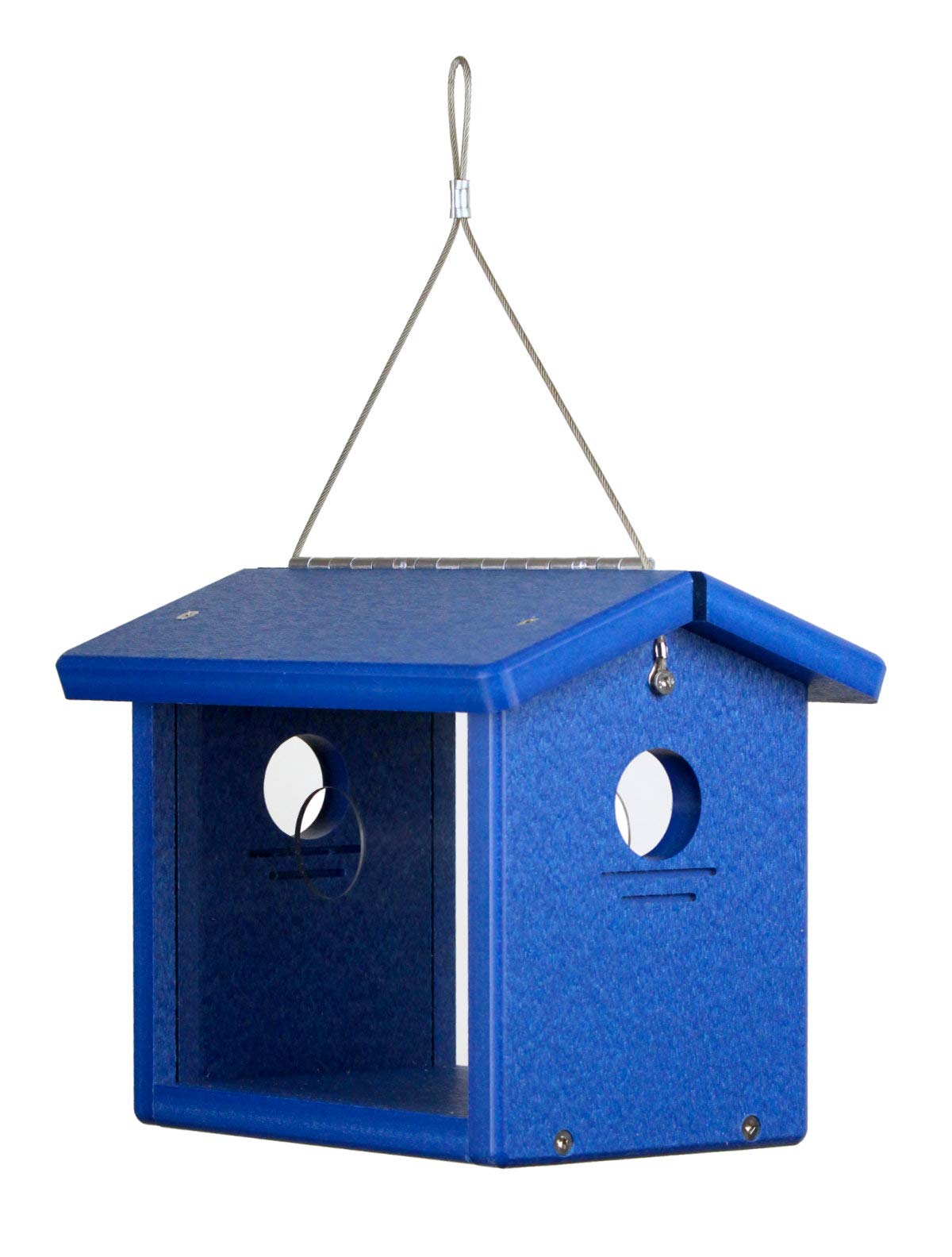
This feeder is engineered specifically for bluebirds, using recycled milk jug plastic that is guaranteed never to crack, split, peel, or fade — a durability claim backed by years of owner use in full sun and snow. The viewing windows are heavy acrylic, and the hanging cable and screw construction are all stainless steel, so corrosion is essentially eliminated.
The design includes four entry points that prevent a trapped feeling for the birds, and the roof geometry is set low enough that starlings give up quickly. Owners report bluebirds learning to use the feeder within a single day, and one full fill of the bottom tray lasts roughly two weeks for a small flock, reducing refill frequency significantly.
At 3.6 pounds, this feeder feels substantial in hand, and every component — from the recycled plastic body to the screw fasteners — is built to survive decades, not just a single season. The only minor complaint is that the acrylic side panels with the feeding holes feel less robust than the rest of the unit and could crack if handled roughly.
Why we love it
- Made in the USA from recycled milk jugs; lifetime-grade fadeproof material
- Four entry points prevent bird trapping; low roof excludes starlings
- Two-week capacity per fill in the bottom tray
Good to know
- Acrylic side panels with feeding holes feel less durable than the body
- Premium price point targets serious bluebird enthusiasts
2. Mosloly Bluebird Feeders Squirrel-Proof, 7 lbs
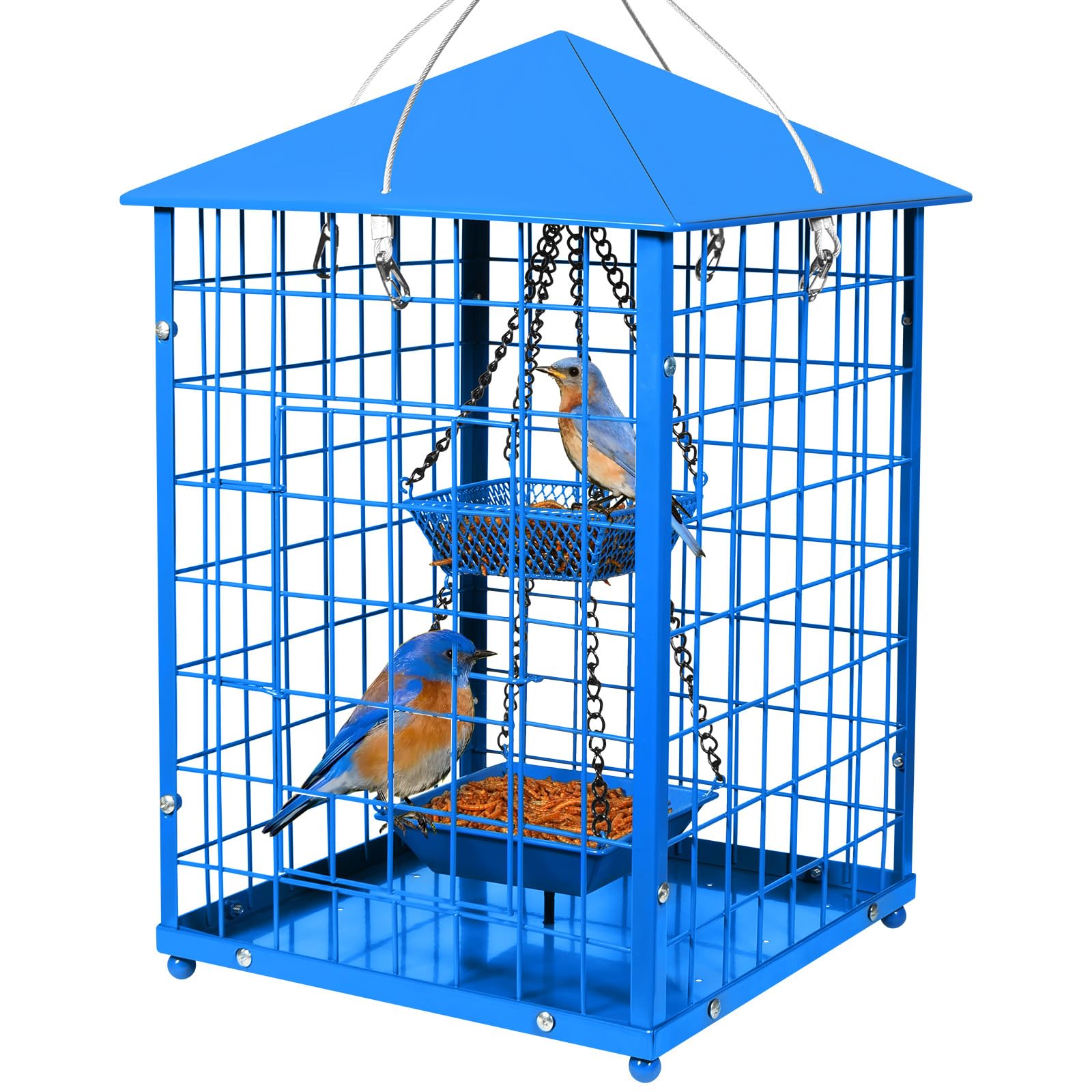
This caged feeder takes a fortress approach to bluebird feeding. The square cage measures 13 x 13 x 19.5 inches with a grid spacing of 1.3 x 1.8 inches — a dimension that allows bluebirds, chickadees, and wrens to enter freely while locking out blue jays, grackles, and pigeons. The enamel coating on the heavy-gauge metal frame resists rust for multiple years.
The two-layer seed cups provide separate compartments, so you can offer mealworms on one side and dry seeds on the other without mixing. Owners note the caged design also functions as a hawk-safe feeding zone since birds can retreat inside the cage while eating. The thick roof lid sheds rain effectively, and drainage holes in the base prevent seed spoilage.
Assembly is fully detachable, and the feeder weighs roughly 10 pounds when full, which means it needs a solid hanging branch or a steel pole. The one recurring hack from owners is using a small clamp to keep the access door securely shut because persistent squirrels can learn to pop it open over time.
Why we love it
- Cage grid size perfectly calibrated to exclude bully birds and squirrels
- Dual-layer seed cups allow mealworms and seeds without cross-contamination
- Enclosed design provides overhead protection from hawks
Good to know
- Large and heavy — requires a sturdy mounting point
- Some owners needed to modify bottom rectangles to block cowbird entry
3. Kingsyard Recycled Plastic Bluebird Feeder

This Kingsyard tray feeder takes a simple, effective approach: a wide scalloped landing tray with two removable glass dishes, each holding 5 ounces of mealworms or jelly. The body is molded from durable recycled plastic that doesn’t absorb water, won’t crack in freezing temperatures, and cleans off with a quick rinse. The overhanging roof shelters the food tray from rain.
Bluebird-specific feedback is overwhelmingly positive — owners consistently report that the bright blue color appears to attract bluebirds visually, and the open tray design gives them the stable perch they need. The removable dishes make cleaning and refilling effortless, and the 10.5 x 7.8-inch footprint fits easily on a shepherd’s hook or hanging bracket.
The trade-off is that the tray is completely open, offering zero protection from larger bully birds or squirrels. The glass cups are also relatively small — some owners feeding multiple bluebirds report needing to refill twice a day. Replacement cups are standard 2.5-inch votive candle dishes, easily sourced from any craft store if a cup arrives broken.
Why we love it
- Blue color is a known attractant for bluebirds; sturdy recycled plastic
- Removable glass dishes make cleaning fast and thorough
- Affordable entry point for a dedicated bluebird feeder
Good to know
- Open design has no protection from squirrels or large birds
- Cups are small — expect frequent refills with multiple birds
4. Wildlife Sciences Mealworms Bird Feeder

This feeder uses a 5 x 5 inch powder-coated mesh bowl paired with a fully adjustable stainless steel roof. The mesh is a heavy security-grade screen material that resists rust, and the adjustable roof can be lowered to a height that welcomes bluebirds and wrens while excluding starlings by making entry posture uncomfortable for larger birds.
The mounting system uses a built-in hanger and can also be stake-mounted. Many owners repurposed this feeder specifically for Carolina wrens, noting that the open mesh bowl allows the birds to pick mealworms through the side of the basket without needing to enter a dark cavity. The roof also keeps mealworms dry during light rain showers.
A commonly reported flaw is that the locking mechanism for the roof height can fail over time, causing the lid to slide down and cover the food. The manufacturer acknowledges this and provides a fix: unscrew the basket, slide the lid off, and pull apart two metal pieces underneath the lid until they catch the grooves again. Some owners simply hot-glue the lid into position for a permanent solution.
Why we love it
- Adjustable roof height fine-tunes exclusion for different bird sizes
- Security-grade mesh basket is rust-resistant and breathable
- Compact footprint works well on a shepherd’s hook
Good to know
- Roof locking mechanism can slip; may require a permanent fix
- Basket is small — suitable for individual feeders, not large flocks
5. Kingsyard Metal Bird Feeder, 3 lbs
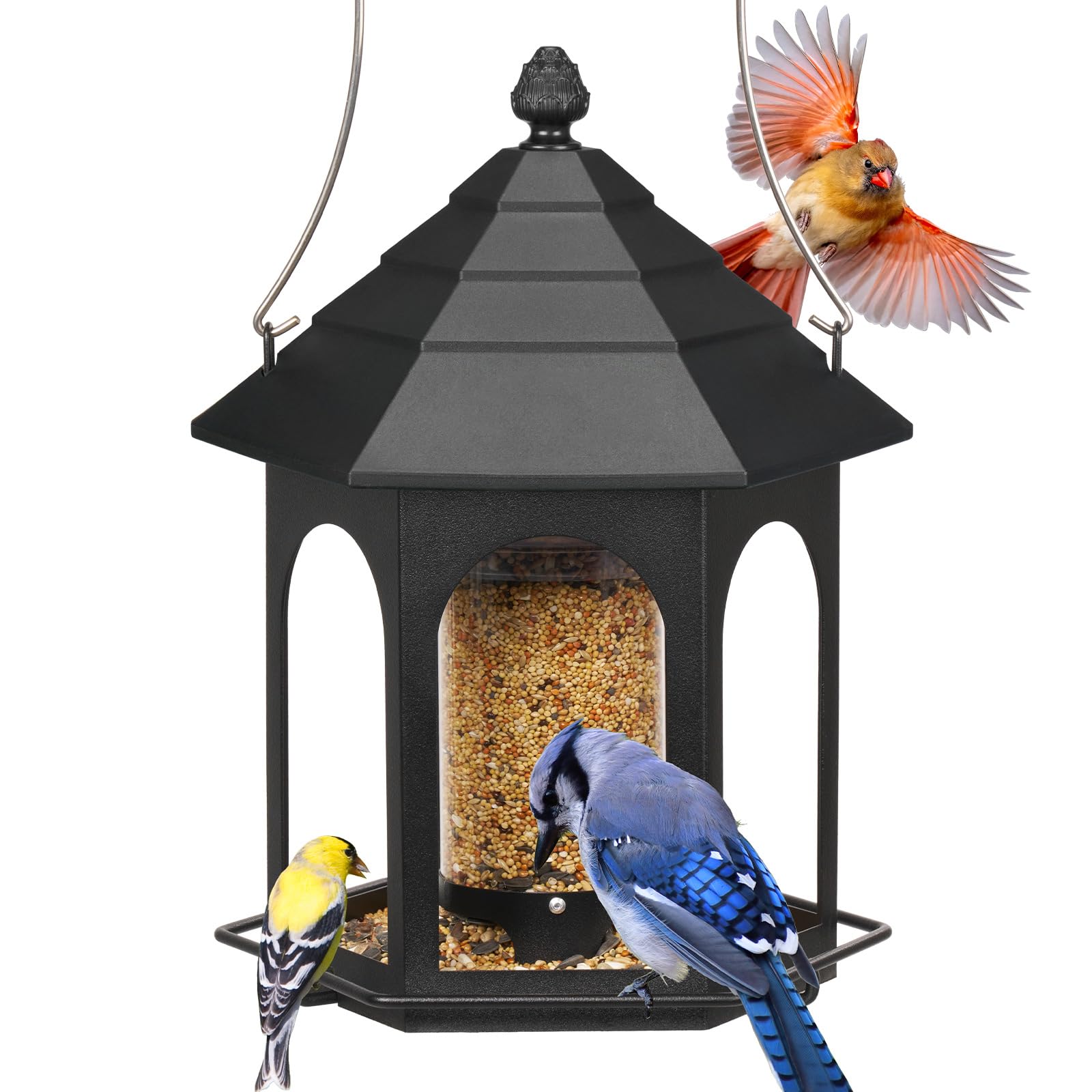
This Kingsyard hopper feeder is designed for general small-bird feeding rather than bluebird specialization. The powder-coated metal frame resists rust and squirrel damage, and the vertical seed column holds 3 pounds of seed with a gravity-fed slide that prevents clogs. The 8.5-inch rainproof cover protects the feeding tray in wet weather.
While bluebirds may visit occasionally, this feeder is better suited for cardinals, chickadees, finches, and titmice. The seed compartment uses a standard sunflower or safflower blend, and the clear plastic sides let you see the seed level at a glance. The wide mouth and removable roof make refilling and cleaning straightforward.
The main limitation for bluebird use is the perch geometry — several owners noted the openings are too short and narrow for a male cardinal to land comfortably, and the same applies to larger bluebirds. The 3-pound capacity also means aggressive birds like blue jays can empty the feeder in under 10 minutes. It works best as a supplementary feeder in a diverse yard setup.
Why we love it
- Powder-coated metal frame is sturdy and rust-resistant
- Transparent seed compartment makes monitoring refill needs easy
- Rustic black finish blends into garden decor
Good to know
- Perch openings are too small for larger birds like cardinals and bluebirds
- 3-pound capacity is modest; aggressive birds can empty it quickly
FAQ
Do bluebirds prefer a cage feeder over an open tray?
What is the ideal perch size for a bluebird feeder?
How often should I replace mealworms in a bluebird feeder?
Final Thoughts: The Verdict
For most gardeners, the bird feeders for bluebirds winner is the Kettle Moraine Recycled Bluebird Mealworm Feeder because it offers the best balance of durability, weather resistance, and targeted exclusion — built specifically for bluebirds and backed by a fadeproof guarantee. If you need maximum bully-bird and squirrel control in a crowded yard, grab the Mosloly Caged Feeder. And for a budget-friendly tray that attracts bluebirds with its color and open access, nothing beats the Kingsyard Recycled Plastic Bluebird Feeder.