
A cockatiel’s tail drags, wings clip the bars, and the bird sits still — that’s the signal that your current cage is too small. Cockatiels are active flyers who need horizontal room to stretch and climb, not just height. Choosing the wrong dimensions or bar spacing leads to feather damage, stress, and a bird that refuses to explore its own home.
I’m Mo Mahin — the founder and writer behind Furric. I’ve spent months comparing cage specifications, studying avian welfare guidelines on minimum flight space, and analyzing aggregated owner feedback to separate the cages that truly work from those that just look big on paper.
If you want a home where your cockatiel can fully extend its wings and move freely, this guide to the best cockatiel cage breaks down the real specs — bar spacing, material gauge, tray design, and access points — that determine whether a cage is a safe, comfortable habitat or a daily frustration.
How To Choose The Best Cockatiel Cage
Cockatiels are not budgies. They need a cage that accommodates a 12- to 14-inch body length plus a tail that adds several more inches. Three factors separate a suitable habitat from a cramped box: bar spacing, floor footprint, and construction quality. Ignore any of these and your bird will be uncomfortable or unsafe.
Bar Spacing Is Non-Negotiable
Standard cockatiel bar spacing ranges from 1/2 inch to 5/8 inch. Anything wider — like 3/4 inch — risks your bird getting its head stuck. Anything narrower turns the cage into a visual prison. Measure the gap yourself before assembly; some listings round down. A cage with 0.4-inch spacing works for smaller birds but feels restrictive for a cockatiel’s crest and head movement.
Footprint Beats Height Every Time
Cockatiels fly horizontally, not straight up. A tall, narrow cage forces them to hop from perch to perch instead of flapping. Look for a footprint of at least 24 inches wide and 18 inches deep. The 32-inch-wide models in this list give your bird genuine flight room across the cage, which reduces bar biting and feather plucking.
Tray Design and Door Access
A slide-out tray with a metal grate above it saves you 10 minutes of scraping every cleaning session. Plastic trays resist rust but can warp under heavy birds over time. Two large front doors — not just small feeder doors — let you reach the back corners for deep cleaning and allow your cockatiel to step out without feeling trapped.
Quick Comparison
On smaller screens, swipe sideways to see the full table.
| Model | Category | Best For | Key Spec | Amazon |
|---|---|---|---|---|
| Topeakmart Flight Cage | Premium | Multiple birds / flight space | 31.1″ wide footprint | Amazon |
| Yaheetech 63-Inch Wrought Iron | Premium | Larger parrots / heavy build | 32″ L x 18.5″ W x 63″ H | Amazon |
| BOINN 82-Inch Flight Cage | Mid-Range | Tall flight cage / play top | 0.6-inch bar spacing | Amazon |
| VIVOHOME 54-Inch Flight Cage | Mid-Range | Single bird / sturdy build | 10 mm bar spacing | Amazon |
| YITAHOME 62-Inch Metal Cage | Mid-Range | Value / includes toys | 17″ x 14″ footprint | Amazon |
| Yaheetech 59-Inch Dome Top | Mid-Range | Style / single cockatiel | 0.6-inch bar spacing | Amazon |
| VEVOR 64-Inch Open Top | Budget | Budget / travel cage | 17.99″ x 13.98″ base | Amazon |
In‑Depth Reviews
1. Topeakmart Wrought Iron Large Flight Parrot Bird Cage

This cage delivers a 31.1-inch-wide footprint that gives cockatiels real horizontal flight room — not just headroom. The powder-coated steel with hammered paint finish resists scratches and water damage far better than standard enamel cages in this price bracket. At over 37 pounds, it stays planted when your bird flaps from perch to perch.
The pull-out tray and removable metal grate make daily cleaning straightforward. Seven doors — including two large front panels — let you reach every corner without contorting your arm. Owners of multiple parakeets and lovebirds consistently report that the birds use the full width of the cage, not just the top third, which is the clearest sign of adequate space.
Assembly instructions are picture-only and can be frustrating, but a 15-minute solo build is possible with basic tool experience. The door lock pins feel slightly loose on some units — a small carabiner clip solves the issue. For a single cockatiel or a bonded pair, this is the most spacious and durable option under typical mid-range pricing.
Why we love it
- Wide 31.1-inch footprint allows genuine flight movement
- Powder-coated finish is water and scratch resistant
- Seven doors provide excellent cleaning and interaction access
Good to know
- Assembly instructions are blurry pictures only
- Door lock pins may need a carabiner for extra security
2. Yaheetech 63-Inch Wrought Iron Rolling Large Bird Cage
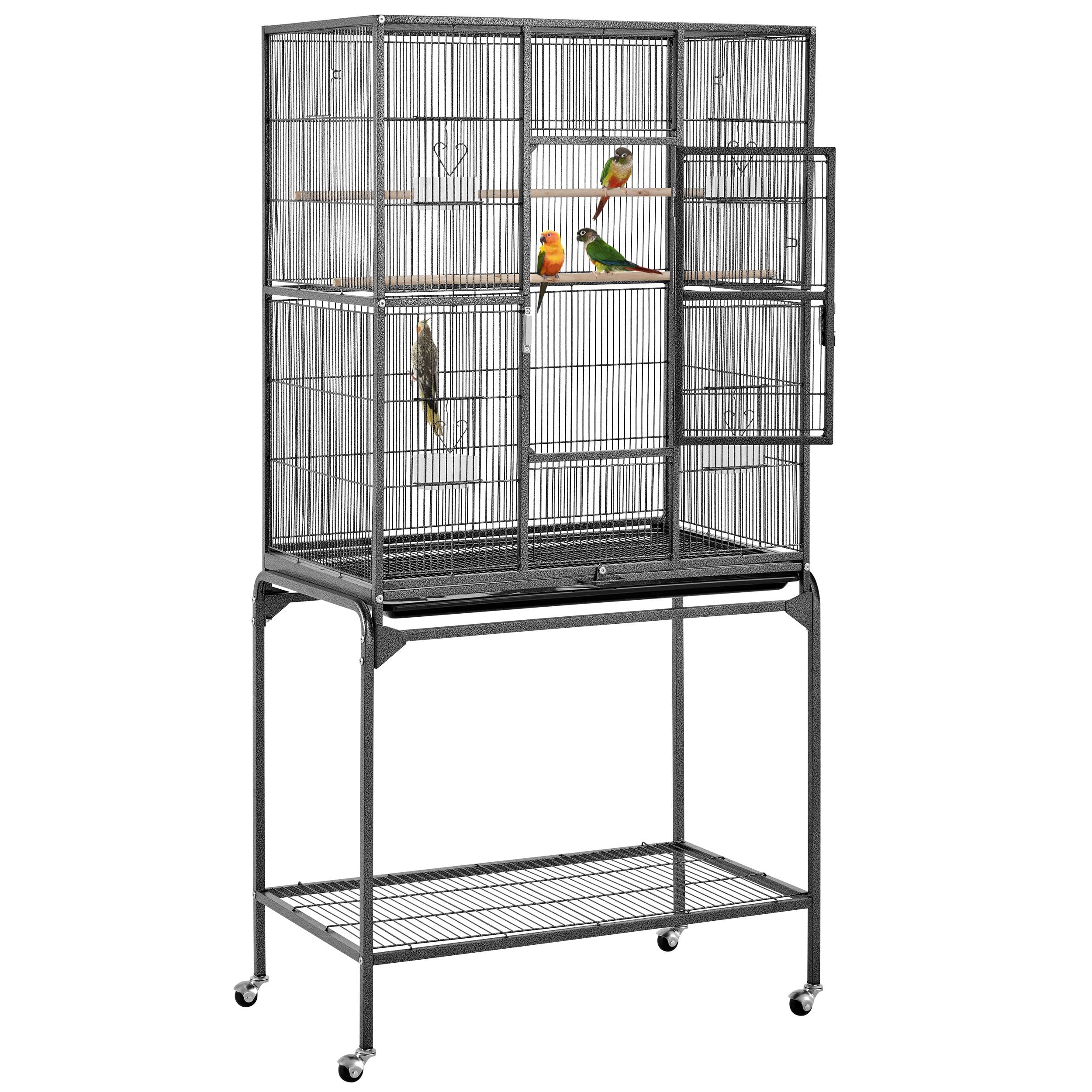
Built with hammered wrought iron and a 3/8-inch bar spacing, this cage is one of the few that comfortably houses both a cockatiel and a small Quaker or Amazon parrot. The 32-inch length offers the widest usable footprint in this roundup, giving even a medium-sized bird enough space for short flights across the cage.
The slide-out tray and bottom grate keep droppings separated, and the four 360-degree casters make relocation smooth even on carpet. Owners report that the powder coating holds up well in humid environments like screened patios, and the detachable stand allows you to place the cage on a table if you prefer a lower profile.
Assembly requires two people and about 40 minutes — the main door lock can stick on some units, and the liner drawer can be stiff to pull out. The included plastic dishes and dowel perches are functional but basic; upgrading to natural wood perches is recommended. For owners who want a cage that lasts years and fits larger species, this is the most future-proof choice.
Why we love it
- Widest usable length (32 inches) for real flight space
- Wrought iron construction resists rust and oxidization
- Detachable stand offers flexible placement options
Good to know
- Two-person assembly needed; takes about 40 minutes
- Main door lock and liner drawer can be stiff initially
3. BOINN 82-Inch Bird Flight Cage with Rolling Stand

The 82-inch total height — 37.4 inches of internal cage height plus the stand and play top — creates a striking vertical habitat. The 0.6-inch bar spacing is on the upper end of the safe range for cockatiels, but the 24-by-22-inch internal floor gives enough width for comfortable wing stretching. The play top includes a wooden perch, allowing out-of-cage bonding without buying a separate stand.
Wrought iron with non-toxic hammer paint makes the frame durable and rust-resistant. The pull-out plastic tray is easier to clean than metal trays that corrode over time. Owners of Timneh African Greys and Quaker parrots report that the cage holds up well to daily use, and the external feeder doors prevent escape during food changes.
Instructions lack hole diagrams, which can slow assembly for first-time builders. At 47.8 pounds, this is the heaviest cage in the lineup — it stays solid but is harder to move. The 0.6-inch spacing means smaller cockatiels might try to squeeze through; if your bird is particularly small, consider a model with 0.5-inch gaps.
Why we love it
- Play top with wooden perch eliminates need for separate stand
- Plastic tray resists rust and is simple to rinse clean
- Heavy wrought iron build stays stable during active play
Good to know
- Instructions missing hole diagrams; assembly is slower
- 0.6-inch bar spacing may allow very small cockatiels to squeeze through
4. VIVOHOME 54 Inch Wrought Iron Large Bird Flight Cage
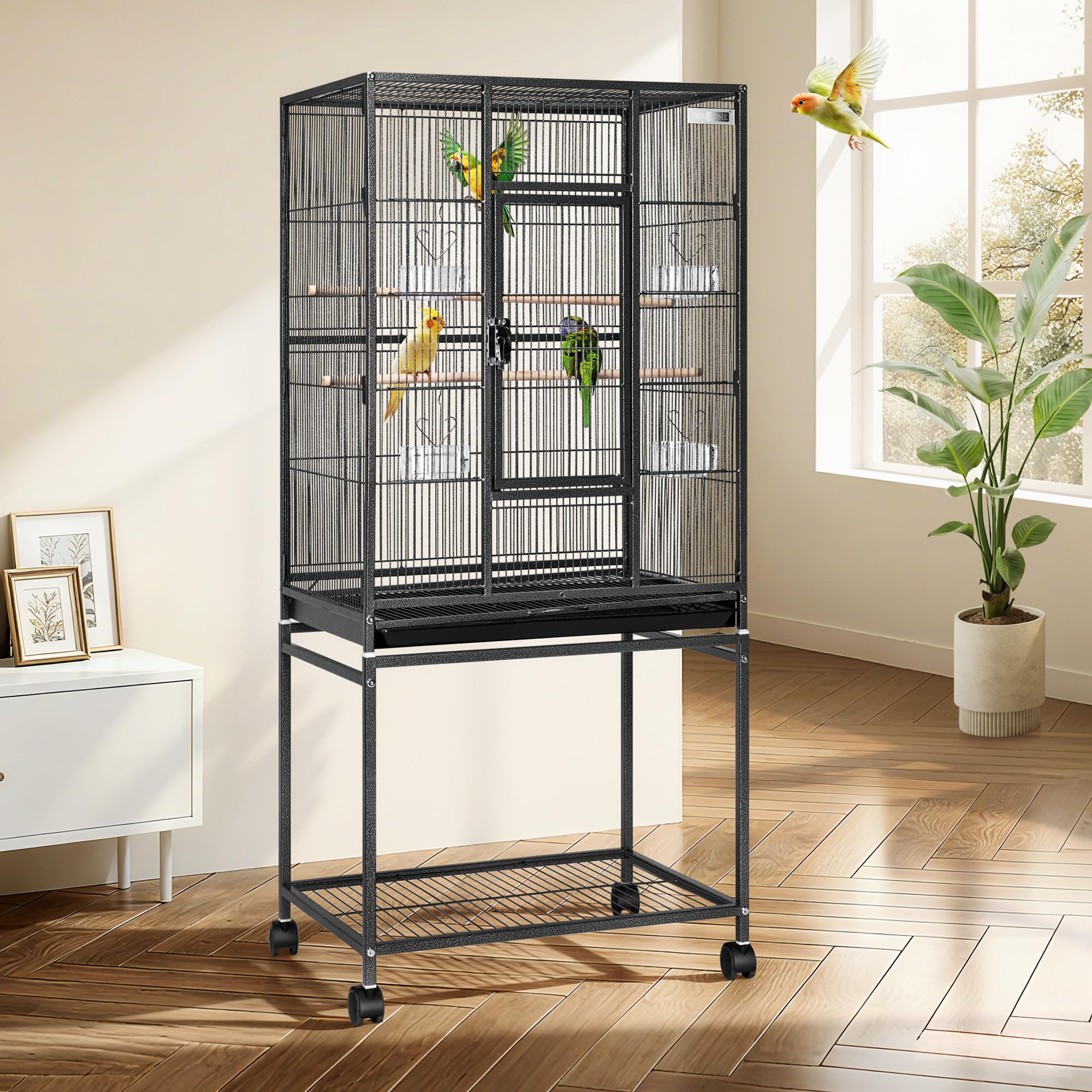
This 54-inch cage uses a 10-millimeter bar spacing — roughly 0.4 inches — which is slightly tighter than ideal for a cockatiel’s crest but perfectly safe and prevents any head-sticking risk. The 24.2-by-16.9-inch floor is adequate for a single cockatiel, and the flat top design lets you hang toys or place potted plants on top without obstructing the cage interior.
The drawer-style tray and removable shelves simplify cleaning, and the four universal casters include brakes to lock the cage in place. Owners of green cheek conures and budgies report that the cage feels sturdy for its weight class, and the latch design prevents birds from opening doors themselves — a common frustration with cheaper cages.
The bottom tray detaches more easily than some owners prefer, and the included plastic dishes are basic. The alloy steel bars are thinner than wrought iron models, so this cage is best suited for small to medium birds rather than heavy chewers. For a single cockatiel who spends most of its day outside the cage, this offers a clean, safe space without overpaying.
Why we love it
- Tight 10 mm bar spacing eliminates head-sticking risk
- Secure latch design prevents birds from opening doors
- Flat top provides flexible toy-hanging or decor space
Good to know
- Bottom tray can detach too easily when sliding
- Thinner steel bars may not withstand heavy chewing
5. YITAHOME 62 inch Metal Bird Cage with Roof Top
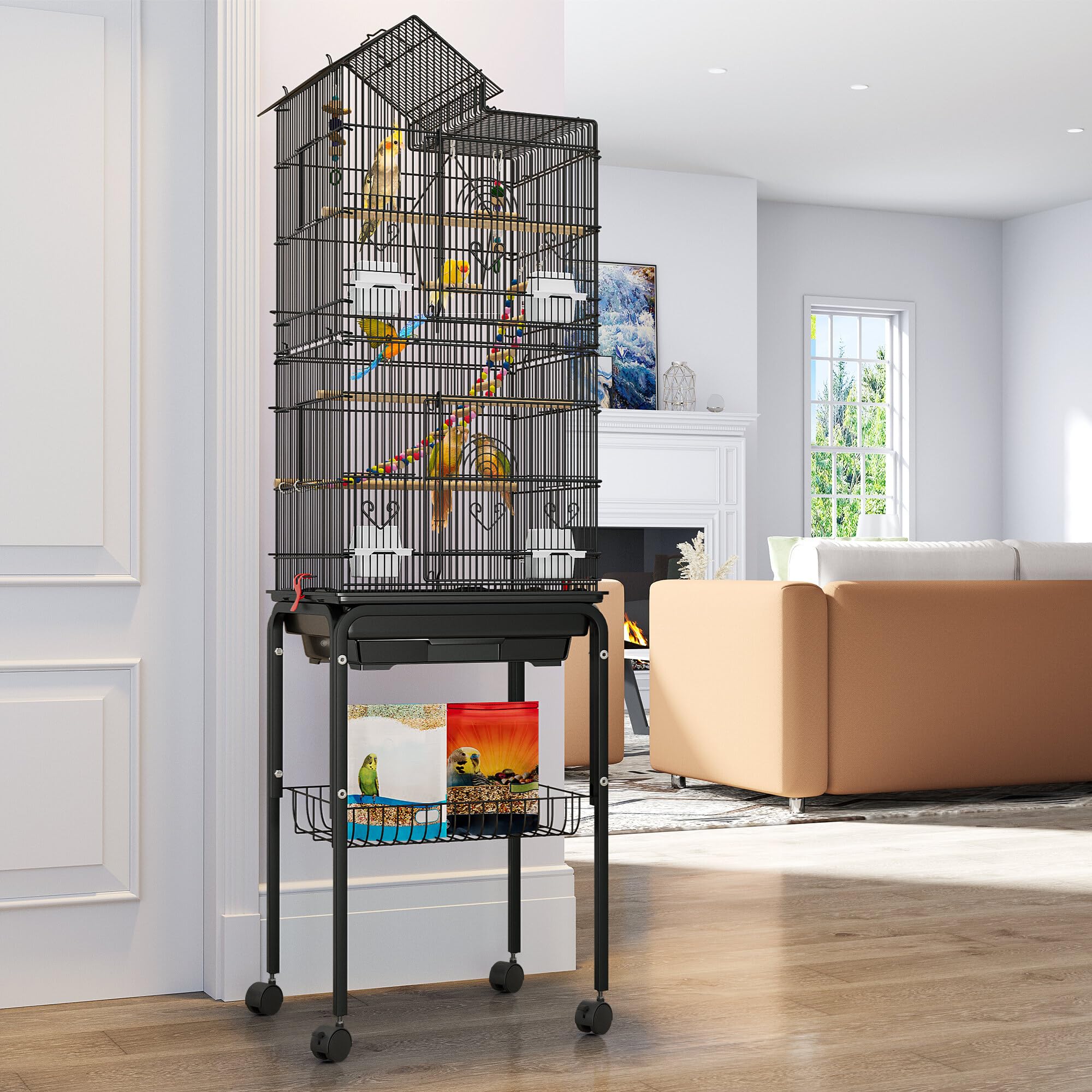
The 62-inch height and 17-by-14-inch footprint make this cage a tall, narrow option that works best as a sleeping or daytime retreat for a single cockatiel that gets daily out-of-cage flight time. The 0.4-inch bar spacing is safe but restricts the bird’s ability to stick its head through — a mixed blessing that prevents accidents but limits visual openness.
YITAHOME includes a long bridge, three pendants, and three comfortable perches with the cage, saving you an immediate trip to the pet store for enrichment items. The four small front feeder doors and two side doors provide decent access for daily tasks, and the detachable mesh grate slides out for quick cleaning. The lightweight 17-pound build makes it easy to move on the 360-degree casters.
Multiple owners note that the cage feels less sturdy than heavier wrought iron models, especially if a larger bird shakes the bars. The narrow width means a cockatiel cannot fully extend its wings horizontally — this is a trade-off for the small floor footprint. If your bird spends most of the day inside, a wider cage is a better investment.
Why we love it
- Includes bridge, pendants, and perches out of the box
- Lightweight and easy to move on casters
- Multiple feeder and side doors for convenient cleaning
Good to know
- Narrow footprint limits horizontal wing extension
- Less sturdy than heavier wrought iron alternatives
6. Yaheetech 59-Inch Rolling Dome Open Top Bird Cage

The curved dome top and arched legs give this cage a furniture-like appearance that blends into living rooms better than standard boxy cages. The 20-by-20-inch square footprint provides adequate width for a single cockatiel to stretch its wings, though it is not wide enough for sustained flight. The 0.6-inch bar spacing matches the BOINN cage — safe for most cockatiels but check your bird’s head size.
The rolling stand uses four 360-degree casters with two locks, and the slide-out tray with a grate keeps droppings contained. Side-access stainless steel dishes are deeper than the plastic bowls included with most cages, reducing seed spillage. Assembly is mostly straightforward, but securing the dome top can be fiddly — some owners use zip ties to stabilize it.
The play top perch requires bending the top doors open, and the long perch can wobble when the cage is rolled. For owners who prioritize aesthetics and plan to let the bird out daily, this cage offers a stylish primary habitat. If you need maximum flight space or plan to keep the bird confined for long periods, a rectangular flight cage is a better choice.
Why we love it
- Curved dome design looks like furniture, not a cage
- Deep stainless steel dishes reduce seed mess
- Square 20-inch floor gives decent wing-stretching room
Good to know
- Dome top can be difficult to secure; may need zip ties
- Play top perch wobbles when moving the cage
7. VEVOR 64-inch Open Top Large Parrot Bird Cage
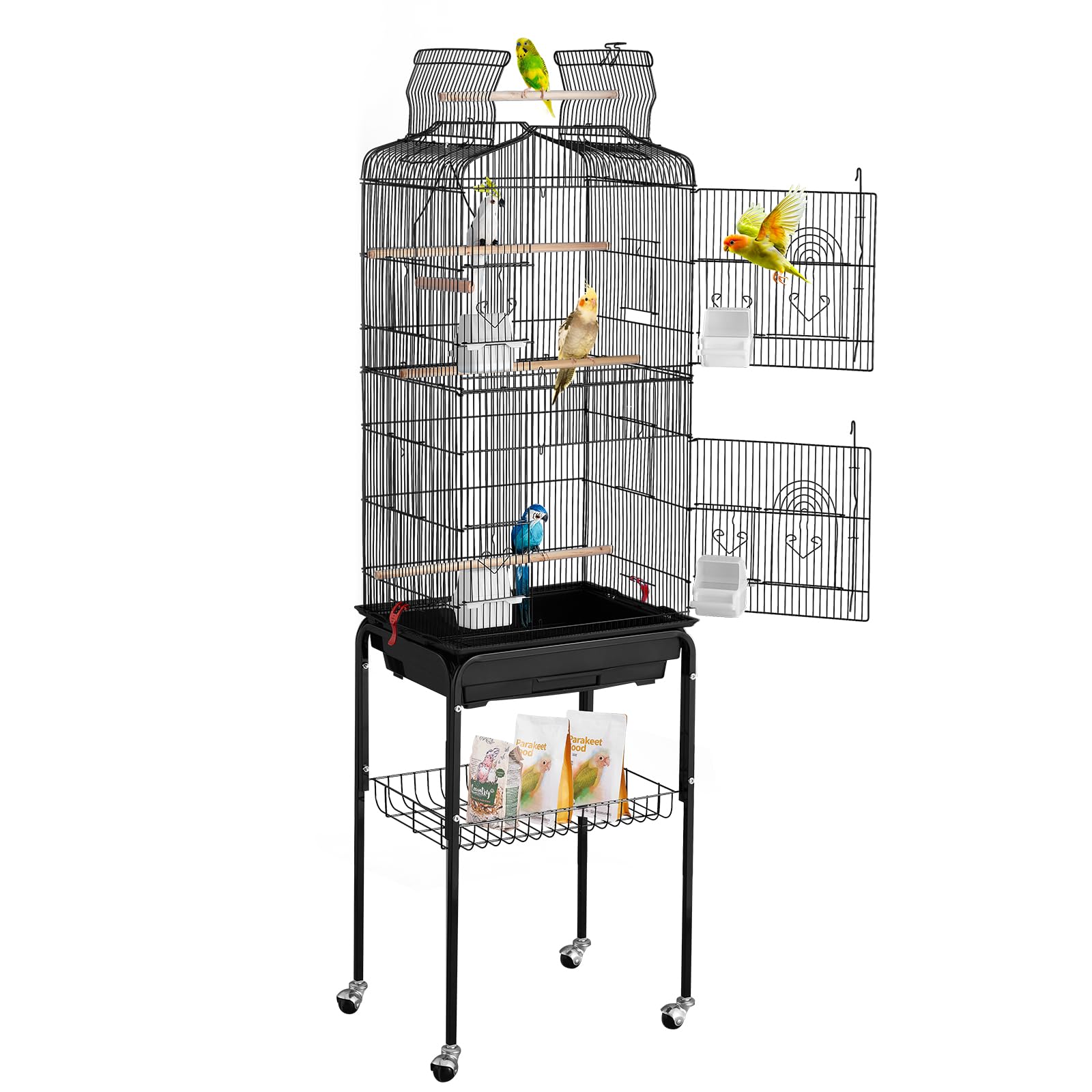
At under 11 pounds and with a 17.99-by-13.98-inch floor, this cage is notably smaller than the other options — it functions best as a travel, quarantine, or temporary cage for a cockatiel. The open top locks in place for interaction or closes to create a standard enclosure. Bar spacing is 0.4 inches, which is safe but visually confining for a bird used to wider gaps.
The detachable rolling stand includes a storage shelf for supplies, and the sliding tray makes cleaning straightforward. Four plastic feeders, four perches, and a swing come included — more accessories than most cages at this tier. Owners of budgies and finches praise it as a lightweight option for trips to the vet or outdoor supervised time.
The metal is not as thick as premium cages, and some owners report that doors can be squeezed open by determined birds — adding small carabiner clips is a wise precaution. The narrow base means a cockatiel cannot fly horizontally; this is strictly a space for sleeping, eating, and short out-of-cage sessions. For the price, it is a capable secondary cage but not a suitable permanent home for an active cockatiel.
Why we love it
- Lightweight and portable for travel or vet visits
- Includes four feeders, four perches, and a swing
- Storage shelf on stand adds practical utility
Good to know
- Floor is too narrow for horizontal wing extension
- Doors may be forced open; carabiner clips recommended
FAQ
What is the minimum cage size for a single cockatiel?
Can I use a budgie cage for a cockatiel?
How often should I replace the cage tray and perches?
Is a dome top or flat top cage better for a cockatiel?
Final Thoughts: The Verdict
For most owners, the best cockatiel cage winner is the Topeakmart Wrought Iron Flight Cage because its 31.1-inch footprint provides genuine flight room at a price that undercuts premium brands. If you need a cage that can also house a larger parrot later, grab the Yaheetech 63-Inch Wrought Iron for its 32-inch length and heavy-duty construction. And for a compact secondary setup or travel cage, nothing beats the VEVOR 64-Inch Open Top for its lightweight portability and included accessories.