
A horse pawing at its belly, refusing the grain it once devoured, or cinching up hard when you reach for the girth—these are the telltale signals of gastric distress that can sideline even the most promising athlete. The link between a sour stomach, a sour attitude, and a dull coat is undeniable in equine health, and getting the right nutritional buffer into your horse’s daily ration is the single most effective non-drug strategy to keep those symptoms at bay.
I’m Mo Mahin — the founder and writer behind Furric. I’ve spent years analyzing veterinary research on equine gastric physiology, comparing ingredient profiles across dozens of digestive supplements, and cross-referencing owner-reported outcomes with hard spec data to separate the products that actually buffer stomach pH from those that just add bulk to a feed bucket.
Whether your horse is a hard-keeping performance mount or a retired pasture puff showing the first signs of fecal water syndrome, this guide breaks down the top formulations for maintaining a healthy stomach lining. After vetting countless ratios of calcium, magnesium, bentonite clay, and soothing botanicals, these are the most effective picks for any budget in the search for the best equine ulcer supplement.
How To Choose The Best Equine Ulcer Supplement
An equine ulcer supplement is not a one-size-fits-all product. The stomach of a horse is divided into two distinct regions—the non-glandular squamous region (where most ulcers form) and the glandular region—so the active ingredients in your chosen supplement must target the right zone. Understanding the buffer system, the active minerals, and the delivery form is critical before you buy.
Calcium, Magnesium, and the Acid-Buffer Ratio
The most effective antacid buffers for the equine stomach are calcium carbonate and magnesium oxide. These minerals neutralize excess hydrochloric acid and raise the pH of the stomach contents. A supplement that lists calcium and magnesium as primary active ingredients—at a ratio near 2:1—is typically mimicking the mechanism of veterinary antacids. Products that simply list these as trace minerals on a label are usually too weak to have a meaningful effect on equine gastric ulcer syndrome (EGUS).
Bentonite Clay: A Dual-Action Ingredient
Bentonite clay, such as the Redmond clay used in several premium supplements, provides both a physical coating action and a toxin-binding effect. It swells in water to form a gel-like layer over the stomach lining, which can protect existing ulcerated tissue from further acid erosion. Bentonite also binds to mycotoxins in feed and helps normalize loose manure, making it a strong choice for horses showing both gastric and hindgut symptoms.
Form Factor: Powder vs. Pellet vs. Liquid Drench
Powders and pellets are the most common forms. Pellets are often more palatable and less dusty, making them the safer choice for horses that are sensitive to inhaling lightweight particles. Powders mix easily into wet feed but can cause a horse to cough if not properly dampened. Liquid formulas like the Finish Line U7 offer immediate absorption via the oral mucosa, but they require a syringe and can be messy. Your choice should match your horse’s eating behavior.
Botanicals, Probiotics, and the Hindgut Connection
Many modern supplements add slippery elm, marshmallow root, and aloe vera to soothe the stomach lining, alongside prebiotics (like beet pulp or inulin) to support hindgut fermentation. If your horse is also experiencing colonic ulcers, frequent loose manure, or girthiness, a supplement that addresses both the foregut and hindgut—such as the SmartEquine Gut Powder—provides more comprehensive coverage than a simple mineral buffer alone.
Quick Comparison
On smaller screens, swipe sideways to see the full table.
| Model | Category | Best For | Key Spec | Amazon |
|---|---|---|---|---|
| UltraCruz Succeed | Premium Granule | Full digestive tract support | Vitamin C & E blend; 30-day supply | Amazon |
| Redmond Daily Gold | Natural Clay Powder | Acid buffer & toxin binder | 100% bentonite clay; 25 lb bag | Amazon |
| Eagle Equine MagnaGard | Magnesium Powder | Acid buffer & calming support | Bentonite + magnesium; 5-month supply | Amazon |
| SmartEquine Gut Powder | Probiotic Blend | Foregut & hindgut health | Prebiotics + marshmallow root; 10 lb | Amazon |
| Corta-Flx U-Gard Pellets | Pellet Buffer | Gastric pH maintenance | Calcium & magnesium; 10 lb bucket | Amazon |
| Corta-Flx U-Gard Powder | Powder Buffer | Economical daily buffer | Calcium & magnesium; 8 lb bag | Amazon |
| Finish Line U7 Liquid | Liquid Drench | Picky eaters & travel stress | Herbal buffer + ascorbic acid; 1/2 gal | Amazon |
In‑Depth Reviews
1. UltraCruz Succeed Digestive Conditioning Supplement

The UltraCruz Succeed is built on a simple but powerful premise—support the entire digestive tract, not just the stomach. It is one of the few formulas on the market with clinical data demonstrating its ability to reduce both gastric squamous ulcers and colonic ulcers, making it a legitimate dual-action option for horses with systemic digestive inflammation. The granular form is low-dust and mixes cleanly into a wet mash without the cloud of fine powder.
Active ingredients include vitamin C and vitamin E, which act as antioxidants to support mucosal repair in the gut lining. Many experienced owners report that this product resolves the loose, watery manure often associated with hindgut acidosis, a symptom that mineral-only buffers cannot touch. It requires a full 30-day course to see results, but the feedback loop is consistent—horses with chronic girthiness, colic episodes, and poor manure quality stabilize on this protocol.
The main drawback is the cost per serving. This is the most expensive product in this roundup on a per-pound basis. However, for horses with confirmed hindgut involvement or a history of recurrent colonic ulcers, the granular formula’s ability to reach the cecum and colon makes the investment justifiable. It is not the best choice for a simple preventive buffer, but it is the most complete therapeutic tool.
Why we love it
- Clinically proven for both gastric and hindgut ulcers
- Low-dust granule avoids respiratory irritation
- Vet-recommended for chronic loose manure
Good to know
- Premium price per serving compared to mineral buffers
- Requires consistent daily dosing for 30 days
- Unflavored; some horses need taste masking
2. Redmond Daily Gold Stress Relief
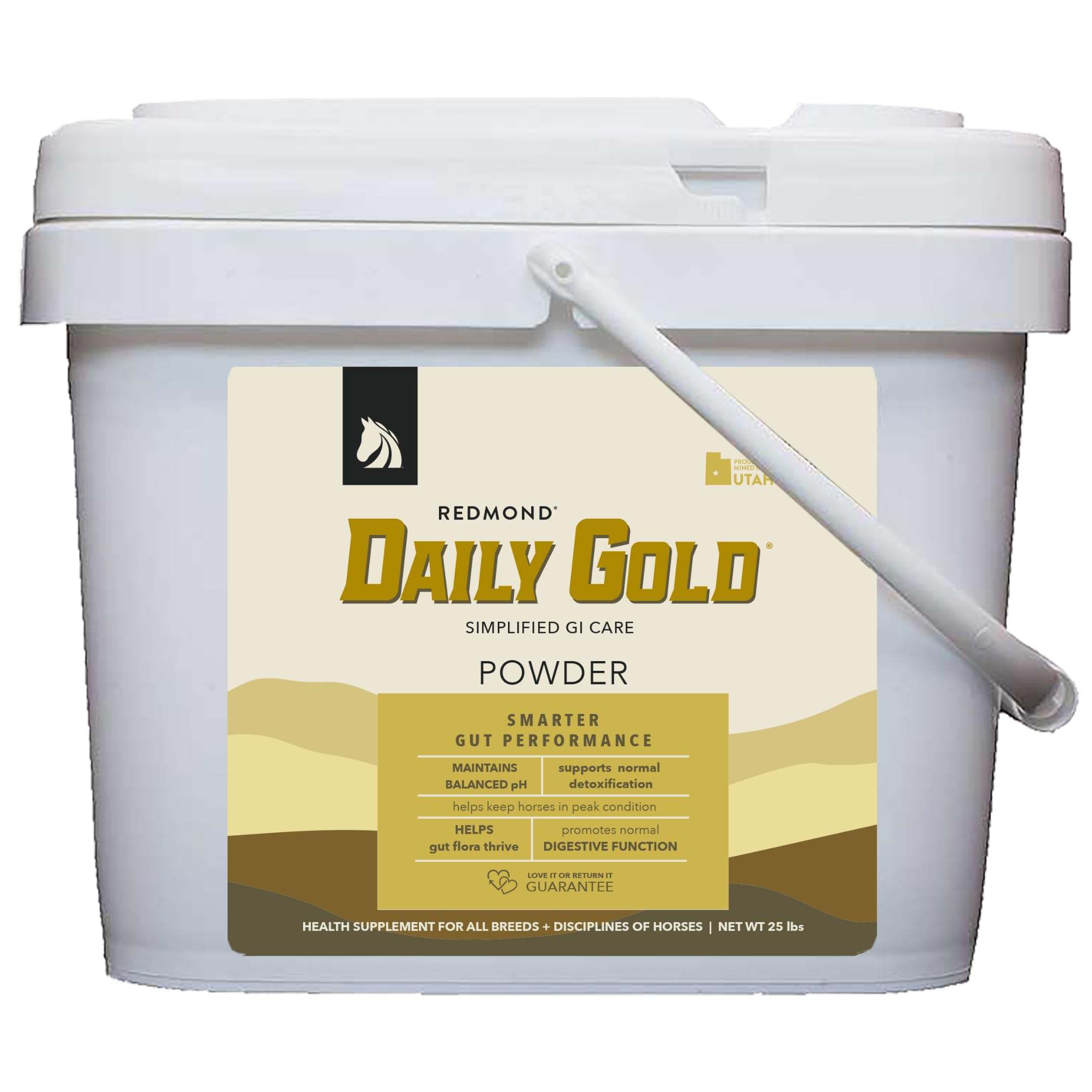
Redmond Daily Gold is a single-ingredient bentonite clay sourced from an ancient seabed in Utah. Unlike most mineral buffers that rely on calcium and magnesium, this product uses the physical coating and chemical-binding properties of pure smectite clay. It buffers stomach acid by creating a colloidal gel layer over the gastric mucosa while simultaneously binding to endotoxins and mycotoxins in the feed that can trigger hindgut irritation.
Owner reports repeatedly highlight its ability to resolve chronic diarrhea and fecal water syndrome. One review describes a 31-year-old horse on the brink of euthanasia for untreatable diarrhea that returned to normal weight and social behavior within three weeks on Daily Gold. The clay is also a source of over 60 trace minerals, which contributes to improved hoof quality and increased water intake—a side benefit for horses that are poor drinkers.
The powder is fine and can be dusty if not handled carefully. It needs to be mixed into a wet mash or soaked feed to prevent inhalation. Some horses initially refuse it due to the earthy smell of the clay. The bag size is generous, making the cost per day very low, but the physical volume of the bag is heavy and may be awkward to store.
Why we love it
- 100% natural bentonite clay with toxin-binding ability
- Resolves chronic diarrhea and fecal water syndrome
- Extremely low cost per day at recommended serving
Good to know
- Fine powder can be dusty; must be dampened
- Earthy smell may require taste masking
- No added calcium or magnesium for acid buffering
3. Eagle Equine MagnaGard Gastric Support

MagnaGard combines bentonite clay with a significant magnesium content, creating a dual-action gastric supplement. The clay coats the stomach lining, while the magnesium helps calm the nervous system—a direct benefit for the high-strung, anxious horse that is prone to stress-induced ulcers. The manufacturer claims a 5-month supply from a single 20-pound bucket, which gives a strong cost-per-day ratio compared to other premium blends.
Feedback from barrel racers and eventers is notable. Several owners report that their horses became more focused and relaxed during competition after starting MagnaGard, suggesting that the magnesium is bioavailable enough to have a mild calming effect without sedation. The bentonite also provides a natural electrolyte source, which can help performance horses maintain mineral balance during intense work schedules.
The texture is powdery but not excessively dusty if mixed with water as recommended. A small number of picky eaters may refuse it dry, but most owners report success by creating a slurry with apple sauce or aloe vera juice. It is not strong enough to serve as a standalone treatment for severe squamous ulcers—should be used as a maintenance buffer after an initial course of omeprazole.
Why we love it
- Bentonite + magnesium provides coating and calming
- 5-month supply from a single bucket
- Electrolyte content supports performance horses
Good to know
- Not potent enough for monotherapy in active ulcers
- Some horses refuse the dry powder
- Requires thorough mixing to prevent waste
4. SmartEquine Gut Powder

SmartEquine Gut Powder is the most compositionally complex supplement in this lineup. Instead of relying solely on mineral buffers, it employs a proprietary blend of Equi GI prebiotics and probiotics, plus soothing botanicals like marshmallow root, slippery elm bark, and aloe vera gel extract. This is a full-spectrum approach that targets both the foregut mucosa and the hindgut microbial population.
Owner reports describe dramatic cosmetic changes in addition to digestive improvement—one review notes a horse with coarse, wiry regrowth on its face and barrel that grew back dark and healthy within a month of starting this product. The prebiotic fibers help stabilize the pH in the cecum and colon, which can reduce the incidence of starch-induced hindgut acidosis in horses on high-grain diets. The botanicals provide a mucilaginous coating that is especially useful for horses that girth up hard or side-chew.
The ultra-fine powder is the biggest drawback. It is so fine that horses can cough, snort, and refuse feed if it is not thoroughly wetted. Several owners warn that it must be sprayed down or mixed into a slurry, and the packaging does not include clear dosing instructions for small animals. The 10-pound bucket represents good value per dose, but the initial acceptance phase can test your patience.
Why we love it
- Prebiotics + herbs for full digestive tract support
- Rapid improvement in coat and overall condition
- Excellent for horses with hindgut symptoms
Good to know
- Ultra-fine powder must be slurried to avoid coughing
- No dosing info printed on the package
- Strong marshmallow scent may be off-putting initially
5. Corta-Flx U-Gard Pellets

The Corta-Flx U-Gard Pellets represent the classic calcium-and-magnesium buffer approach in a horse-friendly pellet format. The primary active ingredients are calcium carbonate and magnesium oxide, which work together to neutralize stomach acid and maintain a stable pH in the squamous region of the stomach. This is the same mechanism used by many veterinary antacid pastes, but delivered as a daily feed-top supplement rather than a therapeutic bolus.
Horses consistently love the taste of these pellets. Multiple reviews mention that even the pickiest eaters clean their tubs without hesitation, which eliminates one of the biggest compliance headaches with powder supplements. The 10-pound bucket provides a long supply at a per-day cost that is significantly lower than the granule or liquid alternatives, making it a pragmatic choice for multi-horse barns or owners on a tight budget.
Clinical evidence supports its use—a 73-day field study on active racehorses showed a decrease in gastric ulcer severity in the treatment group. However, it is primarily a preventive buffer, not a cure. Horses with existing grade 3 or 4 squamous ulcers still require a veterinary-grade omeprazole protocol, with U-Gard used afterward to maintain healing. The pellet size is small enough to prevent sorting but large enough to avoid the dust issue of powders.
Why we love it
- Palatable pellet form; horses eat it easily
- Calcium/magnesium buffer with clinical field study
- Excellent cost per day for multi-horse barns
Good to know
- Preventive only; not for active severe ulcers
- No herb or probiotic content for hindgut support
- Some horses may need 2-3 scoops per day
6. Corta-Flx U-Gard Powder

The powdered version of Corta-Flx U-Gard offers the same calcium and magnesium antacid formula as the pellet form, but in a lighter, more compact bag that is easier to ship and store. The active ingredient ratio is identical—calcium carbonate and magnesium oxide—and the same 73-day clinical study applies, showing reduced ulcer severity in racehorses. For barns that already wet their feed, this powder mixes in seamlessly.
Owner feedback is overwhelmingly positive for ulcer-prone horses. One 27-year-old Thoroughbred with chronic pawing and distress signs was successfully transitioned from omeprazole and bute to twice-daily U-Gard powder plus devil’s claw, with complete resolution of ulcer symptoms after several months. Another owner reports dramatic improvement in quarter mare’s fecal water syndrome after just two weeks of twice-daily dosing, suggesting the buffer also benefits hindgut function indirectly.
The powder creates noticeable dust when scooped, which can be a respiratory irritant for both horse and handler. Several users recommend adding a splash of water to the scoop before mixing into feed to control the airborne particles. The bag is not resealable, so a separate storage container is advisable. Despite the dust, the price point is the lowest per-pound in the lineup, making it the most budget-friendly entry to a gastric health protocol.
Why we love it
- Lowest cost per pound of any mineral buffer
- Clinically proven in a 73-day racehorse study
- Works well when mixed into wet feed
Good to know
- Powder creates significant dust during scooping
- Bag lacks a resealable closure
- Not as palatable as the pellet form for some horses
7. Finish Line U7 Gastric Aid Liquid

Finish Line U7 is a carrot-flavored liquid drench designed for quick absorption. It uses ascorbic acid (vitamin C) as its primary gastric support agent, along with a proprietary herbal blend that buffers stomach acid. The liquid form bypasses the need for feed mixing entirely, making it the best choice for horses that are off-feed due to acute gastric discomfort or for use during travel when the horse may not have access to its usual feed tub.
The dosing protocol is straightforward—2 ounces twice daily for the first 30 days, then a maintenance dose of 1 ounce twice daily. The carrot flavor makes it highly palatable; even horses that refuse to eat will often accept this from a syringe. Owners report significant behavioral improvements in irritable, belly-sensitive mares within a few weeks of use, and it is particularly effective for travel stress and stall confinement, two major risk factors for EGUS.
Liquids spoil once opened if not stored in a cool location, and the bottle has a relatively short shelf life compared to dry powders. The cost per dose is higher than the dry supplements on a daily basis. It is also not a true antacid buffer in the calcium-magnesium sense—it works more as a soothing coat than a pH neutralizer, so it is best used in combination with a solid food-based buffer for long-term management.
Why we love it
- Liquid drench works for off-feed and traveling horses
- Carrot flavor is highly palatable
- Helps with stress-induced appetite loss
Good to know
- Higher cost per day than dry supplements
- Must be refrigerated after opening
- Not a strong antacid; use with a mineral buffer
FAQ
Can a supplement cure equine squamous ulcers without omeprazole?
What is the difference between a gastric buffer and a hindgut supplement?
How quickly should I see behavioral improvement after starting a supplement?
Is it safe to feed an equine ulcer supplement with other medications?
Do ulcer supplements require a withdrawal period for competition horses?
Final Thoughts: The Verdict
For most riders and barn owners, the best equine ulcer supplement is the Corta-Flx U-Gard Pellets because it combines a clinically-tested calcium-magnesium buffer with a pellet form that horses actually want to eat, all at a sustainable daily cost. If your horse needs both foregut and hindgut support, grab the SmartEquine Gut Powder for its full-spectrum probiotic and herbal blend. And for the picky eater or the traveler that drops off feed the moment the trailer door closes, nothing beats the syringe-friendly Finish Line U7 Liquid.