
The crinkle of a fresh pouch or the pop of a can lid — for most cat owners, that sound is followed by hope. Then comes the sniff, the slow walk away, the paw flick that buries an entire bowl under imaginary dirt. Feeding a finicky feline who turns up their nose at chicken flavor is a daily negotiation that drains patience and fills the trash with uneaten food. The right formula changes that script, turning meal prep from a chore into a moment your cat eagerly anticipates.
I’m Mo Mahin — the founder and writer behind Furric. I spend my days cross-referencing ingredient panels, analyzing protein-to-fat ratios, and reading through hundreds of owner experiences to find the formulations that actually pass the feline sniff test.
After comparing recipes and real-world feedback, we’ve identified the formulas that consistently win over selective cats. This guide breaks down the top contenders for the best chicken flavor cat food for picky eaters, focusing on ingredient quality, texture variety, and the specific tactics that turn a food refuser into a clean-bowl finisher.
How To Choose The Best Chicken Flavor Cat Food For Picky Eaters
Selective eating in cats is rarely about stubbornness — it’s often a reaction to texture, aroma, or ingredient quality. The wrong formulation, even if labeled “chicken,” can trigger outright refusal. Here’s what to look for when narrowing your choices.
Texture preference is the real decider
Many picky cats reject food based on mouthfeel before they even taste it. Flaked chicken in broth appeals to cats who like to lap up liquid, while a smooth pate works better for cats who prefer to lick rather than chew. Raw-coated kibble offers a crunchy texture that mimics the sensation of eating small prey. Observe how your cat approaches wet versus dry food to determine which texture category to prioritize.
Protein source and fat content drive the aroma
Chicken as a named ingredient — not “chicken meal” or “poultry by-product” — delivers a stronger, more recognizable scent that triggers feeding response. Formulas with at least 40% crude protein on a dry matter basis tend to be more appealing. A moderate fat content, usually between 18% and 22%, adds richness that entices picky eaters without causing digestive upset.
Toppers and mixers reduce waste risk
Instead of committing to a full bag or case of something your cat might reject, a freeze-dried raw topper lets you test palatability with a small investment. Sprinkling a high-protein dust over an existing food allows you to change the flavor profile without switching diets entirely. This approach works especially well for cats who eat around or ignore kibble but respond to aroma-driven coatings.
Quick Comparison
On smaller screens, swipe sideways to see the full table.
| Model | Category | Best For | Key Spec | Amazon |
|---|---|---|---|---|
| Tiki Cat Born Carnivore Indoor Health | Premium Dry | Indoor cats who need weight management | Chicken as #1 ingredient, pumpkin fiber | Amazon |
| Stella & Chewy’s Raw Coated Kibble | Premium Dry | Transitioning from wet to dry food | 65-70% animal protein, freeze-dried coating | Amazon |
| Fussie Cat Premium Grain Free Pate Variety | Wet Pate | Multi-cat households with varied preferences | 3 flavor variety pack, 2.82 oz cans | Amazon |
| Reveal Chicken Breast in Broth | Limited Ingredient Wet | Sensitive stomachs and ingredient-avoidance diets | Single protein: chicken, 2-3 ingredients total | Amazon |
| Stella & Chewy’s Freeze-Dried Raw Topper | Meal Topper | Low-risk palatability test for ultra-picky cats | 98% animal ingredients, fine powder format | Amazon |
In‑Depth Reviews
1. Tiki Cat Born Carnivore Indoor Health, Chicken & Turkey Meal

Tiki Cat’s Born Carnivore line strikes a rare balance between high-quality ingredients and a price point that feels reasonable for a premium formula. The first ingredient is real chicken, and the recipe avoids corn, wheat, soy, and potatoes entirely. The crunchy kibble texture appeals to cats who enjoy a satisfying chew, and the inclusion of pumpkin provides a gentle fiber source that supports digestive regularity without disrupting appetite.
Owner feedback consistently highlights the aroma — it smells noticeably more like real poultry than mass-market kibble, which helps overcome initial food refusal. Cats that previously ignored dry food have been reported to come running at the sound of the bag opening. The formula is designed specifically for less active indoor cats, with a moderate protein and fat profile that supports healthy weight maintenance rather than promoting rapid gain.
One detail that separates this from competitors: the non-GMO ingredient commitment extends to every component, not just the protein source. Several long-term users report improved coat condition and reduced shedding after switching, attributing the change to the omega-6 fatty acids from chicken fat and salmon oil. For owners dealing with a picky indoor cat who also needs portion control, this is the most complete single-bag solution on the list.
Why we love it
- Real chicken as the first ingredient drives strong palatability
- Pumpkin fiber supports digestion without filler grains
- Non-GMO recipe with no corn, wheat, or soy
Good to know
- Primarily designed for indoor cats — may not suit highly active outdoor cats
- Crunchy texture may not appeal to cats with dental issues
2. Stella & Chewy’s Raw Coated Cat Food, Cage-Free Chicken

This bag solves a specific problem: cats who eat around their kibble. Stella & Chewy’s applies a freeze-dried raw coating to each small pellet, which releases a concentrated meat aroma on contact with saliva. At 65-70% animal protein from cage-free chicken, the macronutrient profile mirrors what a cat would get from a raw diet, minus the handling and storage inconvenience. The small kibble diameter makes it accessible for kittens and senior cats with sensitive gums.
The texture bridging strategy here is clever — it gives wet-food loyalists a dry option that still delivers a strong umami kick. Many owners report that cats who previously refused kibble entirely began eating this within two days. The inclusion of probiotics and natural fiber from pumpkin supports digestive transition, which is important when switching from a different protein source or food format.
A segment of picky eaters still walked away from this formula, suggesting the coating appeal is not universal. However, when combined with a warm water soak to release more aroma, the acceptance rate improves significantly. For owners looking to move their cat away from expensive wet food while maintaining a high-protein diet, this is the most effective bridge product available.
Why we love it
- Freeze-dried raw coating provides intense flavor without requiring full raw handling
- Small kibble size works well for seniors and kittens
- Probiotic support minimizes digestive upset during transition
Good to know
- Some cats still refuse it — coating style is not a guarantee
- Higher price per pound compared to standard kibble
3. Fussie Cat Premium Grain Free Canned Cat Food 3 Flavor Variety

Fussie Cat built its reputation on converting cats that other brands failed. The three-flavor pack — tuna with chicken, tuna with salmon, and ocean fish — gives you four cans of each to identify which protein combination your cat prefers without committing to a full case of one flavor. The pate texture is smooth and dense, which appeals to cats who lap rather than chew, and the grain-free formulation keeps the carbohydrate load low.
Multiple owners report that this is the only wet food their multi-cat household agrees on. The ingredient list is short and readable, with no carrageenan or artificial thickeners. The 2.82-ounce can size is ideal for single meals, reducing waste from half-eaten larger cans that dry out in the refrigerator. Warming the pate for ten seconds before serving significantly boosts acceptance in cats that initially show hesitation.
The main concern is occasional batch inconsistency where darker, tougher cuts of tuna appear in the mix. While most cats still eat around these pieces, owners feeding cats with texture sensitivity may find themselves picking out the hard chunks. Despite this variability, the conversion rate among multi-cat households makes this the safest bet for owners who cannot predict what their cat will accept tomorrow.
Why we love it
- Three-flavor variety pack allows low-commitment preference testing
- Smooth pate texture works well for picky lappers
- Small 2.82 oz cans minimize leftover waste
Good to know
- Occasional hard tuna chunks may need manual removal
- Some cats may prefer only specific flavors in the variety pack
4. Reveal Natural Wet Canned Cat Food, Chicken Breast in Broth
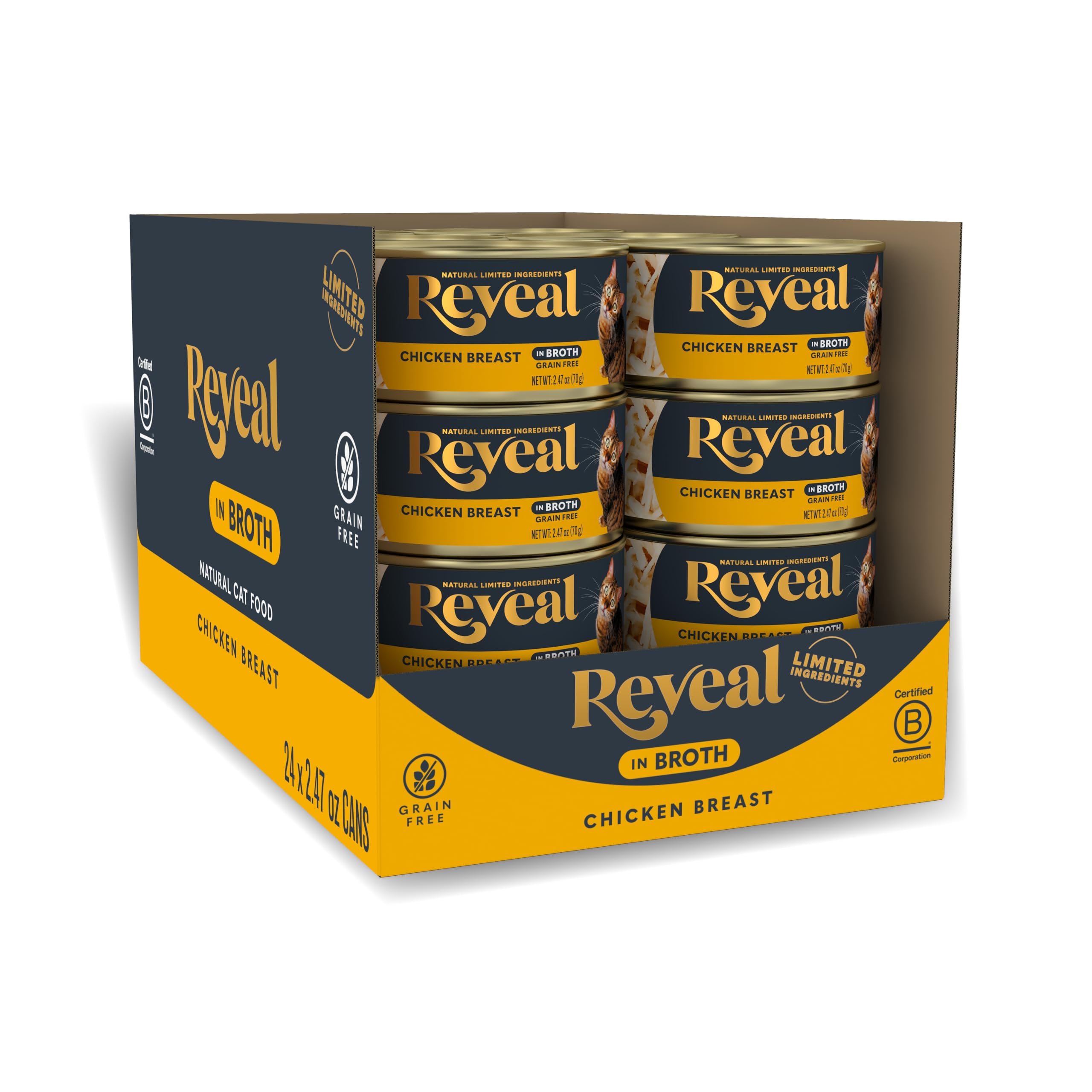
Reveal strips the ingredient list down to its essentials — chicken breast, water, and salt. No gums, no starches, no vitamin premixes. This extreme simplicity makes it a go-to for cats with food sensitivities or owners who want to avoid the endless additive lists common in budget wet foods. The flaked texture in broth is different from pate: it allows cats to lap up the hydrating liquid first, then eat the meat pieces at their own pace.
Feedback from owners of ultra-picky cats shows a 50-60% acceptance rate on first offering. Cats that prefer pate often walk away, while cats that enjoy shreds or flaked meat tend to finish the can. The broth component provides an additional hydration source, which is valuable for cats prone to urinary issues. Each 2.47-ounce can contains roughly 30 calories, making it easy to use as a complete meal for small cats or a supplement for larger ones.
The trade-off is calorie density — this is a low-protein formula by the numbers on the guaranteed analysis, which means active cats may need more than one can per meal. For owners specifically needing a simple chicken-and-broth option that eliminates the risk of hidden triggers, this is the cleanest choice on the market. It is not a magic bullet for all picky eaters, but for the subset that prefers whole meat over processed paste, it solves the refusal problem immediately.
Why we love it
- Extremely short ingredient list ideal for elimination diets
- Flakes-in-broth format encourages hydration in reluctant drinkers
- No artificial flavors, colors, or preservatives
Good to know
- Low protein content may not satisfy highly active cats as a sole diet
- Only about half of picky cats accept it — pate-preferrers may reject
5. Stella & Chewy’s Freeze-Dried Raw Cat Food Topper (Magical Dinner Dust)
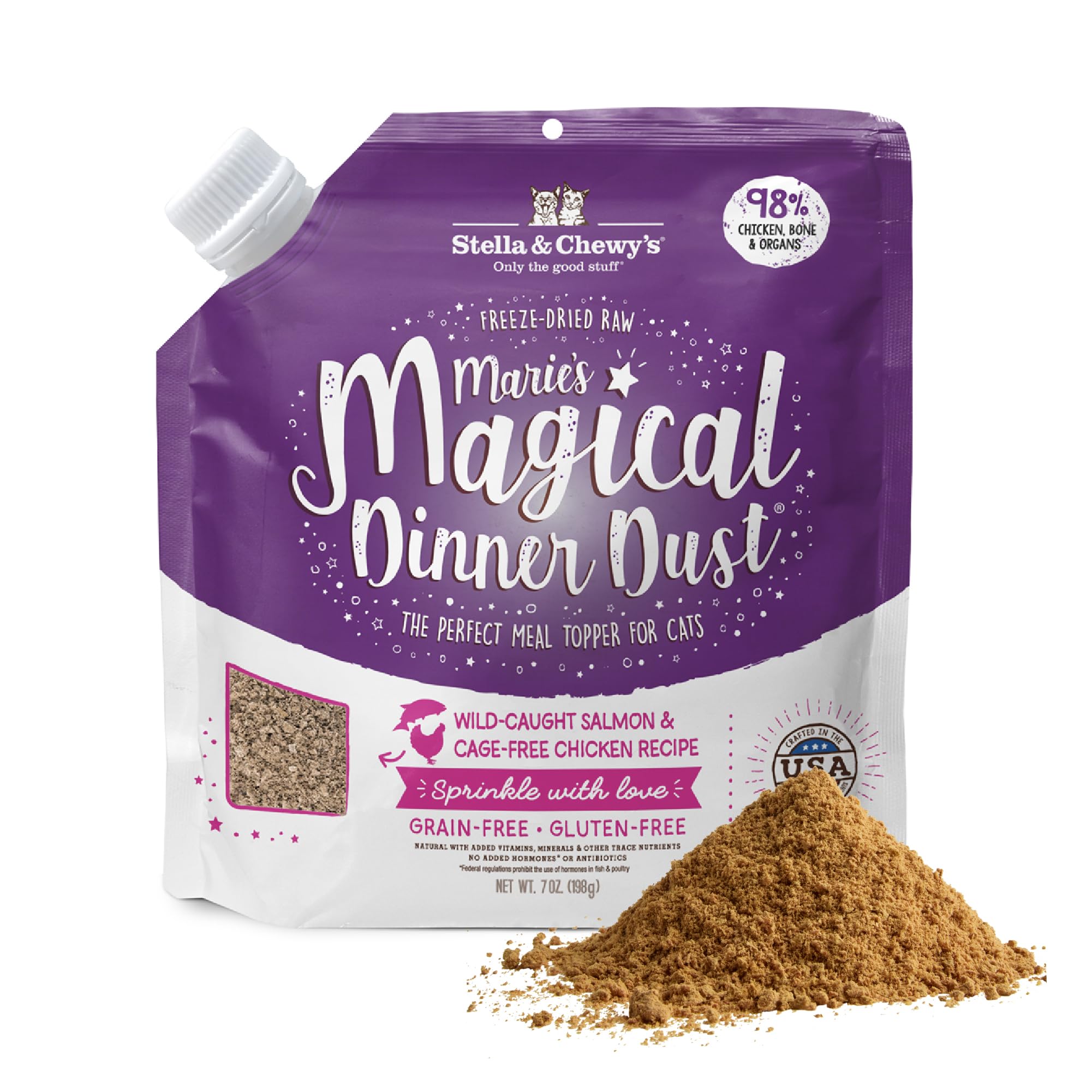
The “Magical Dinner Dust” is not a complete meal — it is a palatability hack for owners who have tried everything else. At 98% wild-caught salmon and cage-free chicken, the fine powder format coats existing food without changing its texture or moisture content. A half-tablespoon over a quarter cup of food is enough to alter the aroma profile of an entire bowl, tricking the cat into thinking they are getting something entirely new.
The reasoning behind this approach is practical: cats often reject food not because of the base ingredient, but because the smell becomes predictable. Introducing a concentrated raw dust provides a novel scent trigger that re-engages the feeding response without requiring a full diet change. Multiple owners report that cats who had been skipping meals for weeks started eating normally within two days of adding the topper. The probiotics also support digestive health during periods of reduced food intake.
The risk is real: a small percentage of cats detect the powder and refuse the entire bowl — and at this price point, a failed attempt stings. Owners with single cats may prefer to test with a smaller format before committing to the full 7-ounce bag. For those willing to gamble, this topper converts more refusers than any wet food on the list because it works with whatever food the cat already tolerates.
Why we love it
- Low-commitment way to test chicken flavor acceptance without changing base diet
- Powder format does not alter food texture or moisture level
- Probiotic addition supports gut health during appetite recovery
Good to know
- Some cats detect the powder and reject the entire bowl
- Expensive per-ounce considering it is only a supplement
FAQ
Why does my cat eat the broth but leave the chicken pieces?
How long should I try a new chicken flavor food before giving up on it?
Can a chicken flavor formula cause allergies in my cat?
Are grain-free chicken recipes better for picky eaters than those with grains?
Final Thoughts: The Verdict
For most owners dealing with a picky cat, the chicken flavor cat food for picky eaters winner is the Tiki Cat Born Carnivore Indoor Health because it delivers reliable palatability through real chicken as the first ingredient, supports indoor weight management with pumpkin fiber, and avoids the fillers that cause selective cats to walk away. If your cat prefers a texture-bridging option that mimics raw feeding without the hassle, grab the Stella & Chewy’s Raw Coated Kibble. And for the household where every cat has different preferences, the Fussie Cat Premium Grain Free Variety Pack gives you the best chance of finding at least one flavor that satisfies every feline at your table.