
A horse that chews, fights, or braces against a metal bit isn’t being stubborn — he’s trying to tell you something is wrong. It rewrites the language between you and the animal. Direct pressure becomes a suggestion, and a suggestion becomes a conversation.
I’m Mo Mahin — the founder and writer behind Furric. Over years of researching equestrian equipment, I’ve analyzed owner feedback on hundreds of hackamores, side pulls, and cross-under bridles, cross-referencing material quality, fit feedback, and the real-world durability data that horse owners rely on before a ride.
This guide separates the well-constructed from the dangerously flimsy so you can find a bitless bridle built for reliability, not regret.
How To Choose The Best Bitless Bridle
Choosing a bitless bridle comes down to understanding three factors: how the bridle applies pressure, what it’s made of, and how the noseband fits your horse’s specific head shape. A side pull that works beautifully on an Arabian may rub the nose of a thick-headed Quarter Horse raw.
Mechanical vs. Direct-Pull Designs
Mechanical hackamores (like the Shires Blenheim) use long shanks to amplify poll and nose pressure — great for horses that lean on the bit but risky in heavy hands. Direct-pull designs (side pulls, cross-unders) distribute pressure across the nose, poll, or cheeks without the lever-action amplification. Cross-under bridles, like the HORZE model, loop behind the jaw for even pressure distribution without leverage.
Noseband Material and Diameter
The rope or leather band that wraps over the nose carries the entire braking signal. Thin rope (7/16″) concentrates pressure into a smaller area, offering sharper cues — excellent for breaking or starting colts. Wider leather or padded designs (3/4″ or larger) spread pressure over a bigger surface, ideal for horses with sensitive noses or those that need gentler communication. Hard, dry rawhide inside a rope noseband is a common complaint in reviews — check that the core is soft enough not to scrape.
Adjustability and Buckle Position
Multiple review comments report buckle placement uncomfortably close to a horse’s eye on several models. Before buying, verify the cheek adjustment points: a bridle that can’t shorten or lengthen enough to clear the eye socket is a safety concern. Look for at least three holes on each side of the headstall and look for separate, removable cheek straps (like the Weaver models use) for maximum positioning flexibility.
Quick Comparison
On smaller screens, swipe sideways to see the full table.
| Model | Category | Best For | Key Spec | Amazon |
|---|---|---|---|---|
| Justin Dunn Bitless Bridle | Premium | Refined communication, dressage & trail | 3/4″ rope noseband, 14.5″ x 10″ | Amazon |
| HORZE Cross-Under Bitless Bridle | Premium | Horses with sensitive mouths, even pressure | Genuine leather, raised noseband | Amazon |
| Shires Blenheim English Hackamore | Premium | English riding, leverage control | 170mm cheek height, stainless steel | Amazon |
| Weaver Deluxe Latigo Side Pull | Mid-Range | Trail riding, direct-pull steering | Rope noseband, 1.15 lb weight | Amazon |
| Mustang Breaking Hackamore | Mid-Range | Starting colts, young horses | 7/16″ rope with rawhide, 1.48 lb | Amazon |
| Weaver Latigo Leather Headstall | Entry-Level | Budget-friendly leather, daily use | 5/8″ latigo leather, 4.8 oz | Amazon |
| Westen Rope Nose Hackamore | Entry-Level | Casual riding, gentle leverage | 6″ rope, carbon steel hardware | Amazon |
In‑Depth Reviews
1. Justin Dunn Bitless Bridle
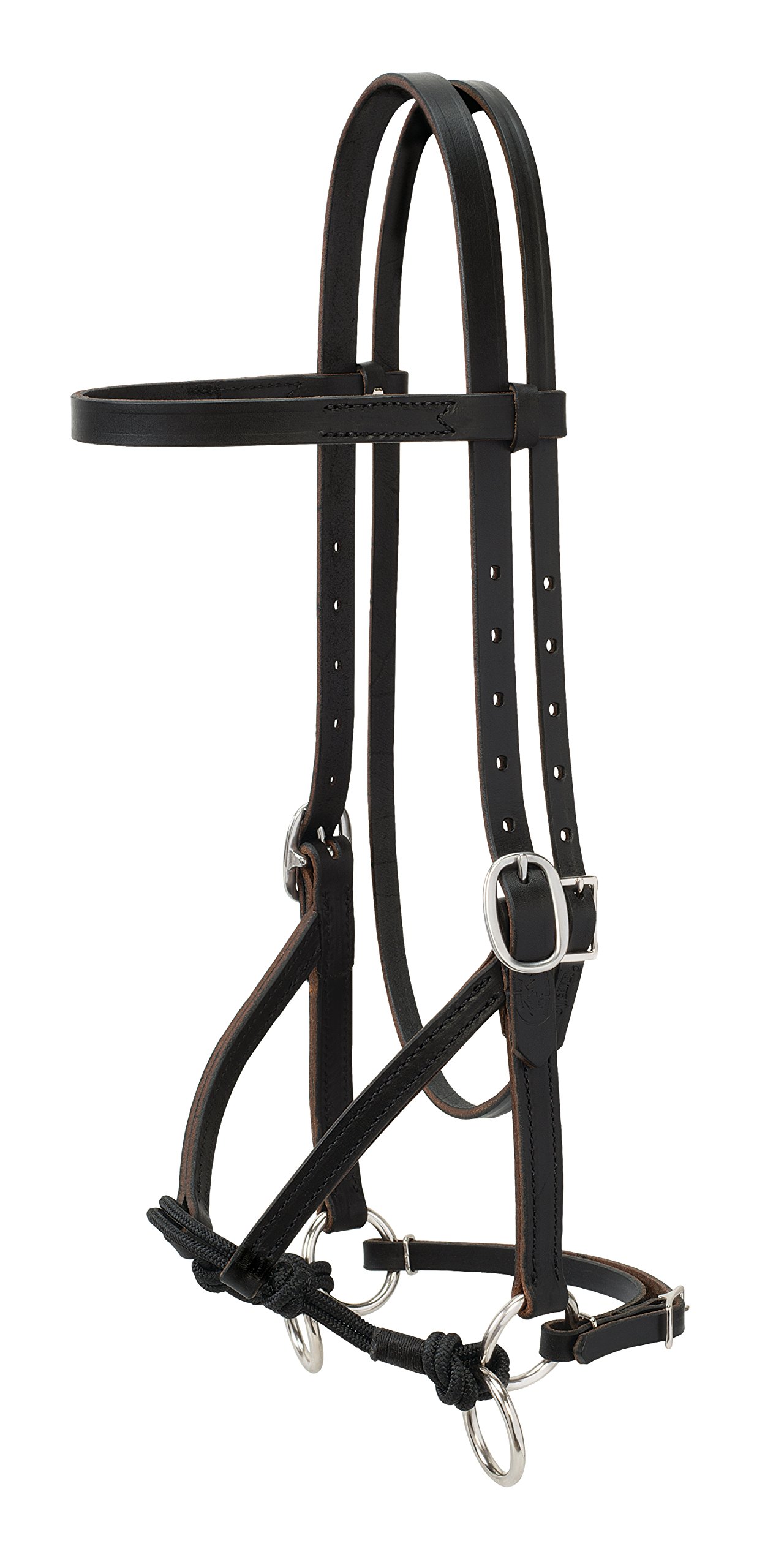
The Justin Dunn bridle is built around a 3/4″ rope noseband with strategically placed knots that encourage the horse to yield to pressure and seek release rather than brace against it. Owner feedback consistently praises the soft rope material for not rubbing, even on long trail rides — a stark contrast to rawhide-core options that cause hair loss on sensitive noses.
Fit range is exceptional. Multiple reviews note it accommodates large drafty heads out of the box, though some owners of half-draft crosses add an extra leather strap to move the buckle further from the horse’s eye. The slim black profile works equally well for English and dressage setups, and the non-rust stainless steel buckles hold up through repeated wash-offs.
This is not a beginner’s training bridle for green horses — the subtle pressure signals work best when the horse already understands response-to-release. For the rider who wants light, nuanced contact without a bit, the Justin Dunn delivers the most refined feel in this list.
Why we love it
- Soft rope construction won’t rub or slip
- Wide noseband distributes pressure gently
- Stainless hardware resists corrosion
Good to know
- Buckle can sit close to the eye on some horse shapes
- Not ideal for horses in early training
2. HORZE Genuine Leather Cross-Under Bitless Bridle
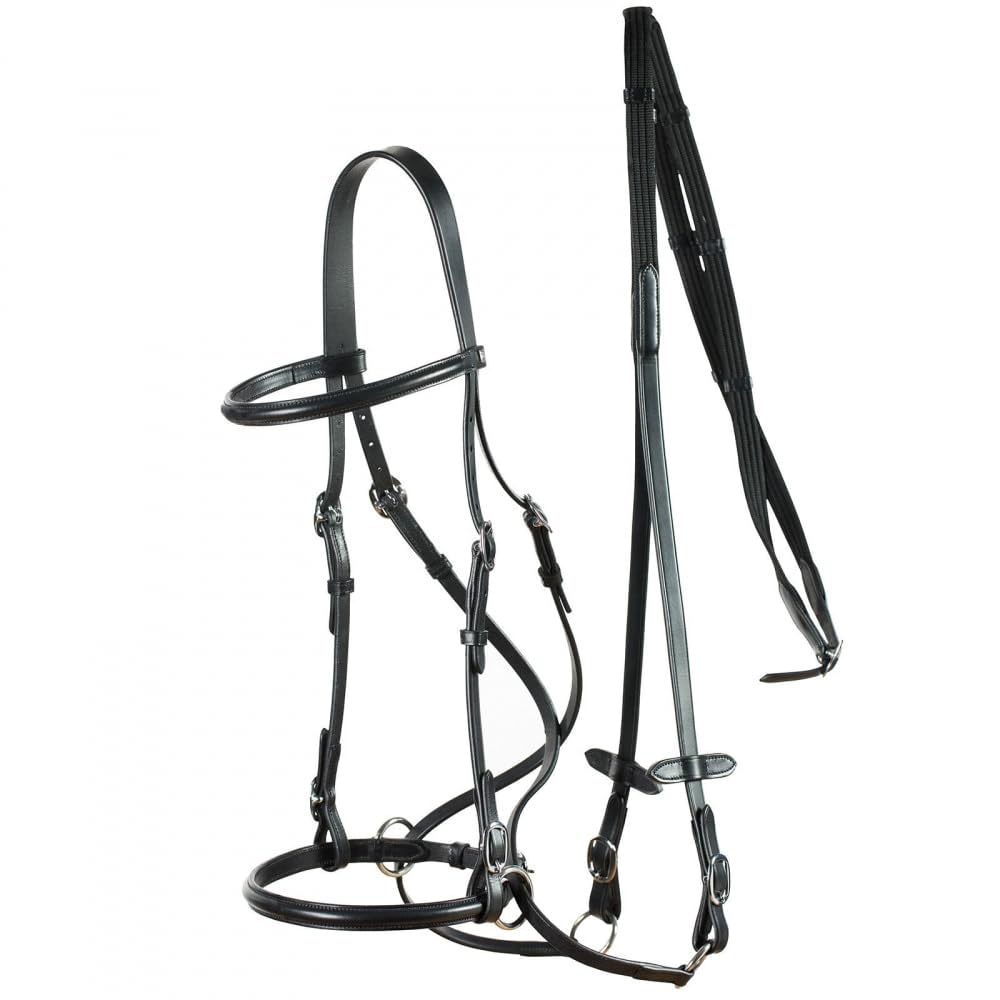
The cross-under mechanism on this HORZE bridle loops behind the horse’s jaw, distributing pressure evenly across the head instead of concentrating it on a single noseband point. This makes it one of the most comfortable options for horses with very sensitive mouths or those who simply cannot tolerate a metal bit. The genuine leather construction, with a raised noseband and classic browband, gives it a show-ring-appropriate appearance that many cheaper nylon options lack.
Several long-term users report the leather arrives a bit stiff and requires several oiling sessions to reach the supple feel they expected. For a pony-sized horse or smaller mare, the fit is excellent right out of the bag. The included cotton webbing reins with leather hand stops provide excellent grip even when sweaty — a practical detail not every bridle includes.
The major concern is stitch integrity at the rein attachment point: one review reported the stitching failed during an unexpected bolt. For horses that may spook or pull hard, it is wise to inspect the stitching regularly and reinforce if you are riding a strong, green animal.
Why we love it
- Cross-under design distributes pressure evenly
- Leather noseband looks clean and professional
- Nice grip from the webbing-and-leather reins
Good to know
- Stitching at rein loop can fail under high stress
- Leather arrives stiff; needs conditioning
3. Shires Blenheim English Hackamore
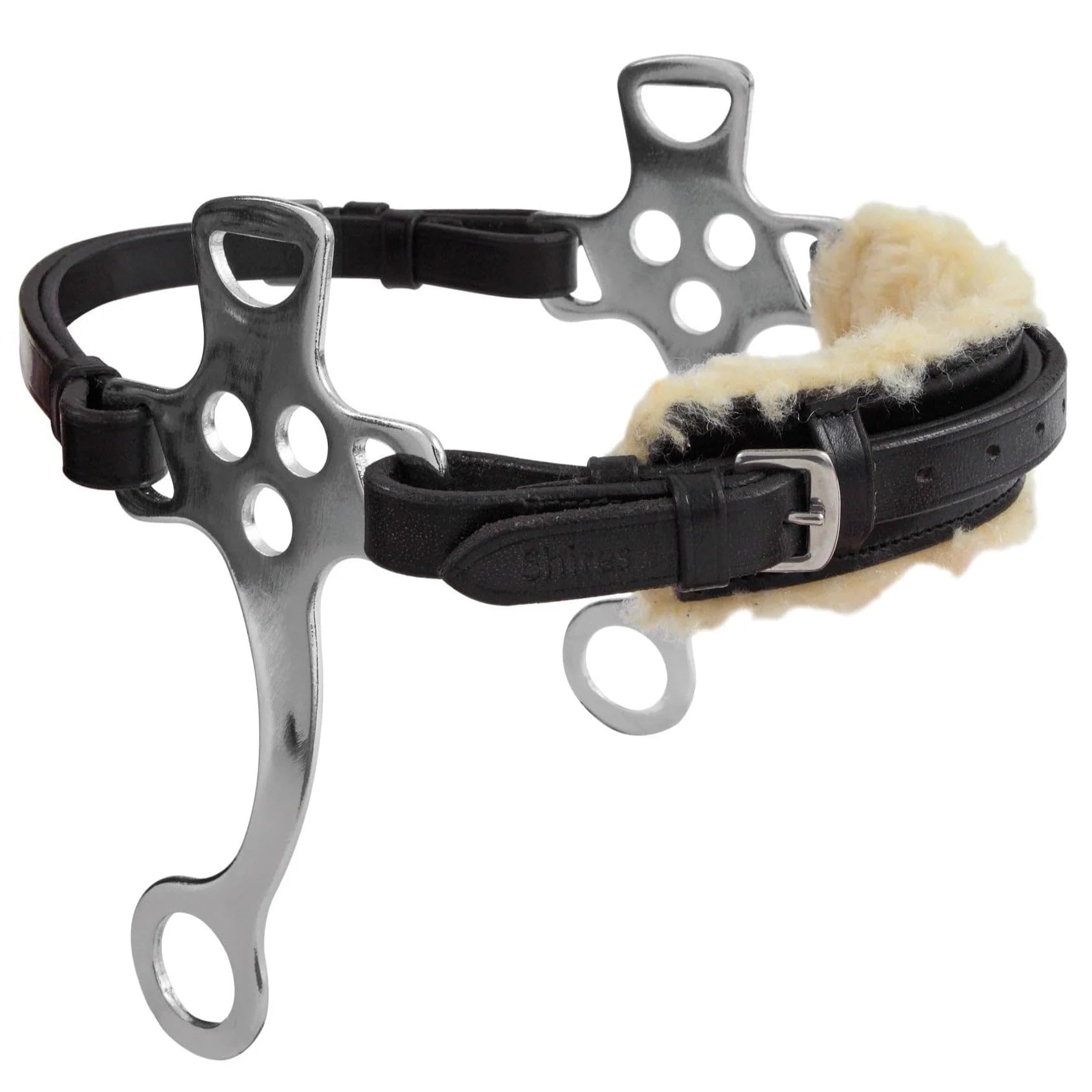
For riders who want mechanical leverage without the heavy-handed bite of a metal bit, the Shires Blenheim is the most thoughtfully engineered option on this list. The long stainless steel shanks (170mm cheek height) amplify poll and nose pressure proportionally to rein tension — the harder you pull, the more the nose and poll feel it, giving you stopping power without a mouthpiece. Every component — the leather headpiece, the sheepskin padding, the stainless hardware — is built to a standard that matches bridles costing significantly more.
Fit is genuinely one-size-fits-most for larger ponies through average-sized horses. Some reviewers with very large horses found it too small, but the adjustability through the cheek and nose straps covers a surprising range. The padding is soft enough that most horses accept it without head tossing, though owners of thick-headed stock horses may need to add extra holes to the chin and nose straps for a proper fit.
The beautiful Havana leather and polished hardware look appropriate at shows, clinics, and formal instruction. This is a premium piece of equipment designed for consistent, daily use in rings and on trails — not a disposable weekend hackamore.
Why we love it
- Precise leverage for refined control
- Sheepskin padding prevents rubbing
- Stainless steel sides are durable and corrosion-resistant
Good to know
- One size may not fit very large draft crosses
- Padding is thinner than some expect
4. Weaver Leather Deluxe Latigo Side Pull

The Weaver Deluxe Side Pull takes a different approach: instead of leveraging pressure up over the poll, it pulls directly on the nose and jaw, giving the rider a simpler, more direct feel. The latigo leather headstall is supple and strong — exactly what Weaver has been known for for decades — and it fits average-sized heads without drama.
The biggest criticism, and one that appears in multiple verified reviews, is that the rope noseband itself is stiff. Several users describe it as having a hard, greasy texture that rubs hair off the nose and causes head tossing in sensitive horses. For a horse that already has a raw nose or that you’re starting under saddle for the first time, this rope is a potential source of conflict. Some owners replaced the rope with a softer alternative entirely.
The sizing also runs small. At least one review described the chinstrap as too tight for an average Quarter Horse, which is disappointing given Weaver’s reputation. This is a trail-and-return item for many buyers — worth trying for the proven leather quality, but only if your horse’s nose shape matches the stock dimensions.
Why we love it
- High-quality latigo leather from a trusted brand
- Direct-pull action feels intuitive
- Lightweight at 1.15 pounds
Good to know
- Rope noseband reported as hard and greasy
- Sizing runs small for wide-headed breeds
5. Mustang Breaking Hackamore Bridle

The Mustang Breaking Hackamore is purpose-built for the first critical rides on a young or green horse. The 7/16″ thin rope noseband concentrates pressure into a smaller area, delivering clear, unambiguous cues that a horse still learning pressure-and-release can understand. It works well as a bridge between a halter and more refined tack — several reviewers successfully used it for the first 30 rides before transitioning their horse to something more subtle.
The nylon headstall is a weak point. Multiple reviews note it is thin and flimsy, and at least one owner replaced the entire headstall with a sturdier leather alternative. The flat braided reins are functional and nicely weighted, though many riders found them excessively long for most adult horses. The rawhide core inside the rope noseband is also a concern — if it dries out, it becomes hard and abrasive, which defeats the purpose of a “breaking” hackamore.
For the price, this is an effective introductory tool — just budget for a replacement headstall and keep the rawhide oiled. It is not built for longevity, but for those first lessons in light contact.
Why we love it
- Thin rope provides clear, sharp cues
- Lightweight and easy to adjust
- Works well as a transition tool from halter to bridle
Good to know
- Nylon headstall is thin and may need replacement
- Rawhide core can become hard if not conditioned
6. Weaver Leather Latigo Leather Browband Headstall

Weaver’s latigo leather headstall is the kind of simple, honest piece of tack that proves you do not need to spend a fortune for reliable leather. The single-ply 5/8″ leather is soft enough to be comfortable from the first ride, and the precision stitching holds up through daily use. The nickel-plated hardware at the buckles is durable but light, and the water-tie design at the bit attachment points allows for easy bit swaps — a thoughtful touch for riders who switch between hackamore and bitted setups.
The browband is included, which is a nice bonus at this tier, and the classic brown color looks much more expensive than the price tag suggests. A few reviewers noted the leather arrived slightly lighter than pictured but took a rich, dark color after a single application of oil. The 4.8-ounce weight is barely noticeable on the horse’s head, and several riders with large-warmblood-type horses reported the size accommodated even big heads straight out of the box.
This is not a complete bitless bridle — you need to add your own bitless noseband or hackamore — but as a foundation piece it offers excellent value and craftsmanship.
Why we love it
- Soft, comfortable latigo leather straight out of the bag
- Included browband saves extra cost
- Water ties allow quick bit changes
Good to know
- Sold as headstall only — no noseband included
- Leather may come lighter than pictured
7. Westen at Rope Nose Little S Hackamore

For the rider who wants to experiment with a bitless bridle without committing to a premium price tag, the Westen Rope Nose Hackamore delivers surprising effectiveness for the money. The Little S design incorporates some leverage through the shanks, giving the rider moderate control without heavy poll pressure. Multiple verified reviews report good results on horses that throw their heads or resist a bit during speed events.
The construction is basic: the rope nose is carbon steel and polypropylene composite, not a supple leather or braided rope. It works, but it does not look or feel like a piece of tack you will pass down. One review mentioned the lack of bridle keepers, causing the cheek pieces to wiggle and shift during sharp turns — an annoyance that can be fixed with zip ties or aftermarket keepers but should not be necessary on a finished product.
This hackamore is best viewed as a low-risk starting point. If you like the feel of bitless riding, you will quickly outgrow it and want something better built. But as a test to see if your horse responds to nose pressure, it gets the job done without breaking the bank.
Why we love it
- Works great for speed events and head-tossing horses
- Moderate leverage without aggressive poll pressure
- Low-risk entry point for bitless experimentation
Good to know
- No bridle keepers included — cheek pieces can wiggle
- Carbon steel and polypropylene feel basic
FAQ
Can a bitless bridle be used on a horse that runs barrel races?
What is the difference between a side pull and a mechanical hackamore?
How do I stop the buckle from rubbing my horse’s eye?
Will a bitless bridle make my horse harder to stop?
Final Thoughts: The Verdict
For most riders seeking a refined, gentle, and beautifully crafted daily driver, the bitless bridle winner is the Justin Dunn Bitless Bridle because the soft rope noseband and stainless steel hardware deliver subtle, reliable control without punishing the horse’s face. If you want the mechanical leverage of a true hackamore with stainless steel quality and full adjustability, grab the Shires Blenheim English Hackamore. And for a genuine leather cross-under design that spreads pressure evenly for a horse with a very sensitive mouth, nothing beats the HORZE Genuine Leather Cross-Under Bitless Bridle.