
Managing a diabetic cat’s diet is a daily battle against blood sugar spikes. The wrong kibble can undo weeks of careful insulin management, while the right formula provides a stable foundation for your cat’s health. Finding a dry food that is both low enough in carbohydrates and high enough in quality protein to be safe for a diabetic cat is the core challenge.
I’m Mo Mahin — the founder and writer behind Furric. I’ve spent years analyzing the nutritional profiles of pet foods, cross-referencing veterinary recommendations with ingredient lists, and sifting through thousands of owner experiences to understand what actually works for managing feline diabetes through diet.
In this guide, I break down the formulas that prioritize low carbohydrate content and high-quality animal protein. I’ve done the research to help you confidently choose the right dry food for diabetic cats without the guesswork.
How To Choose The Best Dry Food For Diabetic Cats
Selecting a dry food for a diabetic cat is not the same as picking a premium maintenance diet. The goal is to minimize post-meal glucose spikes. This requires a close look at the guaranteed analysis and ingredient list, specifically focusing on carbohydrate content and protein source quality.
Carbohydrate Content Is The Primary Metric
Cats are obligate carnivores with no biological need for carbohydrates. For a diabetic cat, high carb levels directly oppose insulin therapy. Look for foods with less than 10-15% carbohydrates on a dry matter basis. This usually means grain-free recipes, but also requires avoiding potatoes, peas, and tapioca, which are common high-starch binders in grain-free kibble.
Protein Source And Quality
The protein should come from named animal sources (chicken, turkey, fish, rabbit) as the first ingredients. Avoid “meat meal” or “by-product meal” without a species specified, as the quality and amino acid profile can vary. High-quality protein supports lean muscle mass, which is often lost in diabetic cats, without contributing unnecessary carbohydrates.
Therapeutic Vs. Over-The-Counter Formulas
Veterinary therapeutic diets like Hill’s m/d are formulated with clinically proven nutrient profiles to manage glucose and weight. They often require a prescription. Over-the-counter high-protein, low-carb options from brands like Orijen, Tiki Cat, or ZIWI can be effective for stable diabetics but should always be discussed with your vet to ensure they meet your cat’s specific needs, especially regarding phosphorus and calcium levels for kidney health.
Quick Comparison
On smaller screens, swipe sideways to see the full table.
| Model | Category | Best For | Key Spec | Amazon |
|---|---|---|---|---|
| Hill’s Prescription Diet m/d GlucoSupport | Therapeutic | Clinical glucose/weight management | Vet-formulated low carb, high protein | Amazon |
| Orijen Guardian 8 | Premium | High animal protein, strong flavor | 90% animal ingredients, 40% protein | Amazon |
| Rawz Dehydrated Chicken & Turkey | Dehydrated | Ultra-low carb, pure protein source | Grain-free, starch-free, meal-free | Amazon |
| ZIWI Peak Steam & Dried Chicken | Air-Dried | Nutrient-dense, low feeding volume | 90% meat/organs/bone, low carb | Amazon |
| Tiki Cat Born Carnivore Indoor Health | Grain-Free | Budget-friendly low carb option | Trout first ingredient, pumpkin fiber | Amazon |
In‑Depth Reviews
1. Hill’s Prescription Diet m/d GlucoSupport Dry Cat Food

This is the clinical standard for diabetic cat management. The m/d GlucoSupport formula is engineered by Hill’s nutritionists and veterinarians specifically to support glucose control and weight loss. With a high protein-to-carbohydrate ratio and added arginine, it targets the unique metabolic needs of diabetic felines. Real-world owner reports consistently cite significant reductions in blood sugar levels and, in some cases, a reduced reliance on insulin injections after consistent feeding.
The formula uses chicken as the primary protein and is enriched with clinically proven antioxidants to support immune function, which is often compromised in diabetic cats. The 4-pound bag size is a practical starting point for cats transitioning from a high-carb diet, as it minimizes waste if the cat is initially picky. Owners with multiple cats, including non-diabetic ones, reported it being effective for weight management across the board.
The primary barrier is the prescription requirement, which means a vet visit and diagnosis are prerequisites. It’s also a premium therapeutic diet, placing it at the higher end of the cost scale compared to over-the-counter foods. Some owners note the kibble pieces are small, which is generally positive for older cats, and the odor is described as mild to moderate.
Why we love it
- Clinically proven for glucose and weight management
- Vet-formulated with optimal carb-to-protein ratio
- High palatability reported even with picky eaters
Good to know
- Requires a veterinary prescription to purchase
- Premium pricing reflects its therapeutic status
- Only available in a single chicken flavor variety
2. Orijen Guardian 8 Dry Cat Food
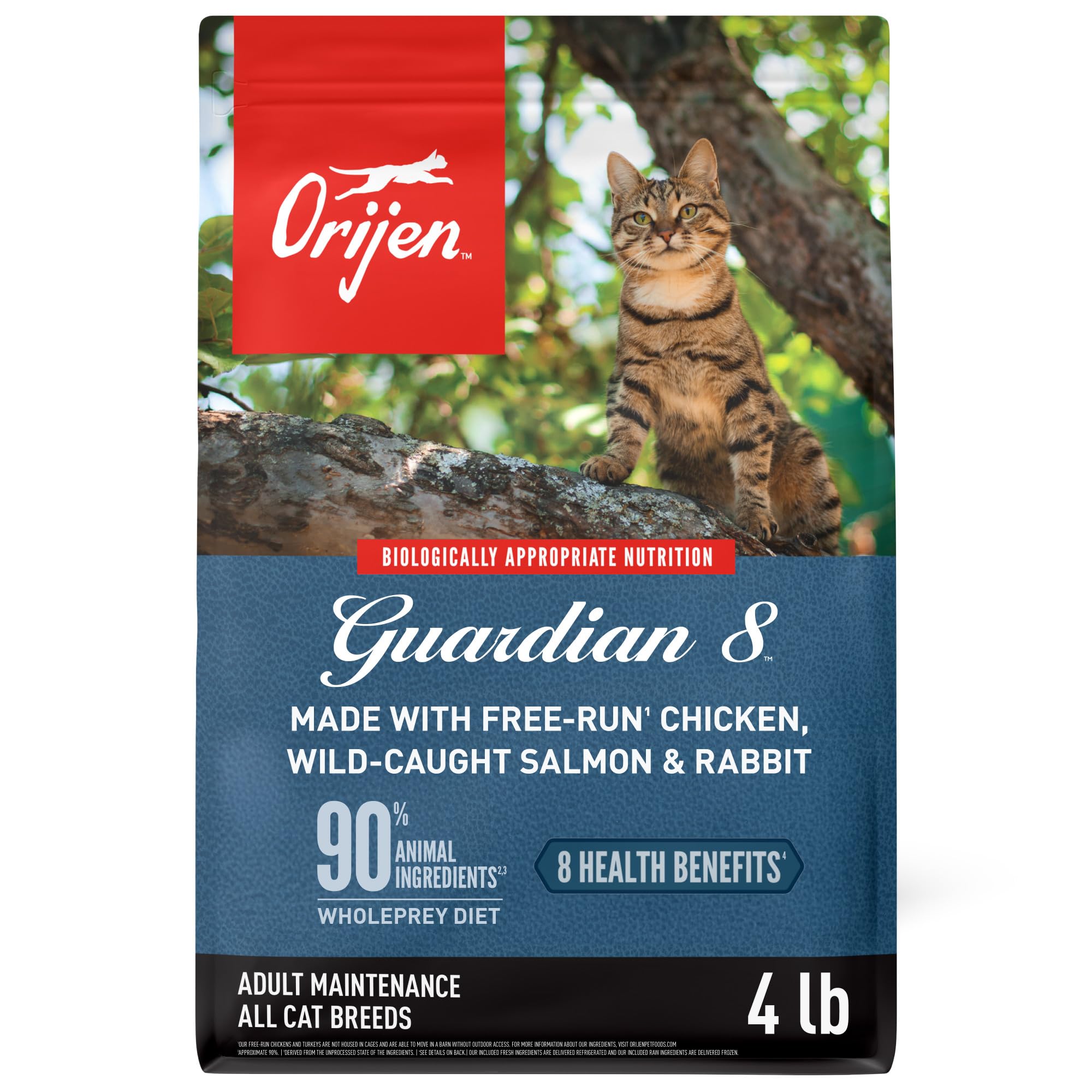
Orijen Guardian 8 is a powerhouse of animal-based nutrition, containing a remarkable 90% animal ingredients including chicken, turkey, salmon, herring, and rabbit. This translates to a guaranteed 40% protein content with a naturally low carbohydrate profile, making it a serious contender for diabetic cats who do not require a prescription diet. The inclusion of whole prey ingredients (organs and bone) mirrors a more natural feline diet.
The freeze-dried liver coating adds a layer of raw flavor that drives palatability, which is crucial for diabetic cats who may have a reduced appetite. The small, disc-shaped kibble (roughly 10.5×3.5mm) is easy for cats of all ages to chew. Owners repeatedly report noticeable improvements in coat softness, energy levels, and overall vitality after switching from standard grocery brands.
The main drawback noted by multiple owners is the zipper seal on the bag, which tends to fail over the life of the bag, requiring the use of clips or tape to maintain freshness. The food also has a strong fishy odor due to the multiple fish ingredients, which may be off-putting to some owners but highly appealing to cats. It’s a premium food that commands a higher price point.
Why we love it
- Extremely high animal ingredient content (90%)
- Low carbohydrate profile ideal for glucose control
- Small kibble size and high palatability
Good to know
- Bag zipper seal is prone to failure
- Strong fish odor from multiple fish sources
- Premium pricing reflects ingredient quality
3. Rawz Dehydrated Chicken, Turkey & Chicken Recipe

Rawz Dehydrated food stands out for what it explicitly excludes: it is grain-free, starch-free, and meal-free. This results in one of the lowest carbohydrate profiles available in a shelf-stable dry food, which is the primary goal for diabetic cat management. The formula relies entirely on real chicken, turkey, and chicken liver, providing a concentrated, highly digestible protein source without the blood sugar-spiking binders found in most kibble.
The gentle cooking process retains more nutrients than high-pressure extrusion used for traditional kibble, and the dehydrated format means a small volume provides a high nutritional density. This is excellent for diabetic cats who may need to consume fewer calories while still receiving adequate protein and fat. Owners consistently note reduced litter box odor and improvements in their cats’ coat condition and energy levels.
The primary consideration is the kibble size, which multiple reviewers noted is very small. While most cats enjoy the texture, some larger cats preferred larger pieces. The second is the premium cost, which is significant for a 7.8-pound bag. However, the high density means you feed less volume per serving, potentially offsetting the per-pound cost.
Why we love it
- Grain-free, starch-free, and meal-free formula
- Exceptionally low carbohydrate content
- Nutrient-dense, requires smaller serving sizes
Good to know
- Kibble pieces are very small
- High upfront cost per bag
- Some cats may need time to adjust to texture
4. ZIWI Peak Steam & Dried Chicken with Whole Mackerel

ZIWI Peak’s Steam & Dried process is a unique two-step method: gentle steaming locks in nutrients from raw ingredients, followed by a low-temperature air-drying phase that preserves them without the high heat of traditional extrusion. This produces a food that is 90% meat, organs, and bone with virtually no carbohydrate content, making it an outstanding non-prescription option for diabetic cats.
Using ethically sourced New Zealand chicken and wild-caught mackerel, the formula is rich in Omega-3 fatty acids, which are excellent for skin and coat health. The textural crunch is highly stimulating for cats, and the dense nutrient profile means owners feed very small portions per meal. Reports of weight loss and shinier coats are common, even in older, less active cats.
The most significant drawback is the price point, as this is one of the most expensive options per ounce. The air-dried texture is different from standard kibble, and while most cats love it, a very small minority may reject it. The whole mackerel variety has a notably strong fish odor, which can be a pro for cats but a con for sensitive owner noses. This food is best used as a complete meal for maximum benefit.
Why we love it
- Ultra-low carb, high meat content formula
- Gentle steam and air-dry process preserves nutrients
- High in Omega-3s for coat health
Good to know
- Among the most expensive dry cat foods per ounce
- Strong fish odor on the Whole Mackerel variety
- Unique texture may not appeal to all cats immediately
5. Tiki Cat Born Carnivore Indoor Health, Trout & Menhaden Fish Meal

Tiki Cat Born Carnivore Indoor Health offers a solid entry point into low-carb dry food without the prescription premium. With real trout as the first ingredient and a grain-free, non-GMO recipe that avoids potatoes, corn, wheat, and soy, it provides a clean protein source that is gentle on the digestive system. The inclusion of pumpkin serves as a prebiotic fiber source to support healthy digestion, a common concern in diabetic cats.
This formula is specifically designed for less active indoor cats, which aligns well with the weight management needs of diabetic felines. The kibble size is noted as being perfectly small for easy chewing, and the odor is far less potent than fish-heavy competitors. Multiple owners with picky cats reported immediate acceptance and subsequent improvements in coat shininess, energy, and reduced shedding.
While it is a strong over-the-counter choice, it is not a therapeutic diet. Its carbohydrate content, while low, is not as strictly controlled as a prescription diet like Hill’s m/d. It costs more per pound than standard grocery brands but is competitive with other premium grain-free options. For stable, early-stage diabetics or owners looking for a maintenance food after veterinary clearance, this is the top value.
Why we love it
- High animal protein with trout as first ingredient
- Grain-free, non-GMO, no potato fillers
- Excellent palatability for picky eaters
Good to know
- Not a veterinary therapeutic diet
- Carb content is low but not as strictly regulated as Rx diets
- Costs more per pound than standard grocery kibble
FAQ
How many carbohydrates are too high for a diabetic cat?
Does my diabetic cat need a prescription diet or just any low-carb food?
Why does my diabetic cat refuse to eat their new dry food?
Final Thoughts: The Verdict
For most diabetic cats, the dry food for diabetic cats winner is the Hill’s Prescription Diet m/d GlucoSupport because it is the only clinically proven therapeutic diet designed specifically for this condition. If you want an ultra-low carb, non-prescription option with maximum protein content, grab the Rawz Dehydrated Chicken & Turkey. And for a budget-conscious but still effective over-the-counter choice, nothing beats the Tiki Cat Born Carnivore Indoor Health.