
Neocaridina shrimp are among the most adaptable freshwater inhabitants, but even these hardy dwarf shrimp hit a wall when the substrate leaches ammonia, buffers pH outside their comfort zone, or compacts into an anaerobic mess. The wrong soil turns a thriving colony into a daily test of water changes and lost berried females.
I’m Mo Mahin — the founder and writer behind Furric. I’ve spent years comparing substrate chemistry, studying how volcanic clay, baked minerals, and organic soils affect buffering capacity and bacterial colonization, and cross-referencing those specs with thousands of verified owner experiences.
After reviewing the top active soils on the market, these picks will save you from murky water, failed cycles, and colony crashes. This guide identifies the most reliable best substrate for neocaridina shrimp based on pH stability, ammonia control, and long-term structural integrity.
How To Choose The Best Substrate For Neocaridina Shrimp
Neocaridina davidi thrives in a pH range of 6.5 to 7.5 and prefers moderately soft to moderately hard water. The substrate you pick directly controls whether those parameters stay stable or swing dangerously. Passive inert sands do nothing to buffer pH, while low-quality active soils can leach ammonia for weeks.
Buffering Capacity And pH Target
Active aqua soils are formulated to lower and stabilize pH by releasing humic acids and exchanging mineral ions. For Neocaridina, you want a soil that settles between 6.0 and 7.0 — anything below 6.0 stresses the colony and stalls breeding. Check the manufacturer’s stated pH range before buying; some soils are designed for crystal shrimp and Bee shrimp and drop too low.
Ammonia Leaching And Cycling Speed
Many organic-rich substrates release a burst of ammonia during the first 1–2 weeks, which can kill shrimp if introduced too early. Low-ammonia or pre-leached soils cycle faster and let you add shrimp sooner. The best substrates for Neocaridina either skip the ammonia spike entirely or keep it mild enough that frequent water changes can manage it.
Grain Size And Structure
Grain size between 2 mm and 5 mm is ideal — small enough for shrimp to sift through looking for biofilm, large enough to prevent compaction and anaerobic pockets. Irregular, porous grains provide more surface area for nitrifying bacteria than perfectly round beads. Avoid very fine powders that cloud the water and crush root systems.
Nutrient Content Versus Control
Heavily fertilized soils can cause algae blooms in low-light shrimp tanks. The best approach is a soil that provides trace minerals without excess nitrogen, allowing you to supplement root tabs only where needed. Substrates made from volcanic ash or baked clay tend to offer this balanced profile better than pure potting-soil mixes.
Quick Comparison
On smaller screens, swipe sideways to see the full table.
| Model | Category | Best For | Key Spec | Amazon |
|---|---|---|---|---|
| Ultum Nature Systems Controsoil | Active Soil | Low ammonia cycling | 6.8 pH Buffered | Amazon |
| Fluval Plant & Shrimp Stratum | Active Soil | Balanced pH and plant growth | 17.6 lb Bag | Amazon |
| Dennerle Shrimp King Active Soil | Premium Active Soil | Low pH soft water tanks | Double-baked Volcanic | Amazon |
| LANDEN Aqua Soil | Active Soil | Large tanks on a budget | 5L / 10 lb Bag | Amazon |
| CaribSea Samurai Soil | Premium Active Soil | No-rinse instant setup | 9 lb, No Ammonia Spike | Amazon |
In‑Depth Reviews
1. Ultum Nature Systems Controsoil

Controsoil is built from volcanic ash that has been processed to yield a remarkably low ammonia output — owners report cycle completion in 2–3 weeks with the help of starter bacteria. The 6.8 pH buffer is spot-on for Neocaridina, keeping the water slightly acidic without dropping into the danger zone that slows breeding. The granules are lightweight and porous, providing ample surface area for nitrifying bacteria while remaining soft enough for bottom dwellers like Corydoras to sift through.
Early reviews note that the bag arrives with fine dust that must be rinsed thoroughly or capped with sand to avoid muddy water on day one. Once settled, the color transitions from a light tan to a darker brown over several months, blending naturally with planted aquascapes. This soil lacks added nutrients, so you will need crushed root tabs for heavy root-feeders, but that also gives you precise control over fertilization levels.
The extra fine grain size (roughly 1–2 mm) is excellent for shrimp foraging but requires a thicker layer — one bag of the 1-liter size is not enough for a standard 10-gallon tank at the recommended 2-inch depth. Plan for at least two bags for a shallow scape or three for a planted layout. Considering the speed of cycling and the stable pH, this is the most reliable pick for shrimp breeders who want predictable water chemistry.
Why we love it
- Very low ammonia spike speeds up cycling
- Volcanic ash base absorbs impurities and keeps water clear
- Soft grain safe for shrimp and bottom feeders
Good to know
- Bag comes dusty; rinsing or capping is mandatory
- No nutrients included — root tabs are necessary for plants
- 1-liter bag is small; multiple bags needed for most tanks
2. Fluval Plant and Shrimp Stratum

Fluval Stratum is the most widely recommended soil in the shrimp-keeping community, and for good reason: the 17.6-pound bag provides enough depth for a 20-gallon long tank, and the porous clay structure buffers pH to a neutral-to-slightly-acidic range that Neocaridina colonies thrive in. Owners consistently report that shrimp breed heavily within weeks of adding this substrate, and plant roots anchor easily without floating up.
You should not rinse this substrate — doing so turns the water black immediately. Instead, pour fill water gently over a plate or plastic bag to avoid disturbing the granules. The water will be cloudy on day one but crystal clear by day two, and the fizzing sound you hear is trapped air escaping from the porous particles, which is normal. The stratum provides safe hiding spots for newborn shrimplets within its irregular grain structure, significantly boosting survival rates.
The main downside is the initial dust cloud that panics new aquarists, and the fact that the pellets are very light — without at least two bags in a deep layout, plants may drift upward before rooting. The bag also lacks any nutrient fortification, so you will need liquid or root fertilizers for demanding plant species. For a standard Neocaridina tank with low-light plants and a sponge filter, this remains the most balanced and value-packed option on the market.
Why we love it
- Exceptional value — 17.6 lb bag covers most tanks
- Encourages heavy shrimp breeding and shrimplet survival
- Easy to plant in; roots hold well
Good to know
- Do not rinse — causes extreme cloudiness
- Very light granules; plants may float until rooted
- No added nutrients; supplement for heavy plant growth
3. Dennerle Shrimp King Active Soil

Dennerle’s Shrimp King Active Soil is a double-baked volcanic soil engineered for maximum longevity — the thermal treatment hardens each granule so they resist disintegration far longer than standard active soils. This makes it a strong choice for shrimp keepers who do not want to replace their substrate every 12–18 months. The pH buffer drives water to 6.0–6.5, which is ideal for soft-water Neocaridina but too low for Crystal shrimp without mineral supplementation.
The 100% natural composition includes a special nutrient formula that discourages algae growth while providing enough trace elements to support biofilm development — the primary food source for shrimp fry. The granules sink quickly after setup, and owners report crystal-clear water within hours rather than days, with no discoloration from tannins. The double-baking process also means the soil does not crush under the weight of hardscape stones or driftwood.
The premium price per liter is the trade-off, and the strong pH drop makes it less flexible if you ever want to keep snails or higher-pH species in the same tank. Some customers noted that in very hard tap water, the buffering capacity gets exhausted faster, so using RO or RO/top water mix is recommended. For dedicated Neocaridina breeders who want a substrate that survives multiple generations without breaking down, this is the most durable option available.
Why we love it
- Double-baked granules last much longer than standard soils
- Algae-resistant nutrient formula keeps glass clean
- Clears quickly — no prolonged cloudiness
Good to know
- Expensive per liter compared to bagged alternatives
- pH drops to 6.0 or lower; not for hard-water setups
- Best paired with RO water to maintain buffering
4. LANDEN Aqua Soil Substrate

LANDEN Aqua Soil offers a 5-liter bag at a price point that undercuts most competitors while still delivering measurable pH buffering to 6.0–6.5 and a porous structure that supports healthy bacterial colonization. The grain size of 3–5 mm is larger than many active soils, which reduces compaction risk and makes it easier to plant stems deeply. Owners report that plants and shrimp adapt well within the first week, and the water clears noticeably faster than with budget alternatives.
The trade-off is inconsistency in bag contents — some customers found dried leaves, grass, and gravel mixed into the soil, requiring manual sorting and rinsing before use. The manufacturer advises against rinsing, but many users reported better results after pre-soaking the soil with nitrifying bacteria to reduce the initial ammonia load. The soil does not cause a nitrate spike like raw organic soils, but the presence of debris means you will want to inspect each bag before adding it to your display tank.
For the price, the value is undeniable, especially for larger tanks where premium brands would cost triple to achieve the same depth. Landen’s soil holds its structure well over time and does not turn to mud like some budget clay-based products. If you are willing to spend an extra 15 minutes sorting and pre-soaking, this substrate delivers 90% of the performance of premium brands at a fraction of the cost.
Why we love it
- Large 5L bag provides excellent coverage per dollar
- Porous structure supports quick bacterial cycling
- Holds shape well — does not disintegrate over time
Good to know
- May contain dried plant debris and gravel; needs sorting
- Pre-soaking with bacteria recommended before use
- pH drop to 6.0 may be too low for some Neocaridina lines
5. CaribSea Samurai Soil
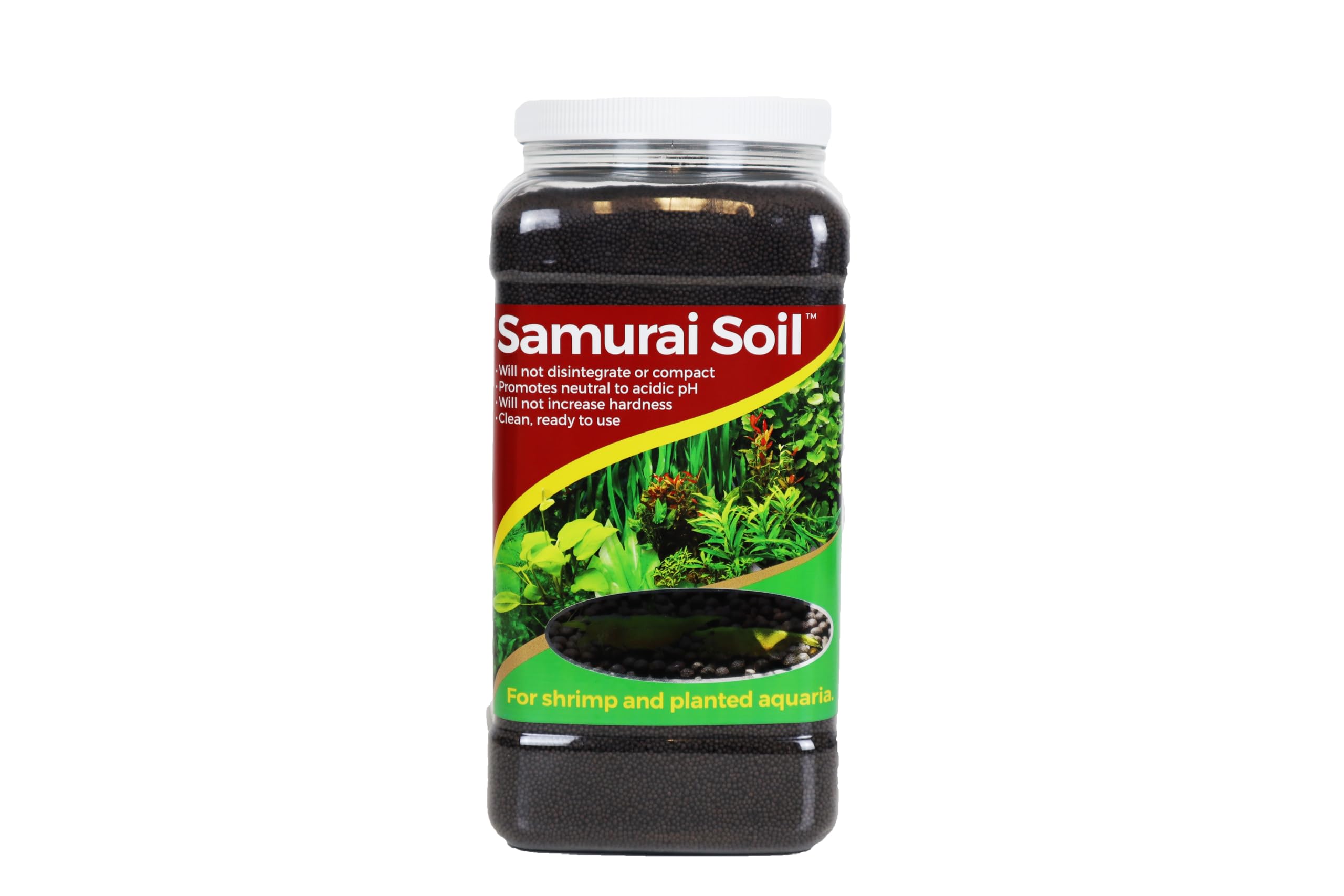
CaribSea’s Samurai Soil stands out for its claim of zero ammonia spike — and verified buyer reports confirm that you can add shrimp almost immediately after setup without the usual die-off. The soil is pre-washed and ready to use straight from the bag, producing clear water on day one with no rinsing required. The pH buffer settles in the neutral-to-acidic range, which is exactly where Neocaridina thrive and begin breeding.
The 9-pound bag is compact enough for small to medium tanks (ideal for 5 to 15 gallons) and the granules are notably harder than standard baked clay soils, resisting compaction and crumbling even under heavy hardscape. The soil also contains a dose of biologicals designed to accelerate the nitrogen cycle, which is a unique feature among active substrates. Several owners praised the lack of cloudiness and the fact that their shrimp were grazing on the surface within hours of setup.
The premium price and smaller bag size are the limiting factors — you will need multiple bags for a 20-gallon tank, which quickly adds up. The lack of nutrient content means plants will need root tabs, and the biological additives may be redundant if you already use seeded filter media. For shrimp-only tanks and nano planted setups where quick stocking is the priority, this is the most hassle-free active soil available.
Why we love it
- No ammonia spike — add shrimp immediately
- Pre-washed and ready to use; no cloudiness
- Hard granules resist compaction over time
Good to know
- Expensive per pound compared to larger bag options
- 9 lb bag is small; multiple bags needed for bigger tanks
- No added nutrients — supplement for plant growth
FAQ
Can I use potting soil or garden soil in my Neocaridina tank?
How deep should I layer the substrate for Neocaridina shrimp?
Will my substrate lower the pH too much for Neocaridina?
How long does active aquarium soil last before needing replacement?
Final Thoughts: The Verdict
For most gardeners, the best substrate for neocaridina shrimp winner is the Fluval Plant and Shrimp Stratum because it offers the ideal pH range, proven breeding results, and enough volume for standard tanks at a fair mid-range price. If you want low ammonia and the fastest cycle time, grab the CaribSea Samurai Soil. And for long-term durability without granule breakdown, nothing beats the Dennerle Shrimp King Active Soil.