
When a feline companion receives a kidney disease diagnosis, every meal becomes a medical decision. The right canned food can slow disease progression, manage phosphorus levels, and maintain quality of life — but navigating the sea of renal diets, prescription labels, and ingredient claims is a stressful puzzle for any cat owner.
I’m Mo Mahin — the founder and writer behind Furric. I spend my time studying veterinary nutrition protocols, cross-referencing ingredient panels for phosphorus and protein ratios, and analyzing hundreds of owner experiences to separate foods that deliver measurable kidney support from those that just look good on the label.
Whether your cat is in early stage renal decline or requires advanced care, this guide breaks down the highest-value options available now for canned cat food for cats with kidney disease.
How To Choose The Best Canned Cat Food For Cats With Kidney Disease
Selecting the right renal diet requires looking past marketing claims and focusing on a few concrete, vet-backed parameters that directly affect kidney workload and disease progression.
Phosphorus: The Primary Target
Restricted phosphorus is the single most important factor in a kidney-support diet. High phosphorus accelerates kidney damage in cats with compromised renal function. Look for foods with a phosphorus percentage below 0.5% on a dry matter basis (DMB). Weruva Wx Phos Focused, for example, boasts up to 50% less phosphorus than AAFCO minimums, which is an aggressive but clinically relevant reduction.
Protein Quality Over Quantity
While older thinking demanded severe protein restriction, modern veterinary nutrition emphasizes high-quality, highly bioavailable protein to maintain muscle mass without overloading the kidneys with nitrogenous waste. Foods like Hill’s k/d use enhanced essential amino acids to support lean muscle while still managing renal workload.
Hydration Through Wet Food
Moisture content is a built-in advantage of canned food. Cats with kidney disease are prone to dehydration, which further stresses the kidneys. A wet diet with gravy or broth helps maintain hydration and supports urine output for flushing toxins.
Prescription vs. Over-the-Counter
Prescription diets like Purina Pro Plan Veterinary Diets NF and Hill’s k/d undergo feeding trials and meet strict nutritional profiles for renal support. OTC options like Weruva Wx can be excellent for early-stage or management cases, but always consult your veterinarian to confirm phosphorus and protein targets for your cat’s specific IRIS stage.
Quick Comparison
On smaller screens, swipe sideways to see the full table.
| Model | Category | Best For | Key Spec | Amazon |
|---|---|---|---|---|
| Hill’s k/d Starter Kit | Prescription Trial | Testing flavors & textures | ActivBiome+ prebiotics | Amazon |
| Weruva Wx Phos Focused | OTC Low-Phos | Early-stage & picky eaters | 50% less phosphorus than AAFCO | Amazon |
| Hill’s k/d Wet Stew | Vet Gold Standard | Clinically proven kidney support | Reduced phosphorus & sodium | Amazon |
| Purina Pro Plan NF Early Care | Prescription Pate | Early-stage kidney management | Restricted phosphorus + omega-3s | Amazon |
| Purina Pro Plan NF Advanced Care | Prescription Advanced | Late-stage kidney support | Reduced protein + antioxidants | Amazon |
| Blue Buffalo K+M Dry | Prescription Dry | Kidney + joint support combo | Glucosamine & chondroitin | Amazon |
| Purina Pro Plan Urinary Pate | OTC Urinary | Early urinary pH management | Low magnesium + pH control | Amazon |
In‑Depth Reviews
1. Hill’s Prescription Diet k/d Kidney Care Starter Kit

This starter kit is designed as a low-commitment way to figure out which renal formulation your cat will actually eat. It includes two pouches of dry k/d kibble, two 5.5-oz cans of wet food, and four 2.9-oz small cans, covering multiple protein sources and textures. The ActivBiome+ Kidney Defense prebiotic blend targets the gut-kidney axis, which is a newer frontier in renal nutrition.
Veterinary prescription is required, but the variety approach directly addresses the common problem of CKD cats rejecting a single flavor after a few days. Owners report that testing textures — stew versus pâté versus dry — early helps them commit to a bulk purchase later without wasting money on uneaten cases.
Some cats eventually refuse the dry kibble after initial interest, but the wet options tend to maintain higher acceptance. This kit is an intelligent starting point, not a long-term solution, for owners navigating a new renal diet transition.
Why we love it
- Low-risk way to test four textures and flavors before buying bulk
- ActivBiome+ prebiotics support the gut-kidney connection
- Clinically proven to stimulate appetite with E.A.T. trigger technology
Good to know
- Requires veterinary prescription to purchase
- Some cats tire of the dry kibble after initial acceptance
2. Weruva Wx Phos Focused Chicken Formulas Variety Pack
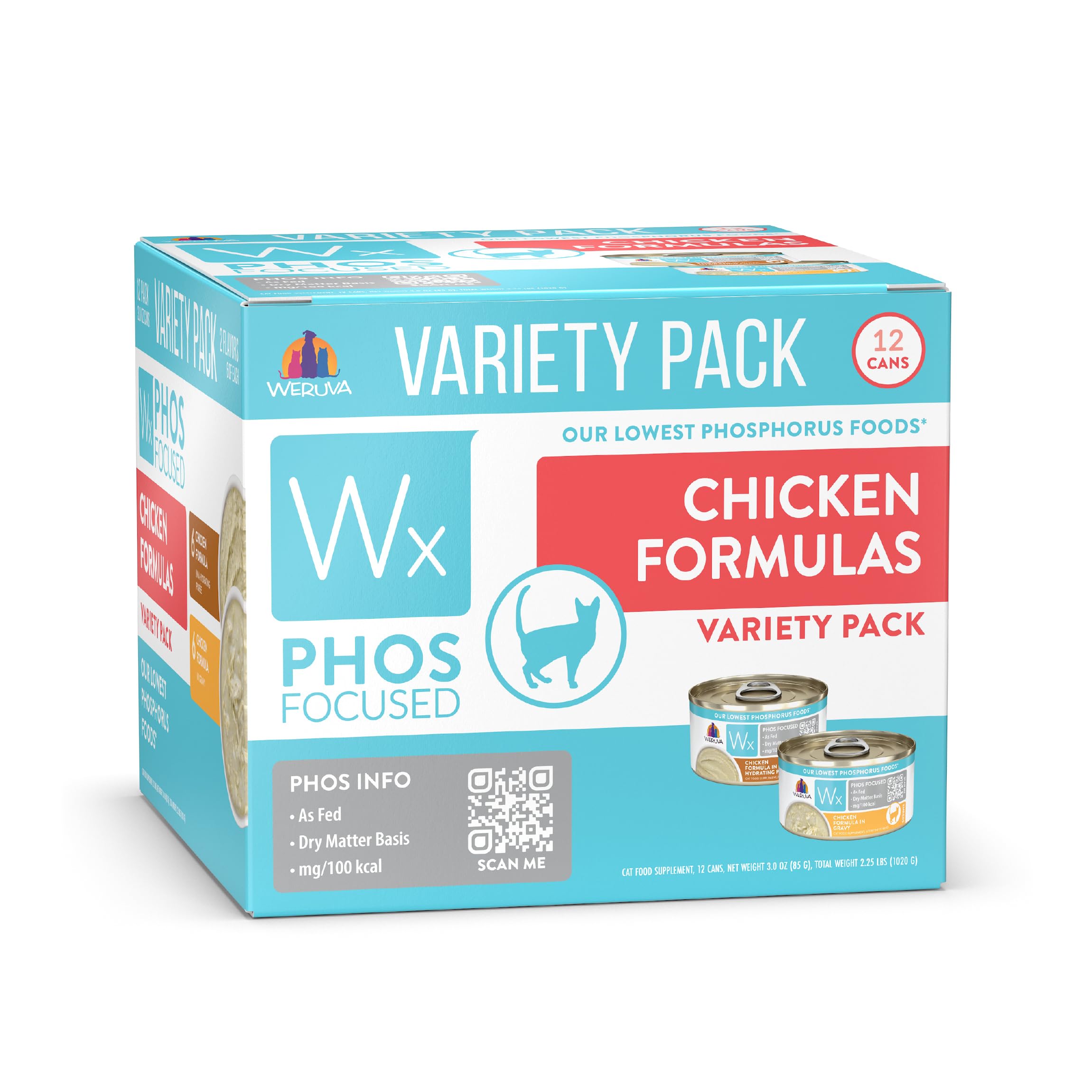
Weruva Wx Phos Focused is a standout non-prescription option for early-stage kidney disease or cats who refuse veterinary renal diets outright. The phosphorus level is up to 50% lower than AAFCO minimums — a dramatic reduction that rivals some prescription formulas. The protein comes from bone-free muscle meats, which are highly bioavailable and minimize renal nitrogen load while supporting muscle mass.
Owner reports show kidney values dropping significantly — from 2.4 to 1.6 in one documented case over a year — when combined with a low-phosphorus kibble. Cats with CKD who reject prescription food often accept Weruva’s chicken-in-gravy texture because it lacks the strong medicinal odor of some veterinary diets.
Texture pickiness is the main variable: some cats love the shredded strings in gravy, while others prefer the puree option. The 3-oz can size is small, which is convenient for portion control but means higher frequency ordering for multi-cat households.
Why we love it
- Extremely low phosphorus compared to standard cat food
- Muscle meat proteins are highly digestible and maintain muscle mass
- No fillers, cellulose, or carbohydrates that artificially lower phosphorus stats
Good to know
- Some cats reject the shredded texture in favor of pate
- Not a prescription diet; always check with your vet for stage-appropriate protein levels
3. Hill’s Prescription Diet k/d Kidney Care Chicken & Vegetable Stew

Hill’s k/d Chicken & Vegetable Stew is one of the most researched kidney-support diets available. The formulation uses reduced phosphorus and sodium alongside the proprietary ActivBiome+ prebiotic blend, which has been clinically shown to activate beneficial gut bacteria linked to kidney function. Essential amino acids exceed AAFCO minimums, which helps combat the muscle wasting common in CKD cats.
Owner feedback is consistently positive: cats who reject competitive renal pâtés often accept the stew texture — bite-sized chunks in gravy — and many finicky eaters clean their bowls. The 2.9-oz can size is ideal for single meals and reduces waste from uneaten leftovers.
The primary downside is the price point, which sits at a premium level. Some owners report cats eventually becoming bored with the limited flavor rotation, so mixing textures or alternating with another renal formula may be necessary for long-term acceptance.
Why we love it
- Clinically proven to improve and lengthen quality of life in CKD cats
- ActivBiome+ prebiotic blend actively supports kidney function via the gut
- Reduced phosphorus and sodium with enhanced essential amino acids
Good to know
- Requires veterinary prescription and is priced at a premium level
- Limited flavor varieties may lead to food boredom over time
4. Purina Pro Plan Veterinary Diets NF Kidney Function Early Care Feline Pate
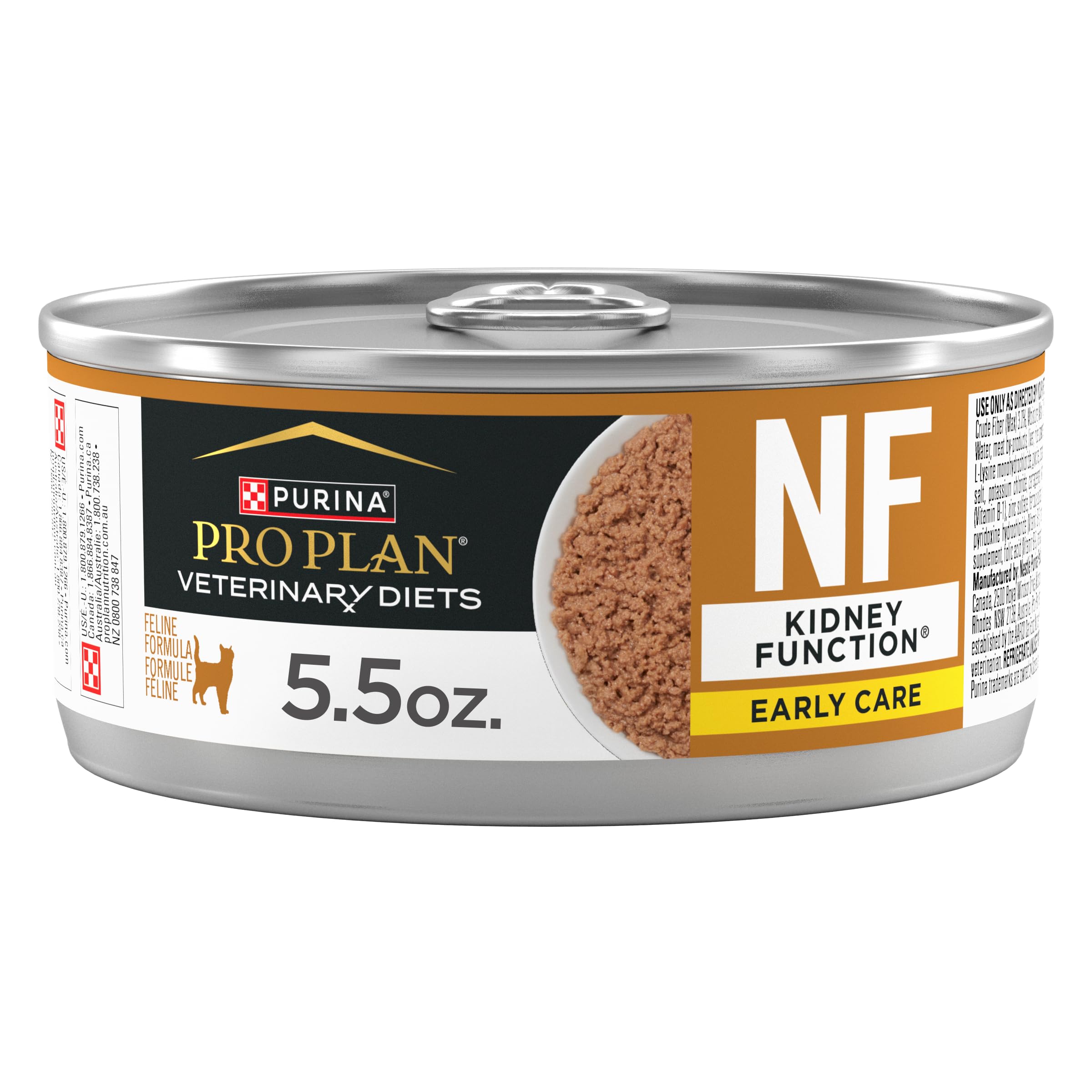
Purina Pro Plan NF Early Care is formulated specifically for cats in the early stages of kidney disease. It uses a moderate level of high-quality protein rather than aggressively restricting it, which helps maintain muscle mass while still reducing the kidney’s filtration workload. The restricted phosphorus content is supplemented with omega-3 fatty acids from EPA and DHA, which have anti-inflammatory effects on renal tissue.
Owner reviews highlight that cats who refused Science Diet kidney food often accept this pate formula — even non-CKD housemates try to steal it. Kidney values have been reported to improve after a few months on this diet, especially when combined with regular hydration and monitoring.
Palatability is not universal: some cats with advanced CKD or texture aversions reject the pate entirely. Mixing with warm water or a small amount of baby food (vet-approved) can improve acceptance. The 5.5-oz cans are larger than many renal options, which is economical but means managing leftovers for single-cat households.
Why we love it
- Moderate protein level designed for early-stage kidney management
- Omega-3 fatty acids (EPA/DHA) provide renal anti-inflammatory support
- Prebiotic fiber nourishes GI health, which is often compromised in CKD cats
Good to know
- Requires veterinary prescription; not suitable for advanced kidney failure
- Pate texture is rejected by some cats who prefer chunks or gravy
5. Pro Plan Veterinary Diets NF Kidney Function Advanced Care Feline Pate

The Advanced Care variant from Purina Pro Plan Veterinary Diets is designed for cats in IRIS Stage 3 or 4 kidney disease. It features a more aggressively reduced protein level compared to the Early Care formula, plus restricted phosphorus and sodium. Antioxidants including vitamin E and beta-carotene are added to combat the oxidative stress that accelerates renal decline.
Owner experiences are mixed: some cats accept the pate readily and show stabilized kidney values, while others require creative mixing — warm water, Hydra Care, or a small amount of baby squash — to mask the taste. The salmon-based recipe has a notably less medicinal smell than competitor brands, which helps with initial acceptance.
Quality control issues appear in customer feedback: dented cans and occasional batches with discolored, hard food texture are reported. Always inspect cans upon arrival and verify best-by dates. The 5.5-oz size provides two meals for most cats, reducing packaging waste.
Why we love it
- Aggressive protein and phosphorus restriction for late-stage kidney failure
- Antioxidants help reduce oxidative damage to compromised kidneys
- Omega-3 fatty acids from fish oil support renal health
Good to know
- Must be mixed with palatability enhancers for some cats to accept it
- Inconsistent can quality reported — inspect all cans on arrival
6. Blue Buffalo Natural Veterinary Diet K+M Kidney + Mobility Support Dry Cat Food
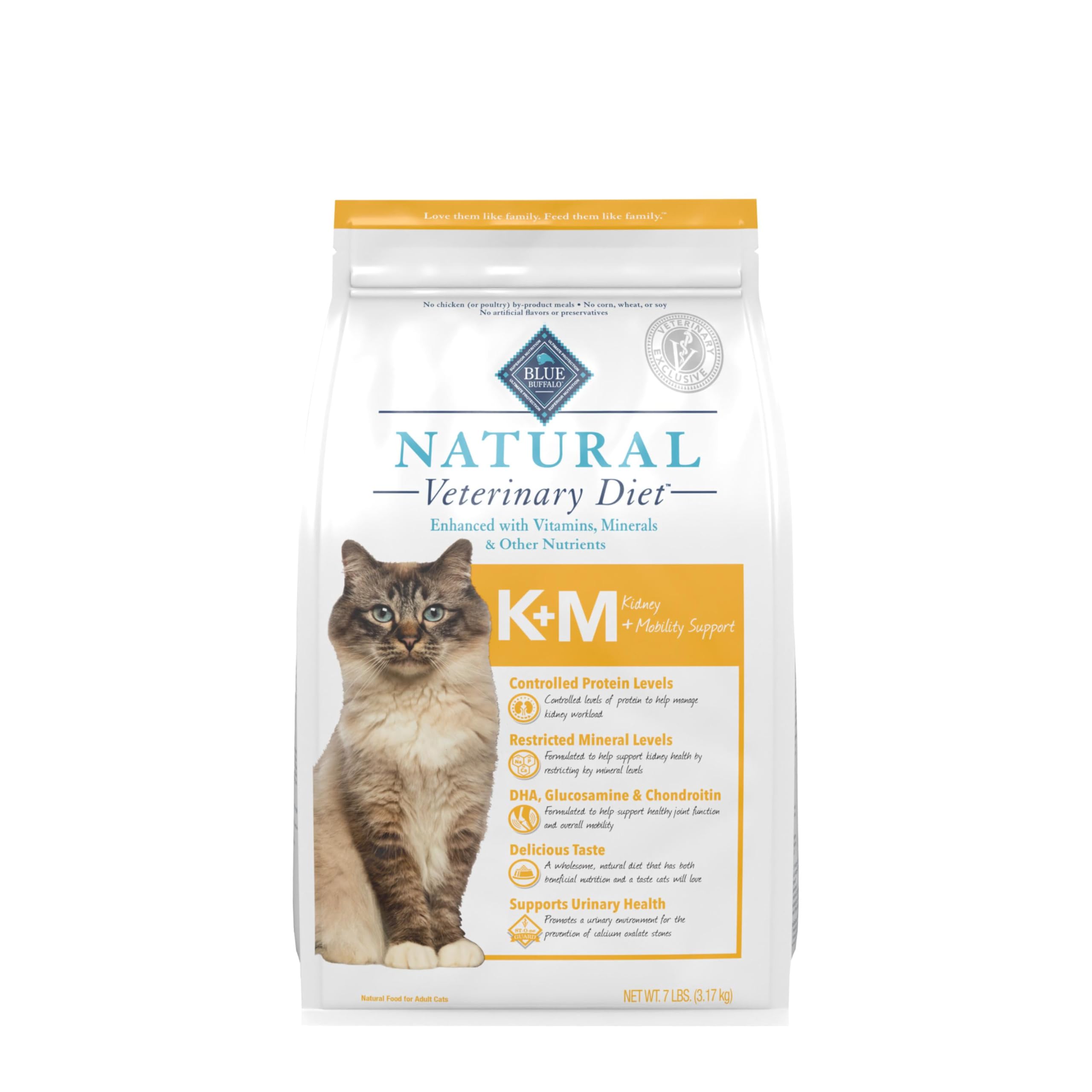
Blue Buffalo K+M is a dual-purpose prescription formula that addresses both kidney function and joint health. Controlled protein levels reduce kidney workload while glucosamine and chondroitin support mobility — a practical combination for senior cats who often struggle with both CKD and arthritis. The kibble is noticeably smaller than most veterinary renal diets, which helps cats with dental sensitivity or mouth pain eat comfortably.
Owner reviews are emphatic: many cats who refuse Hill’s or Purina renal kibble eat Blue Buffalo K+M readily. One owner reported a CKD cat surpassing a two-year life expectancy and reaching age 16 after switching to this food. The chicken-first ingredient list avoids corn, wheat, soy, and poultry by-product meals, which aligns with a clean-label approach.
This is a dry food, so it lacks the hydration benefits of canned options. Owners should pair it with a low-phosphorus wet food or add water to maintain moisture intake. Veterinary prescription is required, and the 7-lb bag is a moderate value at mid-range pricing.
Why we love it
- Dual kidney + joint support in one formula for senior cats
- Small kibble size is gentle on sensitive teeth and gums
- High owner-reported acceptance even from picky CKD eaters
Good to know
- Dry food format requires supplemental hydration via wet food or added water
- Requires veterinary prescription — confirmed by an approval process on Amazon
7. Purina Pro Plan Urinary Tract Health Pate Cat Food Variety Pack

Purina Pro Plan Urinary Tract Health is not a kidney disease diet, but it serves an important supporting role for cats with early-stage urinary issues that may lead to or accompany renal disease. It reduces urinary pH and provides low dietary magnesium, which helps prevent struvite crystal formation — a common stressor on the kidneys. The pate texture is smooth and easy to eat for older cats with reduced appetite.
Owner feedback highlights its effectiveness in managing FLUTD (feline lower urinary tract disease) when used alongside a prescription dry food. The Ocean Whitefish and Salmon entrees are highly palatable, and multiple owners note that cats prefer this over Science Diet urinary formulas. The 24-can variety pack is a cost-effective way to introduce urinary pH management.
This is not a substitute for a proper renal diet in cats with diagnosed kidney disease. The phosphorus and protein levels are not restricted enough for CKD management. It is best used as a transitional or supplementary food for cats with mild urinary concerns, not as the primary treatment for kidney failure.
Why we love it
- Effective pH management helps prevent struvite crystals that stress kidneys
- High palatability — many cats prefer this over competitor urinary formulas
- Budget-friendly entry point for managing urinary tract health
Good to know
- Not formulated for diagnosed kidney disease — lacks sufficient phosphorus restriction
- Pate-only format may not appeal to cats who prefer chunks or gravy textures
FAQ
What is the ideal phosphorus percentage in cat food for kidney disease?
Can I feed my CKD cat a mix of prescription and over-the-counter food?
How do I get my cat to eat renal food when they refuse every brand?
Final Thoughts: The Verdict
For most cat owners navigating a new kidney disease diagnosis, the clear winner in the canned cat food for cats with kidney disease category is the Weruva Wx Phos Focused Variety Pack because it delivers aggressive phosphorus restriction without requiring a prescription, uses highly digestible muscle meat, and has strong owner-reported results in improving kidney values. If you want clinically proven, vet-recommended renal support with prebiotic kidney defense, grab the Hill’s Prescription Diet k/d Chicken & Vegetable Stew. And for advanced-stage kidney disease requiring the most aggressive protein and phosphorus reduction, nothing beats the Purina Pro Plan NF Advanced Care.