
Finding a treatment that truly eliminates both chewing and sucking lice without requiring multiple reapplications is the difference between a profitable season and a costly infestation.
I’m Mo Mahin — the founder and writer behind Furric. I’ve spent years analyzing livestock treatment specifications, comparing active ingredient concentrations, and studying aggregated owner feedback to separate effective solutions from underpowered formulations.
Whether you manage a commercial herd or a small homestead, selecting the right lice treatment for cattle means understanding active ingredients, residual duration, and application methods that match your specific operation.
How To Choose The Best Lice Treatment For Cattle
Choosing a cattle lice treatment isn’t as simple as grabbing the first insecticide spray you see. You need to match the active ingredient, concentration, and application method to the type of lice in your herd and the size of your operation.
Active Ingredient and Concentration
Permethrin is the most common and effective active ingredient for cattle lice. Concentrations of 10% or higher provide rapid knockdown and weeks of residual protection. Lower concentrations may require more frequent reapplications and often fail to break the life cycle of sucking lice.
Application Method
Concentrates you dilute yourself offer the best cost-per-dose for large herds. Spray-on formulations work well for spot treatments and smaller groups. Backrubber applications are ideal for pasture-raised cattle that self-treat. Choose a product that fits your handling setup and labor availability.
Residual Duration
Look for treatments that maintain efficacy for at least 2–4 weeks. Short-residual products force you to reapply during the 3–4 week louse egg-hatching cycle, making eradication nearly impossible. Long residual action breaks the cycle with fewer applications.
Quick Comparison
On smaller screens, swipe sideways to see the full table.
| Model | Category | Best For | Key Spec | Amazon |
|---|---|---|---|---|
| Neogen Insectrin X 32 oz | Premium | Broad-spectrum herd treatment | 10% Permethrin, 2 lb concentrate | Amazon |
| Durvet Permethrin EC 10% 16 oz | Mid-Range | Versatile multi-species use | 10% Permethrin EC concentrate | Amazon |
| Martin’s 32 oz Permethrin 13.3% | Mid-Range | Higher-concentration spot treatment | 13.3% Permethrin, 32 oz liquid | Amazon |
| Wisdom Pro L&H 7.9% Bifenthrin | Value | Indoor/outdoor premise treatment | 7.9% Bifenthrin, quart concentrate | Amazon |
| PT 221L Pressurized Insecticide | Budget | Facility crack/crevice treatment | Lambda-Cyhalothrin aerosol, 16 oz | Amazon |
In‑Depth Reviews
1. Neogen Insectrin X 32 oz
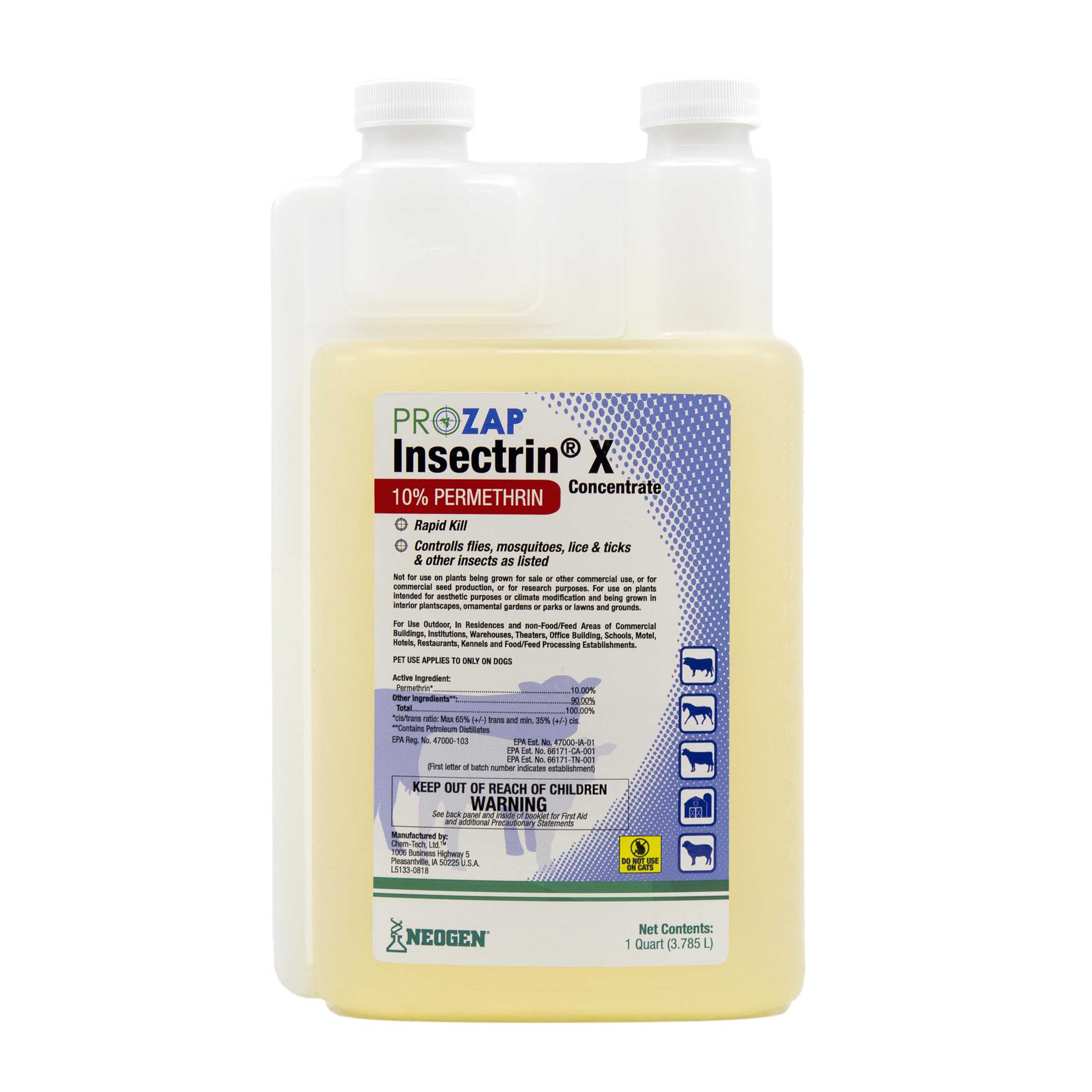
The Neogen Insectrin X delivers a 10% permethrin concentrate specifically labeled for livestock premise spray, backrubber use, and spot treatment — making it the most versatile option for cattle lice control. Its residual action lasts long enough to break the louse egg-hatching cycle with fewer reapplications, saving labor on larger operations.
Users report instant knockdown on chewing lice and effective control of sucking lice when applied as a whole-body spray at the recommended dilution rate of 1–2 oz per gallon of water. The 32-ounce bottle treats a significant number of animals, lowering your per-head treatment cost compared to ready-to-use aerosols.
The main trade-off is the strong chemical smell that persists for several hours after application. Wear a respirator and nitrile gloves during mixing and spraying, and keep treated animals in well-ventilated areas until the spray dries completely. The smell dissipates but is a clear signal this is a professional-grade concentrate.
Why we love it
- Labeled for backrubber, spray, and spot treatment — three methods in one product
- Long residual breaks louse life cycle with fewer reapplications
- Excellent cost per dose for herds of 20+ head
Good to know
- Strong chemical odor requires PPE during mixing and application
- Not for direct topical use on animals — must be diluted first
2. Durvet Permethrin EC 10% 16 oz

Durvet’s Permethrin EC 10% is an emulsifiable concentrate that mixes easily with water and is specifically labeled for use on dairy and beef cattle, horses, sheep, goats, and swine. This broad multi-species approval makes it a practical choice for mixed-livestock operations where lice management must cover multiple animal types from a single bottle.
At 1 oz of concentrate per gallon of water, the 16-ounce bottle produces 16 gallons of ready-to-use spray — enough to treat a moderate-sized herd multiple times. Users report rapid knockdown of fleas and ticks in addition to lice, and the residual activity holds up well on dry hair coats in drylot conditions.
The formula has a noticeable chemical odor during mixing. Store the concentrate in a cool, dark location to maintain potency. The 16-ounce size is economical for small to mid-sized herds but may require multiple bottles for large commercial operations where per-ounce pricing on the 32-ounce options is more favorable.
Why we love it
- Labeled for dairy and beef cattle plus horses, sheep, goats, and swine
- EC formulation mixes readily without clumping in cold water
- Cost-effective for mixed-species operations
Good to know
- Strong odor during mixing requires outdoor preparation and PPE
- 16 oz size limits cost efficiency for very large herds
3. Martin’s 32 oz Permethrin 13.3%
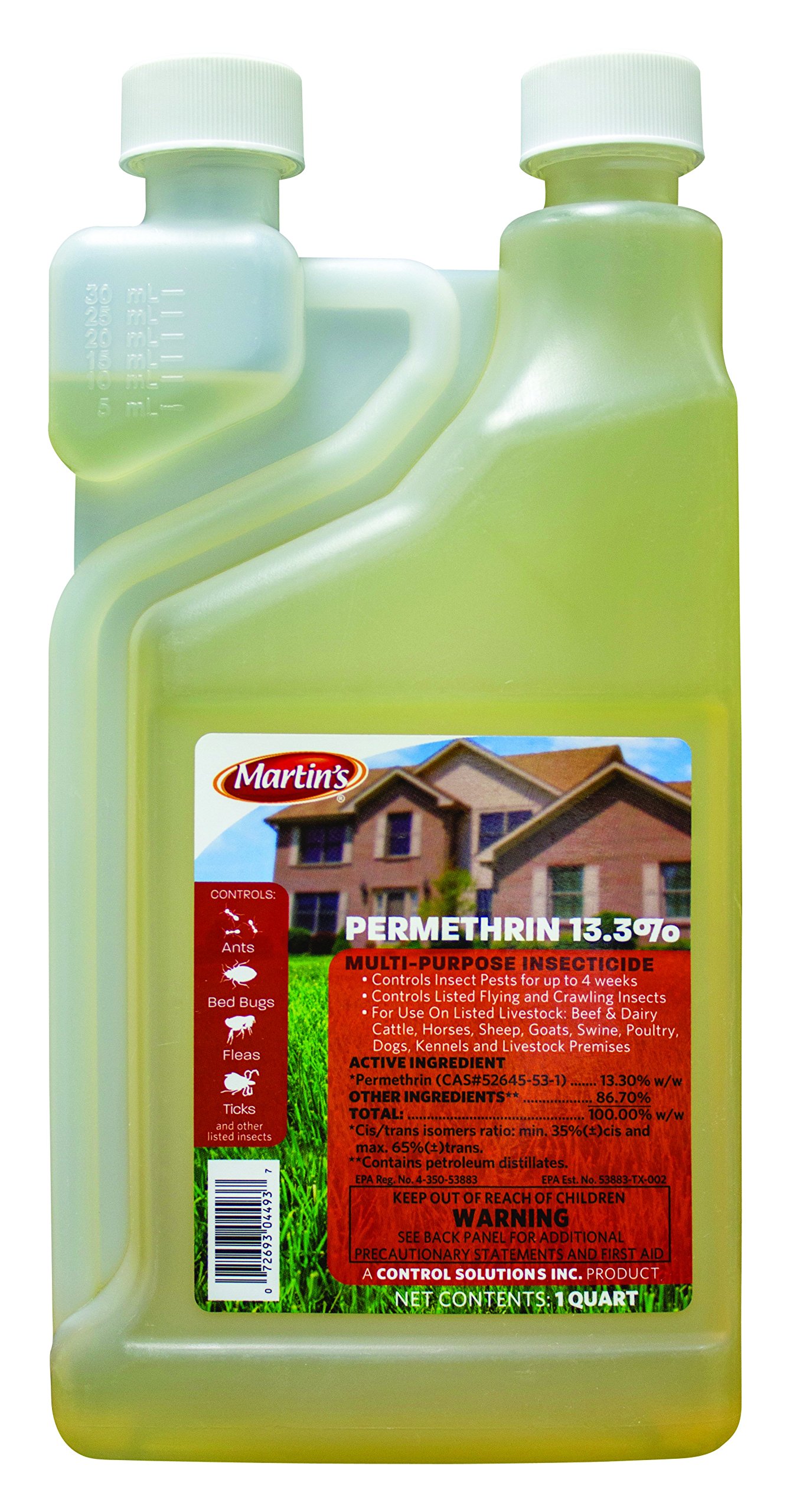
Martin’s Permethrin 13.3% is the highest permethrin concentration in this lineup, delivering more active ingredient per ounce than standard 10% formulations. This means you use less concentrate per gallon of finished spray — the 32-ounce bottle goes further, making it a strong value for operations treating large numbers of cattle.
Labeled for indoor and outdoor use, Martin’s controls lice, ticks, mosquitoes, and flies on livestock premises. Users consistently report 4–6 weeks of tick control in perimeter treatments, and the residual activity on cattle hair coats is comparable. The higher concentration allows you to dial in dilution rates precisely for spot treatment or whole-body spraying.
The chemical smell is notably stronger than lower-concentration products — several users describe it as paint-thinner intensity. This product is not suitable for indoor handling facility use without full ventilation. Dilute outdoors and allow animals to dry in open pens to minimize respiratory irritation.
Why we love it
- Highest permethrin concentration (13.3%) maximizes cost per gallon of spray
- 32 oz bottle treats more animals than standard 16 oz concentrates
- Up to 6 weeks residual control when applied correctly
Good to know
- Very strong solvent-like odor requires outdoor mixing and full PPE
- Ineffective on ants, crickets, and roaches if used for premise treatment
4. Wisdom Pro L&H 7.9% Bifenthrin Quart

The Wisdom Pro L&H uses bifenthrin rather than permethrin, offering an alternative mode of action (sodium channel modulation) that is effective against pyrethroid-resistant louse populations. The 7.9% concentration is lower than permethrin products, but bifenthrin’s environmental stability on surfaces compensates with extended residual activity.
This product is best used for premise treatment — spraying cattle housing, bedding areas, and fence lines where lice and ticks harbor between feedings. Direct on-animal use is not the primary design, but the residual on treated surfaces kills lice that crawl across them for weeks after application.
The quart bottle goes a long way when used at typical dilution rates of 1–2 oz per gallon. The bifenthrin base has a less intense odor than permethrin concentrates, making it more tolerable for indoor handling facility treatment. Be cautious around flowering plants near the treatment area, as bifenthrin is highly toxic to bees.
Why we love it
- Bifenthrin provides an alternative mode of action for resistant lice populations
- Excellent surface residual — weeks of activity on bedding and facility surfaces
- Less chemical odor than permethrin-based concentrates
Good to know
- Not labeled for direct whole-body spray on cattle — premise use only
- Highly toxic to bees and aquatic life; avoid runoff into waterways
5. PT 221L Pressurized Insecticide with Gloves

The PT 221L is a ready-to-use aerosol containing lambda-cyhalothrin, designed for crack-and-crevice treatment and spot application. This is a facility-focused product — it targets lice harborage points in cattle housing, alleyways, and handling chutes rather than treating the animals directly.
Lambda-cyhalothrin provides rapid knockdown with a long residual on porous surfaces like wood and concrete. The included protective gloves are a thoughtful addition for operators who may not have PPE on hand. The pressurized can format eliminates mixing errors and is ideal for quick spot treatments between herd rotations.
For lice treatment specifically, this product is a supplement to whole-animal sprays — not a replacement. Use it to treat cracks in stanchions, bedding pack edges, and wall junctions where lice aggregate. The 16-ounce can is small, so budget multiple cans for a complete facility treatment.
Why we love it
- Ready-to-use aerosol eliminates mixing time and dosing errors
- Included gloves reduce the need to source separate PPE
- Potent lambda-cyhalothrin provides residual control on facility surfaces
Good to know
- Not a standalone whole-animal lice treatment — must supplement sprays
- Small 16 oz can size requires multiple units for full facility coverage
FAQ
Can I use permethrin 10% directly on cattle without diluting?
How often do I need to retreat cattle for lice?
What is the difference between chewing lice and sucking lice treatments?
Final Thoughts: The Verdict
For most cattle operations, the lice treatment for cattle winner is the Neogen Insectrin X because the 10% permethrin concentrate is labeled for spray, backrubber, and spot treatment — three application methods in one bottle with proven 2–4 week residual. If you need a multi-species concentrate that covers dairy, beef, horses, and small ruminants, grab the Durvet Permethrin EC 10%. And for facility-focused premise treatment with an alternative mode of action, nothing beats the Wisdom Pro L&H Bifenthrin.