
An outdoor cat that lacks a dry, insulated refuge faces hypothermia, frostbite, and constant predation risk during winter months. A proper shelter must balance weatherproofing against the cat’s instinctual need for a quick escape route — a detail many entry-level designs ignore entirely.
I’m Mo Mahin — the founder and writer behind Furric. I spend my time cross-referencing HDPE density ratings against wood thickness specifications, studying the thermal conductance of foam versus hollow-core walls, and analyzing hundreds of owner reports about how feral cats actually use these structures before recommending a single model.
After comparing seven different models across resin, oxford cloth, plastic, and wood constructions, the right shelter for outdoor cats comes down to three variables: insulation type, door configuration, and base elevation off wet ground.
How To Choose The Best Shelter For Outdoor Cats
Every year, caregivers buy a shelter only to find it collects condensation, blows over in the first windstorm, or sits empty because the single entrance feels like a trap. You can avoid those failures by checking three things before you buy.
Wall Construction & Insulation Type
The cheapest shelters use single-wall polyethylene or thin oxford cloth. These block rain but do almost nothing to stop heat loss. A dual-wall HDPE shell or a fir-wood panel laminated with closed-cell foam traps the cat’s body heat far more effectively. If you live where temperatures drop below freezing, look for explicit layered insulation rather than relying on the cat’s fur alone.
Entrance Configuration — One Door vs. Two
A single doorway forces a cornered cat to flee past a predator. Dual exits — a front door plus a rear or side escape hatch — give the cat a chance to bolt if a raccoon, coyote, or aggressive dog blocks the main opening. This single feature often determines whether a feral cat will trust the shelter enough to sleep inside.
Base Elevation & Floor Material
Ground moisture wicks upward through any non-elevated floor. Shelters with plastic legs or wooden risers that hold the floor 2-4 inches above the soil stay drier and last longer. A removable, washable floor panel also prevents ammonia buildup from urine-soaked bedding, which matters when the shelter sits in a barn or enclosed porch where ventilation is limited.
Quick Comparison
On smaller screens, swipe sideways to see the full table.
| Model | Category | Best For | Key Spec | Amazon |
|---|---|---|---|---|
| FunXplore Insulated (Gray) | Premium Wood | Freezing winters, predator-prone areas | 3-layer foam + fir wood walls | Amazon |
| Generic HDPE Shelter (White) | Premium Plastic | Year‑round all‑weather use | Dual-layer HDPE hollow wall | Amazon |
| FunXplore Wood Double Room | Mid-Range Wood | Multi‑cat colonies, garage use | Solid wood, asphalt shingle roof | Amazon |
| Texsens Weatherproof (Black) | Mid-Range Fabric | Mild climates, portable placement | Elevated base, Velcro assembly | Amazon |
| TSEHOOHOO Stackable Plastic (Green) | Mid-Range Plastic | Sheltered porches, stackable setups | Double‑layer plastic, elevated stand | Amazon |
| Rest-Eazzzy Oxford (Grey) | Budget Fabric | Fair‑weather temporary shelters | Waterproof oxford cloth, carry handle | Amazon |
| DRATO Resin Igloo (Black) | Budget Plastic | Patios, covered backyards | Resin shell, 18.5″ interior | Amazon |
In‑Depth Reviews
1. FunXplore Insulated Outdoor Cat House (Gray)
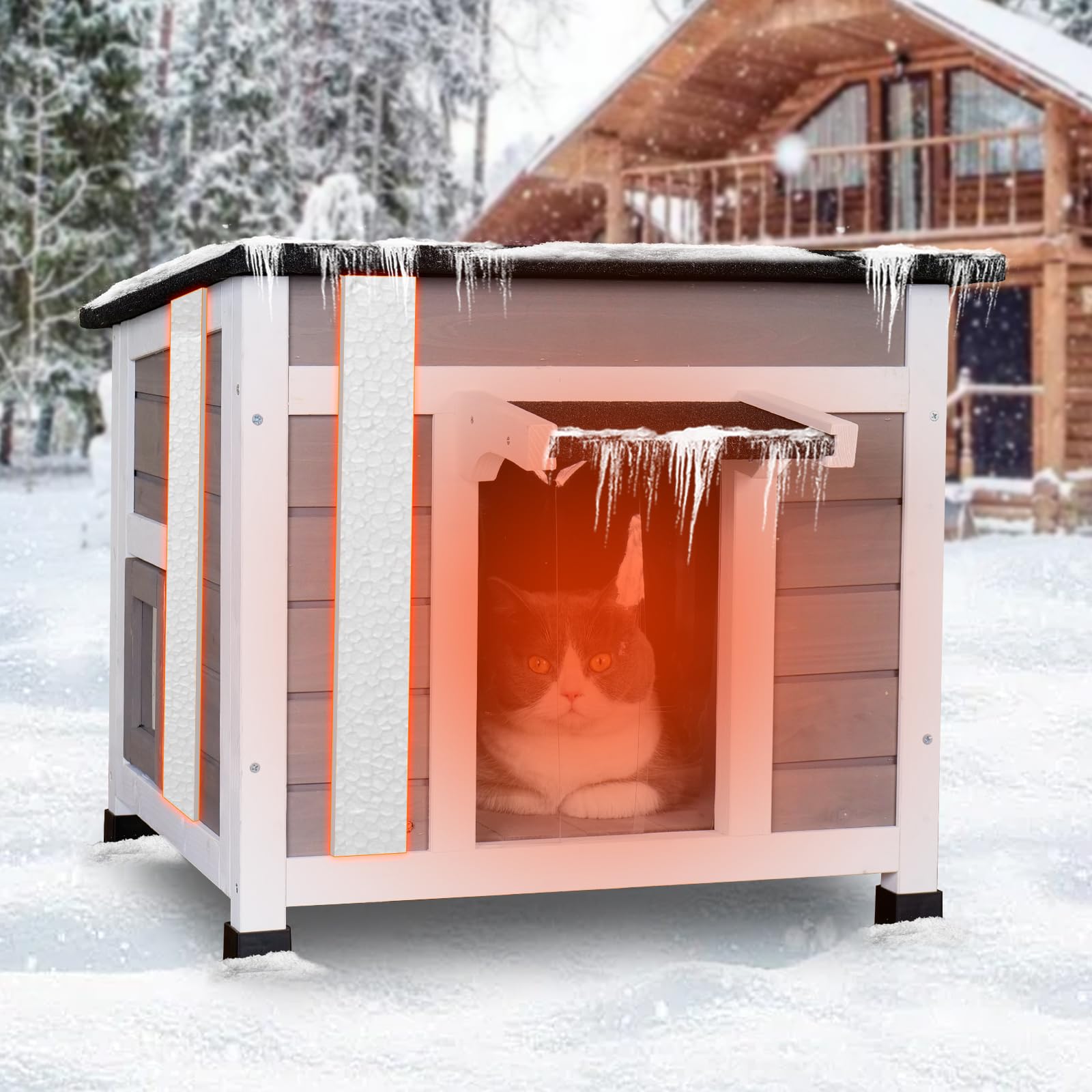
This is the only shelter in this lineup with a three-layer composite wall — solid fir wood on the exterior, a high-density foam core, and plywood on the interior. The 1.5‑inch thickness traps body heat roughly twice as effectively as single-panel resin or fabric walls, making it viable for sub‑freezing nights. The 100‑percent waterproof asphalt roof and four elevated plastic feet keep the floor dry even when the ground is saturated with snowmelt.
Two separate escape doors equipped with clear PVC curtains give a cornered cat a viable flight path, which is the feature that separates this model from the single-entrance alternatives. Owner reviews consistently note that skittish feral cats began using the shelter within hours, something that rarely happens with enclosed buckets or single‑door igloos. Assembly runs under fifteen minutes with a screwdriver because each panel is stamped with a part number that matches the manual.
The removable floor panel and hinged roof make deep cleaning trivial — you can scrape out old straw and wipe down the interior without tools. The fir wood benefits from an annual coat of exterior sealant, but the built‑in foam insulation means you do not need to add Reflectix or straw to the walls. For caregivers in hard‑winter zones who want a shelter that cats actually trust, this is the most complete package.
Why we love it
- Three-layer foam wall locks warmth far better than single-panel designs
- Dual escape doors give feral cats the confidence to enter
- Elevated base and waterproof roof keep the interior bone dry
Good to know
- Fir wood needs periodic sealing against prolonged rain exposure
- Roof material can shed black granules in the first few weeks
2. Generic Heavy-Duty HDPE Cat Shelter (White)
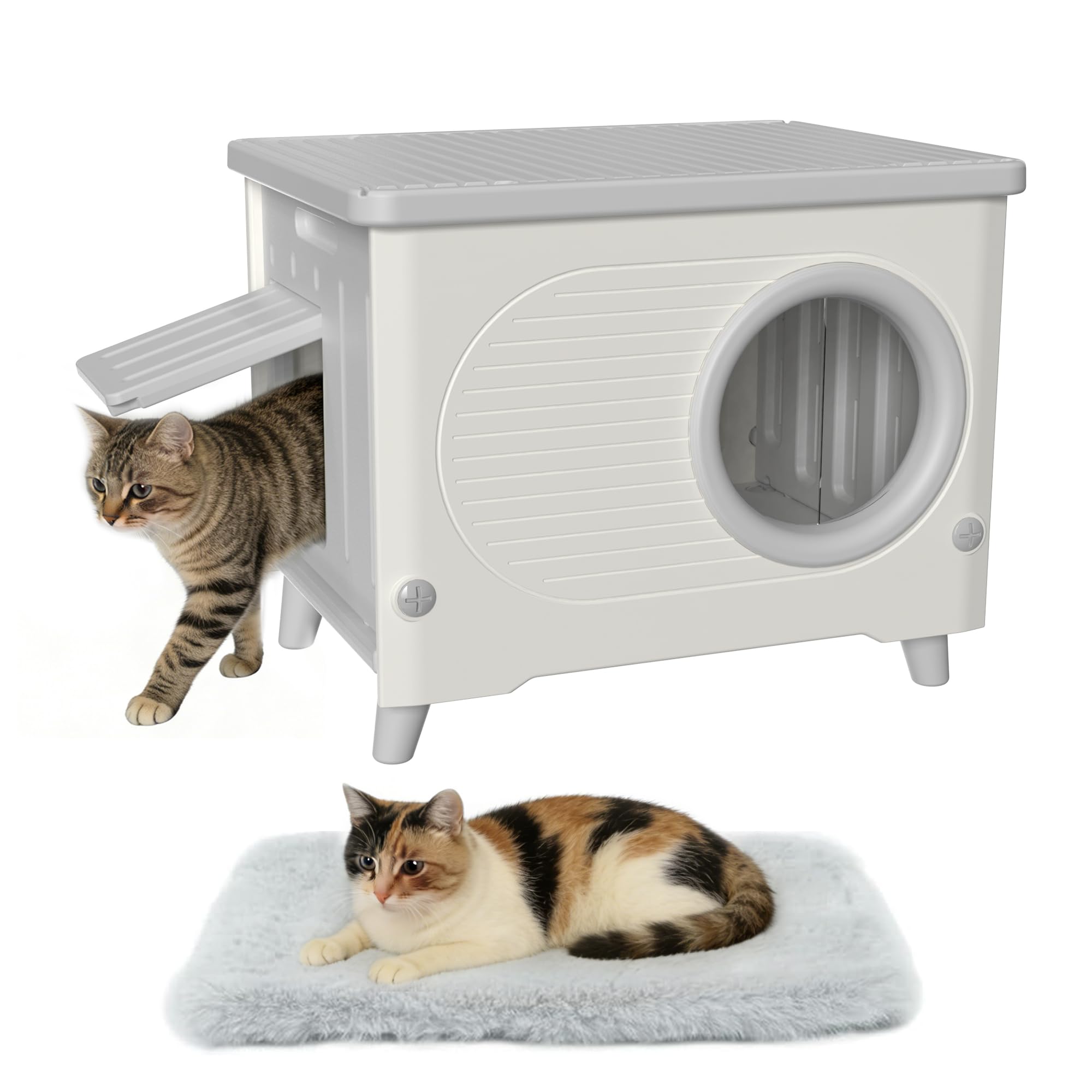
Where the FunXplore leans on foam, this shelter relies on a dual‑wall hollow HDPE structure that provides a dead-air gap between the outer and inner shells. That air gap acts as thermal break — not as effective as foam, but significantly better than single-wall plastic or fabric. The material itself resists impact, UV fade, and scratching from claws, which matters when the shelter sits on a concrete patio or in a barn where other animals may bump into it.
The round burrow‑style entrance aligns with feline instinct, which is why multiple owners report that their strays accepted it within a day. The design also reduces wind intrusion compared to a wide rectangular opening. An elevated base lifts the floor off damp ground, and the stackable feature lets you place two units side by side for multi‑cat colonies without taking up extra floor space.
Assembly is tool‑free — the pieces click together like a puzzle, and the smooth surface wipes clean with a damp cloth. The included cushion is washable, though owners in cold climates add a self‑heating pad underneath. Some report that angled downpours can push water through the round entrance, so placing it against a wall or under an overhang helps.
Why we love it
- Dual‑wall HDPE shell provides a genuine thermal air gap
- Round burrow entrance feels natural and reduces wind intrusion
- Tool‑free assembly and easy‑clean surface
Good to know
- Downward rain can still wet the interior through the entrance
- Single door lacks the safety of a secondary escape route
3. FunXplore Wood Double-Room Cat House (Gray & Red)
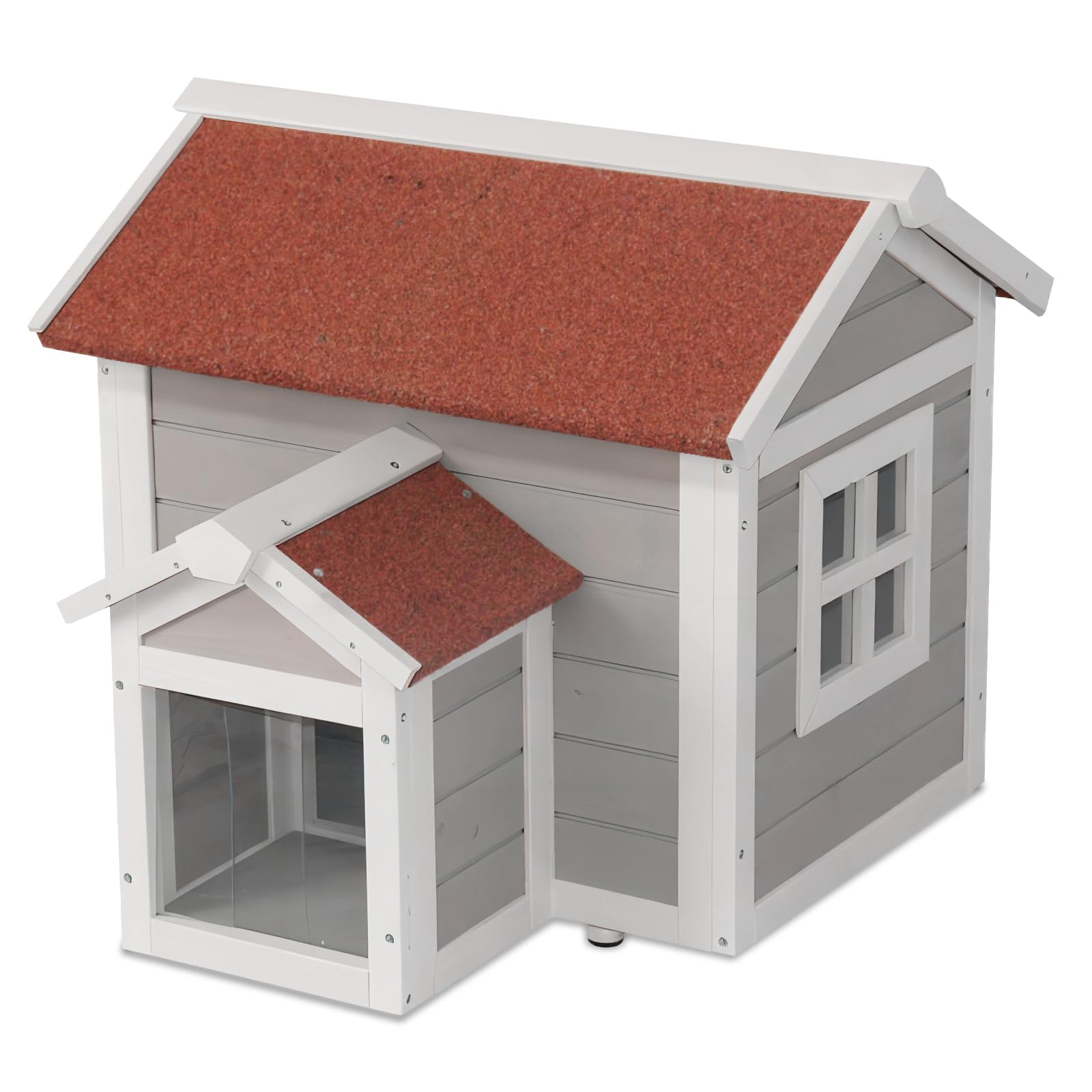
This model trades the foam core of the premium FunXplore for solid wood panels with a slatted floor and an asphalt shingle roof. The interior space is generous enough for two adult cats to share, and the dual exits — a front door with soft PVC strips and a side opening — give each cat an independent escape path. The elevated legs lift the floor 2.5 inches off the ground, which blocks the moisture wicking that ruins fabric shelters.
Real customer builds confirm that the wood feels lightweight during assembly but becomes rigid once all panels lock together. The roof opens on hinges, and the floor board slides out, which makes weekly straw changes and interior wipe‑downs a one‑minute task. Owners who seal the wood with exterior paint or stain report the shelter lasting through multiple winters without warping.
The main caveat is that this shelter has zero factory insulation — the walls are a single layer of wood. In freezing weather you will need to add a foam liner or use deep straw bedding inside. Wind can also tip it if the shelter is not weighed down or staked. That said, the dual‑door layout and the ability to easily add your own insulation make it a smart choice for caregivers who want wood aesthetics without paying for pre‑installed foam.
Why we love it
- Two independent exits reduce the trapped‑feeling risk for skittish cats
- Hinged roof and removable floor simplify deep cleaning
- Asphalt shingle roof sheds rain reliably
Good to know
- No factory insulation; requires DIY foam or straw in cold climates
- Light weight means it can blow over if not secured
4. Texsens Weatherproof Cat House (Matte Black)

Texsens takes an entirely different approach: the walls are polyester fabric stretched over a collapsible frame and joined with Velcro seams. That makes the shelter fold flat for storage or transport, and the total assembly time is under 60 seconds without any tools. The elevated base uses six plastic risers that keep the fabric floor off the ground, and the kit includes two windproof stakes for moderate wind conditions.
The shelter ships with four door covers — two transparent PVC curtains for rain, two mesh screens for airflow — plus a soft cotton mat and a separate cooling pad for summer. That variety lets you adapt the shelter seasonally, which is rare in this category. Owners who set it up on covered porches report zero wetness inside after heavy rain, though the fabric itself is water‑resistant rather than fully waterproof, so full exposure to a storm will eventually soak through.
Cat acceptance is high according to owners, largely because the entrance is generous and the Velcro door flaps can be pinned open so the cat can see through. The plastic smell out of the box is strong and needs a two‑day airing. This is not a winter shelter for icy climates — the fabric walls provide minimal insulation — but for mild weather, relocation flexibility, or temporary use during barn renovations, it is the lightest and most packable option.
Why we love it
- Velcro frame collapses flat — ideal for travel or seasonal storage
- Includes both mesh and solid door curtains plus a cooling pad
- Elevated plastic legs stop ground moisture from soaking the floor
Good to know
- Fabric walls offer almost no insulation for freezing weather
- Strong plastic odor out of box requires 2‑3 days to air out
5. TSEHOOHOO Stackable Plastic Cat House (Green)
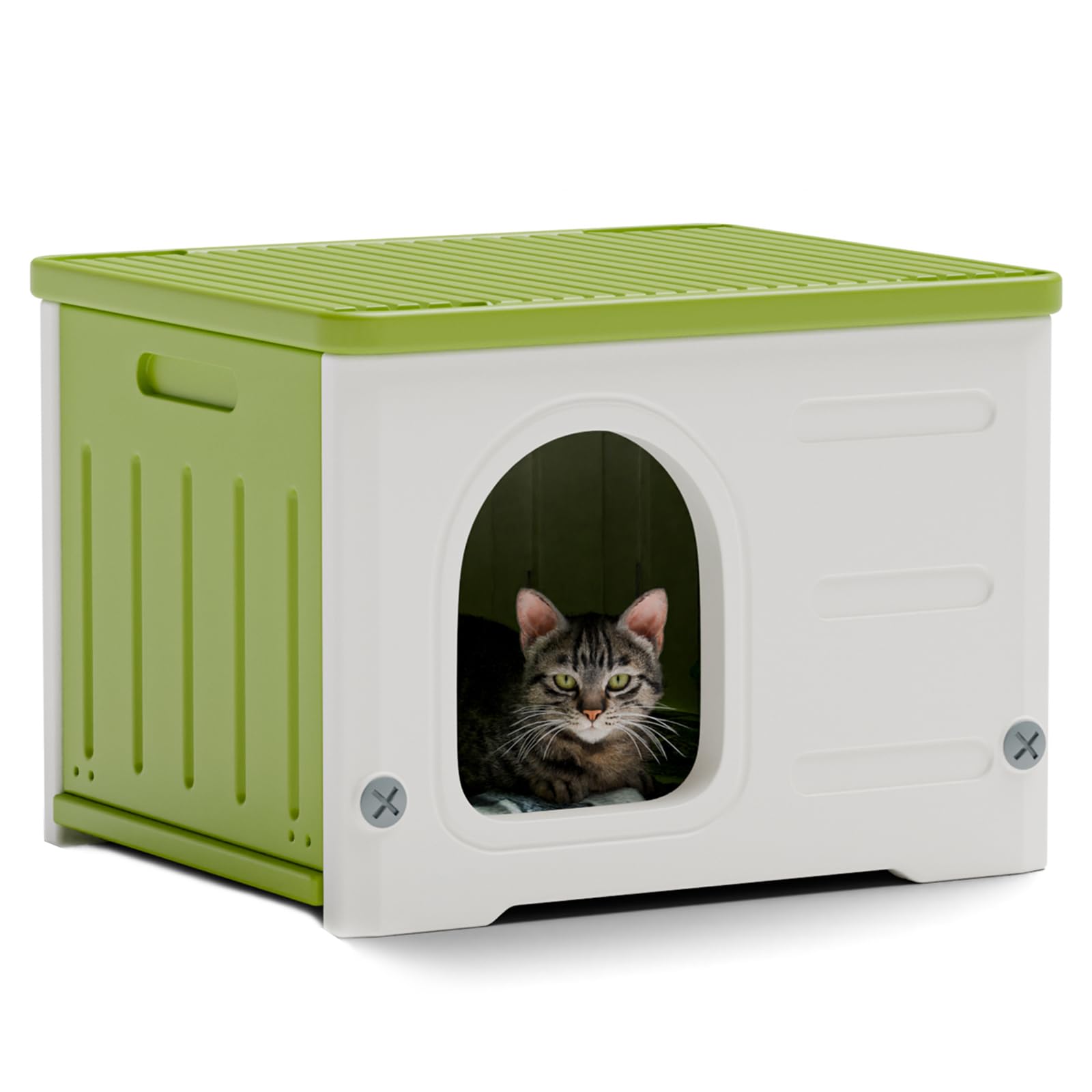
This is a double‑walled plastic shelter with a thickened shell that feels similar to a child’s sturdy toy bin. The walls snap together with plastic screws — no metal hardware — and the top buckle design lets you lift the roof off for cleaning. The stackable feature is genuinely useful if you manage a colony: two units can sit on top of each other without wobbling, doubling the shelter capacity within the same footprint.
The interior measures 20.8 by 16.1 by 15.1 inches, which fits one adult cat comfortably or two kittens. Owners note that two full‑grown cats rarely use it simultaneously, but a mother cat with a litter fits fine. The included cushion is thin — a comforter‑grade layer — so you will want to add straw or a self‑heating pad for winter. The base sits on a sturdy plastic stand that keeps the floor an inch off the ground, enough to block puddles but not deep snow.
The entrance is a large rectangular opening without a flap. This makes the shelter feel open and non‑threatening, which helps shy cats commit to entering, but it also lets wind and rain blow straight in. Several owners have added a mylar blanket or cut a clear plastic curtain to cover the doorway. The stackable ability and the easy‑clean plastic surface make this a practical mid‑range pick for covered patios and barn stalls.
Why we love it
- Stackable design saves floor space for multi‑cat setups
- Snap‑together assembly with plastic screws — no tools needed
- Large entrance helps shy strays feel safe approaching
Good to know
- Wide doorway lets wind and rain enter without a protective flap
- Included cushion is too thin for insulation on its own
6. Rest-Eazzzy Oxford Cloth Cat House (Grey)
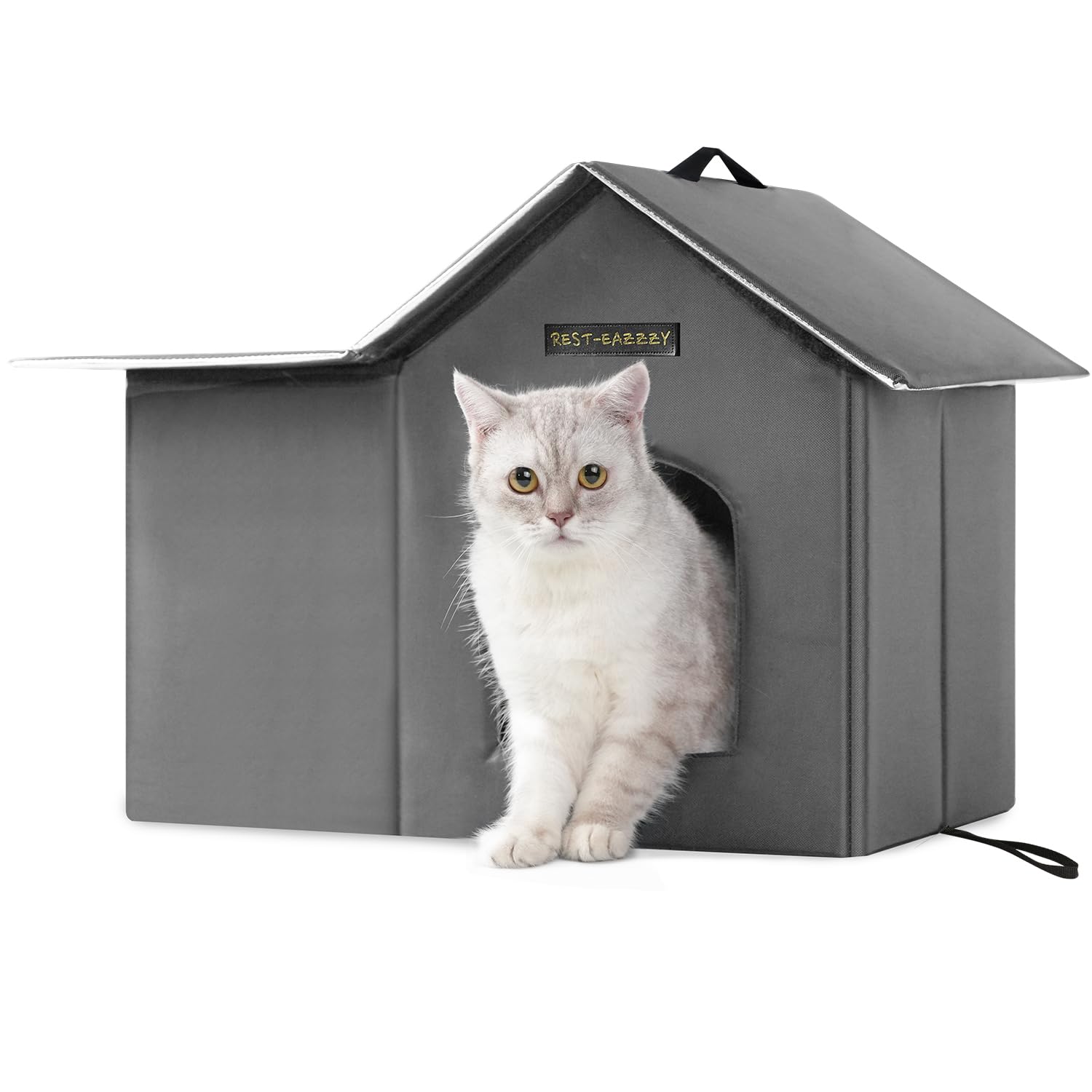
This shelter relies on a sandwich‑design waterproof oxford cloth stretched over a collapsible frame. The material sheds rain initially, but owners report that prolonged direct sun exposure degrades the fabric and causes it to leak within a single season. The medium size measures 13 by 18 by 14 inches — tight for one adult cat, though it works for kittens or small breeds.
The standout feature here is the portable carry ring on the roof, which lets you move the shelter between locations in seconds. Assembly is nearly zero — you unfold the frame and it snaps into shape. An included mat and curtain add a small amount of additional weather protection. Owners who placed it in locations sheltered from wind and direct rain report cats using it regularly.
The lack of any rigid wall, the lightweight construction, and the reported sun damage make this a temporary or fair‑weather shelter rather than a durable structure. It works well as a backup for a garage or screened porch, but for full‑time outdoor exposure in wet or sunny climates, the plastic and wood options in this guide will outlast it by multiple seasons.
Why we love it
- Carry handle makes relocation effortless — useful for rotation between spots
- Unfolds in seconds with no tools or fasteners
- Sandwich‑wall fabric blocks light rain initially
Good to know
- Fabric degrades quickly under direct sunlight
- Too small for larger adult cats to turn around comfortably
7. DRATO Resin Cat Igloo (Black)
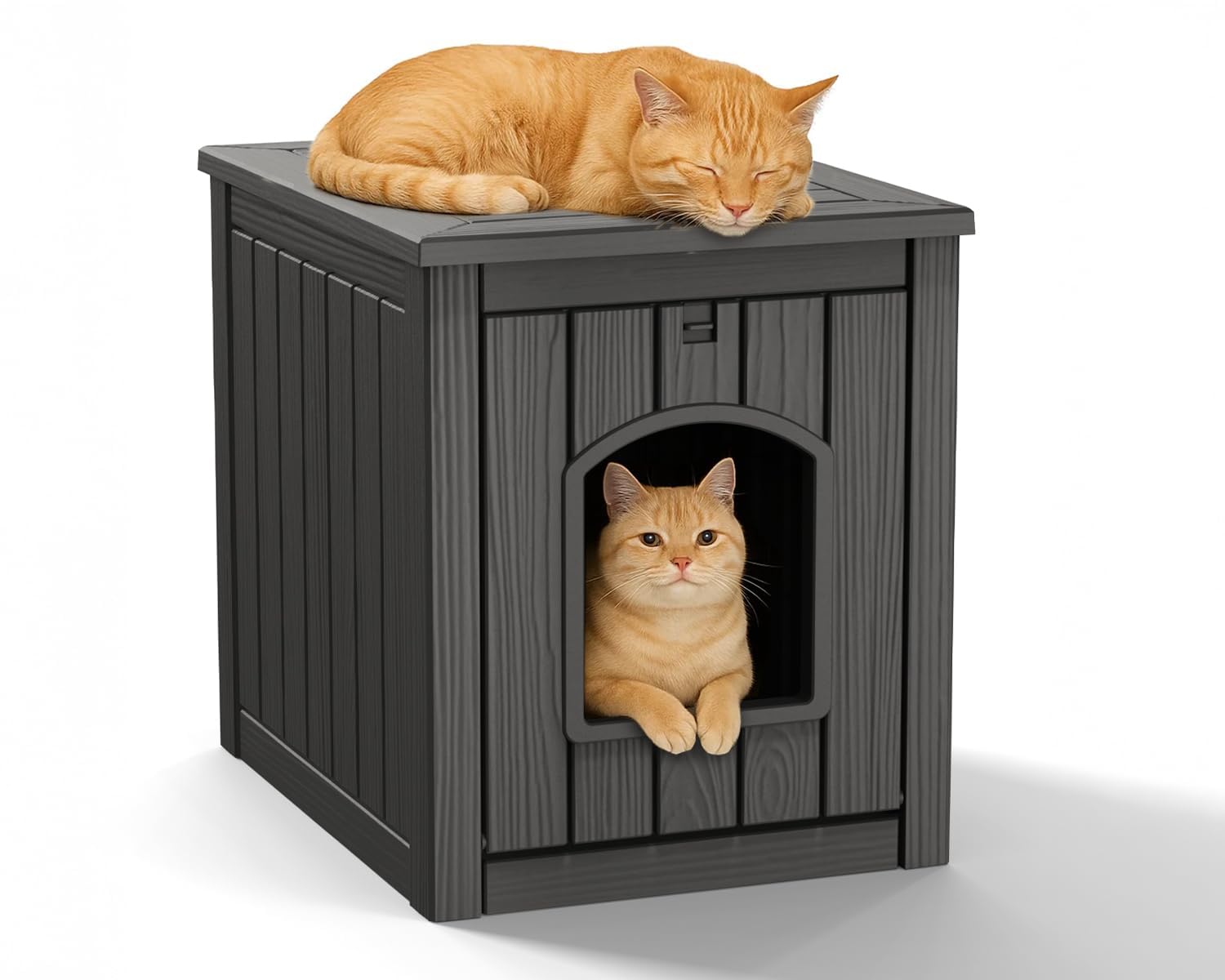
The DRATO igloo is a resin‑shell shelter with a 18.46‑inch diameter interior — large enough for one larger cat or two small cats curled together. The material is a blend of polyethylene and polypropylene reinforced with metal fibers, which gives it a rigid, durable feel that resist cracking and UV degradation better than the oxford cloth shelters. The igloo shape sheds water efficiently because there are no flat seams for moisture to pool.
Assembly takes roughly five minutes: the two shell halves snap together with interlocking tabs on the bottom plate. Owners report that stray cats accept the igloo immediately, likely because the rounded enclosure mimics natural dens. The shelter is heavy enough that moderate wind does not move it, and the smooth resin surface cleans easily with a hose. A few owners noted that the single entrance can trap heat in summer, so placing it in partial shade during warm months is advisable.
The resin provides no insulation value on its own. In winter, the interior temperature stays only slightly above ambient unless you add a thick layer of straw or a self‑heating pad. The igloo configuration also lacks a secondary exit, which makes it less suitable for predator‑dense areas. For a covered back patio or a garage corner where the cat faces no predation risk, the DRATO is a simple, waterproof shell that sets up in minutes.
Why we love it
- Two‑piece snap assembly — one of the fastest setups available
- Igloo shape sheds rain without pooling
- Heavy enough to stay in place during windy conditions
Good to know
- No insulation — needs straw or a heating pad for cold months
- Single entrance provides no escape route from predators
FAQ
Should I buy an insulated shelter or add insulation myself?
Why does a dual‑exit shelter matter for feral cats?
Can I use an electric heating pad inside an outdoor cat shelter?
Final Thoughts: The Verdict
For most caregivers, the shelter for outdoor cats winner is the FunXplore Insulated Gray model because its three‑layer foam wall and dual‑exit design solve the two biggest problems — heat loss and predator trapping — that keep feral cats from using cheaper shelters. If you need a durable plastic shell that stacks for multiple cats and requires no insulation upgrades, grab the Generic HDPE shelter. And for a portable, fold‑flat option that you can move between locations in under a minute, the Texsens weatherproof model is the lightest choice that still keeps the floor elevated off wet ground.