
That dark spot spreading across the arm of your favorite upholstered chair after a single glass of red wine is the moment every furniture owner dreads. A quality fabric stain protector is the invisible shield that turns absorbent fibers into a liquid-repelling surface, buying you critical minutes to blot away spills before they ever become permanent marks.
I’m Mo Mahin — the founder and writer behind Furric. I’ve spent thousands of hours analyzing chemical formulations, studying hydrophobic coating technologies, and cross-referencing real-world spill tests from verified buyers to separate true protectors from overpriced water in a can.
After evaluating application ease, curing time, odor intensity, and the actual beading effect on upholstery fibers, I’ve settled on the five protectors that earn a spot on your shopping list when searching for the best fabric stain protector for furniture.
How To Choose The Best Fabric Stain Protector For Furniture
Not all fabric protectors are designed for indoor upholstery. Automotive formulas contain stronger solvents that emit heavy fumes, while universal sprays may darken delicate fabrics like linen or silk. Matching the chemistry to your furniture’s fiber type and your household’s sensitivity to odors is the first decision that determines success.
Formula Chemistry: Water-Based vs Solvent-Based
Water-based protectors use amorphous silicon dioxide or fluoropolymer dispersions suspended in water. They are non-flammable, odorless, and safe for use around children and pets — ideal for indoor sofa and chair applications where ventilation is limited. Solvent-based aerosols, like traditional Scotchgard formulas, create a stronger initial water-beading effect but require outdoor application and several hours of off-gassing before the furniture is safe to sit on. Check the label for “non-toxic” or “PFAS-free” if you are treating a high-contact surface like a nursery glider or a pet bed.
Application Method: Aerosol vs Trigger Spray
Aerosol cans deliver a fine, consistent mist that penetrates deep into woven fibers, making them best for large surface areas like an entire sofa or wall-to-wall carpet. Trigger spray bottles give you more control over output and coverage, reducing overspray on non-target surfaces, but require more manual effort on large projects. For a single armchair or a set of dining chair cushions, a trigger spray is more economical and wastes less product. For a full sectional, an aerosol covers ground faster.
Cure Time and Longevity
Every fabric protector needs a dry-cure period — typically 24 to 48 hours — during which the hydrophobic bonds form and the coating cures to its maximum repellency. Using the furniture before the cure window expires can damage the coating and leave gaps in protection. Premium water-based formulas can last up to three years on low-contact surfaces, while standard aerosol protectors typically require reapplication every six to twelve months depending on abrasion from sitting and cleaning.
Quick Comparison
On smaller screens, swipe sideways to see the full table.
| Model | Category | Best For | Key Spec | Amazon |
|---|---|---|---|---|
| protectME Fabric Protector | Premium Water-Based | Indoor sofas & pet-safe zones | 73 sq ft per 25.4 oz bottle | Amazon |
| ForceField Fabric Protector | Non-Toxic Spray | Delicate fabrics & outdoor cushions | 22 oz trigger bottle | Amazon |
| Scotchgard Fabric Water Shield | Solvent Aerosol | Heavy-duty water repellency | 13.5 oz aerosol can | Amazon |
| Cadillac All Weather Shield | Universal Aerosol | Mixed materials (leather + fabric) | 10.5 oz aerosol can | Amazon |
| Scotchgard Auto Fabric & Carpet | Auto Aerosol | Car upholstery & floor mats | 10 oz aerosol can | Amazon |
In‑Depth Reviews
1. protectME Fabric Protector and Stain Resistant Spray
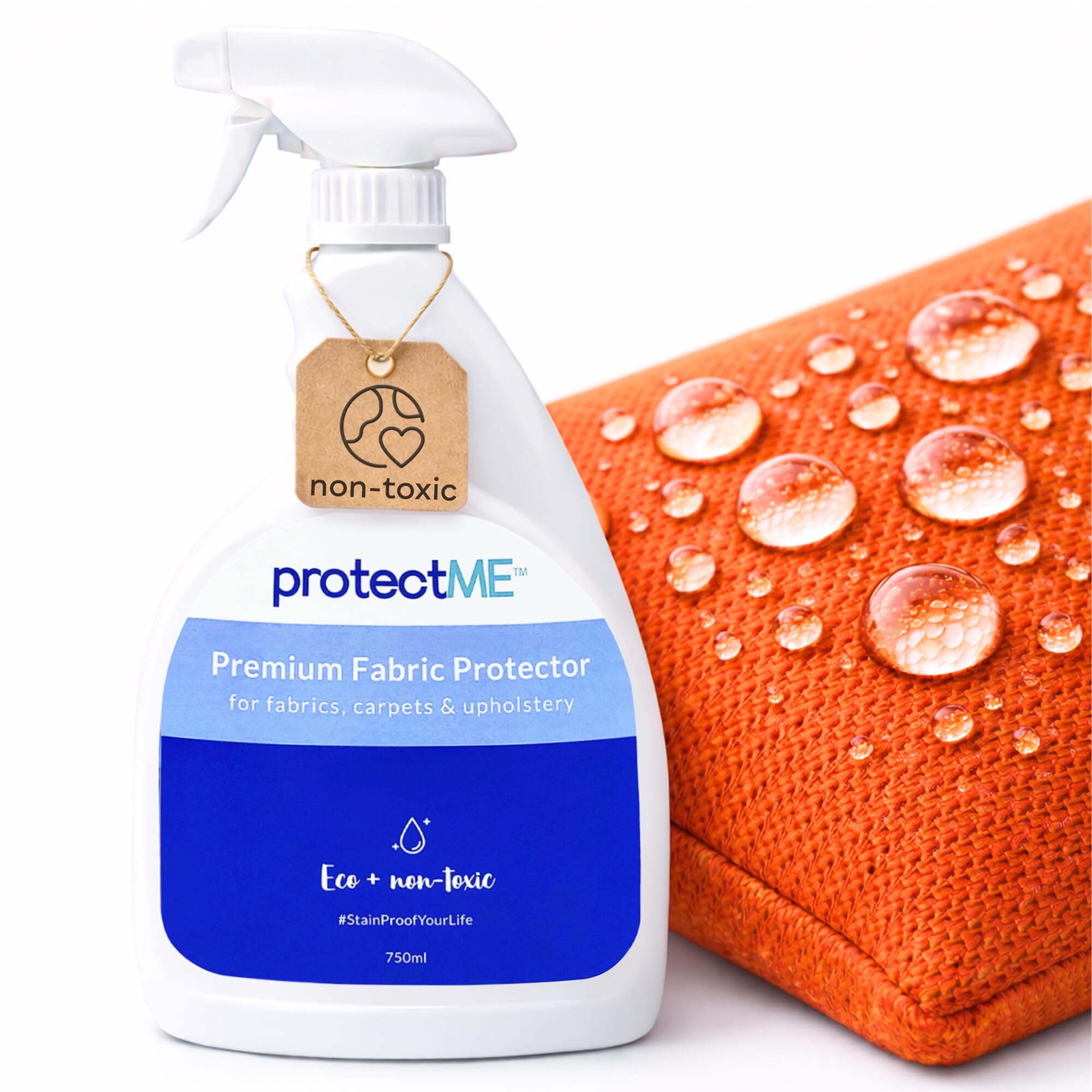
This is the only formula on the list that bridges professional-grade longevity with a completely non-toxic, odorless profile. The water-based amorphous silicon dioxide coating cures to an abrasion-resistant finish that lasts up to three years — six times longer than standard solvent-based protectors. With 73 square feet of coverage per 25.4-ounce bottle, protectME is the most economical premium option when measured by cost per square foot, even though its upfront price sits at the higher end of the spectrum.
The trigger spray applicator delivers a precise, controllable mist that works well on smaller projects like a single sofa or a set of dining chairs, but users tackling large sectional couches or multiple rooms may want to switch to the brand’s battery-powered sprayer for efficiency. Multiple verified buyers report that milk, juice, and coffee bead up immediately on treated fabric and wipe away without leaving a trace, making this the safest choice for households with toddlers or pets.
One reviewer noted zero hydrophobic effect on a polypropylene rug after following the recommended application rate, suggesting that synthetic olefin fibers may resist this water-based coating. The manufacturer recommends buffing the first coat into napped or fluffy fabrics to ensure even saturation — a step that makes the difference between invisible protection and patchy coverage.
Why we love it
- Odorless and non-toxic — safe for indoor use around children and pets immediately after curing
- Three-year protection span dramatically outlasts every aerosol competitor in the category
- Refill bottle design reduces plastic waste and per-application cost
Good to know
- Trigger sprayer requires more manual effort on large upholstery projects compared to aerosol cans
- Some synthetic fibers like polypropylene may not form a visible water-beading effect
- Higher upfront investment than budget aerosol alternatives
2. ForceField Fabric Protector Spray

ForceField occupies the sweet spot between premium water-based protectors and traditional aerosol cans. The 22-ounce trigger bottle uses a non-toxic formula that dries clear and odorless, making it suitable for indoor furniture applications where ventilation is limited. Verified buyers consistently report that liquids bead up and roll off treated surfaces immediately after the dry-cure period, and the formula withstands multiple cleaning cycles without breaking down.
The sprayer mechanism is the product’s weak link — multiple long-term users report that the trigger failed after a few uses, turning a precision tool into a frustrating dripper. The 22-ounce capacity is also a tight fit for larger projects; one reviewer found it insufficient for two small recliners, whereas an older bottle of the same formula covered six dining chairs. That suggests the per-spray output decreased in a recent packaging revision.
Where ForceField excels is its material compatibility. It works on silk, sisal, linen, and other delicate textiles that solvent-based aerosols would discolor or stiffen. If you own a mix of upholstery fabrics and need one protector that handles them all without testing for colorfastness, this is your most versatile option.
Why we love it
- Safe on delicate fabrics including silk and sisal without risk of darkening or stiffening
- Non-toxic and odorless formula suitable for indoor application with limited airflow
- Durable coating withstands multiple wet cleanings without degrading
Good to know
- Sprayer mechanism has a history of premature failure across multiple buyer reports
- 22-ounce bottle may not cover two recliners adequately for full protection
- Bottle opening design makes refilling or transferring product difficult
3. Scotchgard Fabric Water Shield, 13.5 Ounces

The latest iteration of the classic Scotchgard formula comes in a 13.5-ounce aerosol can that delivers the most aggressive water repellency in this lineup. The solvent-based chemistry creates a powerful hydrophobic barrier that causes even heavy liquids like wine and coffee to bead instantly, giving you a wide window to blot before any absorption occurs. Users report successful application on upholstery, curtains, pillows, and even motorcycle gear, demonstrating the formula’s versatility across woven and synthetic fabrics.
The tradeoff is the strong petroleum odor that accompanies application. Multiple verified reviews mention needing to apply the spray outdoors and let the treated items air out for two days before the smell dissipates completely. This makes it less practical for stationary furniture that cannot be moved outside, such as a built-in window seat or a large sectional anchored in a living room.
Drying clear and odorless after the off-gassing period, the coating on a recliner that was retreated after a full year still showed bright, clean fabric comparable to day one. The grid application pattern recommended by experienced users — spraying in overlapping north-south, then east-west passes — ensures even saturation without wet spots that can dry stiff.
Why we love it
- Maximum water repellency that causes heavy liquids to bead instantly for easy cleanup
- Proven longevity — one user reported fabric remaining bright and stain-free for over a year
- Versatile across household items beyond furniture including clothing, backpacks, and shoes
Good to know
- Strong petroleum odor requires outdoor application and 24-48 hours of ventilation
- Not ideal for stationary furniture that cannot be moved for off-gassing
- Solvent-based formula may darken or stiffen some delicate fabrics
4. Cadillac All Weather Shield – Leather and Fabric Protector Spray
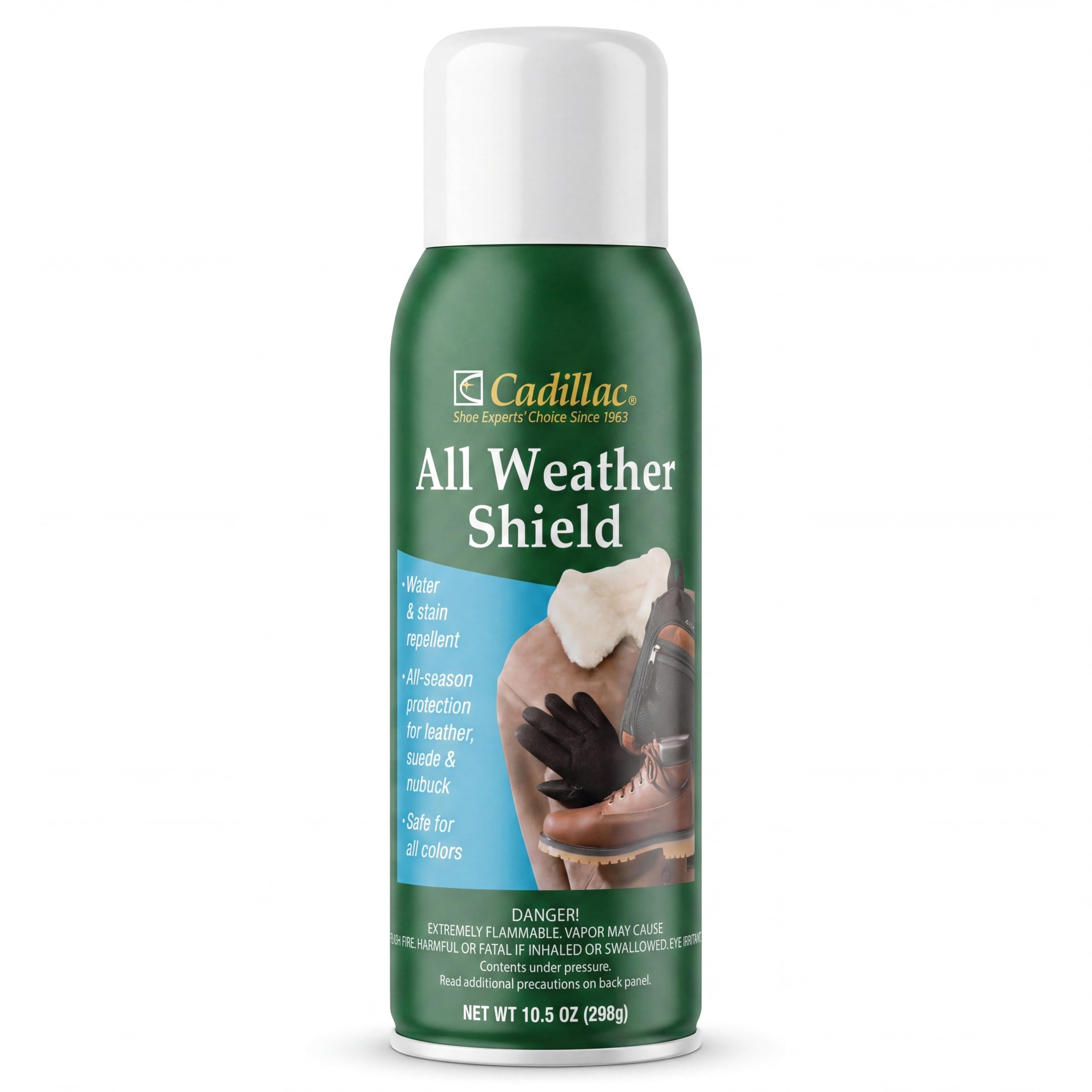
Cadillac’s All Weather Shield is the Swiss Army knife of fabric protectors — it works on leather, suede, nubuck, canvas, nylon, polyester, and standard upholstery fabrics without altering the color or texture. The 10.5-ounce aerosol produces a fine mist that coats evenly when held 6 to 9 inches from the surface, and the formula resists everything from red wine and coffee to grass stains and road salt. Proudly made in the USA since 1963, this brand carries a legacy reputation that shops and cobblers have trusted for decades.
The strong initial odor is the most consistent complaint across user reviews. One pet owner noted that the smell lingered for two days and visibly bothered their dog, even though the human nose could barely detect it after 24 hours. For households with sensitive animals, the off-gassing period may require keeping the treated room off-limits longer than the product instructions suggest.
Where this protector truly shines is on mixed-material furniture — a sofa with leather seating surfaces and fabric sides, or a headboard with suede panels and a cotton frame. Instead of buying two separate protectors and risking one damaging the wrong material, one can of Cadillac covers every surface uniformly. Owners of ten-year-old Ugg-like fabric and suede items report the material looking nearly new after seasonal reapplication.
Why we love it
- Safe on leather, suede, nubuck, canvas, and synthetic fabrics without darkening
- Effective against wine, coffee, oil, and salt stains in real-world testing
- American-made with a decades-long track record consistent across thousands of reviews
Good to know
- Initial odor is strong and may require multiple days of ventilation for sensitive pets
- 10.5-ounce can provides less coverage per dollar compared to larger bottle options
- Solvent base may not be ideal for enclosed indoor spaces with poor airflow
5. Scotchgard 4104D Auto Fabric & Carpet Protector
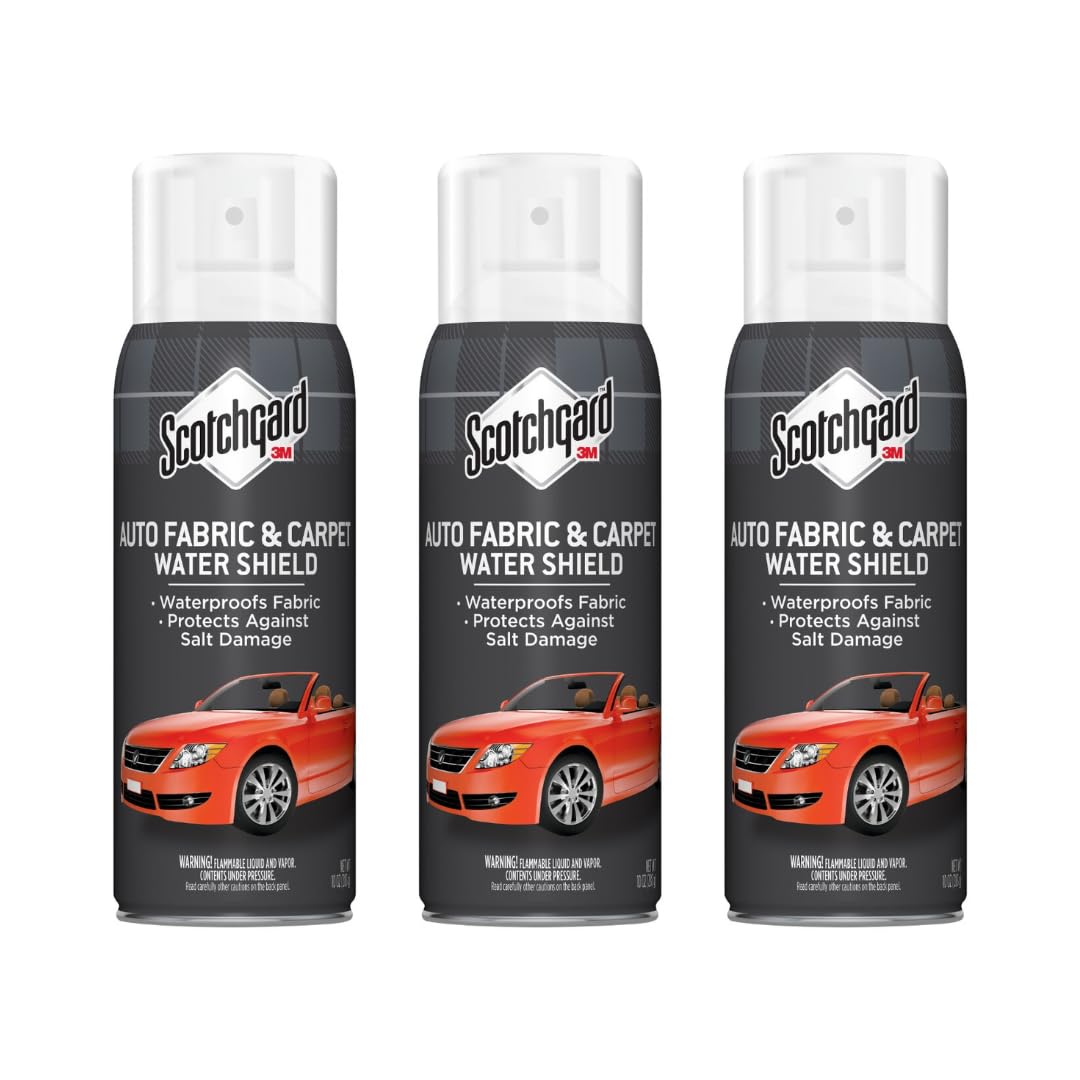
Though labeled for automotive use, this 10-ounce aerosol from Scotchgard is the go-to protector for car seats, floor mats, and any fabric surface that faces heavy abrasion from shoes and sliding. The formula repels both oil-based and water-based spills, creating a barrier that causes chocolate, lipstick, and other sticky vehicle messes to wipe clean without scrubbing. Parents of toddlers especially appreciate this product — cloth seats in family cars are notoriously difficult to clean, and this protector turns a spill emergency into a quick blot-and-go event.
The petrol-like odor is even stronger here than on the household Fabric Water Shield. Multiple reviewers warn that the smell is overpowering during application and requires the car doors to stay open for hours. One user noted a 24-hour ventilation period before the interior was comfortable to sit in. This is the tradeoff for the more aggressive oil-repelling chemistry that household protectors do not typically offer.
Experienced Scotchgard users recommend a specific two-coat technique: spray in overlapping north-south lines, then east-west lines to create a crosshatch barrier. Multiple light coats outperform one heavy coat. Always test for color bleeding on an inconspicuous spot first, especially on lighter fabrics, and ensure the surface is thoroughly clean before application — sealing dirt under the protector creates a permanent stain.
Why we love it
- Repels both oil and water-based spills for comprehensive stain protection in vehicles
- Crosshatch application technique creates a durable barrier that withstands heavy abrasion
- Trusted brand with decades of reliable performance at a very low per-can cost
Good to know
- Strong solvent odor requires extended ventilation after application in vehicle interiors
- 10-ounce can provides limited coverage — larger vehicles may need multiple cans
- Not recommended for delicate upholstery fabrics like silk or velvet
FAQ
Can I use a fabric protector on a microfiber couch without stiffening the fibers?
How long does it actually take for the smell to completely disappear from a solvent-based protector?
Will a fabric protector prevent cat claw snags or just liquid stains?
Can I apply a second coat of a different brand on top of an existing protector?
Final Thoughts: The Verdict
For most households, the best fabric stain protector for furniture winner is the protectME Fabric Protector because it combines odorless, non-toxic application with a three-year protection span that no aerosol can match, making it ideal for family living rooms. If you need maximum water repellency for a heavy-traffic piece that can be moved outdoors for treatment, grab the Scotchgard Fabric Water Shield. And for mixed-material furniture with leather and fabric surfaces that each need a single compatible protector, nothing beats the Cadillac All Weather Shield.