
The Catahoula Leopard Dog was bred to work livestock and hunt hogs in the swamps of Louisiana — a powerful, driven breed that demands more than fillers and chicken-by-product meal. Their high-octane metabolism and deep chest mean a food that settles wrong can cause bloat or energy crashes before noon. This is not a breed you feed with a “one-size-fits-all” bag from the grocery aisle.
I’m Mo Mahin — the founder and writer behind Furric. I’ve spent over a decade analyzing pet food formulations, cross-referencing AAFCO nutrient profiles with breed-specific health data, and synthesizing hundreds of real owner reports to decode which recipes actually fuel a Catahoula’s working drive and sensitive digestion.
After weeks of comparing protein sources, kibble geometry, caloric density, and joint-support inclusions, I’ve narrowed the market down to the seven top contenders for the best food for catahoula leopard dog.
How To Choose The Best Food For Catahoula Leopard Dog
Catahoulas are not Golden Retrievers. Their metabolic rate is higher, their exercise output is extreme, and their digestive tracts can be sensitive to cheap binders. Here is what to check before buying any bag.
Protein Source and Percentage
Aim for a minimum of 27% crude protein from a named animal source — chicken, beef, lamb, or fish. Avoid generic “meat meal” or “poultry by-product.” Catahoulas thrive on a single, digestible protein that matches their ancestral diet. Switch proteins only if you see hot spots or loose stools.
Kibble Shape and Size
This is specific to Catahoulas: they have a broad muzzle but a moderate bite depth. Kibble that is too small (under 12mm diameter) encourages gulping without chewing, which raises bloat risk. Look for a disc or oval shape at least 14mm across. Large-breed formulas usually nail this geometry.
Fat-to-Fiber Ratio and Caloric Density
Working Catahoulas need 15-18% fat for sustained energy, but fiber should stay under 5% to avoid filling the gut with indigestible bulk. A caloric density around 360-400 kcal per cup allows you to adjust portions without losing nutrient density. Low-density foods will leave a Catahoula constantly begging and under-fueled.
Joint and Digestive Support
Glucosamine and chondroitin are non-negotiable for a breed prone to hip dysplasia. Probiotics (enterococcus faecium or lactobacillus) are also critical — Catahoulas’ deep chests make bloat a real danger if fermentation goes wrong in the gut. A formula with both joint support and guaranteed probiotics reduces your vet visits.
Quick Comparison
On smaller screens, swipe sideways to see the full table.
| Model | Category | Best For | Key Spec | Amazon |
|---|---|---|---|---|
| Purina Pro Plan SPORT 27/17 | Mid-Range | Active working adults | 27% protein, 17% fat | Amazon |
| Merrick Backcountry Great Plains | Premium | Picky eaters, raw-curious owners | Freeze-dried raw pieces | Amazon |
| Open Farm RawMix Front Range | Mid-Range | Ethical sourcing, multi-protein | Bone broth coated kibble | Amazon |
| ORIJEN Amazing Grains Large Puppy | Premium | Large-breed puppies under 2 years | 90% poultry/fish ingredients | Amazon |
| Hill’s Science Diet Large Puppy | Mid-Range | Vet-recommended puppy growth | DHA for brain development | Amazon |
| Diamond Naturals Whitefish & Sweet Potato | Budget-Friendly | Chicken/grain sensitive adults | Single protein, wild-caught fish | Amazon |
| Royal Canin Large Puppy | Premium | Controlled skeleton development | Tailored calcium/phosphorus ratio | Amazon |
In‑Depth Reviews
1. Purina Pro Plan SPORT 27/17 Chicken & Rice

The Purina Pro Plan SPORT 27/17 lands at the sweet spot for adult Catahoulas that work, run, or hunt daily. At 27% crude protein from real chicken and 17% fat, it delivers the sustained energy release a livestock dog needs without the calorie surplus that turns a lean frame soft. The kibble measures roughly 15mm in diameter — large enough to discourage gulping but small enough for a Catahoula’s moderate bite depth.
Owner reports consistently highlight no digestive upset even when transitioning from lower-protein diets, which points to the guaranteed live probiotics doing their job. The glucosamine inclusion (approx 400 ppm) provides baseline joint support for a breed where hip dysplasia is the primary orthopedic concern. The 37.5 lb bag size also means fewer purchases per month for multi-dog households.
Where this formula falls short is ingredient transparency — the chicken is not specified as free-range or pasture-raised, and the rice is simply “brewer’s rice,” a lower-nutrient fraction. For owners prioritizing whole-food sourcing over performance metrics, this may feel underwhelming. Still, for the active Catahoula that needs reliable fuel at a sustainable cost, the 27/17 ratio is the most proven option on this list.
Why we love it
- Optimal 27/17 protein/fat split for working dogs
- Large kibble reduces gulping and bloat risk
- Guaranteed probiotics ease stomach sensitivity
Good to know
- Chicken source is not free-range or pasture-raised
- Brewer’s rice is a lower-quality grain fraction
- Some owners find it more affordable at local feed stores
2. Merrick Backcountry Great Plains Red Meat

The Merrick Backcountry Great Plains Red Recipe is the choice for owners who want to introduce raw nutrition without a full switch. The kibble base is grain-free and made with deboned beef as the first ingredient, and the freeze-dried raw bites deliver organ meat and bone that mimic whole-prey eating. Catahoulas with chicken sensitivities — a common complaint among owners — benefit from the poultry-free formulation.
The omega-6 to omega-3 fatty acid ratio (approximately 3:1) supports the Catahoula’s short, dense coat, which takes a beating on swamp runs and brush hunts. Glucosamine (800 mg/kg) and chondroitin (500 mg/kg) are substantially higher than most mid-range formulas, providing serious joint protection for a breed that often stays active into its teens. Owners of finicky Catahoulas report that the raw pieces trigger an enthusiastic feeding response even in dogs that previously ignored their bowl.
The main obstacle is the bag cost — this is the most expensive grain-free option here per pound, and for a large-breed dog eating 3-4 cups daily, a 20 lb bag disappears fast. Additionally, the kibble itself is on the smaller side (around 12mm), which may allow a determined gulper to swallow without chewing. If your Catahoula inhales food, this layout requires a slow-feed bowl.
Why we love it
- Freeze-dried raw chunks boost palatability for picky eaters
- High glucosamine/chondroitin levels for joint protection
- Chicken-free formula suits sensitive Catahoulas
Good to know
- Relatively small kibble may encourage gulping
- Premium price per pound adds up for large breeds
- Some dogs pick out raw pieces and leave kibble
3. Open Farm RawMix Front Range Recipe
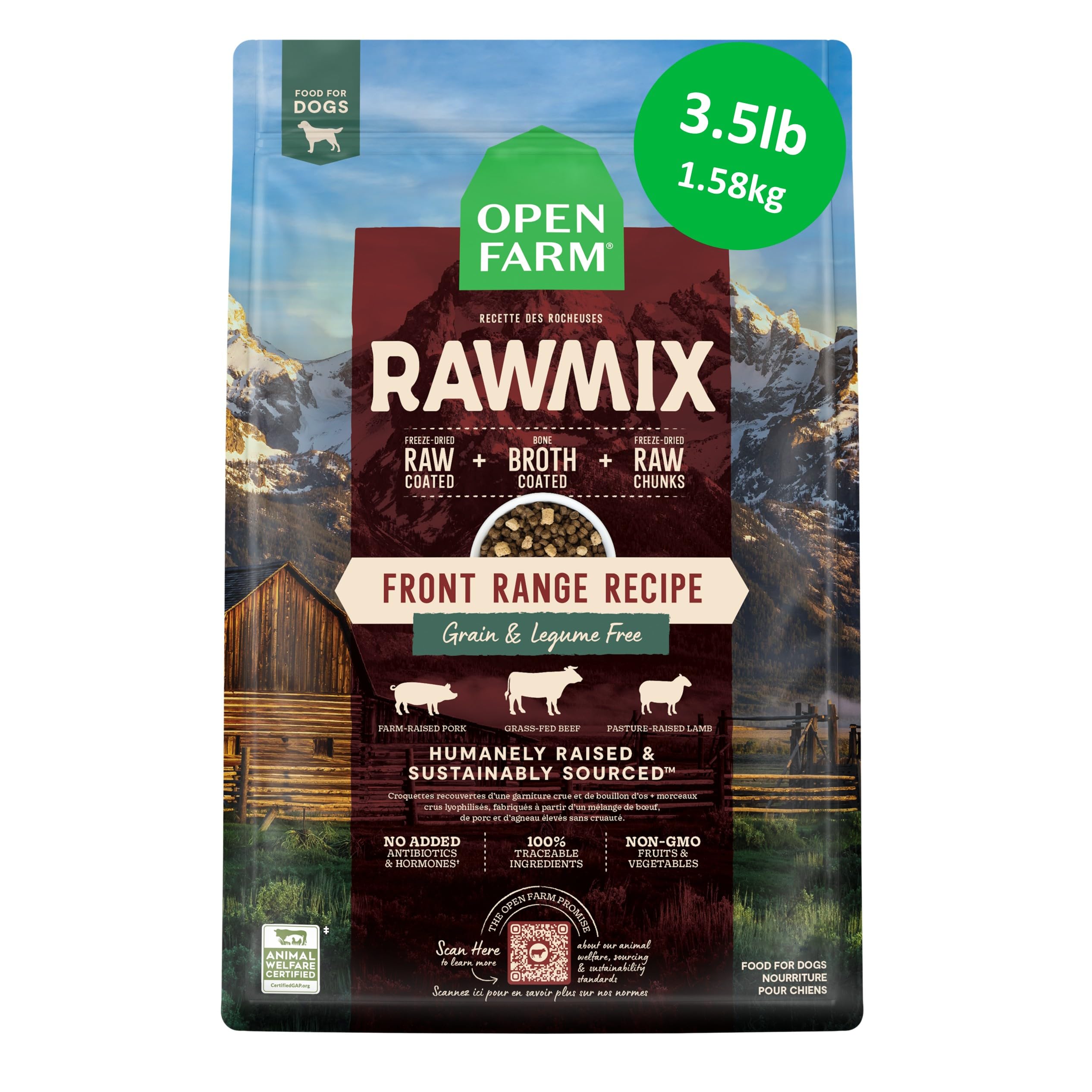
Open Farm’s RawMix Front Range Recipe offers a beef-pork-lamb blend that appeals to Catahoulas raised on varied proteins. The bone broth coating adds moisture and collagen to dry kibble — a smart feature for dogs that don’t drink enough water after intense exercise. Every ingredient is traceable via lot code, which matters for owners with a Catahoula that has reacted to mystery ingredients in the past.
The formula includes organic pumpkin, dandelion greens, and apple cider vinegar — all prebiotic sources that support the sensitive digestive tract of a deep-chested breed. At roughly 365 kcal per cup, the caloric density is appropriate for active adults, though sedentary Catahoulas will need careful portioning to avoid weight creep. The freeze-dried raw inclusions (beef, pork, lamb organ meat) are evenly distributed rather than clustered at the top of the bag, a detail that reduces feeding inconsistency.
The 3.5 lb bag size is a problem for long-term use — you would need multiple bags per month for a working Catahoula, which adds packaging waste and shipping cost. Larger bag sizes (20 lb) exist but are often out of stock. For owners who prioritize ethical sourcing over bulk value, this is an excellent rotation or topper option.
Why we love it
- Bone broth coating adds moisture and collagen
- Lot-code traceability for every ingredient
- Organic prebiotics support digestive health
Good to know
- Small bag size requires frequent repurchasing
- Multi-protein blend may trigger sensitivities in some dogs
- Limited larger-bag availability on Amazon
4. ORIJEN Amazing Grains Puppy Large Breed
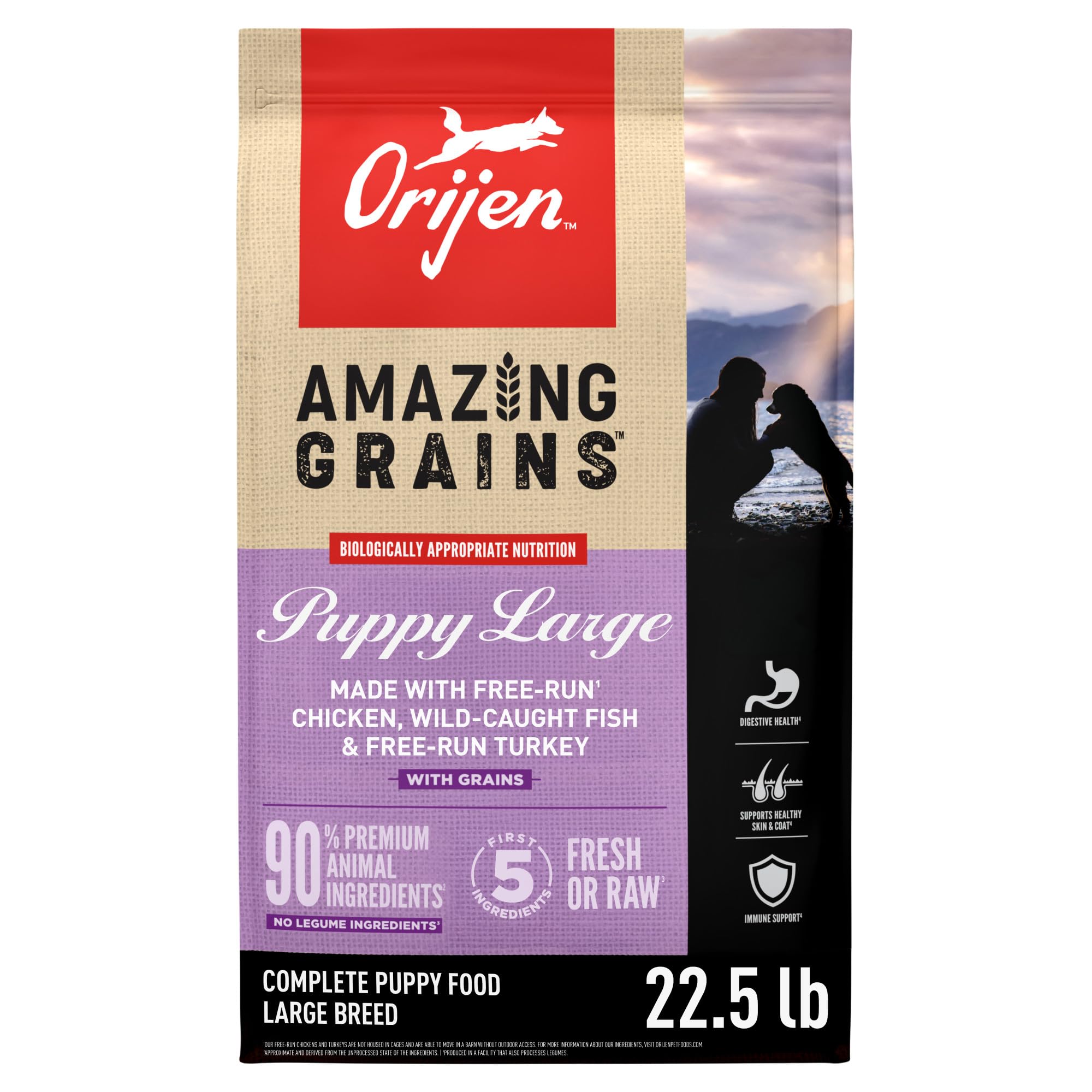
For Catahoula puppies — especially those from working lines — the ORIJEN Amazing Grains Large Puppy formula sets a high bar. With 90% poultry and fish ingredients including whole herring, whole whiting, chicken liver, and salmon, it provides the amino acid profile needed for the rapid skeletal growth of a 60-90 lb adult. The freeze-dried coating adds a raw flavor burst that makes meal training easier for stubborn puppy mouths.
The disc-shaped kibble (14 x 6mm) is large enough to encourage chewing, which slows down the scarf-and-barf pattern that some Catahoula puppies develop. The 1.5% omega-3 content from pollock oil supports brain and eye development during the first 18 months — a critical window for a breed that requires high-level trainability. The grains included (oats, millet, quinoa) are non-GMO and provide a slow-release carbohydrate source that sustains a puppy’s erratic energy spikes.
The catch is the price point and rapid consumption rate. A growing large-breed puppy will go through a 22.5 lb bag in roughly two weeks, making this the highest monthly cost option. Some owners report that the protein level (38%) is too high for moderately active puppies, causing loose stools. Transition slowly and monitor stool quality.
Why we love it
- High animal-ingredient content mimics ancestral diet
- Large disc kibble encourages chewing
- Omega-3 from pollock oil supports cognitive development
Good to know
- Extremely high protein may cause loose stools in some puppies
- Very expensive for a rapid-growth feeding schedule
- Only formulated for growth stages, not adult maintenance
5. Hill’s Science Diet Large Breed Puppy
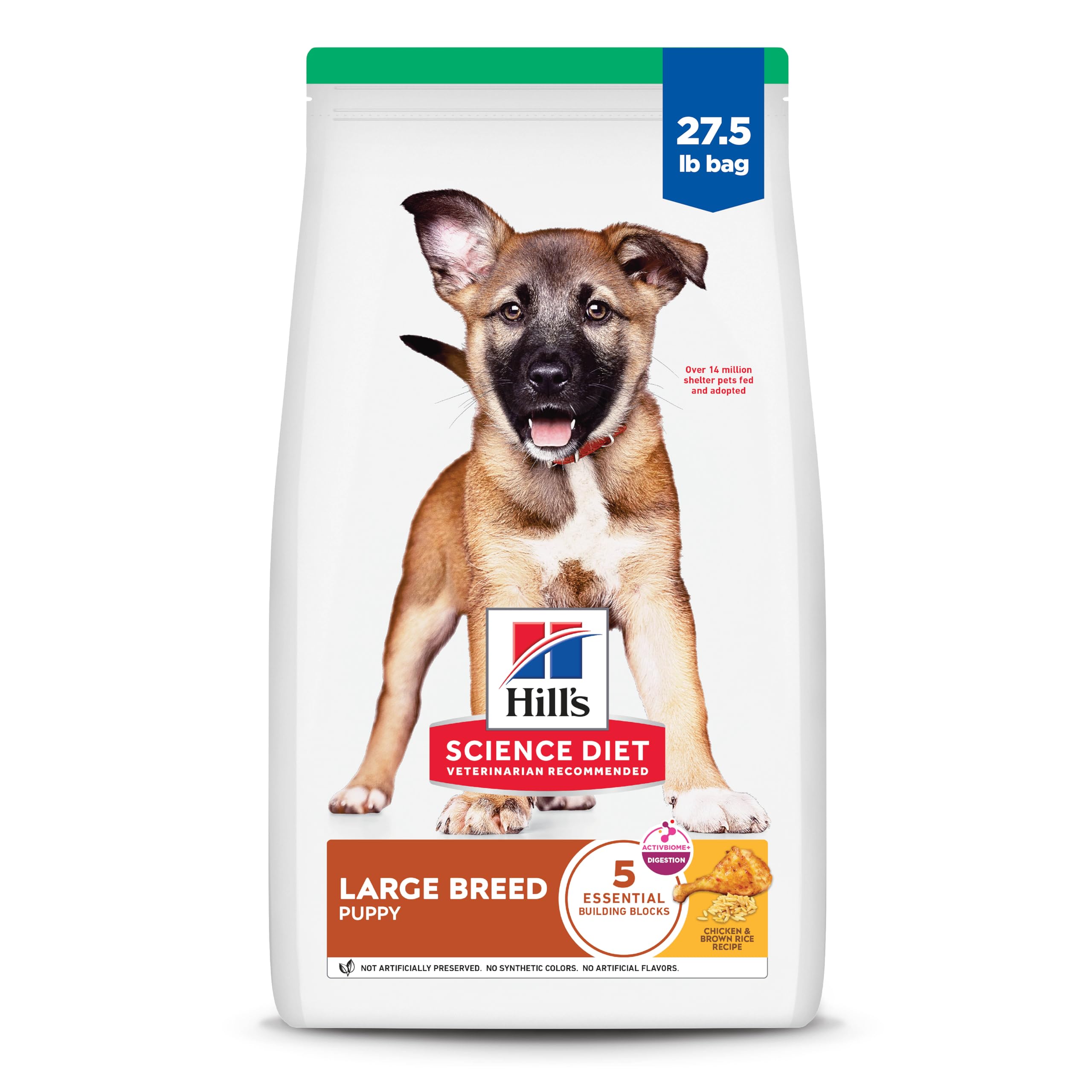
Hill’s Science Diet Large Breed Puppy is the vet-recommended standard for controlled skeletal growth — a critical concern for Catahoulas, whose rapid growth phase can outpace joint development if fed a high-calcium diet. This formula uses balanced minerals (calcium, phosphorus, magnesium) at precisely calibrated levels to prevent the developmental orthopedic disease that commonly affects large, fast-growing breeds.
The chicken and brown rice base provides 27% protein and 15% fat, which is moderate enough to avoid the growth spurts that stress immature hips and elbows. DHA from fish oil supports retinal and cognitive development during the first year, which is when a Catahoula puppy’s problem-solving skills emerge. Owners consistently report firm stools and glossy coats after switching from more aggressive puppy formulas.
The kibble size is medium (roughly 13mm), slightly smaller than ideal for a deep-chested breed. Owners with fast eaters should pair this with a slow-feed bowl. The formula also relies on a single protein source (chicken), which means puppies with emerging chicken allergies will require a different option.
Why we love it
- Precisely controlled calcium level protects developing joints
- DHA from fish oil supports early brain development
- Vet-recommended brand with strong owner satisfaction
Good to know
- Kibble is slightly small for deep-chested gulpers
- Single chicken protein source limits allergy options
- Moderate fat content may lack for high-drive working lines
6. Diamond Naturals Whitefish & Sweet Potato
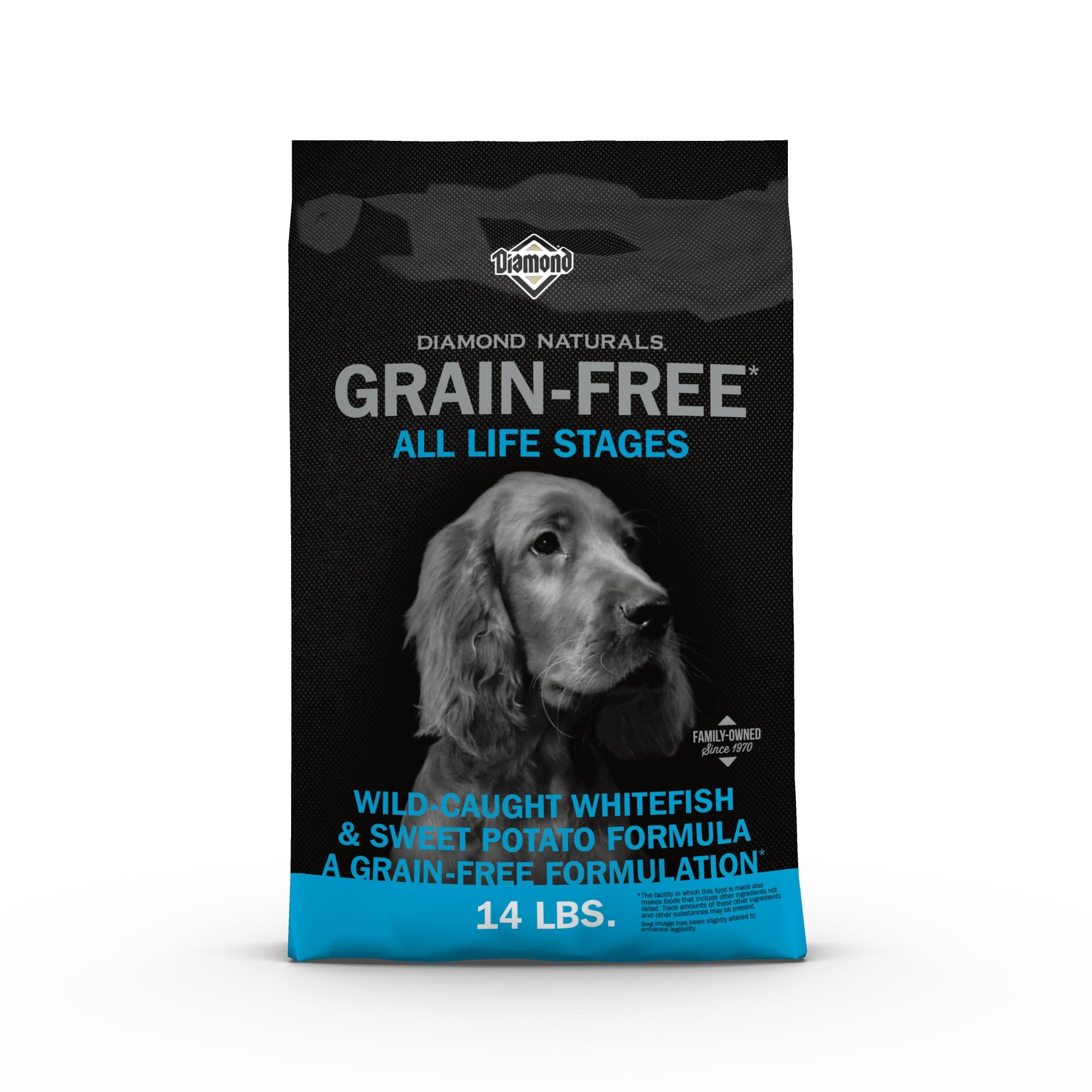
The Diamond Naturals Whitefish & Sweet Potato formula is a strong budget-conscious option for Catahoulas with chicken or grain sensitivities. Wild-caught whitefish provides a novel protein source that often resolves the chronic ear infections and hot spots that plague dogs reacting to poultry. The sweet potato base offers moderate-fiber digestibility without the inflammatory potential of corn or wheat.
Owner feedback consistently notes that this grain-free recipe maintains a soft, lustrous coat — a direct result of the omega-6 and omega-3 fatty acid blend from fish oil and flaxseed. The proprietary probiotic strain survives the gastrointestinal tract, which helps Catahoulas prone to soft stool maintain firm, daily consistency. At roughly 350 kcal per cup, the caloric density is lower than the premium options, which means active adults may need an extra half-cup per meal.
The main drawback is kibble geometry: the pellets are dime-sized (roughly 16mm diameter) which is actually quite large and good for chewing, but the hard texture can be difficult for senior Catahoulas with worn teeth. Some users also report inconsistent bag sealing, leading to stale product. For a tight budget, this is a formula that delivers reliable protein without the premium price tag.
Why we love it
- Novel fish protein solves common chicken allergies
- Surviving probiotics support sensitive digestion
- Consistent shiny coat results from fatty acid profile
Good to know
- Lower caloric density means larger portion sizes
- Hard kibble texture can be tough for senior dogs
- Occasional bag-seal failures reported
7. Royal Canin Large Puppy

Royal Canin Large Puppy is the breed-specific-formula approach for owners who want exact nutritional targeting rather than general performance. The calcium and phosphorus levels are calibrated specifically for large-breed puppies (56-100 lbs adult weight) to ensure that a Catahoula’s long bones ossify at a controlled rate — reducing the risk of hip and elbow dysplasia that plagues the breed. The crunchy kibble texture also provides mechanical scraping that has been shown to reduce plaque buildup by up to 30%.
The formula includes a proprietary blend of prebiotics (FOS and MOS) that feed beneficial gut bacteria, which is particularly important for Catahoulas during the puppy stage when digestive flora is still developing. Owners of labs and Catahoula mixes report that the tailored kibble shape slows eating naturally without requiring a special bowl. The 30 lb bag also provides the best per-pound efficiency among the premium options.
The main compromises are ingredient transparency and palatability. Royal Canin does not prominently list the chicken source or its farming practices, and some puppies turn their nose at the kibble texture if they have been spoiled with raw or freeze-dried additives. The 15-month age limit also means you will have to switch formulas sooner than with all-life-stages options.
Why we love it
- Precisely calibrated calcium for controlled skeletal growth
- Crunchy kibble reduces dental plaque buildup
- Tailored kibble shape slows eating naturally
Good to know
- Chicken source details are not transparent
- Some puppies refuse it if used to tastier formulas
- Not an all-life-stages formula; must switch at 15 months
FAQ
Should I feed grain-free or grain-inclusive for my Catahoula?
How much should I feed a Catahoula per day?
Why does my Catahoula vomit after eating kibble?
Is high-protein food risky for Catahoulas?
Can I mix dry food with wet food for my Catahoula?
Final Thoughts: The Verdict
For most owners, the best food for catahoula leopard dog winner is the Purina Pro Plan SPORT 27/17 because it delivers the proven 27/17 protein/fat split that fuels an active working breed, combined with live probiotics and glucosamine at a sustainable cost. If you want the premium grain-free experience with raw nutrition, grab the Merrick Backcountry Great Plains. And for a growing puppy that needs controlled skeletal development, nothing beats the Hill’s Science Diet Large Breed Puppy.