
Choosing a robot vacuum under $200 used to mean accepting random bump navigation, weak suction, and a map that looked like a toddler drew it. Those days are over. LiDAR navigation and app-controlled no-go zones, once reserved for flagships, are now standard at this price point, making effective automation achievable without a premium budget.
I’m Mo Mahin — the founder and writer behind Furric. I’ve spent years comparing technical specifications, studying real-world owner feedback, and analyzing the sensor fusion and navigation algorithms that separate a daily-driver robot from a frustrating novelty.
Whether you’re managing pet hair or just want floors cleaned on schedule, this guide breaks down the strongest options in the robot vacuum under $200 segment, with honest detail on what each machine actually delivers in real homes.
How To Choose The Best Robot Vacuum Under $200
The sub-$200 space now offers a surprising range of navigation tech, suction power, and smart features. Knowing which specs translate to a cleaner home — and which are just marketing numbers — is the difference between a great purchase and a disappointing one. Here are the three critical factors to evaluate.
Navigation: LiDAR vs. Gyro vs. Random Bump
LiDAR navigation uses a rotating laser sensor to build a real-time map of your home, allowing the robot to clean in efficient rows and return to the dock knowing exactly where it’s been. Gyro navigation relies on inertial sensors — it’s better than random bumping but can still drift over time, missing corners and cleaning the same spots twice. At this price point, prioritize LiDAR models if you have a multi-room layout or want to set no-go zones with confidence. Random-bump robots should only be considered for very small, open spaces.
Battery Runtime and Real-World Coverage
Manufacturer runtime claims are usually measured in quiet mode on a flat hard floor. A 150-minute advertised runtime typically translates to about 90–110 minutes in standard mode. For homes over 1,000 square feet, look for a rated runtime of at least 150 minutes. Models with auto-resume and recharge are essential for larger spaces — the robot charges and picks up where it left off rather than abandoning half the house.
Suction Power and Carpet Handling
Numbers like 5,000Pa or 10,000Pa grab attention, but the real test is how the robot transitions from hard floors to carpet. Look for models with a “carpet boost” mode that automatically increases suction when a rug is detected. For low-pile carpets and area rugs, 4,000Pa to 5,000Pa is generally sufficient. For medium-pile carpets, 5,000Pa or higher combined with a proper roller brush is needed to pull out embedded dirt and pet hair.
Quick Comparison
On smaller screens, swipe sideways to see the full table.
| Model | Category | Best For | Key Spec | Amazon |
|---|---|---|---|---|
| Lefant M330 Pro | LiDAR + Mop | Pet households with low furniture | 95mm height / 150min battery | Amazon |
| Tapo RV20 Max Plus | Self-Emptying | Hands-off cleaning for weeks | 3L auto-empty bin / 180min battery | Amazon |
| iRobot Roomba 105 Vac | LiDAR Only | Brand reliability and mapping | 200min battery / 70x suction | Amazon |
| iRobot Roomba 105 Combo | LiDAR + Mop | Vacuum and mop in one pass | Carpet avoidance mop / 100min battery | Amazon |
| ILIFE A30 Pro | Self-Emptying | 280 days of dust bag capacity | 5×2.5L bags / 5000Pa suction | Amazon |
| eufy C10 Renewed | Self-Emptying | Fitting under ultra-low furniture | 2.85in height / 4000Pa suction | Amazon |
| ILIFE A30s | LiDAR Only | High suction for deep carpet cleaning | 10000Pa max / 150min battery | Amazon |
| Tikom L8000 Pro | LiDAR + Mop | Multi-level home mapping (5 maps) | 45dB quiet / 6000Pa suction | Amazon |
| Uninell UR1 | Gyro + Mop | Entry-level for small apartments | 2.99in height / 5000Pa suction | Amazon |
In‑Depth Reviews
1. Lefant M330 Pro
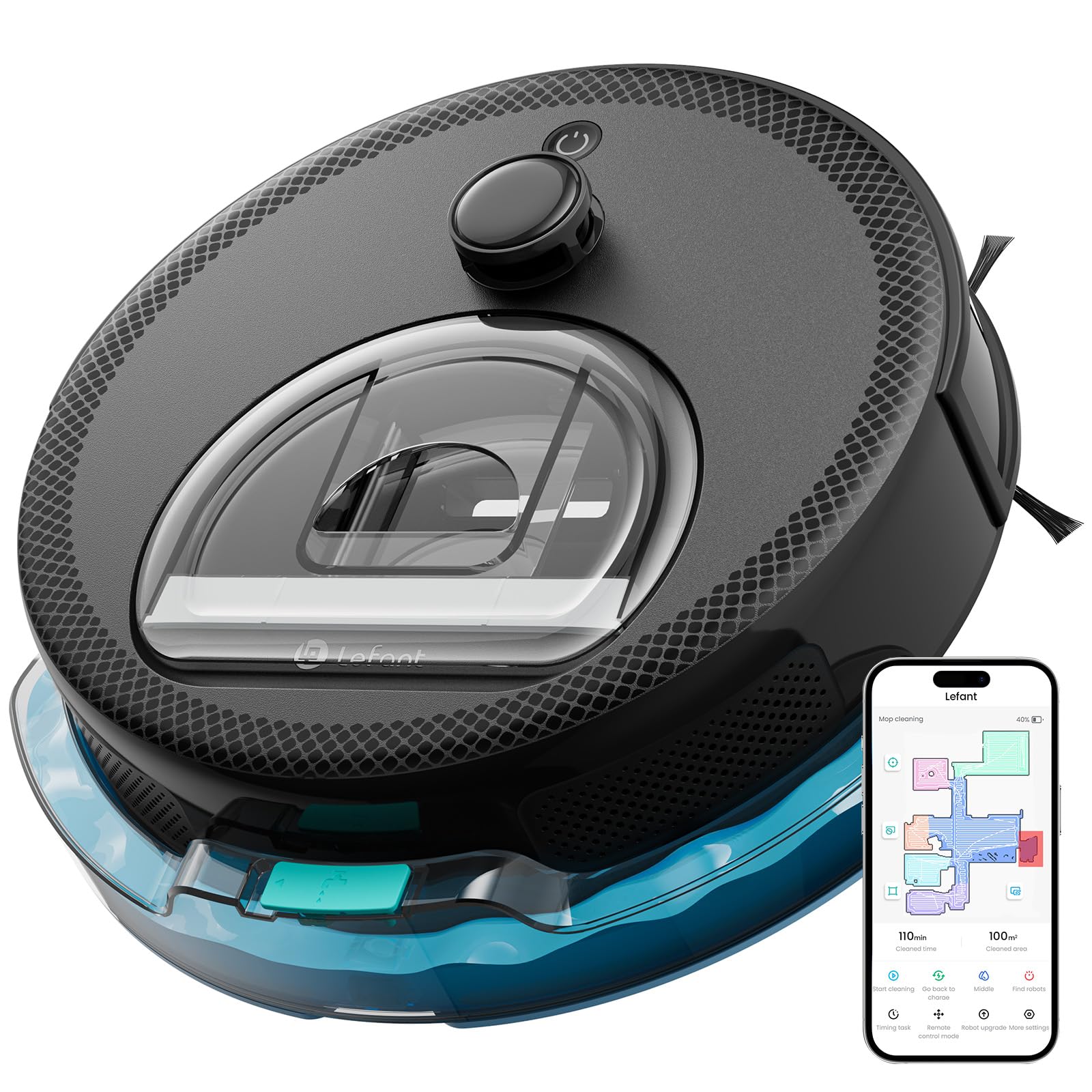
The Lefant M330 Pro sits at the sweet spot of this price bracket thanks to its dToF navigation, which scans up to 15 meters ahead and builds fast, accurate maps. The 95mm ultra-slim body slides under couches and bed frames that block most other robots, and the PSD obstacle detection avoids cords and small objects with precision — even in complete darkness. With a 150-minute battery life and a 450ml visible dustbin, it empties less often and cleans larger floor plans on a single run.
Pet owners benefit from the anti-tangle suction port, which eliminates the hair-wrap problems common with traditional brush designs. Reviewers consistently praise its ability to handle constant dog hair from shedding breeds like Chihuahuas without clogging or squealing. The carpet detection system switches to maximum suction on rugs and avoids them entirely during mopping, keeping fibers dry.
The 200ml water tank and washable mop pad handle daily dust and light grime, though the tank runs dry on the final pass of larger areas. The Lefant app provides no-go zones, scheduling, and voice assistant integration with both 2.4GHz and 5GHz Wi-Fi support — a welcome dual-band feature at this price. The build quality and mapping intelligence consistently rate as best-in-class for the money.
Why we love it
- Ultra-slim 95mm design reaches tight, low-clearance spots
- Anti-tangle suction port eliminates pet hair wrap
- Dual-band Wi-Fi supports 2.4GHz and 5GHz networks
Good to know
- Mopping water tank runs dry on long final passes
- Struggles with fibrous debris like dry leaves on carpet
2. Tapo RV20 Max Plus

The Tapo RV20 Max Plus is one of the few sub-$200 models that includes a self-emptying dock, which automatically transfers debris into a 3L sealed dust bag lasting up to 60 days. This feature alone makes it a standout for anyone who wants near-total hands-off cleaning. The 3.27-inch ultra-slim profile allows it to reach under low furniture, and the 5300Pa max suction handles low-pile carpets and hard floors effectively.
The mesh grid cleaning pattern ensures systematic coverage rather than random wandering, and the carpet boost mode automatically increases suction on rugs while steering clear of them during mopping. The 300ml water tank offers three adjustable water flow levels, providing light polishing across hard floors. The Tapo app allows detailed room editing, schedule setting, and no-go zone creation.
While the vacuum performance is strong, the mopping function is best described as adequate — the included mop pad is small and struggles with dried-on grime. A few users report that the auto-empty suction could be more aggressive for heavy dirt, and the robot can occasionally get stuck on thicker pile rugs. For the price, the combination of LiDAR navigation, self-emptying base, and generous 180-minute runtime makes it a compelling value.
Why we love it
- Self-emptying dock with 60-day capacity
- 180-minute battery covers large homes
- Ultra-slim 3.27-inch height for low furniture
Good to know
- Mop pad is small and only effective for light grime
- Can get stuck on thick or shaggy area rugs
3. iRobot Roomba 105 Vac

The iRobot Roomba 105 Vac delivers a massive 200-minute battery life, making it the undisputed champion for large homes and open floor plans. Its ClearView LiDAR mapping quickly generates accurate room maps, and the 3-stage cleaning system — combining 70x more power-lifting suction than 600-series models, a multi-surface brush, and an edge-sweeping brush — tackles dirt and pet hair across hard floors and rugs.
The Roomba Home app provides detailed customization, including keep-out zones, room targeting, and adjustable cleaning passes. The spot cleaning mode is excellent for localized messes, running repeated passes in a small area for up to five minutes. The robot recharges and resumes cleaning automatically, ensuring it finishes the job without waiting for a manual restart. Reviewers note it handles thresholds and transitions well, and the 13.2-inch width covers a wide cleaning path per pass.
Some users report that the robot occasionally pauses at minor obstructions, requiring some pre-cleaning to ensure smooth operation. The app uses a 24-hour time format and can feel less intuitive than competitors. After two months of daily use, one reviewer reported a recalibration failure, though customer support quickly provided a replacement. For single-purpose vacuuming with maximum battery and reliable LiDAR mapping, this is a top-tier choice.
Why we love it
- Class-leading 200-minute battery life
- ClearView LiDAR for precise room mapping
- Recharges and resumes cleaning from stop point
Good to know
- No mopping function — vacuum only
- App can pause on minor obstacles, requiring pre-cleaning
4. iRobot Roomba 105 Combo
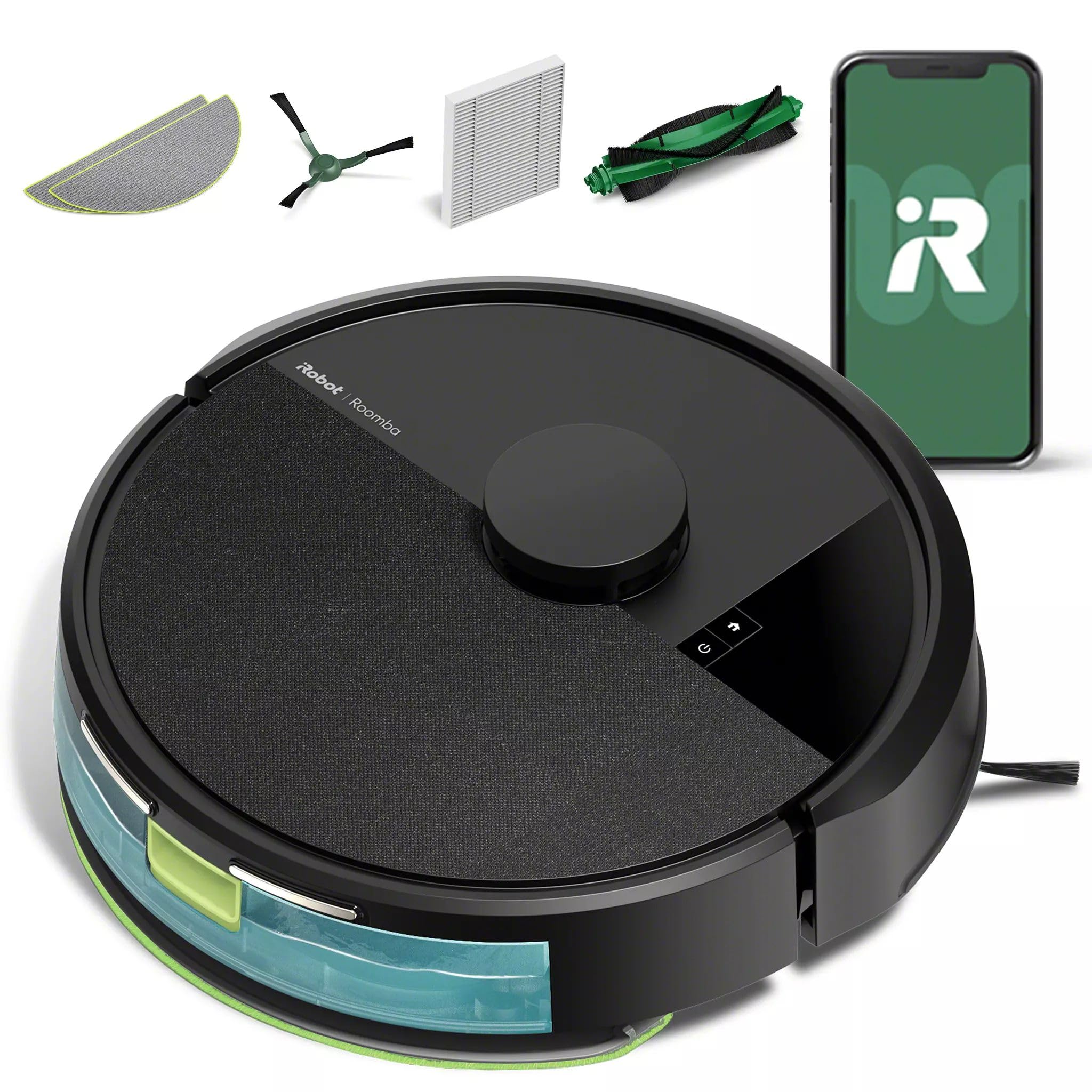
The iRobot Roomba 105 Combo extends the 105 platform with a built-in microfiber mop pad and a micro-pump that controls water flow, providing consistent moisture across hard floors. The critical differentiator is the carpet avoidance sensor — the robot automatically lifts the mop pad or routes away from rugs, keeping carpets dry without requiring manual no-go zone setup. This makes it the easiest vacuum-and-mop solution for homes with mixed flooring.
The 4-stage cleaning system includes 70x more suction, a multi-surface brush, edge-sweeping brush, and the mop pad. The SmartScrub mode delivers 2x deeper scrubbing for stubborn marks, moving the robot in a slow back-and-forth pattern rather than a single pass. The Roomba Home app allows selection of vacuum-only, mop-only, or combo modes, and users can adjust suction power, cleaning passes, and water flow levels per room.
The battery life, however, is a notable trade-off at 100 minutes — roughly half the runtime of the vacuum-only 105 model. This makes it better suited for smaller homes and apartments under 1,000 square feet. Some reviewers report the mop is better suited for maintenance between deep cleans rather than mud or heavy grime. The robot’s spatial awareness is generally good, but occasional corner misses and minor navigation quirks are reported.
Why we love it
- Automatically avoids carpets during mopping
- SmartScrub provides 2x deeper scrubbing on tough marks
- Multiple cleaning modes for flexible use
Good to know
- 100-minute battery is limited for larger homes
- Mop function is best for light maintenance, not deep cleaning
5. ILIFE A30 Pro

The ILIFE A30 Pro pushes the self-emptying concept further than most by including five 2.5L dust bags in the box, giving a theoretical total of 280 days of hands-free cleaning. Each bag lasts up to 8 weeks, dramatically reducing the frequency of manual disposal. The 5000Pa max suction, combined with a roller brush, effectively scoops up dirt, debris, and pet hair from both hard floors and medium-pile carpets.
LiDAR navigation with the SLAM algorithm builds accurate maps and plans efficient routes, while the ILIFEClean app provides full control over no-go zones, virtual walls, schedules, and suction power levels — ranging from Quiet (500Pa) to Max (5000Pa). The 2-in-1 integrated water tank simultaneously holds 200ml of dust and 200ml of water, allowing concurrent vacuuming and mopping without swapping modules.
The mop head does not lift, which limits the robot’s ability to climb over thicker thresholds and transitions. The app interface uses some unclear wording — the “Close” button was confusing for some users. Dust bin capacity is also relatively small, requiring more frequent full empties before the auto-empty can handle it. At this price point, the combination of self-emptying convenience and strong suction makes the A30 Pro a solid choice for daily maintenance.
Why we love it
- 280-day total dust bag capacity in the box
- 2-in-1 tank allows simultaneous vacuum and mop
- Adjustable suction from 500Pa to 5000Pa
Good to know
- Mop head does not lift, limiting threshold climbing
- Small dust bin fills quickly before auto-empty can catch up
6. eufy C10 (Renewed)

The eufy C10 is the slimmest self-emptying robot vacuum on this list at just 2.85 inches tall, allowing it to slide under furniture that blocks most other models — including low-profile platform beds and couches. Despite its compact stature, it packs a 3L self-emptying dock (60-day capacity) and 4000Pa suction with a rolling brush that handles pet hair and daily debris effectively. The renewed pricing makes it a strong value entry into the self-emptying category.
The unique CornerRover Arm is an extendable side brush mechanism that reaches into corners and baseboard edges, capturing pet hair and dust that traditional fixed side brushes miss. LiDAR navigation creates optimized cleaning paths, and the app allows easy map editing and room selection. Users who already own other Eufy models appreciate the consistent accessory ecosystem.
Performance on thicker pile rugs is a limitation — the relatively low 4000Pa suction struggles to pull embedded dirt from medium-pile carpets, and the robot can get stuck on cords and thicker rug edges. The self-empty suction could also be stronger, sometimes requiring manual assistance for heavy loads. As a renewed product, warranty coverage and battery condition may vary, but buyer feedback indicates reliable performance for daily low-pile and hard floor maintenance.
Why we love it
- Ultra-slim 2.85-inch profile for low furniture access
- CornerRover arm reaches deep into corners
- Self-emptying dock with 60-day dust bag capacity
Good to know
- 4000Pa suction is underpowered for medium-pile carpets
- Prone to getting stuck on thicker rugs and power cords
7. ILIFE A30s
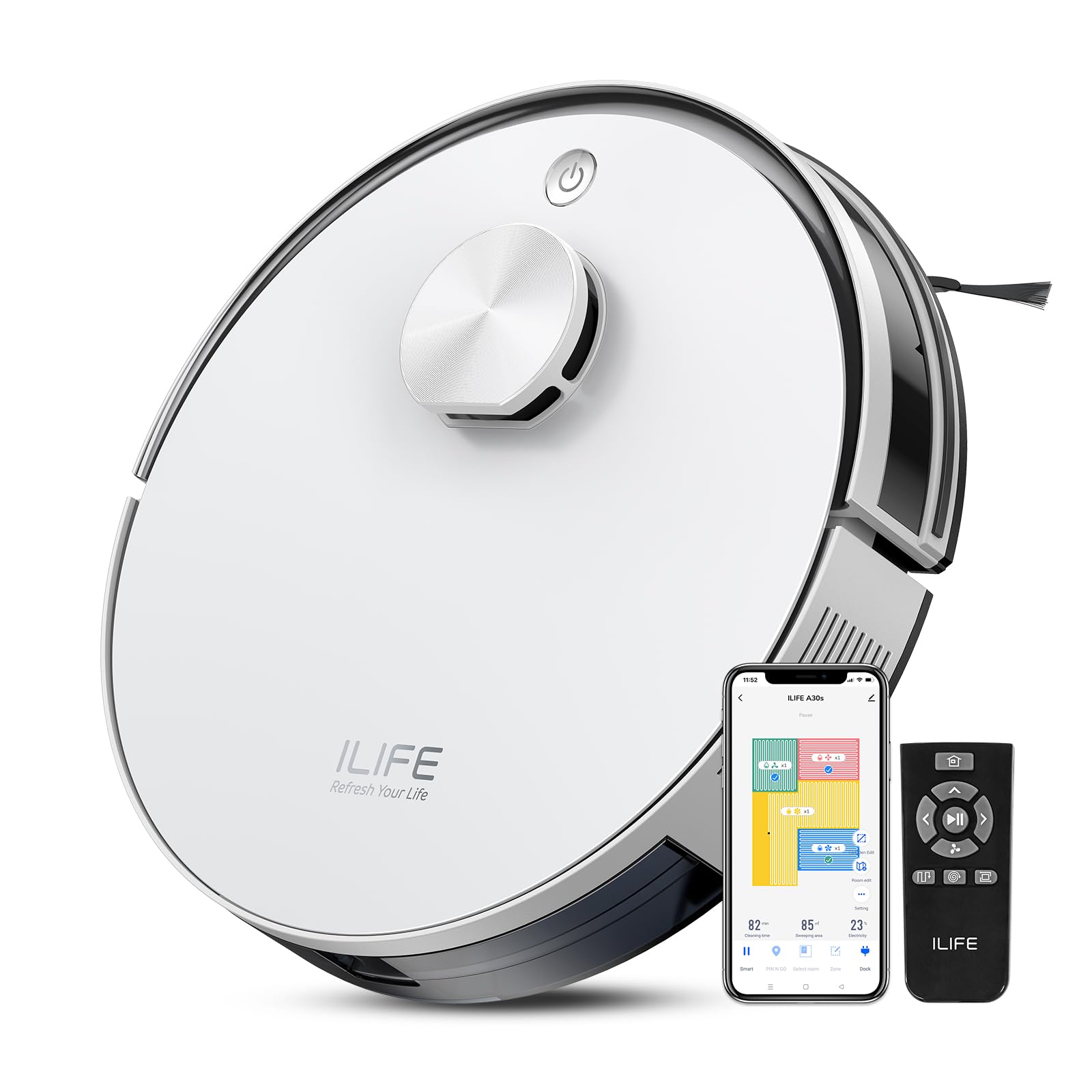
The ILIFE A30s delivers the highest suction power in this roundup at 10,000Pa in spot mode, making it a serious contender for homes with deep-pile carpets or heavy dirt accumulation. The LiDAR navigation with SLAM algorithm maps rooms quickly and plans efficient cleaning paths, ensuring comprehensive coverage. It has no mopping function, so this is a dedicated vacuum — a trade-off that purists will appreciate for the focus on raw pickup power.
The dual anti-tangle design — with both the main brush and side brush engineered to shed hair — is particularly effective for pet households with multiple dogs or cats. Users report that the A30s handles cat litter scatter and fine particles better than many costlier models. The ILIFEClean app provides scheduling, no-go zone creation, virtual walls, and carpet boost activation, though the interface received mixed reviews for its learning curve.
The 150-minute battery life in quiet mode is solid, but under standard or max suction, real-world runtime drops significantly — some users with 900-square-foot areas report needing a recharge before finishing. The robot is noticeably louder in high suction mode, though it’s still quieter than a traditional stick vacuum. For heavy carpet cleaning without mopping needs, the A30s offers unbeatable suction-to-price ratio in this segment.
Why we love it
- 10,000Pa max suction — highest in this price tier
- Dual anti-tangle brushes minimize hair wrap
- Effective LiDAR mapping and no-go zone support
Good to know
- No mopping function — vacuum only
- Battery drains faster in higher suction modes
8. Tikom L8000 Pro
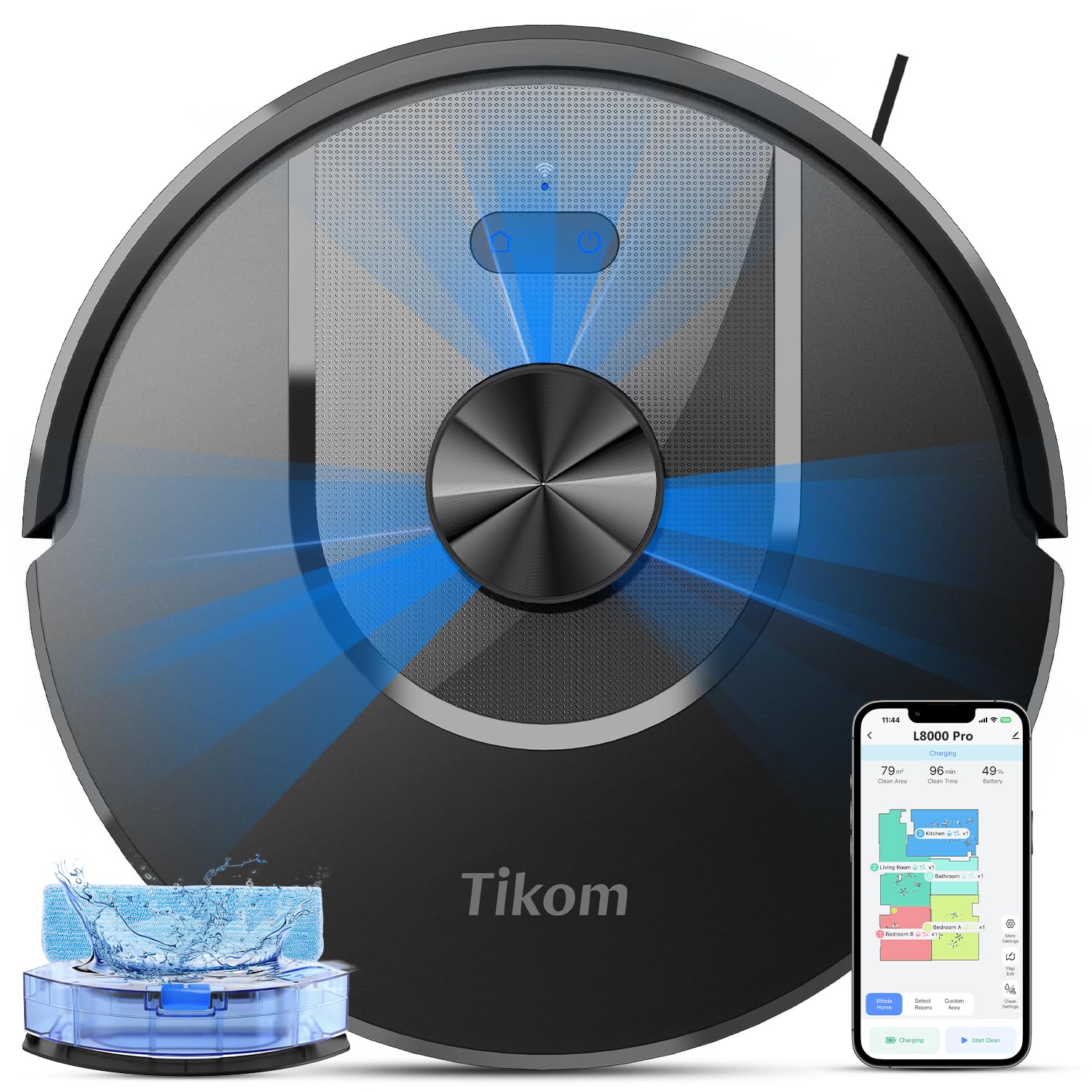
The Tikom L8000 Pro is a dedicated multi-level cleaning solution, supporting up to five saved maps in its LiDAR system. For duplex homes, townhouses, or homes with basements, this eliminates the need to re-map when moving the robot between floors. The 6000Pa suction handles pet hair and dust across hard floors and low-pile carpets, with automatic carpet boost that switches to MAX suction upon detection.
The 2-in-1 dustbin (450ml) and water tank (300ml) offer 1.5 times the capacity of previous Tikom models, reducing fill frequency during long cleaning runs. Operating at just 45dB in low suction mode, it’s one of the quietest options on this list — suitable for running during sleep or work without distraction. The “Do Not Disturb” mode prevents any audible prompts during night cleaning.
The mopping function is best described as a damp cloth trail — adequate for daily dust maintenance but not a replacement for traditional mopping on stuck-on grime. The app, while functional, has a clunky interface with some unclear terminology. On thicker rugs, the robot can struggle and occasionally get stuck. For quiet, multi-floor cleaning with solid LiDAR mapping, the L8000 Pro offers strong value.
Why we love it
- Supports up to 5 saved LiDAR maps for multi-level homes
- 45dB quiet mode for disturbance-free operation
- Oversized 450ml dustbin and 300ml water tank
Good to know
- Mopping is a light damp pass, not deep cleaning
- Struggles on medium-pile to thick rugs
9. Uninell UR1

The Uninell UR1 uses gyro navigation rather than LiDAR, which makes it a budget-friendly entry point for smaller apartments and single-level homes. The gyro system follows a semi-systematic pattern — better than random bump navigation but not as precise as LiDAR. The 5000Pa suction, anti-tangle V-shaped brush, and HEPA filter (99.9% dust and dander capture) make it a strong performer for pet hair on hard floors and low-pile carpets.
At just 2.99 inches thin, the UR1 fits under many low-clearance furniture pieces, and the 180-minute runtime from its 2600mAh battery provides enough endurance for up to 2,100 square feet on a single charge — excellent for an entry-level model. It offers multiple control methods: the Smartlife App, a remote control (ideal for Wi-Fi-free use or seniors), physical buttons, and voice commands via Alexa and Google Assistant.
The mopping function is the UR1’s weakest aspect — the water tank is small, water output is barely noticeable, and the mop pad drags dry quickly on longer runs. The 450ml dust bin is also relatively small, requiring frequent manual emptying. Some users encountered erratic cleaning patterns in random mode and found the app permission requirements excessive. For those prioritizing a low price and long battery over precise navigation, the UR1 is a solid starter robot.
Why we love it
- 180-minute runtime covers up to 2,100 sq ft
- Ultra-slim 2.99-inch height for low furniture
- Includes remote control for Wi-Fi-free operation
Good to know
- Gyro navigation is less precise than LiDAR
- Mopping function is weak and dries quickly
FAQ
Will a LiDAR robot vacuum under $200 work in complete darkness?
How long do the batteries typically last on a sub-$200 robot vacuum?
Can these robots handle thick, plush carpets or high-pile shag?
How often do I need to replace the filter and side brushes?
Is mopping effective on any of these under-$200 robot vacuums?
Final Thoughts: The Verdict
For most households, the robot vacuum under $200 winner is the Lefant M330 Pro because it combines LiDAR navigation, an ultra-slim 95mm profile, anti-tangle suction, and dual-band Wi-Fi at a price that undercuts competitors with similar specs. If you want a self-emptying base for weeks of hands-off cleaning, grab the Tapo RV20 Max Plus. And for maximum suction to tackle deep carpet cleaning, nothing beats the ILIFE A30s at 10,000Pa peak power. Each of these picks addresses a different cleaning priority — match yours to the right machine and you’ll get daily automation without stretching your budget.