
A hanging bird feeder that spills seed in the wind, cracks under the first frost, or lets squirrels drain it in an hour turns your backyard sanctuary into a daily frustration. You want a feeder that keeps seed dry, survives weather shifts, and actually feeds the birds you’re trying to attract — not the local squirrel gang.
I’m Mo Mahin — the founder and writer behind Furric. I’ve spent over a decade analyzing outdoor gear markets, dissecting thousands of owner reports, and comparing metal gauges, tray designs, seed capacities, and weather-seal features across dozens of hanging feeder models.
After filtering five top contenders through material quality, real-world durability, and bird-friendly design, this guide delivers the honest breakdown you need to confidently choose the best hanging bird feeder that fits your yard, your birds, and your patience.
How To Choose The Best Hanging Bird Feeder
Not all hanging feeders perform equally. Before you click buy, match the feeder to your specific conditions: the birds in your area, your local weather, and how much maintenance you’re willing to do. Here are the specs that separate a smart buy from a regret.
Material: Metal Rules for Durability
Plastic tubes crack after one or two seasons in direct sun. Look for powder-coated metal bodies and roofs — the coating resists rust and the metal structure survives falls from hooks or aggressive squirrel jousting. The Gbekery and Kingsyard mesh models use metal construction that weathers far better than acrylic or polycarbonate.
Seed Capacity vs. Waste
Capacity ranges from 3.4 ounces to 2.5 pounds. Larger capacity means fewer refills but also more seed to spoil if moisture seeps in. Check for drainage holes in the tray — they prevent water pooling and mold growth. A 360-degree feeding tray allows multiple birds to eat simultaneously, but if the ports are oversized, seed spills fast. Some models let you adjust port size with tape or inserts.
Mounting and Hanging Hardware
The hanger must be stainless steel or coated metal — thin wire rusts and snaps. Look for a removable base or twist-off top for cleaning access. A wide-mouth opening makes refilling less messy. Dome-style covers protect seed from rain and can be adjusted downward to block larger bully birds, though no dome is fully grackle-proof at the default height.
Quick Comparison
On smaller screens, swipe sideways to see the full table.
| Model | Category | Best For | Key Spec | Amazon |
|---|---|---|---|---|
| Kingsyard Mesh Tube | Mesh Tube | Clinging birds, suet/mealworm | 2.5 lb capacity, all-metal powder coat | Amazon |
| Kingsyard Platform Dome | Platform Dome | Variety seed, adjustable bully control | 11″ hexagon tray, 2″ rim depth | Amazon |
| Monarch Abode Zazu | Glass Bowl | Small birds, jelly/mealworm | 3.4 oz capacity, glass bowl | Amazon |
| Godinsky Metal Feeder | Metal Tube | Smaller birds, rain resilience | 2.5 lb capacity, anti-rust paint | Amazon |
| Gbekery Metal Feeder | Tube & Tray | Mixed seed, multiple birds | 2 lb capacity, 360° tray | Amazon |
In‑Depth Reviews
1. Kingsyard Mesh Tube Bird Feeder
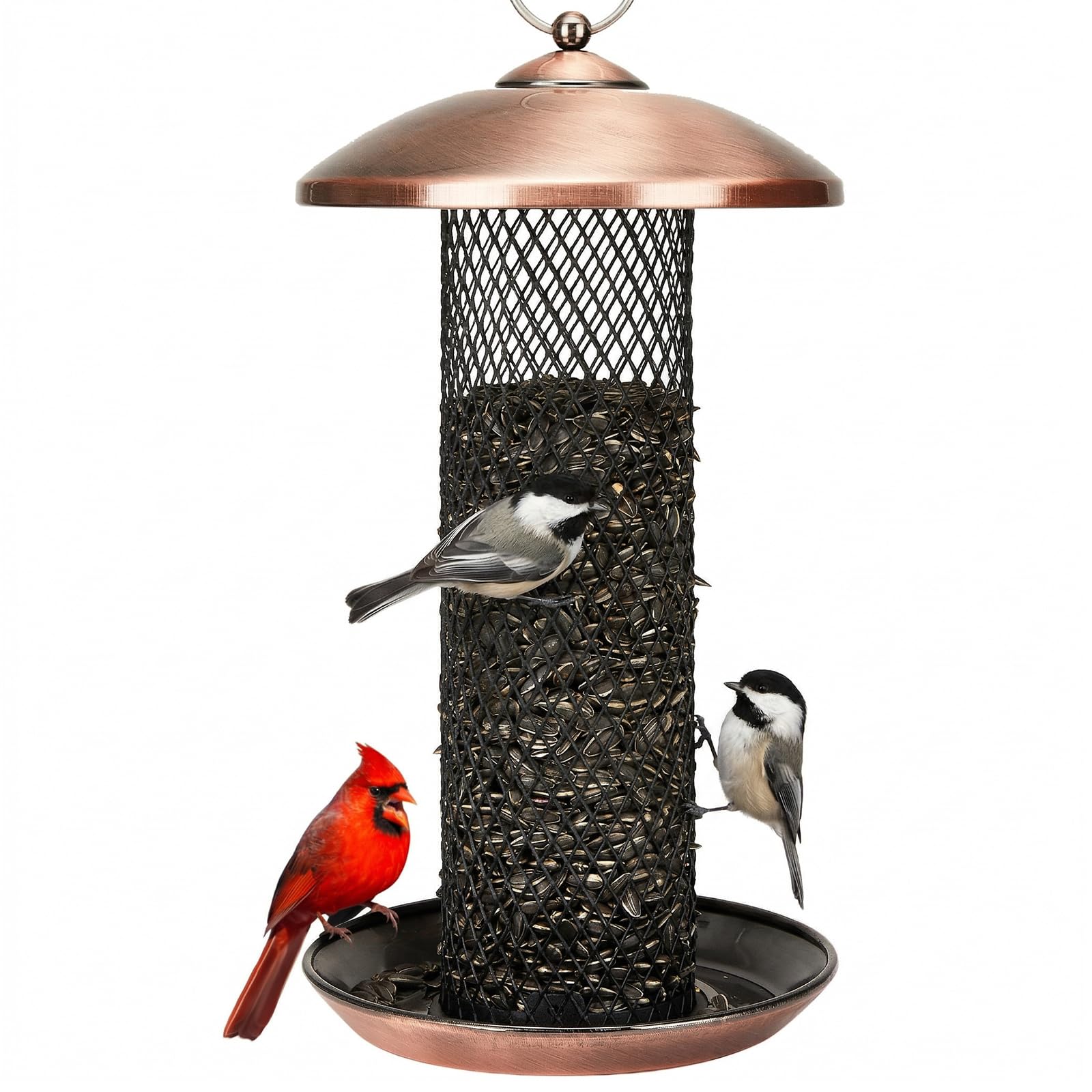
The Kingsyard Mesh Tube eliminates two common failures at once: plastic that degrades and wood that rots. This unit is entirely powder-coated metal — the mesh body, the lid, the base, and the hanging loop. There is no plastic or wood anywhere on the feeder. That means no warping from sun exposure and no easy chew-through for squirrels. The mesh surface works perfectly for clinging species like woodpeckers, nuthatches, and chickadees, while the 360-degree seed tray gives perching birds a stable landing. The 2.5-pound hopper is generous without encouraging seed waste, and the drainage holes in the tray prevent moisture buildup.
Disassembly is tool-free: twist off the top to fill, or remove the base tray for a thorough rinse. The antique copper finish blends into garden settings without screaming for attention. Multiple owners report the feeder has survived being batted off hooks by deer and bears without cracking or bending. That kind of abuse would shatter a plastic tube or snap thin wire hangers. The mesh diameter is small enough to hold sunflower seeds and suet nuggets but large enough to let birds grip and pry seeds through — Nyjer and millet will fall through, so stick to the recommended feed types.
Birds gravitate to it quickly. In owner reports, it consistently ranks as the most visited feeder in the yard, attracting cardinals, finches, bluebirds, sparrows, grosbeaks, and woodpeckers. The all-metal build means zero maintenance beyond periodic cleaning, and the powder coat resists rust even in damp climates. If you want one feeder that handles mixed bird populations without structural complaints, this is it.
Why we love it
- Entirely metal construction — no plastic or wood to fail
- Works for both clinging and perching bird species
- Tool-free disassembly makes cleaning simple
Good to know
- Not suitable for Nyjer or millet — small seeds fall through mesh
- Body feels short for larger clinging birds, but most adapt fine
2. Kingsyard Large Platform Dome Feeder

The Kingsyard Platform Dome Feeder solves the bully-bird problem better than most. The adjustable dome slides up and down the hanging wire, letting you restrict access to smaller species while still keeping seed dry. Lower the dome to a 3-inch gap, and larger grackles and jays struggle to perch — though determined ones may still steal seed. Raised higher, the dome acts as a classic rain cover while allowing all birds to feed freely. The 11-inch hexagon tray is wide enough for multiple birds to eat simultaneously without crowding, and the 2-inch rim keeps seed from spilling during wind gusts.
Construction uses recycled plastic boards fused with a metal frame — more impact-resistant than wood, which splinters, and purely plastic trays that warp. The fine mesh bottom is the standout feature here. It allows rainfall to drain through immediately instead of pooling in the tray, which reduces mold and keeps seed fresh longer. With the dome adjusted to its highest setting, the feeder handles moderate winds without swinging wildly, thanks to the 2.4-pound total weight.
Refilling is straightforward: lift the dome, pour seed onto the tray, and lower the dome back into place. One minor flaw: lowering the dome fully makes it harder to refill quickly since you must hold the dome open while pouring. But the trade-off is worth it for the weather protection. Owners consistently praise the build quality, with many calling it the sturdiest platform feeder they have owned. If your yard has a mix of finches, juncos, cardinals, and the occasional bully species, this feeder gives you manual control over who gets a seat at the table.
Why we love it
- Adjustable dome lets you limit access for bully birds
- Fine mesh bottom drains rainwater immediately
- Recycled plastic body resists fading, cracking, and dents
Good to know
- Determined grackles may still bypass the lowered dome
- Dome repositioning complicates refilling when set low
3. Monarch Abode Zazu Glass Bowl Feeder

The Monarch Abode Zazu sacrifices capacity for elegance and ease. This feeder holds just 3.4 ounces of seed, jelly, or mealworms — barely a handful — but that low volume is deliberate. It forces you to refill frequently, which keeps the food fresh and reduces the chance of stale seed building up. The clear glass bowl lets you see the food level instantly without removing anything. The matte black powder-coated metal frame is welded, not glued, and the hanging wire is coated to resist corrosion. This is a feeder designed for small birds: chickadees, titmice, finches, and wrens. Larger birds like grackles or pigeons cannot perch comfortably on the thin metal rim, which naturally limits access.
Cleaning is the best part: the glass bowl lifts out of the metal frame, so you can hand-wash or run it through the dishwasher. No awkward crevices, no trapped seed dust. The open bowl design also works as a water feeder alternative — some owners fill it with jelly for orioles or mealworms for bluebirds. The one vulnerability: the glass bowl can break if the feeder takes a hard fall or gets batted by a raccoon. Several owners solved this by replacing the bowl with a similarly sized plastic ramekin or a small ceramic dish, turning a fragile point into a non-issue.
Aesthetically, this is the feeder you hang where people sit. It looks like decorative outdoor art rather than a utility seed dispenser. The small footprint means it works on balcony hooks, patio shepherd’s hooks, or narrow tree branches where larger feeders would overwhelm the scene. If your priority is a feeder that complements your outdoor aesthetic and attracts small songbirds without attracting flocks of bully species, the Zazu earns its premium status through thoughtful simplicity.
Why we love it
- Removable glass bowl cleans in the dishwasher easily
- Matte black metal frame is visually refined and rust-resistant
- Small capacity forces frequent refills, keeping food fresh
Good to know
- Glass bowl is breakable if the feeder is knocked down
- 3.4 oz capacity means daily refills if you have many birds
4. Godinsky Metal Bird Feeder
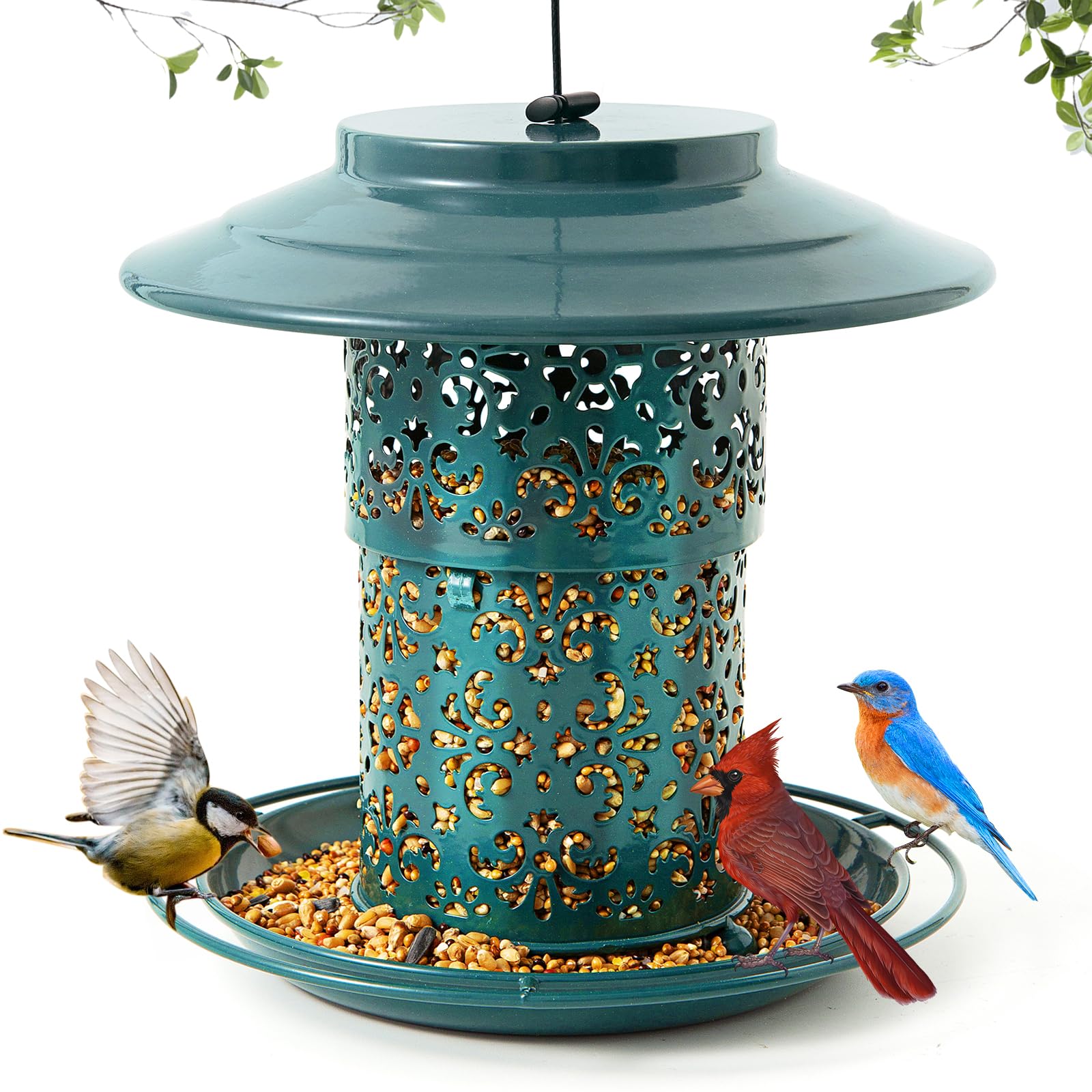
The Godinsky Metal Feeder delivers solid mid-range performance at a budget-friendly price. The painted metal surface resists rain and rust in normal conditions, and the 2.5-pound seed capacity matches larger models without the bulk. The 360-degree feeding tray has four ports, though the perch spacing favors smaller birds — cardinals and larger species have trouble staying on, which actually works in your favor if you want to reduce seed consumption by bully birds. The green powder coat blends into garden foliage, and the included ant moat adds a layer of pest protection that most feeders in this tier skip.
Drainage holes in the tray prevent water from pooling, and the stainless steel lanyard is a meaningful upgrade over thin wire. The feeder measures 7.2 inches across, which is compact enough to hang on branch crotches without looking oversized. Cleaning is straightforward — the large opening lets you reach in with a bottle brush, and a hose rinse clears the tray quickly. The main drawback is that the perch has no weight-sensitive mechanism, so larger birds like pigeons and grackles can land if they balance carefully, though at 7.5 inches tall, they look awkward doing it.
Owner feedback consistently praises the simplicity and the look. Multiple buyers report that this feeder attracted finches and chickadees within hours of hanging, and that it holds up well through spring rains. If you are shopping on a tighter budget but refuse to buy plastic feeders that crack in two seasons, the Godinsky gives you metal construction and a solid 2.5-pound hopper without the premium price tag of the Kingsyard mesh model. It is not squirrel-proof, but no feeder at this investment level should claim to be.
Why we love it
- Painted metal body resists rust better than plastic alternatives
- 2.5 lb capacity reduces refill frequency without wasting seed
- Included ant moat adds pest defense at no extra cost
Good to know
- Perch size favors small birds; cardinals struggle to feed
- No weight mechanism to exclude larger bully birds
5. Gbekery Metal Bird Feeder
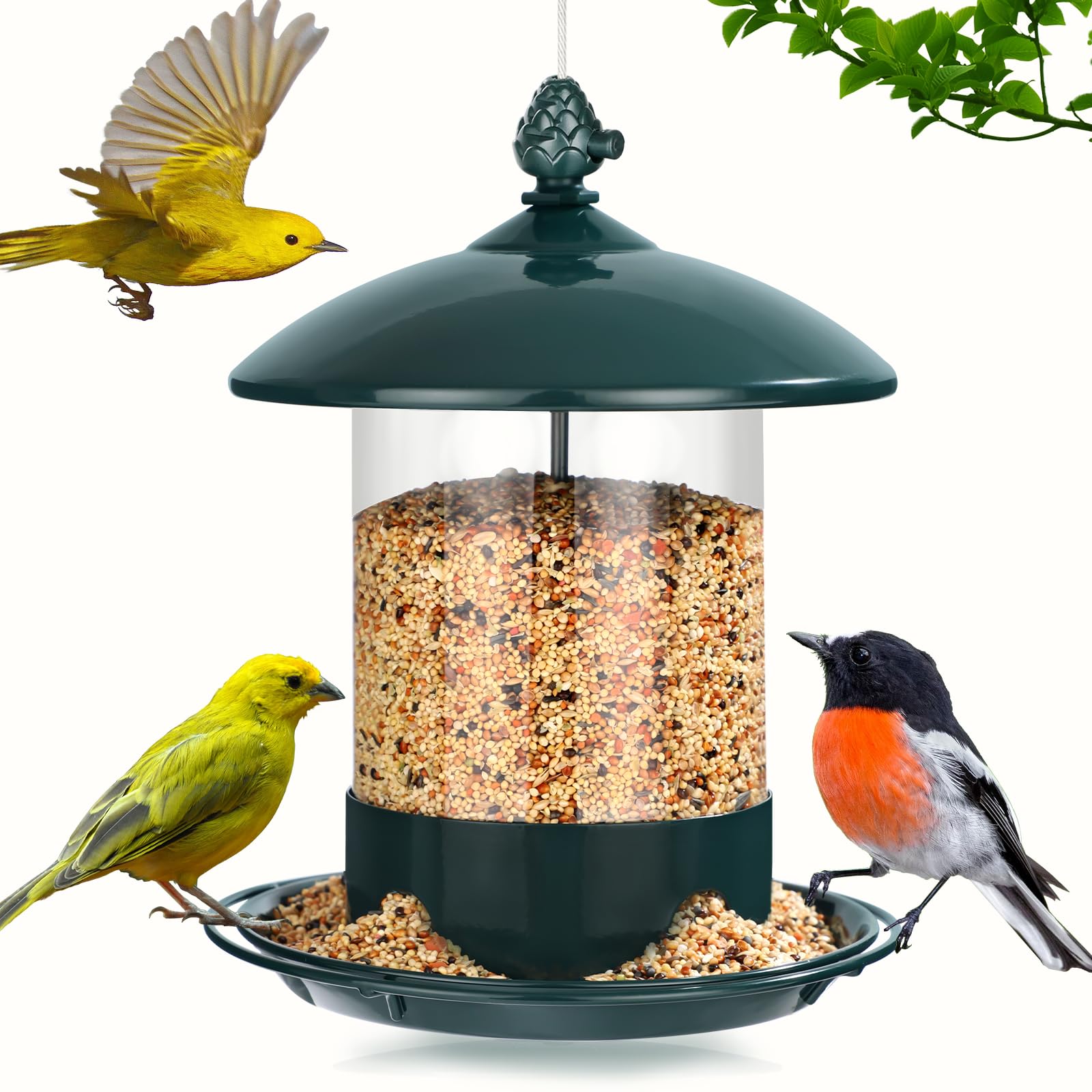
The Gbekery Metal Feeder packs strong weather resilience and a thoughtful closure system into a compact 8.5-inch frame. The lid and tray are metal with an anti-rust coating, and the clear polycarbonate tube is thicker than typical acrylic feeders. The slider-lock cap mechanism is the highlight — instead of a simple twist-off or clip lid, Gbekery uses a sliding lock that squirrels cannot easily pop open. This is a meaningful detail if you have persistent squirrels in your yard. The 360-degree tray with four feeding ports and a circular perch allows multiple birds to feed at once.
The 2-pound capacity is moderate but adequate for one to two days between refills for a typical backyard flock. The wide mouth opening makes filling less messy than narrow-tube feeders. The polycarbonate tube has held up well in owner reports even when feeders have fallen off hooks during storms or bear encounters. The large metal roof extends beyond the tube edges, protecting the feeding ports from rain splash. Drainage holes in the tray prevent water from puddling, keeping seed dry. One owner noted that the four seed arches in the tray are somewhat oversized, which can lead to faster seed waste if birds flick seeds while feeding. A simple tape adjustment to reduce port width to 5/16 inch solved the problem.
At this investment level, the Gbekery delivers the best squirrel-deterrent design in the budget-friendly tier. The combination of metal top and base with a thick polycarbonate tube gives it durability that all-plastic feeders lack. Owners report that finches and sparrows visit consistently, and the feeder has stayed in service through multiple seasons without rust spots or broken parts. If you are looking for a low-risk entry point with metal-quality construction and a locking cap, this model gives you a genuine upgrade over basic tube feeders at the same investment level.
Why we love it
- Slider-lock cap resists squirrel opening better than twist lids
- Thick polycarbonate tube survives falls and weather exposure
- Metal roof and tray with anti-rust coating extend service life
Good to know
- Seed tray ports may be oversized for small seeds
- Polycarbonate tube can be chewed by persistent squirrels
FAQ
Does a metal feeder really stop squirrels from chewing?
How often should I replace seeds in a hanging feeder?
What seed type works best in a 360-degree tray feeder?
Final Thoughts: The Verdict
For most gardeners, the best hanging bird feeder winner is the Kingsyard Mesh Tube because it eliminates plastic and wood failure points, handles both clinging and perching birds, and cleans up in seconds without tools. If you want adjustable bully-bird control and a weatherproof platform, grab the Kingsyard Platform Dome. And for decorative appeal with small-songbird focus, nothing beats the Monarch Abode Zazu.