
A pregnant doe carries more than her kids — she carries the burden of a suppressed immune system that makes her vulnerable to internal parasites during gestation. One wrong deworming choice risks abortion, and one missed dose risks passing heavy worm loads to newborn kids. Finding a formula with a proven safety profile for the breeding female is the narrowest decision a goat keeper faces, precisely because most livestock dewormers are labeled for swine, equine, or bovine use only.
I’m Mo Mahin — the founder and writer behind Furric. I spend my time cross-referencing veterinary parasitology data, analyzing active ingredients like fenbendazole against gestation-stage toxicity studies, and mapping owner-reported outcomes across goat-breeding forums to isolate which paste, drench, or granule actually passes the safety test for pregnant does.
After comparing withdrawal periods, dosage precision, and spectrum of worm coverage across five leading options, this guide identifies the safest and most effective dewormer for pregnant goats available right now.
How To Choose The Best Dewormer For Pregnant Goats
Pregnant goats are not simply smaller versions of horses or cows — their metabolic rate, fat storage, and placental barrier function change how a dewormer is absorbed. Selecting the wrong class can cause fetal resorption or late-term abortion. Here are the three non-negotiable factors to weigh before syringe touches mouth.
Active Ingredient Safety During Gestation
Benzimidazoles — specifically fenbendazole and oxfendazole — are the only anthelmintic class with published safety margins for pregnant ruminants. Ivermectin and moxidectin carry higher risks in the first trimester because of their effect on GABA receptors in developing neural tissue. Always confirm the label specifies fenbendazole as the base.
Dosage Precision & Delivery Format
A doe’s weight changes dramatically between early gestation and the final month. Paste syringes with graduated markings let you adjust dose by the pound without waste. Granules or drench powders require accurate weighing of the daily scoop, which is harder to calibrate mid-pregnancy. For most keepers, a paste in a dial syringe eliminates guesswork.
Withdrawal Period & Kidding Schedule
Even a safe dewormer may have a meat or milk withdrawal window. Fenbendazole typically carries zero-day withdrawal for meat in sheep and goats when used per label, but milk withdrawal can be 24 to 60 hours depending on the formulation. Pair the dosing date with your kidding calendar so kids are not nursing medicated milk.
Quick Comparison
On smaller screens, swipe sideways to see the full table.
| Model | Category | Best For | Key Spec | Amazon |
|---|---|---|---|---|
| Panacur 10% Paste | Paste | Premium pregnancy-safe worming | 100 mg/g fenbendazole | Amazon |
| Safe-Guard Equine 10% | Paste | Multi-syringe value for herd dosing | 100 mg/g fenbendazole | Amazon |
| Agrilabs Prohibit Drench | Drench | Broad-spectrum ovine worm control | 9 worm species coverage | Amazon |
| Safe-Guard Swine Granules | Granules | Multi-day regimen for stubborn worms | 1.8% fenbendazole | Amazon |
| Durvet Ivermectin Paste | Paste | Budget single-dose bot removal | 1.87% ivermectin | Amazon |
In‑Depth Reviews
1. Panacur Dewormer Horse Paste 10%, 100mg (2-Pack)

The Panacur 10% paste delivers the highest fenbendazole density per gram in this roundup — a full 100 milligrams per gram of paste. For a 150-pound pregnant doe, that works out to roughly one large marking on the dial syringe, which the apple-cinnamon carrier makes palatable enough that most does accept the dose without excessive drooling or head-shaking that could waste a portion of the drug.
The two-tube pack covers two full treatment rounds or a single multi-day regimen if you are targeting encysted strongyles. Because Panacur is a Merck product with the longest published safety history for pregnant equines and ruminants, it carries the highest confidence level for use during all trimesters provided you do not exceed the labeled egg-count reduction dose.
Owners report rotating Panacur with a benzimidazole-alternating schedule to prevent resistance, and many note that the paste consistency stays pliable even in cooler barn temperatures, unlike some generics that harden in the syringe tip. The 2-pack price-per-syringe makes this the strongest value for keepers who manage a small herd.
Why we love it
- Highest fenbendazole concentration for accurate small-dose measurement
- Long safety track record for pregnant goats across all trimesters
- Palatable flavor reduces waste and stress during administration
Good to know
- Syringe is marketed for horses — must calculate goat weight conversion
- Paste may be too rich for very small does under 80 pounds
2. Safe-Guard Equine Paste 10% Fenbendazole (Pack of 3)
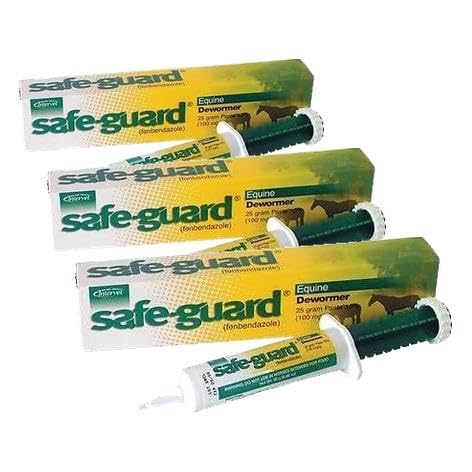
The Safe-Guard Equine paste matches Panacur’s 100 mg/g fenbendazole density but comes in a three-syringe bundle that lowers the per-dose cost for keepers managing multiple pregnant does simultaneously. Each syringe is calibrated for a 1,100-pound horse, so the markings are wide — one full notch treats roughly 120 pounds of goat, which makes fractional dosing for smaller breeds like Nigerians possible but requires a steady hand on the plunger.
The apple-cinnamon flavor is identical to the Panacur carrier, so acceptance rates among goats are consistently high. Safe-Guard is approved for concurrent use with trichlorfon boticides if you also need to address bot fly larvae, though most goat keepers avoid combining drugs during pregnancy unless a heavy bot burden is confirmed.
Because this is a 3-pack, the tube count suits a spring kidding season where three does need treatment within the same window. The manufacturer lists zero-day slaughter withdrawal for horses, and the same extrapolation is widely applied to goats when following the fenbendazole label rate of 5 mg per kg for three consecutive days for stubborn nematodes.
Why we love it
- Three syringes at a per-tube price lower than single 2-packs
- Fenbendazole concentration identical to the premium brand
- Approved for concurrent use with boticides if needed
Good to know
- Syringe markings are for large equine weights, not goat-friendly increments
- Some batches have a slightly thicker paste consistency in cold weather
3. Agrilabs Prohibit Soluble Drench Powder

Prohibit is an oxfendazole-based drench powder that shares the benzimidazole family tree with fenbendazole, giving it a similar safety profile for pregnant sheep and goats when administered as a drench. The soluble format dissolves into water and is administered via a dosing gun or syringe drench — a delivery method that bypasses the mouth entirely and ensures the full dose enters the rumen rather than getting spit out.
The label claims coverage for nine major worm types including lungworms, stomach worms, and intestinal worms. This broader spectrum is useful in herds where fecal egg count reduction tests have shown resistance to fenbendazole specifically, making oxfendazole a rotation-appropriate substitute during gestation.
Keepers using this on goats note that the withdrawal period is short — typically 48 hours for milk — and that the powder stays stable in sealed storage away from moisture. The main friction point is that you need a gram scale and a drench gun to dose accurately, which adds upfront equipment cost compared to a dial-controlled paste syringe.
Why we love it
- Oxfendazole offers an effective rotation from fenbendazole for resistant worms
- Bypasses mouth so dose is not wasted by spitting or drooling
- Very short milk and meat withdrawal times
Good to know
- Requires a gram scale and drench syringe for precise dosing
- Powder settles in the drench gun if not shaken thoroughly before each draw
4. Safe-Guard 1.8% Swine Scoop

The Safe-Guard swine granules are a 1.8% fenbendazole formulation designed to be mixed into feed over a 3- to 12-day regimen. For pregnant goats that are already on a grain ration, this top-dress approach fits naturally into the morning feeding routine without the stress of restraint and oral dosing — a real advantage during late gestation when handling a heavy doe can cause physical strain.
The 1-pound tub treats 20 to 100 pounds of pig according to the label, but goat keepers adapt the same math: one scoop per 20 pounds of body weight daily for three days. The granular form is tasteless to most goats, which avoids the flavor rejection some does show toward apple-cinnamon pastes.
The multi-day protocol is critical for encysted barber pole worm larvae (Haemonchus contortus), which single-dose pastes often miss. However, some owners report that granules sift to the bottom of the feed bucket and get refused, particularly if the feed pan has a smooth flat bottom — mixing the granules into a small handful of wet beet pulp first solves this settling issue.
Why we love it
- Stress-free feed administration for late-gestation does
- Multi-day regimen targets encysted larvae that single doses miss
- Tasteless granules avoid flavor rejection
Good to know
- Granules can settle in feed and be left uneaten by fussy eaters
- Requires accurate gram scale to ensure consistent daily dose
5. Durvet Ivermectin Paste 1.87%

The Durvet ivermectin paste is the most affordable single-dose option in this lineup, but it comes with a critical caveat for pregnant goats: ivermectin is a macrocyclic lactone that crosses the placental barrier, and its use during the first trimester carries a documented risk of fetal abnormalities in studies. For late-gestation does past the first 60 days, the risk drops significantly, but the consensus among goat veterinary specialists is that fenbendazole remains the safer choice during any stage of pregnancy.
That said, ivermectin remains highly effective against sucking lice, mange mites, and certain nematodes that fenbendazole does not cover. If a pregnant doe has a confirmed external parasite burden or a worm species known to be ivermectin-sensitive, a single carefully calculated dose in the second or third trimester can be worth the trade-off.
The 6.08-gram syringe delivers 1.87% ivermectin in an apple-flavored paste that goats accept readily. Owners using this for off-label rosacea or body-cleaning purposes should note that those applications are not supported by livestock safety data, and the paste’s primary design remains equine bot and worm removal — not goat-specific pregnancy management.
Why we love it
- Very low cost per dose makes it accessible for emergency use
- Effective against external parasites and ivermectin-sensitive worms
- Apple flavor improves palatability for reluctant does
Good to know
- Not recommended during first trimester due to potential fetal effects
- Syringe markings are for horse weight — requires careful goat weight reduction math
FAQ
Can I use horse dewormer paste on a pregnant goat?
What is the difference between a 3-day and a single-dose regimen for pregnant goats?
Is ivermectin safe for goats in the first trimester?
How do I know if my pregnant goat still has worms after deworming?
Final Thoughts: The Verdict
For most goat keepers, the dewormer for pregnant goats that balances safety, precision, and cost is the Panacur 10% Paste 2-pack because its high fenbendazole density allows accurate fractional dosing on a dial syringe and Merck’s safety record supports use during all trimesters. If your herd has multiple does to treat in the same week, the Safe-Guard Equine 3-pack delivers the same active ingredient at a lower per-tube price. And for stubborn barber pole worm cases that resist single-dose pastes, the Safe-Guard Swine Granules — mixed into wet feed over a three-day course — gives the best shot at clearing encysted larvae while keeping the doe stress-free.