
A Toy Poodle’s digestive system is compact and sensitive, meaning the wrong kibble size or protein source can trigger vomiting, loose stools, or a refusal to eat. Finding a formula that delivers balanced nutrition in a tiny, easy-to-chew piece is the single biggest challenge owners face—and the difference between a thriving companion and a constant worry.
I’m Mo Mahin — the founder and writer behind Furric. I’ve spent years analyzing pet nutrition formulations, cross-referencing ingredient sourcing with AAFCO nutrient profiles, and sifting through thousands of verified owner reports to identify which dry food recipes actually deliver on their promises for toy-breed digestive systems.
This guide breaks down the top dry kibble options that balance high-quality protein, gut-friendly prebiotics, and appropriately sized pieces for tiny mouths. You will find a detailed look at the best food for toy poodle owners who want science-backed nutrition without the guesswork.
How To Choose The Best Food For Toy Poodle
Toy Poodles have unique nutritional demands tied to their high metabolism, small jaw structure, and predisposition toward digestive sensitivity and dental issues. Selecting a dry food requires attention to three specific criteria beyond the brand name.
Kibble Geometry & Bite Size
A standard kibble piece can be too large for a Toy Poodle’s small mouth, leading to gulping, choking risk, or simply being rejected. Look for formulas explicitly labeled for “small breed” or “toy breed” and check customer images for kibble diameter—pieces around 8–10 mm are ideal. Miniature or “small bites” shapes also help reduce plaque buildup by encouraging chewing.
Protein Source & Digestibility
Chicken, salmon, and lamb are common first ingredients, but Toy Poodles often develop sensitivities to poultry. High-quality salmon or novel proteins (like duck or venison) can reduce allergy triggers. The guaranteed analysis should show 30–38% protein for active adults and 28–32% for less active seniors, with fat content between 14–18% to maintain energy without promoting weight gain.
Targeted Additives for Toy Breed Concerns
Toy Poodles are prone to patellar luxation and dental disease. A supporting formula should include glucosamine and chondroitin (for joint health), Omega-3 and Omega-6 fatty acids (for skin and coat condition), and prebiotic fiber like chicory root or inulin (to regulate stool quality). Avoid recipes with excessive fillers like corn, wheat, or soy that offer minimal nutritional value for small digestive systems.
Quick Comparison
On smaller screens, swipe sideways to see the full table.
| Model | Category | Best For | Key Spec | Amazon |
|---|---|---|---|---|
| Blue Buffalo Wilderness Small Breed | Mid-Range | High-protein active Toy Poodles | 36% crude protein, 4.5 lb bag | Amazon |
| Merrick Lil’ Plates Puppy | Mid-Range | Growing Toy Poodle puppies | Glucosamine & chondroitin, 4 lb bag | Amazon |
| Hill’s Science Diet Puppy Sensitive Stomach | Premium | Sensitive stomachs & skin allergies | Salmon #1, prebiotic fiber, 4 lb bag | Amazon |
| NutriSource Puppy Small & Medium Breed | Premium | Digestive & cardiovascular health | Prebiotics + probiotics, 4 lb bag | Amazon |
| Royal Canin Small Digestive Care | Premium | Adult Toy Poodles with chronic digestive issues | High digestibility proteins, 3.5 lb bag | Amazon |
In‑Depth Reviews
1. Blue Buffalo Wilderness Adult Small Breed Dry Dog Food

With real chicken listed as the first ingredient and a guaranteed 36% crude protein, Blue Buffalo Wilderness delivers the highest protein concentration in this roundup. That matters for Toy Poodles because their rapid metabolism burns energy quickly, and this formula supports lean muscle maintenance without relying on poultry by-product meals or artificial preservatives. The kibble size is specifically tailored for small jaws, reducing the urge to gulp.
The inclusion of LifeSource Bits—antioxidant-rich pieces cold-formed to preserve potency—adds a layer of immune system support that many owners of Toy Poodles with environmental allergies find beneficial. Omega-3 and Omega-6 fatty acids are present to support coat quality, a common concern for the breed’s fine, curly hair. The active owner reviews consistently mention improved energy and coat shine after switching.
This recipe is grain-free, which works well for Toy Poodles with confirmed grain sensitivities, but it is worth noting that some dogs with very sensitive stomachs may need a gradual 7-day transition to avoid loose stools initially. The 4.5-pound bag size is practical for smaller households where freshness is a priority.
Why we love it
- Highest protein level (36%) for sustained toy-breed energy
- No corn, wheat, soy, or poultry by-product meals
- LifeSource Bits deliver cold-formed antioxidants
Good to know
- Grain-free may not suit all Toy Poodle digestive systems
- Some owners report the kibble is slightly harder than competitor brands
2. Merrick Lil’ Plates Grain Free Small Breed Puppy Food

Merrick Lil’ Plates is engineered specifically for toy and small breed puppies, with deboned chicken as the first ingredient and a holistic blend of high protein and healthy fats to support rapid growth phases. The kibble size is notably small—ideal for a Toy Poodle puppy’s developing jaw—and the crunchy texture helps mechanically clean teeth and freshen breath as they chew.
What sets this formula apart for Toy Poodle owners is the added glucosamine and chondroitin, which support hip and joint structure during the critical growth window when patellar luxation risk is highest. The grain-free recipe includes probiotics for digestive health, and the omega fatty acid profile (Omega-3 and Omega-6) promotes the skin and coat health that puppy Toy Poodles often struggle with during their first coat transition.
Owner feedback highlights that even picky eaters tend to accept this food readily, though the price per pound is on the higher end of the mid-range tier. The 4-pound bag is best suited for small-breed puppies under 10 pounds, as larger dogs will empty it quickly. Some owners noted improved stool quality compared to other “premium” puppy brands within the first week of transition.
Why we love it
- Glucosamine and chondroitin support joint development in Toy Poodle puppies
- Small kibble size reduces choking risk and encourages chewing
- Grain-free with probiotics for sensitive puppy digestion
Good to know
- Higher price per pound compared to all-life-stages kibble
- Some puppies may need gradual transition to avoid initial digestive upset
3. Hill’s Science Diet Puppy Sensitive Stomach & Skin
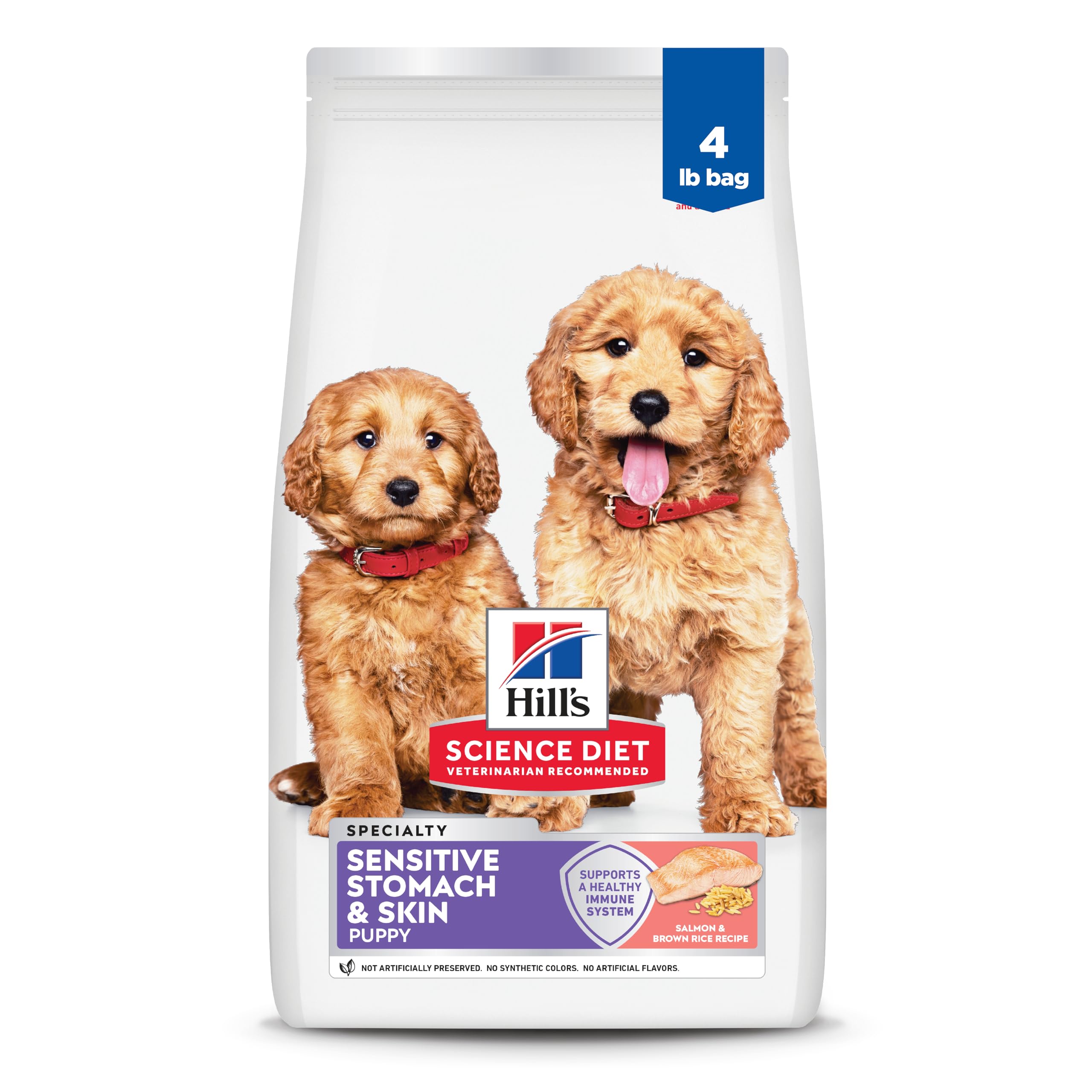
Hill’s Science Diet Puppy Sensitive Stomach & Skin uses salmon as the number one ingredient, making it a standout option for Toy Poodle puppies with known poultry sensitivities or itchy skin. The formula is highly digestible, featuring prebiotic fiber that supports optimal nutrient absorption—a crucial factor for toy breeds whose short digestive tracts can struggle with less-processed ingredients.
The triple-support approach—targeting stomach, skin, and immune health simultaneously—is rare in puppy-specific formulations. Enriched with Vitamin E and Omega-3 and Omega-6 fatty acids, it directly addresses the dry, flaky coat that Toy Poodle owners often report during seasonal changes. The DHA content supports brain development, which is particularly important for the intelligent, trainable Toy Poodle breed during the 8–16 week socialization window.
Owner reviews frequently mention rapid resolution of scratching and loose stool issues, sometimes within 48 hours of switching. The kibble size is rated for medium breeds on the package, but actual customer feedback confirms it is small enough for Toy Poodle puppies. The 4-pound bag is resealable with a Velcro closure, preserving freshness longer than other bag designs in this roundup.
Why we love it
- Salmon-based protein ideal for poultry-sensitive Toy Poodles
- Clinically proven to reduce scratching and improve stool quality
- Contains DHA for cognitive development during puppyhood
Good to know
- Slightly higher fat content may require portion control for less active puppies
- Not grain-free; contains brown rice and barley
4. NutriSource Puppy Food Small & Medium Breeds

NutriSource Puppy brings a dual prebiotic and probiotic approach to digestive health, which is particularly valuable for Toy Poodle puppies that develop loose stools during teething or stress periods. The chicken meal first ingredient provides concentrated protein without excess moisture, delivering essential amino acids for lean muscle growth in a small-breed body frame. The round kibble shape is sized appropriately for toy and medium breeds.
What separates this formula from standard puppy foods is the inclusion of L-Carnitine, taurine, choline chloride, and DL Methionine—a cardiovascular support stack that addresses the Toy Poodle’s predisposition toward heart conditions like mitral valve disease later in life. The wholesome grain blend (brown rice, oatmeal, barley) provides sustained energy release rather than the spikes associated with high-glycemic fillers.
Owner reviews consistently note firm stool quality and shiny coats within two weeks of switching. The 4-pound bag is competitively priced for a premium puppy formula, and the packaging includes a clear feeding chart based on weight and age. It is worth noting that the formula contains fish meal, so it may not be suitable for Toy Poodles with confirmed fish allergies.
Why we love it
- Dual prebiotic and probiotic support for sensitive Toy Poodle digestion
- Cardiovascular support additives (L-Carnitine, taurine) target breed-specific risks
- Wholesome grains provide sustained energy without corn or soy
Good to know
- Contains fish meal; avoid if your Toy Poodle has a fish allergy
- Kibble shape is round rather than irregular, may appeal less to some picky eaters
5. Royal Canin Small Digestive Care Adult Dry Dog Food
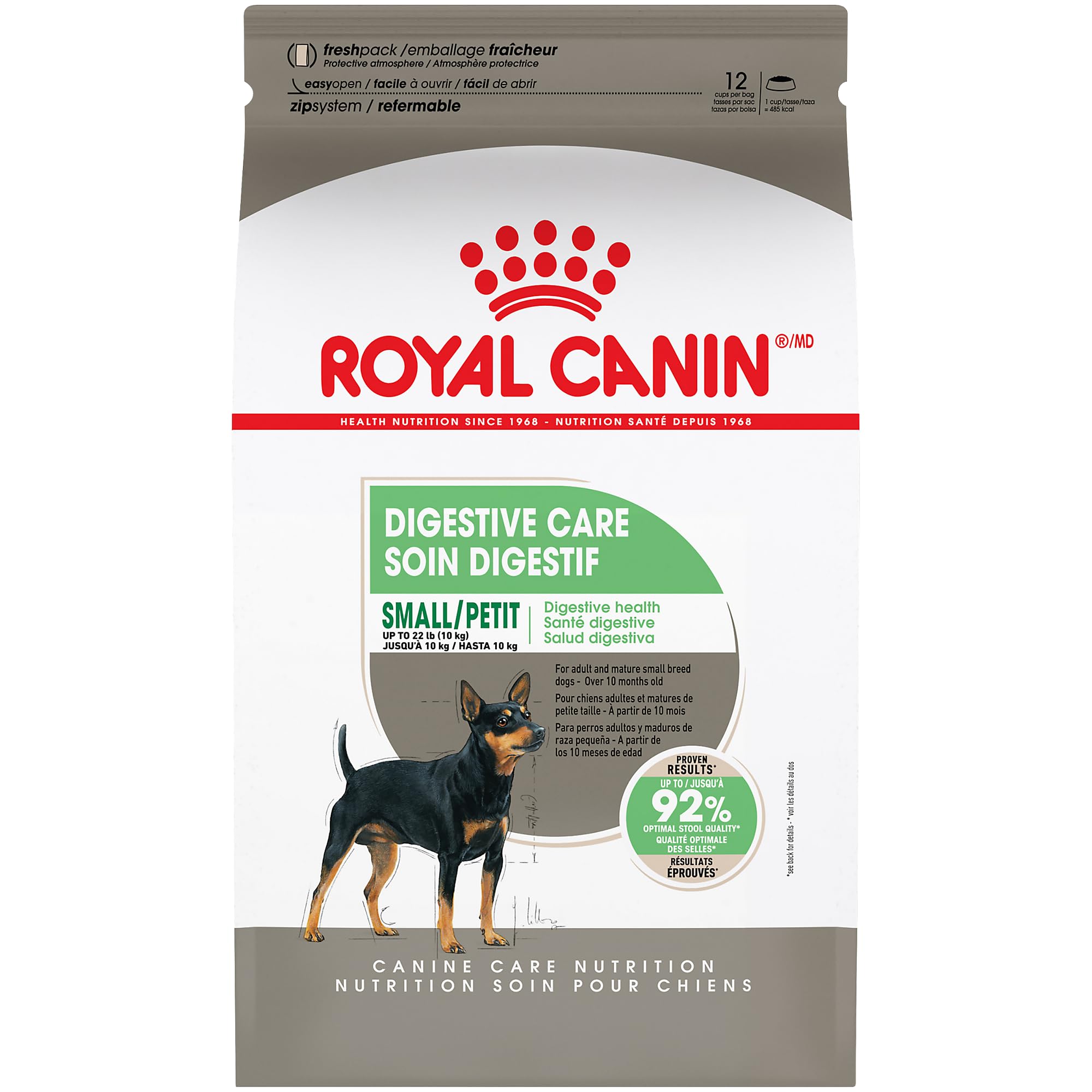
Royal Canin Small Digestive Care is designed explicitly for small dogs weighing up to 22 pounds with confirmed sensitive stomachs—a profile that matches the Toy Poodle’s common digestive struggles. The formula uses highly digestible proteins combined with prebiotics and a specific blend of dietary fibers to regulate intestinal flora and improve stool quality. The pellet shape is remarkably small, measuring approximately 8 mm in diameter, which is ideal for Toy Poodle mouths.
The clinical approach here is distinct: rather than relying on novel proteins or grain-free recipes, Royal Canin focuses on ingredient digestibility and fiber optimization. This makes it an excellent option for Toy Poodles with chronic gastritis, colitis, or post-gastroenteritis recovery. The feeding guidelines are precise, accounting for body weight and activity level, and the formula complements the brand’s wet food for mixed feeding routines.
Owner feedback is particularly strong for Toy Poodles with a history of vomiting or loose stools. Multiple buyers report that this is the only kibble their small dog can eat without adverse reactions. The 3.5-pound bag size is smaller than competitors, which reflects the premium positioning and higher per-pound cost, but the targeted digestive benefits often reduce the need for additional supplements or veterinary visits.
Why we love it
- Clinically proven to manage chronic digestive issues in small dogs
- Extremely small kibble size (around 8 mm) ideal for Toy Poodle mouths
- Highly digestible proteins reduce risk of vomiting and loose stools
Good to know
- Higher per-pound cost compared to other adult formulas
- Adult-only formula; not suitable for Toy Poodle puppies under 10 months
FAQ
How often should I feed a Toy Poodle puppy versus an adult?
What protein source is safest for a Toy Poodle with allergies?
Can I mix wet and dry food for my Toy Poodle?
Final Thoughts: The Verdict
For most Toy Poodle owners, the winner is the best food for toy poodle category, the Blue Buffalo Wilderness Adult Small Breed, because it combines the highest protein concentration (36%) with a small kibble size and immune-supporting LifeSource Bits at a mid-range price point that works for most households. If you are raising a Toy Poodle puppy, grab the Merrick Lil’ Plates Puppy for its joint-supporting glucosamine and tiny kibble. And for Toy Poodles with chronic digestive issues or sensitive skin, nothing beats the Royal Canin Small Digestive Care.