
A dog that bulldozes your couch cushions, shreds a toy in three minutes, or barks endlessly at the back door isn’t being naughty — it’s mentally under-stimulated. The difference between a calm, tired pet and a chaotic one often comes down to one thing: how you spend its brain power. Cognitive toys channel that raw canine drive into problem-solving, forcing your dog to sniff, nudge, slide, and strategize for a reward.
I’m Mo Mahin — the founder and writer behind Furric. I’ve spent years analyzing enrichment product specs, studying canine behavior research on mental fatigue, and cross-referencing thousands of owner reviews to isolate which puzzle designs actually hold a dog’s attention beyond a single session.
Whether you own a Border Collie that solves level-1 puzzles in seconds or a stubborn Dachshund that needs extra motivation to eat slowly, this guide breaks down the five best options to buy right now. Read on for my curated list of the best cognitive toys for dogs.
How To Choose The Best Cognitive Toys For Dogs
Not every puzzle challenges a dog the same way. Some toys rely on simple rolling and nudging to dispense kibble, while others require sliding compartments, lifting flaps, or rooting out plush prey. Matching the toy’s mechanical demand to your dog’s natural problem-solving style determines whether the toy becomes a five-minute flop or a daily obsession.
Difficulty Progression
Puzzle toys are generally rated level 1 (easiest) through level 3 (hardest). A level-1 treat ball works for a puppy or a dog new to puzzles — just roll to release kibble. Level-2 toys add sliding covers or removable pieces. Level-3 puzzles require multiple action sequences, such as sliding a block then lifting a flap. Buying a toy with adjustable or multi-level difficulty extends its useful life because you can raise the challenge as your dog’s skills improve.
Material Durability vs. Play Style
Hard ABS plastic holds up well for nudge-and-slide puzzles used under supervision. Natural rubber withstands moderate chewing but degrades if a dog switches to aggressive gnawing. Plush toys with internal squeakers engage prey drive but inevitably get disemboweled by determined shredders — they work best for gentle rooters or supervised sessions. No toy is indestructible, so match the material to your dog’s known chewing intensity and always supervise initial use.
Treat Compatibility and Portion Size
Check the size of the dispenser openings or compartment wells. A puzzle designed for standard kibble will jam with larger training treats or wet food. Some slow feeders hold up to 1.5 cups of dry food, making them suitable for a full meal; others hold only a handful of small treats and function as snack dispensers. Adjustable openings let you control treat release speed, which is critical for dogs that get frustrated when food stops flowing.
Quick Comparison
On smaller screens, swipe sideways to see the full table.
| Model | Category | Best For | Key Spec | Amazon |
|---|---|---|---|---|
| DUDULOVY Level 3 Puzzle | Sliding Puzzle | IQ Training & Advanced Play | 18 treat compartments + 3 difficulty levels | Amazon |
| Outward Hound Hide-A-Squirrel | Plush Puzzle | Prey Drive & Interactive Digging | 6 removable squeaky squirrels in XL tree trunk | Amazon |
| ATDOALL 3-Tier Slow Feeder | Slow Feeder Bowl | Gulping Prevention & Meal Puzzles | 3-layer maze, 10.35-inch diameter, 1.5 cup capacity | Amazon |
| PETSTA 2-Pack Puzzle Toy | Treat Dispenser | Beginner Rolling & Nudging Play | Adjustable dispensing opening, 8-inch diameter | Amazon |
| Forfon 9-Piece Enrichment Set | Starter Kit | Multi-Toy Variety & Budget Buyers | 2 lick mats + 3 treat balls + 1 puzzle toy | Amazon |
In‑Depth Reviews
1. DUDULOVY Level 3 Dog Puzzle (Red)

This is the most sophisticated puzzle in the lineup, featuring 18 treat compartments spread across sliding blocks, removable covers, and a corner squeaker for auditory reinforcement. The manufacturer rates it level 3, but the real advantage is the multi-level design that lets you start at the easiest configuration and progressively lock compartments as your dog masters each stage. Owners of working breeds like Blue Heelers and Dutch Shepherds report dogs staying engaged for 20–30 minutes per session, which is exceptional for a stationary puzzle.
The plastic body is thick and rigid — one reviewer with a 20-pound dog noted the puzzle absorbed daily abuse for months without cracking. The sliding blocks glide quietly, which matters if your dog works puzzles near a sleeping household. Cleanup requires warm water and soap because the compartments are shallow; it is not dishwasher safe, so expect to hand-wash the base and the removable pieces separately.
A common adaptation owners make: if a clever dog learns to flip or remove the sliding tiles, you can simply take those pieces out and hide treats under the stationary sections instead. This breaks the “solved in five minutes” cycle and extends the toy’s lifespan. The square footprint (13.3 by 11.8 inches) fits in a standard crate footprint, making it a strong choice for meal-time enrichment.
Why we love it
- Three difficulty levels on one base adapt to improving problem-solving skills
- Thick ABS plastic withstands moderate chewing and repeated sliding
- Quiet mechanics allow use without disturbing other pets or people
Good to know
- Not dishwasher safe — hand wash required
- Determined dogs may dislodge sliders; modification may be needed
2. Outward Hound Hide-A-Squirrel (X-Large)

Hide-A-Squirrel is a cult classic in the cognitive toy space because it triggers prey drive without requiring any training — dogs instinctively root, dig, and tug the squeaky squirrels out of the plush tree trunk. The XL version holds six squirrels inside a 12.6-inch trunk, which gives a larger dog enough surface area to grip and pull. The toys combine a puzzle element (find and extract all squirrels) with a plush comfort object, making it a dual-purpose enrichment and snuggle item.
Durability is the main trade-off. Numerous owners report that the squirrels lose their cotton tails and squeakers within weeks of daily play, especially with strong chewers. The log itself holds up better — one owner reported the trunk surviving over a year with minor stitching repairs. For a 40-pound puppy mix, the toy provided daily entertainment as long as the squirrels were replaced periodically. Extra squirrel refills are sold separately, which is a practical way to extend the toy’s life.
The puzzle aspect is straightforward but effective: a dog must decide which squirrel to pull first, sometimes sniffing the trunk to locate remaining prey. Owners of terriers, dachshunds, and other earthdogs report this toy keeps their dogs occupied for 15–20 minutes per session. However, the toy is not designed for unsupervised chewing — the plush material and internal squeaker mechanism will not survive a dog that shreds stuffed animals.
Why we love it
- Strong prey-drive engagement requires zero training for most dogs
- Replaceable squirrel refills extend toy life rather than requiring full replacement
- XL size gives large breeds enough trunk surface for gripping and tugging
Good to know
- Squirrel squeakers and tails fail quickly with aggressive chewers
- Not suitable for unsupervised play with shredders
3. ATDOALL 3-Level Slow Feeder Bowl
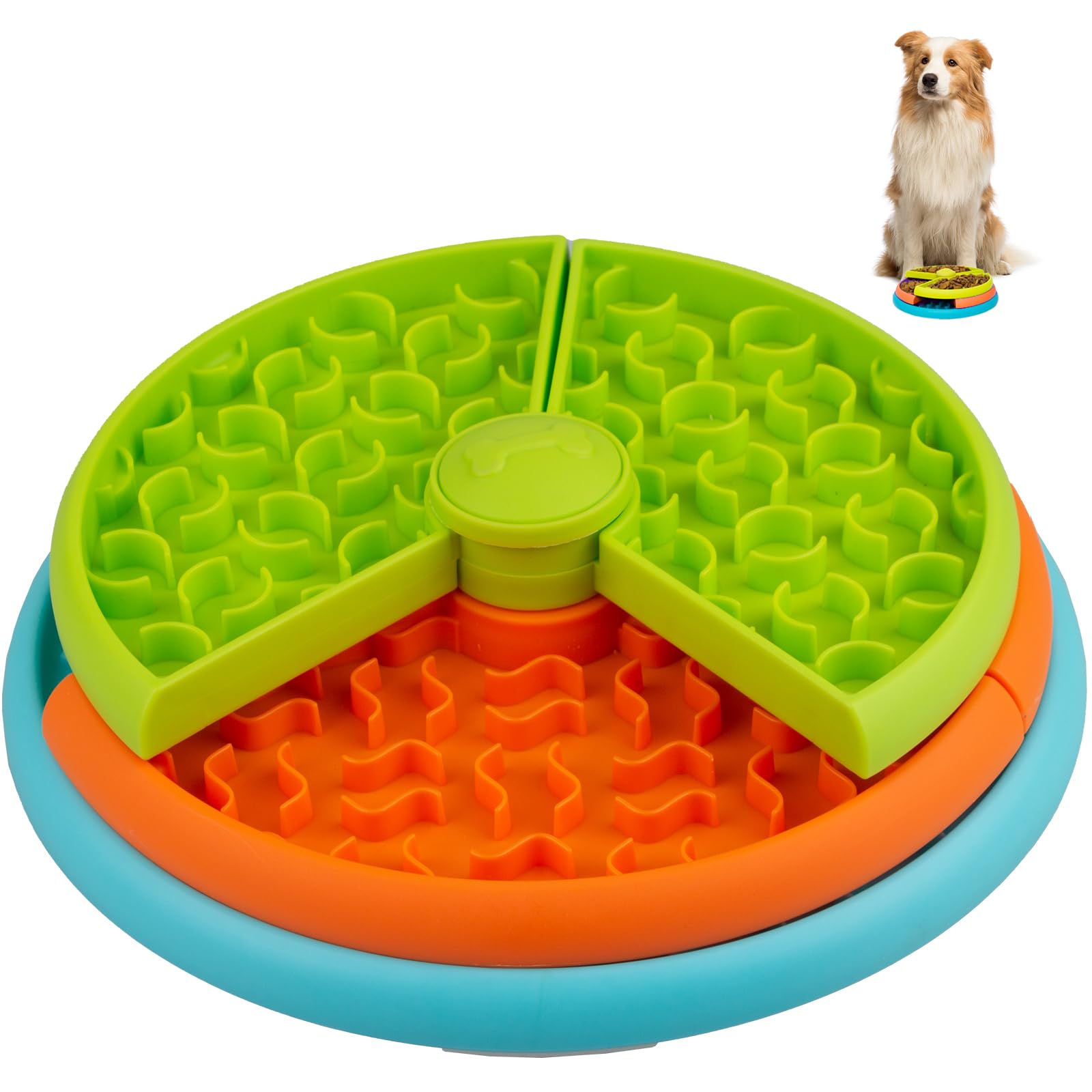
This slow feeder bowl combines a 3-layer rotating maze with a non-slip rubber base, turning a standard meal into a cognitive challenge. The dog must spin each tier to align the openings and release kibble into the lower levels, which effectively slows eating speed while requiring problem-solving. The 10.35-inch diameter holds 1.5 cups of dry or wet food, making it suitable for a full meal for medium to large dogs up to 55 pounds. The orange plastic is non-toxic and easy to hand-wash or run through the dishwasher.
The most noticeable benefit reported by owners is the elimination of post-meal vomiting in dogs that previously gulped food too quickly. A 55-pound Boxer owner noted the feeder completely stopped regurgitation, and a Dutch Shepherd owner valued the mental stimulation as much as the slowed eating pace. The three tiers are easy to assemble and disassemble for cleaning, which prevents food residue from building up in the maze channels.
One limitation: on smooth tile or hardwood floors, the rubber feet do not always hold the base firmly in place, and a determined dog can nudge the entire bowl across the room. Some owners place the feeder on a non-slip mat or against a wall to prevent sliding. The faint noise of kibble rattling through the plastic tiers is an audible cue that keeps the dog engaged, but sensitive dogs may find it slightly distracting.
Why we love it
- Three-tier rotating maze effectively slows gulping and provides mental challenge
- Dishwasher-safe plastic makes cleanup convenient after wet food use
- Holds a full 1.5-cup meal for medium to large dogs
Good to know
- Rubber feet may slide on smooth floors; may need a mat underneath
- Not suitable for dogs that prefer to lift and flip the bowl rather than spin it
4. PETSTA 2-Pack Adjustable Puzzle Toy
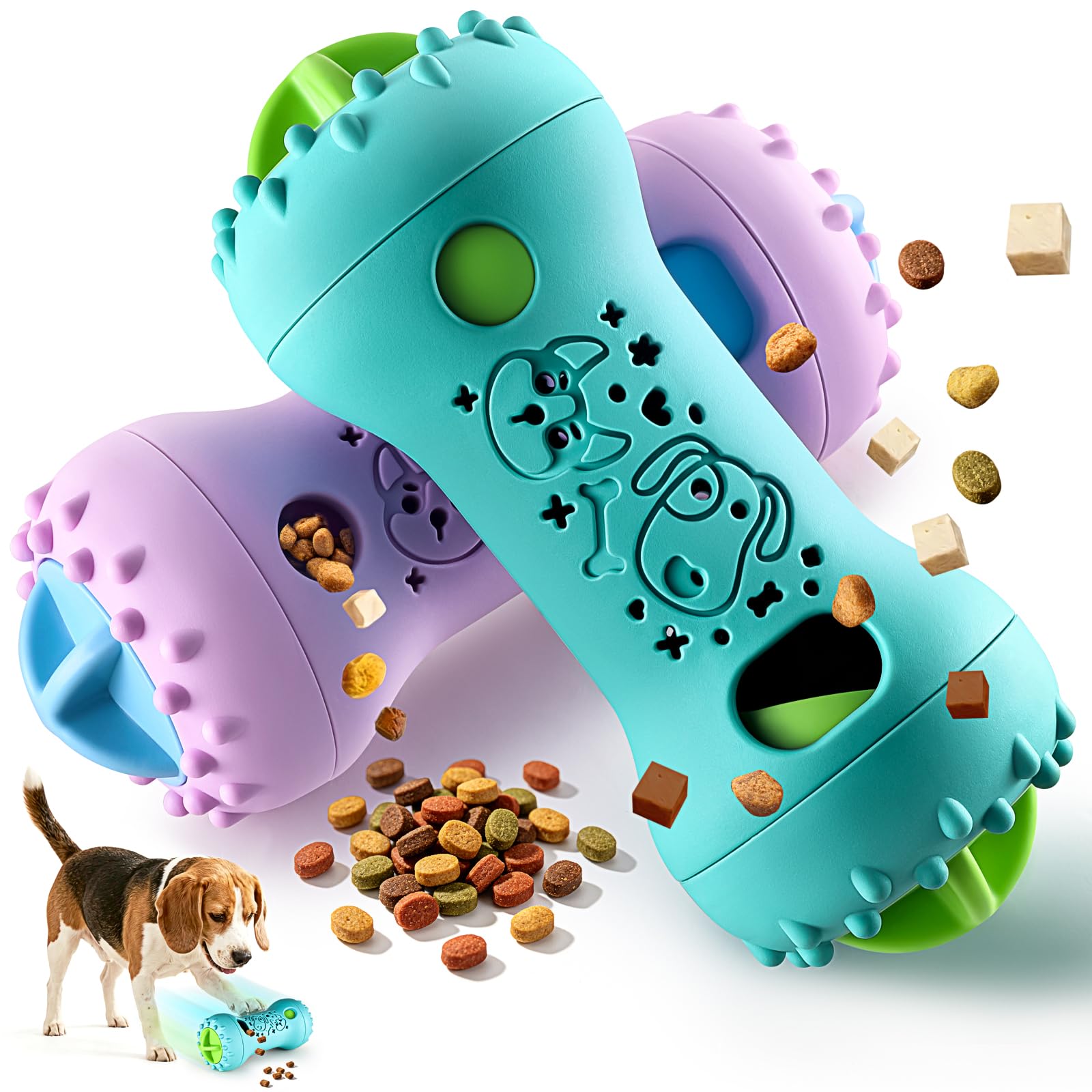
This two-pack delivers a low-barrier entry into treat-dispensing puzzles. Each 8-inch plastic disc features an adjustable opening that you can twist to control how fast kibble or dry treats fall out. The concept is simple: dogs learn to roll and chase the toy to release rewards, building cause-and-effect understanding without requiring complex compartment-sliding skills. The 2-pack format means one toy can be in the dishwasher while the other is in use, which is convenient for multi-dog households.
Owner feedback consistently highlights how quickly dogs pick up the rolling motion. A Blue Heeler puppy figured it out within minutes and now uses the toy as a crate enrichment tool. The ABS plastic has held up well over a month of use with moderate play, although the manufacturer explicitly notes this is not a chew toy — dogs that switch from rolling to gnawing can crack the plastic. The toy works best with small dry kibble or freeze-dried treats; sticky or oversized rewards clog the opening.
The detachable design twists open for filling and cleaning, which owners find more hygienic than solid-ball dispensers. However, the toy’s light weight means it skitters across tile floors when nudged hard — some dogs chase it more than they work the puzzle. For supervised enrichment sessions with small to medium dogs, this is a reliable and affordable cognitive tool that can be rotated with other toys to maintain novelty.
Why we love it
- Adjustable opening lets you control treat release speed for different skill levels
- Two-pack provides backup for multi-dog homes or rotation play
- Easy twist-open design simplifies filling and cleaning
Good to know
- Not built for chewers — switch to gnawing can crack the plastic
- Lightweight and skids on smooth floors; best used on carpet or a mat
5. Forfon 9-Piece Enrichment Set (All-Around)
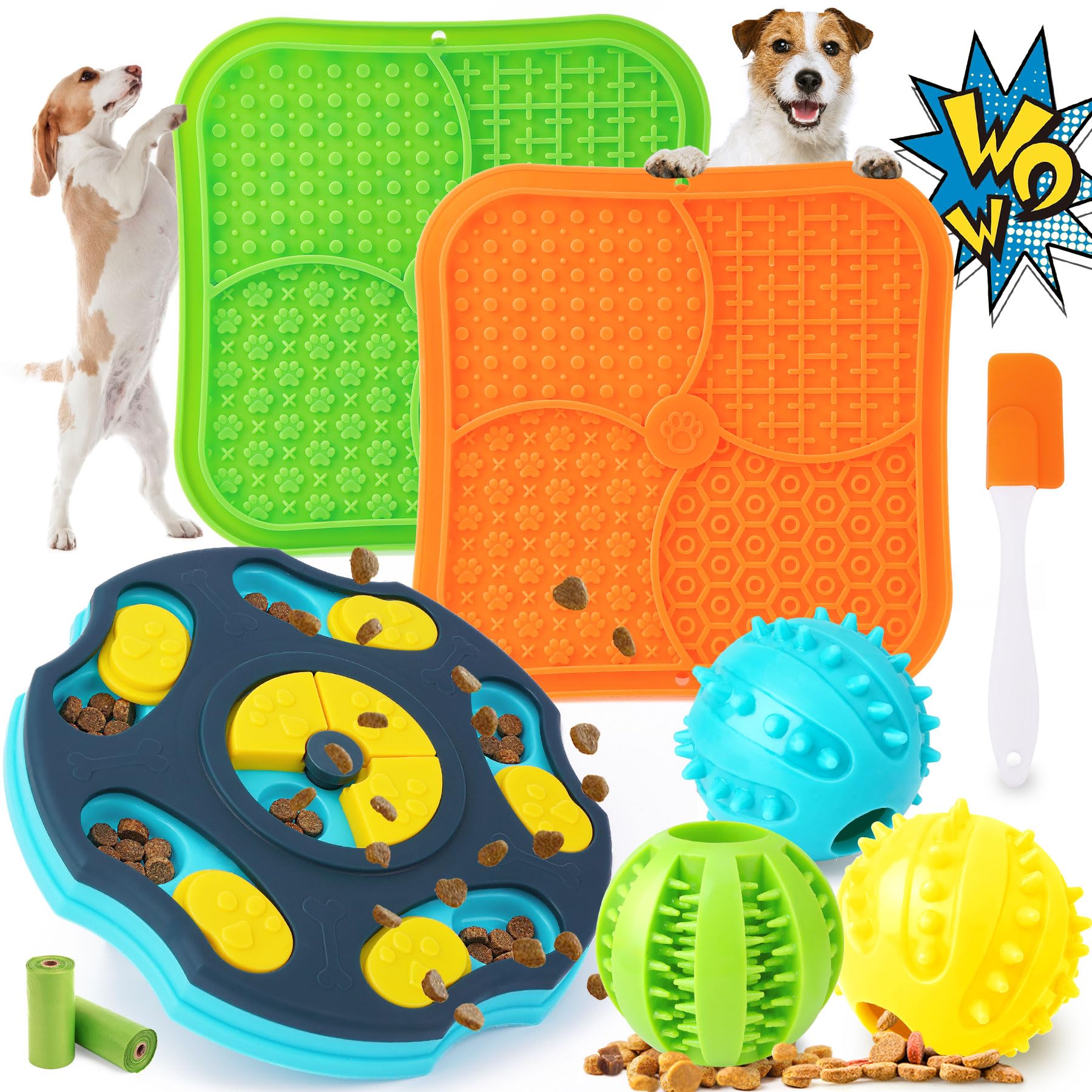
This kit bundles two lick mats with suction cups, a plastic puzzle toy, three treat balls, a silicone spatula, and two cleanup bags — essentially a full starter arsenal for dogs new to enrichment. The variety allows owners to discover which puzzle type their dog prefers before investing in a dedicated single toy. The lick mats suction to tile or bathtub walls for peanut butter smearing, the treat balls work for basic rolling play, and the puzzle toy offers a simple sliding compartment challenge.
Natural rubber and silicone materials make the pieces easy to clean and relatively durable for a set at this price point. Owners of small to medium dogs report the lick mats lasting about six months with regular use, while the treat balls held up to moderate fetching. However, the puzzle toy’s sliders can pop off if a large or strong dog paws at them aggressively, and the treat balls are not designed for heavy chewers — one owner noted that a larger dog destroyed the balls within the first session.
The spatula and bags are practical extras — the spatula helps spread sticky spreads without getting hands messy, and the bags support outdoor cleanup. For a puppy or a small dog still learning puzzle mechanics, this set provides low-cost experimentation. But for a determined working breed or aggressive chewer, the pieces will not withstand sustained use, making this set best suited as a supervised rotation rather than a daily workhorse.
Why we love it
- Nine pieces let you test multiple enrichment styles in one purchase
- Lick mat suction cups stick to tile and tub for bathroom distraction
- Natural rubber and silicone materials are easy to clean and pet-safe
Good to know
- Treat balls and puzzle sliders not designed for large or aggressive chewers
- Some pieces are lightweight and may be tossed rather than worked
FAQ
How long does it typically take a dog to solve a level-3 puzzle?
Can I use wet food or peanut butter in these cognitive toys?
My dog ignores the puzzle and just paws it around the room — what should I do?
Final Thoughts: The Verdict
For most dogs that need a real mental workout, the best cognitive toys for dogs winner is the DUDULOVY Level 3 Puzzle because its adjustable three-level design keeps smart dogs challenged for weeks longer than any single-level toy. If your dog is a gulper that needs mealtime structure, grab the ATDOALL 3-Tier Slow Feeder for its effective maze slowing and full-meal capacity. And for a high-prey-drive dog that lives to dig and tug, nothing beats the Outward Hound Hide-A-Squirrel.