
When a veterinarian diagnoses heart disease in your cat, the diet switch becomes the single most impactful step you can take at home. Managing cardiac health through nutrition means controlling sodium, balancing taurine levels, and choosing ingredients that support circulation without stressing the kidneys or urinary tract.
I’m Mo Mahin — the founder and writer behind Furric. I’ve spent years analyzing veterinary nutrition studies, comparing label ingredient disclosures against AAFCO standards, and cross-referencing owner-reported outcomes for cardiac-supportive feline diets.
Whether your cat has hypertrophic cardiomyopathy, a heart murmur, or congestive heart failure, the right food slows disease progression and improves quality of life. This buying guide breaks down the top contenders for the best cat food for cats with heart disease by examining nutrient profiles, ingredient sourcing, and real-world owner feedback.
How To Choose The Best Cat Food For Cats With Heart Disease
Feeding a cat with heart disease requires a shift in thinking — the priority moves from generic “complete and balanced” to a tightly controlled nutrient profile that supports cardiac muscle function and blood pressure regulation. Three factors separate a helpful diet from a harmful one.
Sodium Restriction
Excess sodium forces the heart to pump harder, worsening fluid retention and straining already compromised cardiac tissue. Target wet or dry foods with sodium content below 0.2% on a dry matter basis. Prescription cardiac diets often hit 0.1% or less. Avoid any formula listing “salt” in the top five ingredients.
Taurine Levels
Taurine deficiency is a known reversible cause of dilated cardiomyopathy in cats. Even if your cat’s heart disease is genetic (hypertrophic cardiomyopathy), maintaining adequate taurine intake supports normal heartbeat regulation. Look for at least 0.1% taurine on a dry matter basis, with 0.15%+ offering a safety buffer.
Phosphorus and Kidney Protection
Heart disease in cats frequently coexists with chronic kidney disease. High phosphorus accelerates renal decline, which then further stresses the cardiovascular system. Foods targeting heart health should keep phosphorus below 0.6% dry matter, ideally paired with controlled protein levels to reduce kidney workload.
Quick Comparison
On smaller screens, swipe sideways to see the full table.
| Model | Category | Best For | Key Spec | Amazon |
|---|---|---|---|---|
| Royal Canin Urinary Care Dry | Veterinary Diet | Heart & urinary combo management | 0.08% sodium (dry matter) | Amazon |
| Purina Pro Plan Urinary Health Wet | Wet Variety Pack | Hydration & low-magnesium heart support | Low magnesium, 5.5 oz cans | Amazon |
| Fera Pets Taurine Supplement | Cardiac Supplement | Boosting taurine in existing diet | 500 mg taurine per capsule | Amazon |
| Open Farm Wild-Caught Salmon Dry | Grain-Free Dry | Clean protein & traceable ingredients | 0.12% taurine (dry matter) | Amazon |
| Solid Gold Indigo Moon Pollock Dry | High Protein Dry | Omega-3s & probiotic gut support | 42% protein, 12 lb bag | Amazon |
In‑Depth Reviews
1. Royal Canin Feline Urinary Care Dry Cat Food

Royal Canin’s Urinary Care formula delivers a low-sodium profile that benefits cats with concurrent heart and urinary issues — a common comorbidity in aging felines. The chicken-based kibble achieves a sodium content around 0.08% on a dry matter basis, well below the 0.2% threshold that stresses cardiac output. Its precisely balanced mineral content helps maintain healthy urine concentration without forcing high water intake, which matters when heart medication already affects kidney filtration rates.
Customer feedback consistently notes that cats with past urinary blockages and diagnosed heart murmurs maintain stable health on this diet. The 3-pound bag size suits trial periods before committing to a larger veterinary prescription. Royal Canin’s internal study showing urinary health improvement within 10 days speaks to the formula’s rapid physiological impact.
Pairing this dry kibble with a wet food that adds moisture without sodium is a common strategy among owners managing cardiac cats. The pellet form is well-accepted even by picky eaters, with multiple owners reporting five-cat households where every cat prefers this over alternatives.
Why we love it
- Ultra-low sodium supports weakened hearts
- Vet-recommended for combined urinary-cardiac management
- High palatability across multiple cats
Good to know
- Not a prescription cardiac diet — consult vet for advanced CHF
- Chicken protein may trigger allergies in sensitive cats
2. Purina Pro Plan Urinary Tract Health Wet Variety Pack

This wet food variety pack addresses two critical needs for cardiac cats: hydration and low dietary magnesium. The high-moisture content (around 78%) helps maintain blood volume and kidney perfusion — essential when heart medications like diuretics or ACE inhibitors alter fluid balance. The chicken and beef entrees reduce urinary pH to discourage crystal formation without adding sodium or phosphorus beyond safe cardiac levels.
Owners report that cats with diagnosed urinary tract inflammation and concurrent heart murmurs show immediate symptom improvement — vocalization during urination stops within days. The protein content supports lean muscle maintenance in senior cats who often lose muscle mass alongside cardiac decline. Each 5.5-ounce can provides complete and balanced nutrition with 25 essential vitamins plus taurine.
The affordable per-can cost makes it feasible for multi-cat households where one cat requires urinary-cardiac support but others eat the same food. Owners note that the pate texture is preferred over chunk or shredded formats, especially for cats with dental issues or reduced appetite common in heart disease.
Why we love it
- High moisture supports heart and kidney function
- More affordable than prescription wet diets
- Real meat proteins maintain muscle mass
Good to know
- Limited flavor rotation — only chicken and beef options
- Some cats reject the pate texture initially
3. Fera Pets Taurine Supplement for Dogs & Cats

When a cardiac cat’s existing food lacks sufficient taurine, or when blood work confirms low levels, Fera’s targeted supplementation bridges the gap. Each capsule delivers 500 mg of taurine combined with L-carnitine, CoQ10, vitamin E, and organic hawthorn berry — a blend shown in owner reports to reverse severe congestive heart failure symptoms in senior pets. The NASC quality seal and GMP compliance indicate rigorous manufacturing standards.
Owners of 12- to 14-year-old cats and dogs report restoration of normal breathing, elimination of coughing from heart murmurs, and renewed mobility within 2 to 4 days of starting the supplement. The capsule can be opened and sprinkled over food, which helps when cats refuse whole pills. The salmon flavor base masks the supplement taste for most felines.
This product functions as an adjunct, not a standalone diet — it adds cardiac-specific cofactors to a food that already meets AAFCO nutrient profiles. Cats on this supplement still need a low-sodium primary diet; the combination of restricted sodium plus targeted taurine creates the strongest cardiac support protocol.
Why we love it
- Veterinarian-formulated with multiple cardiac cofactors
- Reversed severe CHF symptoms in reported cases
- Flexible administration — whole capsule or sprinkled
Good to know
- Not a replacement for prescription cardiac diet
- Some cats detect the supplement and refuse food
4. Open Farm Wild-Caught Salmon Grain-Free Dry Cat Food

Open Farm’s salmon formula provides a grain-free, limited-ingredient option for cardiac cats who also suffer from food sensitivities — a common pair when heart disease coincides with inflammatory bowel disease. The wild-caught salmon delivers omega-3 fatty acids that reduce systemic inflammation, which in turn eases cardiac workload. Taurine content sits at approximately 0.12% dry matter, providing a solid safety margin for heart health.
Owners report that cats switched from prescription or generic foods to Open Farm show improved digestion, elimination of vomiting, and normalized stool within a week. The absence of chicken is notable — many cardiac cats have undiagnosed poultry allergies that manifest as gastrointestinal distress. The functional ingredients (pumpkin, dandelion greens, cranberries) support digestion without adding sodium.
Every ingredient carries a lot code traceable to its geographic origin, offering peace of mind for owners of medically fragile cats. The 4-pound bag size works well for trial periods, though multi-cat households may prefer the larger format for cost efficiency.
Why we love it
- No chicken formula ideal for sensitive cardiac cats
- Traceable ingredients ensure quality control
- Omega-3s from wild salmon reduce inflammation
Good to know
- Fish-based diet may not suit all cats’ preferences
- Higher protein may stress kidneys in advanced renal disease
5. Solid Gold Indigo Moon High Protein Pollock Dry Cat Food
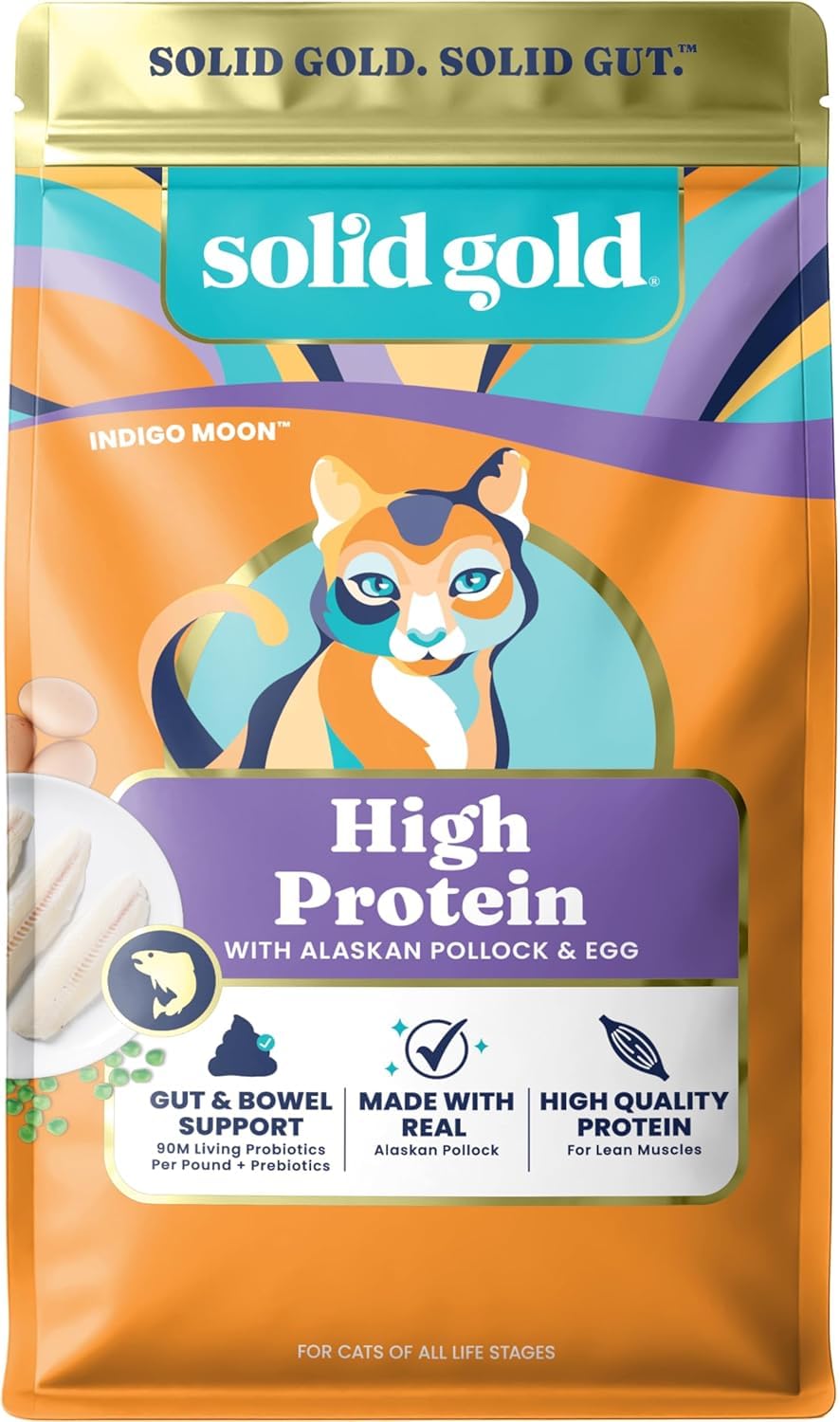
Solid Gold’s Indigo Moon formula prioritizes high-quality novel protein from Alaskan pollock, paired with live probiotics and prebiotics that support gut health — often compromised in cats on long-term cardiac medication. The 42% protein content helps maintain lean muscle, which is particularly important for cardiac cats prone to muscle wasting. The grain-free, gluten-free formulation removes plant-based fillers that offer no cardiac benefit.
Owner reviews highlight improved digestion and shiny coats within weeks of switching, even in picky eaters. The large 12-pound bag provides strong value for multi-cat households, though the kibble size may be too large for senior cats with dental issues. The omega-3 and omega-6 fatty acid profile (including DHA) supports cardiovascular function at a cellular level.
This food works best as part of a split diet — dry kibble for convenience plus a low-sodium wet food for hydration. Some owners note that the high protein content can cause stinker stools during the transition period, but most report that digestive normalization occurs within two weeks.
Why we love it
- Novel pollock protein reduces allergy risk in cardiac cats
- Probiotics aid digestion compromised by heart meds
- Largest bag size for cost-effective feeding
Good to know
- Kibble too large for senior cats with dental problems
- High protein may accelerate renal decline in CKD cats
FAQ
Can I feed my cat with heart disease a grain-free diet?
How much taurine does a cat with heart disease need daily?
Is wet or dry food better for a cat with heart disease?
Final Thoughts: The Verdict
For most cat owners, the best cat food for cats with heart disease winner is the Royal Canin Feline Urinary Care Dry because it delivers ultra-low sodium (0.08%) alongside mineral balance that protects both heart and urinary tract in a single kibble. If you want complete hydration support, grab the Purina Pro Plan Urinary Health Wet Variety Pack for its high-moisture, low-magnesium canned formula. And for cats needing targeted taurine elevation beyond what food provides, nothing beats the Fera Pets Taurine Supplement for its veterinarian-formulated blend of cardiac cofactors.