
Constant scratching, bald patches, and dry, flaky skin are clear signals your cat’s food is working against their body, not with it. Choosing the right diet is the single most effective way to calm skin inflammation and stop digestive upset before it starts.
I’m Mo Mahin — the founder and writer behind Furric. I’ve spent years cross-referencing veterinary nutritional data, analyzing ingredient profiles for common allergens like chicken and corn, and aggregating thousands of owner reports to understand what actually works for cats with reactive skin.
After breaking down ingredient panels, protein sources, and fatty acid profiles, these are the most effective formulas to target skin and stomach sensitivities. This guide ranks the top options for cat food for sensitive skin, focusing on the specific ingredients and nutritional strategies that deliver real results.
How To Choose The Best Cat Food For Sensitive Skin
Selecting the right formula requires looking past the marketing claims and zeroing in on the protein source, fat profile, and carbohydrate load. These three factors almost always determine whether a cat’s skin will clear up or stay inflamed.
Protein Source is Everything
Chicken and beef are the two most common feline allergens. If your cat is scratching, the first move is eliminating these proteins. Look for a single novel protein like turkey, salmon, duck, or venison. Limited-ingredient diets minimize the risk of triggering a reaction by stripping away unnecessary ingredients.
Omega-3 and Omega-6 Fatty Acid Ratios
Skin health starts with the fat profile. Omega-6 fatty acids support the skin barrier, while Omega-3s (from fish oil or flaxseed) reduce systemic inflammation. A proper balance—typically higher Omega-6 with a meaningful Omega-3 boost—helps reduce dryness, flaking, and itching over time.
Hydrolyzed Proteins for Severe Cases
For cats with confirmed food allergies, standard limited-ingredient diets may not be enough. Hydrolyzed protein formulas break the protein molecules down so small that the immune system cannot detect them as a threat. These are prescription-level diets often recommended by veterinarians after other options fail.
Quick Comparison
On smaller screens, swipe sideways to see the full table.
| Model | Category | Best For | Key Spec | Amazon |
|---|---|---|---|---|
| Purina Pro Plan LIVECLEAR | Dry Kibble | Allergen reduction for owners & cat skin health | Reduces Fel d 1 by 47% | Amazon |
| Hill’s z/d Hydrolyzed | Veterinary Dry | Severe food allergies & chronic itching | Hydrolyzed chicken protein | Amazon |
| Blue Buffalo True Solutions | Dry Kibble | Poultry-sensitive cats needing coat repair | Salmon #1 ingredient | Amazon |
| Royal Canin Hair & Skin Care | Wet Pouch | Moisture-rich diet for skin & coat | Omega-3 & Omega-6 in gravy | Amazon |
| Hill’s Science Diet Variety Pack | Wet Pouch | Hydration + digestive tolerance | Vitamin E & fatty acids | Amazon |
| Blue Buffalo Basics | Dry Kibble | Senior cats with grain & poultry sensitivity | Turkey & Potato limited ingredient | Amazon |
| Purina Cat Chow Gentle | Dry Kibble | Budget-friendly transition from standard food | Omega-6 fatty acids | Amazon |
In‑Depth Reviews
1. Purina Pro Plan LIVECLEAR Turkey and Oatmeal Formula
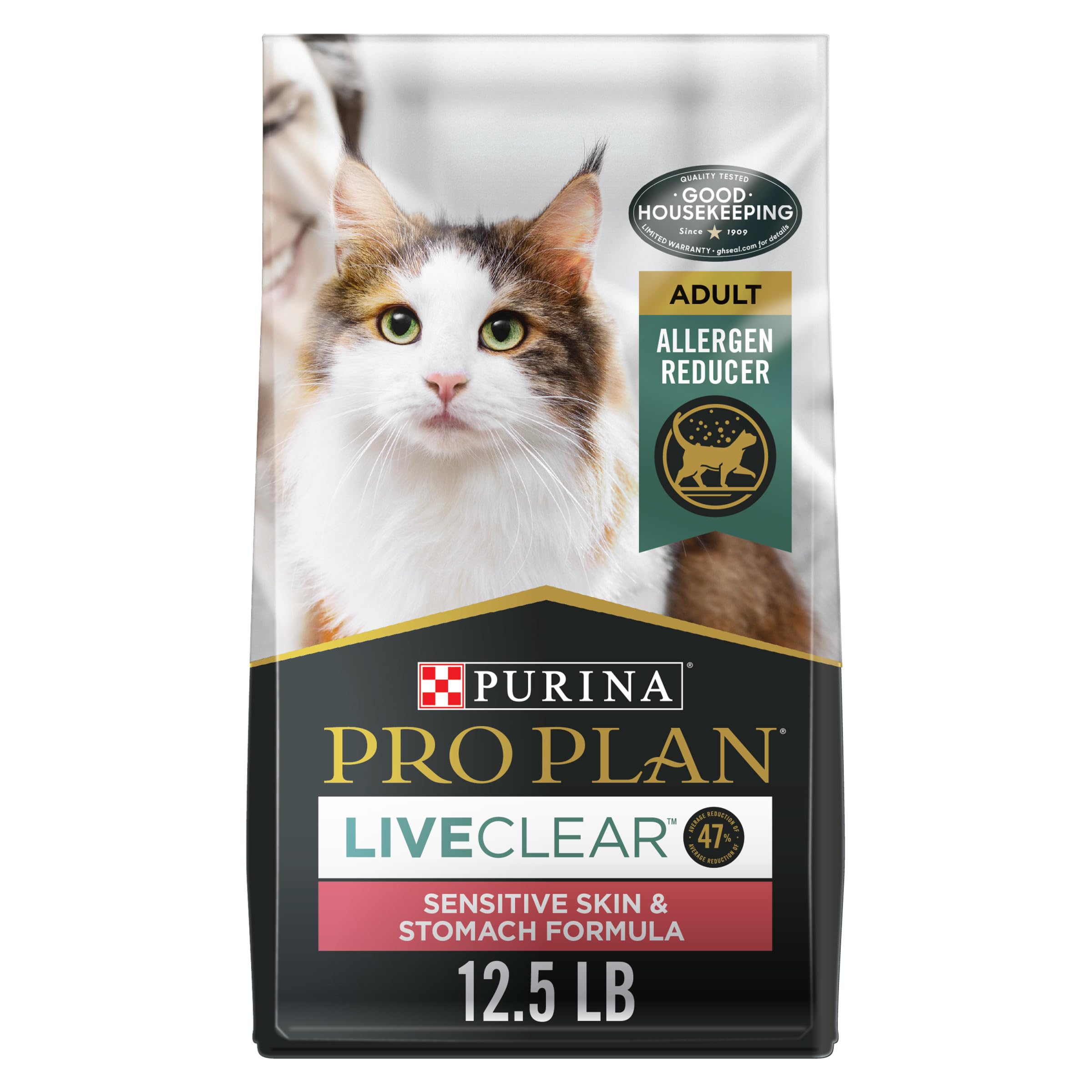
This formula is a dual-action breakthrough: it uses a patented egg-based protein to neutralize the Fel d 1 allergen in cat saliva while simultaneously supporting skin health with Omega-6 fatty acids and prebiotic fiber. Over a decade of research backs the allergen reduction claim, with studies showing an average 47 percent reduction in active allergen on cat hair and dander starting in the third week.
The 12.5-pound bag provides a high-protein, turkey-based kibble that avoids common poultry allergens like chicken. Owners report dramatic improvements in their cat’s skin condition—reduced scratching, regrowth of lost fur, and visibly softer coats—alongside the bonus effect of their own allergy symptoms nearly disappearing. The prebiotic fiber blend is gentle enough for cats with sensitive stomachs who still need digestive support.
Some cats may produce more stool initially as their system adjusts to the prebiotic fiber, and the 12.5-pound bag represents a significant upfront cost compared to standard cat foods. However, for households where both the cat and the owner suffer from allergies, this dual-benefit formula is unmatched in a non-prescription context.
Why we love it
- Reduces the major cat allergen Fel d 1 by nearly half
- Turkey-based formula avoids common chicken allergy triggers
- Omega-6 fatty acids visibly improve coat softness and skin health
Good to know
- Premium price point versus standard cat food brands
- May increase stool production during the first few weeks
2. Hill’s Prescription Diet z/d Skin/Food Sensitivities Dry Cat Food

When a cat’s immune system reacts to virtually every intact protein source, the only answer is a hydrolyzed diet. Hill’s z/d breaks chicken protein down into molecular fragments so small the immune system cannot recognize them as a threat. This makes it the go-to choice for cats with confirmed food allergies that cause severe scratching, open sores, and chronic digestive upset.
The 4-pound bag is compact, but this is a concentrated formula designed for therapeutic use. It incorporates ActivBiome+ Digestion—a proprietary prebiotic blend that rapidly activates the gut microbiome to support healthy digestion and stool quality. The high levels of Omega-6 and Omega-3 fatty acids target skin barrier repair and reduce inflammation at the cellular level.
Owners of senior cats and Siamese breeds report that this food stopped daily vomiting within weeks, improved coat fluffiness, and helped cats maintain healthy weight. The primary drawback is the need for a veterinary prescription, which adds a step to purchasing. The small bag size also means more frequent repurchasing for multi-cat households.
Why we love it
- Hydrolyzed protein prevents immune system detection
- ActivBiome+ prebiotic blend supports rapid digestive improvement
- Rich in Omega-3 and Omega-6 for active skin barrier repair
Good to know
- Requires a veterinarian’s prescription to purchase
- Premium cost per pound, and 4-lb bag requires frequent reordering
3. Blue Buffalo True Solutions Skin & Coat Care Salmon
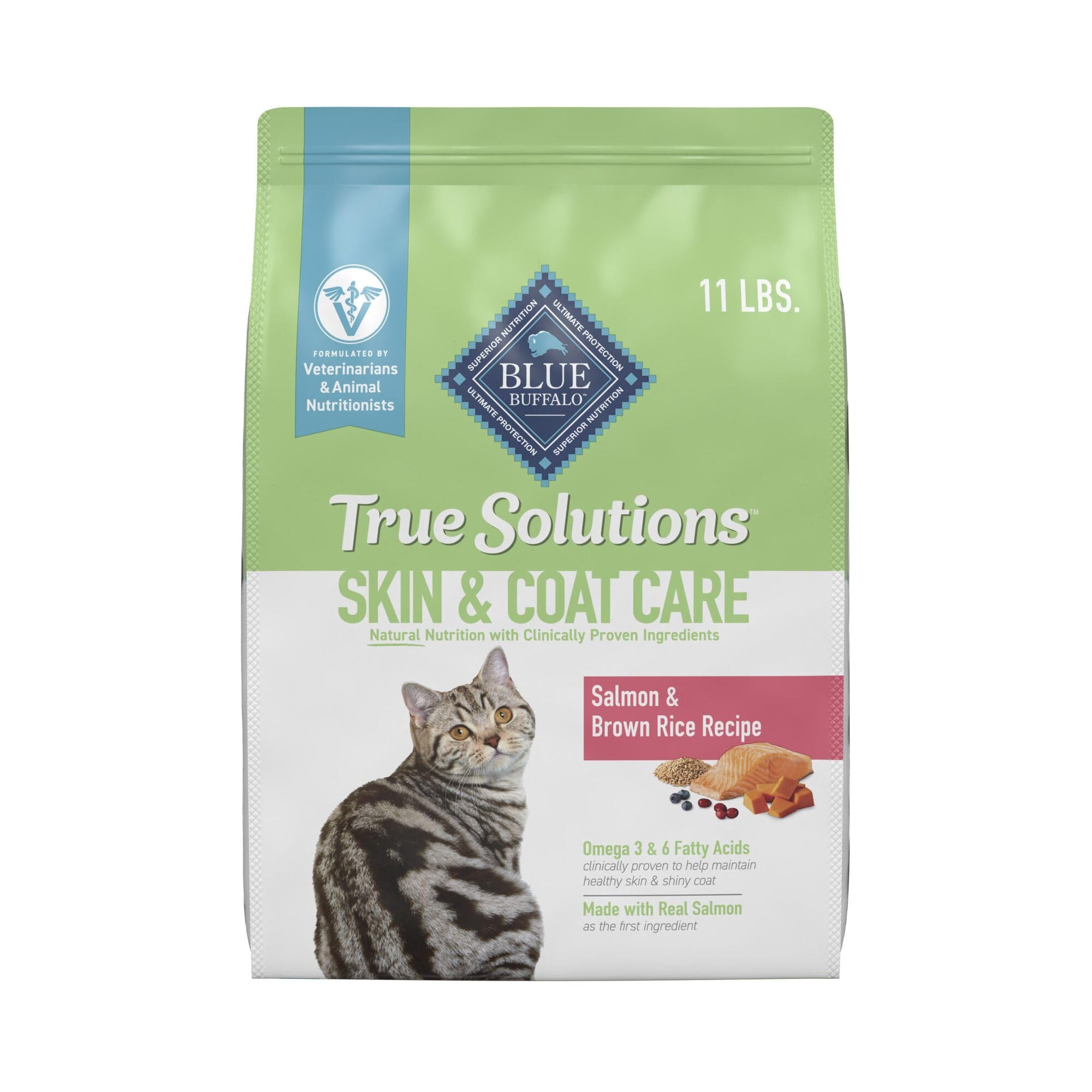
This 11-pound bag from Blue Buffalo’s True Solutions line is built around one principle: real salmon as the single protein source. For cats who react to chicken, swapping to salmon eliminates the most common trigger while delivering the dense Omega-3 fatty acids that fish provides. The result is a dense, soft coat and dramatically reduced dry skin patches.
Formulated by veterinarians and animal nutritionists, this dry kibble is designed for adult cats and uses a small kibble shape that is easy to chew, even for older cats. Recurring owner reports note that shedding visibly decreased after the first month of feeding, and cats with severe poultry sensitivity who developed scabs and brittle fur saw full recovery of skin moisture and coat shine within weeks.
The bag does not feature a resealable closure, which is an annoyance for a 11-pound bag that may take a month to finish. Some fishy breath and occasional stool odor are common trade-offs with salmon-based foods, but the cost per pound is reasonable compared to similar limited-ingredient recipes.
Why we love it
- Single salmon protein source avoids poultry allergies entirely
- Owners report dramatic shedding reduction within one month
- Small kibble size makes it accessible for older or tooth-sensitive cats
Good to know
- Bag cannot be resealed, requiring an airtight container
- Salmon-based diet may cause fishy breath and looser stools in some cats
4. Royal Canin Feline Hair & Skin Care Adult Thin Slices in Gravy

Wet food provides the dual benefit of high moisture content—critical for urinary tract health in cats—and a palatable texture that picky eaters rarely resist. Royal Canin’s Hair & Skin Care formula delivers thin slices of chicken in a gravy that is fortified with Omega-3 and Omega-6 fatty acids targeting coat luster and skin barrier health.
The 24-pack of 3-ounce pouches is designed for single-serving convenience with zero waste. Owner reports highlight that cats with suspected food allergies who had developed scabby, irritated skin on the head and neck experienced nearly complete resolution within a few weeks of switching to this formula. The cat’s enthusiasm for the flavor is a recurring theme—many owners describe excited meowing at mealtime.
The protein base is chicken, which is the most common feline allergen. If your cat has a confirmed chicken allergy, this formula is not a safe choice. The small 3-ounce portion size may also require two pouches per feeding for larger male cats, doubling the daily cost.
Why we love it
- Gravy-based formula increases daily water intake for skin hydration
- Owners report rapid clearance of scabs and skin irritation
- Highly palatable—picky eaters and fussy cats rarely refuse it
Good to know
- Chicken is the primary protein—unsuitable for cats with chicken allergies
- Small 3-oz pouches may mean two servings per meal for larger cats
5. Hill’s Science Diet Adult Sensitive Stomach & Skin Wet Cat Food Variety Pack

Science Diet’s Sensitive Stomach & Skin wet food uses a blend of two protein bases—Chicken & Beef and Salmon & Tuna—in a gravy format that encourages hydration. The formula includes vitamin E and fatty acids to support skin barrier function while the easily digestible ingredients reduce the likelihood of loose stools or vomiting after eating.
The 12-pack of 2.8-ounce pouches provides variety across four recipes, which helps prevent flavor fatigue in picky eaters. Owner reports from elderly cat households are strong: a 12-year-old cat with daily vomiting saw the episodes drop to once total within three weeks of exclusive feeding. The gravy-first consumption pattern is common, but even cats who only lick the gravy still absorb the beneficial fatty acids for skin support.
The downside is spoilage speed. Once opened, the wet food begins to dry out and smell noticeably within hours if left in the bowl. The portion size is also small for larger cats, and having two protein types (Chicken & Salmon) means it cannot serve as a limited-ingredient elimination diet for cats with specific protein allergies.
Why we love it
- Variety pack reduces the chance of a cat refusing the food
- Gravy base boosts moisture intake for skin and urinary health
- Short-term use shows rapid reduction in vomiting frequency
Good to know
- Contains both chicken and salmon—not suitable for single-protein elimination diets
- Food spoils quickly in the bowl; uneaten portions must be discarded within hours
6. Blue Buffalo Basics Grain-Free Turkey & Potato Recipe

Blue Buffalo Basics is a limited-ingredient diet that strips away everything except a single protein (deboned turkey) and a single carbohydrate (potato). There is no chicken, corn, wheat, soy, dairy, or egg—making this a strong elimination-style diet for cats with multiple food sensitivities. The formula is tailored for senior cats but works for adults as well.
The 5-pound bag is a good trial size for owners unsure about their cat’s tolerance, but the 8-pound bag offers better per-pound value. The inclusion of LifeSource Bits—antioxidant-rich kibble pieces—supports immune health, though some owners report their cats pick around them. Omega-3 and Omega-6 fatty acids from flaxseed and fish oil provide the skin barrier support that reduces itching.
Owner reports from households with chicken-allergic cats confirm that this food stops allergic reactions, reduces scratching, and keeps coats soft. The primary limitation is that some cats dislike the LifeSource Bits and leave them in the bowl, which slightly dilutes the nutritional completeness of each serving. The 5-pound bag is also priced relatively high per pound compared to mid-tier competitors.
Why we love it
- Single turkey protein source eliminates the most common allergens
- Grain-free and free from corn, soy, wheat, dairy, and egg
- Omega fatty acids support skin repair in senior cats
Good to know
- Some cats refuse the LifeSource Bits antioxidant pieces
- 5-lb bag is a small trial size with a higher per-pound cost
7. Purina Cat Chow Gentle Turkey
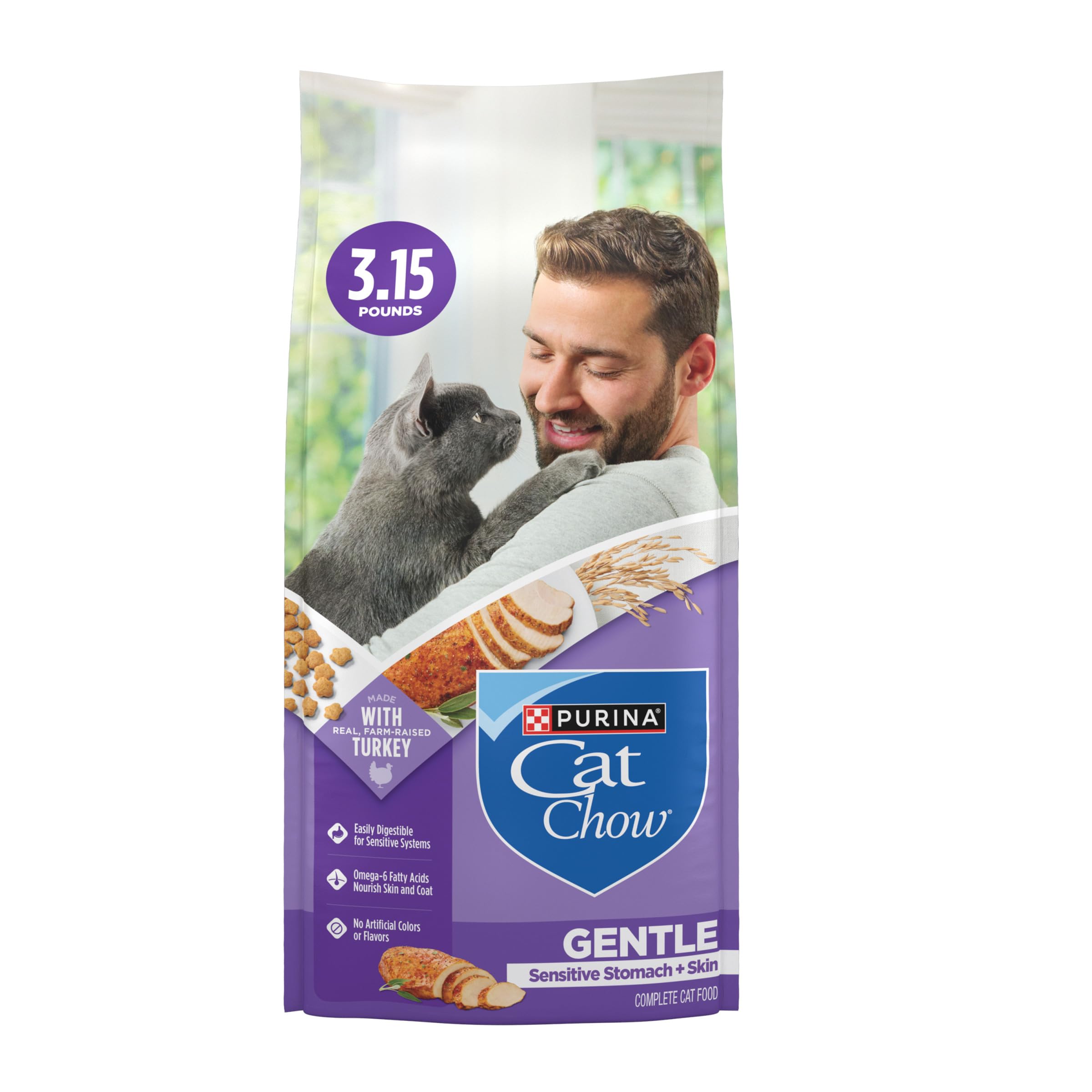
Purina Cat Chow Gentle is a straightforward turkey-based dry food designed for cats with mild sensitive stomachs and skin reactions. It avoids artificial colors and flavors while providing Omega-6 fatty acids for skin and coat support. The 4-pack of 3.15-pound bags gives you over 12 pounds of food total at a competitive price point for the category.
Owner reports highlight its effectiveness for cats who were vomiting or experiencing soft stools on standard indoor formulas. The turkey recipe is a step away from chicken-heavy blends, and the addition of prebiotic fiber supports digestive regularity. Cats who are picky eaters seem to take to the crunchy kibble texture well, and the smaller bag size allows for portion control without committing to a massive 20-pound bag that may go stale.
This is not a limited-ingredient diet, so cats with severe allergies to corn or grains may still react to the carbohydrate profile. The Omega-6 fatty acid content is present but not optimized with Omega-3s in the same way as salmon-based or prescription formulas. It works best as a transition food for cats moving away from low-quality generic food, rather than as a therapeutic diet for advanced skin conditions.
Why we love it
- Turkey protein helps reduce reactions from standard chicken formulas
- 4-pack of smaller bags keeps kibble fresh and allows portion testing
- Omega-6 fatty acids support basic skin and coat health maintenance
Good to know
- Not a limited-ingredient formula; contains grains and multiple ingredients
- Lacks significant Omega-3 content found in salmon or higher-tier recipes
FAQ
How quickly should I expect to see skin improvement after switching food?
What is the difference between a limited-ingredient diet and a hydrolyzed protein diet?
Can I feed wet food exclusively for sensitive skin, or is dry food better?
Final Thoughts: The Verdict
For most gardeners, the cat food for sensitive skin winner is the Purina Pro Plan LIVECLEAR because it tackles both the internal allergen causing reactions and the fatty acid support needed for skin repair. If you want a clinically proven hydrolyzed diet for severe allergies, grab the Hill’s z/d Hydrolyzed. And for a poultry-limited option that transforms coat quality on a salmon base, nothing beats the Blue Buffalo True Solutions Salmon.