
A tortoise’s shell and respiratory system are extraordinarily sensitive to the substrate it walks on every day. Too dry, and the shell develops pyramiding; too wet, and your reptile risks shell rot and respiratory infections. The wrong mix can also cause impaction if ingested, making this choice a matter of long-term health, not just enclosure aesthetics.
I’m Mo Mahin — the founder and writer behind Furric. I’ve spent years analyzing substrate particle size data, humidity retention curves, and organic composition reports while cross-referencing thousands of verified owner reviews across tortoise species to determine which bedding actually supports healthy burrowing and safe digestion.
If you want a bedding that holds burrows, manages humidity, and won’t harm your tortoise if nibbled, this guide to the best tortoise substrate breaks down exactly which coconut-based, organic, and chip options deliver on those requirements based on spec-level comparisons and real-world keeper experience.
How To Choose The Best Tortoise Substrate
Not every bag labeled “reptile bedding” works for tortoises. The substrate you choose directly impacts humidity levels inside the shell, the tortoise’s ability to dig, and the risk of impaction if material is swallowed. Focus on these four criteria.
Particle Size and Impaction Risk
Fine-particle substrates like sand or crushed walnut shells are dangerous for tortoises because they clump internally when swallowed. Coconut coir fiber and small-to-medium coconut chips are preferred because they pass through the digestive tract more easily. Avoid any product with sharp, splintered edges that could cut the mouth or esophagus.
Humidity Retention vs. Shell Rot
Tortoises require species-specific humidity levels. Forest species like Red-footed tortoises need 70–80% humidity; desert species like Sulcatas need it lower (40–60%). Coconut coir holds moisture exceptionally well without becoming waterlogged, making it versatile across humidity zones. A substrate that stays soggy on top increases bacterial growth and the risk of shell rot.
Organic Purity and Additives
Many potting soils contain perlite, vermiculite, chemical fertilizers, or wetting agents that are toxic to reptiles. The safest tortoise substrates are 100% organic, free of synthetic additives, and ideally triple-washed to remove excess salts. Products labeled as organic coco coir or natural coconut husk chips meet this standard when they disclose no added chemicals.
Burrow Stability
Tortoises dig to thermoregulate and feel secure. A substrate that collapses under moisture won’t hold a burrow, stressing the animal. Coconut chips and coir fibers lock together when slightly damp, creating stable tunnels. Loose, powdery mixes or overly large bark chunks fail to maintain structure, forcing the tortoise to sleep exposed.
Quick Comparison
On smaller screens, swipe sideways to see the full table.
| Model | Category | Best For | Key Spec | Amazon |
|---|---|---|---|---|
| BabiChip Coconut Chip Substrate | Coco Chips (Loose) | Medium tortoises, desert species | 6 quarts, small chip size | Amazon |
| RediChip Medium Coconut Chip Substrate | Coco Chips (Loose) | Large enclosures, holding humidity | 12 quarts, medium chip | Amazon |
| Legigo 4 Pack Compressed Coconut Fiber | Coco Coir (Bricks) | Budget-friendly bulk, high humidity | 5.7 lbs, expands to ~32 qt | Amazon |
| Modellor Premium Super Washed Coco Coir | Coco Coir (Bricks) | Seed starting, fine-particle bedding | 5 lbs, expands to 36 qt | Amazon |
| Fluker’s All Natural Hermit Crab Sand | Sand & Coir Mix | Hermit crabs, not tortoises | 12 lbs, sand/coir mix | Amazon |
In‑Depth Reviews
1. BabiChip Coconut Chip Substrate 6 Quart
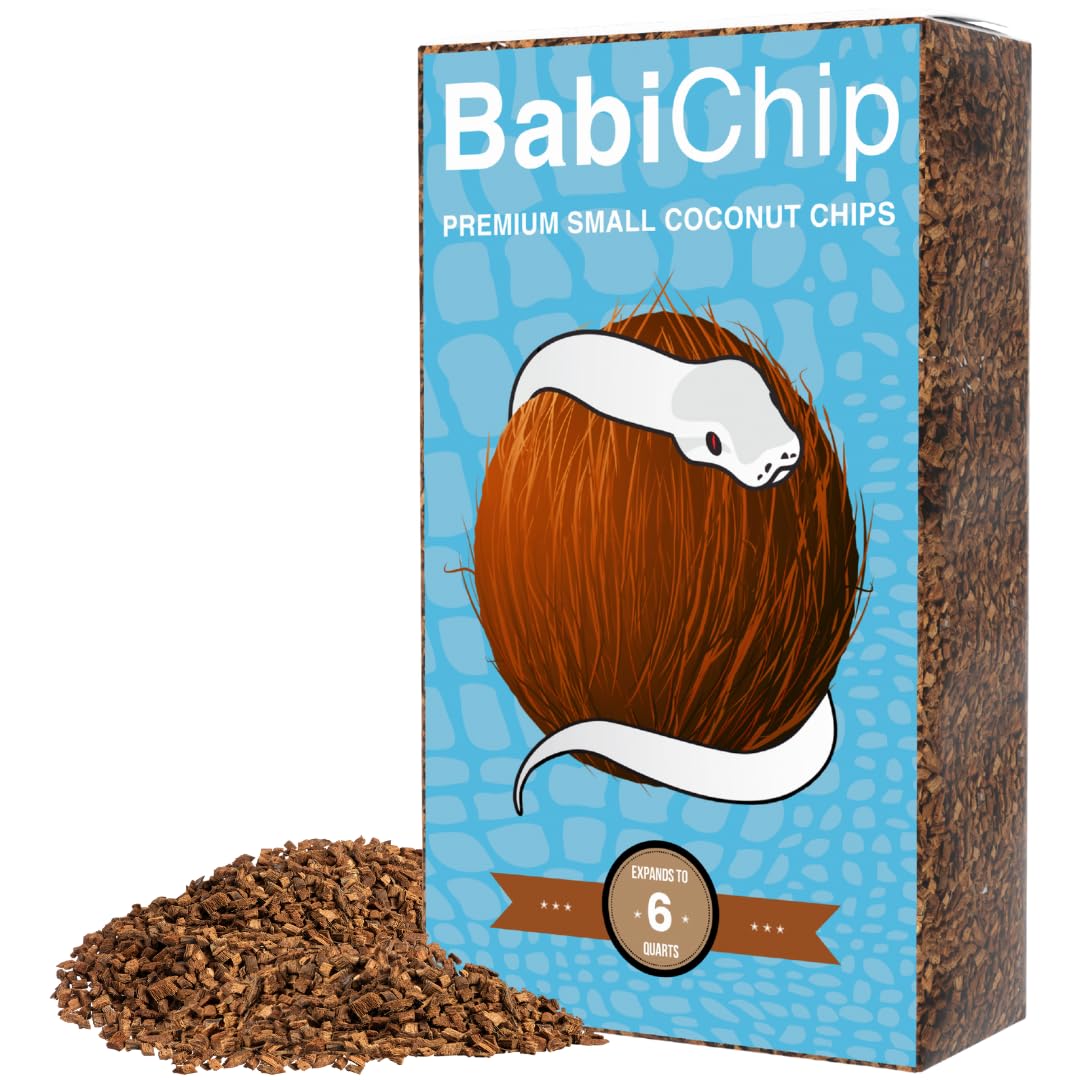
BabiChip hits the sweet spot between particle size and moisture management. The chips are smaller than standard orchid bark but larger than coco coir dust, which drastically reduces impaction risk while still locking together for stable burrows. Owners of medium-sized tortoises report that a 4-bag fill in a 6×3 enclosure provides several inches of diggable depth without collapsing.
Moisture retention is excellent — the chips hold humidity without becoming saturated on the surface, preventing shell rot in species like Red-foots and Hermann’s tortoises. The product comes ready to use out of the bag for arid species, or you can add water for tropical setups. Users specifically praise the lack of dust, mold, and sharp edges compared to forest floor or generic bark products.
The 6-quart bag is compact, so calculate your enclosure’s square footage before buying. For a 40-gallon breeder tank, you’ll likely need two to three bags to reach a 3-inch depth. The lack of instructions on the packaging is a minor oversight, but the loose chip format makes it intuitive — no soaking or expanding brick required.
Why we love it
- Small chip size minimizes impaction risk
- Excellent humidity hold without sogginess
- Dust-free and ready to use immediately
Good to know
- 6-quart bag covers limited area per bag
- Some users report sharp edges for very small snakes
2. RediChip Medium Coconut Chip Substrate 12 Quart

RediChip is the big sibling of the BabiChip line, offering a 12-quart bag of medium-sized coconut chips that are refined and sorted in the United States. The larger bag volume makes it a practical choice for adult tortoises in spacious enclosures. The chips are 100% organic, free of synthetic chemicals, and designed to hold humidity without staying saturated — a critical balance for preventing scale rot in ball pythons and shell rot in tortoises.
Users consistently note that this substrate mixes well with orchid bark or sphagnum moss to fine-tune humidity levels. One keeper mentioned that mixing RediChip with fine bark creates a burrow-stable layer that stays clean for weeks and allows their Sulcata to dig without the tunnels caving in. The chips are also recommended for bioactive setups, supporting isopod and springtail populations that break down waste.
The main complaint is that a single 12-quart bag is not enough to fill a large tank alone — owners of 55-gallon and larger enclosures report needing multiple bags. The price per quart is slightly higher than compressed bricks, so budget-conscious keepers may want to supplement with coir bricks. Some bags also arrive dustier than expected, though this improves after the first misting.
Why we love it
- Medium chip size supports stable burrows
- Humidity retention without waterlogging
- Clean, dust-free after initial rinse
Good to know
- Small bag volume for the price
- Dustiness can vary between batches
3. Legigo 4 Pack Compressed Coconut Fiber Substrate
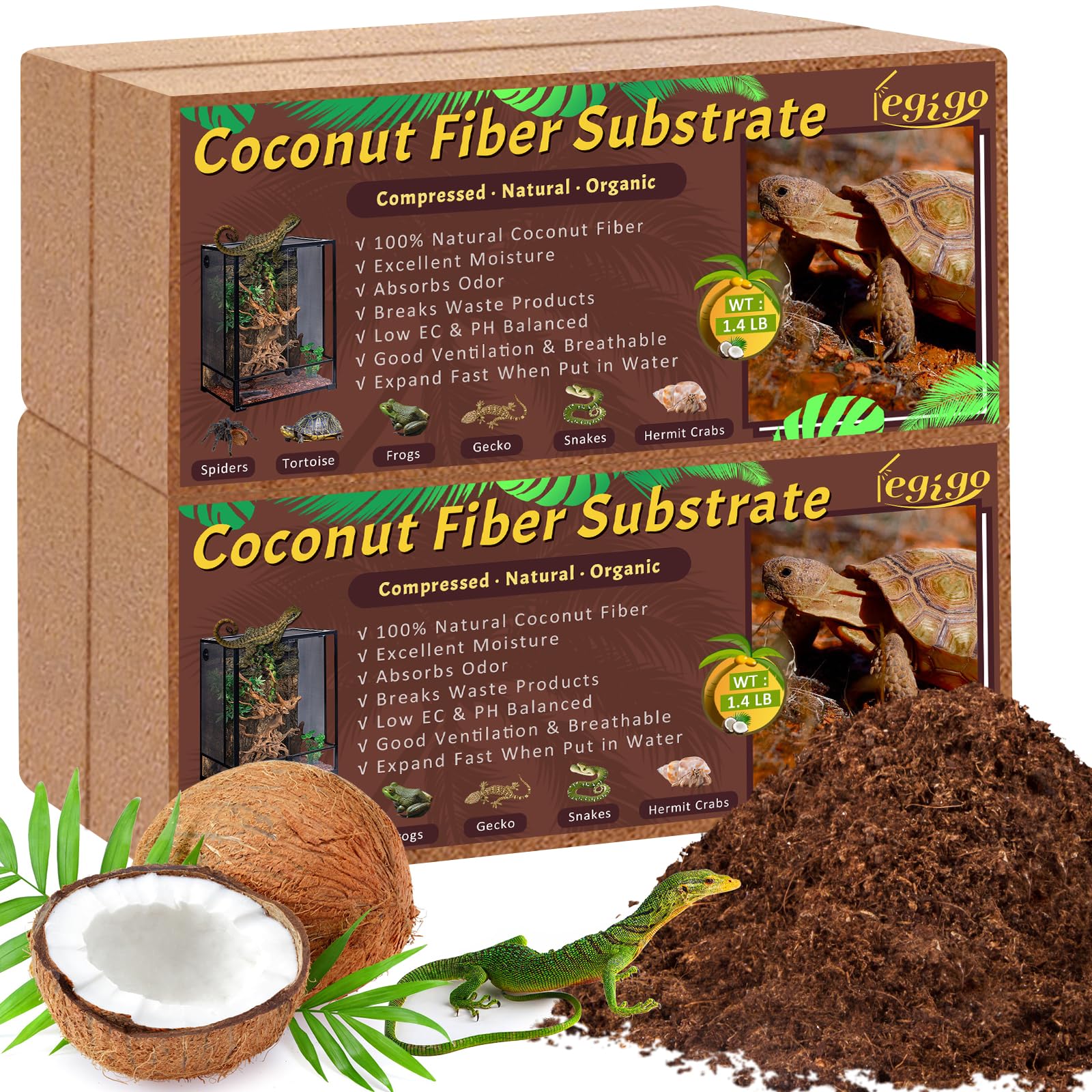
Legigo’s 4-pack of compressed coconut fiber bricks offers the highest expansion-to-cost ratio on this list. Each 1.4-pound brick expands to roughly 8 quarts when hydrated, giving you over 30 quarts of usable coco coir across the full pack. This makes it the go-to choice for keepers who need to fill deep enclosures without spending heavily per quart.
The coco coir is made from natural coconut fiber with no added dirt, chemicals, or fillers. It absorbs water quickly and decomposes waste odors naturally, which is a huge plus for tortoises that produce significant bioload. Keepers of Sulcata and Russian tortoises report that their animals burrow enthusiastically into the coir, and it holds moisture well enough to maintain 60–70% humidity without soaking the shell.
The downsides: bricks require soaking in hot water to break apart, and the packaging does not include instructions. Some users found the coir too fine for species that prefer chunkier texture. For tortoises, mixing these bricks with a handful of medium chips like BabiChip creates a more structured substrate that supports burrows without collapsing.
Why we love it
- Exceptional value for deep enclosure fills
- Odor-absorbing and chemical-free
- Expands reliably with hot water
Good to know
- No instructions included on packaging
- Very fine texture; needs chips for burrow stability
4. Modellor Premium Super Washed Coco Coir 4 Bricks
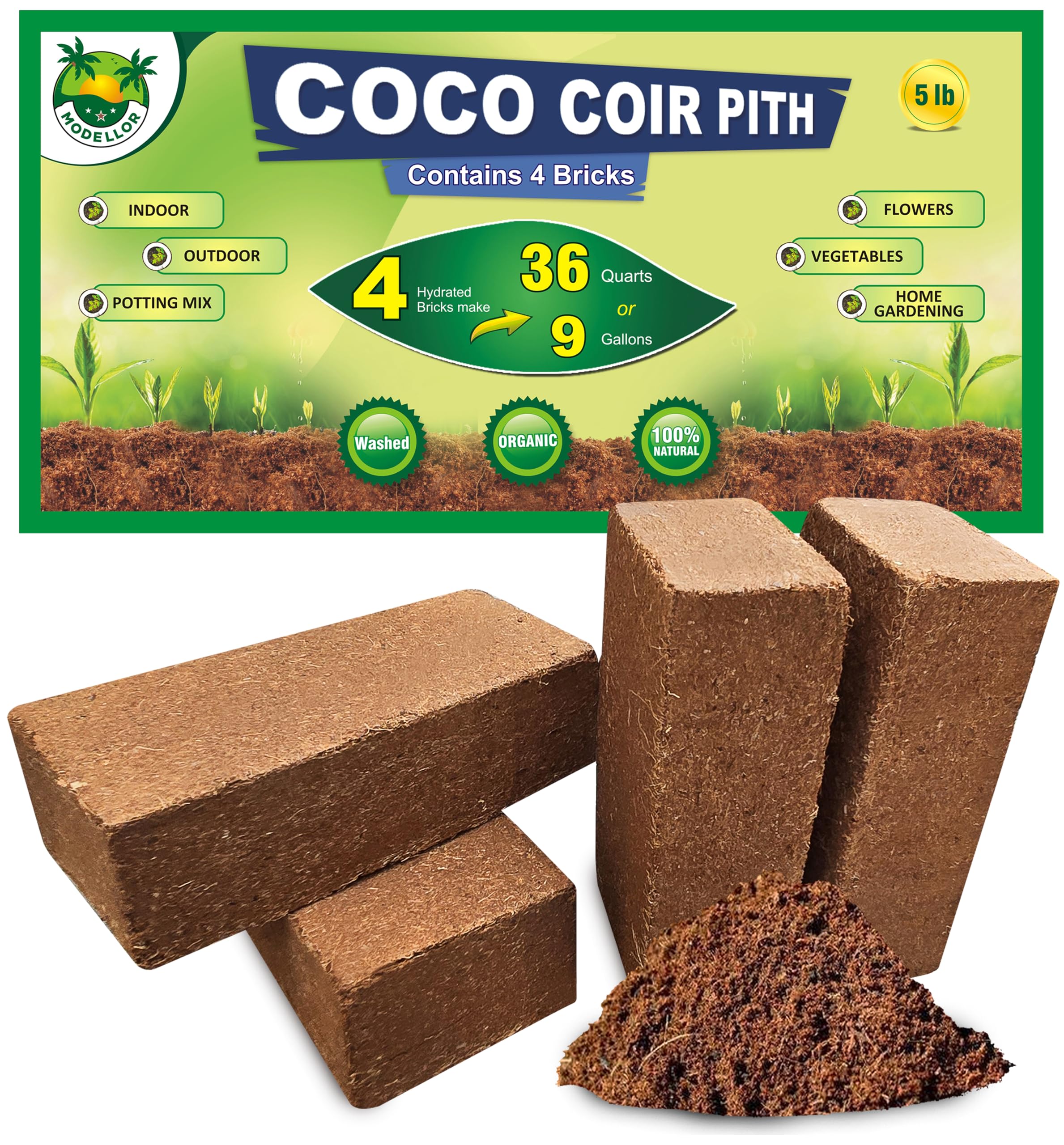
Modellor’s coco coir stands apart from other bricks because it is triple-washed and pH-balanced before packaging. This removes almost all residual salts and tannins, which are common issues with cheap coir that can irritate a tortoise’s eyes, nose, and skin. The 5-pound set expands to 36 quarts of fluffy, odorless coir ideal for high-humidity species like Red-footed tortoises or hatchlings that need stable moisture.
The medium particle size — not too fine, not too coarse — offers better drainage than most coir bricks while still holding excellent moisture. Hydration is fast: drop a brick in warm water and it breaks apart into usable substrate within 15 minutes. Users report strong root growth in plants mixed with this coir, which is a good sign for bioactive tortoise setups where live plants are incorporated.
At a mid-range price point, Modellor is slightly more expensive than Legigo per expanded quart, but the quality consistency and lack of debris justify the premium for sensitive tortoises. The one catch: the particle size is still on the finer side, so it may not hold burrows as well as chip-based substrates unless you compact it slightly when damp.
Why we love it
- Triple-washed, low-salt, pH-balanced
- Expands quickly and consistently
- Excellent for sensitive tortoise species
Good to know
- Higher price per quart than basic coir bricks
- Fine texture may need chip additive for burrowing
5. Fluker’s All Natural Premium Sand Substrate 12 lbs

Fluker’s sand substrate is a blended mix of natural sand, coconut fiber, sea salt, and calcium carbonate with added probiotics. While it works well for hermit crabs that need a sand bed for molting, it is not recommended as a primary tortoise substrate. The sand component increases impaction risk significantly because tortoises may ingest it while feeding, and the calcium carbonate can cause digestive blockages over time.
That said, the product is high-quality for its intended species. The coconut fiber helps retain humidity better than pure beach sand, and the probiotics break down organic waste to keep the enclosure cleaner. Hermit crab keepers consistently rate it 5/5 for burrowing and humidity maintenance, noting that their crabs molt successfully without issues.
If you keep a tropical species that needs a small sand patch for egg-laying, you could mix a very small amount into a coco coir base — but this is an edge case. For general tortoise bedding, skip this product and choose a pure coconut chip or coir alternative from the list above. The value is good for the 12-pound bag, but the sand composition makes it a niche purchase for tortoise owners.
Why we love it
- High humidity retention for hermit crabs
- Probiotics reduce waste odor
- Good burrowing texture for sand species
Good to know
- Sand content is a major impaction risk for tortoises
- Not suitable as sole tortoise bedding
FAQ
Can I use potting soil as tortoise substrate?
How deep should tortoise substrate be?
Is coconut coir safe for all tortoise species?
How often should I change tortoise bedding?
Final Thoughts: The Verdict
For most tortoise keepers, the best tortoise substrate winner is the BabiChip Coconut Chip Substrate because it balances low impaction risk with stable burrow structure and humidity control across all common tortoise species. If you need bulk volume on a tighter budget, grab the Legigo 4 Pack Compressed Coconut Fiber and supplement with chips for burrow stability. And for sensitive tortoises that require the purest, lowest-salt medium, nothing beats the Modellor Premium Super Washed Coco Coir.