
Angelfish are notoriously picky eaters in captivity, often refusing flakes that drift too fast or pellets that don’t match their body size. The right diet directly influences their fin shape, color saturation, and long-term resistance to common freshwater diseases like hole-in-the-head. Choosing a food that balances protein content with digestibility is the single most important decision for keeping these cichlids thriving.
I’m Mo Mahin — the founder and writer behind Furric. I’ve spent hundreds of hours cross-referencing nutritional specs, analyzing owner reports on feeding behavior, and studying the ingredient profiles of dozens of aquatic diets tailored for cichlids and angelfish.
This guide breaks down the top pellet and flake options on the market, comparing protein ratios, sinking behavior, and ingredient transparency so you can confidently select the best angelfish food that matches your tank’s specific needs.
How To Choose The Best Angelfish Food
Angelfish are omnivorous cichlids that require a high-protein staple with occasional vegetable matter. Selecting food isn’t just about brand loyalty — it’s about matching the pellet size, protein level, and sinking speed to the fish’s mouth structure and feeding zone in the tank.
Protein Content and First Ingredient
Angelfish thrive on diets with at least 35% crude protein. Check the guaranteed analysis on the label — foods listing fish meal, shrimp meal, or krill meal as the first ingredient provide the amino acids necessary for muscle development and fin regeneration. Avoid fillers like corn or wheat gluten in the top three ingredients.
Pellet Size and Sinking Behavior
Adult angelfish have upward-facing mouths and prefer food that drifts down slowly. Medium pellets (2-3 mm) are ideal for fish over 3 inches. Pellets that sink too fast may go uneaten and decay, while floating-only options can cause gulping and bloat. Look for slow-sinking formulas that hover in the mid-water column.
Quick Comparison
On smaller screens, swipe sideways to see the full table.
| Model | Category | Best For | Key Spec | Amazon |
|---|---|---|---|---|
| Ocean Nutrition Soft Moist Sinking Pellets | Premium Pellet | High-protein slow-sinking diet | 41.1% Crude Protein | Amazon |
| Hikari Cichlid Gold Floating Pellets (3-Pack) | Premium Floating Pellet | Color enhancement in cichlids | Beta Carotene + Vitamin C | Amazon |
| TetraMin Nutritionally Balanced Flakes | Value Flake | Staple for community tanks | Prebiotics & Antioxidants | Amazon |
| Hikari Marine-A Pellets | Mid-Range Pellet | Larger angelfish (4”+) | DHA & EPA from seaweed | Amazon |
| Seachem NutriDiet Cichlid Flakes | Budget Flake | Daily feeding with probiotics | GarlicGuard & Probiotics | Amazon |
In‑Depth Reviews
1. Ocean Nutrition Soft Moist Sinking Pellets

The Ocean Nutrition Soft Moist Sinking Pellets deliver the highest protein density in this roundup at 41.1%, making them the strongest option for growing juvenile angelfish or maintaining body mass in breeding adults. The soft, moist texture mimics natural invertebrate prey, which tends to trigger a stronger feeding response from angelfish compared to hard, dry pellets.
Each pellet is sealed in an oxygen-free pouch to preserve freshness for three to four months after opening — a meaningful advantage for keepers who feed a single food type daily. The formula includes garlic and krill oil, both of which act as feeding stimulants for finicky eaters while supporting immune function. Owners report that even picky discus and wild-caught angels accept these pellets within days.
The sink rate is moderate, allowing angelfish to intercept the pellets before they hit the substrate. This reduces waste accumulation on the tank floor and keeps water parameters stable. The non-clouding guarantee holds up in practice, especially when paired with weekly water changes.
Why we love it
- Highest protein content (41.1%) ensures rapid growth and color density
- Soft moisture-rich texture appeals to picky cichlids
- Garlic additive boosts appetite and immune resistance
Good to know
- Not a floating formula — ideal for mid-water feeding zones only
- Small pellet size may require crushing for very small juvenile angels
2. Hikari Cichlid Gold Floating Pellets (3-Pack)
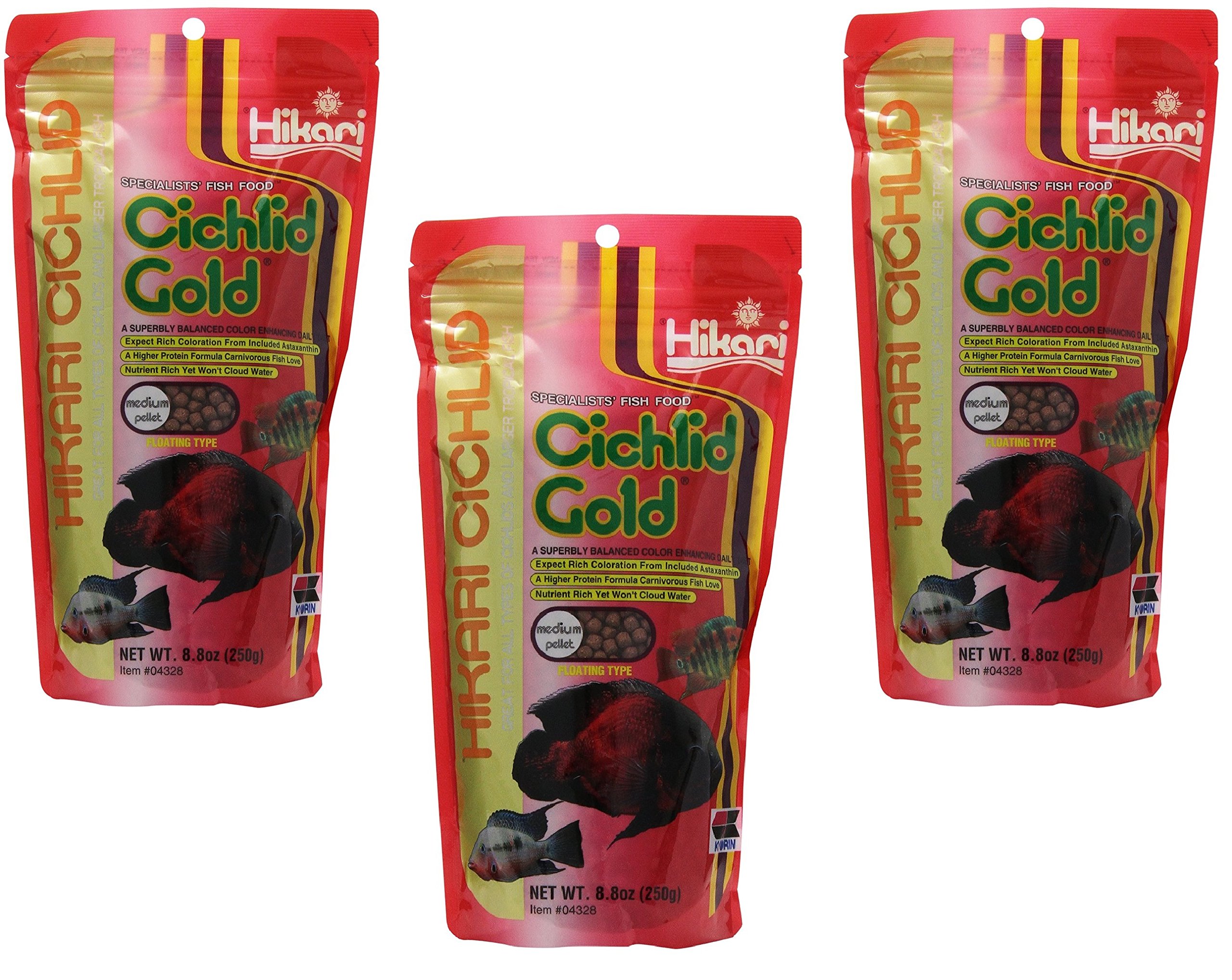
The Hikari Cichlid Gold Floating Pellets are a staple in the cichlid hobby for a reason: the beta carotene and natural spirulina content visibly intensify red, orange, and yellow pigments in angelfish within two to three weeks of consistent feeding. These floating pellets allow you to monitor exactly how much each fish consumes, which is critical when keeping angelfish with faster surface feeders.
The 3-pack provides 26.4 ounces total, offering the lowest cost-per-ounce among the premium options here. The pellets maintain their shape in water for several minutes without disintegrating, meaning they won’t cloud the tank even if you overestimate portions. Long-term owners of African cichlids and angelfish alike report that this food supports consistent spawning activity when fed as a primary diet.
One practical note: the medium pellet size (roughly 2 mm) is appropriate for adult angelfish over 3 inches. For younger fish under 2 inches, you may need to pre-soak or crush the pellets to prevent gill flaring and choking. The resealable bag design helps preserve the fish oil content between feedings.
Why we love it
- Rapid color enhancement through beta carotene and natural spirulina
- Floating design allows easy feeding observation and portion control
- Triple-pack delivers strong bulk value for multi-tank setups
Good to know
- Medium pellets may be too large for juvenile angelfish under 2 inches
- Distinct fishy odor may be off-putting in close quarters
3. TetraMin Nutritionally Balanced Tropical Flake Food

TetraMin is the most recognized name in tropical fish flakes, and the 7.06-ounce bottle offers the lowest cost-per-ounce of any product in this guide. The formula includes prebiotics and select proteins that support digestion and growth, though the crude protein content is lower than the pellet-based competitors — typically around 32%, which is adequate for maintenance but not ideal for breeding or rapid growth in angelfish.
The clear-water guarantee holds true when you follow the three-minute feeding rule: any food not consumed in that window should be netted out. Angelfish that have been raised on flakes from a young age tend to accept these readily, while wild-caught or flake-naive specimens may show initial hesitation. The flake size is small enough for all life stages, including fry, without needing to crush.
Where TetraMin falls short for dedicated angelfish keepers is its lack of species-specific additives. There’s no color-enhancing astaxanthin or high-DHA fish meal targeting cichlid metabolism. It works best as a supplementary food in a community tank with multiple tetra species, not as the sole angelfish diet.
Why we love it
- Exceptionally affordable for the bottle size — great for budget setups
- Prebiotic formula aids digestion in mixed-species community tanks
- Fine flakes are suitable for fry and small juvenile angelfish
Good to know
- Lower protein content limits growth potential in young angelfish
- No cichlid-specific additives for color enhancement or immune support
4. Hikari Marine-A Pellets for Larger Fish

The Hikari Marine-A Pellets are formulated primarily for larger marine fish, but they have found a strong following among freshwater angelfish keepers with specimens measuring 4 inches or more. The pellet diameter is noticeably larger than standard cichlid food — roughly 3 to 4 mm — which matches the gape of adult angelfish and reduces the frantic grazing behavior seen with tiny granules.
What sets Marine-A apart is its sponge-like texture after hitting the water. The pellet softens rapidly without dissolving, making it easier for angelfish to process and reducing the risk of internal blockages. The inclusion of clam extract and seaweed meal improves palatability even for fish that have been on frozen diets for months. Owners consistently note that this food outcompetes frozen mysis in acceptance tests with larger angelfish and discus.
The DHA and EPA content from marine sources helps reduce stress during transport or tank reshuffling, which is a common trigger for angelfish to go off feed. However, the pellet size is unsuitable for medium or small angelfish under 3 inches — beginners should match this product specifically to fish body size.
Why we love it
- Unique sponge-like softening reduces digestive stress in large angelfish
- Clam extract entices even the most stubborn frozen-food feeders
- High DHA/EPA content supports immune function during stress events
Good to know
- Large pellet size is only appropriate for adult angelfish over 4 inches
- Not a floating formula — pellets sink rapidly once softened
5. Seachem NutriDiet Cichlid Fish Flakes

Seachem’s NutriDiet Cichlid Flakes are a hormone-free, probiotic-fortified flake designed to support long-term immune health in cichlids. The inclusion of GarlicGuard serves a dual purpose: it acts as a natural appetite stimulant for angelfish that are recovering from illness or adjusting to a new tank, and it provides a mild antiparasitic effect against intestinal flagellates.
The flake matrix is fortified with chlorella algae and vitamin C, which together support slime coat production — a critical factor for angelfish prone to fin rot and external infections. Owners of peacock cichlids and angelfish report that these flakes do not cloud water, even when fed two to three times daily as directed. The flake size is on the larger side compared to TetraMin, so you may need to crumble them for smaller angelfish under 2 inches.
The protein content is decent for a flake-based diet, though it doesn’t match the density of pellet options like Ocean Nutrition. This product sits comfortably as a daily maintenance food for adult angelfish in a stable community tank, but keepers aiming for maximum growth rates should supplement with a high-protein pellet rotation.
Why we love it
- GarlicGuard ingredient boosts appetite and offers natural parasite resistance
- Probiotic and chlorella formula strengthens slime coat and immune system
- Does not cloud water even with consistent daily feeding
Good to know
- Protein content is lower than pellet-based cichlid foods
- Large flakes require crumbling for juvenile or small-bodied angelfish
FAQ
Can angelfish eat cichlid pellets made for African species?
How do I transition my angelfish from flakes to pellets?
What protein percentage is ideal for breeding angelfish?
Do floating or sinking pellets work better for angelfish?
How often should I rotate angelfish food brands?
Final Thoughts: The Verdict
For most angelfish keepers, the best angelfish food winner is the Ocean Nutrition Soft Moist Sinking Pellets because it delivers the highest protein density at 41.1% in a slow-sinking format that matches the natural feeding behavior of angelfish. If you want rapid color enhancement with the convenience of floating pellets, grab the Hikari Cichlid Gold 3-Pack. And for a budget-friendly daily staple that won’t cloud your water, nothing beats the TetraMin Nutritionally Balanced Flakes.