
The term “non toxic rug” has become a marketing free-for-all. Walk into any big-box home store and you’ll find labels screaming about being “green” stuck on polypropylene mats that off-gas VOCs like a freshly paved parking lot. The buying decision isn’t about looks anymore — it’s about whether the floor covering in your nursery, bedroom, or living room is slowly circulating petroleum-based fumes into your breathing zone.
I’m Mo Mahin — the founder and writer behind Furric. I’ve spent the last several years cross-referencing material composition data, third-party textile certifications, and thousands of owner reviews to separate genuine low-VOC rugs from the greenwashed impostors.
This guide cuts through the fiber-type confusion (wool, jute, cotton, sisal) and zeroes in on rugs that actually back up their clean-label promises. Whether you need a natural-fiber entry runner or a large wool-cotton blend for the family room, choosing the right non toxic rugs starts with knowing which materials smell like the earth and which ones smell like a chemical plant.
How To Choose The Best Non Toxic Rugs
Selecting a rug that is genuinely non toxic requires understanding three core pillars: the fiber’s origin, the binding process, and the back layer chemistry. Synthetics like polypropylene and polyester are petroleum-derived and often require chemical stabilizers, stain-resistance treatments, and synthetic latex backings that continuously release volatile organic compounds. Natural fibers (jute, wool, cotton, sisal) skip the petrochemical starting point, but the dye process and backing adhesive can still introduce toxins. Focus on three levers to lock in a clean purchase.
Fiber Type: Natural vs. Synthetic
Jute and wool are the safest bets for low-VOC rugs because they require minimal chemical processing. Jute is a bast fiber — it’s naturally anti-static, biodegradable, and rarely needs synthetic dyes to achieve its earthy palette. Wool is protein-based and inherently flame-resistant, eliminating the need for flame-retardant chemical sprays. Cotton, especially when organic, is another clean option, though its durability in high-traffic zones is lower than wool. Avoid polypropylene rugs labeled “solution-dyed” — this is a dye process that fuses color into the plastic filament, but the base material still off-gasses throughout its life.
Backing Material and Adhesives
This is where many “natural fiber” rugs fall short. A jute or wool face can be glued onto a synthetic latex or PVC backing that releases VOCs, defeating the purpose of the natural top layer. Look for rugs with a cotton canvas backing, a natural jute backing, or no backing at all (flat-weave constructions). If your rug needs a pad, select an organic wool felt pad or a natural rubber pad — standard synthetic rubber pads often contain styrene-butadiene rubber (SBR), which is a known respiratory irritant.
Certifications That Actually Matter
Greenwashing labels are everywhere, so anchor on third-party certifications that have testing protocols. OEKO-TEX Standard 100 tests for hundreds of harmful substances, including phthalates, heavy metals, and formaldehyde. GoodWeave certification ensures ethical production but also audits for chemical safety. GOTS (Global Organic Textile Standard) is the gold standard for organic fiber rugs — it restricts toxic inputs from the farm to the finished product. If a rug lacks any of these, assume it has not been independently verified for low toxicity.
Quick Comparison
On smaller screens, swipe sideways to see the full table.
| Model | Category | Best For | Key Spec | Amazon |
|---|---|---|---|---|
| SAFAVIEH Natura (NAT102B) | Premium Wool/Cotton | Medium to high-traffic family rooms | 1″ wool pile, 0.5″ cotton backing | Check Price |
| Loloi Chris Loves Julia JUD-01 | Premium Jute/Cotton | Living room layer or base rug | Handwoven, GoodWeave certified | Check Price |
| HOMEMONDE Braided Jute 8×10 | Premium Jute | Eco-conscious entryway or dining room | 0.5″ thick braided, 100% jute | Check Price |
| SAFAVIEH Natural Fiber NF141B | Mid-Range Sisal | Low to medium traffic formal areas | 0.5″ sisal, suede backing | Check Price |
| S & L Homes Jute Cotton 8×10 | Mid-Range Jute/Cotton | Dining room under-table coverage | 0.5″ thick, hand woven | Check Price |
| REDEARTH Jute Cotton 6×9 | Mid-Range Jute/Cotton | High-traffic living rooms, reversible | Flat weave, no pile | Check Price |
| nuLOOM Elfriede Jute Cotton 4×6 | Entry-Level Jute/Cotton | Hallway runner or bedroom accent | 0.25″ pile, 60% jute | Check Price |
| Loloi Amber Lewis Alie ALE-02 | Budget Polypropylene | Budget-friendly high traffic areas | 0.13″ pile, OEKO-TEX certified | Check Price |
| Savi Home Wool Cotton Blend 4×6 | Budget Wool/Cotton | Entryway or front porch decorative use | 0.3″ thick, handwoven braided | Check Price |
In‑Depth Reviews
1. SAFAVIEH Natura Collection (NAT102B)

This 8×10 handmade wool and cotton rug from SAFAVIEH is the goldilocks choice for anyone wanting non toxic floor coverage that doesn’t sacrifice softness or style. The pile stands a full inch high — that’s double the thickness of most jute rugs — giving you a padded step that feels closer to a wall-to-wall carpet than a flat-woven mat. Wool’s natural protein structure resists dust mites and mold without chemical treatment, and the cotton backing eliminates the VOC-heavy latex adhesive found in budget rugs.
The Moroccan boho pattern in beige and ivory blends warm and cool neutrals, making it adaptable to both earthy living rooms and crisp coastal bedrooms. Owner reports consistently mention zero off-gassing upon unboxing and a durability that holds up under daily foot traffic and furniture weight. The 39.5-pound heft tells you this isn’t a flimsy print — it’s a densely woven fiber structure.
The most common critique is shedding during the first few weeks, which is typical for wool rugs. A few vacuum passes with a suction-only head accelerate the break-in period. For buyers who want the lowest-VOC fiber available (wool) in a large format with genuine hand-knotted craftsmanship, this SAFAVIEH model is the top pick.
Why we love it
- Full 1″ wool pile provides cushion without a synthetic foam pad.
- Cotton canvas backing eliminates VOC-heavy latex adhesives.
- Handmade construction and GoodWeave certification for ethical production.
Good to know
- Wool shedding is normal for the first several weeks.
- Avoid direct sunlight to prevent natural fiber fading over time.
2. Loloi Chris Loves Julia Judy Collection (JUD-01)

Designed by the home renovation duo Chris Loves Julia and manufactured by Loloi, this handwoven jute and cotton rug is purpose-built for layering. The flat-weave construction has zero foam, zero latex, and zero synthetic backing — just tightly packed natural plant fiber. The neutral “Natural/Cream” color is heathered with subtle tonal variation, giving it the look of a high-end textile without the high-end price tag.
At 16.5 pounds for the 5×7.5 size, the density is impressive. Owners consistently mention that the jute “smell” (a mild earthy scent typical of natural fiber) dissipates within 24 hours of unboxing, unlike synthetic rugs that can off-gas for weeks. The rug lays flat quickly, though some creases from the folded shipment may need a day under light furniture to settle.
The low profile makes it ideal for dining rooms where chairs need to glide without catching a high pile, and the GoodWeave certification adds assurance that the handweaving was done under ethical working conditions. If your priority is a genuinely low-toxin rug that doubles as a design element, this Loloi model delivers.
Why we love it
- Zero synthetic backing or adhesives — pure jute and cotton construction.
- GoodWeave certified for ethical handmade production.
- Subtle neutral pattern works as a base for layered boho or farmhouse decor.
Good to know
- Jute texture is more nubby than soft — rug pad recommended for comfort.
- Temporary earthy smell when new, fades within one to two days.
3. HOMEMONDE Braided Jute 8×10
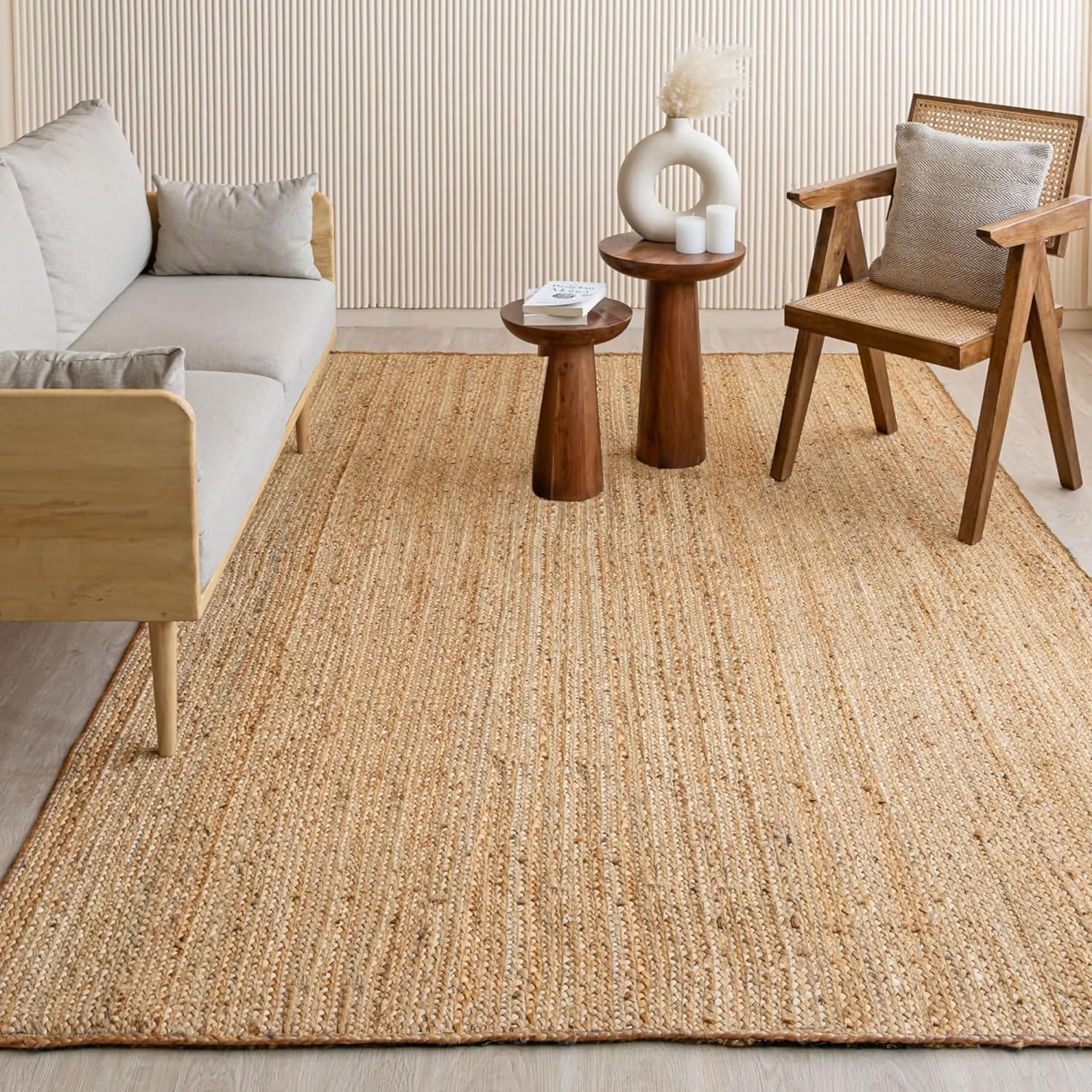
If you want the lowest possible chemical footprint, a 100%-jute braided rug is hard to beat. This HOMEMONDE model uses zero synthetic fibers and zero adhesives — the jute strands are physically braided together into a durable mat. The braided construction naturally resists fraying along the edges, and the 0.5-inch thickness is thick enough to feel substantial underfoot without obstructing doors.
Owner feedback highlights the lack of any chemical smell upon arrival, which is rare even among natural-fiber rugs. The rug also arrives rolled rather than tightly folded, meaning it lies flat within hours. The neutral “Natural” color works with any wood tone or upholstery palette, and the reversible design doubles the lifespan — you flip it when one side shows wear.
Be aware that jute is not a “plush” material — it has a firm, textured surface that feels more like a woven basket than a carpet. It also requires careful vacuuming with a suction-only head to avoid pulling fibers. For buyers who value pure material provenance over softness, this is the cleanest option in the lineup.
Why we love it
- 100% natural jute with zero adhesives or synthetic backing.
- Reversible braided design extends lifespan significantly.
- Nearly zero off-gassing reported — no chemical smell.
Good to know
- Jute has a firm, non-plush texture — not suitable for barefoot lounging.
- Requires suction-only vacuum to avoid pulling braided fibers.
4. SAFAVIEH Natural Fiber Collection (NF141B)
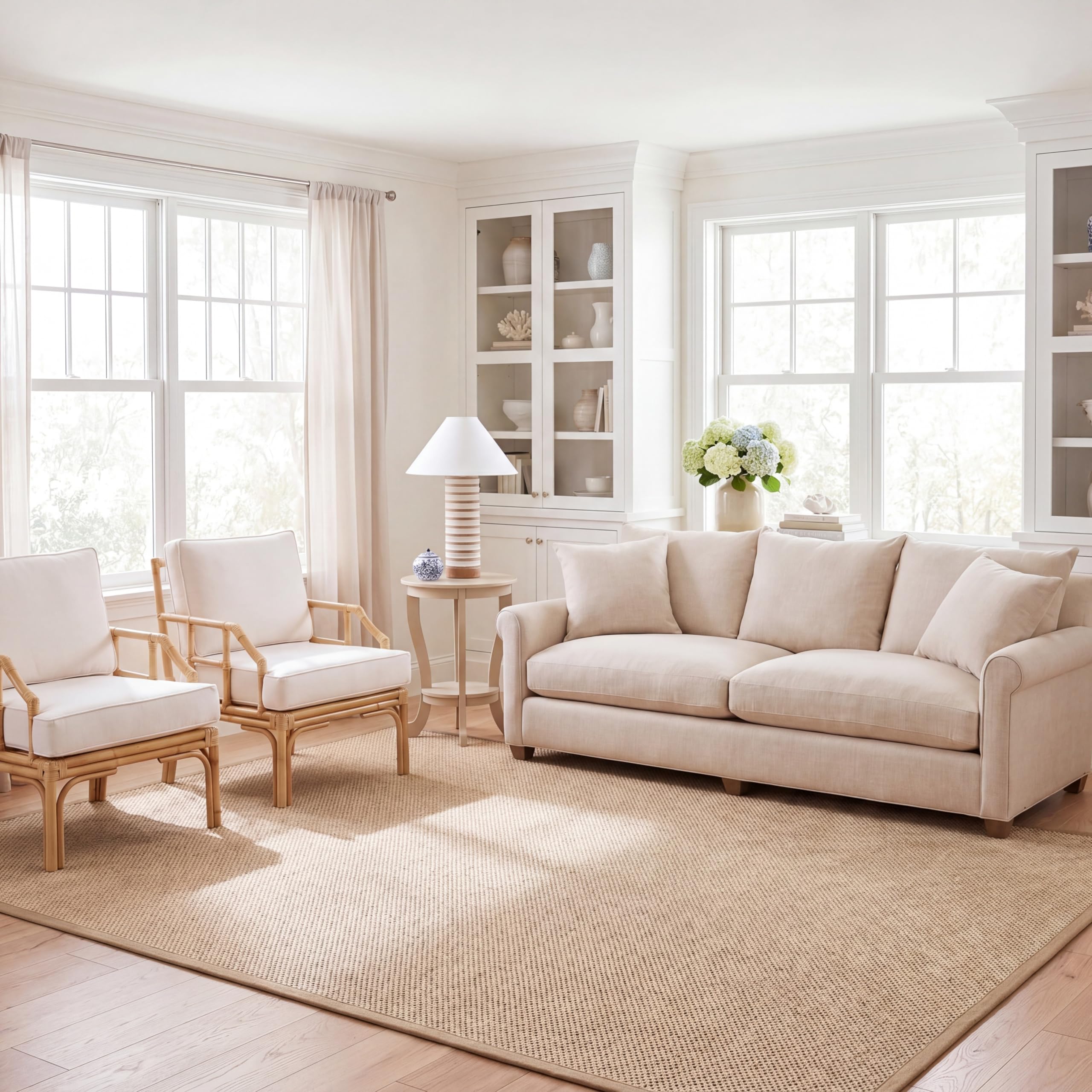
Sisal is the toughest natural fiber you can put on a floor, and this SAFAVIEH model leverages that strength in a machine-woven construction that keeps costs lower than hand-knotted alternatives. The 8×10 size covers a large dining or living area, and the maize/linen color palette brings warmth without competing with existing decor. The woven design includes a clean border detail that gives it a tailored look.
The suede backing adds grip and acts as a barrier between the sisal and your floor, but note that suede is a synthetic material. For purists seeking 100% natural construction, the suede layer is a minor compromise. However, the face fiber is pure plant-based sisal, which means the primary surface you interact with is VOC-free. Owners praise the tight, uniform weave and the fact that the rug lays completely flat within hours of unboxing.
Sisal is inherently rough on bare feet — think the texture of a doormat. It also absorbs moisture, so it’s best kept in dry, low-humidity rooms. This rug is not for bedrooms where you walk barefoot, but it excels in formal living rooms, dining rooms, or entryways where durability and low toxicity are the primary metrics.
Why we love it
- Sisal face fiber is a renewable, biodegradable material with zero VOC output.
- Machine-woven construction for consistent density and durability.
- Non-slip suede backing keeps the rug stable on hardwood or tile.
Good to know
- Sisal texture is coarse — not comfortable for barefoot walking.
- Not water resistant; spills must be blotted immediately to avoid staining.
5. S & L Homes Jute Cotton 8×10
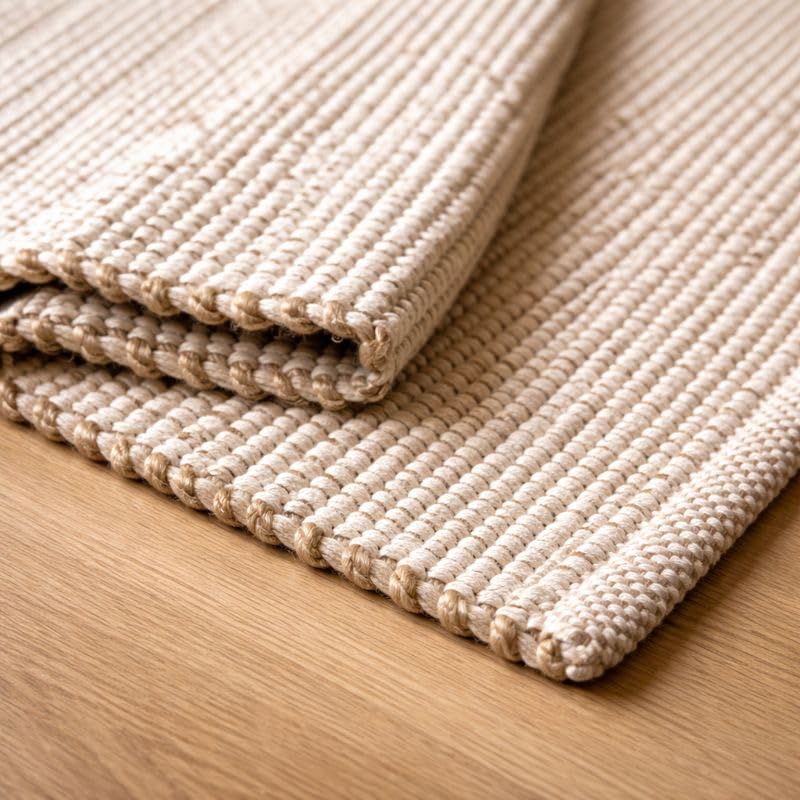
This 8×10 handwoven rug from S & L Homes uses the standard 60/40 jute-to-cotton ratio that provides a slightly softer feel than a pure jute rug because the cotton fibers reduce the prickliness. The 0.5-inch thickness is ideal for dining areas where chairs need to slide, and the weight — 32 pounds — keeps the rug anchored even without a pad on carpet.
Owners describe the color as a warm, heathered natural that pairs well with dark wood tables and neutral wall tones. The handmade nature means subtle variations in weave density and edge alignment, which adds to the organic aesthetic. Most buyers confirm the rug has minimal smell and that any mild earthy scent fades within a day of airing out.
The primary downside reported is that the rug arrives folded in a box, which can leave persistent creases. Some owners needed to roll it in reverse overnight or place heavy books on the folds to get it lying completely flat. A rug pad is recommended and will also help protect the jute from excessive wear in high-traffic zones.
Why we love it
- Cotton blend softens the jute texture for more comfortable barefoot contact.
- Generous 8×10 size anchors large dining or living spaces effectively.
- Heavy build weight (32 lbs) minimizes shifting without a pad.
Good to know
- Arrives folded — persistent creases may require manual flattening.
- Some owners reported a moldy smell (isolated quality control issue).
6. REDEARTH Jute Cotton 6×9
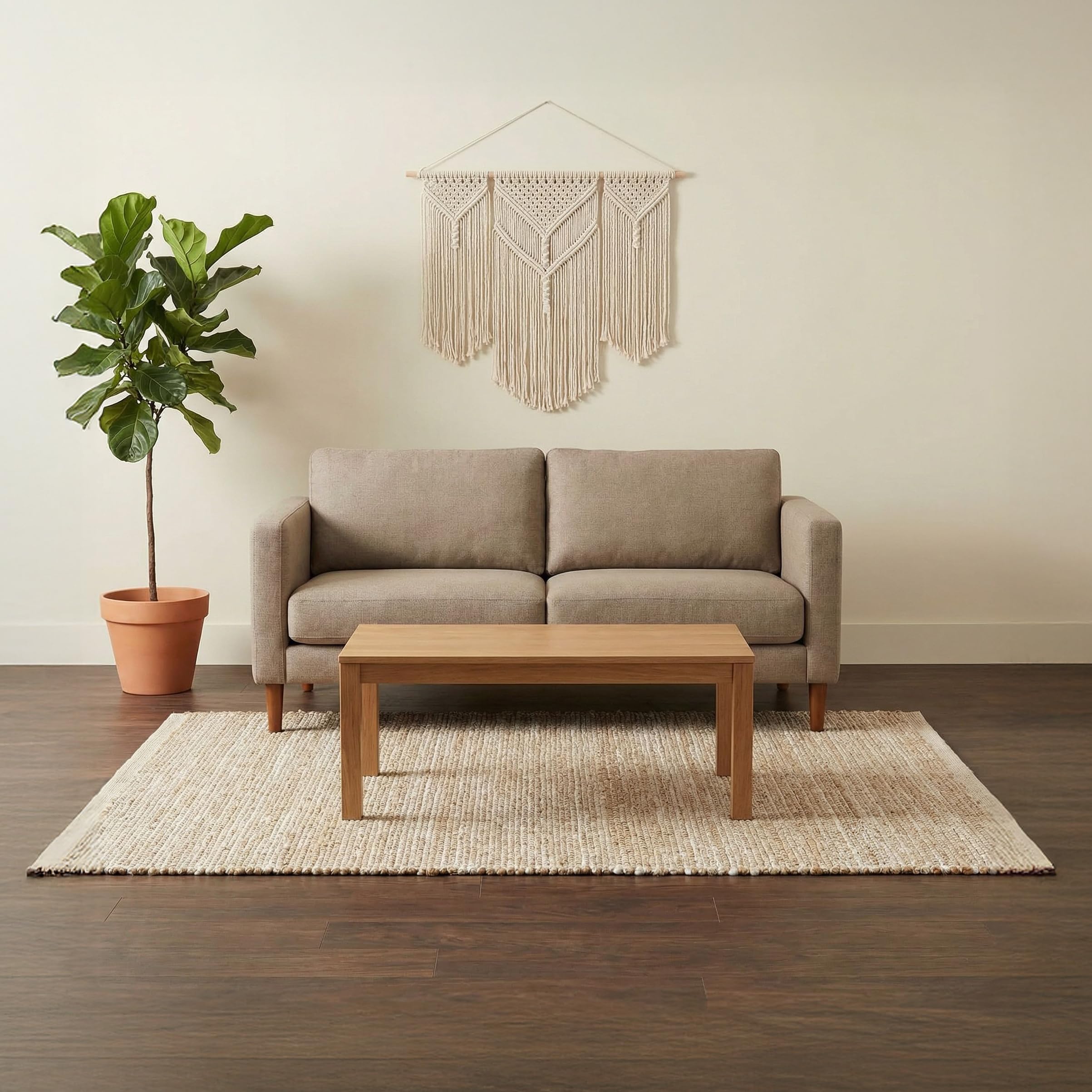
The REDEARTH jute-cotton flat weave stands out for its reversible design — both sides are finished identically, which effectively doubles the usable life. The 6×9 size hits a common sweet spot for living rooms and open-concept dining areas, providing broad coverage without overwhelming a standard 12×12 room. The no-pile construction means it won’t trap dust or allergens, and the natural beige/cream tones hide minor dirt well between cleanings.
Multiple owners mention ordering a second unit after the first, which is a strong indicator of satisfaction. The rug is handwoven by artisans in India using renewable fibers, and the packaging avoids plastic shrink wrap that often traps moisture and creates odor. The flat weave also makes this rug easy to roll up and store seasonally without permanent crease damage.
The color in person is noticeably darker and warmer than product photos suggest — closer to a medium-brown jute tone than a pale beige. If you need an exact match to a specific decor color, order a swatch first. The creases from the folded delivery also require active flattening; some owners recommend unrolling and placing furniture on the folds for 24-48 hours.
Why we love it
- Reversible flat-weave construction extends the rug’s service life significantly.
- No pile means low allergen trapping and easy vacuum maintenance.
- Handwoven from renewable jute and cotton with minimal packaging waste.
Good to know
- Color runs darker and warmer than online product images suggest.
- Folded shipping causes deep creases that need manual flattening effort.
7. nuLOOM Elfriede Jute Cotton 4×6
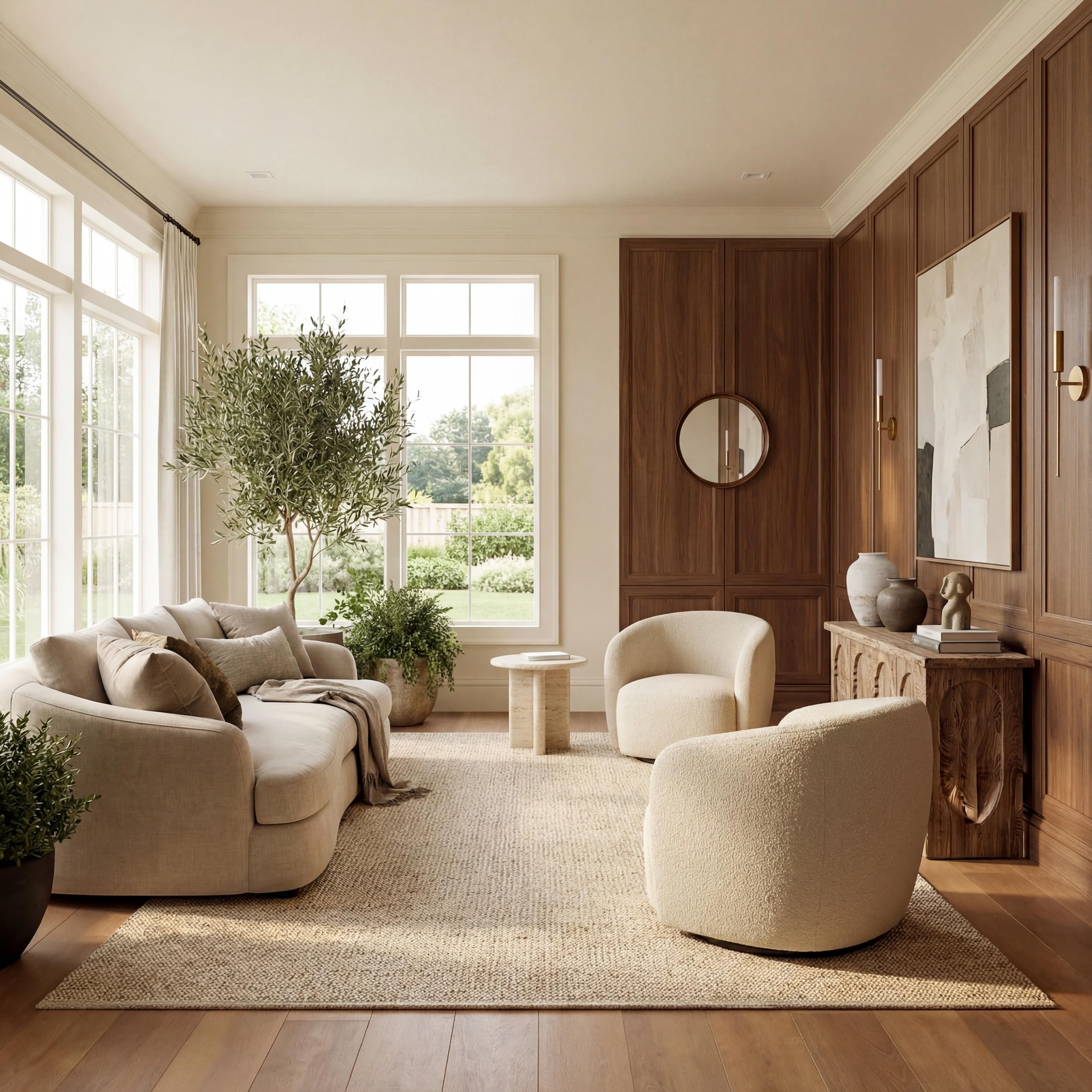
nuLOOM’s Elfriede collection is a staple in the natural-fiber rug market, and for good reason. The 4×6 size is versatile enough to function as a hallway runner, a kitchen island mat, or a bedroom side rug. The 60/40 jute-cotton blend provides a medium pile height (0.25 inches) that is lower than wool carpets but higher than a flat weave, giving it a slight cushion without bulk.
Owner reviews consistently mention the rug holds up well with kids and pets, thanks to the dense machine-made weave that resists pulling. The natural color has subtle variation — no two sections look perfectly uniform, which is a hallmark of jute’s organic dye absorption. Multiple buyers confirmed the rug lays flat from day one without curling edges, which is a common complaint with lower-cost jute rugs.
The trade-off is that this rug is not soft for barefoot lounging. Jute is inherently textured, and the medium pile does not change that fundamental quality. Additionally, some owners noted a mild musty odor that took a few days to air out fully. This is typical of jute shipped in sealed packaging but is worth factoring in for sensitive noses.
Why we love it
- Durable machine-made weave withstands high-traffic areas and pet nails.
- Medium 0.25″ pile provides more structure than a flat weave.
- Lays flat out of the box with no curling or edge rolling.
Good to know
- Not plush or soft — jute texture remains firm underfoot.
- May have a temporary musty smell that airs out over a few days.
8. Loloi Amber Lewis Alie Collection (ALE-02)

This is the synthetic entry in our lineup, but it earns a spot because it’s OEKO-TEX certified, meaning the polypropylene and polyester fibers have been tested for harmful substances like phthalates and formaldehyde. The Alie collection is designed by Amber Lewis and features a vintage-inspired low-pile pattern that hides dirt and resists shedding. The 5’3″ x 7’9″ size fits standard living room layouts without running wall to wall.
The power-loomed construction creates a dense, flat surface that vacuums cleanly and withstands high-traffic abuse without visible wear. The sand/sky colorway blends warm sand tones with a subtle blue-gray. Owners praise the stain resistance — coffee and wine spills blot up without leaving residue on the synthetic fibers.
However, synthetic is synthetic. While OEKO-TEX certification reduces the chemical risk, polypropylene is still petroleum-based and will have a different environmental footprint than plant fibers. Some owners noted the rug’s color appeared more olive-toned than the taupe shown in photos. If your non toxic requirement is absolute (no synthetic polymers), skip this one. If you need a budget-friendly low-VOC rug for a high-traffic rental floor, the certification provides meaningful assurance.
Why we love it
- OEKO-TEX certified to be free of phthalates, lead, and formaldehyde.
- No shedding and easy spot-cleaning for pet messes and spills.
- Low pile allows furniture to glide easily and prevents tripping.
Good to know
- Face fiber is polypropylene — petroleum-based, not plant-derived.
- Color accuracy can vary; some orders read more olive or gray than expected.
9. Savi Home Wool Cotton Blend 4×6
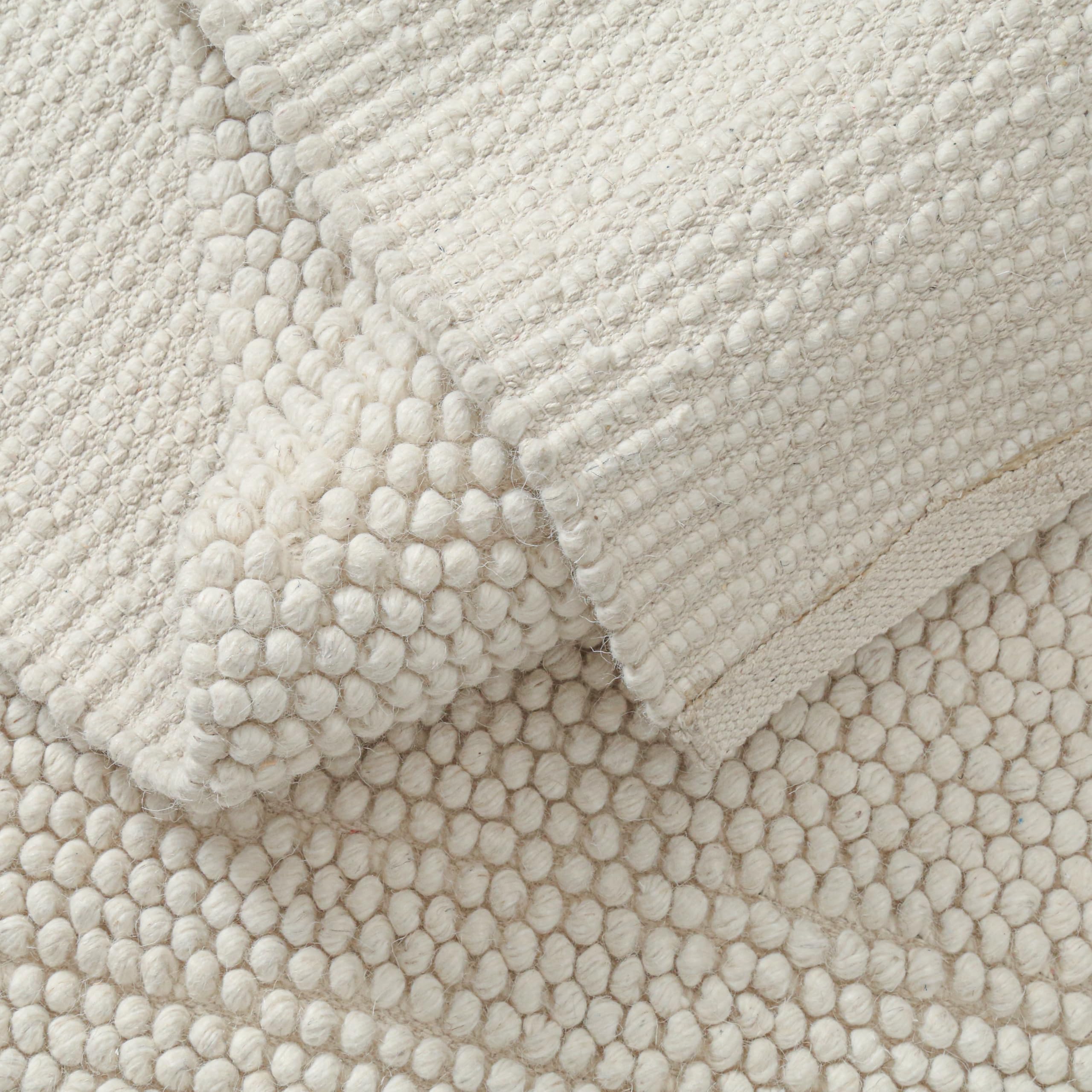
This Savi Home rug uses a handwoven braided construction of wool and cotton that gives it a chunky, popcorn-like texture. The 4×6 size works well as an entryway mat, a front-door accent, or a small kitchen island rug. Wool is naturally flame-resistant and mold-resistant, and the cotton backing keeps the structure breathable without needing synthetic latex.
The ivory color is versatile and neutral, blending with farmhouse or modern decor. Owners love the look and feel, describing it as “cute” and “soft enough to walk barefoot on.” The rug holds up to daily dog traffic without visible matting, and the braided edges resist unraveling better than glued fringe.
The biggest limitation is size — 4×6 is great for a doorway or an accent zone but too small to anchor a seating area. Some owners noted that loose threads need occasional trimming, especially if cats paw at the braids. The rug is also purely decorative for some users; the braided construction is not as dense as a woven rug, so it can shift on smooth floors without a pad.
Why we love it
- Wool and cotton construction is naturally flame-resistant and mold-resistant.
- Handwoven braided texture adds visual depth and farmhouse warmth.
- Soft enough for barefoot use despite the rugged braided appearance.
Good to know
- Small 4×6 sizing limits placement to doorways or accent zones.
- Braided fibers may need occasional trimming as the rug settles.
FAQ
How long does it take for jute rug odor to go away?
Can a non-toxic rug still contain latex?
Are wool rugs safer than jute for people with allergies?
What does OEKO-TEX certification actually mean for rugs?
Final Thoughts: The Verdict
For most shoppers, the non toxic rugs winner is the SAFAVIEH Natura Collection (NAT102B) because it combines a thick wool pile with a cotton backing and GoodWeave certification, offering the lowest-VOC profile in a handsome, large-format package. If you want a flat, layer-friendly natural fiber rug with zero synthetic components, the Loloi Chris Loves Julia Judy (JUD-01) is your pick. And for pure material purity at an accessible price, the HOMEMONDE Braided Jute offers a 100% natural surface with no adhesives, no backing, and no compromises.