
That foul, rotten smell wafting up from your horse’s hoof is more than just an odor — it’s the definitive sign of thrush, a bacterial and fungal infection that attacks the frog and central sulcus. Left unchecked, it can lead to lameness, hoof wall separation, and expensive farrier bills. The market is split between liquid sprays, sticky putties, and dry powders, each with a different mechanism for killing the anaerobic bacteria thriving in moisture and packed dirt.
I’m Mo Mahin — the founder and writer behind Furric. I’ve spent countless hours comparing veterinary formulations, analyzing ingredient lists for caustic vs. natural compounds, and studying owner-reported recovery timelines across hundreds of equine thrush cases.
Choosing the wrong formula can mean wasted applications, staining your hands for days, or even drying out the hoof too aggressively. That’s why I’ve broken down the five top-rated options to help you pick the most effective thrush remedy for horses based on your horse’s specific hoof condition and your management routine.
How To Choose The Best Thrush Remedy For Horses
Thrush is an anaerobic infection, meaning it thrives in environments without oxygen — exactly what a dirty, moist hoof sulcus provides. The most effective treatments either chemically kill the bacteria (antiseptics) or physically dry out the environment so the bacteria cannot survive. Knowing which approach fits your horse’s hoof condition is the first step to a clean, healthy frog.
Liquid vs. Dry: The Delivery Mechanism Matters
Liquid treatments (sprays and solutions) are fast to apply and penetrate deep into crevices, but they add moisture to the hoof — the exact thing thrush feeds on. Dry powders and clay putties work by absorbing excess moisture and creating an inhospitable environment for bacteria, but they require more effort to pack into the sulcus. For deep, chronic thrush with a compromised frog, a drying agent is often more effective.
Causicity: Chemical Burn vs. Natural Healing
Many traditional thrush remedies rely on strong chemicals like copper sulfate or iodine that kill bacteria but also burn healthy frog tissue, slowing regeneration. Non-caustic formulas (kaolin clay, eucalyptus oil, natural antiseptics) are gentler on the hoof, allowing the frog to re-harden and heal without the setback of chemical damage. If your horse has sensitive soles or you are treating a foal, non-caustic is the safer route.
Stain Factor and Application Ease
If you care about your hands, clothes, and stable flooring, check the staining potential. Many liquid solutions (especially copper-based or purple-dyed formulas) leave marks that last days. Powders and clay putties are virtually non-staining. Also consider how often you can realistically treat — busy barn managers prefer a once-daily dust or pack that lasts 2–3 days versus a twice-daily spray routine.
Quick Comparison
On smaller screens, swipe sideways to see the full table.
| Model | Category | Best For | Key Spec | Amazon |
|---|---|---|---|---|
| Artimud Hoof Putty | Premium Putty | Deep sulcus packing | 10 oz clay, eucalyptus-based | Amazon |
| No Thrush Dry Powder | Mid-Range Powder | Daily moisture control | 5.5 oz kaolin clay powder | Amazon |
| Nu-Stock | Budget Oil | Scratches & rain rot | 12 oz sulfur-based oil | Amazon |
| Vetericyn Hoof Care | Mid-Range Liquid | Mild thrush & seedy toe | 8 oz blue antiseptic spray | Amazon |
| Grooms Hand Thrush Solution | Mid-Range Spray | Built-in hoof pick convenience | 4 oz spray, purple formula | Amazon |
In‑Depth Reviews
1. Artimud Horse Hoof Putty
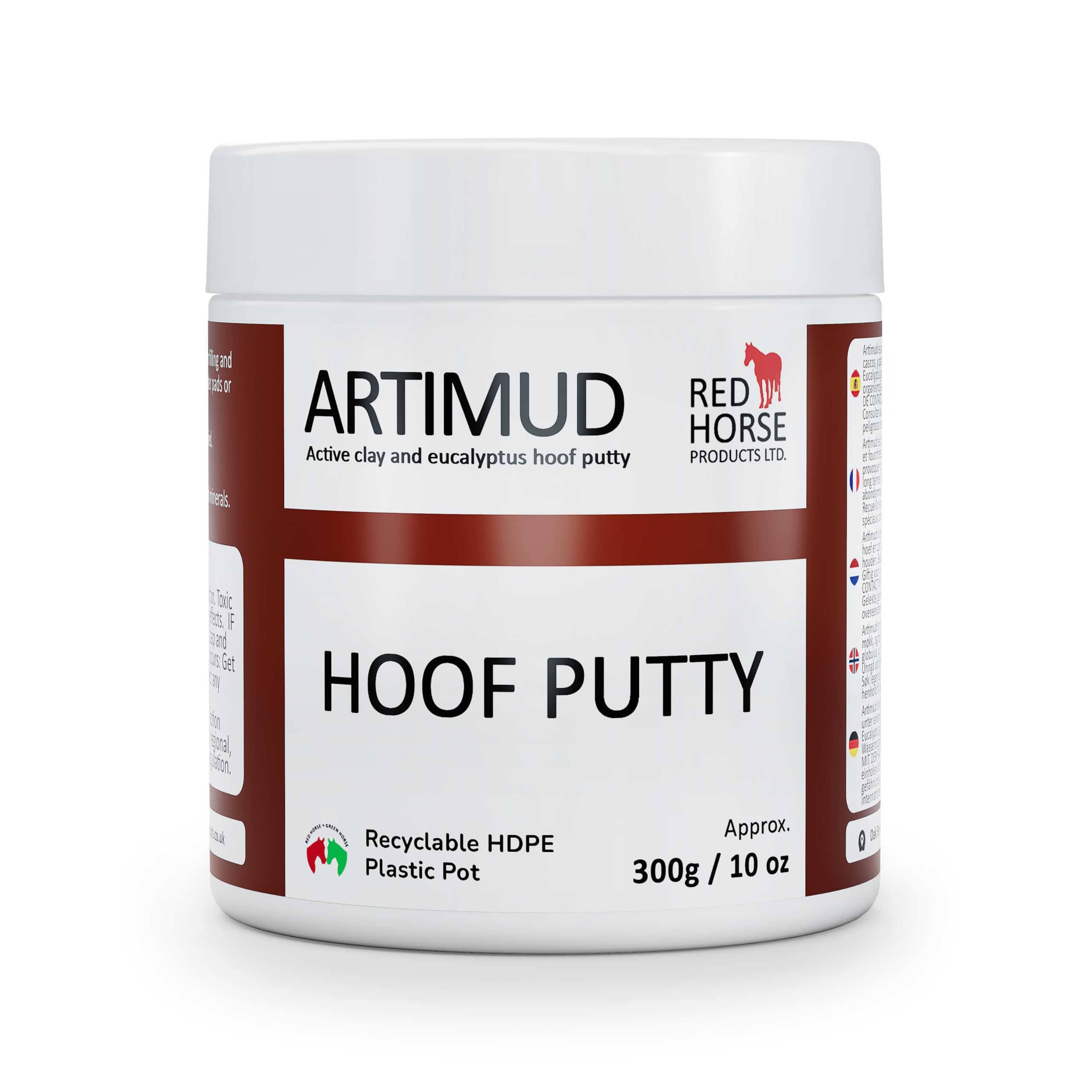
This eucalyptus-infused clay putty from Red Horse Products is the most targeted approach for deep central sulcus thrush. Unlike sprays that run off, the putty stays packed in the crevice for up to two days, physically smothering the anaerobic bacteria while the eucalyptus acts as a natural antiseptic. Users report clearing deep, stubborn infections within two weeks of daily packing — a timeline that outperforms most liquid alternatives.
The formable clay texture makes it ideal for use under shoes, glue-on boots, or packing material. Farriers frequently recommend it because it does not kill the beneficial microflora of the hoof like caustic copper-based treatments do. The pleasant herbal smell is a bonus in a category notorious for sulfurous or chemical odors.
One downside is that the open tub can dry out and turn rock hard after a few weeks if not sealed tightly, so store it with the lid firmly closed. It is also the priciest option per ounce, but considering it stays active for days per application, the cost per successful treatment is competitive.
Why we love it
- Stays packed in deep sulcus for 48+ hours
- Natural eucalyptus formula, gentle on healthy tissue
- Farrier-recommended for chronic cases
Good to know
- Can dry into a hard brick if lid is loose
- Higher per-ounce cost than liquid treatments
2. Four Oaks Farm No Thrush Dry Powder

This was the first dry powder treatment on the market, and it remains a staple in large breeding barns for good reason. The high-purity air-floated kaolin clay particles work by physically adhering to the moisture in the frog, depriving thrush bacteria of the wet environment they need to survive. Users consistently report seeing visible results in 3–4 days with daily dusting, and the powder helps re-harden a soft, spongy frog.
Application is straightforward — just dust the powder into all hoof grooves and heel cracks using a soft brush or your fingers. Because it is non-caustic and non-staining, you can use it daily without worrying about chemical burns or blue hands. It is also effective for scratches, rain rot, and mud fever, making it a versatile addition to the barn first-aid kit.
The 5.5 oz bottle provides roughly 60 applications, which is excellent value for a preventative or mild-case protocol. For deep, packed-in infections, some users find the powder does not penetrate as deeply as a clay putty, so it works best as a consistent daily maintenance tool rather than a heavy-duty pack.
Why we love it
- Dries out the frog without harsh chemicals
- 60 applications per bottle — great value
- Non-staining and safe for daily use
Good to know
- Less effective for deep sulcus packing than putty
- Requires daily re-application after turnout
3. Grooms Hand Thrush Solution

The Grooms Hand Thrush Solution wins the convenience category hands-down. The spray bottle features an integrated hoof pick on the cap, so you can clean the frog and apply treatment in one motion — a game-changer for barn managers treating multiple horses. The liquid formula has excellent staying power, lasting through rain and wet turnout for several days, which users consistently highlight as superior to other spray-on options.
This solution uses a purple dye (likely copper-based) that reliably knocks out even stubborn thrush infections. Multiple reviews note that a mild case clears in 1–2 applications, and the spray works at all angles, making it easy to reach the central sulcus without bending into awkward positions. The trigger mechanism allows a precise stream rather than a wasteful mist.
The main caveat is that the purple liquid stains everything it touches — hands, clothes, stall mats, and white markings on the horse. Wearing disposable gloves is essential. Additionally, some users report the trigger can clog or stop spraying mid-bottle, so have a spare spray head or use it with a dropper bottle if consistency becomes an issue.
Why we love it
- Built-in hoof pick saves time in daily treatments
- Superior rain-proof staying power
- Clears mild thrush in 1–2 applications
Good to know
- Purple dye stains skin and surfaces badly
- Trigger mechanism can clog or fail prematurely
4. Vetericyn Hoof Care

Vetericyn uses a hypochlorous acid-based technology that differs from traditional copper or iodine treatments. This bright blue formula is designed to penetrate deep into the hoof tissue and draw out the exudate (pus and moisture) that feeds thrush bacteria. Users report marked improvement in 8–9 days, with cracks and thrush largely resolved within a month — a solid timeline for moderate infections.
The 8 oz bottle includes a precision cap that allows targeted application into the sulcus and frog cracks without wasting product. The foam-like consistency clings to the hoof surface, creating a protective barrier that lasts between pickings. The formula is non-caustic, so it will not burn the healthy frog the way strong chemical alternatives can.
The major trade-off is the staining. The bright blue dye leaves marks on skin and clothing that persist for days, and several users recommend transferring the liquid to a dropper bottle to control the mess. For barns with light-colored stall mats, this can be a nuisance. It also requires consistent daily application for best results, making it less suited for owners who can only treat every few days.
Why we love it
- Penetrates deep to draw out infection-causing exudate
- Non-caustic, safe for sensitive hooves
- Precision cap allows targeted application
Good to know
- Blue dye stains hands, clothes, and surfaces
- Requires daily application for best results
5. Durvet Nu-Stock

Nu-Stock is a sulfur-based oil that has built a loyal following for its surprisingly effective wound-healing properties across multiple species — horses, dogs, and even humans. While it is not marketed exclusively as a thrush treatment, its powerful antibacterial and antifungal properties make it a viable option for minor hoof infections, scratches, and rain rot. Users report it speeds healing of skin lesions and small wounds remarkably fast.
The 12 oz bottle provides a generous volume for the price, and the oil consistency means it stays on the affected area longer than water-based sprays. It is also safe to use on other livestock, so one bottle covers your entire barn’s first-aid needs. The application is simple — just brush or rub the oil into the affected frog or sole area.
The single biggest complaint is the smell. The sulfur odor is intense and long-lasting, described by users as smelling like rotten eggs that lingers for hours or days. If you or your horse is sensitive to strong odors, this is a dealbreaker. It also stains bedding and blankets, though the stains are usually washable. For dedicated thrush treatment, purpose-built options are more reliable, but Nu-Stock earns its spot as a versatile backup.
Why we love it
- Works on horses, dogs, and livestock — multipurpose value
- Large 12 oz bottle, budget-friendly per ounce
- Effective on scratches, rain rot, and minor wounds
Good to know
- Extremely strong sulfur smell that lingers
- Not specifically formulated for deep thrush packing
FAQ
How often should I apply a dry powder thrush treatment?
Can I use a clay putty like Artimud under shoes?
Why does my thrush treatment stain the hoof blue or purple?
What is the difference between caustic and non-caustic thrush remedies?
Final Thoughts: The Verdict
For most horse owners fighting active thrush, the thrush remedy for horses winner is the Artimud Hoof Putty because its clay format stays packed in the deep sulcus for days, providing continuous drying action without caustic chemicals. If you need a low-maintenance daily option that doubles as a preventative, grab the No Thrush Dry Powder. And for barn managers treating multiple horses where speed and convenience are everything, nothing beats the built-in hoof pick of the Grooms Hand Thrush Solution.