
When the thermometer drops and natural insect populations vanish, your backyard birds enter a daily survival sprint for high-fat, high-protein calories. A poor food choice in January means birds burn more energy cracking open tough hulls than they gain from the kernel inside — a losing equation that can push winter visitors to move on or, worse, fail to make it through a cold snap.
I’m Mo Mahin — the founder and writer behind Furric. I’ve spent the last two seasons cross-referencing ingredient labels, fat-to-fiber ratios, and real owner feeding rates to separate the winter fuel from the filler.
After digging through dozens of blends and thousands of verified reviews, I’ve narrowed the field to five proven performers to help you pick the right wild bird food for winter without wasting a dollar on bags your birds will ignore.
How To Choose The Best Wild Bird Food For Winter
Winter bird food is not the same as summer bird food. Cold-weather feeding demands maximum caloric density, minimal waste, and formulations that remain stable when temperatures cycle between freezing and thawing. Here are the three criteria that separate a smart winter buy from a bag full of filler.
Fat content is the priority metric
Birds burn fat reserves overnight just to keep their body temperature above freezing. A winter blend should list black oil sunflower seeds, sunflower hearts, peanuts, or suet as dominant ingredients — these deliver 40-50% fat content by weight. White millet and cracked corn provide energy but lack the dense fat profile winter birds require.
No-waste or shell-free options save energy for the birds
In summer, birds can afford the time to crack open sunflower hulls. In winter, every second spent husking is a second of heat lost. Shelled sunflower hearts or no-waste blends let birds consume calories instantly, and they keep your feeding area free of frozen, soggy hulls that can harbor mold through a thaw.
Suet vs. seed — use both for maximum winter impact
Seed blends cover ground-feeding and perching species, but suet cakes target insect-eating birds like woodpeckers, nuthatches, and chickadees that struggle to find fat in frozen landscapes. A dual approach — a hopper feeder with seed and a cage feeder with suet — dramatically increases the diversity of winter birds you’ll see.
Quick Comparison
On smaller screens, swipe sideways to see the full table.
| Model | Category | Best For | Key Spec | Amazon |
|---|---|---|---|---|
| Happy Wings Black Oil Sunflower Seeds | Mid-Range | High-energy seed for cardinals & finches | 5-pound bag of whole black oil seeds | Amazon |
| Cool Birds Classic Blend | Mid-Range | Multi-species variety from a single feeder | 10 pounds with 5 seed types | Amazon |
| Valley Farms Sunflower Hearts | Premium | Mess-free winter feeding | 4 pounds of whole shelled hearts | Amazon |
| Wildlife Sciences Suet Plugs | Premium | Targeting woodpeckers & tree-clingers | 16-pack of beef suet sticks | Amazon |
| Heath Outdoor Suet Cakes | Premium | High-volume suet for heavy feeders | 18-pack, no-melt up to 122°F | Amazon |
In‑Depth Reviews
1. Happy Wings Black Oil Sunflower Seeds – 5 lb
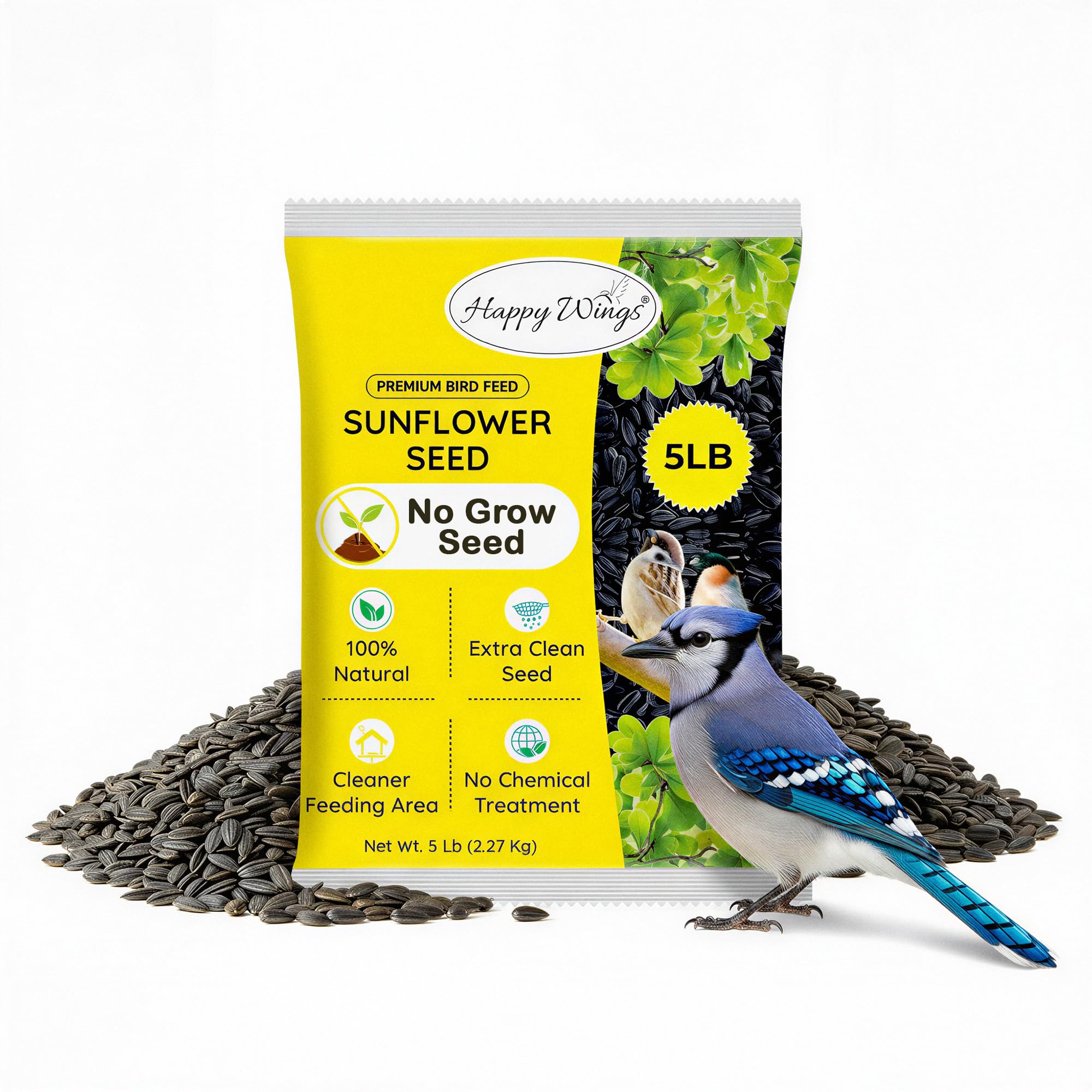
Black oil sunflower seeds carry the highest fat-to-shell ratio of any common birdseed, and Happy Wings delivers a clean, consistently sized seed that cardinals, chickadees, and finches go through rapidly in cold weather. The 5-pound bag is a practical winter starter size — enough to establish a feeding pattern without committing to a 20-pound bulk bin that might go stale.
This is a single-ingredient seed, not a blend, which means zero filler. Every seed in the bag is a high-energy kernel, and the no-grow formulation prevents sprouting under feeders during wet winter thaws. Processed in USDA-approved facilities, the batch quality is consistent — reviewers report bags free of debris or dust.
The main tradeoff is that whole sunflower seeds produce hull waste under the feeder, which you’ll need to rake or scoop in late winter to prevent mold once temperatures rise. For a straightforward, high-calorie seed option that appeals to the widest range of winter songbirds, this bag delivers exactly what the label promises.
Why we love it
- Single-ingredient purity — no millet or corn fillers
- High-oil content supports overnight fat reserves
- No-grow formula prevents sprouted mess
Good to know
- Hulls accumulate under feeders and require cleanup
- 5-pound bag may deplete quickly with heavy bird traffic
2. Cool Birds All Birds Classic Blend – 10 lb
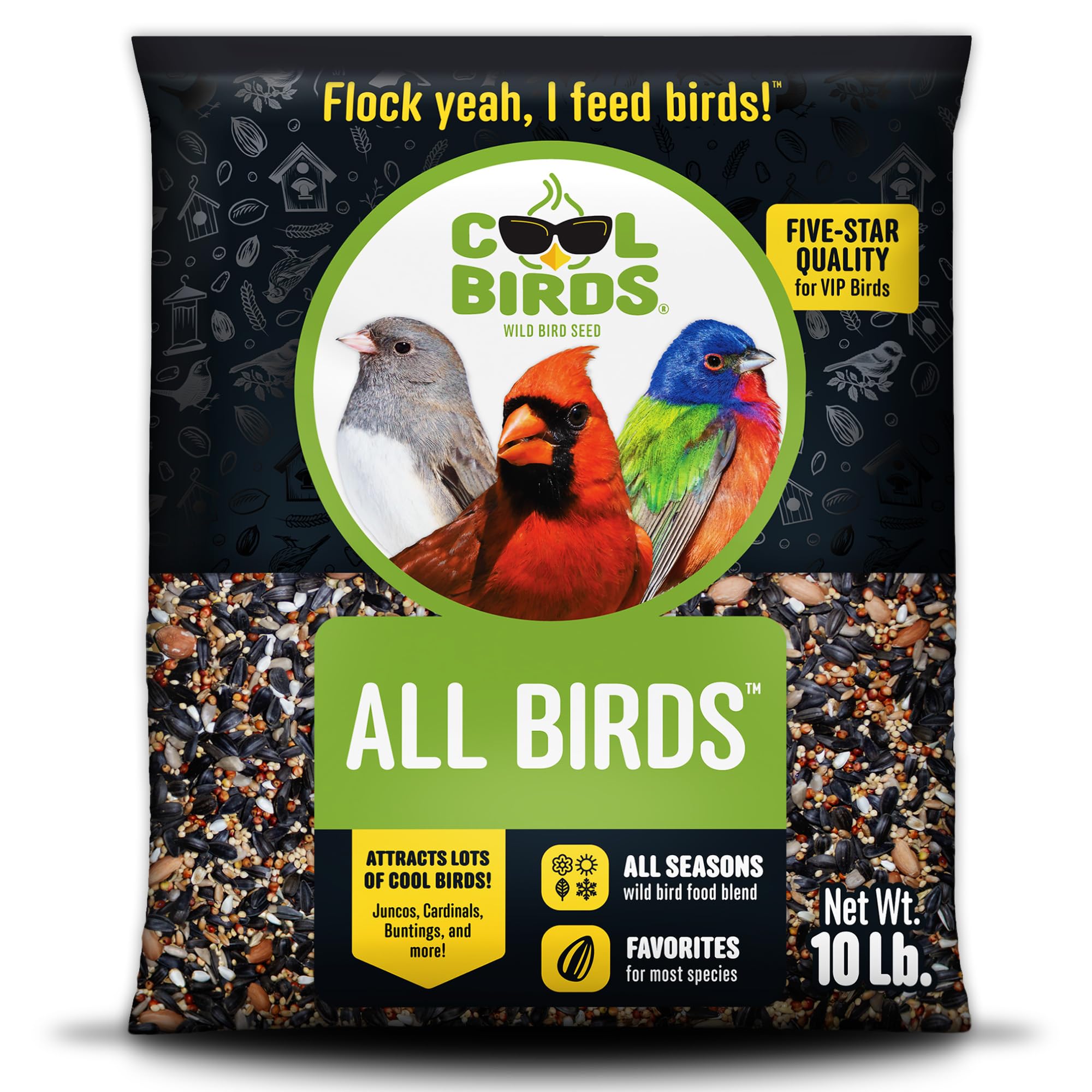
Cool Birds built this 10-pound blend with black oil sunflower, white millet, safflower, peanuts, and sunflower hearts — a combination that draws both perching birds and ground feeders like doves, jays, and sparrows. For winter, the inclusion of sunflower hearts provides instantly available calories, while the peanuts add protein that supports feather regrowth during harsh molts.
Reviewers consistently note the low filler content. The bag smells fresh rather than musty, and the seed-to-husk ratio is respectable for a blend at this volume. It works across tube feeders, hoppers, trays, and platform setups, which makes it a versatile choice if you run multiple feeder types in your yard.
The primary caution is that safflower and millet have lower fat content than pure sunflower, so birds in extreme cold may pick through the blend selectively. A few handfuls of extra black oil seeds mixed in can compensate. Overall, this is the strongest multi-species winter blend in this lineup if variety is your goal.
Why we love it
- Five-ingredient variety attracts the widest species range
- Includes sunflower hearts for instant winter energy
- 10-pound bag offers strong per-pound value
Good to know
- Some birds may pick out only preferred seeds
- White millet fraction lower in fat than sunflower
3. Valley Farms Whole Sunflower Hearts – 4 lb
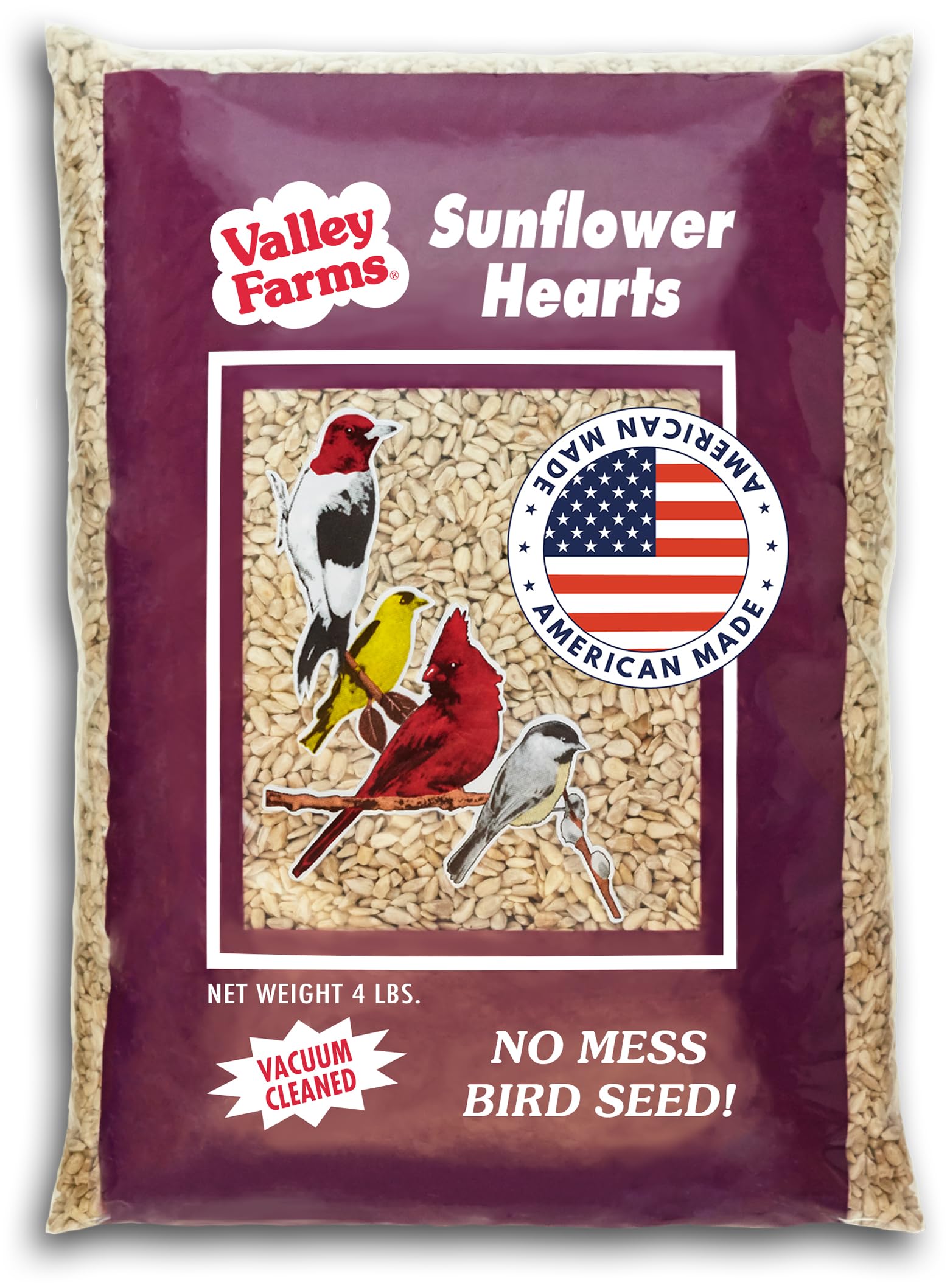
Valley Farms sells whole, shelled sunflower hearts — the kernel only, with no hulls and minimal dust. For winter feeding, this is the closest you can get to a zero-waste bird food. Birds land on the feeder, eat the entire piece, and move on without spending precious metabolic energy cracking shells. The ground below stays clean, which is a major advantage during freeze-thaw cycles that turn hull piles into mold mats.
These hearts are vacuum-cleaned, and the bag quality is noticeably better than cheaper alternatives that arrive with significant broken kernel fragments. Made in the USA, the 4-pound bag is dense — 4 pounds of sunflower hearts has roughly the same caloric load as a much larger bag of whole seeds because there is zero inedible shell weight.
Because shelled seeds spoil faster when exposed to moisture, you should avoid open tray feeders during rain or melting snow. Use a tube feeder with small ports or a covered hopper. A single feeder of these hearts can empty quickly if you have a flock of goldfinches or pine siskins, so consider stocking an extra bag.
Why we love it
- Zero hull waste — nothing to clean under feeders
- Instant calorie consumption with no shelling time
- Vacuum-cleaned for minimal dust and debris
Good to know
- Must be kept dry — spoils faster than whole seeds
- 4-pound bag depletes quickly with heavy traffic
4. Wildlife Sciences Suet Plugs Variety 16 Pack

Suet plugs are an excellent winter supplement for tree-clinging birds — woodpeckers, nuthatches, chickadees, and titmice — that prefer clinging vertically to feeding rather than perching on a seed tray. Wildlife Sciences packs 16 plugs across four wrapped 4-packs, each stick measuring roughly 3.75 inches long and 1 inch in diameter. The ingredient base is rendered beef suet with cracked corn, millet, and pecans.
The variety-pack format lets you rotate flavors without committing to a single 18-count box. The plugs fit standard suet plug feeders, and the beef suet base holds its form well in cold weather — unlike softer suet cakes that can crumble during freezing delivery. Reviewers report that these plugs consistently bring in woodpeckers that ignore seed feeders entirely.
Some users have noted that plug dimensions have varied slightly between batches, with a few plugs running narrower than expected and slipping through feeder holes. If your feeder has standard-sized openings, this is rarely an issue. The fat content is dense enough to support birds through sub-freezing nights.
Why we love it
- Specialized format for woodpeckers and nuthatches
- Variety 4-pack keeps feeding interesting
- Beef suet base provides high-density winter fat
Good to know
- Plug diameter can vary slightly between batches
- Requires a dedicated suet plug feeder
5. Heath Outdoor Products All Season Suet Cakes – 18 Pack

Heath’s All Season Suet comes in an 18-count case formulated with a “no melt” binder that holds its shape up to 122°F — a detail that matters more than you might think because a sunny winter feeder can still heat suet above its softening point on clear, windless days. The Bird’s Blend includes rendered beef suet, cracked corn, millet, and processed grain by-products.
Reviewers consistently report that woodpeckers and wrens demolish these cakes rapidly — several owners note a single cake lasting only two days under heavy bird traffic. The pull-tab packaging makes unwrapping simple even with cold, stiff fingers, and the 18-count case is the strongest per-cake value in this lineup.
A small number of users have reported unusual inclusions like green worms in individual cakes. This appears to be a rare storage issue rather than a formulation problem, but it is worth inspecting each cake before loading the feeder. For winter bulk suet feeding, this case provides the best volume-to-cost ratio for keeping multiple suet feeders stocked.
Why we love it
- No-melt formulation stable up to 122°F
- 18-count bulk case is excellent per-cake value
- Easy-peel packaging for cold-weather handling
Good to know
- Rare reports of quality inconsistencies in individual cakes
- Cakes deplete very fast under heavy bird traffic
FAQ
Can I mix suet and seed in the same feeder?
Why do some winter blends include millet if birds prefer sunflower?
Final Thoughts: The Verdict
For most winter backyards, the wild bird food for winter winner is the Happy Wings Black Oil Sunflower Seeds because pure black oil sunflower delivers the highest fat content per pound with zero filler. If you want to attract the widest variety of species from a single feeder, grab the Cool Birds Classic Blend. And for keeping your feeding zone spotless while providing instant cold-weather energy, nothing beats the Valley Farms Sunflower Hearts.