
Red-eared sliders are notoriously picky eaters, and the wrong pellet can turn their water cloudy, their shells soft, and their appetite off entirely. A diet that balances low protein for shell development, high calcium for beak health, and real meat-based protein for growth is the difference between a sluggish turtle and an active, vibrant one.
I’m Mo Mahin — the founder and writer behind Furric. I’ve spent months comparing ingredient lists, calcium-to-phosphorus ratios, and protein levels across the top aquatic turtle foods, cross-referencing every claim with real owner feedback from hundreds of verified buyers.
Whether you are raising a juvenile that needs steady growth or maintaining an adult with a sensitive digestive system, choosing the right food for red eared slider depends on matching the protein level, form factor, and calcium content to your turtle’s age and personality.
How To Choose The Best Food For Red Eared Slider
Red-eared sliders are omnivores that need a carefully calibrated ratio of animal protein, plant matter, and calcium. The wrong balance can lead to pyramiding on the shell, sluggish behavior, or water fouling that forces extra tank cleanings.
Protein Percentage
Juvenile sliders need around 40–45% protein to support rapid growth, but adults require only 25–30%. Stick with low-protein floating pellets for daily feeding to avoid kidney strain and shell deformities, and use high-protein freeze-dried meat only as a weekly treat.
Calcium-to-Phosphorus Ratio
Aim for a calcium-to-phosphorus ratio of at least 2:1. This supports hard shell growth and prevents metabolic bone disease. Calcium blocks that double as food and beak trimmers are ideal for sliders that chew aggressively.
Form Factor and Float
Red-eared sliders are surface feeders, so floating pellets work best. Sticks and blocks that stay intact longer reduce water clouding. If your slider is a messy eater, larger sticks produce less dust and fine particles than crumbles or granules.
Additives and Fillers
Avoid artificial colors and unlabeled starches. The best foods use whole fish meal, shrimp, or insect protein as the first ingredient. Foods labeled as veterinary diet or raw typically have fewer fillers and higher digestibility.
Quick Comparison
On smaller screens, swipe sideways to see the full table.
| Model | Category | Best For | Key Spec | Amazon |
|---|---|---|---|---|
| Hikari Saki-Turtle Sticks | Stick Pellet | Water clarity & low waste | Low-protein floating stick | Amazon |
| Fluker’s Buffet Blend | Variety Jar | Picky eaters & bonding | Shrimp + mealworms + pellets | Amazon |
| Zoo Med Growth Formula 3-Pack | Low-Pro Pellet | Proper shell development | Low-protein floating pellet | Amazon |
| Zoo Med Block Value Pack | Calcium Block | Beak trimming & enrichment | Pellets in solid calcium base | Amazon |
| BNYEE 3 in 1 Freeze-Dried Meat | Freeze-Dried Raw | High-protein weekly treat | Chicken, duck & fish cubes | Amazon |
In‑Depth Reviews
1. Hikari Saki-Turtle Sticks
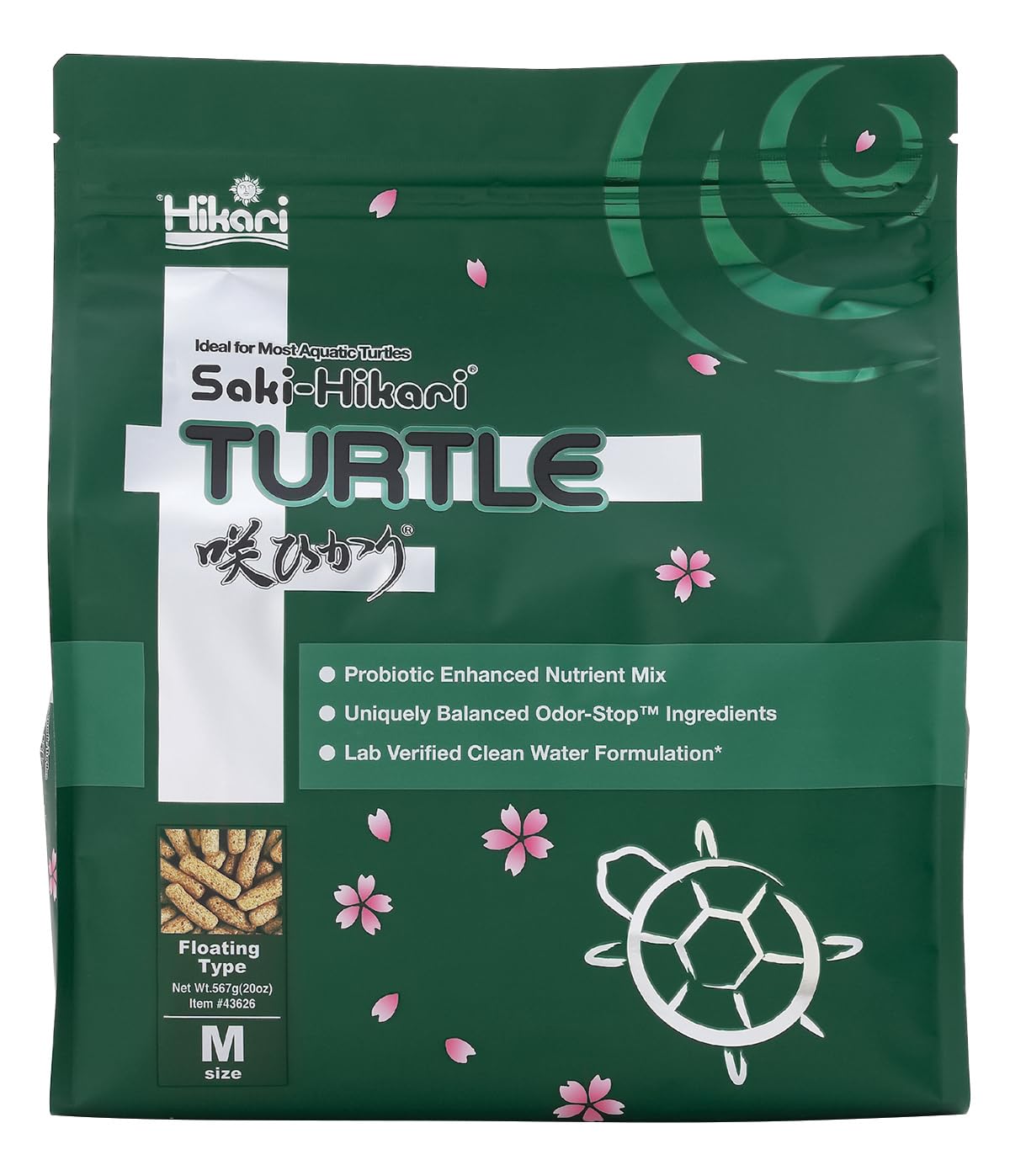
Hikari’s Saki-Turtle Sticks are the single most recommended food by long-term slider owners, and for good reason. The low-protein floating stick formulation produces significantly less waste than standard pellets, with verified buyers reporting a drop from five full tank cleanings per cycle to just two. The inclusion of Hikari Germ—a stabilized probiotic—helps digestion and reduces the ammonia load in the water.
The sticks are firm enough that they don’t dissolve immediately, which means less clouding and uneaten residue. A 19-year-old picky slider that refused other brands switched exclusively to these, and owners of a 52-year-old Florida cooter report the same enthusiasm. The bag is resealable and the sticks hold their shape well even in warmer tank water.
One trade-off: some sliders initially hesitate because the sticks are larger than standard pellets. Breaking them in half for the first week helps transition. The product is manufactured in Japan and consistently arrives with a use-by date well into the future, which is rare for aquatic turtle food.
Why we love it
- Dramatically reduces water clouding and tank cleaning frequency
- Probiotic blend improves digestion and lowers ammonia
- Consistently fresh with long use-by dates
Good to know
- Sticks may need breaking for smaller juveniles
- Higher upfront cost per ounce compared to standard pellets
2. Fluker’s Buffet Blend Aquatic Formula
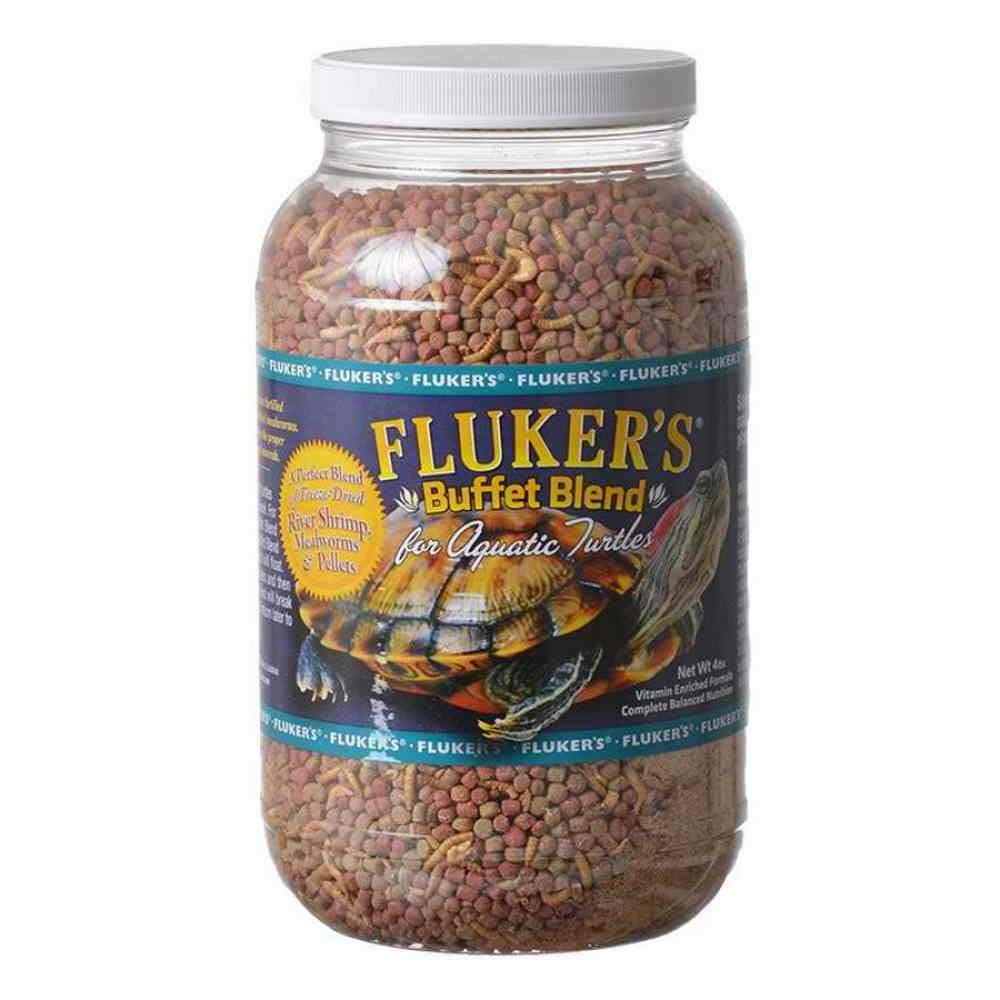
Fluker’s Buffet Blend combines freeze-dried shrimp, freeze-dried mealworms, and vitamin-enriched floating pellets in one 4-pound jar. This is the most efficient way to provide dietary variety without buying three separate containers. Verified owners report that sliders go for the shrimp and mealworms first, then finish the pellets, ensuring they consume the full nutritional profile.
Hand-feeding the larger shrimp pieces creates bonding opportunities, and the floating pellets are textured enough that turtles can grab them easily without creating dust. Owners of four sliders that grew from 1.5 inches to 13–15 inches over 22 months credit this food as their staple.
The main caveat is that the pellets are smaller than stick formulations, so water clouding is slightly higher if you overfeed. Start with a pinch and observe how much your slider consumes in 15 minutes. The jar is bulky but packs enough food for multiple turtles or several months of single-turtle feeding.
Why we love it
- Three protein sources in one jar for balanced nutrition
- Screw-top lid keeps everything fresh for weeks
- Shrimp pieces enable hand-feeding and bonding
Good to know
- Smaller pellets may cloud water if overfed
- Some turtles pick out shrimp and leave pellet remains
3. Zoo Med Natural Aquatic Turtle Food Growth Formula 3-Pack

Zoo Med’s Growth Formula is a low-protein floating pellet specifically formulated to prevent pyramiding and support healthy organ development in red-eared sliders. Three 7.5-ounce bottles are bundled together, giving you the equivalent of buying two and getting one free. The lower protein level is ideal for adults that no longer need the high-protein growth diet of juveniles.
Veterinarians frequently recommend this brand, and one owner keeping their daughter’s 27-year-old slider switched to Zoo Med after vet advice and never looked back. The pellets float well and are small enough for juvenile sliders to eat without choking. The resealable bottles keep the kibble fresh and make it easy to portion out a single feeding without exposing the entire stock to humidity.
The trade-off: this formula is purely plant-based and low-protein, so it should be supplemented with occasional freeze-dried meat or insects to mimic the slider’s natural omnivorous diet. Owner reviews note that turtles eat it readily but don’t show the same excitement as they do for shrimp or whole-fish-based foods. Use this as the reliable daily staple and add variety through treats.
Why we love it
- Low-protein formula supports proper shell formation
- Three-bottle bundle offers great long-term value
- Vet-recommended formulation from a trusted brand
Good to know
- Must be supplemented with animal protein for balanced diet
- Less appealing to picky sliders compared to meat-based foods
4. Zoo Med Block Value Pack Set of 2

Zoo Med’s Banquet Blocks embed natural aquatic turtle food pellets inside a solid calcium base. The turtle must chew through the calcium to reach the pellets, which naturally wears down the beak and provides a steady calcium supply for shell health. This is one of the only products that combines enrichment, nutrition, and dental care in a single serving.
Owner reports confirm that red-eared sliders actively chase and hunt these blocks, turning feeding time into interactive play. One 14-year-old slider obsessively consumed a block in one to two days, compared to a week when given smaller blocks. The set includes two blocks, and each block lasts several days depending on turtle size and activity level. The blocks are made in the USA.
The blocks are not a complete diet—they function best as a supplement or a vacation feeding option. Owners who used them as the sole food during a week-long trip report that turtles nibbled but preferred regular pellets. For daily feeding, use these as a calcium treat one to two times per week, and rely on a low-protein floating pellet for the staple.
Why we love it
- Dual-function food and calcium block trims beaks naturally
- Provides enrichment through active chewing and hunting behavior
- Excellent option for weekend or vacation feeding
Good to know
- Not a complete daily diet — use as supplement
- Some sliders ignore blocks if they prefer soft pellets
5. BNYEE 3 in 1 Freeze-Dried Turtle Meat Food

BNYEE’s 3 in 1 Meat Food uses freeze-dried raw cubes of chicken, duck, and fish to deliver human-grade protein with no added preservatives. The freeze-drying process locks in the natural aroma and texture, which drives sliders into an active feeding frenzy. Owners consistently report that turtles that ignore standard pellets come rushing to the glass as soon as the bag opens.
The cubes are extremely hard in their dry state and must be soaked in water for about five minutes before feeding. Once rehydrated, they regain a fleshy texture that mimics fresh meat. The high-protein content (no specific percentage on the label, but whole meat is naturally around 60–70% protein on a dry basis) makes this ideal as a weekly treat rather than a daily staple, especially for adult sliders that require lower protein levels.
The bag is small at 3 ounces, and two turtles can finish it in a week. Owners note the strong scent attracts turtles quickly, and the cubes are easy to hand-feed individually. The packaging doesn’t always match the product photos, but the quality of the meat itself is consistently praised. For sliders recovering from illness or breeding females needing extra protein, this is the best targeted supplement available.
Why we love it
- 100% pure freeze-dried raw meat with no preservatives
- Soften in water to restore natural texture
- Irresistible to even the pickiest sliders
Good to know
- Must be presoaked for safe feeding
- Small bag size leads to quick consumption for multiple turtles
FAQ
How often should I feed my red-eared slider pellets?
Can I feed my red-eared slider only freeze-dried meat?
Why does my red-eared slider refuse to eat pellets?
What protein percentage is best for an adult red-eared slider?
Final Thoughts: The Verdict
For most gardeners, the food for red eared slider winner is the Hikari Saki-Turtle Sticks because it combines low-waste stick formulation, probiotic digestion support, and dramatically improved water clarity. If you want built-in dietary variety, grab the Fluker’s Buffet Blend. And for a budget-friendly calcium block that trims beaks naturally, nothing beats the Zoo Med Block Value Pack.