
Choosing the wrong substrate for a saltwater aquarium can stall the nitrogen cycle for weeks, trap detritus that fuels nuisance algae, or leave your tank looking like a construction site instead of a slice of ocean. The grain size, mineral composition, and bacterial load of your sand bed directly dictate water clarity, pH stability, and how quickly you can safely introduce fish and corals.
I’m Mo Mahin — the founder and writer behind Furric. I’ve spent years analyzing marine substrate chemistry, comparing grain-size distributions, and tracking long-term owner feedback on how different aragonite sands affect alkalinity and biological filtration in reef systems.
This guide walks through the seven most popular substrates and explains exactly how each one performs in a real reef tank. Whether you’re cycling a new nano or upgrading a mature display, selecting the right live sand for reef tank setup is the most important filtration decision you will make this year.
How To Choose The Best Live Sand For Reef Tank
Every reef tank runs on biological filtration, and the sand bed is the engine room. But not all bagged substrates share the same chemistry or particle geometry. Four factors separate a successful substrate from one that creates chronic problems.
Grain Size: Special Grade vs. Fine vs. Sugar-Sized
The most important spec on any reef sand label is grain diameter. Special-grade sand (roughly 1–2.5 mm) strikes the best balance: it stays on the bottom under moderate flow, lets pods and bristle worms burrow, and doesn’t clog filter socks. Fine sand (0.5–1 mm) looks more natural but can blow into sandstorms if your return pump is strong. Sugar-sized sand (sub-0.5 mm) compacts easily and traps detritus, requiring frequent vacuuming. For most mixed reefs with soft and stony corals, special grade is the safe default.
Aragonite vs. Silica: Chemistry Matters
Aragonite is calcium carbonate in a crystal form that slowly dissolves in saltwater, releasing calcium and alkalinity. That natural buffering keeps pH in the 8.1–8.4 range and helps stony corals build skeletons. Silica-based play sand or pool filter sand is cheap but inert — it provides no buffer, so you will need to dose more alkalinity supplements to compensate. Every product in this list uses aragonite, which is the right choice for marine systems.
Live vs. Dry Sand: The Bacterial Trade-Off
“Live” sand is bagged wet and contains live nitrifying bacteria (Nitrosomonas and Nitrobacter) that colonize the bed immediately, cutting the cycle down to a week or less. Dry aragonite sand requires you to seed it with live rock or bottled bacteria, which takes longer but avoids the risk of bringing in unwanted hitchhikers like dinoflagellates or bristle worms that sometimes survive in wet-bagged sand. For a new tank, live sand speeds things up; for a mature system where you are replacing a toxic bed, dry sand is safer.
Bag Weight and Bed Depth
A general rule is 1–1.5 pounds of sand per gallon of water to achieve a 1–2 inch bed. Shallow beds under 1 inch don’t support denitrifying bacteria populations (they need a low-oxygen zone below the surface). Beds over 3 inches can develop hydrogen sulfide pockets if not maintained by sand-sifting animals. Check how many pounds are in each bag and calculate total weight needed for your display tank volume — buying multiple smaller bags is often cheaper than one oversized bag.
Quick Comparison
On smaller screens, swipe sideways to see the full table.
| Model | Category | Best For | Key Spec | Amazon |
|---|---|---|---|---|
| CaribSea Arag-Alive Bimini Pink | Premium Live | Mixed reef with burrowing gobies | 1.0–3.0 mm special grade | Amazon |
| Carib Sea Aragonite Reef Sand 40 lb | Premium Dry | Large tanks needing bulk substrate | 1.0–2.0 mm medium grain | Amazon |
| Carib Sea Arag-Alive Special Grade Reef Sand | Live Bacteria | Fast cycling a new tank | 1.0–2.0 mm special grade | Amazon |
| CLASSIC SAND & PLAY Natural Aquarium Sand | Pre-Washed Dry | No-cloudiness freshwater or marine | 0.5–1.0 mm fine white | Amazon |
| Aqua Natural Sugar White Sand | Ultra-Clean Dry | Bright white aquascapes | 0.5–1.0 mm sugar size | Amazon |
| imagitarium Black Aquarium Sand | Colored Dry | Black substrate contrast | 0.5–1.0 mm fine grain | Amazon |
| FANTIAN Aquarium Sand 20 lb | Decorative Dry | Budget-friendly mixed color | 0.6–1.2 mm natural mixed | Amazon |
In‑Depth Reviews
1. CaribSea Arag-Alive Bimini Pink Special Grade Reef Sand – 20 lbs
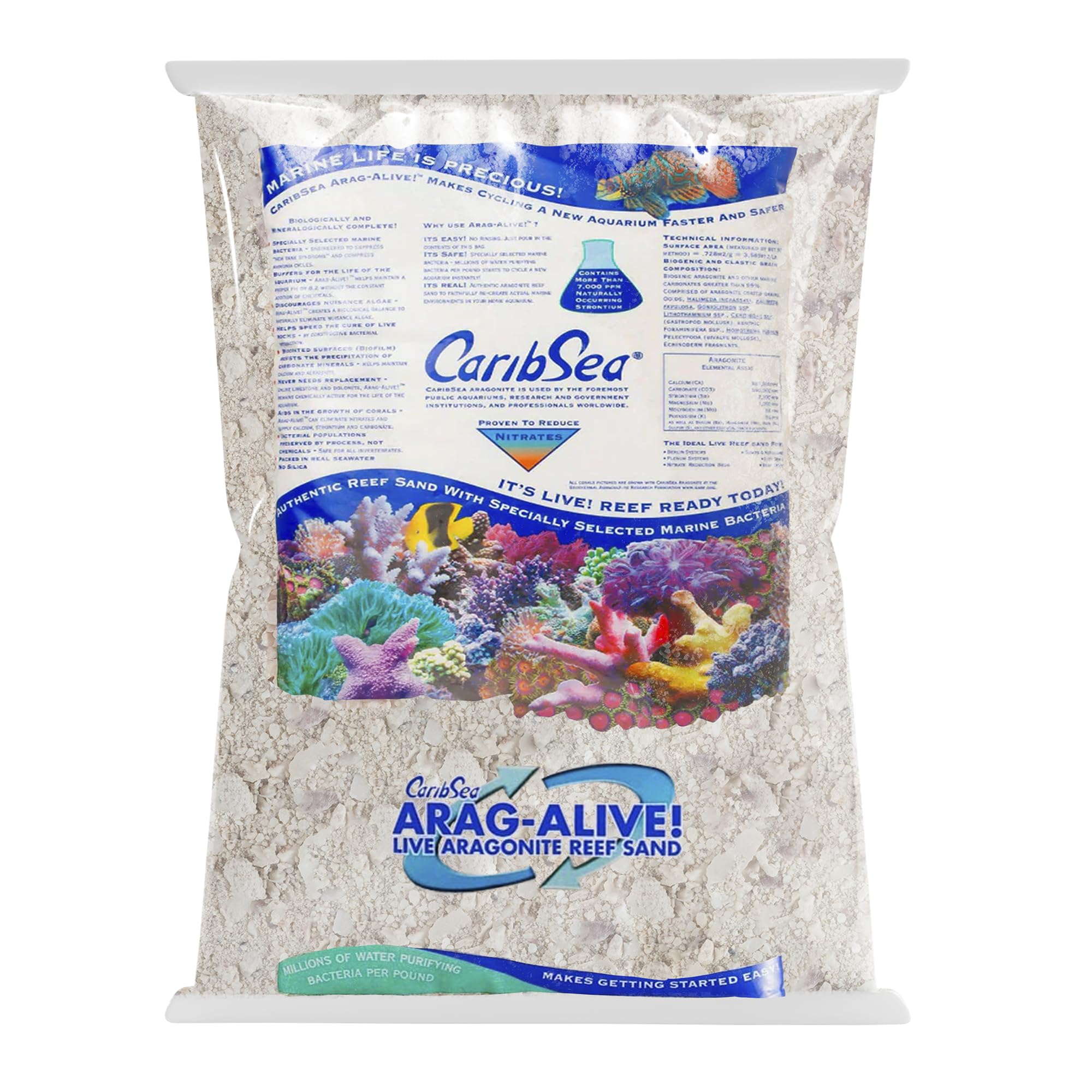
CaribSea’s Bimini Pink is the most visually distinctive reef substrate on the market — the pink hue comes from crushed coral skeletons and is completely natural, not dyed. The special-grade particle size (ranging from about 1 mm up to 3 mm) is heavy enough to resist blowing around even in high-flow SPS tanks, yet loose enough that a diamond goby can shift it without getting stuck. Multiple owner reports confirm the sand includes a water conditioner pouch and that the aragonite chemistry buffers pH without any weird spikes during the first month.
Biological performance is outstanding: the live bacteria colonize the bag during storage, so the sand carries an active nitrifying population that can cut a new tank’s cycle from weeks to days. The bag contains some larger shell fragments that some owners choose to pick out, but those same fragments provide extra surface area for biofilm growth. The pink tint fades slightly under intense LED lighting but remains noticeably warmer than white aragonite sand, giving the tank a Caribbean reef feel.
This is the best choice for aquarists who want a substrate that functions as both a biological filter and a design feature. The denser grain means less detritus burial than fine sand, and the buffering capacity supports stable calcium and alkalinity levels without heavy dosing. For a mixed reef with gobies, wrasses, or a sand-sifting starfish, this is the most forgiving live sand available.
Why we love it
- Natural pink color adds warmth without dye
- Heavy special-grade grain stays put under strong flow
- Live bacteria jump-start the nitrogen cycle quickly
Good to know
- Some large shell fragments may need manual removal
- Pink hue can appear less vivid under very bright LED arrays
2. Carib Sea Arag-Alive Substrate Special Grade Reef Sand, 10 lb

This is the standard that every other reef sand is measured against. The Arag-Alive line from CaribSea bags aragonite sand with a proprietary blend of live nitrifying and denitrifying bacteria — when you pour this into a new tank, you add millions of already-established microbes that begin processing ammonia and nitrite within hours. The special grade (1–2 mm) is wide enough to avoid compaction but fine enough to look natural in a nano or a 75-gallon display.
Customer feedback consistently highlights two benefits: the sand cuts cycle time dramatically compared to dry aragonite, and the wheat color (a warm off-white) shows off coral colors without the sterile look of pure white sand. The 10-pound bag is a reasonable size for tanks up to 15 gallons at a 1-inch depth, though a 75-gallon tank will need about five bags. Owners report that the sand settles within 24 hours if rinsed gently, and that alkalinity readings stabilize around 8–9 dKH without intervention.
For reef keepers who want a proven, repeatable substrate that works every time, this is the safest buy. It is neither the cheapest nor the most exotic, but the combination of live bacteria, stable aragonite chemistry, and the proven grain size makes it the most likely to deliver a successful cycle without surprises.
Why we love it
- Live bacteria significantly reduce cycling time
- Special grade resists compaction and detritus buildup
- Natural wheat color complements coral and rockwork
Good to know
- 10 lb bag covers only smaller tanks
- Must be kept wet before use to preserve bacterial life
3. Carib Sea ACS00050 Aragonite Reef Sand, 40-Pound

When you are filling a 90-gallon or larger display, buying individual 10-pound bags becomes expensive fast. This 40-pound bag of CaribSea’s dry aragonite sand gives you the same mineral composition as the live versions but without the bacterial culture — you supply the bacteria yourself via live rock or bottled products. The medium grain size feels coarser than sugar sand, more like finely crushed shell, which means it stays put under moderate flow and does not get sucked into filter intakes.
Owners report that the sand requires thorough rinsing (some used over 100 gallons of water before the cloudiness settled), but after 48–72 hours the water clears to crystal. The natural wheat color with occasional pink and blue flecks gives the sand bed visual texture. The bag is sturdy enough to survive shipping without splitting, and the 40-pound weight provides enough depth for a 55–75 gallon tank with about 2 inches of coverage. Several African cichlid keepers also use this sand because it buffers pH to about 8.2 in hard water.
This is the right choice if you already have a seeded live rock system and do not want to pay extra for live bacteria in the bag. The dry format also eliminates the risk of importing unwanted hitchhikers that sometimes accompany wet-bagged live sand. For large tanks, the per-pound cost is significantly lower than any live product.
Why we love it
- Best cost-per-pound for large tanks
- Medium grain prevents filter clogging
- Stable aragonite chemistry buffers pH and alkalinity
Good to know
- Requires heavy rinsing to avoid cloudiness
- No live bacteria — must be seeded separately
4. CLASSIC SAND & PLAY Natural Aquarium Sand, 20 lb
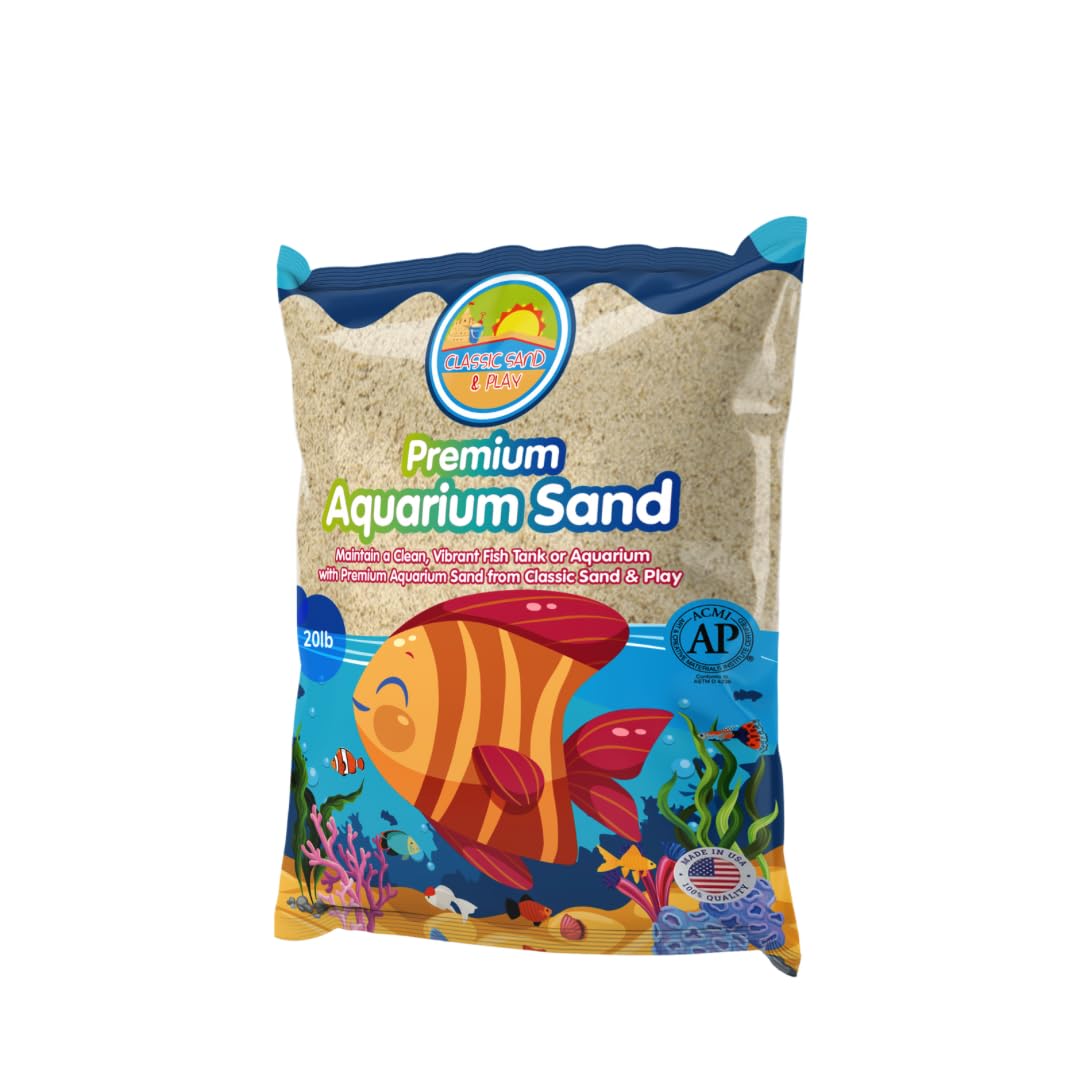
Cloudy water on day one is the single biggest frustration with new substrate, and CLASSIC SAND & PLAY addresses that directly by triple-washing and kiln-drying the sand before bagging. Multiple user reports confirm that you can pour this sand straight from the bag into a filled tank with almost no cloudiness — a near-impossible claim for most fine sands. The 0.5–1.0 mm grain size is finer than special-grade aragonite, giving a smooth, beach-like appearance that works well for freshwater and marine tanks alike.
The natural color is an off-white, not a sterile bright white. Reviewers specifically note that it looks “natural” and not artificial, and that the sand stays put once settled. There are no large shell fragments or sharp particles, making it safe for bottom-dwellers like corydoras or gobies that constantly sift through the substrate. The 20-pound bag covers approximately 20 gallons to a depth of about 1.5 inches, which is adequate for a nano reef or a planted freshwater tank.
This product is ideal for aquarists who prioritize immediate water clarity and do not want to spend hours rinsing. It lacks the live bacteria and pH-buffering capacity of aragonite-based reef sand, so it works best in tanks that already have a mature biological filter and stable water chemistry. For a low-biocapacity nano or a dedicated seahorse tank, the cleanliness is worth the trade-off.
Why we love it
- Virtually no cloudiness — minimal rinsing needed
- Soft, natural off-white color suits any aquascape
- Smooth grains safe for bottom-dwelling fish
Good to know
- No live bacteria or aragonite buffering
- Fine grain may blow around under high flow
5. Aqua Natural Sugar White Sand 20 lb

Aqua Natural’s Sugar White Sand is the cleanest dry sand I have seen in terms of dust and fines. The manufacturer kiln-dries and triple-washes the sand in New Zealand, and user reports consistently confirm that only two or three rinses are needed before the water runs perfectly clear. The 0.5–1.0 mm grain is denser than typical sugar sand, so it does not get sucked into filter intakes or blow around the tank as much as similarly fine competitors.
The color is described as “off-white with a slight yellow tone” in the dry bag, but under aquarium lighting it appears very bright — several owners mention it is the whitest natural sand they have found without being bleached. The small grain size is excellent for plenum-style deep sand beds that require tightly packed particles to create low-oxygen zones for denitrification. The 20-pound bag is enough for a 15–20 gallon tank at a 1.5-inch depth, or can be mixed with darker substrates to create a gradient effect.
This substrate is a strong option for reef keepers who want a bright, clean-looking white sand without the premium price of live aragonite brands. It does not buffer pH, so it pairs best with a mature biological filter and regular alkalinity dosing. For planted tanks or marine systems where aesthetics matter more than built-in buffering, the cleanout performance is best in class.
Why we love it
- Exceptionally clean — very minimal rinsing needed
- Bright white appearance under aquarium lighting
- Dense grains resist filter suction better than most fine sands
Good to know
- No pH-buffering capacity — inert silica-based sand
- Fine grain may still shift in tanks with very high flow rates
6. imagitarium Black Aquarium Sand 20 lbs
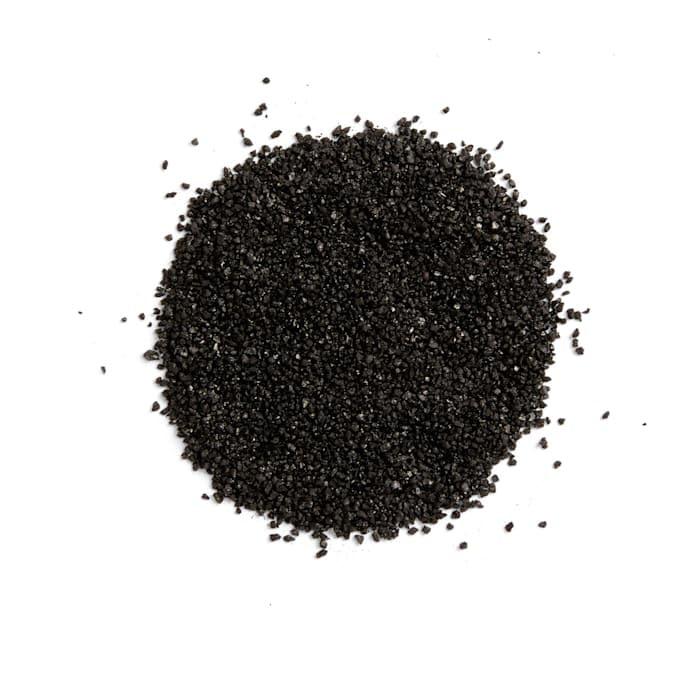
Black sand has become a popular choice for reef tanks that want to make coral colors pop — the dark background creates contrast that white sand cannot provide. Imagitarium’s 20-pound bag delivers a matte black finish that looks natural, not shiny or plastic-like. The fine grain (0.5–1.0 mm) is lightweight, which means it improves the look of the tank but requires careful placement near filter intakes and powerheads to avoid being pulled into the filtration system.
Owner reviews are divided on cleanliness: some report the sand is ready to use after a 10-minute rinse, while others experienced persistent cloudiness that required multiple water changes over a week to fully clear. The variation suggests batch inconsistency — some bags contain more dust than others. Once settled, the black color makes driftwood and green plants stand out vividly, and the sand does not appear to leach any dyes or discoloration into the water column.
This substrate is best for aquarists who value aesthetics over biological performance. It is an inert product with no buffering capacity, so it belongs in tanks with established water chemistry. The lightweight grains can be annoying to vacuum because they get sucked into siphons easily. For a saltwater biotope or a high-contrast planted display, the visual payoff is worth the extra maintenance.
Why we love it
- Matte black finish creates stunning color contrast
- No dye leaching reported after settling
- Affordable for large aquascapes
Good to know
- Cleanliness varies between bags; some require heavy rinsing
- Fine lightweight grains clog filter socks and siphons
7. FANTIAN 20 lbs Aquarium Sand, 0.6-1.2 mm
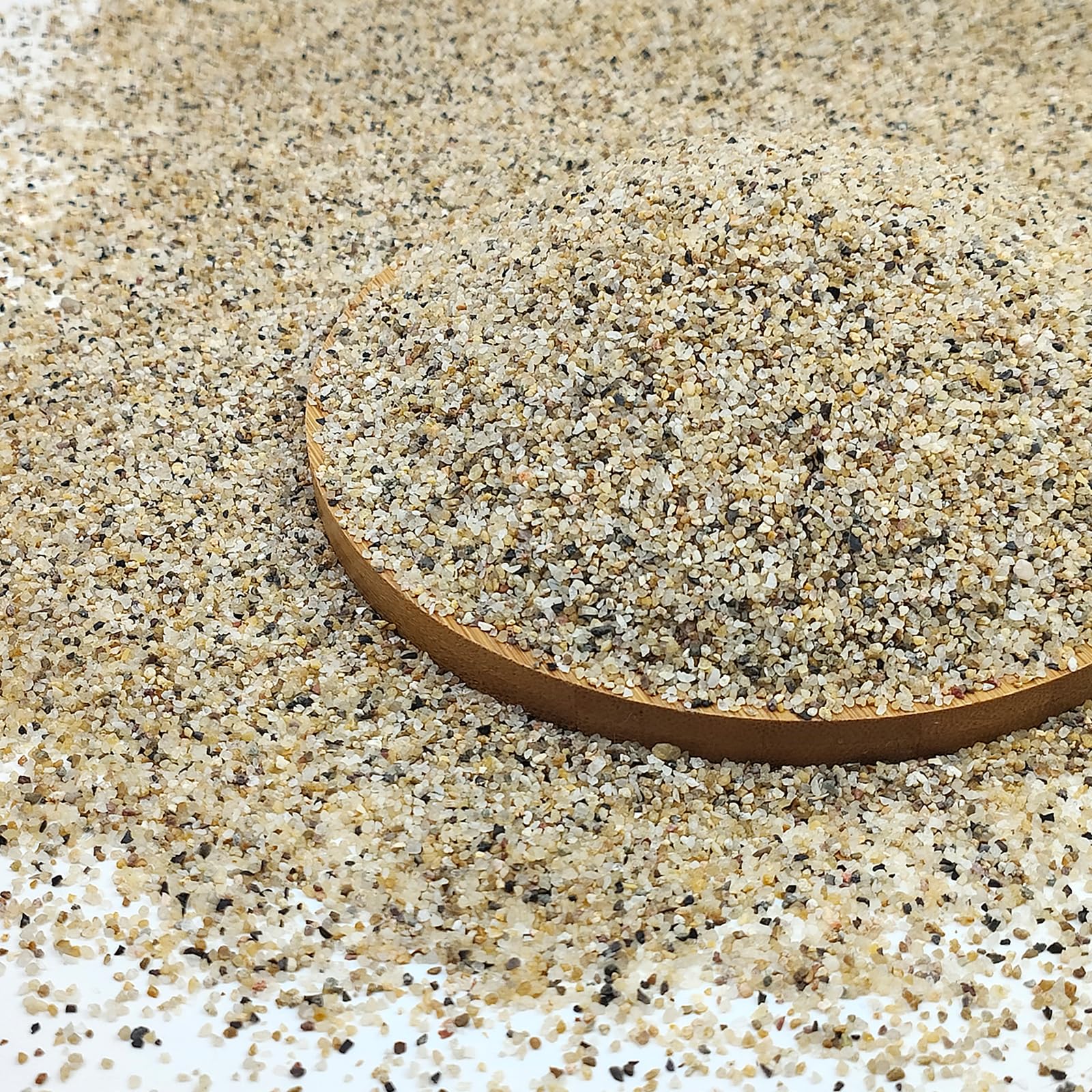
FANTIAN’s 20-pound bag is the most affordable option in this roundup, and it fills a specific niche: decorative aquascaping for hobbyists who want colored sand without spending heavily. The grain size (0.6–1.2 mm) is slightly coarser than the imagitarium and Aqua Natural options, which helps it stay in place under moderate flow. The sand is available in several color options including mixed tones, and the natural variation in particle color gives the bed a textured look that plain white or black cannot achieve.
User reports confirm that the sand requires rinsing to remove initial dust, but the cloudiness clears within a few days with water changes. Some owners noted that the “white” variety appears slightly brownish or dull under certain lighting, which is a risk with uncolored natural sand that has not been sorted for purity. The sand is safe for fish and invertebrates, and several reviewers used it successfully for betta tanks and reptile enclosures without any issues.
This product works for entry-level reef keepers or for those setting up a quarantine tank where substrate cost is a primary concern. It lacks aragonite buffering and live bacteria, so it requires a separate cycling strategy. For the price per pound, it is a competent inert substrate that will not harm the tank, but it does not offer any of the biological or chemical advantages of the higher-tier options on this list.
Why we love it
- Lowest cost per pound for large volumes
- Coarser grain resists drifting better than super-fine sand
- Safe for fish, invertebrates, and reptiles
Good to know
- Color may appear dull or brownish in some lighting
- No biological or pH-buffering benefits
FAQ
How many pounds of live sand do I need for my tank?
Can I mix live sand with dry aragonite sand?
Final Thoughts: The Verdict
For most gardeners, the live sand for reef tank winner is the Carib Sea Arag-Alive Special Grade because it delivers live bacteria, stable aragonite chemistry, and a proven grain size that fits virtually any mixed reef. If you want a visually unique substrate that resists blowing around, grab the CaribSea Arag-Alive Bimini Pink. And for a massive tank on a budget, nothing beats the Carib Sea Aragonite Reef Sand 40-Pound for sheer volume-to-value ratio.