
Selecting a cat outdoor house for a feral colony or a barn cat means choosing a shelter that withstands rain, snow, and wind while also feeling secure enough for a timid animal to actually enter. The wrong choice leaves you with an expensive plastic box that sits empty while the cat shivers under a porch. The right one becomes a daily refuge your cat uses through every season.
I’m Mo Mahin — the founder and writer behind Furric. I’ve analyzed hundreds of product specifications, studied thermal performance data, and compared waterproofing construction details across dozens of outdoor cat shelters to separate the truly durable designs from the ones that will leak or fall apart within a season.
Whether you are caring for a barn cat or protecting a neighborhood stray, this guide breaks down the most reliable options for a cat outdoor house that balances insulation, weatherproofing, and ease of maintenance.
How To Choose The Best Cat Outdoor House
A good outdoor cat shelter is not just a box with a door hole. The most critical factors are insulation quality, waterproofing, escape routes, and floor elevation. Focus on these four specs and you will avoid the common mistakes that leave shelters unused or unsafe.
Insulation layers and thermal liner material
Look for houses with at least two insulating layers. Solid wood plus a removable sponge or fabric liner provides far more warmth than a single-wall plastic shell. The thickness of the liner, usually measured in inches, directly correlates to how much body heat the cat can retain on subzero nights. Cheap houses rely on the cat’s fur alone, which is rarely enough.
Escape door design and placement
A single entrance can trap a cat if a predator blocks the opening. The best shelters include a secondary escape exit, preferably on an opposite wall or with a one-way flap. This feature dramatically increases a feral cat’s sense of security and makes your investment far more likely to be used.
Waterproofing and elevated base
Moisture is the number one enemy of outdoor cat shelters. A raised floor with rubber feet or legs prevents ground water from seeping in. The roof should be sloped or pitched, and the material must be genuinely waterproof — asphalt shingles or PVC-coated fabric outperform flat wooden tops in heavy rain. Check for sealed seams and overlapping awnings over the entrance.
Quick Comparison
On smaller screens, swipe sideways to see the full table.
| Model | Category | Best For | Key Spec | Amazon |
|---|---|---|---|---|
| Rockever Outdoor Cat House | Premium | Multi-cat colonies, year-round use | 25.4″ L x 20.5″ W interior, asphalt shingle roof | Amazon |
| GUTINNEEN Insulated Cat House | Premium | Winter insulation, multiple cats | 0.78″ thick removable sponge liner, 2 escape doors | Amazon |
| AIVITUVIN Insulated Cat House | Mid-Range | Wooden shelter with removable liner | Fir wood construction, 3 ventilation holes | Amazon |
| FunXplore Wooden Cat Shelter | Mid-Range | Budget-friendly wooden house | Solid wood with asphalt roof, 2 exits | Amazon |
| Generic HDPE Cat House | Mid-Range | Tool-free assembly, lightweight | HDPE dual-layer shell, 16″ H | Amazon |
| SIWA MARY Heated Cat House | Value | Budget heated shelter, easy setup | 5-layer insulation, integrated heating pad | Amazon |
| Clawsable Heated Cat House | Compact | Weather-resistant fabric, portable | 13″ x 17″ x 18.5″, UL-tested heating wire | Amazon |
In‑Depth Reviews
1. Rockever Outdoor Cat House
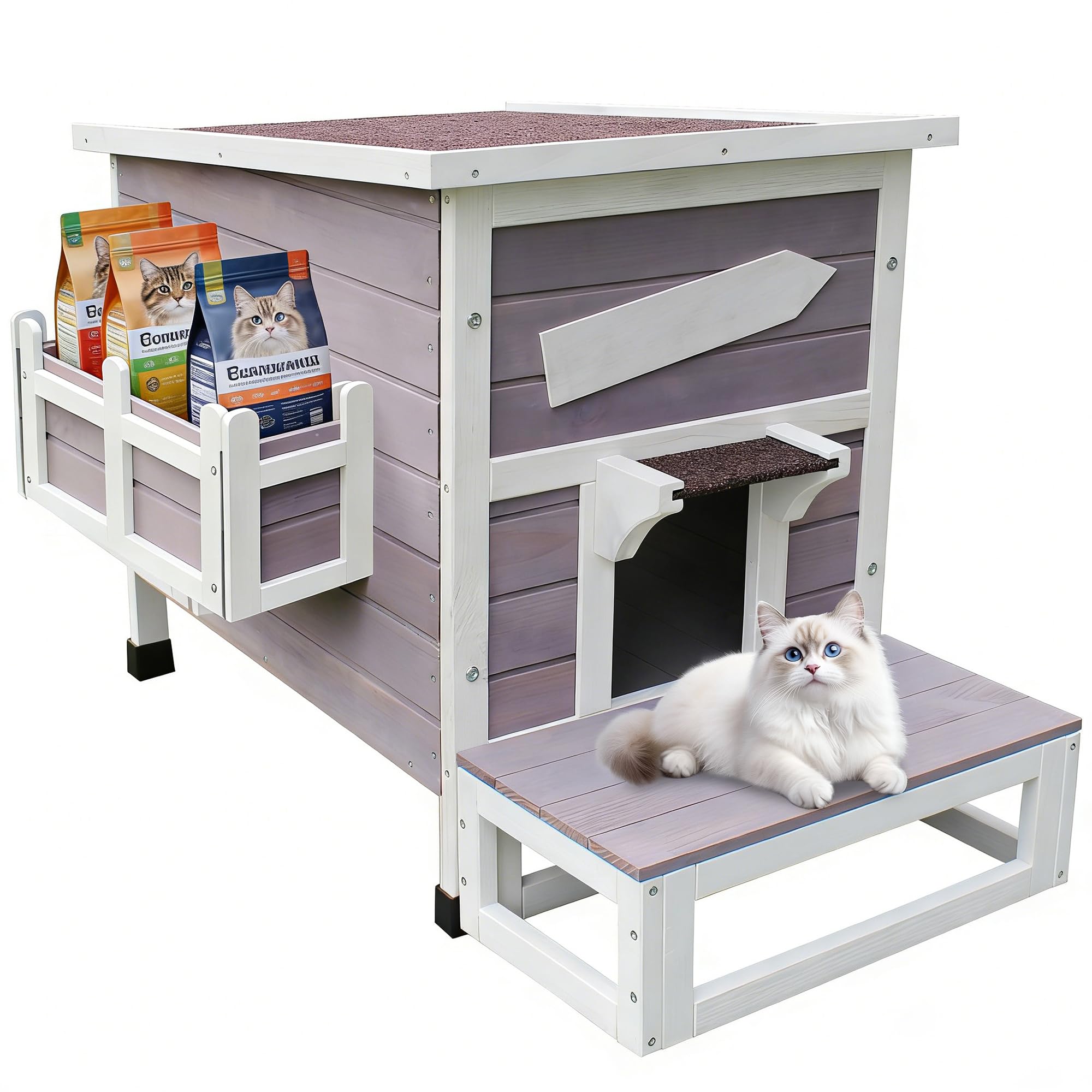
The Rockever stands out because of its genuine asphalt shingle roof, which sheds water far more effectively than flat wooden tops. The interior dimensions of 25.4″ by 20.5″ give multiple cats room to huddle, and the included balcony and side storage shelf add utility without compromising the shelter’s primary job. The three-hole cable port on the right side is a clever feature that allows you to run a heating pad cord while maintaining ventilation during summer.
Dual exits with a main door and a dedicated emergency escape door address the single biggest concern for feral cats — feeling trapped. The rear exit uses a transparent acrylic flap that lets in light while blocking wind, and the front PVC curtain adds another layer of weather protection. The entire roof hinges open and the bottom floor lifts out, making deep cleaning a five-minute job rather than a chore.
Assembly requires a Phillips screwdriver and roughly an hour, but the pre-drilled holes and precision-fit panels mean no frustrating misalignments. Several users report housing four cats comfortably in this unit, and the wood construction with weatherproof paint has held up for well over a year in wet climates. The only real compromise is the thin included mat, which most owners replace with a self-warming or heated pad.
Why we love it
- Asphalt shingle roof offers superior waterproofing
- Dual exits with emergency escape door improve cat security
- Hinged roof and removable floor simplify deep cleaning
Good to know
- Assembly can take over an hour for first-time builders
- Thin included mat should be upgraded for winter use
2. GUTINNEEN Insulated Cat House

This is the shelter you buy when your priority is keeping cats warm through a hard freeze. The three-layer insulation system uses solid fir wood, a plywood backing, and a removable 0.78-inch thick sponge liner that is covered in a machine-washable fabric. That liner makes a measurable difference — the interior stays noticeably warmer than single-wall wooden houses, and the fact that you can wash it means hygiene does not degrade over time.
Three escape doors give maximum flexibility and safety, which is especially important for a colony setting where multiple cats might need to exit quickly. The elevated base lifts the structure off damp ground, and the design allows you to place two units together to create a larger shared space if needed. Customers report straightforward assembly with a drill in about 30 minutes, and the weatherproof shingle roof holds up well in rain and snow.
The wooden legs are the main area where reviewers note caution — in very wet climates, some owners built a small deck or added rubber feet to prevent rot over multiple seasons. The removable liner seals out drafts effectively, and the size comfortably fits 2-3 adult cats. One user tested it in subzero temperatures and confirmed the interior stayed well above freezing with the liner in place.
Why we love it
- Thick 0.78″ removable sponge liner provides real insulation
- Three escape doors offer maximum safety for multi-cat use
- Easy 30-minute assembly with basic tools
Good to know
- Wooden legs may need weatherproofing in wet climates
- Some users report a strong chemical smell at first
3. AIVITUVIN Insulated Cat House
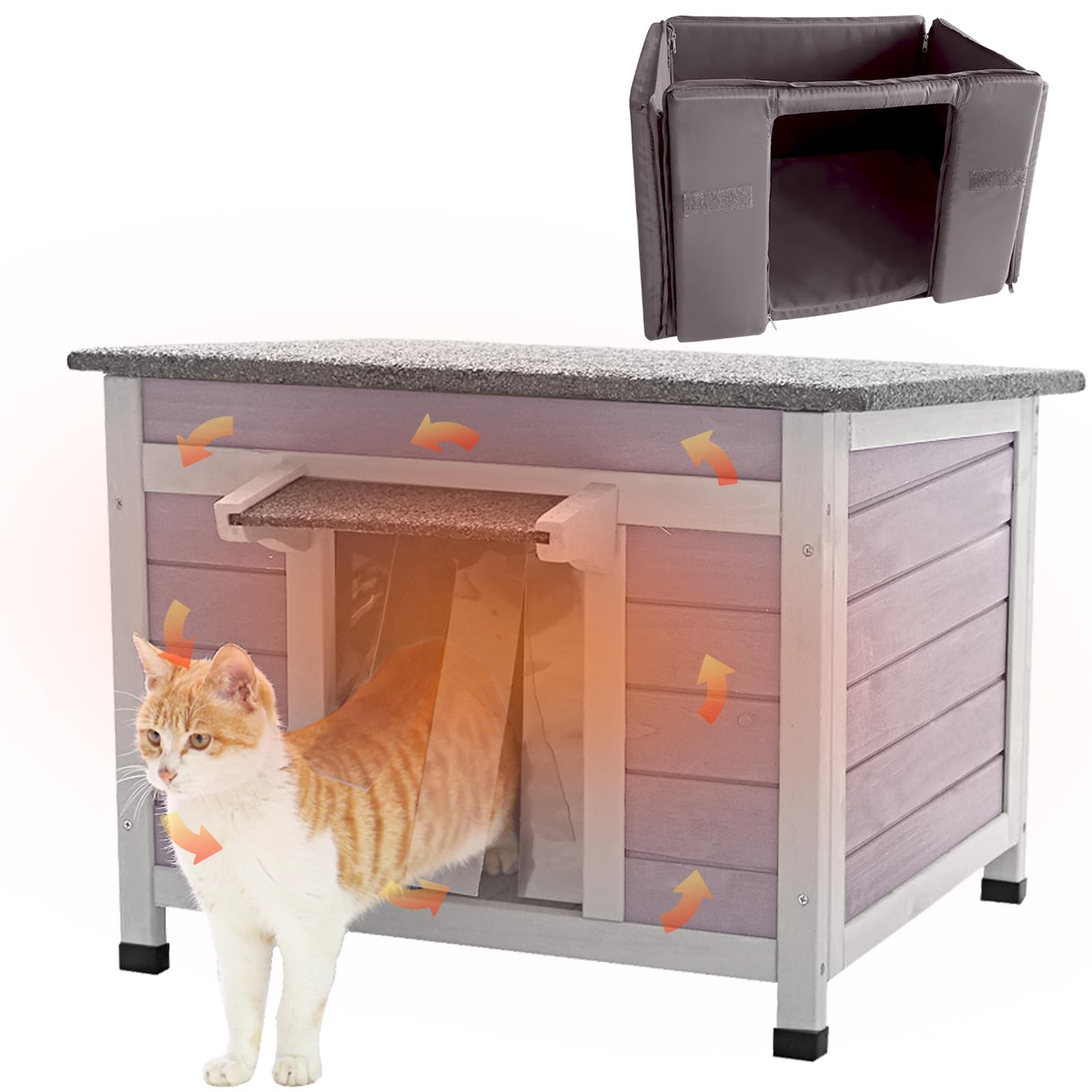
This mid-range wooden house from AIVITUVIN uses 100% fir wood with a waterproof paint coating and a large asphalt roof that overhangs the entrance to keep rain out. The internal dimensions of 23.6″ by 20.9″ provide enough space for one or two cats, and the included removable thermal liner made from high-density sponge with a PVC coating adds an extra layer of warmth that plain wooden houses lack.
The design includes a movable floor and a large opening front door plus a roof that lifts up, which makes cleaning the interior straightforward. Three ventilation holes allow airflow without creating a draft, preventing condensation buildup on cold nights. Multiple customers note that the PVC door flaps trap body heat effectively, with one feral cat transforming from completely wild to affectionate within weeks of moving in.
The main downside reported across reviews is the poor instruction manual, which uses incomplete illustrations and can make assembly frustrating — several owners needed 75 minutes instead of the advertised 30. The wood material is solid but lightweight, and some users recommend adding wood glue during assembly to prevent splitting. Despite the assembly hiccup, the finished product is warm, dry, and sturdy enough for year-round use.
Why we love it
- Fir wood with waterproof paint and asphalt roof offers lasting weather protection
- Removable thermal liner contributes to measurable warmth
- Three ventilation points prevent interior condensation
Good to know
- Assembly instructions are poorly illustrated and incomplete
- Wood may split if screws are over-tightened during build
4. FunXplore Wooden Cat Shelter

This wooden shelter from FunXplore delivers a solid balance of price and functionality. The natural solid wood frame is paired with a waterproof asphalt roof and four elevated footpads that keep the floor dry. The hinged roof opens for easy top-down access, and the lift-up floor design lets you sweep out debris in under a minute — a feature that becomes essential when housing feral cats who resist handling.
Dual exits with PVC curtains give cats two escape routes, and the round entrance mimics a natural burrow opening, which helps shy or feral cats feel safe enough to enter. The slatted floor allows ventilation underneath, though several customers recommend adding foam insulation or reflective liner if you live in an area where temperatures drop below freezing. Assembly takes roughly 30 minutes with an electric screwdriver, and the pre-drilled holes mostly align well.
The wood feels thin compared to premium models, and one reviewer noted the paint has a strong chemical smell that dissipates after a few days of airing out. The roof overhang can leave gaps if not positioned correctly, and the included plastic door flaps may need training treats to convince wary cats to push through them. Despite these small issues, the structure is sturdy once assembled and many customers have ordered second units after seeing how well the first one worked.
Why we love it
- Lift-up floor design enables quick cleaning without moving the house
- Asphalt roof and elevated feet keep interior dry in rain
- Round burrow entrance appeals to natural feline instincts
Good to know
- Wood feels thin and may need added insulation for extreme cold
- Chemical paint smell requires airing out before use
5. Generic HDPE Cat House
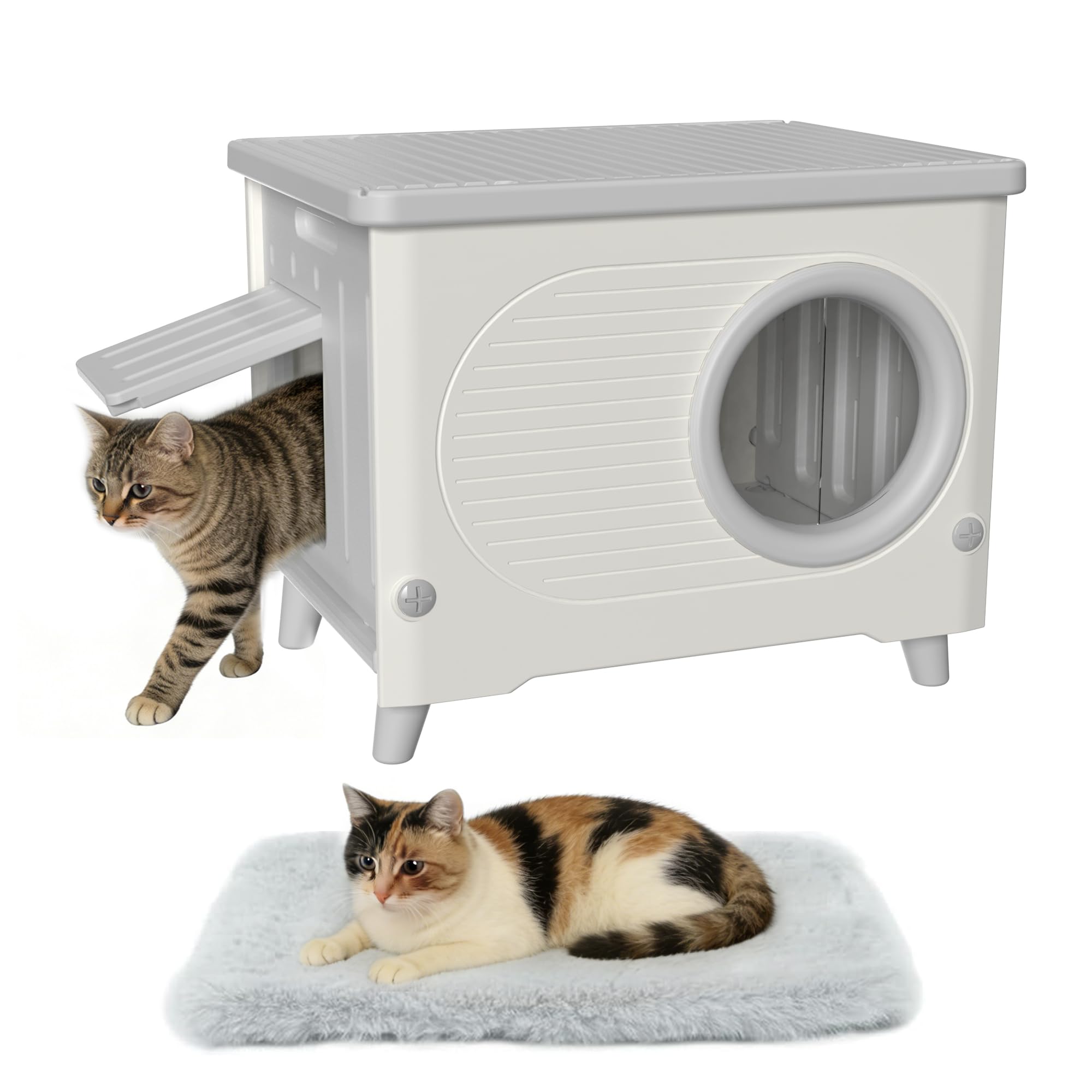
For those who want a lightweight, weather-resistant shelter that requires zero tools to assemble, this HDPE model delivers. The dual-layer plastic shell with reinforced stress points resists scratching and fading from UV exposure, and the sealed-edge design keeps wind and rain out effectively. The round burrow-style entrance reduces wind intrusion better than a square opening, and the elevated base lifts the interior off cold, damp ground.
The stackable design is useful for multi-cat households or rescue situations where space is limited — you can place two units on top of each other without compromising stability. Assembly takes about 10 minutes because the pieces fit together like a puzzle, and the smooth HDPE surface wipes clean with a damp cloth. The included cushion is basic, but the interior is large enough to fit one adult cat or up to three kittens comfortably.
One limitation is that the HDPE material, while durable, does not provide the same insulation level as a wooden house with a thick liner. Reviewers recommend using this in fair-weather conditions or on a covered porch, rather than exposing it to heavy snowfall or subzero temperatures. The front opening can let in angled rain, so some users add a clear flap as an improvement. For a no-fuss summer shelter or a backup house, this is a solid choice.
Why we love it
- Tool-free puzzle assembly takes under 15 minutes
- HDPE shell resists scratches, fading, and impact
- Stackable design saves space in multi-cat setups
Good to know
- Insulation is limited, best used in mild or covered conditions
- Angled rain can enter the opening without added flap
6. SIWA MARY Heated Cat House
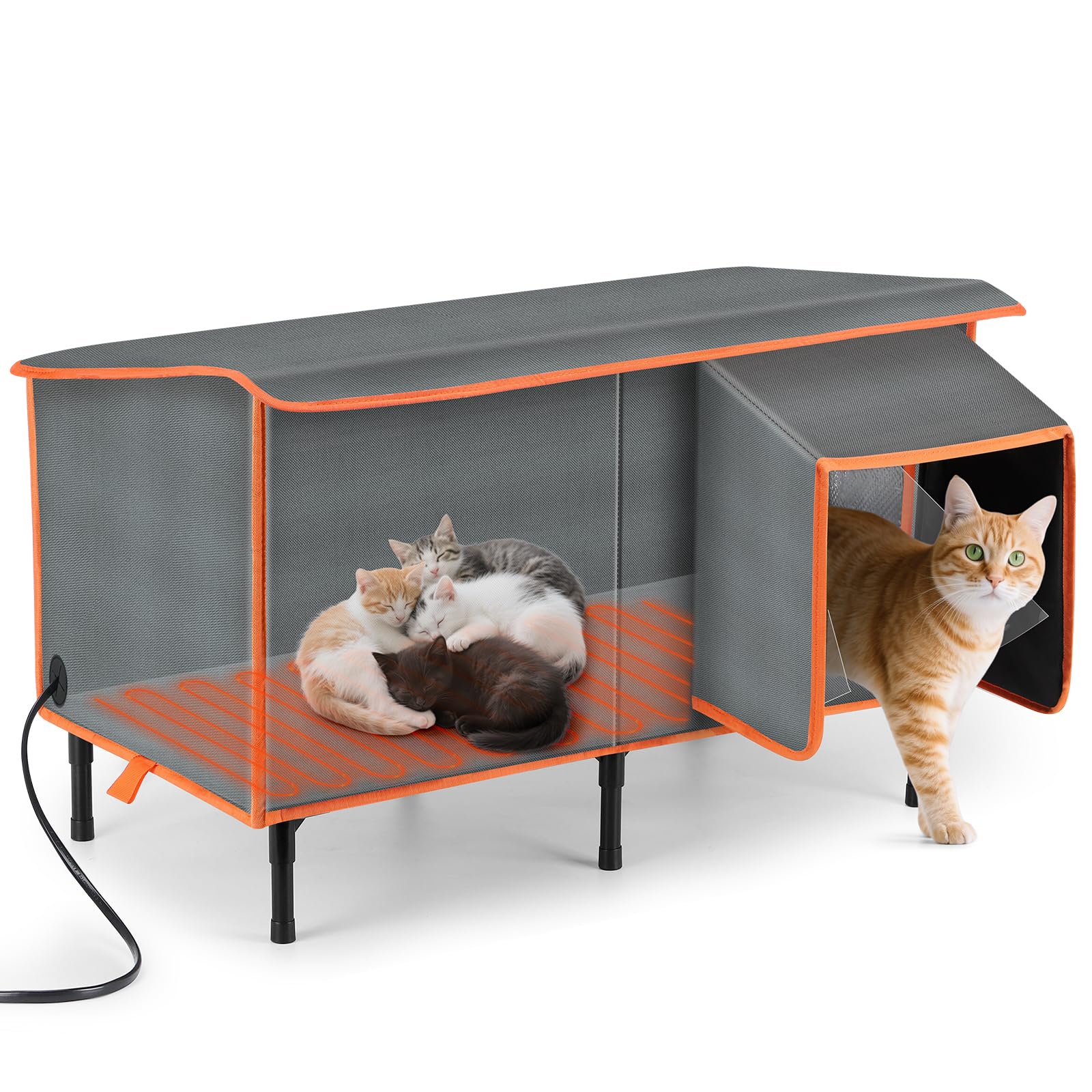
The SIWA MARY model is the most affordable heated option on this list, and it manages to include a functional heating pad without cutting major corners on the shelter itself. The five-layer construction uses aluminum, polypropylene, and PVC to create a fully weatherproof shell, and the integrated heating pad has dual-resistant cord protection to prevent chewing damage. The ultra-soft cover on the pad is machine-washable, which is a practical touch for a house that gets regular use.
Assembly is straightforward with clear instructions, and the 25.7″ by 13.5″ floor space accommodates cats up to about 25 pounds. The inclined roof prevents water pooling, and the elevated base keeps the floor dry. Customers report that feral cats started using this house within days, and several verified that the interior stayed warm and dry through subzero nights. The front and rear exits provide an escape route, and the roof opens for cleaning.
The main trade-off is the overall compact footprint — the width is narrower than many wooden models, so larger adult cats may find it a snug fit. The legs can feel slightly loose according to some reviewers, and the heating pad does not have adjustable temperature settings. For the price point, however, this provides a warm, dry shelter that gets the job done for a single cat or a mother with kittens.
Why we love it
- Includes safe, washable heating pad with chew-resistant cord
- Five-layer construction offers solid weather protection
- Easy assembly with clear instructions
Good to know
- Narrower width may feel tight for larger adult cats
- Heating pad lacks adjustable temperature control
7. Clawsable Heated Cat House
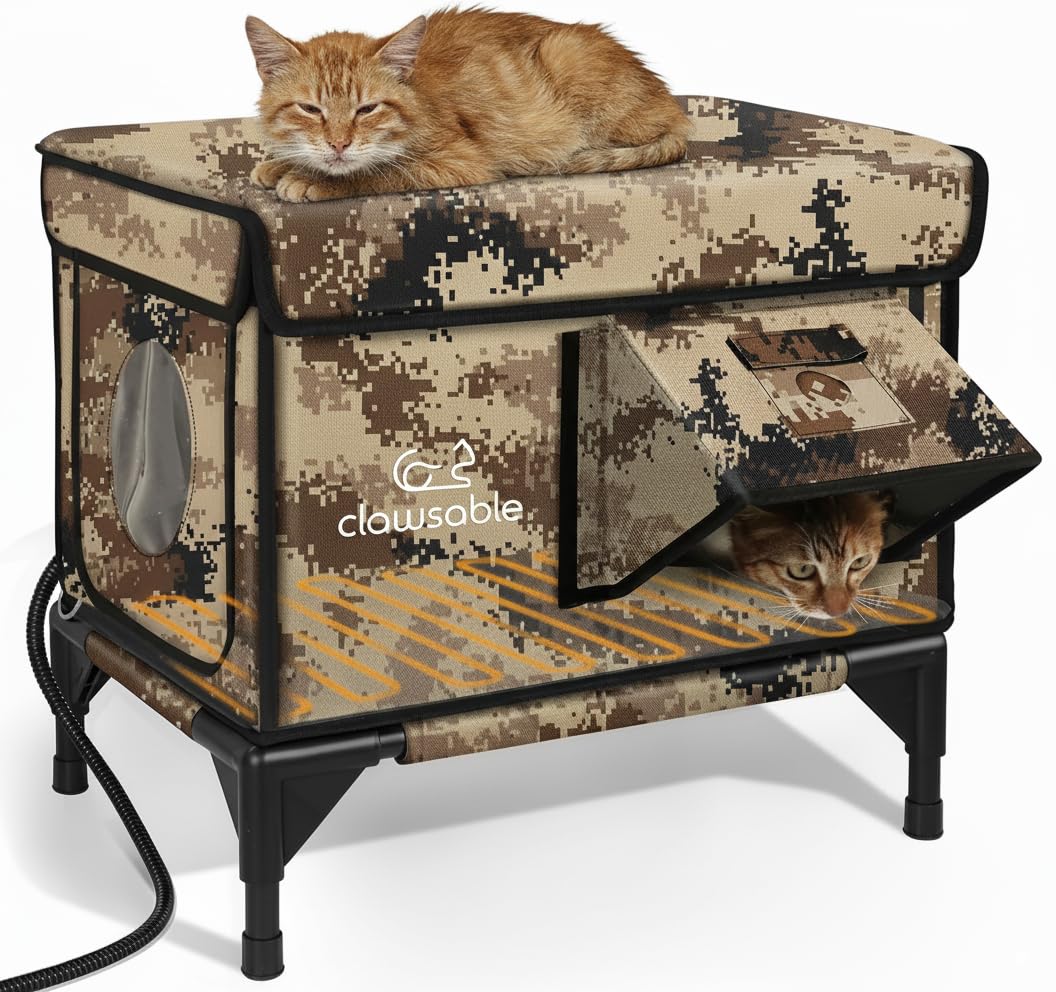
This compact heated house uses a weather-resistant fabric shell over a sturdy frame, making it lighter than wooden alternatives while still providing real insulation. The five-layer construction with reflective walls traps body heat effectively — one customer measured 58°F inside when the outside temperature was 35°F. The included heating pad is UL-tested and fully waterproof, with a removable cover that can be machine washed.
The escape door design is one-way, which allows a cat to flee from a predator while keeping cold air from rushing in. The waterproof awning extends over the entrance to block rain, and the quick-open Velcro top makes daily cleaning effortless. The 13″ by 17″ footprint is compact, and assembly takes about 5-10 minutes with no special tools. The desert camouflage color option helps the house blend into natural surroundings.
The biggest drawback is the size — several reviewers note that it is a very snug fit for a full-grown adult cat. The dimensions are clearly stated, but the actual usable space feels smaller than the numbers suggest. Some cats refused to enter the first few times, and it took up to three weeks of treat training for a wary feral to use it regularly. For a single small cat or kitten, this house offers impressive warmth in a portable package.
Why we love it
- UL-tested waterproof heating pad provides safe, reliable warmth
- One-way escape door improves cat safety without drafts
- Quick 10-minute assembly and Velcro top for easy cleaning
Good to know
- Compact size is too small for larger adult cats
- Feral cats may need several weeks to adjust to entry
FAQ
How do I get a feral cat to use a new outdoor house?
What material lasts longest in wet climates?
Should I add straw or hay inside the shelter?
How many cats can fit in a standard outdoor cat house?
Final Thoughts: The Verdict
For most gardeners and cat caretakers, the cat outdoor house winner is the Rockever Outdoor Cat House because its asphalt shingle roof, dual exits, and easy-clean floor design provide the best all-season durability. If you prioritize extreme winter insulation with a removable thermal liner, grab the GUTINNEEN Insulated Cat House. And for a budget-friendly heated shelter that delivers warmth without breaking your wallet, nothing beats the SIWA MARY Heated Cat House.