
A male cardinal slams into your feeder, cracks a black oil sunflower shell in under three seconds, then whistles to his mate. That exact strike-rate is the difference between a blend built for cardinals and a bag of generic filler. The wrong mix attracts house sparrows and starlings; the right mix makes your yard a guaranteed daily stop for the brightest red birds at the feeder.
I’m Mo Mahin — the founder and writer behind Furric. I’ve cross-referenced ingredient labels, analyzed customer feedback across hundreds of bags, and studied the feeding behavior of this specific species to isolate what actually holds a cardinal’s interest versus what gets kicked to the ground.
After evaluating oil content, seed-size distribution, filler percentage, and feeder compatibility, the market offers a clear set of options that deliver consistent results. This buying guide breaks down the most effective food for cardinals so you can fill your feeder with confidence.
How To Choose The Best Food For Cardinals
Cardinals are large-beaked, ground-feeding songbirds with a strong preference for high-oil seeds. A bag that works for general backyard birds often fails with cardinals because the seed size, shell thickness, or oil content doesn’t match their feeding physiology. Focus on these three factors to avoid buying a bag that ends up as squirrel chow.
Black Oil Sunflower Is the Baseline
Black oil sunflower seeds have thin shells that cardinals can crack open in a single bite, and the kernel inside contains roughly 28–30% fat, which is critical for winter thermoregulation and molting season. If a blend contains fewer than 50% black oil sunflower, cardinals will pick through it, eat the sunflower, and leave the rest on the ground. Pure black oil sunflower seed is the safest single-ingredient bet for a guaranteed visit rate.
Safflow Seeds Deter Squirrels and Starlings
Cardinals are one of the few species that actively eat safflower. Squirrels, grackles, and European starlings generally avoid it because of its bitter taste. A blend that pairs black oil sunflower with safflower gives cardinals two food sources while filtering out the most aggressive feeder raiders. Bags that rely on milo, cracked corn, or millet as bulk fillers rarely hold a cardinal’s attention for more than a few pecks.
Filler Percentage and Waste Ratio
Cheap blends dilute expensive seeds with red milo, wheat, and oats. Cardinals toss these aside, which creates a mess under the feeder and attracts rodents. Look for blends labeled “no filler” or “no waste” where the ingredient list shows only sunflower, safflower, peanuts, and sunflower hearts. A higher upfront price per bag often equals lower cost per cardinal visit because nearly every seed in the bag gets eaten instead of kicked to the dirt.
Quick Comparison
On smaller screens, swipe sideways to see the full table.
| Model | Category | Best For | Key Spec | Amazon |
|---|---|---|---|---|
| Nature Anywhere Bird Banquet | Premium Blend | No-filler, high-protein mix | Zero filler grains; 5 lb bag | Amazon |
| Cool Birds All Birds Blend | Premium Blend | Wide species variety | Six-ingredient mix; 10 lb bag | Amazon |
| Happy Wings Black Oil Sunflower | Single Seed | Pure, high-oil sunflower | 100% black oil sunflower; 5 lb bag | Amazon |
| Kaytee Cardinal Blend | Cardinal Mix | Safflower + sunflower blend | Safflower & black oil sunflower; 7 lb bag | Amazon |
| Wagner’s Deluxe Wild Bird Food | Economy Blend | Budget-friendly general feeding | Sunflower + millet mix; 10 lb bag | Amazon |
In‑Depth Reviews
1. Nature Anywhere Bird Banquet Wild Bird Seed Blend
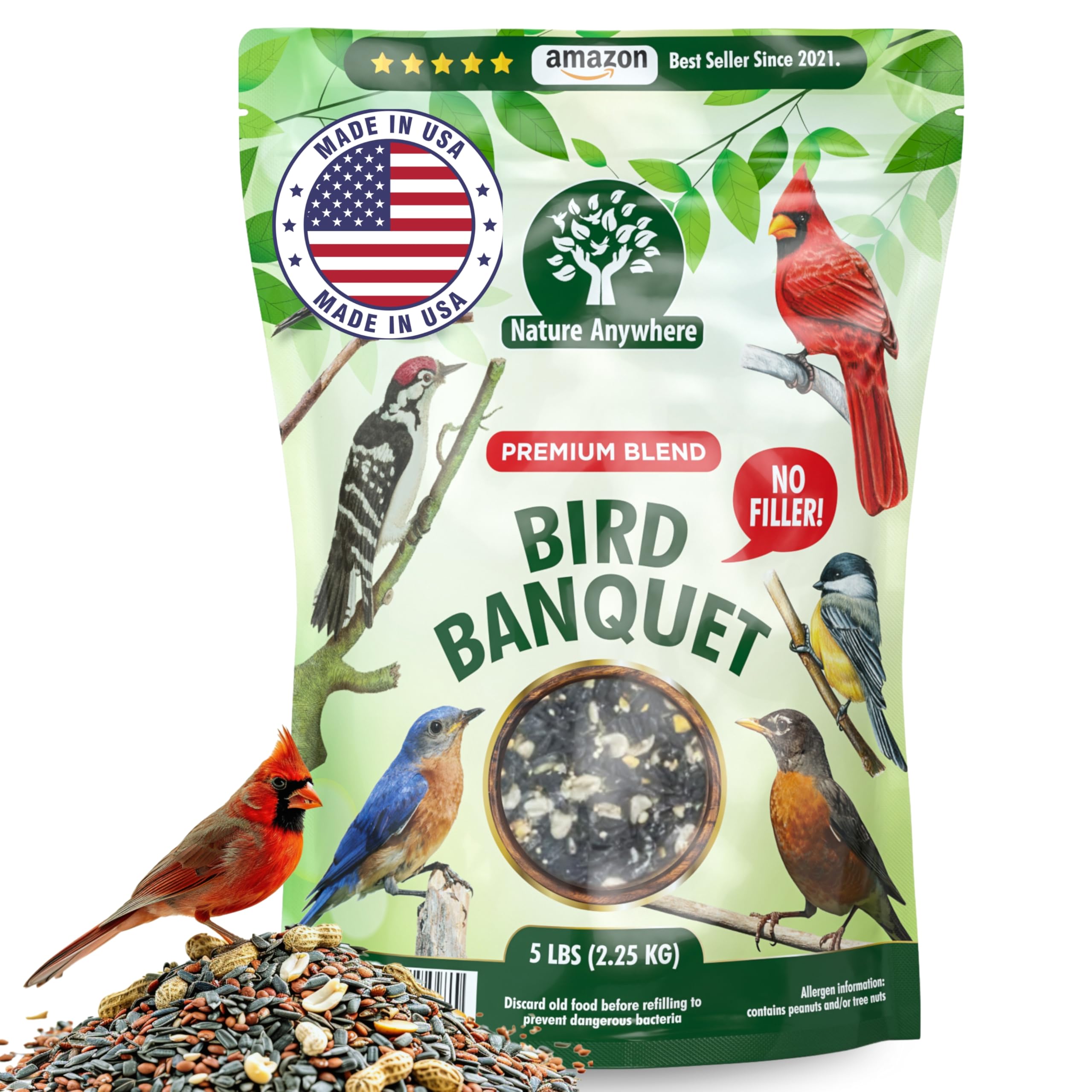
Birders who watch their feeder daily notice the difference inside 24 hours: cardinals hit this blend hard and stay. The premise is simple — zero milo, zero wheat, zero cracked corn — just sunflower, safflower, peanuts, and sunflower hearts packed at a protein-rich ratio that cardinals find irresistible. Customers report refill frequency doubles compared to store-brand blends, which is exactly what you want if your goal is maximum cardinal visitation.
The 5 lb bag is compact but dense, and the no-filler policy means nearly every seed that hits the tray gets consumed above ground. Fallen seed waste is minimal, which reduces attraction for rodents and keeps the area under the feeder cleaner. The blend works equally well in tube, hopper, and tray feeders, though cardinals clearly prefer a platform-style feeder where they can perch open-winged while cracking shells.
A few customers noted that the bag size runs out fast with heavy feeder traffic — daily refill users may want to stock two bags at a time. The premium ingredient cost is slightly higher per pound than generic mixes, but the consumption-to-waste ratio makes it the most efficient option for dedicated cardinal watchers.
Why we love it
- Absolutely zero filler grains — every seed is edible for cardinals
- High-protein formulation supports bright plumage and winter energy
- Money-back guarantee if feeder activity doesn’t improve
Good to know
- 5 lb bag may require frequent restocking for high-traffic feeders
- Per-pound cost is higher than economy blends
2. Cool Birds All Birds Wild Bird Seed Blend
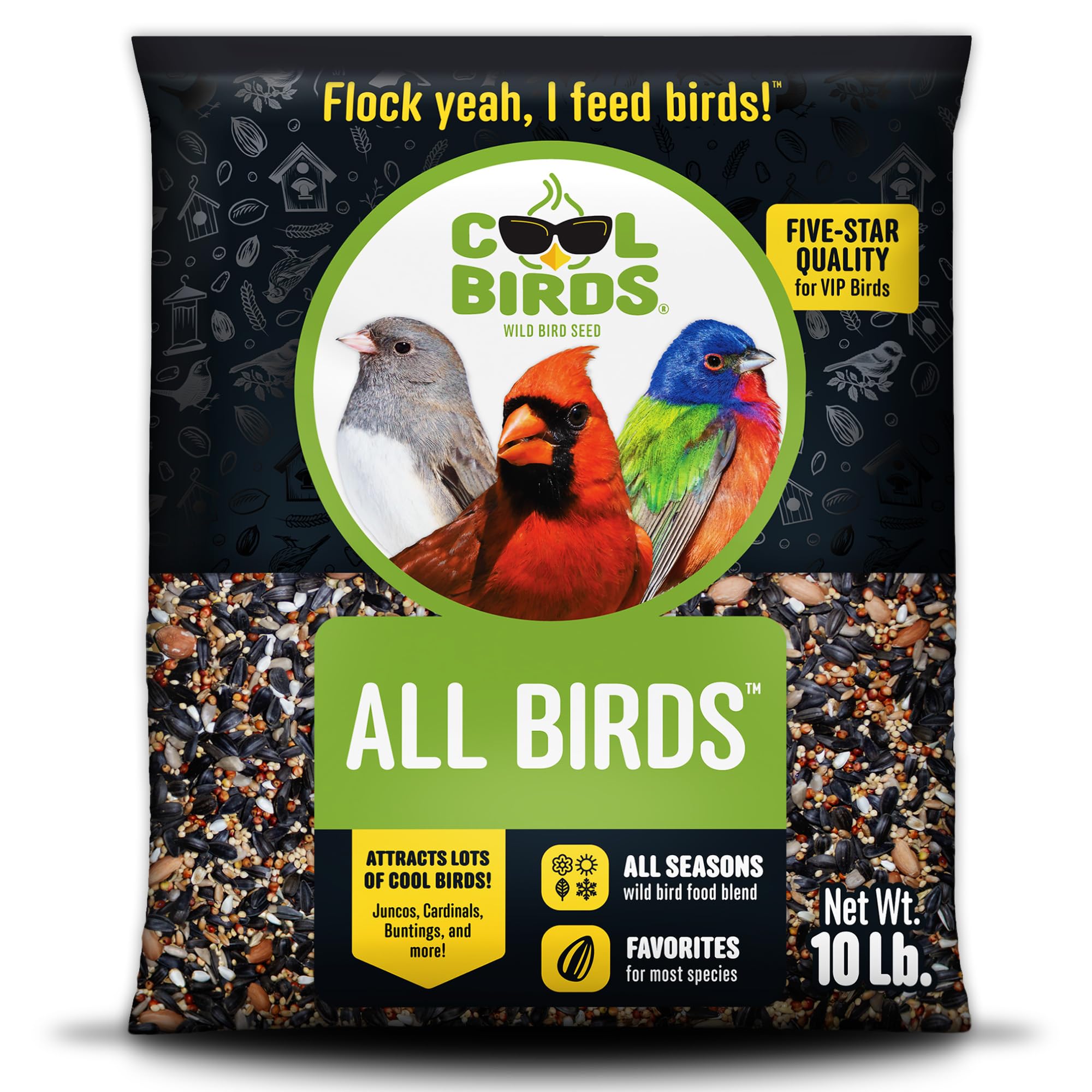
Cool Birds built this blend for biodiversity, and it delivers: cardinals, chickadees, nuthatches, woodpeckers, goldfinches, and even the occasional bluebird show up. The ingredient sheet lists black oil sunflower, white millet, safflower, peanuts, sunflower hearts, and wholesome grains — a varied buffet that keeps multiple perching niches occupied simultaneously. Customers specifically call out the minimal filler content; the millet and grains are fine enough that small birds eat them instead of wasting them.
The 10 lb bag hits a sweet spot between value and variety. The sunflower and safflower fraction is high enough to hold cardinals, while the millet and sunflower hearts draw in finches and titmice. This blend performs best in a tray or platform feeder where cardinals can sort through the seeds at their own pace. Tube feeders work too, but the larger seeds tend to jam in narrow ports.
One trade-off: the inclusion of white millet means some ground-feeding birds will perch below the feeder and pick up fallen seeds. That is not inherently negative, but if you are strict about keeping the area clean, you may notice more hull accumulation than with a pure sunflower-safflower blend. Overall, a strong choice for birders who want variety without sacrificing cardinal appeal.
Why we love it
- Attracts a wide range of songbirds including cardinals, jays, and woodpeckers
- Low amount of cheap filler — high proportion of edible seeds
- 10 lb bag provides a good cost-per-pound ratio
Good to know
- White millet may attract ground-feeding birds that leave hulls below the feeder
- Larger seeds can jam narrow tube-feeder ports
3. Happy Wings Black Oil Sunflower Seeds
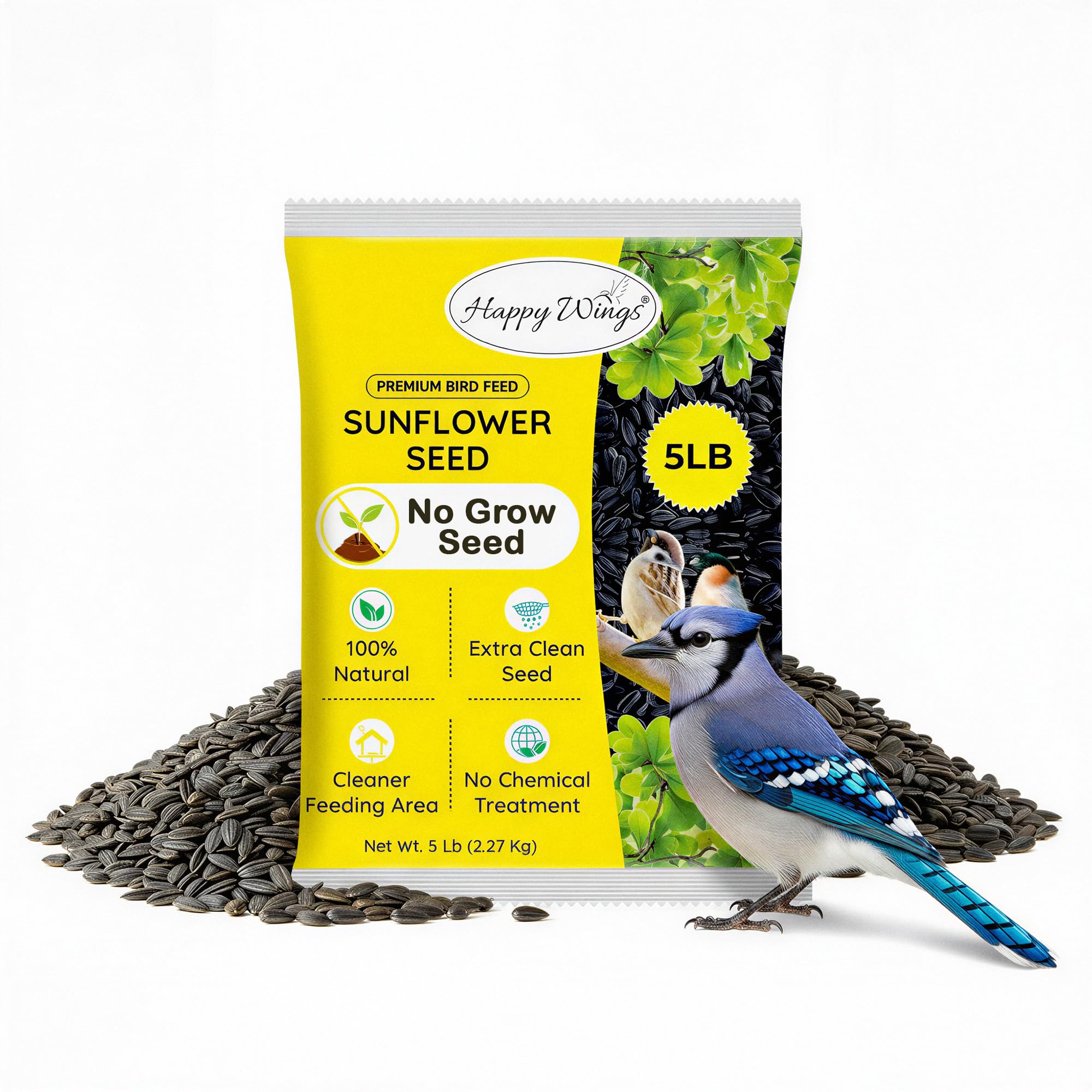
When you strip away every variable and feed cardinals the single seed they evolved to prefer, the result is predictable: they empty the feeder fast. Happy Wings delivers straight black oil sunflower with no blending, no fillers, and no extras. The seeds are rich in natural oils and fats, which cardinals metabolize rapidly — especially during cold months when they need to maintain body temperature through the night.
The 5 lb bag size is manageable for a single feeder setup. The seeds are clean, dust-free, and processed in USDA- and BRC-GS-approved facilities, which matters for quality consistency. The “no-grow” heat-treatment prevents the seeds from sprouting under the feeder, so you do not get volunteer sunflower shoots poking through your lawn.
Some birders note that straight sunflower attracts more than just cardinals — house finches, chickadees, and nuthatches will also swarm the feeder. That is not a drawback unless you are specifically trying to exclude certain species. The main limitation is that the 5 lb bag runs out quickly if you have a busy feeder, and there is no safflower component to deter squirrels if they discover the station.
Why we love it
- Single seed formula removes all guesswork — cardinals eat it without hesitation
- High oil content provides critical winter energy
- No-grow treatment prevents messy sprouts under the feeder
Good to know
- No safflower component means squirrels may become regular visitors
- 5 lb bag may require weekly restocking with high traffic
4. Kaytee Cardinal Wild Bird Seed, 7 lb

Kaytee’s Cardinal Blend solves the two most common complaints in bird feeding: squirrel theft and species selectivity. By pairing black oil sunflower with safflower, this mix gives cardinals two high-value seeds while the safflower’s bitterness naturally repels squirrels, grackles, and starlings. Customer feedback confirms that cardinals, chickadees, nuthatches, and grosbeaks frequent feeders stocked with this blend, while squirrel activity drops noticeably.
The 7 lb bag is a practical size for a mid-volume feeder. The seed quality is consistent — no mold, no dust, no broken shells. Users report that the blend works well in hopper and tray feeders, and the safflower component means you can use a less expensive feeder without worrying about squirrel damage to the seed ports. Some customers noted that blue jays also enjoy the mix, which is a bonus if you appreciate their bold feeding style.
The downside is that the sunflower and safflower mix still produces shells that accumulate under the feeder. This blend is not a no-wash product, so plan to sweep or rake the area periodically. Additionally, a few reviewers mentioned that house finches and sparrows still manage to eat the safflower despite its bitter reputation, so absolute squirrel-proofing is not guaranteed.
Why we love it
- Safflower seed deters squirrels and aggressive bird species
- Black oil sunflower content attracts cardinals reliably
- 7 lb bag size balances capacity and freshness
Good to know
- Shell accumulation under the feeder requires periodic cleaning
- Some sparrows and finches still eat the safflower
5. Wagner’s Deluxe Wild Bird Food, 10 lb

Wagner’s Deluxe is the entry-level option that fills a feeder without emptying a wallet. The blend contains sunflower seeds mixed with general purpose grains, and the 10 lb bag keeps per-pound cost low. For birders who are testing whether their yard will attract cardinals before investing in premium blends, this bag provides a low-commitment starting point. A resealable Velcro closure on the bag helps maintain freshness between refills.
Customer reports show that this blend does attract cardinals, but the hit rate is lower than the more targeted options above. The presence of millet and other small grains means that cardinals tend to eat the sunflower first and leave the rest, which creates more waste. Ground-feeding birds like doves and sparrows will clean up the leftovers, so the waste is not entirely lost, but the visible cardboard seed accumulation under the feeder is higher than with a no-filler mix.
The biggest limitation is that the blend includes grains that cardinals do not prioritize, which lowers the cost-efficiency for anyone specifically targeting cardinals. For a mixed backyard feeding station where you want to attract a broad range of birds including cardinals, this works. If your singular goal is cardinal visitation, the filler ratio reduces the value despite the low sticker price.
Why we love it
- Lowest per-pound cost of the group — ideal for filling large feeders
- Resealable bag with Velcro closure keeps seed fresh
- Attracts a wide variety of backyard birds including ground-feeders
Good to know
- Higher filler ratio means cardinals pick through and leave waste
- Less effective than targeted blends for pure cardinal feeding
FAQ
Will cardinals eat from a tube feeder or only a tray?
How long does a 7 lb bag last with regular cardinal visits?
Does safflower seed actually keep squirrels away from cardinal feeders?
Final Thoughts: The Verdict
For most gardeners, the best food for cardinals winner is the Nature Anywhere Bird Banquet because its zero-filler formula ensures every seed in the bag gets consumed by cardinals rather than wasted on the ground. If you want a safflower-heavy blend that naturally deters squirrels and aggressive birds, grab the Kaytee Cardinal Blend. And for the purest, most direct feeding experience — straight black oil sunflower with no variables — nothing beats the Happy Wings Black Oil Sunflower Seeds.