
Thick area rugs and low-pile carpet weave dirt into their fibers in a way hard floors simply don’t. A standard robot vac can glide over hardwood but leave your Persian or shag looking dull, feeling gritty, and holding onto pet hair that no amount of spot cleaning seems to fix. The difference between a “meh” clean and a deep carpet refresh comes down to a few key specs: raw suction, brush design that digs into fibers without tangling, and navigation that treats your rug like a surface it needs to conquer, not just roll over.
I’m Mo Mahin — the founder and writer behind Furric. My research into robot vacuums specifically for rugs and carpets involves cross-referencing real owner feedback on suction power, brush roller engagement, and obstacle avoidance performance on low, medium, and high-pile surfaces to separate products that promise “good for carpet” from those that actually deliver.
The goal is to help you cut through the noise and identify the single best robot vacuum for rugs that matches your home’s specific flooring mix and pet hair load.
How To Choose The Best Robot Vacuum For Rugs
Navigating a rug-heavy home requires understanding how each technology in a robot vacuum interacts with carpet fibers. The wrong choice can leave dirt trapped near the base of the fibers or cause the robot to get stuck on fringe edges. By focusing on four specific aspects of a robot’s engineering, you eliminate the guesswork.
Suction Power & Carpet Boost
Suction strength is quoted in Pascals (Pa). For rugs, a baseline of 4,000 Pa is sufficient for low-pile, but medium and high-pile carpets benefit from models offering 6,000 Pa or higher. A critical feature is “Auto-Carpet Boost,” where the robot automatically ramps up its suction when it detects a change from hard floor to carpet using an optical or drop sensor. Without this proactive power increase, pet hair and deep-set crumbs can get left behind on a rug that looked clean on the surface.
Brush Roller Design
Traditional bristle brush rollers get tangled with long hair and pet fur, which then wraps around the axle and reduces performance. For rug owners, a tangle-free or anti-hair-wrap brush roller is essential. Dual rubber or “floating” brush heads are preferred because they maintain constant contact with carpet fibers, flexing to dig deeper without damaging the pile. Models that feature a dedicated “JawScrapers” or split-blade design actively cut hair before it wraps, reducing the frequency of manual removal.
Navigation & Edge Cleaning
Random bounce navigation (common with budget units) often misses entire sections of a large rug, especially in corners. LiDAR (laser) navigation systematically maps the room, ensuring the robot covers the rug in row-by-row passes for complete coverage. For rugs with fringe edges, look for a robot with “edge-sweeping” or “CornerRover” arms that reach into corners where rug edges meet walls. Avoid models that rely solely on front bumper collisions, as these can push fringe into the brush roller and cause tangles.
Self-Emptying & Maintenance
Rugs, especially those that house pet hair, fill a robot’s dustbin quickly. A self-emptying base is a major convenience upgrade for rug-heavy homes. The base draws debris from the robot into a larger bag or bin, typically holding 30 to 90 days of dirt. Pay attention to bag capacity: larger bags (2.5–3.5 liters) reduce the frequency of replacement. Additionally, consider models with removable, washable filters to prevent fine carpet dust from clogging the system and reducing suction over time.
Quick Comparison
On smaller screens, swipe sideways to see the full table.
| Model | Category | Best For | Key Spec | Amazon |
|---|---|---|---|---|
| Tikom L8000 Plus | Mid-Range | Budget-friendly carpet clean | 6,000 Pa Suction | Amazon |
| uninell L2 | Mid-Range | Quiet all-day cleaning | 7,000 Pa Suction | Amazon |
| Shark Navigator AV2110S | Mid-Range | Object avoidance & mapping | LiDAR + Self-Cleaning Brush | Amazon |
| roborock Q7 M5+ | Premium Mid-Range | Dual anti-tangle on carpet | 10,000 Pa HyperForce Suction | Amazon |
| DREAME L10s Pro Ultra | Premium | Hot water self-cleaning mops | 7,000 Pa Suction | Amazon |
| Shark Navigator RV2120AE | Premium | Bagless self-empty for rugs | Up to 50% More Suction | Amazon |
| iRobot Roomba Max 705 | Premium | AI obstacle + pet waste avoidance | LiDAR + PrecisionVision | Amazon |
| iRobot Roomba Plus 505 | Premium | Mop + vacuum combo cleaning | AutoWash Dock + Self-Empty | Amazon |
| eufy E28 | High-End | Deep carpet cleaning + mop washing | 20,000 Pa + HydroJet System | Amazon |
In‑Depth Reviews
1. roborock Q7 M5+

The roborock Q7 M5+ sets a high bar for rug-first homes. With 10,000 Pa of HyperForce suction, it has enough raw power to dig deeply into medium-pile carpets, pulling up embedded pet hair and fine dust that lower-suction units miss. The dual anti-tangle design — featuring a “JawScrapers” main brush and a zero-hair-tangling side brush — directly addresses the main annoyance of cleaning rugs: hair wrap that forces you to stop and cut away fur. In real-world conditions, this robot maintains consistent suction across rugs of varying thicknesses, automatically ramping up when moving from hardwood to carpet.
The PreciSense LiDAR navigation ensures the robot maps your home with high accuracy, avoiding obstacles like loose rugs that could confuse bounce-style units. The self-emptying base holds a 2.7-liter dust bag, providing up to 7 weeks of hands-free operation before bag replacement. This is a significant advantage for homes where rug cleaning rapidly fills the internal bin. Owners report that the robot’s mapping is so precise it distinguishes individual furniture legs, allowing it to navigate under dining tables and around chair legs without getting stuck.
While it includes a mop function, the mopping is best suited for light maintenance on hard floors rather than heavy-duty wet cleaning. For pure rug vacuuming duties, the combination of extreme suction and tangle prevention makes this one of the most effective options in the mid-premium tier. The main trade-off is the price point, but for the performance and features, it justifies the cost for serious carpet cleaning.
Why we love it
- Industry-leading suction power for deep rug penetration
- Dual anti-tangle system effectively prevents hair wrap on brush rollers
- LiDAR mapping with no-go zones for precise room control
Good to know
- Mopping function is basic and not intended for heavy scrubbing
- Dust bag is proprietary and must be replaced every 7 weeks
2. DREAME L10s Pro Ultra

The DREAME L10s Pro Ultra excels for homes that need both strong carpet vacuuming and serious mopping capability. With 7,000 Pa of suction, it handles medium-pile carpets effectively, automatically detecting when it transitions from tile or hardwood to rugs to boost suction. The MopExtend technology is a standout: the mop pad extends beyond the robot’s body to clean edges, reducing the gap between the wall and the rug’s edge that other vacuums miss. This feature is particularly valuable for area rugs surrounded by open hard flooring.
The real innovation here is the auto-maintenance dock. It washes the mop pads with 136°F hot water and then dries them with hot air, meaning you don’t have to handle dirty, wet mops after the robot cleans. For rug owners, this means the robot can transition from mopping hard floors to vacuuming rugs without cross-contaminating the carpet with wet or dirty pads. The obstacle avoidance system uses 3D structured light to recognize shoes, cables, and even small items that could get tangled in fringe edges.
However, potential buyers should be aware that the unit’s battery life is rated at 220 minutes, but in real-world multi-room cleaning with carpet boost activated, this can be significantly less. The dock also lacks a removable water bin, requiring manual wiping of the base occasionally. Despite these points, the combination of strong suction, edge-cleaning ability, and self-washing mop makes it a compelling choice for multi-surface homes.
Why we love it
- Hot water self-cleaning and drying mop dock reduces maintenance
- MopExtend cleans right up to rug edges and walls
- Strong 7,000 Pa suction with auto-carpet boost
Good to know
- Dock can be prone to water leaks if not placed on a flat surface
- Battery life drops noticeably when carpet boost is active
3. Shark Navigator RV2120AE

Shark’s Navigator RV2120AE tackles a major pain point for rug owners: the cost and hassle of buying replacement bags for auto-empty bases. The 60-day capacity bagless base empties debris into a 0.22-quart reservoir that you simply dump out — no bags to buy or install. This is especially convenient for high-pile rugs that trap large amounts of pet hair, which can fill a traditional bag quickly. The robot itself uses SmartPath LiDAR navigation, cleaning in methodical row-by-row patterns that ensure full coverage of rug surfaces without random skipping.
The self-cleaning brushroll is designed to dig into carpet fibers while resisting hair wrap. Owners report that it handles dog and cat hair on low and medium-pile carpets well, though some note that very low-pile rugs may not trigger the same aggressive engagement as thicker carpets. The unit delivers what Shark calls “up to 50% more suction” compared to competitor units, though the exact Pa rating isn’t quoted directly; real-world performance shows it lifts pet hair effectively on most residential carpet types.
The main drawback is the robot’s performance on shag or high-pile rugs. Several owners report that while it’s excellent on hard floors, the navigation can struggle with deep carpets, occasionally getting stuck or failing to climb onto thicker rugs. Additionally, the dirt reservoir on the base needs to be emptied weekly in homes with heavy foot traffic and multiple pets. For those prioritizing a bagless system with reliable LiDAR mapping for standard low to medium-pile rugs, this is a very strong option.
Why we love it
- Bagless self-empty base eliminates recurring bag costs
- SmartPath LiDAR navigation provides room-by-room coverage
- Self-cleaning brushroll resists hair wrap on carpets
Good to know
- Can struggle to transition onto high-pile or shag rugs
- Base bin requires weekly manual emptying with heavy pet traffic
4. iRobot Roomba Max 705
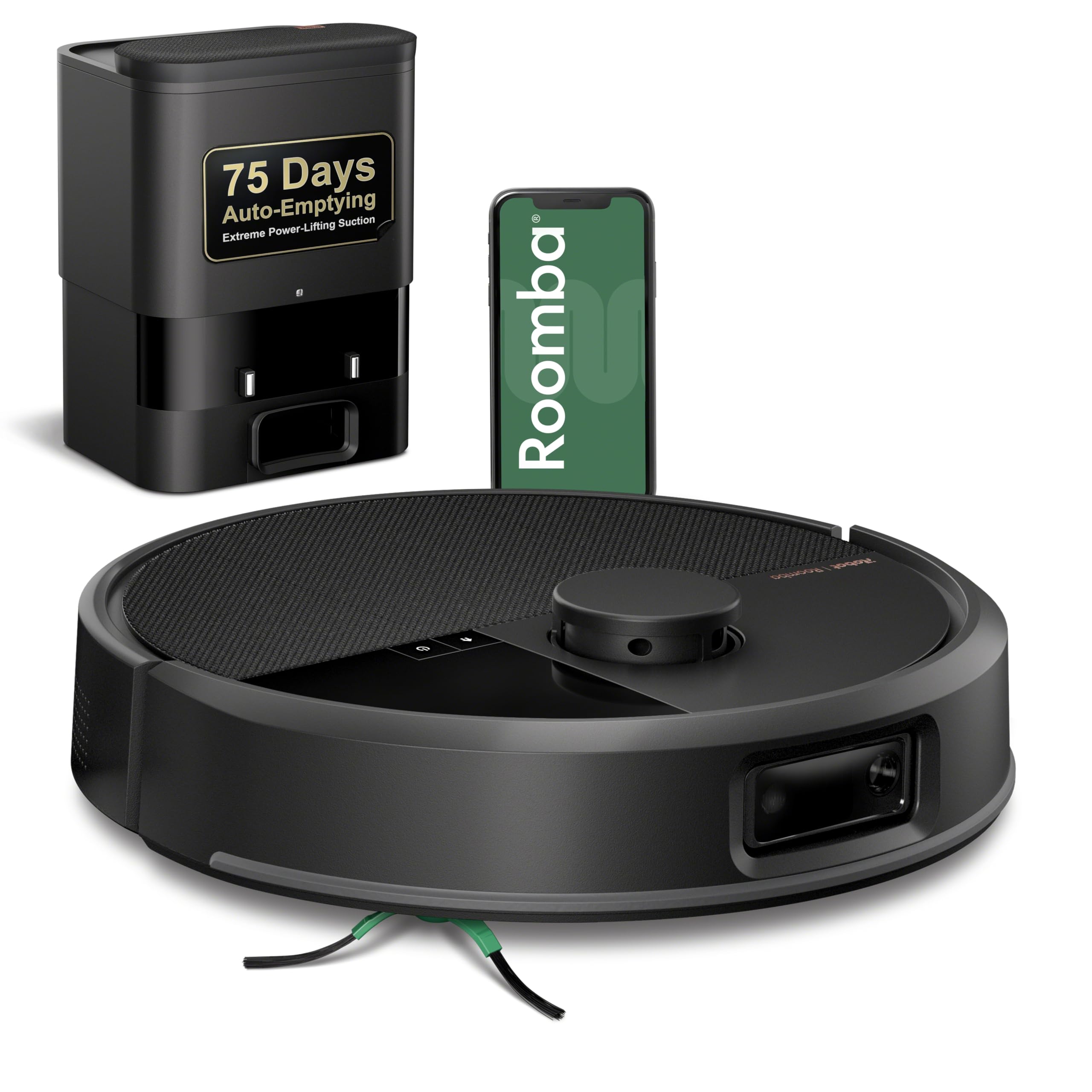
The iRobot Roomba Max 705 integrates PrecisionVision AI, which allows it to recognize and navigate around objects like pet waste, cords, and socks — preventing messy encounters on rugs. This is a critical safety feature for rug owners who may leave charging cables or children’s toys on the carpet. The patented dual rubber brushes flex to maintain constant contact with carpet fibers, working alongside “extreme power-lifting suction” (quoted as 180x stronger than the Roomba 600 series) to dislodge and lift debris from medium and high-pile rugs.
Navigation relies on ClearView Pro LiDAR, generating home maps that the robot uses to clean systematically. The unit can hold a battery charge for up to 210 minutes, covering approximately 924 square feet of living space in a single charge. The AutoEmpty dock holds debris in an enclosed bag for up to 75 days, capturing particles as small as 0.7 microns — a significant benefit for allergy sufferers whose rugs trap dust and dander. The Dirt Detect technology identifies areas of heavy mess and repeats passes to ensure thorough cleaning.
However, the Max 705 has a taller profile, which limits its ability to clean under low-clearance furniture like sofas and bed frames. Additionally, the AI system is overly cautious around obstacles, sometimes avoiding areas that are actually clear. The app has also received criticism for its redesigned interface, which some owners find less intuitive than previous versions. Despite these quirks, the combination of AI recognition and strong rubber brush performance makes it a top-tier choice for homes with unpredictable floor clutter.
Why we love it
- PrecisionVision AI identifies and avoids real-world obstacles
- Dual rubber brushes maintain constant carpet fiber contact
- Long battery life for large rug-covered homes
Good to know
- Taller profile reduces under-furniture access
- App interface redesign has mixed user reception
5. Shark Navigator AV2110S
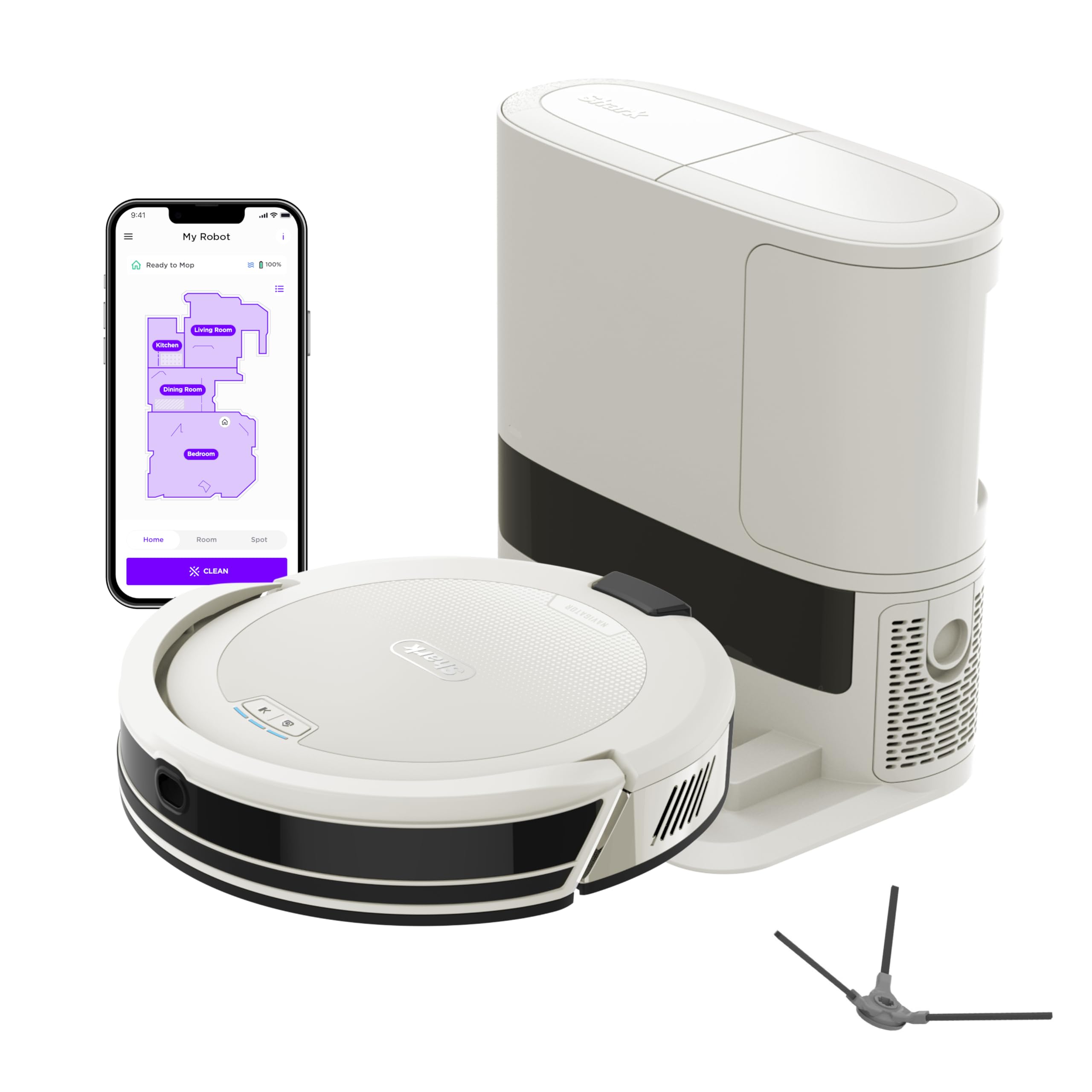
The Shark Navigator AV2110S brings many of the premium features of the RV2120AE into a more accessible mid-range tier. It uses the same SmartPath LiDAR navigation to map rooms and clean row-by-row, ensuring no section of a rug gets missed. The self-cleaning brushroll is designed specifically to dig into carpet and hard floors while actively preventing hair from wrapping around the axle — a direct benefit for pet owners whose rugs accumulate long fur. The 30-day capacity bagless self-empty base eliminates the need for dust bags, keeping ongoing costs down.
Object detection sensors allow this unit to avoid obstacles without requiring a full AI camera system. This means it can navigate around shoes, furniture legs, and even scatted toys without getting stuck. Owners consistently report that the robot operates very quietly, with a noise level comparable to a refrigerator, which is notable for a robot with carpet-boost suction. The app provides control over scheduling, room selection, and no-go zones. Many users describe this as a “Roomba killer” due to its superior navigation and ability to avoid getting stuck compared to older rRobots.
The primary limitation is the 120-minute battery life, which may require a mid-clean recharge for homes larger than 1,500 square feet with extensive rug coverage. Additionally, while it works well on low and medium-pile rugs, some owners note that performance on high-pile or shag carpets is noticeably reduced. The unit also lacks a mop function, making it a pure vacuum solution. For budget-conscious buyers who prioritize carpet performance over mopping, this is a strong recommendation.
Why we love it
- Self-cleaning brushroll prevents hair wrap on rugs
- Bagless self-empty base reduces recurring costs
- SmartPath LiDAR navigation covers rugs methodically
Good to know
- No mopping function available
- Battery life limited to 120 minutes
6. iRobot Roomba Plus 505 Combo
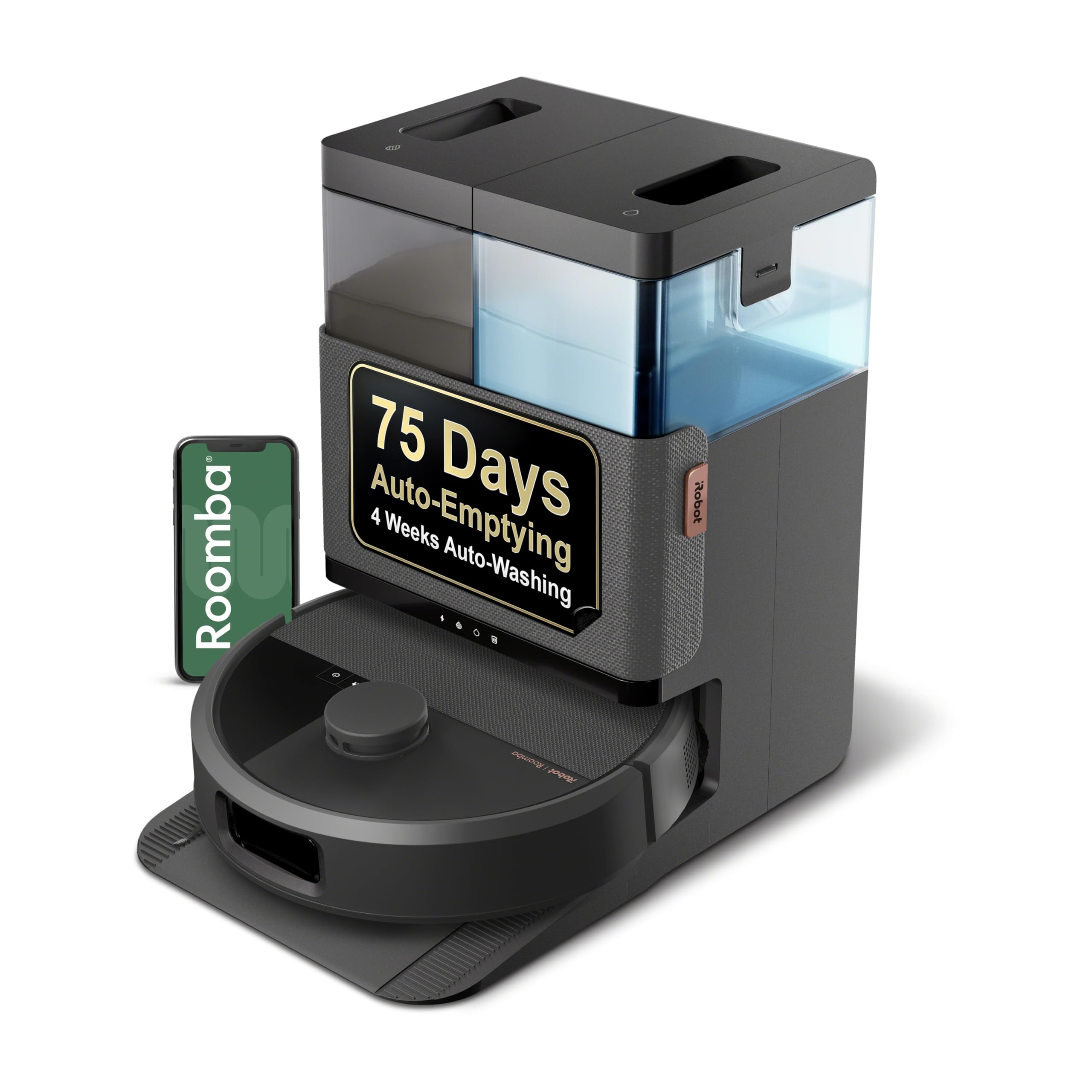
The iRobot Roomba Plus 505 is designed for homes that require both vacuuming and mopping, with an ultra-convenient AutoWash Dock that handles emptying, mopping, and pad drying. The DualClean Mop Pads with PerfectEdge extend coverage to reduce gaps along rug edges, while the SmartScrub feature applies 2x deeper scrubbing pressure to tackle ground-in stains on hard floors. For rug cleaning, the robot identifies carpet automatically and lifts the mop pads before transitioning, preventing wet carpets. This seamless transition is critical for open-concept homes where hard floors and rugs share the same space.
ClearView Pro LiDAR and PrecisionVision AI work together to map the home and avoid obstacles. The dock self-washes the mop pads with clean water, dries them with heat, and empties the dustbin bag for up to 75 days of vacuuming or 4 weeks of mopping before needing attention. Owners praise the thorough cleaning, noting that the mop function picks up dust and grime that traditional vacuuming misses. The app allows for separate vacuum-only, mop-only, or combo cleaning modes, giving you control over whether the robot mops near your rugs or avoids them entirely.
However, the integrated system has some reliability concerns. A number of owners report issues with the dirty water tank reading “tray full” when it’s empty, requiring multiple resets. The app setup process can be frustrating, with some users needing two days to get it functioning correctly. The dock also produces noticeable noise during the self-cleaning cycle. For those willing to troubleshoot initial setup, the convenience of a fully automated vacuum and mop system that handles rugs, hard floors, and pad maintenance is unmatched.
Why we love it
- AutoWash Dock handles mop cleaning, drying, and dustbin emptying
- PerfectEdge mop pads reach rug edges
- Mop pad auto-lifts when transitioning to carpet
Good to know
- Dock can be noisy during self-cleaning cycle
- Some owners experience “tray full” sensor error
7. uninell L2
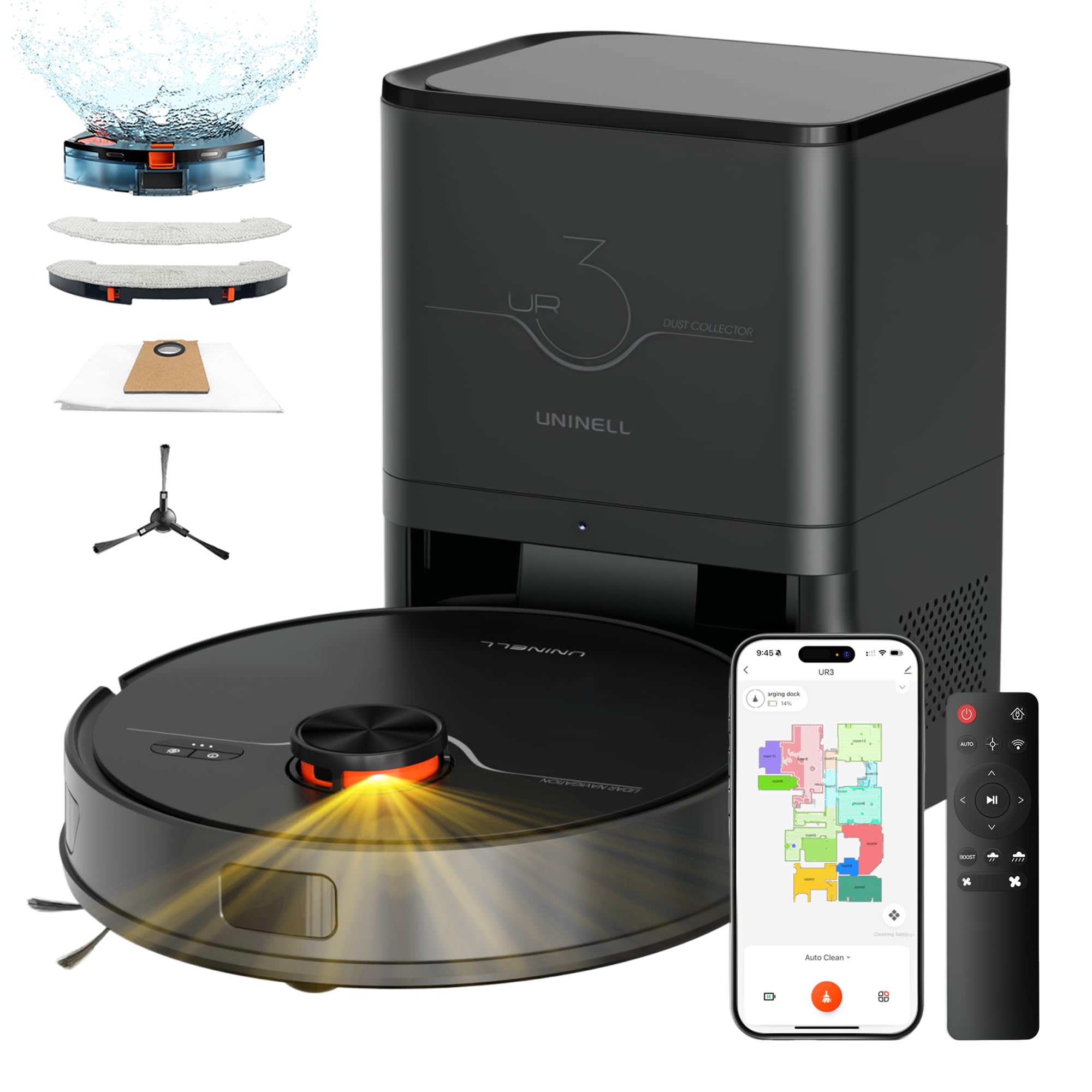
The uninell L2 offers an impressive 7,000 Pa of suction power at a price point that undercuts many competitors. This raw suction makes it highly effective on low and medium-pile rugs, where it picks up pet hair, dust, and crumbs with minimal pass-over. The 3.5-liter self-emptying station holds up to 90 days of debris, a massive capacity for full-time rug cleaners. The tangle-free brush design is specifically engineered to prevent hair wrap, which is a common issue with standard brush rollers on carpet.
LiDAR laser mapping creates accurate home maps, and users can set “No-Go Zones” in the app to keep the robot away from pet bowls or delicate furniture. The unit supports up to 5 different maps for multi-floor homes, allowing you to have one profile for the downstairs rug-heavy living room and another for the upstairs carpeted bedrooms. The remote control is a nice addition for older users who prefer not to navigate smartphone apps. Battery runtime is 180 minutes, sufficient for most homes.
However, the mopping function is a simple damp pad rather than a scrubbing system, so it’s not suitable for stain removal on hard floors. Several owners note that the robot can get stuck on thick rugs or cords, and the self-emptying base produces a loud noise during the emptying cycle. The tangle-free brush does reduce, but doesn’t completely eliminate, hair wrap in long-pile homes. Overall, this is a strong value pick if you prioritize suction power and bag capacity over advanced mopping features.
Why we love it
- 7,000 Pa suction provides deep carpet cleaning at a budget price
- 90-day self-emptying capacity reduces maintenance
- LiDAR mapping with multi-floor support and No-Go Zones
Good to know
- Mopping system is basic and not effective for scrubbing
- Can get stuck on thick rugs with high edges
8. Tikom L8000 Plus
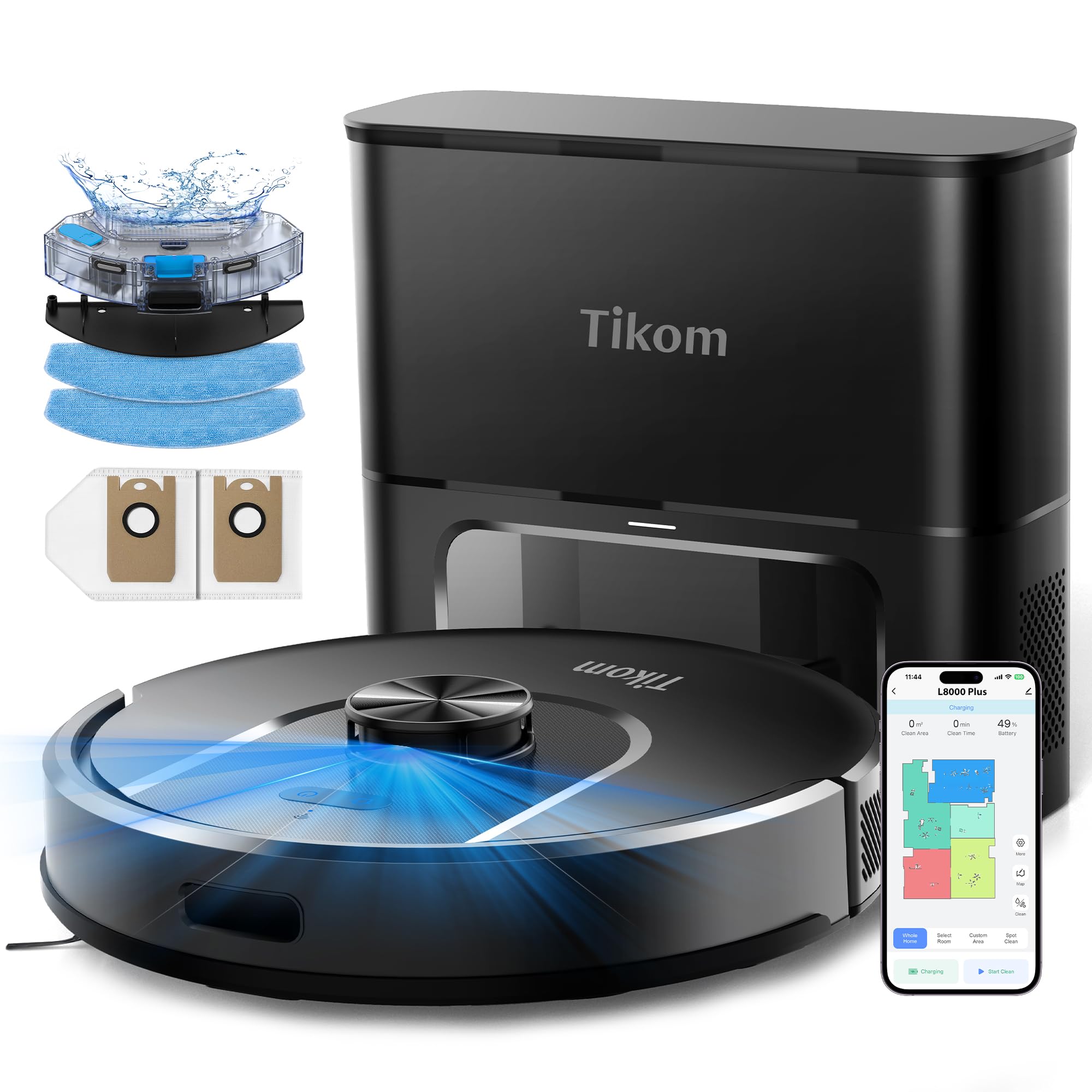
The Tikom L8000 Plus is a well-rounded entry-point for those looking for a self-emptying robot vacuum without overspending. Its 6,000 Pa of suction provides solid performance on low-pile rugs and hard floors, with an automatic carpet boost that increases power when the sensors detect the transition onto a carpet surface. The 3-liter self-emptying dustbag holds up to 90 days of debris, which is consistent with higher-tier models. LiDAR navigation ensures efficient room-by-room cleaning, supporting up to 5 saved maps for multi-floor homes.
Owners report that the robot is quiet during operation and effective at picking up dust, pet hair, and fine particles from both hardwood and carpet. The app control is user-friendly, allowing you to set no-go zones and no-mop zones, which is essential for homes with area rugs you don’t want the mop pad to touch. The battery life is rated at 150 minutes, which covers average-sized homes on a single charge. The mopping function can be disabled when cleaning carpets, preventing wet stains.
The primary limitations are the 6,000 Pa suction, which is adequate but not exceptional for high-pile or heavily soiled carpets. The LiDAR navigation is reliable, but some users note that it occasionally misses tight corners near rug edges. The self-emptying system works well, but the base unit can be loud during the emptying cycle. For budget-conscious shoppers who want a self-emptying robot with decent carpet performance, the L8000 Plus delivers strong value.
Why we love it
- Self-emptying base with 90-day capacity
- Auto-carpet boost ramps up suction on rugs
- LiDAR mapping supports multi-floor homes
Good to know
- 6,000 Pa suction may be insufficient for deep shag piles
- Base can be loud during emptying
9. eufy E28
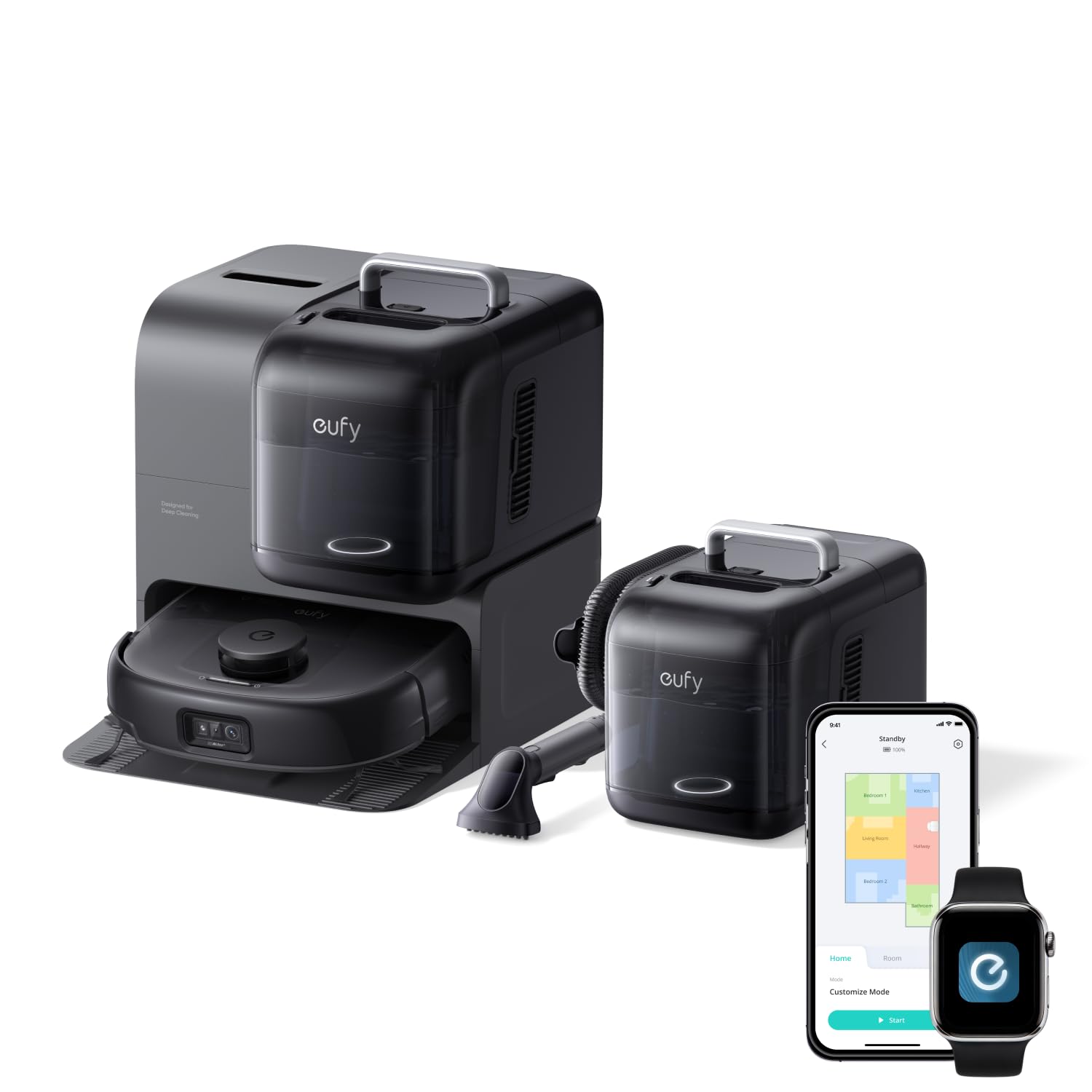
The eufy E28 is a category-bender, combining a 20,000 Pa robot vacuum with a detachable deep carpet cleaner. This is the only unit on the list that offers a removable handheld shampooer for spot-treating carpet stains like coffee spills or pet accidents. The core robot uses a HydroJet System and a self-washing roller mop that cleans itself 2 times per second in real-time, preventing dirty water from being spread across your rugs. The suction power is enormous for a robot vacuum — 20,000 Pa is more than double what most premium units offer, making it capable of pulling deeply embedded dirt from high-pile carpets.
The DuoSpiral anti-tangle brushes are designed to prevent hair and fur from wrapping, and the CornerRover arm extends to sweep debris from edges and walls. The all-in-one station auto-empties the dustbin, washes the roller mop, and refills the water tank. For rug owners, the ability to switch between a powerful vacuum mode and a carpet shampoo mode without pulling out a separate machine is a game-changer. The robot also detects carpet automatically and adjusts suction accordingly.
The downsides are primarily around durability and reliability. Some owners report that the unit can eat rug tassels, and the app experienced initial setup issues with passwords containing spaces. The dustbin size is relatively small at 2.5 liters, which means more frequent emptying in homes with heavy carpeted square footage. The price is the highest on this list, but for those who want professional-grade rug cleaning and a self-cleaning mop system in one package, the value proposition is strong.
Why we love it
- 20,000 Pa suction is the most powerful on this list
- Detachable carpet cleaner handles spot stains
- Self-washing roller mop prevents cross-contamination
Good to know
- Can get caught on rug fringe or tassels
- Premium price reflects the all-in-one capability
FAQ
Will a robot vacuum damage my oriental or Persian rug?
How many Pascals of suction do I need for a medium-pile wall-to-wall carpet?
Why does my robot vacuum avoid my dark-colored area rug?
Final Thoughts: The Verdict
For most gardeners, the robot vacuum for rugs winner is the roborock Q7 M5+ because of its top-tier 10,000 Pa suction and dual anti-tangle system that keeps the brush free of hair wrap, ensuring consistent performance on medium-pile carpets. If you want a bagless self-empty system for rugs, grab the Shark Navigator RV2120AE. And for deep carpet cleaning combined with a self-washing mop dock, nothing beats the eufy E28.