
Neocaridina shrimp, from the hardy cherry to the vibrant blue dream, thrive on a diet that mimics the biofilm, algae, and detritus of a mature freshwater ecosystem. The wrong food—cloudy powders that foul water or pellets too large for tiny mouths—can collapse a colony in weeks.
I’m Mo Mahin — the founder and writer behind Furric. I’ve spent years analyzing the ingredient profiles, protein-to-fiber ratios, and mineral additives (like calcium for molt support) in specialized shrimp feeds, cross-referencing them against the behavioral data and breeding success rates reported by thousands of keepers.
This guide ranks the formulas that actually build stable biofilm, don’t spike nitrates, and provide the bioavailable nutrients your colony needs. After this, you’ll know whether your current food for neocaridina shrimp is helping or hurting your tank’s ecosystem.
How To Choose The Best Food For Neocaridina Shrimp
Unlike fish pellets designed for vertebrate digestion, Neocaridina shrimp require food that supports a continuous grazing behavior, promotes biofilm growth, and provides the specific minerals needed for regular molting cycles. Choosing the wrong formula can lead to empty shells, water quality crashes, and stunted breeding.
Protein Content and Molt Health
Neocaridina shrimp thrive on moderate protein levels between 30% and 40%. Excessively high protein (above 45%) can cause the shrimp to store unmetabolized nitrogen, leading to failed molts and a condition known as “white ring of death.” Look for formulas where fish meal or krill meal is listed before soybean or corn gluten meal.
Calcium and Mineral Supplements
Shrimp cannot produce their own exoskeleton without adequate bioavailable calcium. The best foods include calcium carbonate, spirulina powder (which also offers natural carotenoids for color), and Bacillus subtilis probiotics that help shrimp digest cellulose and plant matter more efficiently. A ratio of roughly 2:1 calcium to phosphorus is the sweet spot for shell regrowth.
Water Stability and Feeding Form
Food that disintegrates into a cloud of fine dust within minutes can spike ammonia and nitrates in a nano tank. Snowflake-style foods (mycelium-based) break into soft flakes that shrimp can graze on for hours without fouling the water. Sinking sticks and discs should hold their shape for at least 30 minutes to allow for complete consumption without waste.
Biofilm and Probiotic Support
A healthy shrimp colony relies as much on the biofilm on your driftwood, rocks, and substrate as on the food you add. Products like Bacter AE work by seeding the tank with beneficial bacteria that create continuous grazing surfaces. For smaller tanks without established biofilm, a probiotic food is even more critical for shrimplet survival.
Quick Comparison
On smaller screens, swipe sideways to see the full table.
| Model | Category | Best For | Key Spec | Amazon |
|---|---|---|---|---|
| GlasGarten Bacter AE | Biofilm Supplement | Baby shrimp survival, tank seeding | 35g probiotic powder | Amazon |
| MorexLab High Protein Discs | Protein Disc | Molting support, large colonies | 9.87 oz / 280g, 30%+ protein | Amazon |
| Xtreme Shrimpee Sticks | Sinking Stick | Nano tanks, low-waste feeding | 6oz, 3mm sticks, USA-made | Amazon |
| GlasGarten Snow Flakes | Snowflake Flake | Grazing supplement, water clarity | 30g mycelium-based flake | Amazon |
| Aquatic Arts Snowflake Pellets | Snowflake Pellet | Multi-species tanks, babies | 2oz, disintegrates into flakes | Amazon |
In‑Depth Reviews
1. GlasGarten Bacter AE (35g)

Bacter AE is not a conventional pellet or flake—it is a freeze-dried bacterial powder that, when mixed with tank water and dosed, colonizes every surface of your aquarium with the biofilm Neocaridina shrimp naturally graze on in the wild. This is especially critical for newborn shrimplets, which are too small to consume most sinking foods and rely entirely on biofilm and aufwuchs for the first two to three weeks of life.
The 35-gram jar may look small, but the dosing instructions recommend just a tiny scoop (about 0.1 grams) once or twice a week for a standard 10-gallon tank. Overdosing is the most common mistake—excess powder creates a bacterial bloom that depletes oxygen. When dosed correctly, however, users report visibly increased shrimplet survival rates, more frequent molting activity, and shrimp that are more active on all hardscape surfaces.
This product is best used as a foundational supplement alongside a staple sinking food. It is unsuitable as a sole food source for adult shrimp over the long term, as it lacks the high protein and calcium levels that larger shrimp need for regular molt cycles. Keepers running larger colonies (30+ shrimp) will find the 35g size economical—a single jar can last three to four months of regular use.
Why we love it
- Dramatically improves baby shrimp survival rates
- Creates natural, continuous biofilm on all surfaces
- Extremely concentrated—one jar lasts months
- Safe to leave in tank without water fouling
Good to know
- Easy to overdose; must measure precisely
- Not a complete daily staple for adult shrimp
2. MorexLab High Protein Discs (9.87 oz)
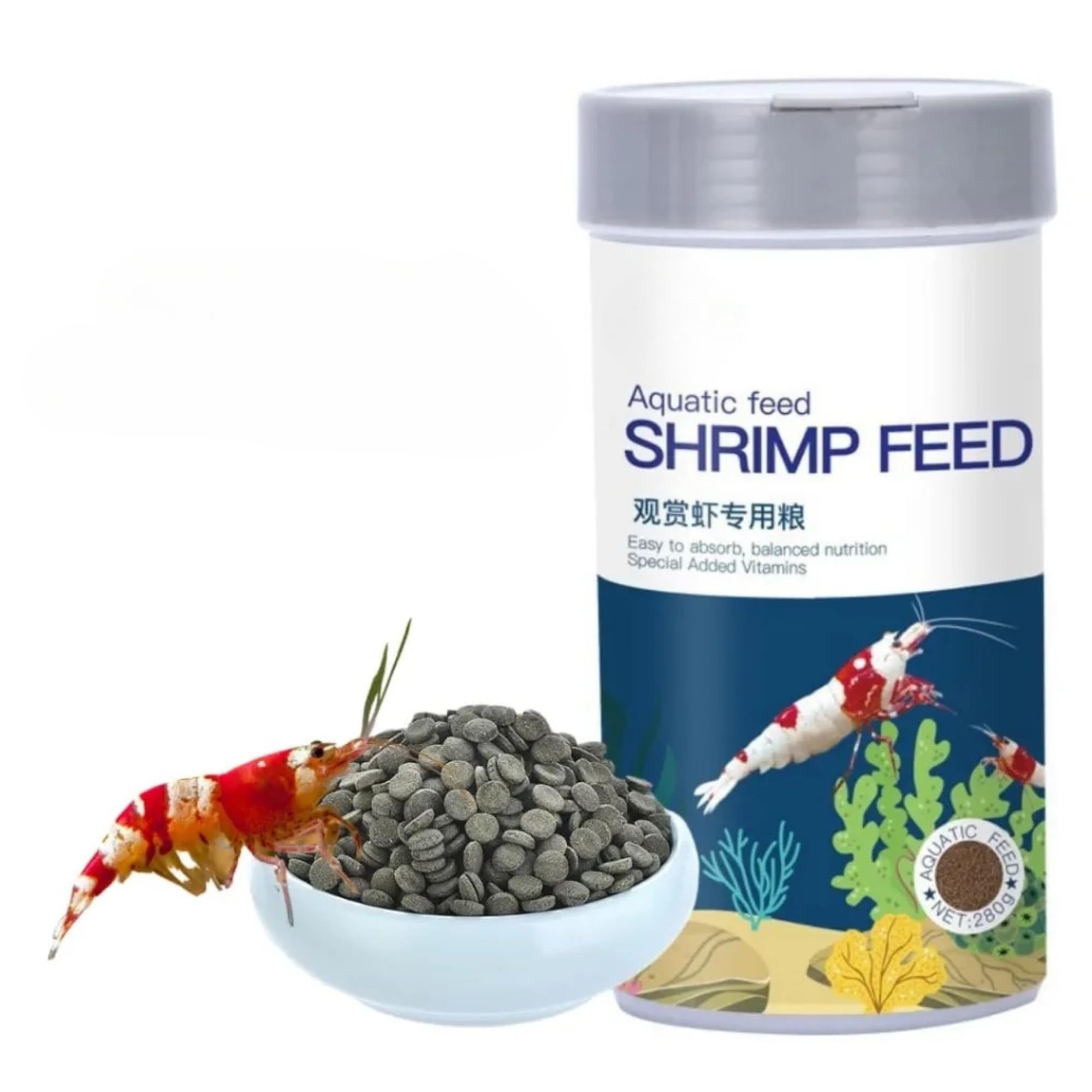
The MorexLab High Protein Discs are formulated with a dense blend of white fish meal, krill meal, squid meal, and spirulina powder, delivering a protein content that sits in the optimal 35–40% range for Neocaridina. Each disc is fortified with Bacillus subtilis probiotics and calcium, the two additives most directly linked to stronger exoskeletons and more successful molts in cherry, blue dream, and rili shrimp.
At 9.87 ounces (280 grams), this is the largest quantity in the lineup, making it the most cost-effective option for established colonies of 20+ shrimp. The discs sink rapidly—within seconds of hitting the water—so they reach bottom-dwelling shrimp before fish can steal them. The discs do expand slightly after absorbing water, so breaking a single disc into quarters is recommended for smaller tanks to avoid uneaten food decomposing in the substrate.
One concern from experienced keepers is that the first ingredient listed is flour rather than fish meal, which places this formula in a supplementary rather than premium daily staple tier. The inclusion of spirulina does promote natural red color development in cherry shrimp, though keepers seeking the absolute highest protein-to-filler ratio may prefer a fish-meal-first formula with shorter ingredient lists.
Why we love it
- Excellent value per gram for large colonies
- Fast-sinking discs reach all shrimp quickly
- Calcium and probiotics support molting health
- Spirulina content enhances natural coloration
Good to know
- First ingredient is flour, not fish meal
- Discs expand in water; portion control needed
3. Xtreme Shrimpee Sinking Sticks (6oz)
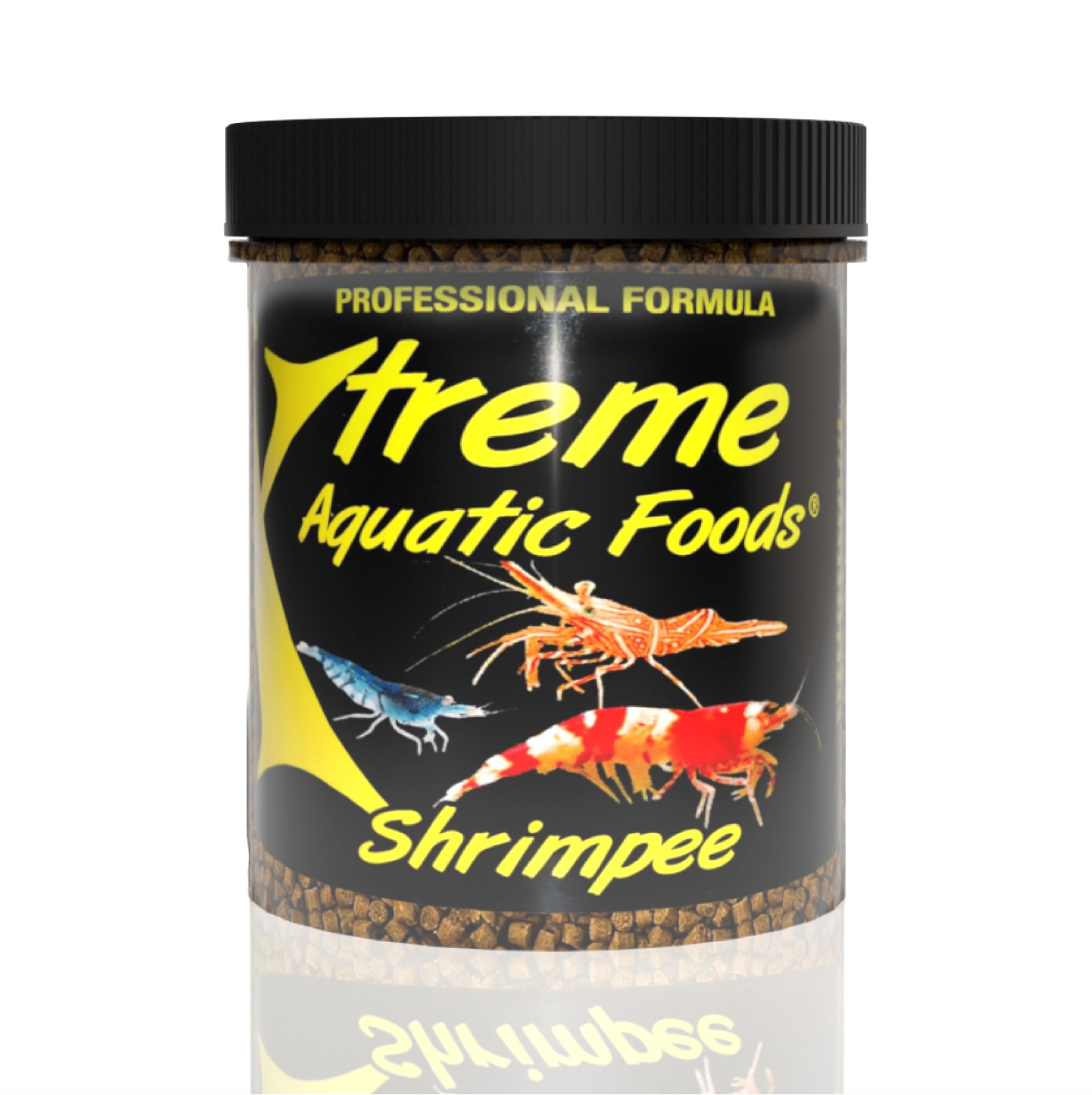
Xtreme Shrimpee 3mm Sinking Sticks are engineered with one specific advantage: dimensional stability underwater. Where many shrimp foods turn to mush within minutes, these sticks maintain their structural integrity for thirty minutes or longer, allowing shrimp to graze naturally without creating a cloud of suspended particles that can stress filter intakes and spike TDS levels in nano tanks.
The 6-ounce bag is USA-made and uses a limited-ingredient formula with scientifically selected proteins and balanced mineral packs. The sticks trigger an immediate feeding response in Neocaridina—shrimp will swarm a stick within seconds of it hitting the substrate. This formula is also popular with corydoras and loach keepers who need a sinking food that doesn’t disintegrate before the bottom-dwellers can find it.
One consistent note from users is the strong, pungent odor released once the sticks hit the water. The smell dissipates within 15–20 minutes but is noticeably stronger than the majority of shrimp foods on the market. Some shrimp keepers also report that the sticks do not break apart easily, meaning a single shrimp may monopolize an entire stick rather than sharing with the colony, so breaking sticks into smaller fragments is advisable for tanks with multiple shrimp.
Why we love it
- Maintains shape underwater; minimal waste
- Triggers immediate, strong feeding response
- USA-made with limited, quality ingredients
- Low fouling risk in nano tanks
Good to know
- Strong odor when wet; may need tank ventilation
- Sticks don’t break apart; may need manual breaking
4. GlasGarten Shrimp Snacks Snow Flakes (30g)

GlasGarten Snow Flakes are built around a single biological ingredient: mycelium, the vegetative root structure of fungi. This material naturally disintegrates into soft, feathery flakes within seconds of contact with water—not into dust or mush that clouds the tank—creating a delicate food source that even the smallest shrimplets and newborn snails can graze on immediately.
The 30-gram bag is small, but the food is so lightweight and airy that a tiny pinch produces dozens of edible particles distributed across the tank by even minimal water flow. This makes it ideal for shrimp keepers who need to spot-feed colonies spread across a heavily planted aquarium. The flakes are plant-based and non-GMO, so they won’t contribute to nitrate buildup, and they are safe to leave in the tank for a day or two without fouling the water.
One limitation is that this is a snack-supplement, not a complete daily ration. The mycelium base is low in protein and calcium relative to fish-meal-based sticks or discs, so it should be rotated with a higher-nutrition staple food. The bag packaging also means that the flakes can arrive slightly crushed if shipped without adequate padding, though this does not affect the food’s performance once in the tank.
Why we love it
- Soft flakes accessible to newborn shrimplets
- Does not foul water; safe to leave in tank
- Plant-based, non-GMO mycelium source
- Distributes widely with minimal water flow
Good to know
- Low protein; needs rotation with staple food
- Bag packaging; flakes can arrive slightly crushed
5. Aquatic Arts Shrimp Food Snowflake Pellets (2oz)
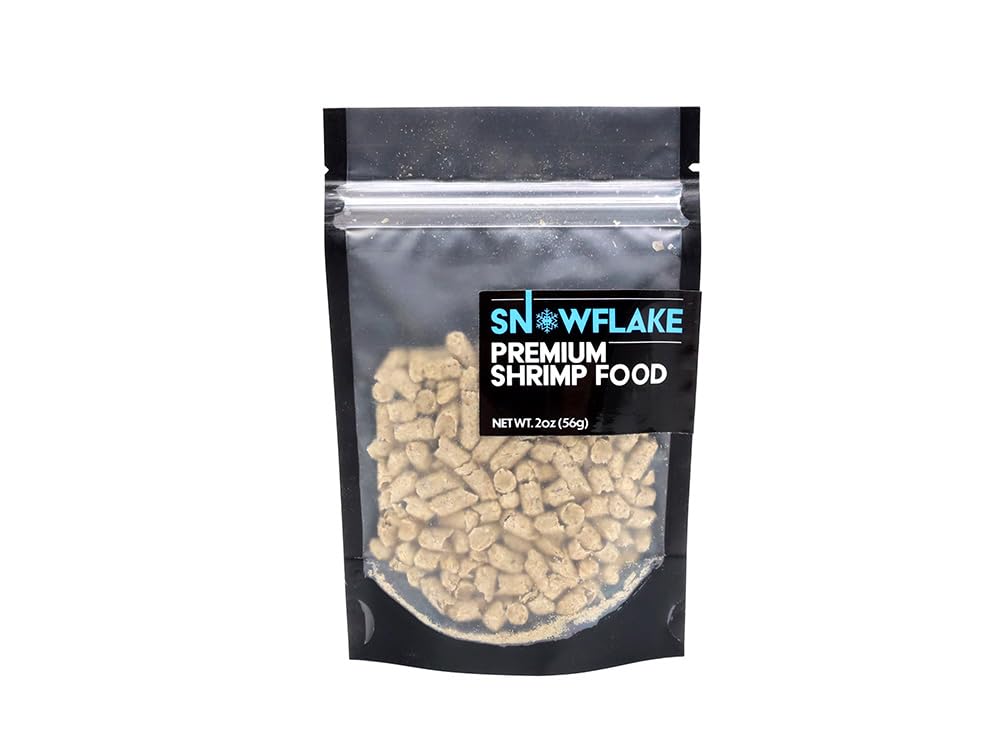
Aquatic Arts Snowflake Pellets combine the snowflake concept with a prebiotic boost, using mycelia as both a nutrient source and a growth medium for beneficial bacteria. Unlike pure mycelium flakes, these pellets are slightly more compressed, so they sink faster and then disintegrate into smaller flakes that shrimp, snails, crabs, and even small fish can all graze on without direct competition.
The 2-ounce jar is the smallest volume in the lineup, but the prebiotic properties mean a single pellet feeds multiple invertebrates simultaneously, reducing the need for separate foods for Nerite snails or Amano shrimp in the same tank. The formula is high-protein and plant-based, with a non-GMO claim that appeals to keepers breeding sensitive Caridina varieties alongside their Neocaridina colonies. Users have reported that it does not cause nitrate spikes even when used as a primary food source for a mixed community tank.
The primary drawback reported by users is packaging inconsistency. Some units ship in a proper glass jar as pictured, while others arrive in a sealed plastic bag that leaves the pellets vulnerable to crushing during transit, converting them into dust. For the price, the jar format should be the standard, not the exception. Additionally, some keepers feel the quantity-to-cost ratio is less favorable than larger bulk bags, making this a better choice for smaller nano tanks or mixed-species communities than for large monoculture colonies.
Why we love it
- Feeds multiple species in one tank (shrimp, snails, fish)
- Prebiotic mycelia support healthy gut flora
- Non-GMO, plant-based, high-protein formula
- Does not spike nitrates in community tanks
Good to know
- Packaging varies; may arrive in bag not jar
- Small jar size; less cost-effective for large colonies
FAQ
Can I feed my Neocaridina shrimp only Bacter AE and no other food?
How often should I feed sinking sticks to a colony of 20 adult Neocaridina?
Why are my shrimp ignoring the new food discs I just dropped in?
Is high-protein shrimp food safe for baby Neocaridina shrimplets?
Final Thoughts: The Verdict
For most keepers, the best food for neocaridina shrimp winner is the GlasGarten Bacter AE because it directly addresses the single most common bottleneck in shrimp keeping—shrimplet survival—by cultivating the biofilm that all life stages depend on. If you want a complete daily staple with calcium for molting support, grab the MorexLab High Protein Discs. And for a low-waste, shape-holding option perfect for nano tanks, nothing beats the Xtreme Shrimpee Sinking Sticks.