
That satisfying rip of a screen door as your dog barrels through for the tenth time isn’t just annoying — it’s a direct line for bugs, debris, and the constant headache of replacement. Standard fiberglass mesh folds under the pressure of claws, teeth, and high-traffic back-and-forth, turning your screened porch into a maintenance project instead of a relaxation spot.
I’m Mo Mahin — the founder and writer behind Furric. I’ve spent hundreds of hours dissecting screen material specs, comparing weave densities and tensile strengths, and cross-referencing owner feedback from high-traffic pet households to find what actually holds up to a determined claw.
This guide walks through the material science and installation realities so you can confidently choose the right screen for porch with pets that stops tears before they start and keeps your outdoor space actually usable.
How To Choose The Best Screen For Porch With Pets
Selecting porch screening for a home with pets means prioritizing tear resistance and structural integrity over visibility or cost. The wrong material turns a weekend DIY project into a recurring expense. Focus on these three factors to avoid the common pitfalls.
Material Type: PET vs. Fiberglass vs. Stainless Steel
Standard fiberglass screen (the cheap, common roll) has a radial strength around 120–140 N/inch — a motivated dog claw or cat scratch punches right through. PET (polyethylene terephthalate) mesh uses a thicker, denser weave that resists punctures significantly better, though it’s still a polymer. For maximum durability, 304 stainless steel mesh with a 22-mesh count and 0.15mm wire diameter offers the highest claw resistance, but it’s harder to work with and can leave visible waves in the frame. Some premium fiberglass products (rated over 320 N/inch) split the difference — easier to install than steel but stronger than PET.
Mesh Density and Open Area
Mesh count refers to the number of openings per linear inch. A standard window screen uses 18×16 mesh. Pet-specific screens often use 20×20 or higher, which reduces the opening size — pests stay out and smaller claws can’t get a purchase point. However, higher density reduces airflow and visibility. A 52% open area (common in stainless steel pet mesh) balances airflow with protection. For a porch, look for a minimum 20-mesh count if your pet is small enough to push a nose or paw through a larger opening.
Installation Realities and Spline Sizing
Pet-resistant screens are thicker and stiffer than standard rolls, which means the standard rubber spline (typically 0.140 inches) may be too thin to hold the material securely in the track. Upgrading to a 0.155-inch spline or a stiffer composition is often required. The heavier material also demands more force when rolling into the frame and can cause more frequent blade changes when cutting. If you are not comfortable with a slightly harder install, a pre-framed magnetic screen door might be the better fit for high-traffic pet access.
Quick Comparison
On smaller screens, swipe sideways to see the full table.
| Model | Category | Best For | Key Spec | Amazon |
|---|---|---|---|---|
| LONGEAS PET Magnetic Screen Door | Magnetic PET | Hands-free pet access | PET material, 75.5″x82″ | Amazon |
| RUNPIG 304 Stainless Steel Mesh | Stainless Steel | Maximum claw resistance | 22 mesh, 0.15mm wire | Amazon |
| Phifer 3032233 PetScreen 60″x96″ | PET Fiberglass | Standard installation | 60″x96″ sheet | Amazon |
| Ideal Pet Products Screen Guard Door | Pet Door Insert | Adding pet door to screen | Flap 10.5″x15″ | Amazon |
| RhymBar Fiberglass 59″x100′ | HD Fiberglass | Large porch projects | 59″x100′, 320N/inch | Amazon |
| Phifer 3025887 PetScreen 36″x25′ | PET Mesh | Multiple window repairs | 36″x25′ roll | Amazon |
| RhymBar Fiberglass 84″x100′ | HD Fiberglass | Extra-wide porch spans | 84″x100′, 320N/inch | Amazon |
In‑Depth Reviews
1. Upgraded PET Mesh Magnetic Screen Door
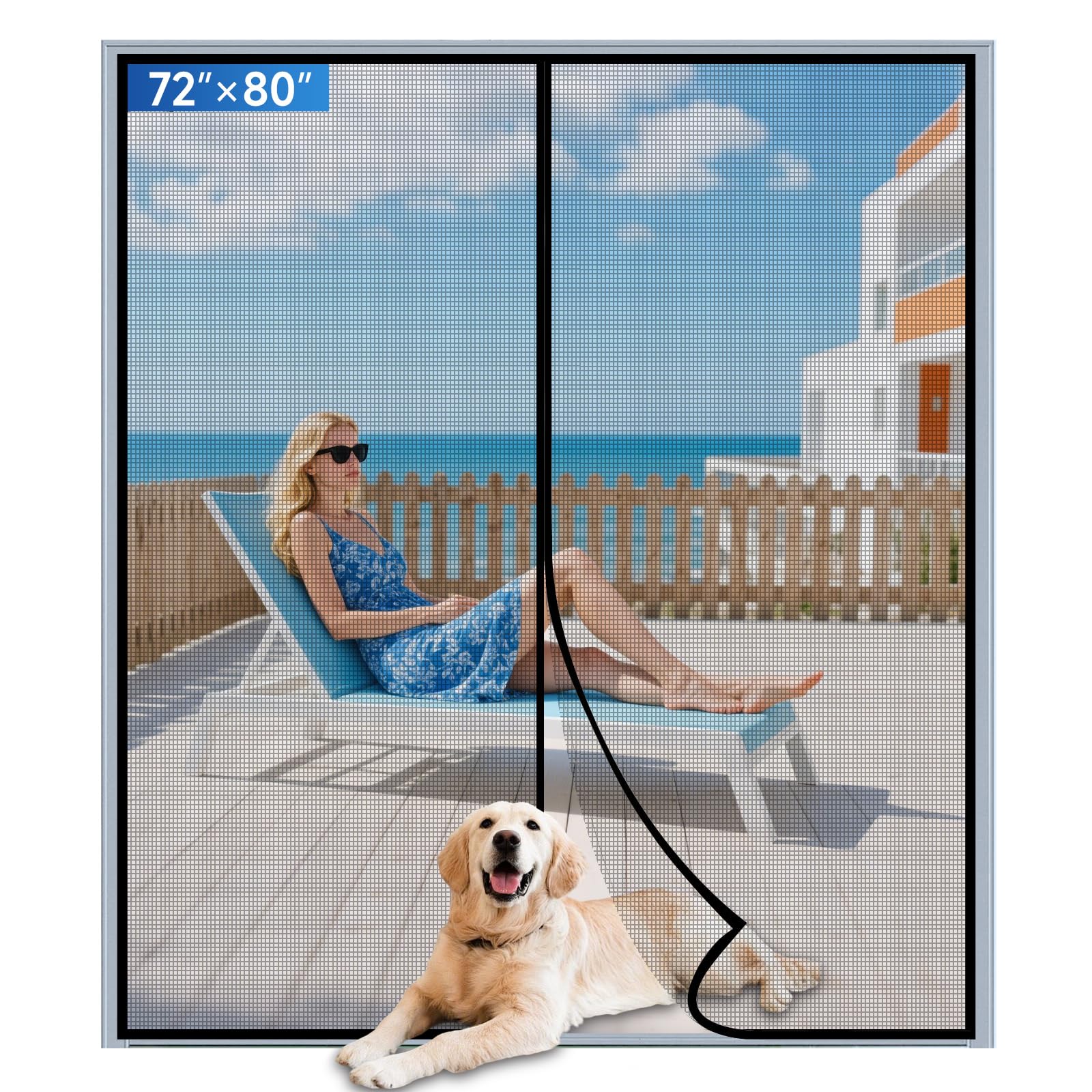
The LONGEAS magnetic screen door uses PET mesh, which is a step up in puncture resistance compared to standard polyester or fiberglass magnetic models. The claim of being stronger against scratching and biting holds up in practice — multiple reviews from owners of 30-pound dogs confirm the mesh survived repeated passes without tearing. The 1.6-inch widened Velcro provides a secure hold on the door frame, addressing a common failure point where adhesive strips peel off in heat or humidity.
Installation takes about ten minutes with the included thumbtacks and Velcro strips, though the measure-twice instruction is worth heeding since the screen is sized for a 72×80 inch door opening. The bottom weighted gravity rod combined with sewn-in magnets ensures the curtain snaps shut behind your pet, maintaining the bug barrier. The 16 magnets are strong enough to seal effectively but still let a small dog push through without resistance.
One owner reported immediate holes from a dog going in and out, which suggests that while PET is tougher than basic mesh, a determined claw or repeated digging at a single spot can still compromise it. For most households with moderate pet traffic, this is the most practical balance of cost, durability, and zero-installation skill required. The magnetic closure system is the defining feature here — it eliminates the need to train pets on a flap or door.
Why we love it
- PET mesh resists punctures better than standard fiberglass magnetic screens
- Magnets and weighted rod close automatically behind pets
- Simple adhesive installation with no frame modification needed
Good to know
- Not indestructible — repeated clawing at one spot can still cause holes
- Adhesive may struggle on rough or painted surfaces over time
2. 304 Stainless Steel Mesh, 47in x 10ft
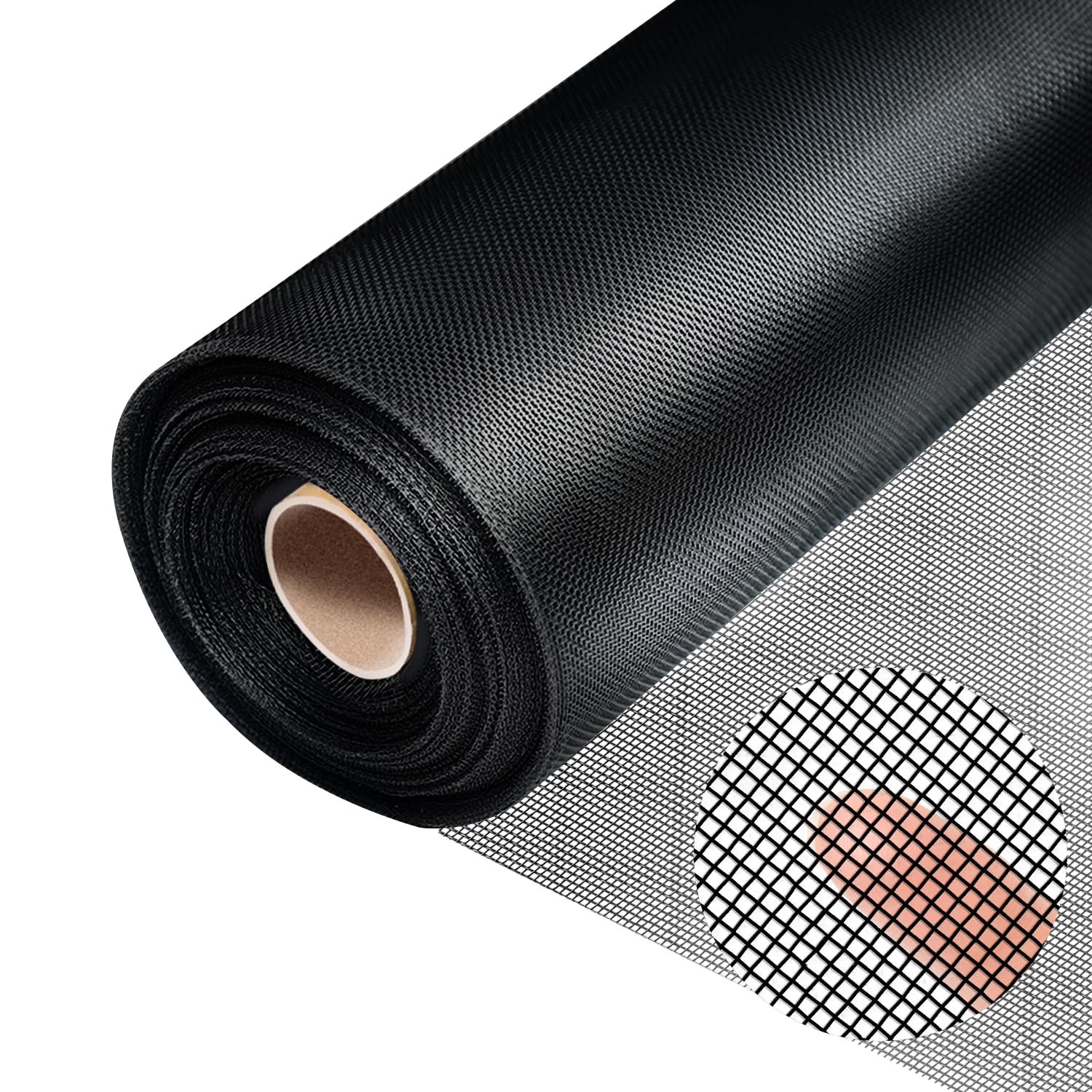
The RUNPIG stainless steel mesh is the nuclear option for pet-proofing. With 22 openings per inch and a wire diameter of 0.15mm, this 304-grade steel is food-safe, rust-proof, and heat resistant up to 800°C — complete overkill for a porch, but that’s exactly the point. Cat claws slide off the surface without snagging, and even a dog repeatedly jumping against it won’t stretch or tear the weave. The 52% open area maintains decent airflow, though visibility is slightly reduced compared to standard fiberglass.
The downside is installation difficulty. Unlike fiberglass or PET, this mesh has no elasticity — it won’t stretch tight in the frame, and the roll tends to hold a slight wave shape from packaging. Cutting requires tin snips, and sharp edges demand gloves. One reviewer noted the thinner 0.15mm wire is lighter than heavier-gauge stainless options, so if your dog is actively pushing a paw through, a thicker wire might be necessary. For passive scratching and general wear, this material will outlast the door frame itself.
This is not a product for the casual DIYer looking for a quick fix. It requires precise cutting, a sturdy frame that can handle the weight (2.94 pounds for this size), and patience with the lack of spring-back tension. However, for a permanent solution in a high-traffic pet porch, stainless steel is the only material that guarantees zero claw penetration.
Why we love it
- Cat claws and dog nails cannot puncture 304 stainless steel
- Rust-proof and withstands extreme temperatures
- 52% open area allows strong airflow
Good to know
- Difficult to install due to no elasticity and sharp edges
- Roll waves may be visible after installation
3. Phifer 3032233 PetScreen, 60″ x 96″

Phifer is the established name in pet screening, and the 3032233 sheet reflects decades of refinement. This 60×96 inch black PET-coated fiberglass screen is thicker and more tear-resistant than standard window mesh, designed specifically for high-traffic areas. Owner reports confirm it withstood a pitbull jumping against it, a Yorkie digging at the bottom edge, and a cat climbing the entire surface — all without ripping. The material blocks some sunlight, which can actually reduce heat buildup on a west-facing porch.
Installation is similar to standard screen replacement, but the added thickness means you will need to apply more force when pressing the spline into the track. Several reviewers noted that the spline channel may require a larger diameter spline (0.155 inch) to hold the material securely. The roll cuts cleanly with a utility knife, and the black color provides excellent outward visibility — you can see through it clearly while maintaining a uniform appearance from the outside.
The main trade-off is weight. This sheet is noticeably heavier than a standard fiberglass piece, which can make it trickier to handle during solo installation, especially on a large door frame. One owner reported a minor vinyl coating flaw near the corner, but overall durability has held up across multiple seasons. For porch doors that see constant dog traffic, this is the most proven drop-in replacement available.
Why we love it
- Thick PET coating withstands dog jumps, cat climbs, and digging
- Excellent outward visibility with a clean black finish
- Proven track record across years of high-traffic use
Good to know
- Thicker material requires more force and possibly a larger spline to install
- Heavy sheet can be awkward for solo installation on large doors
4. IDEAL PET PRODUCTS Screen Guard Pet Door

The Ideal Pet Products Screen Guard is a different kind of solution — it’s a magnetic flap insert designed to be installed within an existing screen guard or screen door frame, not the screen material itself. The extra-large flap measures 10.5 by 15 inches, suitable for dogs from 36 to 90 pounds. The aluminum frame and magnetic closure provide a solid seal that keeps bugs out while giving your pet autonomy to come and go. Multiple reviews noted the door lasted over nine years with regular use.
Installation requires a screen guard (not included) or a wooden frame to mount the aluminum housing. You cut an opening in your existing screen, insert the housing, and use the provided foam tape and screws to secure it. The flap uses a soft, flexible vinyl with sewn-in magnets that hold the door shut against wind. A solid lock-out panel slides down to completely seal the opening when needed, which is useful for nighttime or when you want to restrict access.
The most common installation complaint involves the foam tape backing — the red strip is difficult to separate, requiring patience. The door itself is well-built and, once installed, dogs learn to use it within a few treat-bribed sessions. This is not a universal screen replacement; it’s a targeted solution for homes that already have a screen door and simply need a pet passage without cutting a permanent hole in the wall.
Why we love it
- Durable aluminum frame with magnetic seal lasted over 9 years for some owners
- Lock-out panel gives full control over pet access
- Flap is soft, flexible, and easy for pets to push through
Good to know
- Requires a separate screen guard or frame — not a standalone product
- Foam tape installation can be frustrating
5. RhymBar Fiberglass Screen Mesh 59″ x 100′
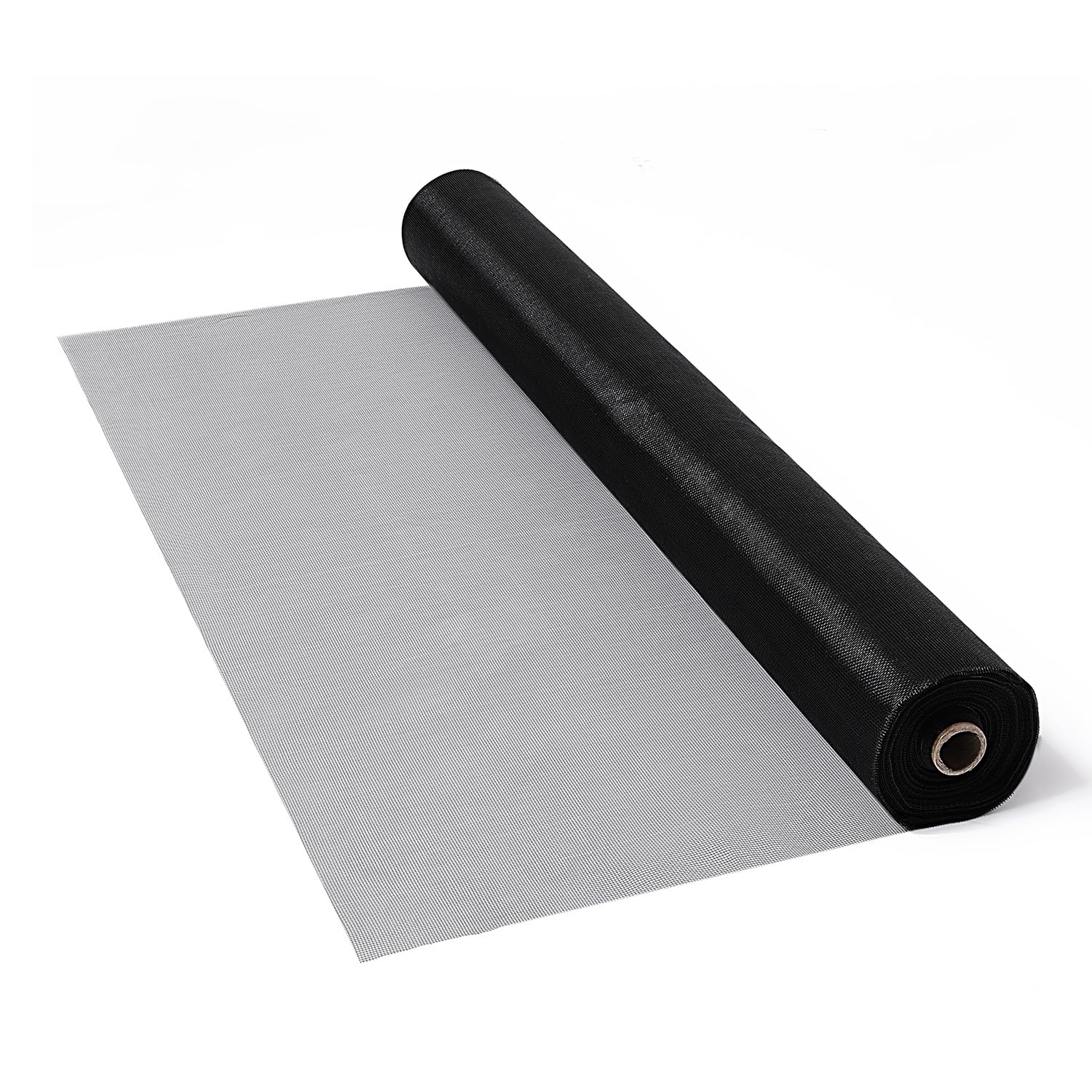
The RhymBar fiberglass screen roll at 59 inches wide and 100 feet long is designed for large-scale porch projects, but its 320 N/inch radial strength makes it a legitimate option for pet households. This is significantly stronger than standard fiberglass (typically 120–140 N/inch), putting it in the same durability conversation as PET mesh but with the easier installation and flexibility of fiberglass. The weight is 110 grams per square meter, giving it a substantial feel without the rigidity of stainless steel.
Installation is straightforward — cut with a utility knife, press into the spline channel, and trim. The material is wrinkle-resistant and doesn’t unravel at the edges, which is a common frustration with cheaper fiberglass rolls. At 100 feet, you can screen an entire porch or replace dozens of window screens from a single roll, making this the most economical choice per square foot for large spaces. The black color provides clear outward visibility while keeping the mesh nearly invisible from the inside.
The catch is that 320 N/inch, while strong, is still a woven fiberglass — a determined dog claw can eventually saw through if given enough time at a single spot. The five-year lifespan estimate from the manufacturer is reasonable for normal use, but high-traffic pet doors may wear faster. For general porch screening where pets are present but not constantly scratching at the mesh, this is the best balance of strength, ease of installation, and coverage.
Why we love it
- 320 N/inch radial strength is much stronger than standard fiberglass
- 100-foot length covers large porch projects from one roll
- Easy to cut and install with no special tools needed
Good to know
- Still vulnerable to focused clawing over time
- Large roll weight (11.92 pounds) requires a steady cutting surface
6. Phifer 3025887 PetScreen, 36″ x 25′
The Phifer 3025887 PetScreen is the roll version of the brand’s proven pet mesh, offering 36 inches by 25 feet of polyester-based screening. Like the sheet version, this material is thicker and more tear-resistant than standard screen, designed to survive repeated pet impacts. Reviewers specifically noted it survived string trimmer damage as well as dog claws, which speaks to the material’s overall toughness. The black polyester construction provides excellent outward visibility without glare.
Installation requires adjusting your technique compared to standard screen. The material’s heft means you need a stiffer spline — one reviewer tested 0.140, 0.155, and 0.125-inch splines and found 0.140 worked, while 0.155 was too difficult to press in fully. The thicker weave also dulls utility knife blades faster, so plan for extra cuts or a fresh blade. Once seated, the screen holds tension well and doesn’t sag over time like thinner alternatives.
At 25 feet, this roll is ideal for repairing multiple windows or a single large porch door section. It’s not cost-effective for a full porch enclosure (the 100-foot RhymBar is better for that), but for targeted replacements where maximum pet resistance is needed, this is the most concentrated durability per foot. The trade-off is the steeper installation curve — if you’re replacing a single small window, the extra effort may not be worth it over a standard screen.
Why we love it
- Thick polyester weave resists dog claws and even accidental trimmer contact
- Black finish offers clear outward visibility with no glare
- Holds tension in the frame better than standard screen
Good to know
- Thicker material requires a larger spline and more force to install
- More expensive per foot than standard fiberglass rolls
7. RhymBar Fiberglass Screen Mesh 84″ x 100′
The larger sibling of the 59-inch RhymBar roll, this screen measures 84 inches wide by 100 feet long, catering specifically to extra-wide porch openings or floor-to-ceiling screen panels. The same 320 N/inch radial strength and 110 g/m² weight apply, giving it the same class-leading strength-to-flexibility ratio as its narrower counterpart. For anyone screening a full-length porch with standard 84-inch height doors, this roll eliminates the need for horizontal seams.
At 17.16 pounds, this roll is heavy and requires a large, clean cutting surface to unroll without dragging debris into the weave. The fiberglass material cuts cleanly with a sharp utility knife and presses into the spline channel without the fight associated with stainless steel. The wrinkle-resistant claim holds up — the material lays flat without creases from the roll, which is critical for achieving a professional-looking final install without visible waves.
The fiberglass weave is not pet-proof in the way stainless steel or PET mesh is, but for the budget-conscious homeowner with well-behaved pets, the 320 N/inch rating provides enough margin to handle occasional contact. If your dog only noses the screen or rests against it, this will hold up fine. If you have a dedicated scratcher or jumper, save for a PET or stainless alternative. For the price per square foot, this is the cheapest way to cover a very large area with respectable pet resistance.
Why we love it
- 84-inch width covers tall porch doors without horizontal seams
- 320 N/inch strength handles moderate pet contact better than standard screen
- Lowest cost per square foot for large coverage
Good to know
- Fiberglass is still vulnerable to focused scratching
- Heavy roll (over 17 pounds) requires a large installation area
FAQ
Will a standard screen hold up to my cat climbing it?
Can I install pet-resistant screen on any existing door frame?
How do I train a dog to use a magnetic screen door without tearing it?
Final Thoughts: The Verdict
For most gardeners, the screen for porch with pets winner is the LONGEAS PET Magnetic Screen Door because it combines the puncture resistance of PET mesh with a zero-tools, hands-free magnetic installation that works immediately for high-traffic pet homes. If you want maximum claw protection and don’t mind a harder install, the RUNPIG 304 Stainless Steel Mesh is the permanent solution. And for a professional-grade drop-in replacement with a proven track record against pitbulls and climbers, nothing beats the Phifer 3032233 PetScreen.