
The single biggest mistake new aquarists make is treating all freshwater fish the same at feeding time. Your angelfish and your pleco have radically different digestive systems — one needs floating cichlid pellets packed with carotene, the other requires a dense, cellulose-rich wafer that sinks to the bottom before the tetras can steal it. Choosing the wrong formula doesn’t just waste money; it clouds your water, spikes ammonia, and leaves your bottom-feeders malnourished.
I’m Mo Mahin — the founder and writer behind Furric. I’ve spent fifteen years analyzing aquarium product data, studying nutritional specifications across hundreds of brands, and cross-referencing owner-reported feeding behaviors with lab-grade protein and fiber percentages to separate marketing fluff from genuinely balanced diets.
Whether you keep a community tank of tetras and corydoras or a cichlid-heavy African setup, finding the best freshwater fish food means matching form factor (flake vs. pellet vs. wafer) to species-specific feeding zones — and I’ve done the legwork to show you exactly which formulas deliver clean water and vibrant fish.
How To Choose The Best Freshwater Fish Food
Freshwater fish are classified into three feeding zones — top-dwelling, mid-water column, and bottom-feeding. The best food matches not just the species’ nutritional needs but also their natural feeding behavior. A surface-foraging cichlid cannot properly consume a fast-sinking wafer, and a nocturnal pleco won’t compete for floating pellets. Matching form to function keeps your tank cleaner and your fish healthier.
Protein and Ingredient Quality — Not Just Percentages
A guaranteed analysis of 40% crude protein sounds impressive, but the source determines whether that protein is digestible. Whole fish meals (herring, salmon) and seafood proteins (shrimp, krill) provide bioavailable amino acids that promote growth and coloration. Plant-based proteins like soybean meal and wheat gluten are cheaper fillers that increase waste and cloud water. Look for first-ingredient whole proteins and avoid anything that lists “meat meal” or “hydrolysate” as primary sources.
Form Factor — Flake, Pellet, or Wafer
Flakes spread across the water surface and are best for small community fish like tetras, guppies, and rasboras that feed at the top or middle column. Pellets can be floating (for cichlids and goldfish) or slow-sinking (for angelfish and larger characins). Wafers are dense, fast-sinking discs designed for bottom-feeders like corydoras, plecostomus, and loaches — they hold their shape for hours so nocturnal feeders can graze after lights out.
Stabilized Vitamins and Color Enhancers
Stabilized vitamin C prevents scurvy-like symptoms in herbivorous fish that cannot synthesize it internally. Beta-carotene and natural spirulina (not synthetic canthaxanthin) enhance reds and oranges in cichlids and livebearers without stressing the liver. Avoid foods that list “artificial colors” as marketing ingredients — they offer no nutritional benefit and can stain your tank’s silicone.
Quick Comparison
On smaller screens, swipe sideways to see the full table.
| Model | Category | Best For | Key Spec | Amazon |
|---|---|---|---|---|
| Xtreme Scrapers Wafers | Wafer | Bottom-feeders & Nocturnals | 13-14mm fast-sinking, 40%+ roughage | Amazon |
| Omega One Cichlid Flakes | Flake | Mid-top feeding cichlids | Crude Protein 34.76%, Omega 3 & 6 | Amazon |
| Ocean Nutrition Formula Two Pellets | Pellet | Herbivores & Omnivores | 40% Protein, spiralina & kelp base | Amazon |
| Ocean Nutrition Formula Two Flakes | Flake | Marine & community herbivores | Marine algae, kelp, natural ingredients | Amazon |
| HIKARI Cichlid Gold Floating Pellets | Pellet | African & South American cichlids | Floating, stabilized vitamin C, beta carotene | Amazon |
In‑Depth Reviews
1. Xtreme Scrapers Wafers

These 13-14mm wafers sink in about three seconds in a standard 12-18 inch tank, which means bottom-dwellers get first access before mid-water fish can intercept them. The core ingredient list is unusual — green peas form the base, supplemented with stinging nettle extract for cellulose that mirrors the natural diet of plecos and catfish. At just 2 ounces per bottle, the portion size is small, but a single wafer feeds three adult corydoras per day, so the value holds for nano tanks or dedicated bottom-feeder setups.
Owner reports consistently note that these wafers stay intact for hours, allowing nocturnal feeders like loaches and banjo catfish to graze without the food dissolving into particulates that strain the filter. Multiple reviewers with 14-inch plecos in 75-gallon tanks feed two wafers at lights-out and report no water clouding issues. The USA-grown manufacturing adds traceability that some import brands lack.
For community tanks with a mix of mid-water tetras and bottom-dwelling corydoras or plecos, this wafer fills the specific gap that floating flakes and pellets cannot — it delivers cellulose-rich roughage directly to the fish that need it most, without fouling the substrate.
Why we love it
- Fast-sinking design prevents surface feeders from stealing bottom-dweller food
- Cellulose from stinging nettle mimics natural roughage for herbivorous catfish
- Holds shape for hours, reducing ammonia spikes from dissolved waste
Good to know
- Small 2-ounce bottle may require frequent reordering for larger tanks
- Best suited for nocturnal or bottom-feeding species, not community float-feeders
2. HIKARI Cichlid Gold Floating Pellets (3 Pack)
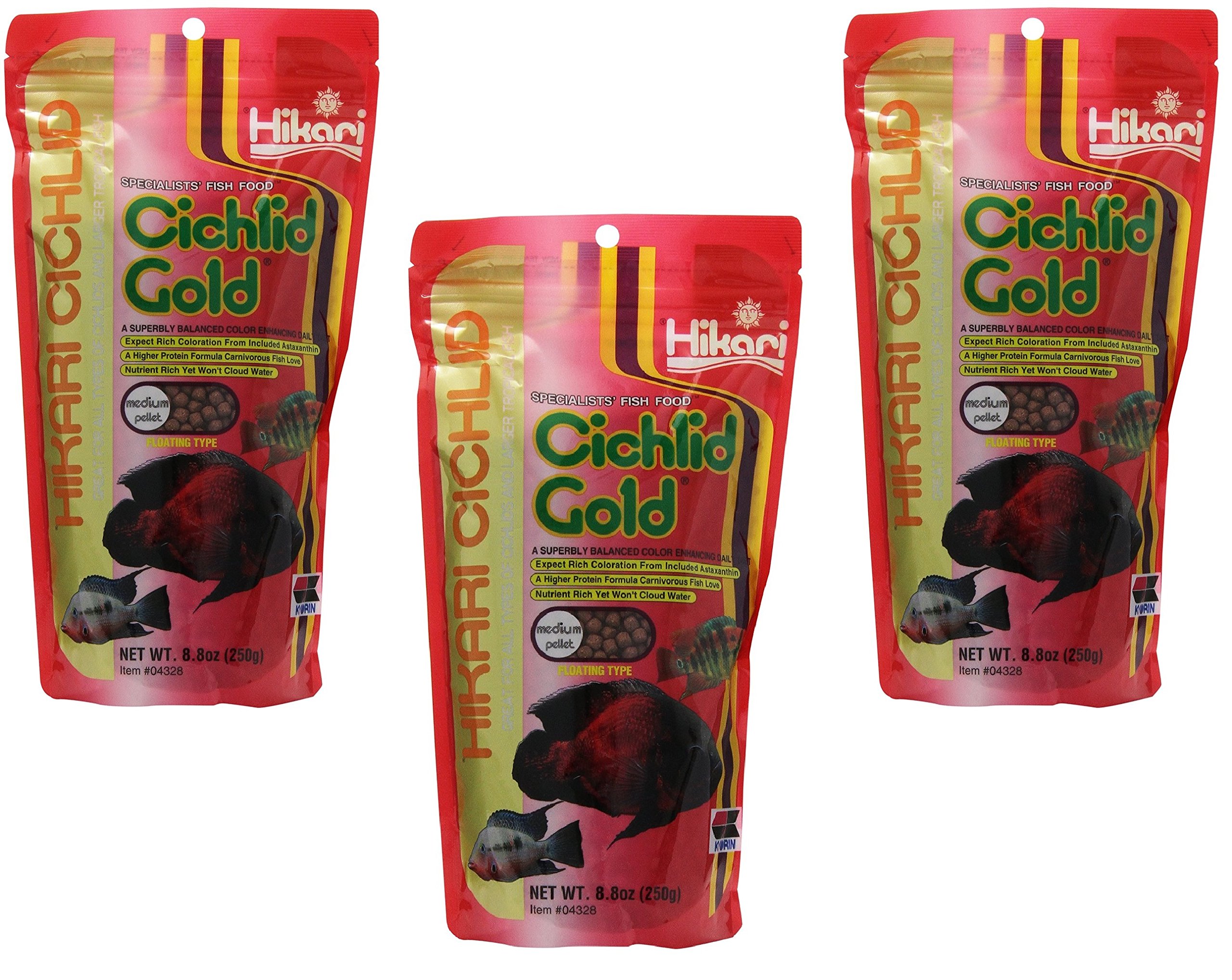
Hikari is one of the most recognized names in specialty cichlid nutrition, and this floating pellet formula explains why. The medium-sized pellets float on the surface, making it easy to monitor exactly how much each fish eats — a critical feature for keeping dominant males from overfeeding while shy females get their share. The inclusion of stabilized vitamin C and NS Germ (a stabilized probiotic) supports digestive health in cichlids prone to bloat from high-protein diets.
The beta-carotene content delivers noticeable red and orange enhancement within two to three weeks, as reported by long-term users feeding African Mbuna Zebra Cichlids for decades. The pellets do not cloud water, even with moderate overfeeding, because they maintain structural integrity until consumed. The triple-pack format provides three 8.8-ounce bags, offering strong per-ounce value for dedicated cichlid keepers.
For smaller or juvenile cichlids, the pellet size may be slightly large — some owners break the pellets in half or switch to a smaller variant until fish mature. The strong fishy aroma is a sign of whole protein content, but keep the bag sealed between feedings to prevent odor from attracting pests.
Why we love it
- Floating design lets you observe feeding behavior and adjust portions per fish
- Stabilized vitamin C and probiotics support long-term health in sensitive cichlids
- Triple-pack provides strong value for multi-tank or heavy-feeding setups
Good to know
- Medium pellets may be too large for juvenile or small-mouthed cichlids
- Strong fishy odor requires secure storage between feedings
3. Ocean Nutrition Formula Two Flakes

While the Formula Two name is shared across pellet and flake variants, this flake version delivers a plant-forward profile ideal for herbivorous and omnivorous community fish. The first ingredients are marine algae, spirulina, and kelp — a protein-light but fiber-rich mix that matches the dietary needs of tangs, rabbitfish, and marine angelfish, though it works equally well in freshwater planted tanks with mollies and swordtails.
The flake size tends toward the larger side, which works great for mid-sized fish but may require crumbling for nano species like guppies or chili rasboras. Owner reviews consistently highlight that the food does not cloud water when used as directed — a strong indicator of low starch content. The 5.5-ounce jar is a solid mid-range portion that suits a single community tank for several months of daily feeding.
For freshwater aquarists with a mixed community that includes both herbivors and omnivores, this flake covers the middle of the column better than most. It is not designed for bottom-feeders or surface-oriented cichlids, but as a daily staple for mid-water fish that graze on plant matter, it delivers reliable nutrition without the filler content of budget flakes.
Why we love it
- Marine algae and spirulina base provides natural color enhancement without synthetic dyes
- No water clouding reported by long-term users
- Large jar offers extended supply for community tanks
Good to know
- Flake pieces may be too large for very small fish without manual crumbling
- Designed primarily for herbivorous and omnivorous species — not ideal for carnivorous cichlids
4. Omega One Cichlid Flakes

Omega One differentiates itself by using whole salmon and other fresh seafood as the primary protein source, avoiding pre-processed meals, hydrolysates, or digests that many budget brands rely on. The guaranteed analysis — min 34.76% crude protein and 11.37% crude fat — is well balanced for omnivorous cichlids that require moderate protein without the excessive levels that can lead to bloating in species like oscars or severums.
The Omega 3 and 6 content supports immune function and fin health, while natural beta carotenes from salmon enhance red pigmentation without synthetic colorants. Multiple owners have reported using this brand since 2017 across multiple tanks with no parameter issues or water clouding. One consistent observation from smaller-tank keepers: the flakes are quite small, which can be a drawback for larger cichlids that prefer larger mouthfuls, but an advantage for fry or nano community tanks.
If you keep a cichlid-heavy tank and want a clean flake that won’t pollute the water column, this is a strong daily driver. Pair with a sinking wafer for any bottom-dwellers in the same tank, as the flakes stay at the surface and mid-water zone.
Why we love it
- Whole salmon as first ingredient ensures digestible, bioavailable protein
- No hydrolysates or digests — cleaner ingredients than most flake competitors
- Omega 3 & 6 support fin health and immune response
Good to know
- Flake size is very small, requiring multiple pinches for larger cichlids
- Surface-floating only — does not reach bottom-feeder species
5. Ocean Nutrition Formula Two Pellets (Small)

This small-pellet variant of the Formula Two line is designed for herbivorous and omnivorous species that feed in the mid-to-lower water column. The inclusion of spirulina and garlic serves dual purposes — spirulina supplies plant-based protein and natural color enhancement, while garlic acts as a mild appetite stimulant and may boost immune resistance against common parasites like ich.
At 40% crude protein with a plant-based core of kelp and soybean meal, this pellet is soft and moist — a design choice that aids digestion for fish that lack the grinding pharyngeal teeth of cichlids. The fast-sinking nature is consistent across user reports: pellets drop through the water column quickly, which is beneficial for bottom-dwelling corals or loaches but can frustrate fish that prefer to catch food mid-water. Some owners report that the pellets sink so fast their fish cannot compete, so target feeding or a slower-sinking alternative may be needed for surface-oriented species.
The 7-ounce (200g) jar is sealed in an oxygen-free pouch to preserve freshness, and the non-GMO, no-artificial-color claim appeals to aquarists who prioritize ingredient transparency. For planted tanks with otocinclus, snails, and peaceful community fish, this pellet is a reliable, low-waste option.
Why we love it
- Soft, moist pellet aids digestion for fish without strong grinding teeth
- Garlic infusion supports immune health and picky eaters
- Oxygen-free packaging preserves nutrient freshness after opening
Good to know
- Fast-sinking design may not suit fish that prefer feeding at the surface
- Soybean meal is a cheaper plant filler compared to whole algae sources
FAQ
Are floating pellets better than sinking pellets for cichlids?
How can I tell if my fish food is causing water clouding?
Can I use marine fish food for my freshwater tank?
Final Thoughts: The Verdict
For most home aquarists, the best freshwater fish food winner is the Xtreme Scrapers Wafers because it delivers the targeted cellulose content that bottom-feeders need, sinks fast enough to avoid interception, and holds its shape without clouding the water. If you want a floating pellet with proven color enhancement for cichlids, grab the HIKARI Cichlid Gold (3 Pack). And for a clean, whole-protein flake that won’t pollute your community tank, the Omega One Cichlid Flakes are a reliable, budget-friendly daily staple.