
The first eight weeks of a chick’s life set the foundation for egg production and overall flock health. Choosing a starter feed with the right protein level (18–22%) and ingredient profile determines whether your birds develop strong skeletal structure, proper feathering, and robust immune function. The wrong feed leads to pasty vent, slowed growth, or long-term nutritional gaps that surface months later.
I’m Mo Mahin — the founder and writer behind Furric. I’ve spent thousands of hours analyzing feed formulations, studying amino acid profiles, comparing certified organic vs. conventional protein sources, and cross-referencing owner-reported growth outcomes across hundreds of flocks.
For backyard flock owners who want a product with verified ingredient sourcing and proven growth metrics, the best chicken starter feed combines optimal protein density with certified organic grains and zero corn or soy fillers.
How To Choose The Best Chicken Starter Feed
Starter feed isn’t a commodity purchase — the ingredient deck and protein density directly impact mortality rates and first-lay timing. Focus on three primary variables before selecting a bag.
Protein Percentage and Amino Acid Profile
Chicks require 18–22% crude protein during weeks 0–8 to support muscle fiber development, feather follicle formation, and organ growth. Feeds below 18% force birds to consume more volume to meet metabolic needs, increasing waste and digestion inefficiency. Look for guaranteed lysine and methionine levels — these two essential amino acids dictate whether protein converts to growth or passes through undigested.
Medicated vs. Non-Medicated Formulations
Amprolium-based medicated feeds suppress coccidiosis by blocking the parasite’s thiamine uptake. This matters if you raise chicks on litter flooring or in high-density brooders where fecal exposure is unavoidable. Non-medicated organic feeds work best for small flocks on wire flooring or clean pasture where coccidiosis pressure is minimal. Switching from medicated to non-medicated mid-cycle requires a 5–7 day washout period.
Ingredient Form: Mash, Crumbles, or Whole Grain
Mash has the highest dust fraction and encourages selective pecking. Crumbles reduce ingredient sorting while maintaining digestibility. Whole grain formulas (not ground into uniform dust) force chicks to work for each kernel, reducing waste and encouraging natural foraging behavior. The trade-off is slower initial intake — chicks accustomed to fine mash may reject whole grains for 24–48 hours.
Quick Comparison
On smaller screens, swipe sideways to see the full table.
| Model | Category | Best For | Key Spec | Amazon |
|---|---|---|---|---|
| Scratch and Peck Starter Crumbles | Organic Whole Grain | Best overall organic growth | 20.5% Protein, Corn-Free, Soy-Free | Amazon |
| Scratch and Peck Starter Mash | Organic Whole Grain | Fermentation feeding method | 20.5% Protein, Fermentable Mash | Amazon |
| Purina Start & Grow Medicated | Medicated Crumbles | Coccidiosis prevention in brooders | 18% Protein, Amprolium, 25 lb | Amazon |
| Prairie’s Choice Starter/Grower | Non-GMO Crumble | Budget-friendly non-GMO feeding | 18% Protein, Crumble, 25 lb | Amazon |
| LIWII Dried Black Soldier Fly Larvae | Protein Supplement | Calcium and protein boost | 45% Protein, 5% Calcium | Amazon |
In‑Depth Reviews
1. Scratch and Peck Feeds Whole Grain Starter Crumbles
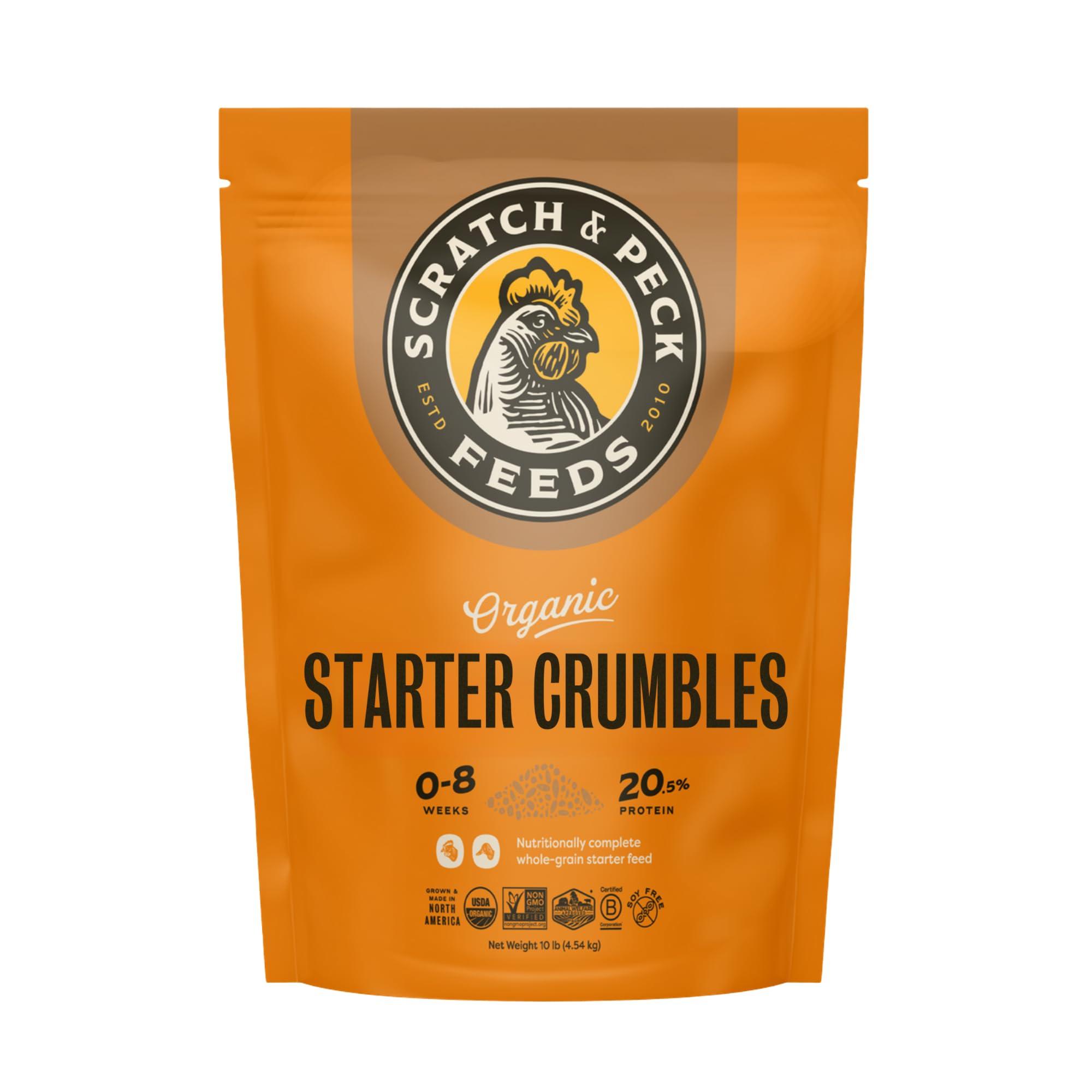
Scratch and Peck’s Starter Crumbles deliver a 20.5% protein payload from organic grains, fish meal, and sunflower oil — zero corn, zero soy, zero synthetic amino acid fortification. The crumble form reduces the dust fraction significantly compared to mash, meaning less feed waste and cleaner waterers during the critical first four weeks. Owner reports consistently note brighter feathering by week three and more uniform body weight across mixed-breed flocks compared to conventional starter feeds.
The ingredient deck includes kelp meal for trace mineral density and flaxseed for omega-3 fatty acid transfer to developing organs. The 10-pound bag size provides roughly 10–12 days of feed for a flock of 15 chicks, making the per-pound cost higher than commodity feeds but justified by the absence of filler grains that pass through undigested. Multiple long-term reviewers report transitioning to the same brand’s layer formula without any feed refusal period.
Certifications are verifiable: USDA Organic and Non-GMO Project Verified, with Pacific Northwest sourcing for all grain components. The crumble size averages 2–3 mm, appropriate for day-old chicks without choking risk. The bag reseals with a zip closure, though transferring to a metal bin after opening extends freshness in humid conditions.
Why we love it
- Corn-free and soy-free formulation prevents digestive upset in sensitive breeds
- 20.5% protein from whole food sources, not synthetic isolates
- Low dust crumble reduces respiratory irritation in enclosed brooders
Good to know
- 10 lb bag feeds only 10–12 days for average backyard flocks; bulk ordering recommended
- Fish meal content produces a mild odor that some keepers find noticeable indoors
2. Scratch and Peck Whole Grain Starter Mash

This mash version of Scratch and Peck’s starter formula retains the same 20.5% protein and organic whole grain base but presents it in a finer texture designed for fermentation feeding. When soaked at a 1:2 feed-to-water ratio for 24–48 hours, the grains begin lacto-fermentation, lowering pH and increasing bioavailability of phosphorus and B vitamins. Keepers who ferment report 15–20% less feed consumption per bird while maintaining identical growth curves.
The mash consistency is coarser than typical starter powders — you’ll see visible cracked grains and flaxseed pieces rather than a uniform flour. This texture discourages selective pecking while remaining soft enough for day-old chicks to ingest without choking. The bag’s resealable closure is adequate, but the mash absorbs ambient moisture quickly, so transfer to an airtight bin within 48 hours of opening is recommended to prevent clumping.
Sourcing integrity matches the crumble version: organic grains from Pacific Northwest farms, Non-GMO Project Verified, and compostable packaging. The 10-pound bag supports roughly 12 days for 15 chicks when fed dry, or up to 16 days when fermented due to increased volume from water absorption. Reviewers consistently report that chicks transitioned to this mash from medicated starters show zero feed refusal within 12 hours.
Why we love it
- Fermentation-ready formulation reduces feed costs by 15–20% with no growth penalty
- Organic whole grain base with visible ingredient integrity, not powdered filler
- Corn and soy elimination prevents crop binding in young chicks
Good to know
- Mash form generates higher dust than the crumble variant during dry feeding
- Requires airtight storage within 48 hours to prevent moisture uptake and spoilage
3. Purina Start & Grow Medicated Chick Feed Crumbles
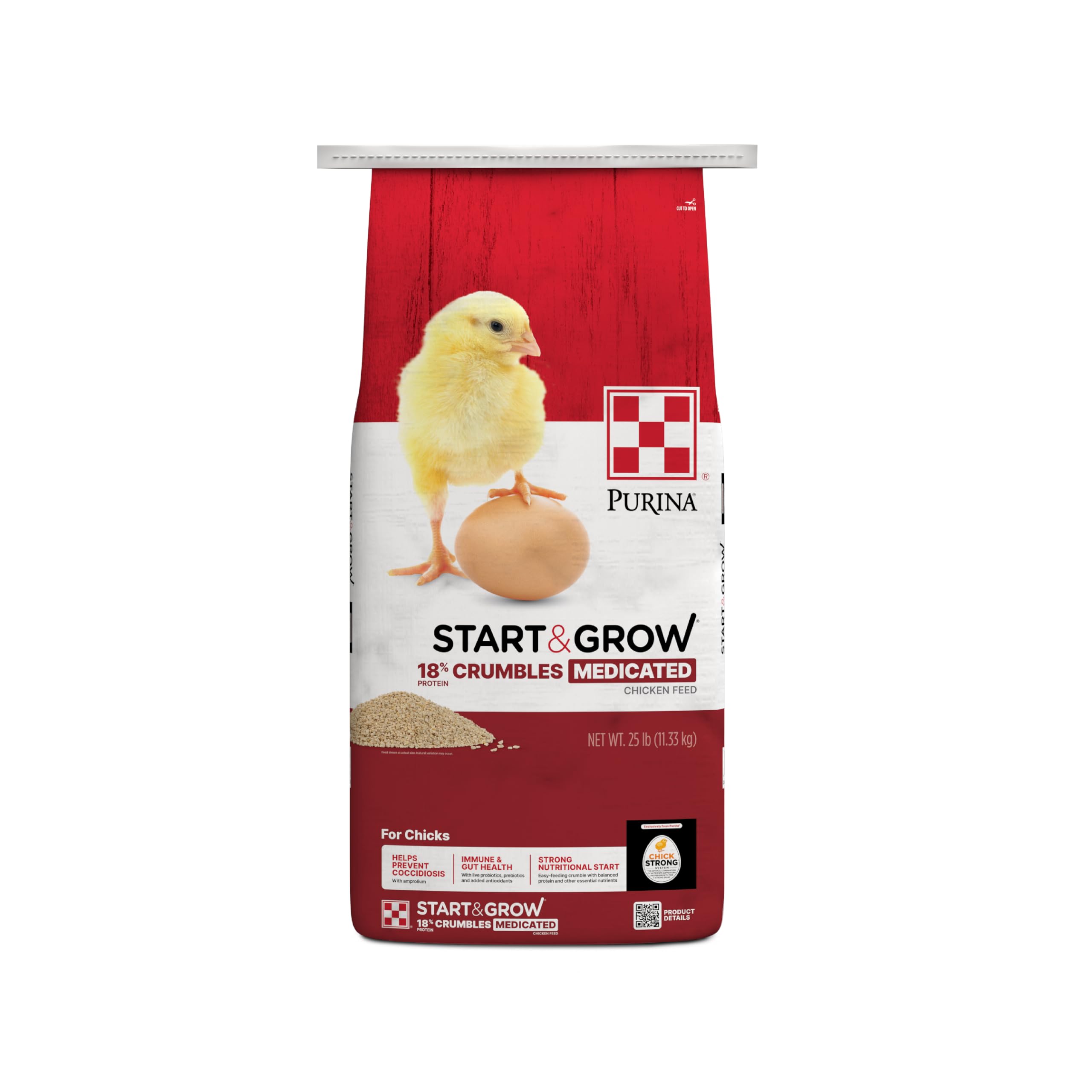
Purina’s Start & Grow delivers a reliable 18% protein formulation with amprolium at 0.0125% for coccidiosis prevention — a proven safeguard for chicks raised on pine shavings or soil floors where oocyst exposure is constant. The crumble size averages 1.5–2 mm, small enough for bantam breeds and day-old standard chicks alike. Prebiotics and probiotics are included in the mix, supporting gut flora establishment during the stress of hatching and transport.
The 25-pound bag offers the lowest per-pound cost among all reviewed products, making it the volume choice for flocks of 20+ chicks or keepers who brooder multiple batches per season. Added marigold extract provides xanthophylls for leg and beak color development, though this is cosmetic rather than nutritional. The formula includes synthetic lysine and methionine to hit the 18% protein target without relying solely on whole-grain amino acid profiles.
Medication withdrawal is not required before moving to layer feed — amprolium is not an antibiotic and carries no VFD restrictions. Note that the 18% protein level is adequate for standard breeds but may fall short for heavy dual-purpose breeds like Brahmas or Jersey Giants that benefit from 20%+ during the first six weeks. The crumbles produce moderate dust, comparable to most commodity starter feeds.
Why we love it
- Amprolium medication provides reliable coccidiosis protection without VFD requirements
- 25-pound bag delivers the best cost per pound for large or multi-batch flocks
- Prebiotic and probiotic inclusion supports digestive health during brooder stress
Good to know
- 18% protein may be insufficient for heavy or dual-purpose breeds during peak growth
- Contains corn and soy, which some keepers avoid for digestive sensitivity reasons
4. Prairie’s Choice Non-GMO Starter/Grower Formula
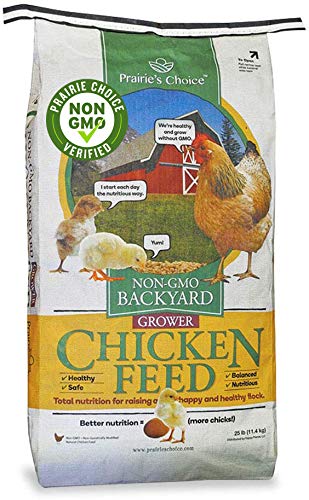
Prairie’s Choice Starter/Grower hits 18% protein from a Non-GMO Project Verified ingredient base, packed in a 25-pound crumble format that covers roughly three weeks for a flock of 15 chicks. The crumble size is slightly larger than Purina’s — averaging 2.5–3 mm — which reduces dust and waste but may require a few days of adaptation for very small bantam chicks. The formula is all-natural with no artificial preservatives, though it does contain corn and soy as primary energy sources.
Owner feedback consistently highlights two points: the feed stays fresher longer than competing brands when stored in a cool environment, and the crumble integrity holds up better during shipping, with minimal bag-bottom dust compared to softer formulations. The 18% protein level is adequate for standard egg-laying breeds up to 18 weeks, though some owners supplement with black soldier fly larvae for extra protein during peak juvenile growth phases.
Grown, milled, and packaged in the USA with traceable supply chains. The bag uses a standard sewn closure rather than a resealable zipper, so a transfer bin is mandatory for moisture control. The formula covers both starter (0–8 weeks) and grower (8–18 weeks) phases, eliminating the need for a mid-cycle feed switch. Multiple reviewers with fussy flocks report that their birds refused other brands but accepted Prairie’s Choice without hesitation.
Why we love it
- 25-pound bag covers starter and grower phases without requiring a feed transition
- Non-GMO certification at a price point competitive with conventional commodity feeds
- Durable crumble structure generates less shipping damage and bottom dust
Good to know
- Contains corn and soy, which may trigger digestive issues in sensitive breeds
- Bag lacks resealable closure; airtight transfer bin required for freshness
5. LIWII Dried Black Soldier Fly Larvae
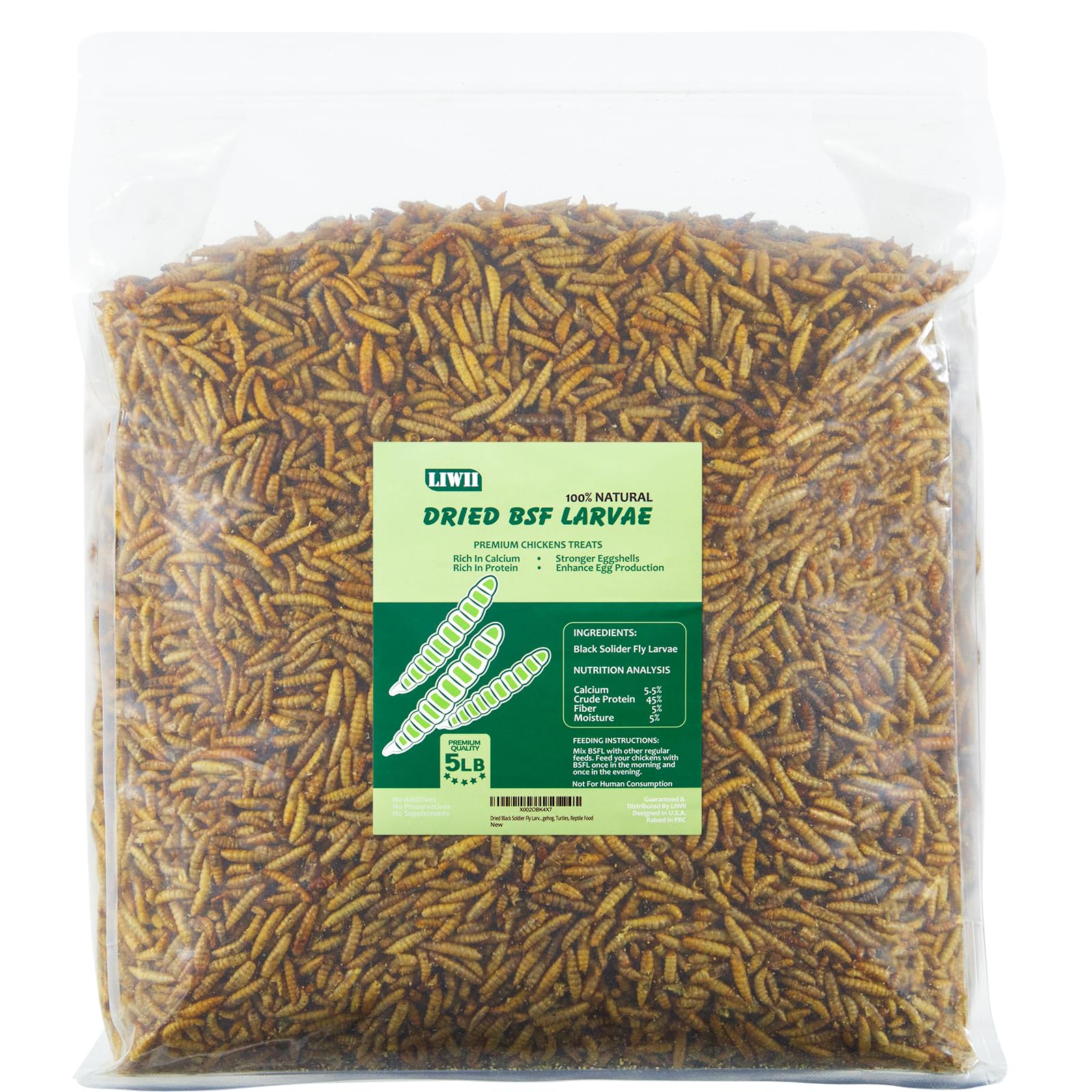
LIWII’s dried black soldier fly larvae deliver 45% crude protein and 5% calcium — roughly 8.6 times the calcium content of dried mealworms by weight. This isn’t a complete starter feed; it’s a high-value supplement designed to be mixed with a balanced starter ration at a 10–15% inclusion rate. The extra calcium supports eggshell quality in developing pullets approaching lay age, while the protein boost compensates for lower-protein starter feeds during weeks 6–8 when growth accelerates.
The larvae are flash-dried without preservatives, maintaining a shelf-stable texture that lasts 12+ months in a sealed container at room temperature. The 5-pound bag provides roughly 80 servings at a 1-ounce per 10 birds daily rate. Keepers report that chickens of all ages develop an immediate preference for the larvae, so controlled feeding is important to prevent selective eating — offer them separately after the chick’s main ration is consumed.
Non-GMO certified with no additives, pesticides, or preservatives. The larvae are a complete protein source containing all essential amino acids, unlike plant-based protein supplements that lack methionine or lysine. This makes them particularly valuable for keepers using corn- or soy-free starter feeds that may have less optimized amino acid profiles. Multiple long-term subscribers report healthier feathering and reduced molting stress after adding BSF larvae to the ration.
Why we love it
- 45% protein and 5% calcium density unmatched by any grain-based supplement
- Flash-dried process preserves amino acid profile without chemical preservatives
- Non-GMO verified and suitable for organic feeding programs
Good to know
- Not a complete feed; must be mixed with balanced starter ration to prevent nutritional imbalance
- Chickens may develop strong preference and refuse base feed if over-supplemented
FAQ
Can I feed starter crumbles to adult chickens?
How long should chicks stay on starter feed?
What’s the difference between medicated and non-medicated starter?
Can I mix black soldier fly larvae with starter crumbles?
Why does my chick starter smell like fish?
Final Thoughts: The Verdict
For most gardeners, the best chicken starter feed winner is the Scratch and Peck Whole Grain Starter Crumbles because it delivers 20.5% organic protein with zero corn or soy filler, producing measurable feathering and weight gain improvements over conventional starters. If you brooder chicks on litter flooring and need coccidiosis protection without a prescription, grab the Purina Start & Grow Medicated Crumbles for its 25-pound value and proven amprolium efficacy. And for keepers using lower-protein starter feeds who want a calcium and protein boost before first lay, nothing beats the LIWII Dried Black Soldier Fly Larvae as a targeted supplement.