
An outdoor cat’s survival through freezing nights depends entirely on one thing: how well your shelter traps body heat while blocking wind and moisture. Choose the wrong material, and your house becomes a damp, drafty box that does more harm than good. The right insulation turns a simple shell into a warm refuge that holds a cat’s natural heat steady even when the mercury drops below 20°F.
I’m Mo Mahin — the founder and writer behind Furric. I’ve spent years comparing thermal properties of pet shelter materials, studying real-world owner feedback from high-latitude climates, and cross-referencing R-value claims against measurable performance in cold-weather setups.
After analyzing dozens of models against their actual insulation construction, I’ve locked in a clear set of options that reliably protect community and feral cats from the elements. This guide breaks down the best choices for insulation for outdoor cat house setups, from budget-friendly fabric shelters to premium plastic cabins built for all-season duty.
How To Choose The Best Insulation For Outdoor Cat House
Most first-time buyers assume any fabric shelter with the word “insulated” on the box will work. In reality, the thermal efficiency of an outdoor cat house depends on three structural decisions that are easy to overlook until your first sub-zero night.
Dead-Air Gap vs Compressible Fill
The most effective outdoor cat shelters don’t just use thick padding — they trap a layer of still air between the interior wall and the outer shell. Look for double-walled construction where polypropylene board, foam core, or a sealed hollow chamber creates a thermal break. Compressible fill like cotton or thin polyester loses most of its R-value when a cat’s weight flattens it.
Windproofing at Entry Points
Cats lose heat fastest through air exchange. A shelter with a full-width open door is a liability. Prioritize models with a suspended flap, overlapping curtain, or offset entry tunnel that stops wind from sweeping directly into the sleeping area. Also check for gap-free seams at the roof-wall joint — water intrusion there destroys insulation overnight.
Elevation and Ground Seal
Cold rises from the ground faster than it falls from the sky. Any house that sits directly on concrete, dirt, or snow will leach body heat through the bottom. An elevated floor that leaves a 2-inch or taller air gap beneath the sleeping surface dramatically reduces conductive heat loss. Pair this with an interior floor layer of straw or mylar-reflective mat only if the base already stays dry.
Quick Comparison
On smaller screens, swipe sideways to see the full table.
| Model | Category | Best For | Key Spec | Amazon |
|---|---|---|---|---|
| Rest-Eazzzy Outdoor Cat House | Fabric | Quick setup & portability | Waterproof Oxford cloth + foil layer | Amazon |
| TailTastic Elevated Cat House | Fabric | Multiple cats, wet ground | 900D Oxford + elevated legs + stakes | Amazon |
| objoy Wooden Cat Shelter | Wood-Plastic | Single cat, permanent outdoor spot | 10mm thick wood-plastic board + escape door | Amazon |
| TIMSUNBER Insulated Shelter | Hybrid | All-season insulation & easy cleaning | Thermal insulation + polypropylene board + raised bottom | Amazon |
| TSEHOOHOO Plastic Cat House | Plastic | Multi-cat stacking, heavy weather | Double-layer thick HDPE + stackable design | Amazon |
In‑Depth Reviews
1. TIMSUNBER Insulated Cat Shelter (Weatherproof, Raised Bottom)
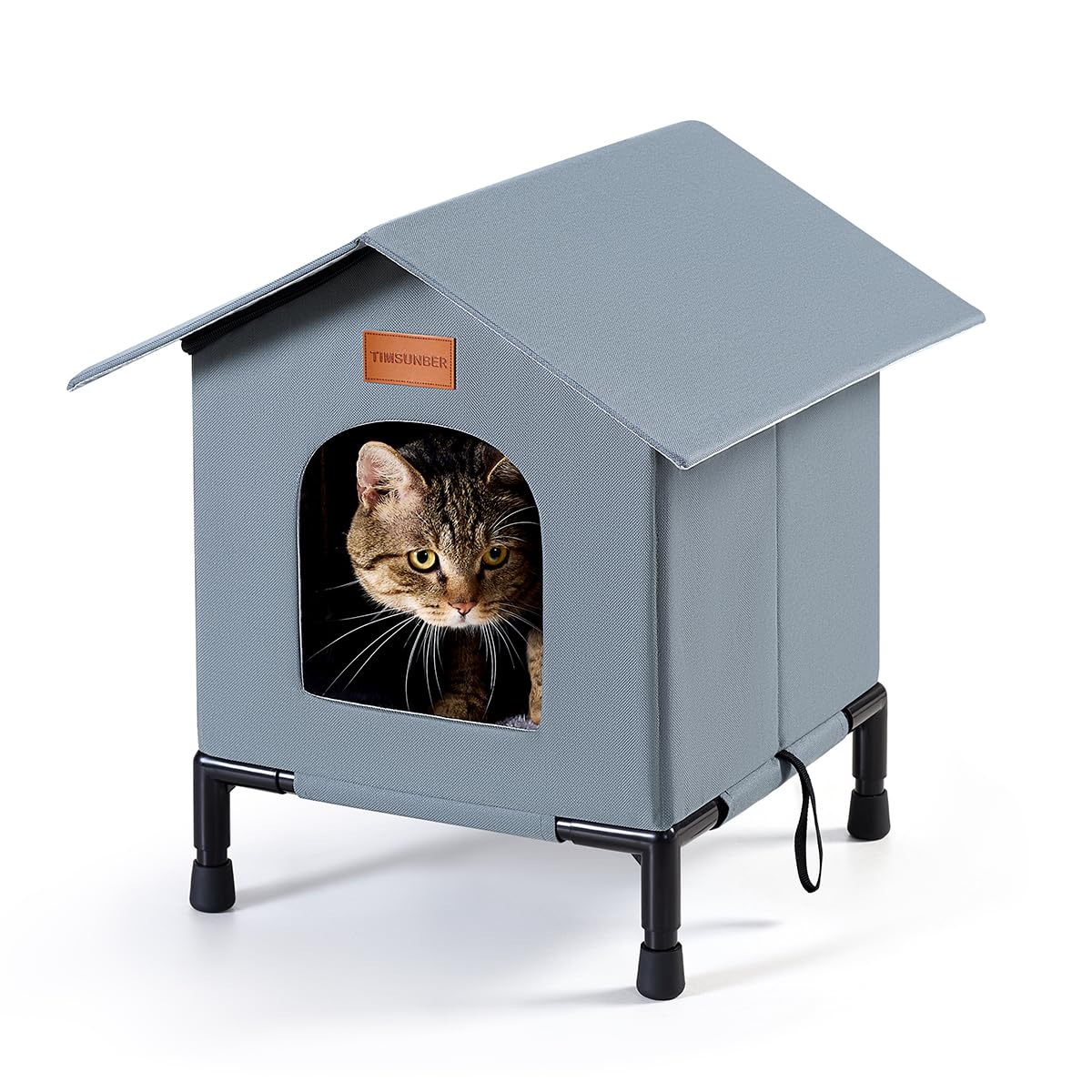
The TIMSUNBER shelter is the closest thing in this roundup to a purpose-built insulated box. Its walls use a thermal insulation layer paired with a rigid polypropylene board — the same kind of closed-cell structure that deadens temperature transfer in cooler chests. The outer skin is PVC double-wall fabric that sheds rain and resists scratching, while the interior stays dry thanks to the bottom being raised a few inches off the ground. At 12.6 x 12.6 x 14.2 inches, the cavity is compact enough for body heat to accumulate quickly but large enough for an average adult cat to curl fully.
What sets this apart from fabric tents is the semi-rigid wall system that maintains its dead-air gap even when the shelter is leaned against or pushed by wind. The roof zips off completely, which makes deep cleaning straightforward — critical when housing strays that may carry dirt or moisture into their sleeping area. Several owners note the entry flap is optional; leaving it off improves access for nervous cats while still maintaining interior warmth because the entry itself is narrow by design.
This is the entry-level premium option because it charges just slightly more than basic cloth models but delivers a multi-layer insulation package that actually holds steady temperature in the 20s without supplemental heating. Owners in rainy Pacific Northwest and snowy Midwest climates both report consistent dry warmth. The primary limitation is capacity — one cat only, and a large 15-pounder will fit snugly rather than spaciously.
Why we love it
- True dead-air insulation wall assembly for reliable warmth.
- Raised floor prevents ground moisture wicking.
- Tool-free assembly and zip-off roof for cleaning.
Good to know
- The entry flap sits loose and may not self-close in strong wind.
- Interior felt makes direct contact with the walls if you add a thick blanket, slightly reducing air gap.
2. TSEHOOHOO Plastic Cat House (Stackable, Elevated)
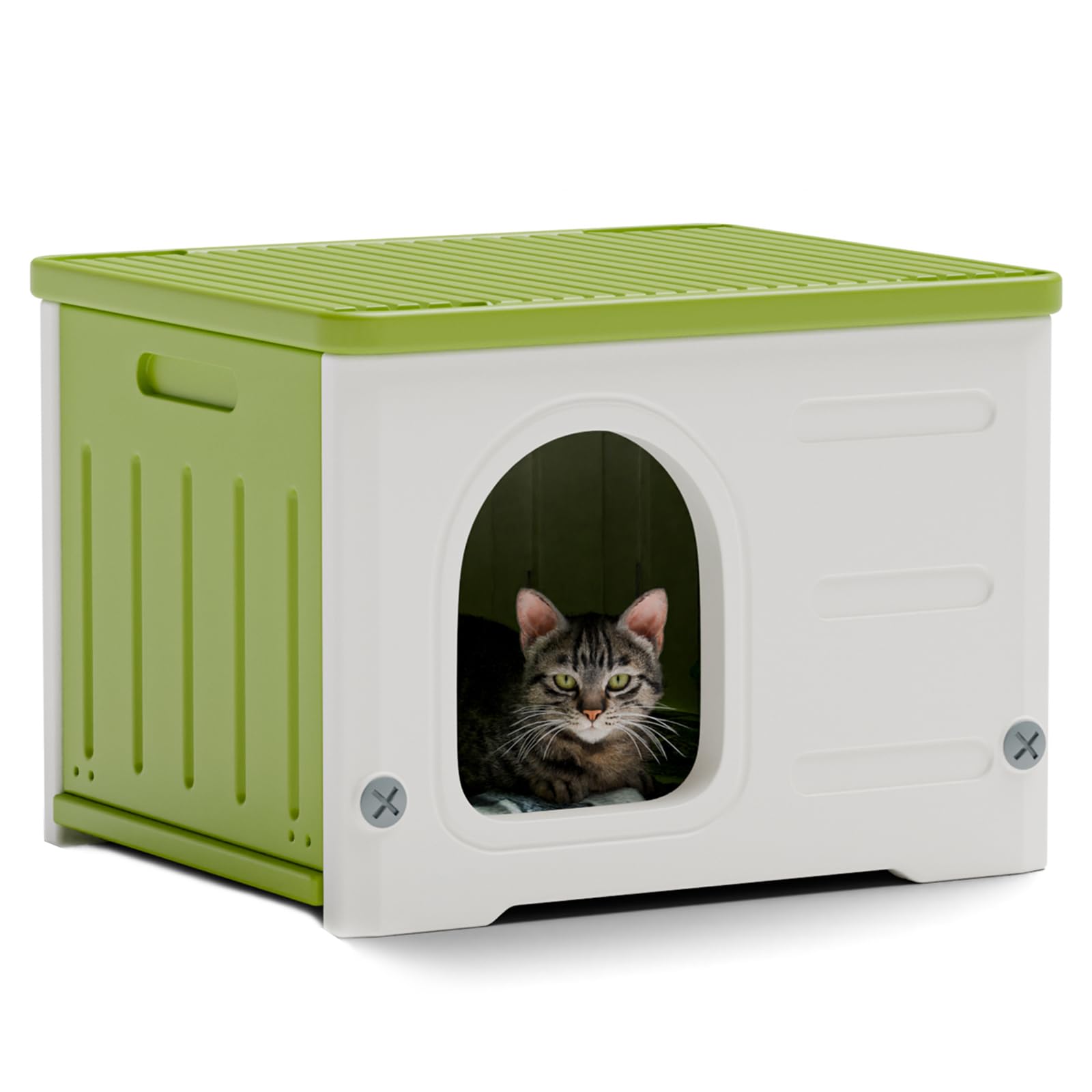
The TSEHOOHOO departs from every fabric option in this list by using a double-layer, thickened plastic shell with an elevated stand. The hollow cavity between the inner and outer HDPE walls acts as a natural dead-air insulator, which explains why it was a top-60 seller in cat houses within months of release. The interior measures a generous 20.8 x 16.1 x 15.1 inches — large enough for two adult cats to share body heat or a single large tom to stretch fully. The plastic structure eliminates the sagging and compression that kills R-value in soft-sided shelters over time.
The standout design feature is stackability: you can lock two or more units together vertically without wobble, which is ideal for colony caretakers housing multiple ferals in a tight shed or garage footprint. The roof clips on with a buckle mechanism, so detaching the top for interior cleaning takes seconds. The included bed pad is thin — owners routinely supplement with straw or a mylar blanket for real winter insulation — but the plastic shell itself holds temperature well when the entry is kept partially blocked.
This is the best overall choice because it solves the two hardest problems in outdoor cat housing simultaneously: it keeps the interior warm without relying on soft insulation that eventually degrades, and it withstands extreme weather (rain, snow, direct sun) without fabric rot or mildew. The 12-month warranty and stackable expansion make it a long-term investment for anyone managing multiple cats. The only genuine complaint is that the door is large enough to let cold air pool toward the center, but adding straw bedding or a mylar curtain at the entrance resolves that entirely.
Why we love it
- Weatherproof rigid plastic won’t absorb moisture or lose R-value.
- Stackable system scales for multiple-cat colonies.
- Elevated base eliminates ground freeze transfer.
Good to know
- Door opening is wide; needs a flap or straw barrier for draft reduction.
- Plastic screws must be threaded carefully to avoid stripping.
3. TailTastic Elevated Cat House (Large, Waterproof)

The TailTastic is a fabric shelter that competes with much pricier options by focusing on the two factors that matter most in moisture-heavy winter climates: ground elevation and fabric density. The body uses 900D Oxford cloth — noticeably thicker than the common 600D material — and the roof upgrades to a leather-like synthetic that sheds snow without absorbing weight. Six ground stakes come bundled, which is a rarity at this price point and crucial for keeping the house anchored during gusty storm nights.
The elevated platform is the real insulation play here. By lifting the entire sleeping surface off the ground, cold transfer through the bottom fabric is effectively halted. The internal space (24 x 15.7 x 13 inches) comfortably fits two to three adult cats, which means they can huddle together and pool body heat — a thermal strategy that outstrips any passive material inside a single-cat shelter. A sloped roof prevents snow and water from pooling, a common failure point in flat-topped fabric houses that eventually leak through sewn seams.
For under thirty dollars, the TailTastic delivers an insulation foundation that works best when you add extra material — a layer of straw, a mylar blanket, or a self-warming pad inside — but the structure itself is ready for real winter duty. The zip door is large enough for a cat to enter without hesitation but does not seal airtight, so placing the entry away from the prevailing wind direction is recommended. This is the strongest budget-conscious pick for caretakers who need shelter for multiple ferals and can supplement the interior fill.
Why we love it
- Elevated platform stops ground cold more effectively than any floor mat.
- Sloped roof prevents structural collapse under snow load.
- High-density fabric resists tearing in high winds.
Good to know
- Interior lining is thin; you must add straw or reflective foam for real warmth.
- The top is not load-rated; cats sitting on the roof cause visible sagging.
4. Rest-Eazzzy Outdoor Cat House (Insulated with Mat)
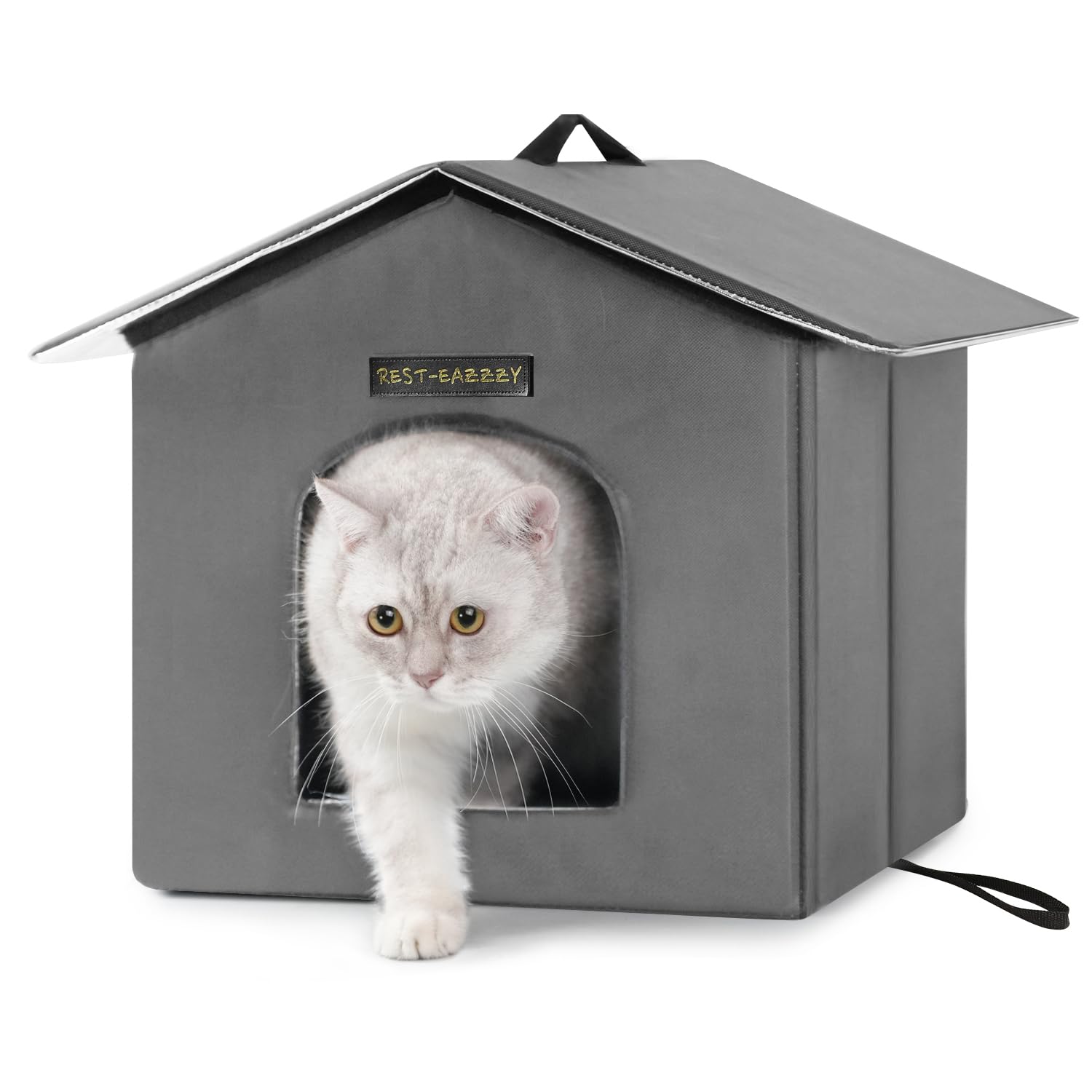
The Rest-Eazzzy house is one of the most frequently bought cat shelters in Pet Supplies for a reason: it hits the right combination of affordability, instant setup, and a surprising thermal feature for its size. The wall sandwich includes a foil layer that reflects a portion of the cat’s radiated body heat back inward — a cheap but functional improvement over single-wall nylon houses. Exterior fabric is waterproof Oxford cloth, and the included floor mat adds a thin layer of separation from cold ground contact.
Assembly literally takes under five minutes — the structure is a pop-up tent frame with a slip-on cover. The included carry ring makes relocation trivial, which matters if you need to move the shelter between a garage and porch as seasons change. Customer feedback consistently describes the small (13 x 13 x 14-inch) version as a tight fit for one average cat, but owners feeding devoted strays report that the tightness actually helps trap warmth faster than larger, draftier boxes.
The trade-off for this simplicity is long-term durability. The foil layer and Oxford fabric degrade faster under constant UV exposure than plastic or wood-alternative shelters, and some owners report visible wear after a single winter in full sun. It is best suited for semi-annual use — deploy it for the coldest months, then store it away in spring. For the price, it is the easiest entry point into insulated outdoor cat housing, especially if you want to test whether your local strays will accept a shelter before investing in a premium build.
Why we love it
- Integrated foil layer reflects some body heat for free.
- Pop-up assembly takes minutes with zero tools.
- Lightweight and portable via roof carry ring.
Good to know
- Fabric and foil are not UV-stable; expect wear after one season in direct sun.
- Size restricts use to a single small cat; no room for supplemental heating pads.
5. objoy Wooden Feral Cat Shelter (Escape Door)

The objoy shelter uses 10mm-thick wood-plastic composite board — a material that naturally provides higher thermal mass than any fabric or plastic structure in this roundup. Wood-plastic does not conduct cold the way metal or thin plastic does, and its surface hardness means heavy snow loads (multiple inches) will not collapse the roof. The extended eaves and attached door curtains reduce direct rain entry, and the 2-inch legs lift the entire box above puddles and frost line.
The most important safety feature here is the side-hinged escape door. Predators like raccoons or roaming dogs occasionally trap cats inside univentered shelters; this panel lets a cat push out from a secondary exit if the main entrance is blocked. For feral colony caretakers, that single feature is worth the premium over simpler designs. The internal dimensions (17.32 x 12.99 x 13.38 inches) fit a single cat under 10 pounds — larger cats can enter and turn around but will not have space to stretch.
Owners consistently praise the structural rigidity at this price, but the wood-plastic material is vulnerable to water pooling on the flat roof if the panels are not sealed with silicone caulk. Some buyers reported misaligned screw holes in the roof piece, which can leave a gap if not adjusted during assembly. This house is ideal for permanent placement in a sheltered location (under a porch, deck, or inside an outbuilding) where the insulation can perform without constant direct rain exposure. For a single feral cat that needs predator-safe housing, this is the most secure build available near the budget entry point.
Why we love it
- Wood-plastic board provides superior thermal mass and wind resistance.
- Escape door prevents predator trapping.
- Extended roof eaves keep rain away from entry.
Good to know
- Flat roof may pool water; owners should seal seams with clear silicone.
- Interior floor is not removable, making deep cleaning a challenge.
FAQ
Does my outdoor cat house need a heating pad with good insulation?
Can I use fiberglass batt insulation in a wooden cat shelter?
How do I know if the cat house is warm enough without a thermometer?
Should I place the entrance facing south or sheltered from wind?
Will the insulation degrade if the house sits in direct sun all summer?
Final Thoughts: The Verdict
For most caretakers, the insulation for outdoor cat house winner is the TSEHOOHOO Plastic Cat House because its double-layer HDPE shell, elevated stand, and stackable design deliver reliable warmth and extreme weather durability without fabric degradation. If you want the strongest thermal performance in a compact single-cat shelter, grab the TIMSUNBER Insulated Shelter with its rigid polypropylene board wall. And for a predator-safe permanent placement where snow load is a factor, nothing beats the objoy Wooden Feral Shelter with its escape door and wood-plastic construction.