
Few things are more unsettling than spotting the telltale signs of roundworms in your cat’s stool or vomit—long, spaghetti-like strands that signal an infestation inside your feline companion. As obligate intestinal parasites, roundworms can sap your cat of nutrients, leading to a dull coat, potbelly, stunted growth in kittens, and chronic digestive upset if left untreated. Choosing the right dewormer isn’t just about convenience; it’s about delivering the correct active ingredient (pyrantel pamoate or fenbendazole) at the right dosage to paralyze and expel these nematodes before they reproduce and spread to other pets or even humans via zoonotic transmission.
I’m Mo Mahin — the founder and writer behind Furric. My recommendations stem from cross-referencing veterinary parasitology guidelines, comparing active ingredient concentrations across dozens of oral suspensions and tablets, and analyzing thousands of verified owner reports to identify which formulations actually clear roundworm burdens without causing unnecessary stress to your cat.
Whether you’re treating a newly adopted kitten or managing a multi‑cat household, this guide breaks down the specific efficacy, dosing ease, and safety profiles of each product to help you confidently select the best cat dewormer for roundworms that fits your cat’s age, weight, and living situation.
How To Choose The Best Cat Dewormer For Roundworms
Selecting an effective roundworm treatment starts with understanding the active ingredient. Pyrantel pamoate is the most widely recommended compound for feline roundworms—it works by paralyzing the nematodes so the cat’s intestinal tract can expel them naturally. Not all dewormers are created equal; ingredient concentration, dosing method, and spectrum of coverage vary significantly between products.
Active Ingredient — Pyrantel Pamoate vs. Fenbendazole
Pyrantel pamoate targets both roundworms and hookworms and is considered safe for kittens as young as two weeks old when dosed correctly. Fenbendazole, while broader in spectrum (it also covers whipworms and some tapeworms), requires a multi‑day dosing schedule for roundworms. For a straightforward roundworm infection, a single dose of pyrantel pamoate followed by a second dose two weeks later is a proven protocol.
Dosing Accuracy — Weight Matters
Underdosing is the most common reason dewormers fail. Products that provide a clear, weight‑based dosage chart (milliliters per pound or kilograms) reduce guesswork. Liquid suspensions with a calibrated dropper or syringe allow precise measurement for small kittens, while tablets must be split carefully—a major source of dosing error. Look for a product that matches your cat’s current weight range exactly.
Form — Oral Suspension vs. Tablet
Liquid suspensions are generally easier to administer to cats, especially picky eaters or kittens. They can be mixed into wet food or given directly via syringe. Tablets often require hiding in treats or pill pockets and can be rejected if the cat detects the medication. Palatability matters: a chicken‑ or beef‑flavored liquid will often be accepted far more willingly than an unflavored tablet.
Quick Comparison
On smaller screens, swipe sideways to see the full table.
| Model | Category | Best For | Key Spec | Amazon |
|---|---|---|---|---|
| Nemex 2 Liquid Wormer | Liquid Suspension | Precise kitten dosing | 4.54 mg/mL pyrantel pamoate | Amazon |
| No More Tapeworms in Cats and Dogs | Liquid Suspension | Multi‑parasite coverage | 60mL with 3mL dropper | Amazon |
| PetArmor 7 Way De‑Wormer | Chewable Tablet | Combined broad‑spectrum treatment | 2 tablets for dogs 25.1‑50 lbs | Amazon |
| Toltrazuril 5.0% | Liquid Suspension | Targeted coccidia treatment | 60mL oral suspension | Amazon |
| FRONTLINE Plus for Cats | Spot‑On Topical | Flea & tick prevention | 8 pipettes, 0.5mL each | Amazon |
In‑Depth Reviews
1. Nemex 2 Liquid Wormer — 2 oz.

Nemex 2 is a veterinary‑grade pyrantel pamoate suspension at a precise concentration of 4.54 milligrams per milliliter, formulated specifically to target large roundworms and hookworms in dogs. While the label lists dogs, many cat owners and breeders use it off‑label under veterinary guidance for feline roundworm treatment—the active ingredient is the same class recommended for cats. The 2‑ounce bottle provides enough volume to treat multiple cats or a litter of kittens, making it a highly economical choice per dose.
The liquid format includes a calibrated dropper that allows you to measure exact milliliter doses based on your cat’s weight, reducing the risk of underdosing. Owners consistently report that the suspension has a palatable taste that puppies and kittens accept readily when mixed into a small amount of wet food. The absence of strong chemical odor also makes it easier to slip into a meal without rejection, a major win for finicky felines.
Because pyrantel pamoate only targets adult roundworms, a second dose is necessary two to three weeks later to catch newly hatched larvae. The clear instructions on the bottle make this protocol easy to follow. A small percentage of cats may experience mild, transient loose stool as the worms are expelled, but serious adverse reactions are rare at recommended doses.
Why we love it
- Precise 4.54 mg/mL concentration enables accurate weight‑based dosing for kittens and adult cats.
- Palatable taste makes administration easy either mixed with food or given directly.
- Compact 2‑ounce bottle delivers excellent value for multi‑cat households or foster litters.
Good to know
- Labeled for dogs only; requires veterinary guidance for off‑label cat use.
- Only targets adult roundworms—a follow‑up dose two weeks later is mandatory for full clearance.
2. No More Tapeworms in Cats and Dogs — 60ml
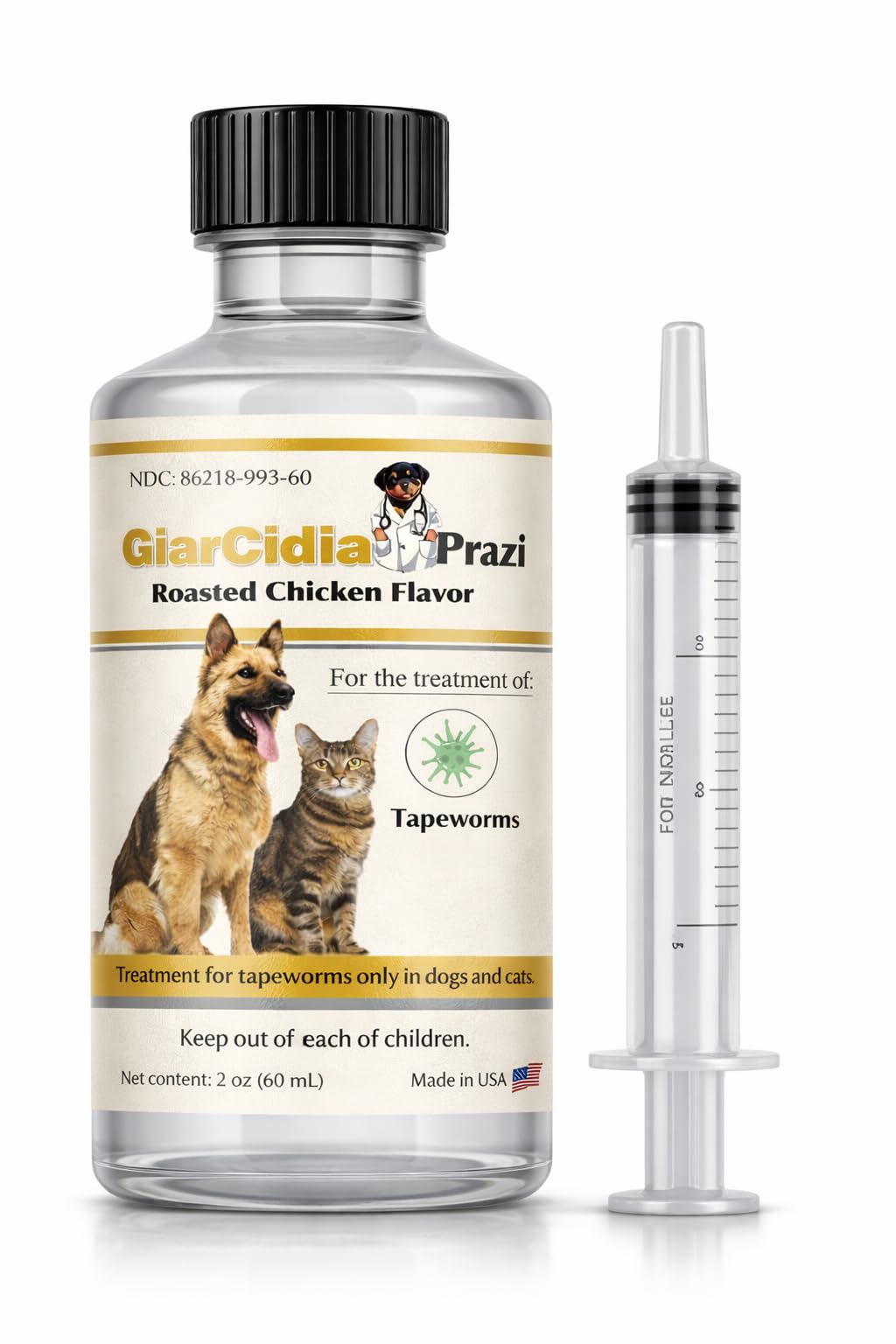
Positioned as a dual‑species oral suspension, this product is formulated to manage tapeworm issues in both cats and dogs, using a weight‑based dosage chart printed directly on the bottle for accuracy. The 60‑milliliter bottle comes with a 3‑milliliter dropper that simplifies measurement for cats weighing as little as 2.5 pounds. Its roasted chicken flavor is a deliberate feature to improve acceptance—an important factor when medicating cats who are notoriously sensitive to unfamiliar tastes.
Owner feedback highlights that the liquid can be mixed into a tablespoon of wet food without the cat detecting it, though some cats still show reluctance if the flavor isn’t masked thoroughly. The versatility of the product—marketed for both species—makes it a convenient option for households with multiple pets, though the label actively cautions that a full treatment course involves three doses administered at specific intervals, which is longer than many single‑dose pyrantel protocols.
The primary active target here is tapeworms (praziquantel is the common ingredient for those), so confirm this product’s ingredient list if your primary concern is strictly roundworms. Some owners have reported excellent results for mixed infections when used as directed. The non‑return policy can be frustrating if you order the wrong size or your cat refuses the taste, so read the dosing instructions carefully before purchase.
Why we love it
- Chicken flavor designed to mask the medication taste, increasing acceptance.
- Weight‑based dosage chart with included 3mL dropper eliminates guesswork for small cats.
- Can be used for both cats and dogs, simplifying inventory in multi‑pet homes.
Good to know
- Requires three separate doses to complete the full treatment protocol.
- Non‑returnable after opening; verify size and dosage before purchasing.
3. PetArmor 7 Way De‑Wormer for Dogs — 2 Chewables

This broad‑spectrum chewable tablet is formulated for dogs over 25 pounds and covers seven species of worms, including roundworms, but it is not designed for feline use. The active ingredients—praziquantel and pyrantel pamoate—are effective against tapeworms and roundworms respectively, but the dosage per tablet is calibrated to canine body weight ranges. The chewable format makes administration straightforward for dogs, as it smells neutral and can be offered as a treat or crumbled into food.
Owners report that even picky large‑breed dogs accept the tablet without resistance, and the two‑tablet pack is enough for a dog in the 25‑ to 50‑pound range, with dosing instructions scaling up for heavier animals. Mild stomach upset or soft stool occurred in a small subset of dogs, usually within 24 hours of dosing, but resolved without intervention. The product’s greatest strength is its value—significantly cheaper than a veterinary visit for a deworming consult and prescription.
The key limitation for cat owners is obvious: the weight thresholds and species‑specific dosing make it unsuitable for feline use. If you own both dogs and cats, this is an excellent option for your canine companion, but you’ll need a separate product for your cat. The instructions could also be clearer about the re‑dosing window, as many owners found themselves researching typical three‑month intervals online rather than finding them on the label.
Why we love it
- Combines praziquantel and pyrantel pamoate to cover seven worm species in one chewable tablet.
- Much more affordable than a veterinary clinic deworming visit for large dogs.
- Chewable format is easy to administer with minimal smell or rejection.
Good to know
- Formulated specifically for dogs—not safe or effective for cats.
- Label lacks clear re‑dosing schedule; owners must consult a veterinarian or reputable online sources.
4. Toltrazuril 5.0% — 60mL
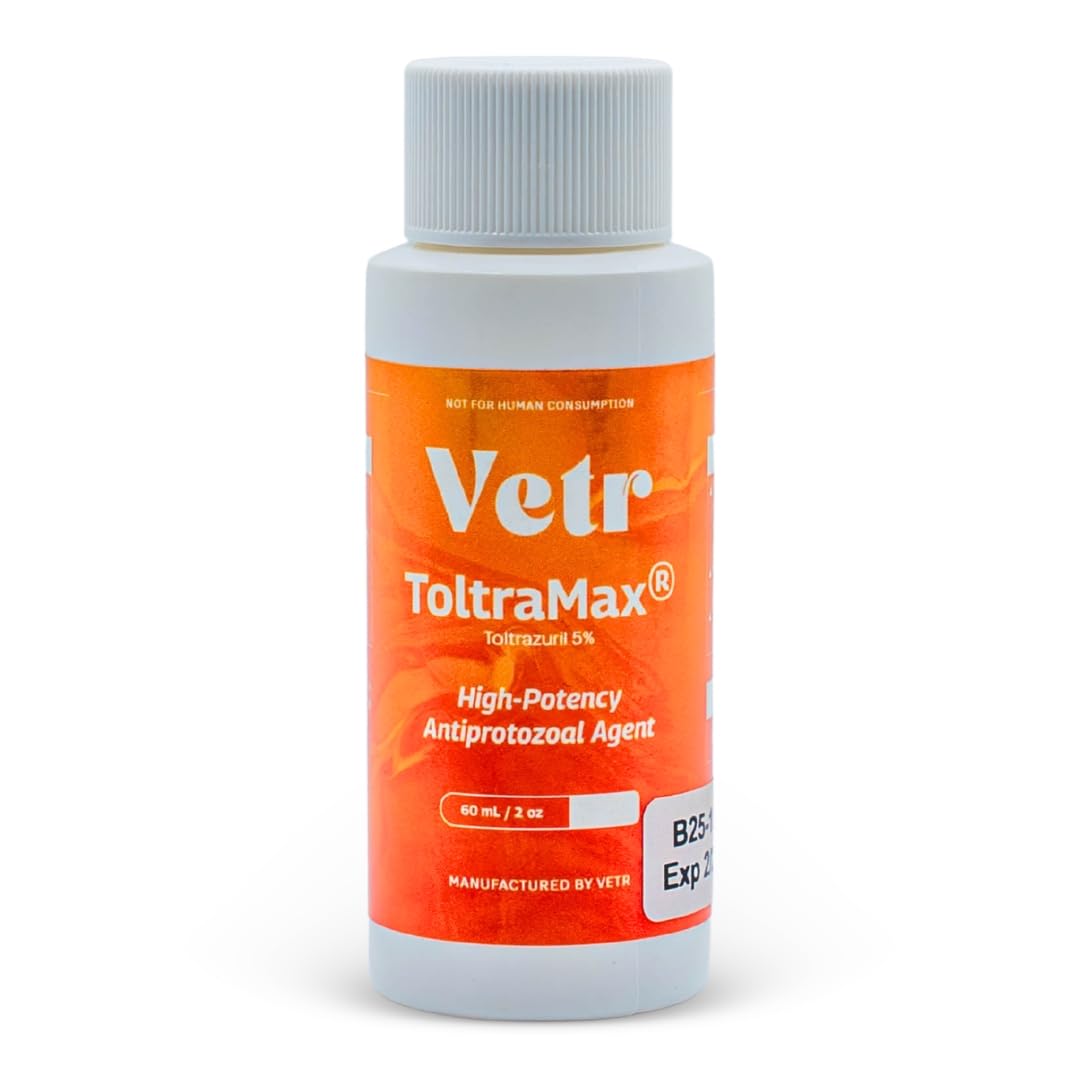
Toltrazuril 5.0% is an oral suspension intended for the treatment of coccidia (a protozoan parasite) in non‑food chain animals including horses, dogs, and cats. It is not a dewormer for roundworms—this is a critical distinction. Roundworms are nematodes, while coccidia are single‑celled organisms requiring a completely different class of antiprotozoal medication. Cat owners who mistake coccidia symptoms (watery, mucus‑filled diarrhea) for roundworm infection will not resolve the issue with this product.
Having said that, if your veterinarian has confirmed a coccidia diagnosis via fecal floatation, this toltrazuril suspension is a potent and fast‑acting option. Owner reports describe visible improvement in stool consistency within 12 to 48 hours of the first dose. The unflavored liquid has no strong smell, and most cats accept it when mixed into a small amount of wet food. The dosing is weight‑based (typically 0.5 to 2 milliliters per day depending on size) and the 60‑milliliter bottle provides enough volume for a full course in a multi‑cat household.
The product carries a veterinarian‑recommended designation and has a strong track record in breeding and rescue environments where coccidia outbreaks are common. However, the shelf life after opening is relatively short (four to six weeks), so it is best purchased when you have an active, confirmed case. If you are targeting roundworms, choose a pyrantel pamoate product instead—this is a specialized weapon for a different parasitic foe.
Why we love it
- Highly effective against coccidia, with rapid improvement reported within 12 to 48 hours.
- Veterinarian‑recommended concentration suitable for cats, dogs, and horses.
- Large 60mL bottle provides enough volume for a full treatment course across multiple animals.
Good to know
- Does NOT treat roundworms, hookworms, or any other nematode parasites—only coccidia.
- Short post‑opening shelf life of 4 to 6 weeks; not ideal for long‑term storage.
5. FRONTLINE Plus Flea & Tick Spot Treatment for Cats — 8 Count

FRONTLINE Plus is a spot‑on topical treatment that kills adult fleas, flea eggs, flea larvae, and ticks, and it has no direct activity against intestinal roundworms. The active ingredients—fipronil and (S)-methoprene—are insecticides/insect growth regulators, not anthelmintics. If your cat already has a roundworm infection, applying FRONTLINE Plus will not eliminate the worms; you need a separate oral dewormer containing pyrantel pamoate or fenbendazole.
However, consistent monthly flea prevention plays a powerful indirect role in roundworm management. Fleas are the intermediate host for the tapeworm *Dipylidium caninum*, and controlling fleas prevents tapeworm reinfestation. More importantly, keeping fleas off your cat reduces the overall parasite load in your home environment, giving deworming treatments a better chance at lasting success. Owners who pair a monthly topical flea treatment with a biannual oral dewormer report fewer repeat infections.
The 8‑count pack provides eight months of prevention when applied monthly. It is waterproof 24 hours after application and has a long track record of safety for cats and kittens eight weeks and older. Application is straightforward: part the fur at the base of the skull and squeeze the pipette contents directly onto the skin. A small percentage of cats may experience temporary skin irritation or a greasy spot at the application site, but serious reactions are uncommon.
Why we love it
- Break the flea life cycle and reduces risk of tapeworm transmission via fleas.
- Waterproof formula provides reliable 30‑day protection after drying.
- Trusted brand with over 20 years of field use in cats.
Good to know
- Does not treat or prevent roundworm infections—requires a separate oral dewormer.
- Effectiveness can vary regionally if local flea populations have developed resistance.
FAQ
How do I know if my cat has roundworms or coccidia?
Can I use a dog dewormer on my cat for roundworms?
How long after treatment will I see dead worms?
Final Thoughts: The Verdict
For most cats, the best cat dewormer for roundworms winner is the Nemex 2 Liquid Wormer because its precise 4.54 mg/mL pyrantel pamoate concentration allows weight‑based dosing that works for kittens and adult cats alike, and its easy‑to‑give liquid format means fewer rejected doses. If you want a complete roundworm and tapeworm solution in one palatable chicken‑flavored liquid, grab No More Tapeworms in Cats and Dogs. And for preventing the fleas that spread tapeworms and keep your cat comfortable, nothing beats the monthly reliability of FRONTLINE Plus for Cats.