
Wild birds have a natural sweet tooth, and the easiest way to turn your feeder into a neighborhood hotspot is with real dried fruit. Unlike plain seed mixes that get picked over and discarded, fruit-based blends deliver the energy, antioxidants, and natural sugars that songbirds actively seek during migration and cold months.
I’m Mo Mahin — the founder and writer behind Furric. I’ve spent years analyzing commercial bird food formulations, comparing nutritional density across different fruit and nut ratios, and mapping customer satisfaction data to identify which blends actually deliver consistent feeder traffic without wasteful fillers.
After reviewing dozens of formulas, I’ve narrowed the best options down to five blends that reliably attract cardinals, chickadees, woodpeckers, and other backyard favorites — this is the definitive guide to choosing the best dried fruit for wild birds your feeder will see this season.
How To Choose The Best Dried Fruit For Wild Birds
Not all dried fruit blends are created equal. Many economy bags pack in corn, milo, and millet as cheap fillers that birds kick out of the feeder, leaving you with a messy yard and unhappy visitors. Focus on these three criteria to ensure you’re buying a blend that actually delivers nutrition and keeps birds returning.
Real Fruit Content Versus Artificial Flavoring
Open the bag and look for visible fruit pieces — raisins, papaya chunks, dried berries, or apple bits. Some brands coat cheap seeds with artificial fruit flavoring and call it a fruit blend. Real dried fruit provides natural sugars, fiber, and micronutrients that birds metabolize efficiently. The presence of whole fruit pieces rather than dust or powder is your acid test for quality.
Filler-Free Seed Ratios
The best blends skip corn, milo, and red millet entirely. These ingredients add bulk weight but offer low nutrition and high waste — birds toss them to reach sunflower hearts, nuts, and fruit. Premium blends list sunflower hearts, peanuts, tree nuts, and dried fruit as the first ingredients. If the label lists corn before fruit, keep moving.
Species-Specific Attraction
Different fruit blends pull different birds. Raisins and berries attract robins, bluebirds, and thrushes. Papaya chunks and tropical fruit appeal to orioles and tanagers. Nut-and-fruit combos with peanuts and tree nuts draw woodpeckers, nuthatches, and chickadees. Match the fruit profile to the species you want to see most at your feeder.
Quick Comparison
On smaller screens, swipe sideways to see the full table.
| Model | Category | Best For | Key Spec | Amazon |
|---|---|---|---|---|
| Wild Delight Fruit N’ Berry | Mid-Range | Cardinals and blue jays | 5 lb bag, berry flavor | Amazon |
| Pennington Ultra Double Nut & Fruit | Mid-Range | Year-round feeding variety | 10 lb bag, Bird Kote vitamins | Amazon |
| Cool Birds Nut & Fruit | Premium | Cardinals and grosbeaks | 10 lb bag, no corn/milo/millet | Amazon |
| Valley Farms Fruit Nut & Berry | Premium | Diverse species attraction | 4 lb bag, vacuum cleaned | Amazon |
| Cool Birds Sad Squirrels Hot | Premium | Squirrel-resistant feeding | 10 lb bag, chili pepper oil | Amazon |
In‑Depth Reviews
1. Cool Birds Nut & Fruit Wild Bird Seed
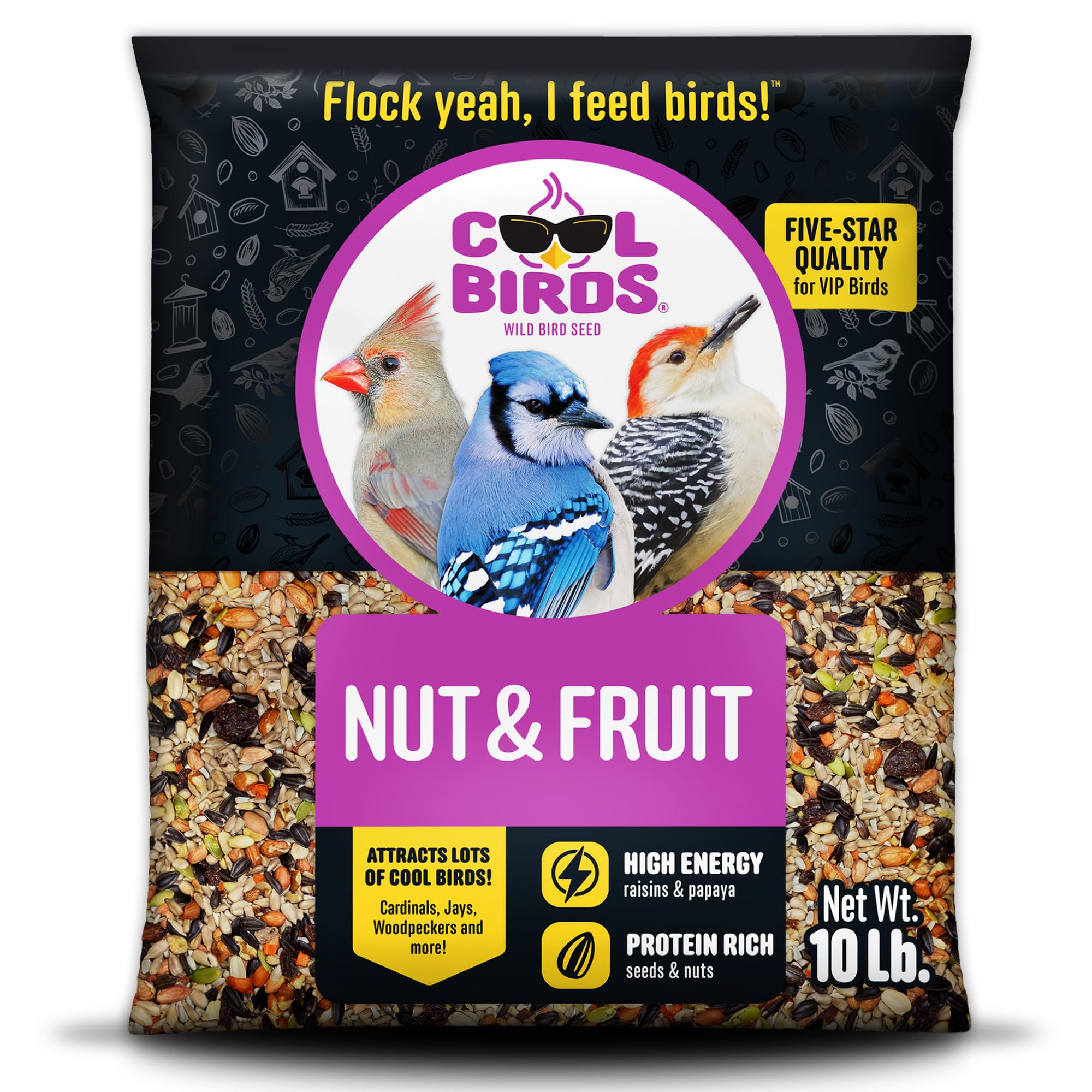
Cool Birds built this 10-pound blend around sunflower hearts, peanuts, tree nuts, raisins, and papaya — skipping corn, milo, and millet entirely. That ingredient decision alone puts it ahead of most mass-market blends. The fruit pieces are visibly large, not ground into dust, which means birds actually consume them rather than push them aside.
Customer reports confirm that cardinals, grosbeaks, woodpeckers, and chickadees hit this feeder consistently. The nut-to-fruit ratio is balanced enough that smaller birds can handle the pieces while larger woodpeckers get substantial peanut chunks. It works in tube, tray, hopper, and platform feeders without clogging.
The only trade-off is that birds go through it fast — the high desirability means you’ll refill more often than with filler-heavy blends. But for the feeder traffic and species variety you get, that’s a good problem. This is the most complete fruit-and-nut mix for the money.
Why we love it
- Zero corn, milo, or millet fillers
- Large visible fruit pieces (raisins, papaya)
- Attracts cardinals, grosbeaks, woodpeckers
- Works in all standard feeder types
Good to know
- Birds consume it quickly — expect frequent refills
- No shell-free option in this blend
2. Valley Farms Fruit Nut & Berry
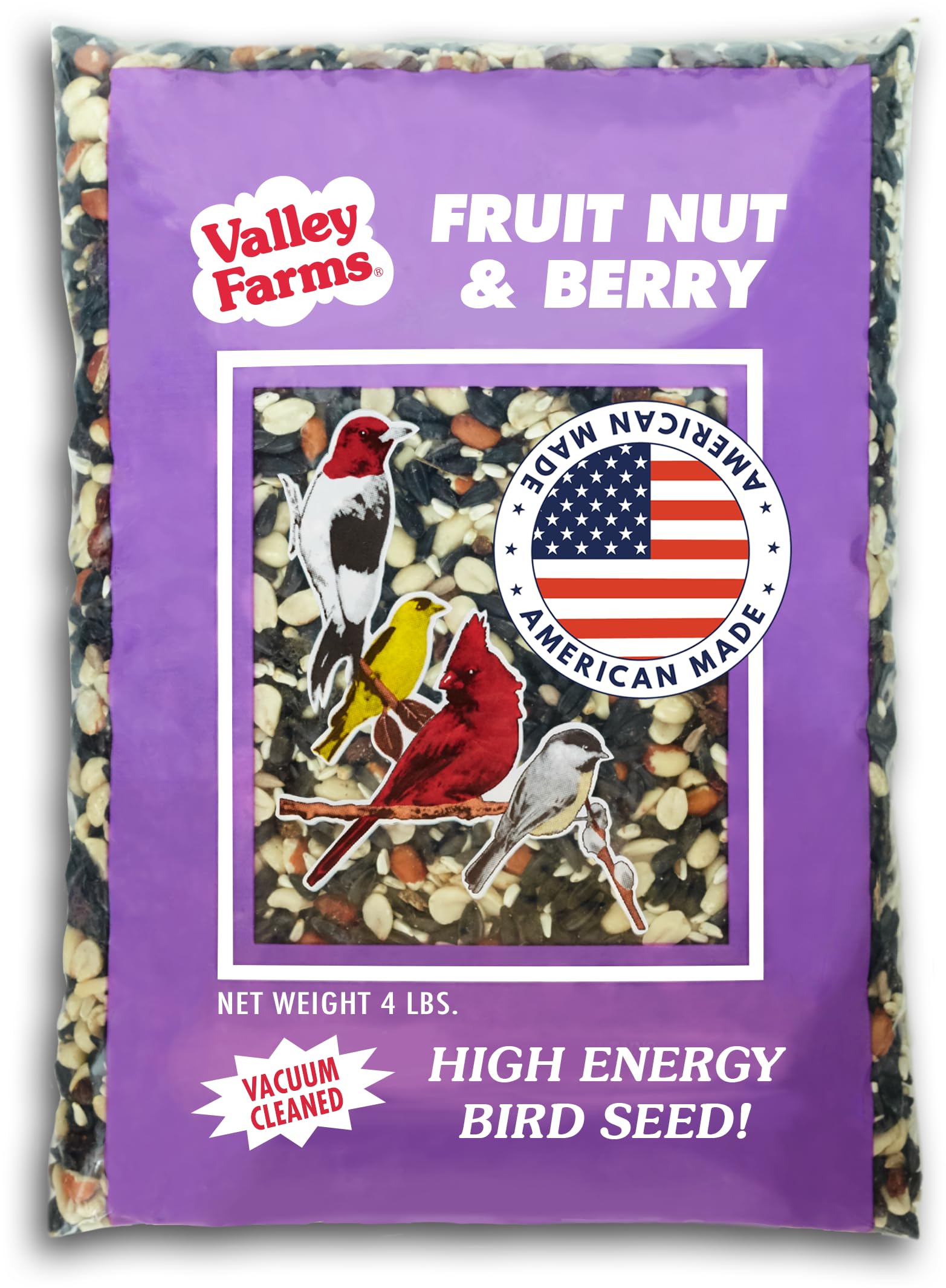
Valley Farms packs dried berries, peanut kernels, sunflower hearts, black oil sunflower, and safflower into a 4-pound bag that’s vacuum cleaned to remove dust and debris. The safflower component is a smart inclusion — it’s the preferred seed of cardinals, grosbeaks, and buntings while being less attractive to blackbirds and starlings.
The dried berry pieces provide the antioxidant boost that fruit-seeking birds need, and the peanut kernels deliver the fat content for winter energy. Multiple reviews note that this blend attracts more species variety than standard seed mixes, with chickadees, titmice, and nuthatches joining the regular feeder crowd.
At 4 pounds, you’ll burn through this bag faster than the 10-pound options, especially if your feeder draws a crowd. It’s a premium choice for birders who want to support a small US family business and prioritize ingredient quality over sheer volume.
Why we love it
- Vacuum cleaned with minimal dust
- Safflower seed deters starlings and blackbirds
- Real dried berry pieces for natural antioxidants
- Proudly made in the USA by a small family business
Good to know
- Only 4 pounds — goes fast with heavy traffic
- Premium per-pound cost compared to bulk blends
3. Pennington Ultra Double Nut, Nut & Fruit Blend
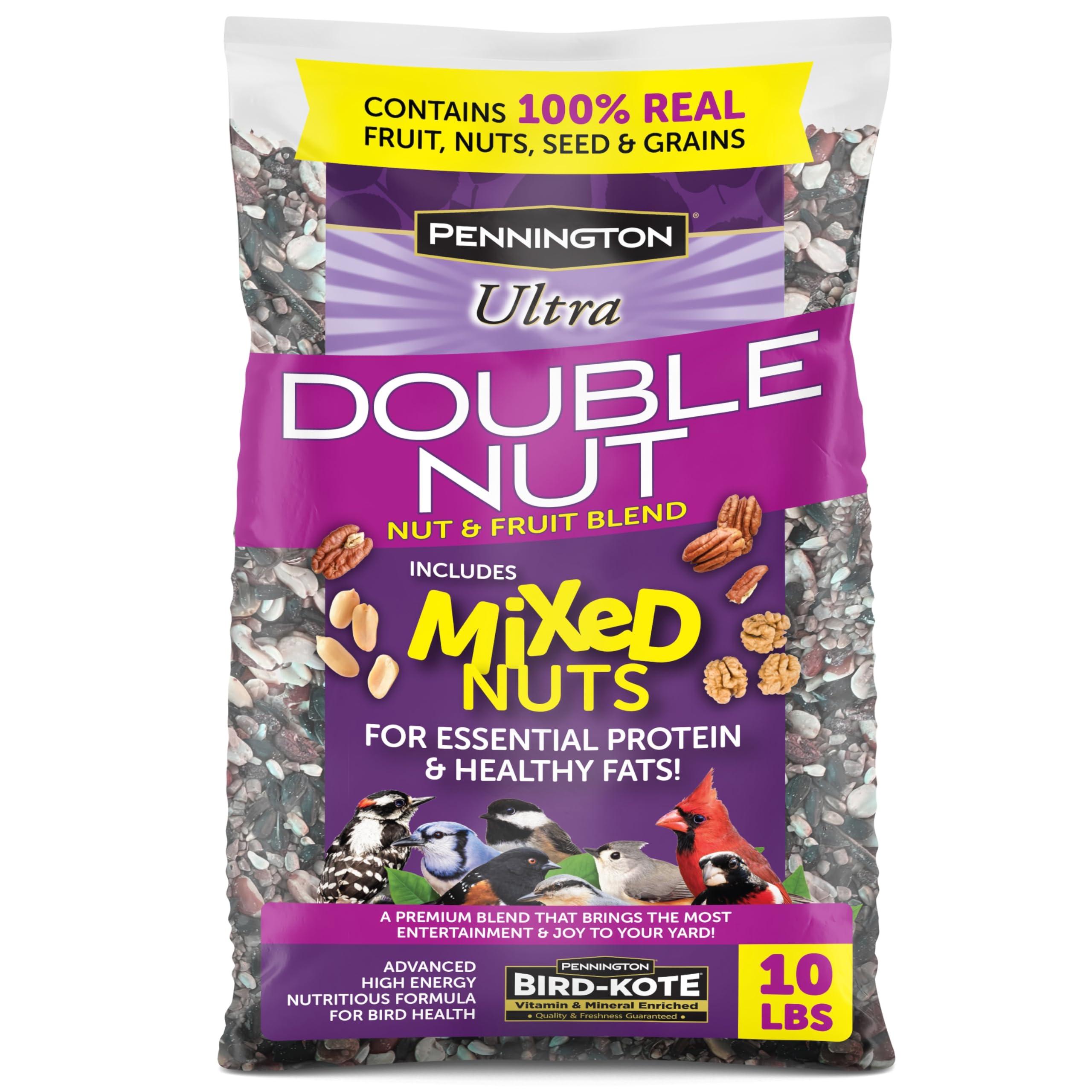
Pennington’s 10-pound blend mixes tree nuts, 100% real fruits, seeds, and grains with their exclusive Bird Kote technology — a vitamin and mineral coating that adds nutritional value beyond raw ingredients. This is a year-round workhorse blend that works in gazebo, hopper, platform, and tube feeders without issue.
The fruit content is genuine, not artificially flavored, and the nut variety keeps woodpeckers and nuthatches engaged. Customer feedback consistently mentions that cardinals, chickadees, blue jays, and towhees show up regularly. The Bird Kote coating is a nice bonus for overall bird health during molting and winter stress periods.
This isn’t a zero-fill blend — it contains grains alongside the fruit and nuts, which some picky birds may sort through. But for the 10-pound quantity and the vitamin enrichment, it delivers solid value for birders who want variety without paying premium per-pound prices.
Why we love it
- 10-pound bag offers strong value per feeding session
- Bird Kote vitamin/mineral coating supports bird health
- Mixed nuts and 100% real fruit attract diverse species
- Compatible with multiple feeder styles
Good to know
- Contains grains alongside fruit — picky birds may sort
- Not a shell-free or no-mess formula
4. Wild Delight Fruit N’ Berry Bird Food

Wild Delight’s 5-pound Fruit N’ Berry formula uses an advanced seed blend with no fillers, designed specifically to attract cardinals, blue jays, chickadees, and woodpeckers. The berry flavor profile pulls in fruit-loving species that might ignore generic seed mixes — multiple verified reviews note that cardinals in particular flock to this bag.
The 5-pound size is ideal for single-feeder setups or testing a new blend without committing to a large bag. Customers consistently report that birds finish every last seed, which confirms the no-filler promise — nothing gets kicked onto the ground. The berry component adds the natural sugar energy that migrating birds need.
On the downside, 5 pounds doesn’t last long if you have multiple feeders or a hungry flock. You’ll need to order frequently. The berry flavor also attracts squirrels, so plan your feeder placement accordingly or pair with a squirrel baffle.
Why we love it
- No fillers — every seed gets eaten
- Berry flavor strongly attracts cardinals
- Great entry-level size for testing
Good to know
- 5 pounds goes fast with active feeders
- Berry scent may attract squirrels
5. Cool Birds Sad Squirrels Hot Bird Seed
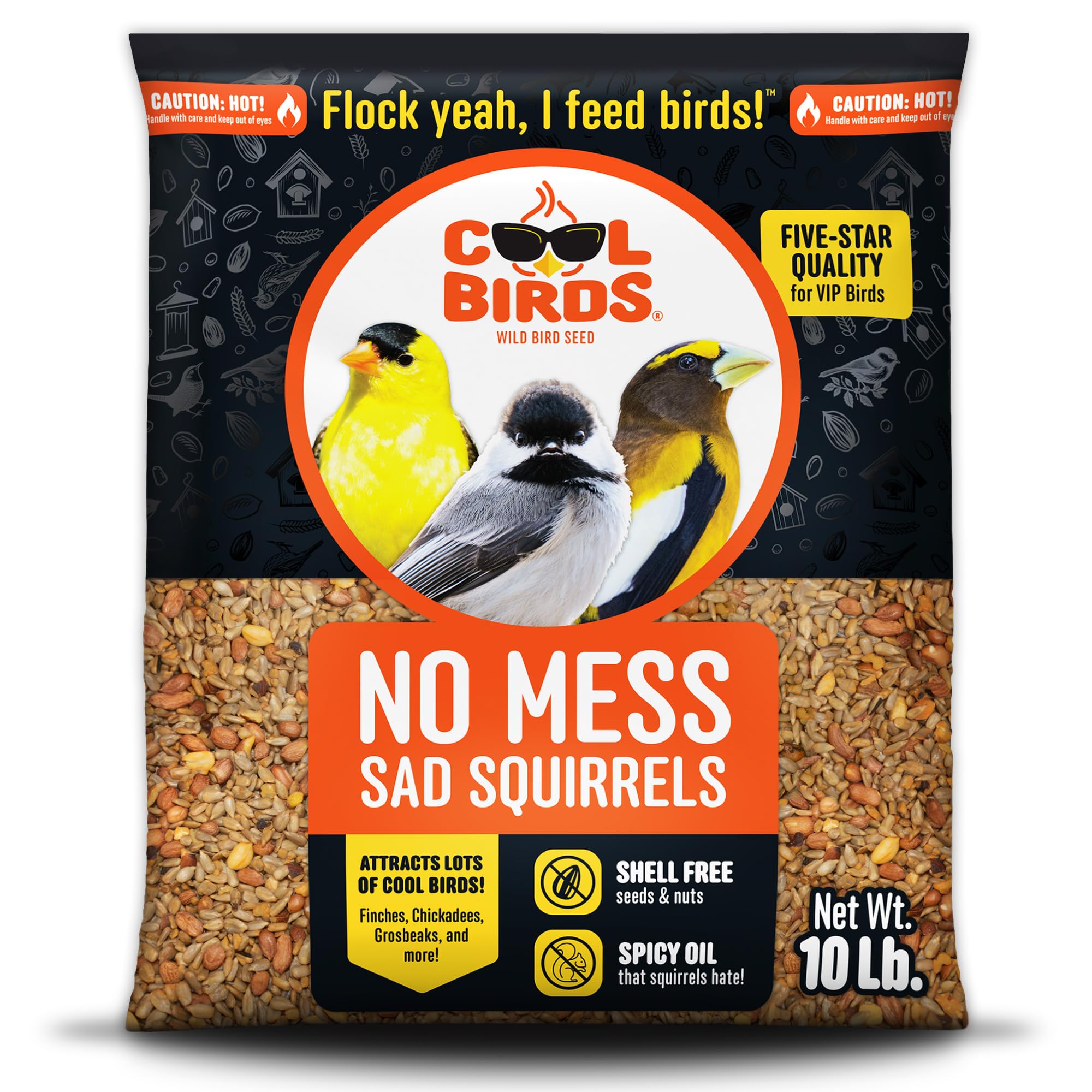
This 10-pound blend from Cool Birds tackles the #1 backyard bird feeder complaint — squirrels — by infusing sunflower hearts, peanuts, and tree nuts with chili pepper oil. Birds are immune to capsaicin, but squirrels feel the burn and leave after one taste. It also happens to be a no-mess, shell-free formula, meaning zero cleanup under your feeder.
Customer reports confirm that cardinals, chickadees, finches, and nuthatches feed happily while squirrels retreat after a single bite. The 10-pound bag lasts three to four weeks in moderate weather, and the lack of shells means no weeds sprouting from discarded hulls. It’s also friendly for deck and patio feeders where mess matters.
Some users have reported that the chili pepper effectiveness varies — a few squirrels eventually seem to tolerate the heat. If you have particularly persistent squirrels, you may need to combine this with a physical baffle. Also, wear gloves when handling the seed to avoid chili oil transfer to your skin or eyes.
Why we love it
- Chili pepper oil deters squirrels without harming birds
- 100% edible — no shells, no mess, no weeds
- Birds prefer it over other spicy brands per customer feedback
- Ideal for deck, patio, and tidy feeding areas
Good to know
- Some squirrels may eventually tolerate the heat
- Wear gloves when handling — capsaicin transfers
FAQ
Can dried fruit for wild birds go bad?
What dried fruits do cardinals prefer most?
Will dried fruit attract pests or rodents?
Should I mix dried fruit with regular bird seed?
Final Thoughts: The Verdict
For most backyard birders, the best dried fruit for wild birds winner is the Cool Birds Nut & Fruit blend because it delivers zero-filler ingredients, large visible fruit pieces, and consistent traffic from cardinals, grosbeaks, and woodpeckers. If you want a vitamin-enriched option with 10 pounds of variety at a friendly per-pound cost, grab the Pennington Ultra Double Nut & Fruit. And for squirrel-proof feeding with no mess beneath the feeder, nothing beats the Cool Birds Sad Squirrels Hot Bird Seed.