
A ferret’s life revolves around exploration, and the cage is its home base, not its prison. Choosing the wrong one means dealing with constant escapes from narrow 1-inch bar gaps, cleaning nightmares from fixed trays, or worse, bumblefoot from bare wire floors. The right ferret cage balances security for your slinky escape artist with practical access for you.
I’m Mo Mahin — the founder and writer behind Furric. My research focuses on deconstructing animal-housing specs, analyzing bar spacing, material gauge, lock mechanisms, and ease-of-cleaning data from thousands of real owner reports across dozens of small-animal cage models.
This guide ranks the top seven ferret cages on the market today, focusing on the critical specs: bar spacing, floor dimensions, ramp design, and tray accessibility. After hours of data analysis, we found the best ferret cages balance vertical climbing space with secure 0.5-inch bar spacing to prevent escapes.
How To Choose The Best Ferret Cages
Ferrets have a unique body structure: long spines, flexible ribs, and an instinct to squeeze through anything their skull fits through. A cage built for a guinea pig or a chinchilla will fail within days. Here is what you must evaluate before clicking buy.
Bar Spacing: The One Spec That Matters Most
Standard adult ferrets can compress their bodies to fit through a 1-inch gap. The industry safety standard is 0.5-inch (12.7 mm) bar spacing. Anything wider, like the 0.88-inch gaps found on some Topeakmart models or the 22 mm gaps on the HABUTWAY, risks your ferret escaping or getting its head stuck. Always check the manufacturer’s listed gap size in millimeters and verify it is 12.7 mm or less for ferrets.
Floor Construction and Paw Safety
Ferrets have delicate feet prone to pododermatitis (bumblefoot). Bare wire floors or metal mesh are unacceptable. Look for solid plastic platforms, ramps with fabric covers, or deep plastic trays that can be lined with fleece or bedding. The best cages include “paw safe fabric covers” on their shelves, or provide a deep enough base tray (5 to 6 inches) to hold absorbent bedding and prevent injuries.
Door Design and Ease of Cleaning
A ferret cage must be cleaned weekly. Full-width hinged doors (at least 15 inches wide) allow you to access the interior without contorting your arms. Double front doors are ideal. Additionally, a pull-out bottom grate and a removable plastic tray make the chore quick rather than exhausting. Check that the grate is solid metal, not a flimsy wire grid that breaks under regular handling.
Quick Comparison
On smaller screens, swipe sideways to see the full table.
| Model | Category | Best For | Key Spec | Amazon |
|---|---|---|---|---|
| Mcage 4-Tier Double Unit | Mid-Range | Vertical climbing space | 0.5 in bar spacing, 53.5 in tall | Amazon |
| Mcage Wrought Iron 4-Level | Mid-Range | Chew-proof metal structure | 0.5 in bar spacing, all metal | Amazon |
| Mcage Double Unit 4-Tier | Mid-Range | Budget Critter Nation alternative | 0.5 in bar spacing, 4 tiers | Amazon |
| HABUTWAY 45 inch | Mid-Range | Small ferret or chinchilla | 22 mm bar spacing, 45 in tall | Amazon |
| Topeakmart 2-Story | Premium | Ease of cleaning with two doors | 0.88 in bar spacing, hammer paint | Amazon |
| Yaheetech 69 inch | Premium | Multiple ferrets or rats | 10 mm bar spacing, 69 in tall | Amazon |
| Kaytee My First Home | Budget | Single ferret starter habitat | 0.5 in bar spacing, deep base | Amazon |
In‑Depth Reviews
1. Mcage X-Large 4-Tier Double Unit
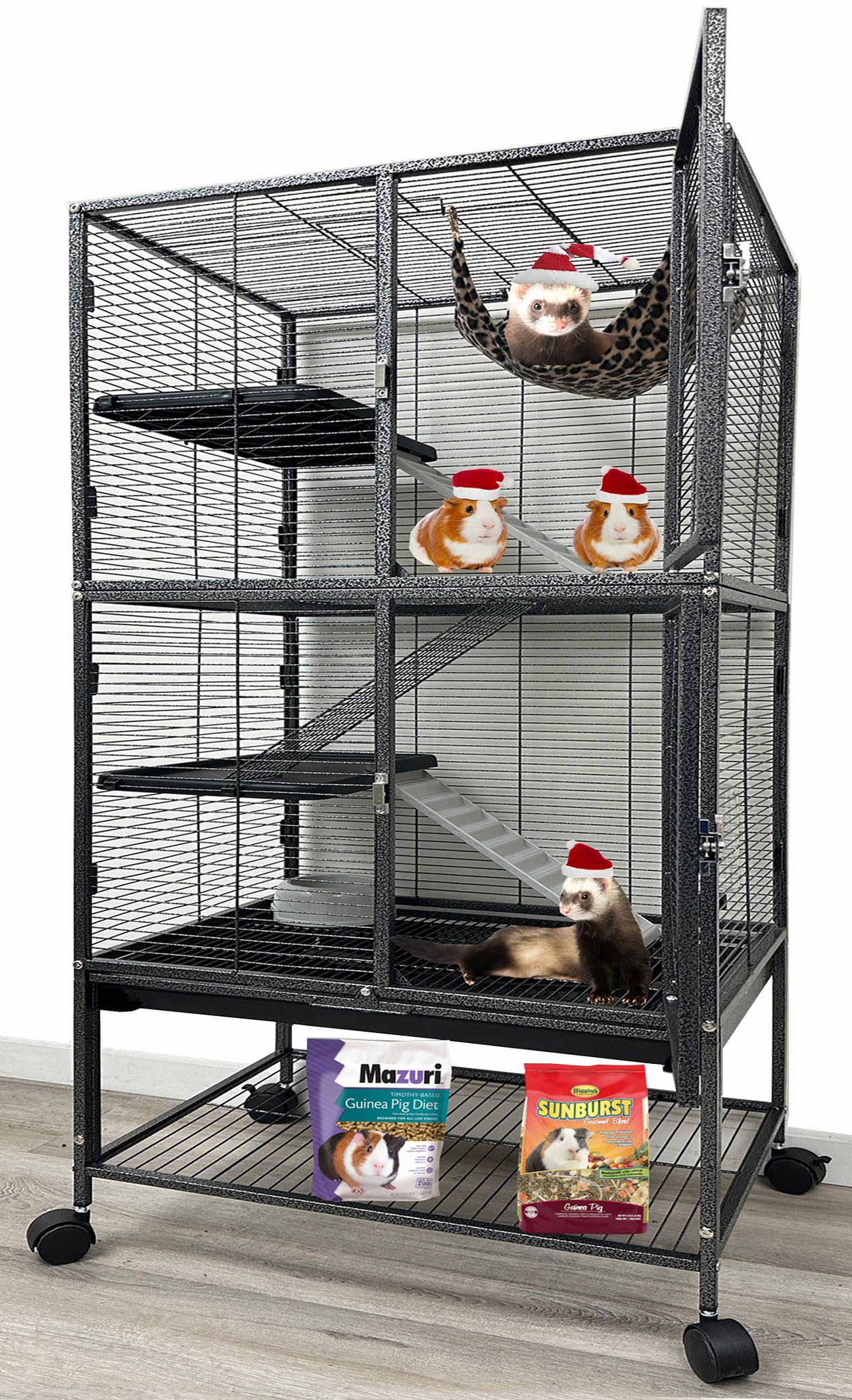
The Mcage X-Large Double Unit stands at 53.5 inches tall with a 31-inch length, offering a true two-story layout with a solid middle floor. The 0.5-inch horizontal wire spacing perfectly matches ferret safety requirements — preventing both escape and paw injuries. It comes with two oversized hinged front doors (21 x 15 inches) that swing fully open, making deep-cleaning the interior straightforward without needing to disassemble the cage.
Owner feedback confirms the structure is sturdy wrought iron with a powder-coated finish that resists scratching from ferret claws. The included accessories — a hammock, water bottle, and food bowl — are functional enough to start with. The rolling stand with two lockable casters adds mobility and a bottom shelf for storage. However, the assembly instructions are text-heavy with unclear diagrams; expect to spend 30 to 45 minutes figuring out which unlabeled part is H1 versus H2.
The pull-out bottom grate and plastic tray make cleaning efficient, though some owners report the wire spacing on the platforms is too wide for small feet without the fabric covers. Adding a layer of fleece on the shelves eliminates this concern. For ferret owners wanting a vertical, secure, and accessible cage without jumping to premium pricing, this Mcage model delivers a strong balance of value and features.
Why we love it
- True double-unit design with full middle floor for stable climbing
- Rolling stand with lockable casters and built-in storage shelf
- Includes hammock, bowl, and water bottle out of the box
Good to know
- Assembly instructions are confusing with unlabeled parts
- Wire platform gaps require fabric covers to prevent paw discomfort
2. Yaheetech 69-Inch Extra Large 3-Level

The Yaheetech 69-inch cage offers the tallest single-structure option in this lineup, reaching well over 5.5 feet. Its 10-millimeter bar spacing is the tightest of any model here, making it effectively escape-proof for even the smallest juvenile ferrets. The three-tier design includes two removable platforms connected by ladders, but the internal configuration is fully flexible — you can reposition the shelves or remove the ladders entirely to create a clear vertical climbing space.
Assembly is notably easier than the Mcage alternatives, with clear step-by-step instructions and pre-marked hardware. Owners consistently report building it in about 45 minutes with two people. The slide-out bottom tray and wire grate separate waste efficiently, though the tray itself is relatively shallow compared to dedicated ferret habitats. The rolling stand detaches if needed, and the open shelf underneath provides excellent storage for litter boxes and food bags.
One design quirk: there are ten small doors intended for bird feeders and breeding boxes. Ferret owners often need to zip-tie these shut to prevent intelligent escape attempts. The cage also does not bolt to its stand — a potential stability concern for a structure this tall. Drilling two small screws into the stand frame solves this. For multi-pet households or owners with multiple ferrets, the size and verticality of this cage are unmatched in this price bracket.
Why we love it
- 69-inch height provides massive vertical climbing and exercise space
- 10 mm bar spacing is the tightest and safest in class
- Easy assembly with clear instructions and marked hardware
Good to know
- Multiple small doors require zip-ties to prevent ferret escapes
- Cage does not attach to the stand without custom drilling
3. Mcage Wrought Iron 4-Level Chew-Proof

The Mcage 4 Level Wrought Iron cage is built for durability with an all-metal body and a hammered epoxy paint finish. The 0.5-inch vertical wire spacing is different from most horizontal-bar cages — it still prevents escape but gives a slightly different climbing feel that some ferrets prefer. The large swing-out front door measures nearly the full width of the cage, allowing you to remove platforms and clean the interior without obstruction.
Owners praise the slide-out bottom metal grate and plastic tray, which together make daily spot-cleaning a one-minute task. The four locking casters handle the weight of the cage without wobbling. However, a common issue reported by buyers: the stand base does not line up perfectly with the cage frame, requiring zip-ties or washers to properly secure the two parts. This is not a structural failure but an alignment nuisance during assembly.
The included ramps are metal with cross-wire steps covered by fabric, which helps prevent bumblefoot. The four levels provide good enrichment for a single ferret or a bonded pair. The biggest drawback is the lack of a top door for easy access — you must use the front door for everything. For owners who prioritize a fully metal, long-lasting frame over plastic components, this Mcage model is a reliable workhorse.
Why we love it
- All-metal construction with durable hammered paint finish
- Full-width front door makes maintenance very easy
- Smooth rolling casters with two locking brakes
Good to know
- Stand base alignment may require zip-ties to fit properly
- No top access door, limiting cleaning angles
4. Mcage Double Unit 4-Tier with Top Hook Door

This Mcage Double Unit offers a layout similar to the Critter Nation but at a lower cost. It measures 24 inches long by 17.5 inches wide by 53.5 inches tall, with 0.5-inch horizontal bar spacing and a full middle floor that turns the cage into two separate stories connected by a ladder. The standout feature here is the top hook door (8 x 9 inches) — an additional access point not found on most competing models in this price range.
The double large front doors (15 x 18 inches) swing open wide, and the top door allows you to lower a hammock or toys from above without opening the main doors. Owners note that the assembly instructions are terrible — small black-and-white diagrams with no text. Expect a 45-minute build that requires patience and re-reading the steps. Once assembled, the cage is sturdy and stable on its rolling casters.
The main trade-off is the lack of solid-bottom platforms. The wire grates on the levels need fabric covering to prevent ferret foot injuries. The bottom tray is a standard pull-out plastic bin, but the grate above it has a large gap that small ferret paws can slip through. Adding a fleece liner or a sheet of corrugated plastic on top of the grate solves this. For ferret owners on a budget who want a Critter Nation-style layout, this Mcage is a solid choice if you are willing to make minor modifications.
Why we love it
- Critter Nation style layout at a budget-friendly price point
- Top hook door provides extra access for hanging toys
- Stable rolling stand with storage shelf underneath
Good to know
- Terrible assembly instructions — nearly no text guide
- Wire platforms must be covered to prevent foot injuries
5. Topeakmart 2-Story Metal Rolling Cage

The Topeakmart 2-Story cage stands 54 inches tall with a 31 by 20 inch footprint, giving it a wider floor area than the Mcage units. It is constructed from heavy-gauge steel with a hammered paint finish that resists rust and scratches better than standard powder coatings. The two full-width swing doors each are secured by locks strong enough to prevent even clever ferrets from opening them.
Assembly is the biggest complaint here — owners report spending 3 to 5 hours with two to six people deciphering picture-only instructions. The cage itself, once built, is roomy and solid. It includes fleece shelf covers and a small litter box, which is unusual at this price. However, the 0.88-inch bar spacing (22 mm) is a serious concern for ferrets. A determined adult ferret may be able to squeeze through, and the wide gaps can trap a ferret that tries to force its head through.
The plastic tray is undersized for the slide tracks, creating small gaps where waste and bedding can fall through to the stand shelf. The wire platforms need covering to protect paws. For owners with smaller ferrets or those looking for a chinchilla cage that ferrets could temporarily use, the build quality is high. For dedicated ferret housing, the bar spacing is a dealbreaker for many safety-conscious buyers.
Why we love it
- Heavy-gauge steel with premium hammered paint finish
- Two full-width doors with secure locks
- Includes fleece covers and a litter box
Good to know
- 0.88-inch bar spacing may not be safe for all ferrets
- Assembly is extremely difficult with unclear instructions
6. HABUTWAY 45 inch Rolling Chinchilla Cage

The HABUTWAY cage is a square-based unit at 20.5 by 20.5 inches and 45 inches tall, making it one of the more compact options. It is marketed as a ferret cage, but the 22-millimeter bar spacing (approximately 0.87 inches) is too wide for ferret safety, as confirmed by numerous owner reviews. For chinchillas or guinea pigs, this gap is fine. For ferrets, it is a real risk that requires wrapping the cage in wire mesh to prevent escapes.
On the positive side, the build quality is solid for its price tier. The all-metal frame uses a hammer pattern finish that hides scratches well. The five platforms are covered with blue flannel and arranged at different heights, offering good enrichment. The pull-out bottom tray slides out easily for cleaning. The four rolling casters with brakes make it easy to move from room to room, though some owners report the wheels are flimsy and cause wobbling on uneven floors.
The biggest structural issue is that the plastic tray sits loosely without a metal grate on top, meaning bedding gets kicked out during normal ferret digging behavior. The side latches are also plastic and prone to breaking under repeated use. While the cage is a decent home for chinchillas or rats, ferret owners should look elsewhere unless they are willing to heavily modify the bar spacing and tray system.
Why we love it
- Compact square footprint fits in tight spaces
- Five flannel-covered platforms for climbing enrichment
- Hammer pattern finish resists rust and scratches
Good to know
- 22 mm bar spacing is dangerously wide for ferrets
- Plastic tray and latches are flimsy and prone to failure
7. Kaytee My First Home Multi-Level Exotics Habitat

Kaytee’s My First Home Habitat is a 30.5 by 18 by 30.5-inch cage that is smaller than the other options, but it comes with a deep plastic base pan that is about 5 inches high. This deep tray is excellent at containing bedding, litter, and debris, keeping your floors cleaner than the shallow trays on larger cages. The 0.5-inch wire spacing is exactly right for ferrets, and the chew-proof locks prevent them from popping doors open.
The multi-level design includes two adjustable shelves and two ramps, but the total height (30.5 inches) is limiting. A single ferret can use this cage, but it will be cramped for two. The plastic base, while great for mess control, is a problem if you have a ferret that enjoys chewing plastic — some owners report bite damage to the rim. The front doors are small and do not swing open fully, making deep cleaning less convenient than the Mcage or Topeakmart options.
Assembly is moderate, but the clip-in shelves have divots that can trap urine if not cleaned frequently. The narrow bar spacing and deep tray make this a great starter cage for a juvenile ferret or a temporary quarantine habitat. For the price, it is functional and safe. But the limited vertical space and plastic construction mean most owners will outgrow it within a year, needing a larger double-unit cage for their ferret.
Why we love it
- Deep 5-inch plastic base prevents bedding from being kicked out
- 0.5-inch bar spacing is perfectly safe for ferrets
- Affordable entry-level price for new ferret owners
Good to know
- Small 30.5-inch height is cramped for adult ferrets
- Plastic base can be chewed by determined ferrets
FAQ
Can I use a chinchilla cage for my ferret?
How much vertical space does a ferret need daily?
Why do ferret cages need solid platforms instead of wire shelves?
Is it safe to stack two smaller ferret cages vertically?
Final Thoughts: The Verdict
For most gardeners, the best ferret cages winner is the Mcage X-Large 4-Tier Double Unit because it combines secure 0.5-inch bar spacing, a spacious 53.5-inch vertical layout, and practical double front doors at a mid-range price. If you want maximum vertical height for multiple ferrets, grab the Yaheetech 69-inch 3-Level for its tight 10 mm bars and flexible tier configuration. And for a reliable starter habitat for a single ferret or a quarantine setup, nothing beats the Kaytee My First Home with its deep base tray and proper 0.5-inch spacing.