
Choosing a floor covering for your chicken coop is a battle against moisture, mites, and manure. A bad choice harbors ammonia fumes that damage your flock’s respiratory system and turns daily cleaning into a miserable chore.
I’m Mo Mahin — the founder and writer behind Furric. I’ve spent years analyzing agricultural bedding trials, comparing absorption rates across natural substrates, and scouring owner feedback to identify which coop floor surfaces stand up to actual daily use.
This guide reviews the top nontoxic, absorbent, and easy-to-clean options to help you build a healthier home for your hens. When you need the ultimate breakdown of the best flooring for chicken coops, these are the five products that rose to the top of my research.
How To Choose The Best Flooring For Chicken Coops
The right floor covering does three things: absorbs moisture before ammonia forms, stays low-dust to protect lungs, and cleans out fast without destroying your back. Here are the three specs that separate good coop flooring from a health hazard.
Absorption Rate & Ammonia Neutralization
Wet droppings release ammonia within 24 hours. A bedding or mat that locks moisture inside its fibers — rather than letting it pool on the surface — buys you days of odor control. Hemp and aspen excel here; straw and pine shavings typically fall short.
Dust & Respiratory Safety
Chickens have sensitive respiratory tracts. High-dust materials like kiln-dried pine shavings can trigger chronic inflammation. Low-dust options like hemp bedding or pressed aspen liners keep the air clean inside enclosed coops.
Cleanup Efficiency
Deep-litter materials let you sift and remove solids daily while composting in place over months. Disposable liners and mats, on the other hand, can be swapped out in seconds. Your choice depends on how much time you want to spend inside the coop.
Quick Comparison
On smaller screens, swipe sideways to see the full table.
| Model | Category | Best For | Key Spec | Amazon |
|---|---|---|---|---|
| Eaton Pet & Pasture Hemp Bedding | Hemp Bedding | Deep-litter odor control | 2x absorption vs. traditional bedding | Amazon |
| Rural365 Nest Box Liners | Aspen Liners | Quick nest box swaps | 13×13 inch aspen pad with paper backing | Amazon |
| ToLanbbt Interlocking Mats | PVC Drainage Mats | Wet-area coop flooring | 0.55″ thick with drainage holes | Amazon |
| HoazHoald Nesting Herbs | Dried Herb Mix | Natural mite deterrence & scent | 8-herb blend in a resealable bag | Amazon |
| New Pig Absorbent Mat | Polypropylene Roll | Oil / moisture spill containment | 50 ft roll, absorbs industrial liquids | Amazon |
In‑Depth Reviews
1. Eaton Pet and Pasture Hemp Bedding

This hemp bedding absorbs roughly twice the moisture of standard pine shavings, which translates into noticeably less ammonia buildup inside a closed coop. The fiber structure holds onto liquid rather than letting it pool at the bottom, so the top layer stays dry enough for chickens to scratch and forage without standing in dampness.
Grown without pesticides or herbicides and processed to keep dust levels extremely low, this bedding is a strong choice for flocks prone to respiratory issues. Owners practicing the deep-litter method report that the smell stays controlled for up to six months between full cleanouts, with only daily spot-sifting required.
The bag is compact — 28 liters of compressed flake — so larger coops may need multiple bags to achieve a four-inch base layer. That upfront cost is higher than pine, but the extended lifespan and reduced labor often make it more economical over a full season.
Why we love it
- Near-zero dust protects flock respiratory health
- Superior moisture control for deep-litter composting
- Naturally bug-resistant without chemical treatments
Good to know
- Small bag volume; multiple bags needed for large coops
- Higher per-bag price than pine shavings
2. Rural365 Chicken Nest Box Liners

These 13-by-13-inch aspen pads come with a paper backing that holds the shavings together, so you can lift the whole liner out and replace it in seconds. That design is ideal for nest boxes, where you want to remove soiled material without disturbing eggs or scattering loose bedding everywhere.
Aspen is a naturally low-dust hardwood that doesn’t release the aromatic oils found in pine or cedar, which can irritate chickens. The shavings absorb moisture away from the egg surface, reducing the chance of cracked shells and keeping the nest box cleaner between refreshes.
Each pack contains 12 liners. How long a single liner lasts depends on how many hens share the box — in a standard two-hen nest, owners typically swap every one to two weeks. When the pad eventually tears or gets too soiled, you simply toss the whole unit and lay a fresh one.
Why we love it
- Paper backing makes removal fast and mess-free
- Aspen wood is low-dust and safe for respiratory health
- Consistent 13×13 size fits most standard nest boxes
Good to know
- Not designed for deep-litter floor coverage
- Per-liner cost is higher than bulk shavings
3. ToLanbbt Modular Interlocking Mats

Unlike loose bedding, these 11.8-inch square tiles snap together to form a rigid floor surface with built-in drainage holes. When placed over a solid coop floor, the 0.55-inch thick mat keeps chickens elevated above moisture and droppings, allowing liquids to drain below where they can be absorbed by a separate substrate or washed away.
The blend of PVC and rubber makes the tiles durable enough for heavy foot traffic and resistant to UV degradation if used in an outdoor run. Owners report that the interlocking system stays flat under weight, with no shifting or buckling even when the coop floor is slightly uneven.
A 12-pack covers roughly 12 square feet. Extension packs can be added to cover larger runs or deep coops. Some users note a strong chemical smell out of the box that dissipates after a few days of airing outdoors, which is worth planning for before introducing your flock.
Why we love it
- Elevated design keeps chickens dry above pooled moisture
- Drainage holes prevent liquid accumulation
- Modular system expands to any coop size
Good to know
- Initial chemical smell requires 2–3 days of airing out
- Not designed as a standalone absorbent layer
4. HoazHoald Nesting Herbs
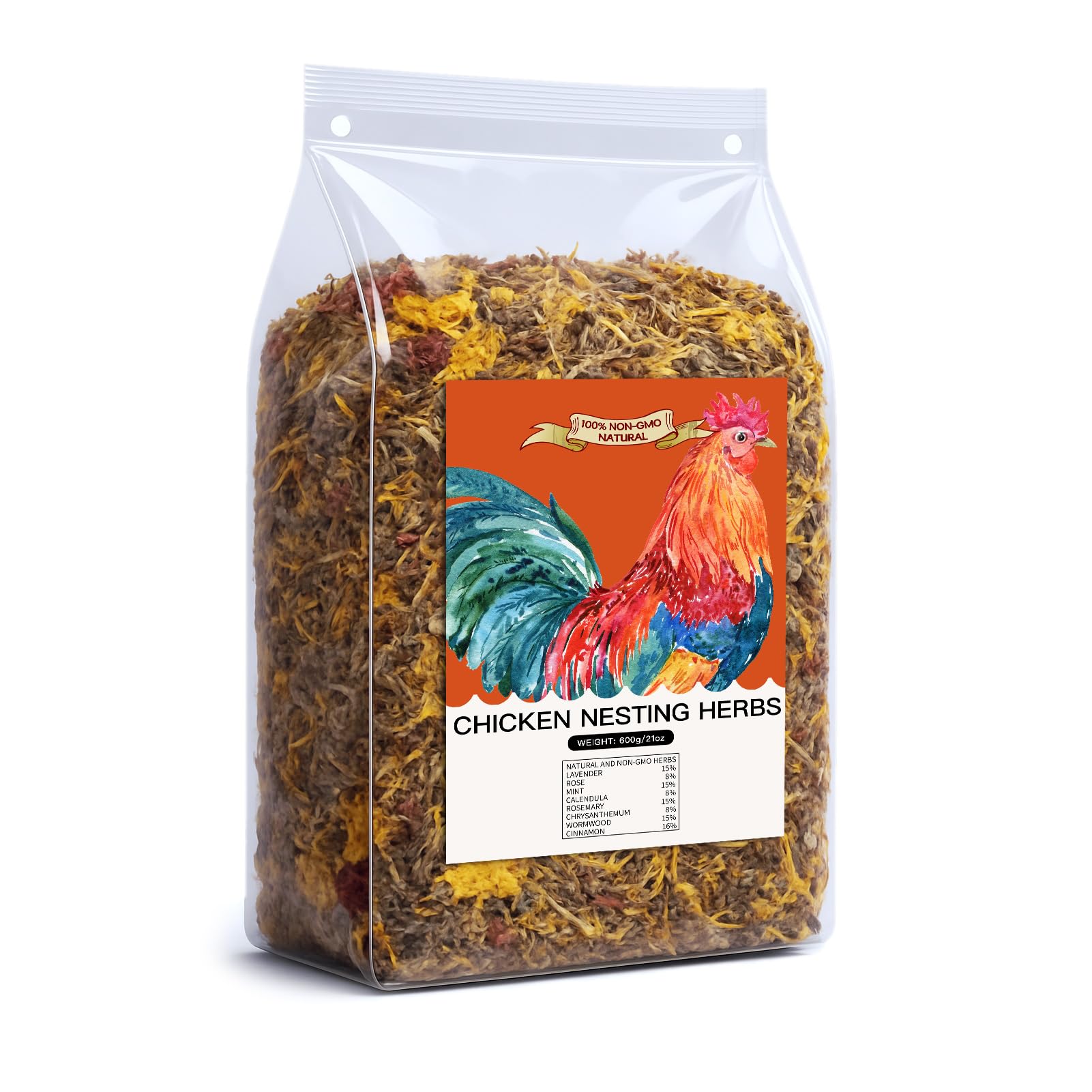
This 21-ounce premixed blend of lavender, rose, mint, calendula, rosemary, chrysanthemum, wormwood, and cinnamon is designed as a top dressing for nesting boxes rather than a full floor covering. The aromatic oils from the dried flowers and herbs help mask ammonia odors and are reported by users to discourage mites from settling in nest corners.
Chickens will peck at and eat these herbs, which adds a nutritional element — the dried material provides trace vitamins, minerals, and calcium that can supplement their regular feed. The herbs are non-GMO and air-dried without chemical preservatives, making them safe for ingestion.
The blend is loose and lightweight, so it should be sprinkled on top of existing bedding or liners rather than used as a standalone floor layer. One 21-ounce bag lasts several weeks in a typical 4-hen nest box setup, but heavy scratching will displace it faster.
Why we love it
- Natural scent helps keep the coop smelling fresher
- Edible herbs supplement the flock’s nutrition
- Essential oils may help deter nest mites
Good to know
- Only suitable as a top dressing, not a full floor layer
- Needs frequent reapplication in active nest boxes
5. New Pig Universal Absorbent Mat Roll

This industrial-grade polypropylene mat is 15 inches wide and 50 feet long, designed in a continuous roll that you cut to any coop dimension. The melt-blown fiber construction wicks liquid rapidly across the surface and traps it inside the mat, keeping the top feel dry to the touch.
While originally engineered for oil and chemical spills, the mat’s absorption mechanism works just as effectively on chicken manure moisture. It repels water on the surface side but pulls the liquid into the fiber core, which can reduce the ammonia smell that rises from wet droppings.
The trade-off is material feel: polypropylene is a synthetic felt, not a natural bedding. Chickens won’t scratch or forage through it the way they will through hemp or aspen. It functions best as a heavy-duty floor liner under a top layer of softer bedding or in a brooder where quick, total absorbency is the priority.
Why we love it
- Continuous 50-foot roll can be cut to any coop shape
- Rapid wicking traps moisture inside the fiber
- Withstands temperatures from -30°F to 425°F
Good to know
- Synthetic texture is not forage-friendly for chickens
- Best used as a liner beneath natural bedding
FAQ
How deep should hemp bedding be in a chicken coop?
Can I use dried nesting herbs as the only floor covering?
Will polypropylene mats hurt my chickens if they peck at them?
Final Thoughts: The Verdict
For most gardeners, the best flooring for chicken coops winner is the Eaton Pet and Pasture Hemp Bedding because it strikes the perfect balance between moisture absorption, dust control, and deep-litter longevity — keeping your flock healthy and your cleaning routine manageable. If you want a quick-swap system for nest boxes, grab the Rural365 Nest Box Liners. And for a heavy-duty synthetic base layer under natural bedding, nothing beats the New Pig Absorbent Mat Roll.