
The first eight weeks of a chick’s life determine its long-term health, egg-laying consistency, and resistance to common flock illnesses. Choosing the wrong starter feed — one loaded with corn filler, low-quality soy, or unnecessary medications — can lead to slow feathering, poor bone development, and a weak immune system that follows the bird into adulthood.
I’m Mo Mahin — the founder and writer behind Furric. I specialize in comparing livestock nutrition specifications, studying ingredient sourcing and manufacturer milling practices, and cross-referencing hundreds of verified owner reports to separate marketing hype from genuinely better feed formulations.
After analyzing protein percentages, ingredient lists, and real-world feeding outcomes across multiple brands, I’ve identified the five starter feeds that deliver the best balance of growth support, digestive health, and long-term value. This review is your guide to the best feed for chicks on the market today.
How To Choose The Best Feed For Chicks
Starter feed is the most critical nutritional input for the first 18 weeks of a chick’s life. The wrong formulation — too low in protein, heavy on indigestible fillers, or medicated when your flock doesn’t need it — can create problems that take months to correct. Here are the three specifications that separate a genuinely good starter feed from an average one.
Protein Percentage and Amino Acid Profile
Starter feeds should contain between 18% and 22% crude protein. The protein drives muscle development, feather growth, and organ formation during the chick’s most rapid growth phase. Below 18%, chicks grow slowly and may develop crooked keels or weak legs. Above 22% without proper amino acid balancing can stress the kidneys. Look for feed that lists methionine and lysine levels — these two amino acids are the limiting factors for feather quality and skeletal strength in young birds.
Medicated vs Non-Medicated: Making the Right Call
Medicated starter feeds typically contain amprolium, a coccidiostat that helps prevent coccidiosis — a common and often fatal intestinal disease in chicks. Non-medicated feeds are cleaner but require you to manage coop sanitation and stress levels more carefully. If you raise chicks on wire floors or in exceptionally clean brooder conditions, non-medicated is the better long-term choice. If you brood on litter or soil, the medicated route can be a safety net — but never mix medicated feed with additional coccidiostats in the water.
Ingredient Quality: Corn, Soy, and the Filler Problem
Conventional starter feeds rely heavily on corn and soybean meal as cheap protein and energy sources. Corn and soy are difficult for young chicks to digest and often carry pesticide residues that can disrupt developing gut flora. Premium feeds eliminate both, replacing them with peas, flax meal, kelp, and fish meal — ingredients that provide a more complete amino acid profile and are easier on the digestive system. If you plan to raise organic or pasture-raised layers, start with a corn-free and soy-free feed from day one to build the right gut microbiome.
Quick Comparison
On smaller screens, swipe sideways to see the full table.
| Model | Category | Best For | Key Spec | Amazon |
|---|---|---|---|---|
| Scratch and Peck Starter Crumbles | Premium Organic | Maximum growth with clean ingredients | 20.5% protein, crumble form | Amazon |
| Scratch and Peck Starter Mash | Mid-Range Organic | Versatile dry or fermented feeding | 20.5% protein, whole grain mash | Amazon |
| Purina Start and Grow | Mid-Range | Convenient crumbles with color support | 18% protein, marigold extract | Amazon |
| Mile Four Organic Starter Mash | Premium Organic | Small flock owners wanting corn/soy-free | 21% protein, 2 lb sample | Amazon |
| Prairie’s Choice Starter/Grower | Budget-Friendly | Larger flocks needing volume at lower cost | 18% protein, 25 lb bag | Amazon |
In‑Depth Reviews
1. Scratch and Peck Feeds Whole Grain Starter Crumbles
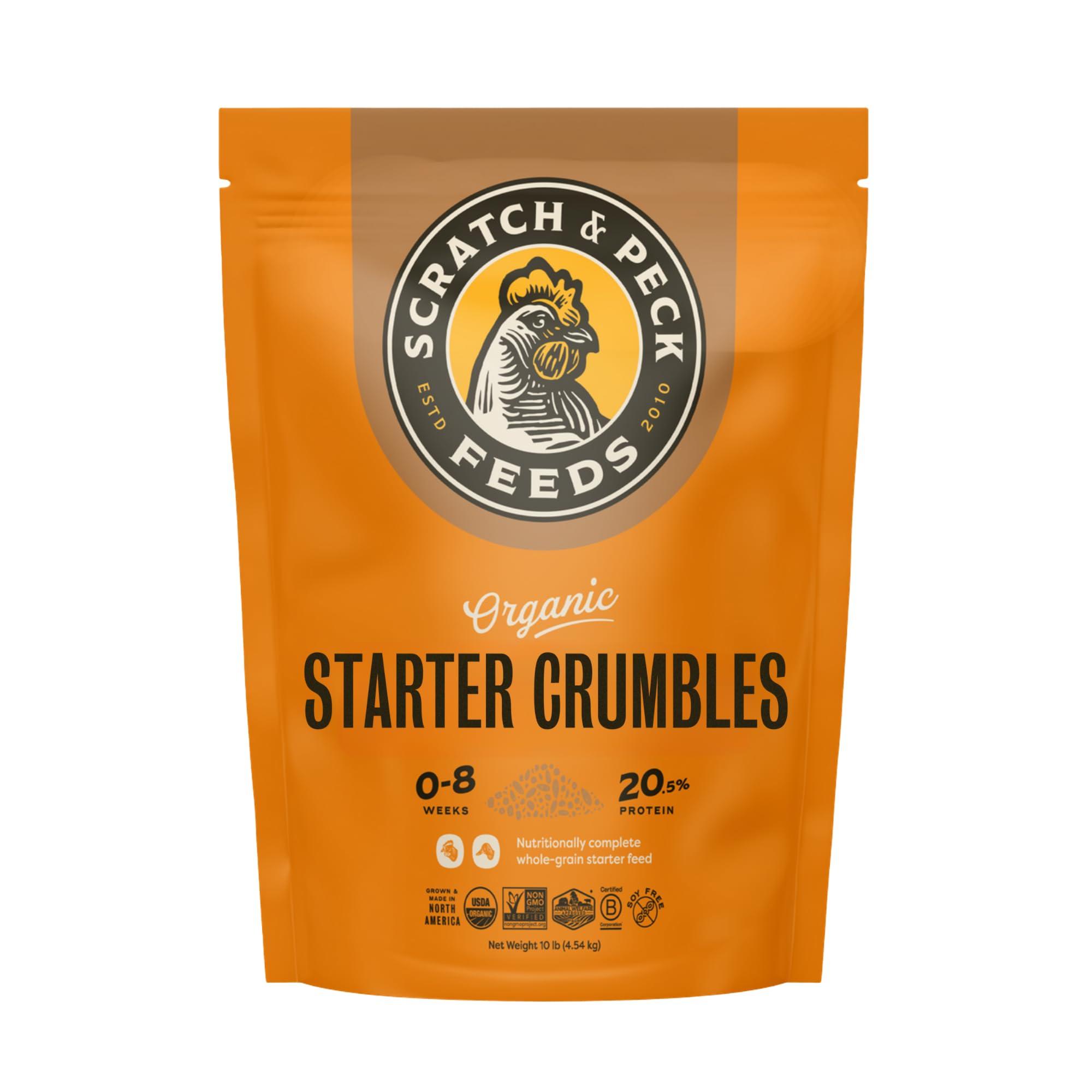
This crumble formulation from Scratch and Peck delivers a complete nutritional profile that supports rapid growth in both chicks and ducklings from day one. The 20.5% protein comes from organic whole grains, fish meal, and organic sunflower oil — ingredients that provide digestible amino acids without relying on corn or soy fillers. The crumble size is fine enough for week-old bantams yet substantial enough for heavier breeds to eat without excessive waste.
Owner reports consistently highlight how quickly chicks take to this feed compared to conventional starter mash. Multiple verified buyers noted that chicks actively sought out these crumbles over competing feeds placed in the same brooder. The inclusion of kelp and flax meal adds omega-3 fatty acids that contribute to early feathering and immune system resilience. At 10 pounds per bag, the price per pound is competitive for a certified organic, non-GMO product.
The only drawback is the bag size — a smaller option would help first-time buyers test the feed without committing to a full 10-pound purchase. The paper packaging, while eco-friendly, requires careful storage in a rodent-proof container. Overall, this crumble is the gold standard for anyone who wants the cleanest possible ingredient list without sacrificing growth performance.
Why we love it
- Certified organic and non-GMO with zero corn or soy fillers
- High palatability — chicks prefer it over standard starter feeds
- Supports healthy feathering and immune function from the first week
Good to know
- No small bag option available for initial testing
- Paper packaging must be transferred to a sealed container immediately
2. Scratch and Peck Whole Grain Starter Mash

This whole grain mash from Scratch and Peck is the same base formulation as the crumbles but in a mash form that offers more feeding flexibility. The 20.5% protein content matches the crumble version, but the texture allows for both dry feeding and fermentation. Fermenting this mash for 24 to 72 hours converts starches into lactic acid, improving nutrient bioavailability and naturally discouraging selective eating — a common problem with whole grain feeds.
Several long-term buyers report that this feed helped chicks recover from vitamin deficiencies acquired from lower-quality starter feeds used during the first week. The resealable bag is a practical feature for maintaining freshness between feedings, though the paper material still requires pest-proof storage. One 10-pound bag fed 28 chicks for three weeks, making the cost per bird very reasonable for an organic product.
The whole grain texture is coarser than finely ground mash, which some owners found surprising on first opening. Chick grit should be offered alongside this feed to aid mechanical digestion, especially during the first two weeks. The lack of insect-based protein means owners raising chicks for high-protein meat production may need a supplemental source, but for standard layer flocks, this mash delivers everything required through the starter phase.
Why we love it
- Excellent for fermentation to improve digestion and reduce feed waste
- Corn-free and soy-free with certified organic grains
- Resealable bag helps maintain freshness between uses
Good to know
- Coarse texture requires chick grit for proper digestion
- No insect-based protein for high-protein diet needs
3. Purina Start and Grow Non-Medicated Chick Feed Crumbles
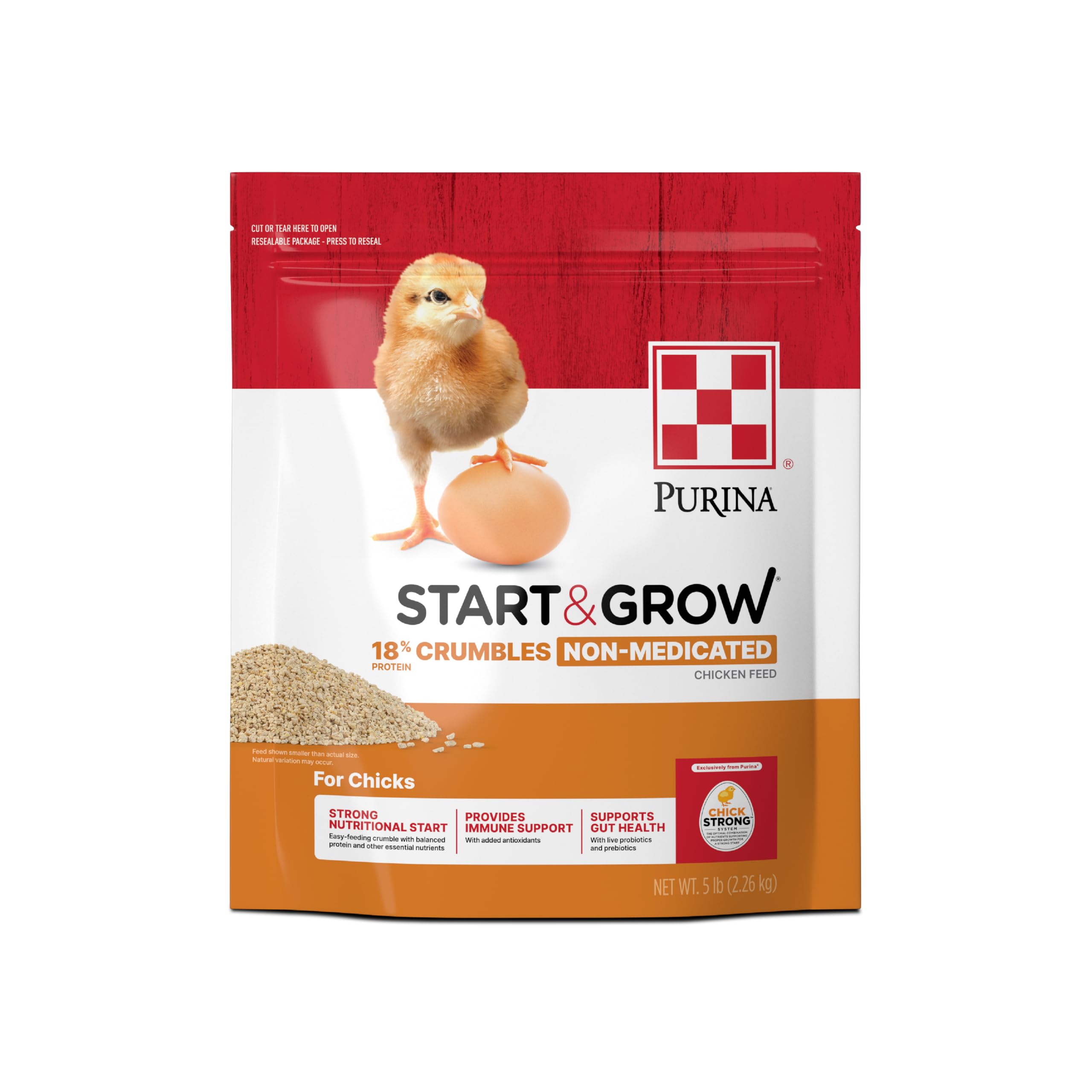
Purina Start and Grow is the most widely available starter feed on this list, and for good reason — it works reliably for the vast majority of backyard flocks. The 18% protein is at the lower end of the recommended range for chicks, but the inclusion of prebiotics and probiotics supports digestive health and helps chicks extract maximum nutrition from each bite. The crumble texture is fine and uniform, making it easy for day-old chicks to consume without struggling.
The standout feature here is the exclusive marigold extract fortification, which promotes brightly colored beaks, shanks, and overall appearance. While this is partly cosmetic, the marigold extract also provides antioxidant benefits that support immune function. Vitamin A fortification targets healthy adult bird development, and Vitamin E helps maintain a robust immune system during the vulnerable first weeks. Multiple verified buyers noted smooth transitions from this feed to layer feed with no digestive upset.
It’s not an organic formula, and it contains corn and soy. For owners committed to an all-organic or corn-free system, this feed doesn’t fit. But for the average backyard keeper who wants a proven, affordable starter that keeps chicks healthy without overcomplicating nutrition, Purina delivers consistent results. The compact 5-pound bag is ideal for small hatches of 5 to 10 chicks.
Why we love it
- Prebiotics and probiotics support digestive and immune health from day one
- Marigold extract enhances natural coloration and provides antioxidants
- Smooth transition to layer feed reported by many long-term users
Good to know
- Contains corn and soy fillers not suitable for organic programs
- Protein at 18% is at the minimum recommended level for starter feed
4. Mile Four Organic Chicken Feed Starter Chick Mash
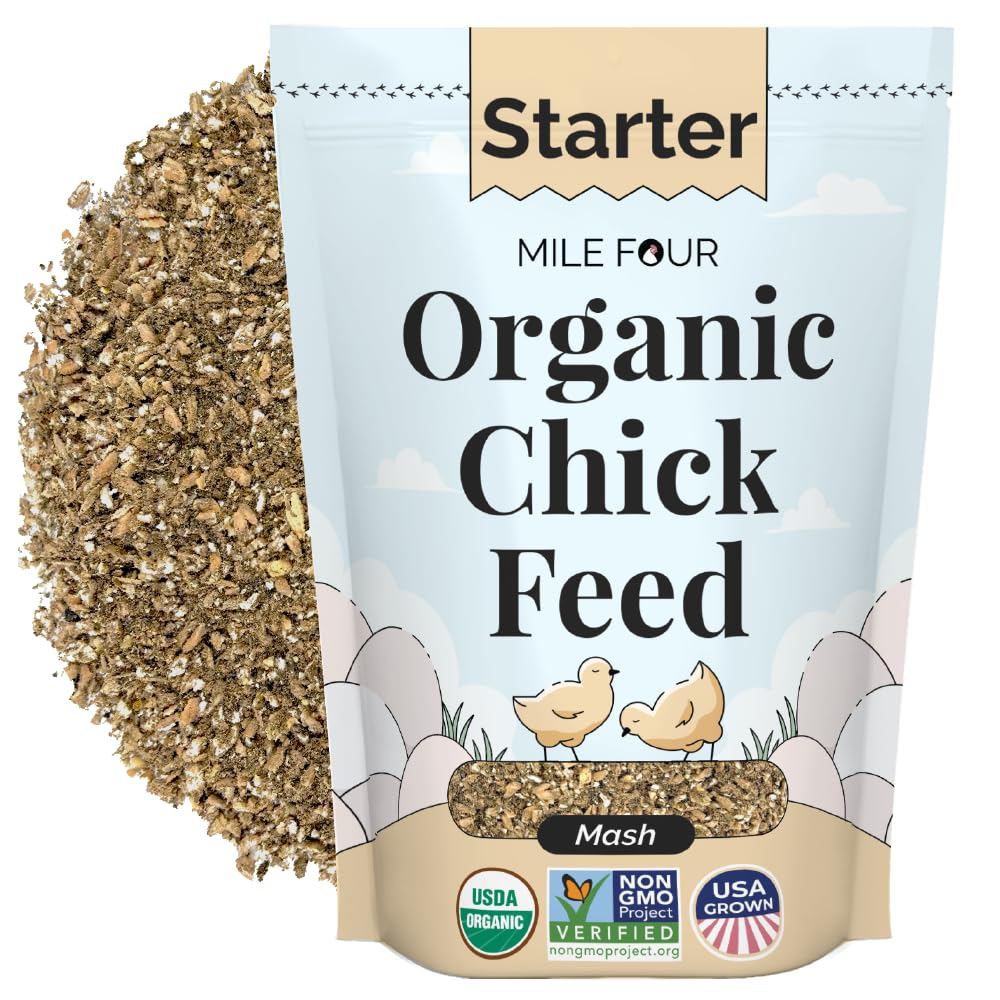
Mile Four’s organic starter mash is the highest-protein option in this review at 21%, and it achieves this without corn or soy — a significant achievement given how many organic feeds still rely on soybean meal as their protein base. The ingredient list features 100% USA-grown organic grains, organic flax meal, and organic kelp, providing a diverse amino acid profile that supports rapid growth and early feather development. The mash texture is ideal for week-old chicks and works well for fermenting.
Owner reviews are overwhelmingly positive, with multiple buyers describing how chicks rejected standard mash in favor of this feed. The freshness is notable — Mile Four mills in small batches and ships directly, so the feed typically arrives within days of production rather than sitting on a warehouse shelf for months. This freshness translates to higher palatability and better nutrient retention. The 2-pound sample size is a smart approach for first-time buyers who want to verify their flock’s preference before committing to a larger bag.
The cost per pound is the highest on this list, making it best suited for small flocks or short-term use. The feed also lacks marigold extract, so owners who want maximum shank and beak color may need to supplement. The packaging has also drawn complaints — some buyers received bags that had opened during shipping due to insufficient Amazon packaging.
Why we love it
- Highest protein content at 21% without corn or soy fillers
- Freshly milled in small batches for superior palatability
- Sample size lets you test before buying bulk
Good to know
- Very expensive per pound compared to conventional starter feeds
- No marigold extract for enhanced beak and shank coloration
5. Prairie’s Choice Non-GMO Backyard Chicken Feed Starter/Grower
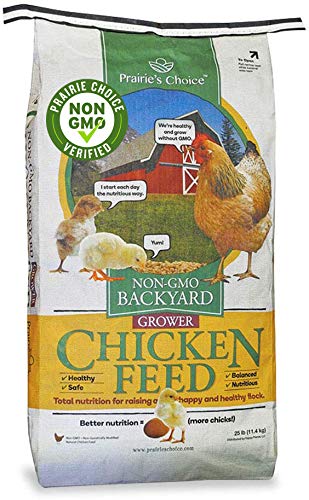
Prairie’s Choice Starter/Grower delivers 18% protein in a large 25-pound bag that provides the best volume-to-cost ratio among all the non-GMO options reviewed here. The crumble texture is consistent and produces minimal dust compared to many competitor feeds. The feed is grown, milled, and packaged in the USA, and the 18% protein level is adequate for standard layer breeds through the first 18 weeks of life.
Owner feedback reveals a split between enthusiastic champions and more measured users. Multiple verified buyers report that their chickens actively seek out this feed and refuse other brands, while a smaller group notes that their flocks showed no visible preference. The feed holds its freshness well in the sealed bag, and the larger quantity reduces the frequency of reordering — a practical advantage for owners with 10 or more birds. The non-GMO ingredient claim is the primary differentiator here versus conventional commodity feeds at a similar price point.
Consistency between batches has been noted as a concern. Some users reported that their second bag contained significantly more dust and fines than the first, suggesting variability in manufacturing or handling. The feed also contains corn and soy, so it won’t fit an organic or corn-free feeding program. For owners who prioritize non-GMO certification at a reasonable per-pound price and have larger flocks, this is a solid workhorse starter feed.
Why we love it
- Best value per pound among non-GMO starter feeds
- Consistent crumble texture with minimal dust in quality batches
- Large 25-pound bag reduces reorder frequency for bigger flocks
Good to know
- Contains corn and soy fillers despite non-GMO claim
- Batch consistency issues — some bags have significant dust content
FAQ
What protein percentage is ideal for day-old chicks?
Can I feed medicated starter if my chicks are vaccinated for coccidiosis?
How long should I keep chicks on starter feed before switching?
Is corn-free and soy-free feed worth the higher cost for chicks?
Final Thoughts: The Verdict
For most backyard keepers, the best feed for chicks is the Scratch and Peck Whole Grain Starter Crumbles because it delivers 20.5% protein from certified organic, corn-free, and soy-free ingredients in a convenient crumble form that chicks of all breeds accept immediately. If you want the flexibility of fermenting your feed, grab the Scratch and Peck Whole Grain Starter Mash. And for a large flock on a budget with non-GMO certification, nothing beats the Prairie’s Choice Starter/Grower at 25 pounds per bag.