
An outdoor cat isn’t just a pet that happens to roam — it’s a creature that relies on your planning for its survival. Whether you’re caring for a feral colony, a barn cat, or a spoiled housecat who demands porch time, the single most important purchase you can make is a shelter that fights back against weather, predators, and ground moisture. A flimsy box won’t cut it when temperatures drop or the rain turns sideways.
I’m Mo Mahin — the founder and writer behind Furric. I spend my time comparing structural materials, analyzing insulation values, studying door-flap mechanics, and reading hundreds of owner experiences to separate durable outdoor cat houses from the ones that rot or collapse after one season.
After looking at the latest designs, insulation methods, and real-world owner feedback, I’ve assembled this guide to help you find the right best outdoor cat houses for your specific situation, climate, and budget.
How To Choose The Best Outdoor Cat Houses
Not every shelter sold as “weatherproof” can handle a real storm or a deep freeze. Here are the four criteria that separate a reliable outdoor cat house from a waste of money.
Material: HDPE vs. Wood vs. Fabric
High-Density Polyethylene (HDPE) resists moisture, scratches, and fading without rotting or warping. Wood looks more natural but needs a quality sealant, especially on the bottom edges and seams. Fabric or PVC shelters are lightweight and portable, but they rely on a metal frame and may not hold up against strong winds or cat claws. Match the material to your climate: HDPE for wet or variable weather, wood for covered porches, and fabric for temporary or mild-season use.
Insulation and Thermal Management
Look for a double-wall construction or air-gap cavity that traps warmth without electricity. A sealed roof, draft-proof door flaps, and an elevated floor all reduce heat loss. If you live where temperatures regularly drop below freezing, a thermostat-controlled heated pad inside the shelter (with proper weatherproofing) offers the best protection. Avoid shelters that rely solely on thin wood panels or single-layer plastic — they turn into refrigerators at night.
Escape Doors and Entry Design
Feral and outdoor cats fear being trapped. A house with only one entrance can become a death trap if a predator blocks the exit. A true outdoor cat house includes a rear escape door — often a small one-way flap or a secondary opening. The main entry should face away from prevailing winds and include a clear PVC flap that lets the cat push through easily but blocks rain and snow.
Elevation and Ground Isolation
Ground moisture seeps through the bottom of any shelter placed directly on soil or concrete. An elevated base — at least 2 inches with rubberized feet or wooden legs — creates an air gap that keeps the floor dry and reduces heat loss. Some designs include stackable feet for uneven terrain. Never place a shelter on bare dirt; add a layer of gravel or a wooden pallet underneath for additional drainage.
Quick Comparison
On smaller screens, swipe sideways to see the full table.
| Model | Category | Best For | Key Spec | Amazon |
|---|---|---|---|---|
| Rockever Insulated HDPE | HDPE Plastic | All-season heavy weather | Double-wall HDPE + escape door | Amazon |
| Pawtners Heated | Fabric/Metal Frame | Sub-freezing winters | UL heated pad + 26″ wide interior | Amazon |
| NAMOTEK Heated | Nylon/Insulated | Thermostat-controlled warmth | 95-108°F auto heated pad | Amazon |
| Rockever Wooden + Balcony | Wood | Covered patios with style | Asphalt roof + balcony + storage | Amazon |
| PetsCosset Two Story | Wood | Feeding + sleeping combo | Two-level layout + removable divider | Amazon |
| FunXplore Wooden | Wood | Value-focused feral care | Asphalt roof + dual PVC exits | Amazon |
| Generic HDPE Shelter | HDPE Plastic | Budget entry-level placement | Stackable design + tool-free build | Amazon |
In‑Depth Reviews
1. Rockever Insulated Outdoor Cat House (Large HDPE)
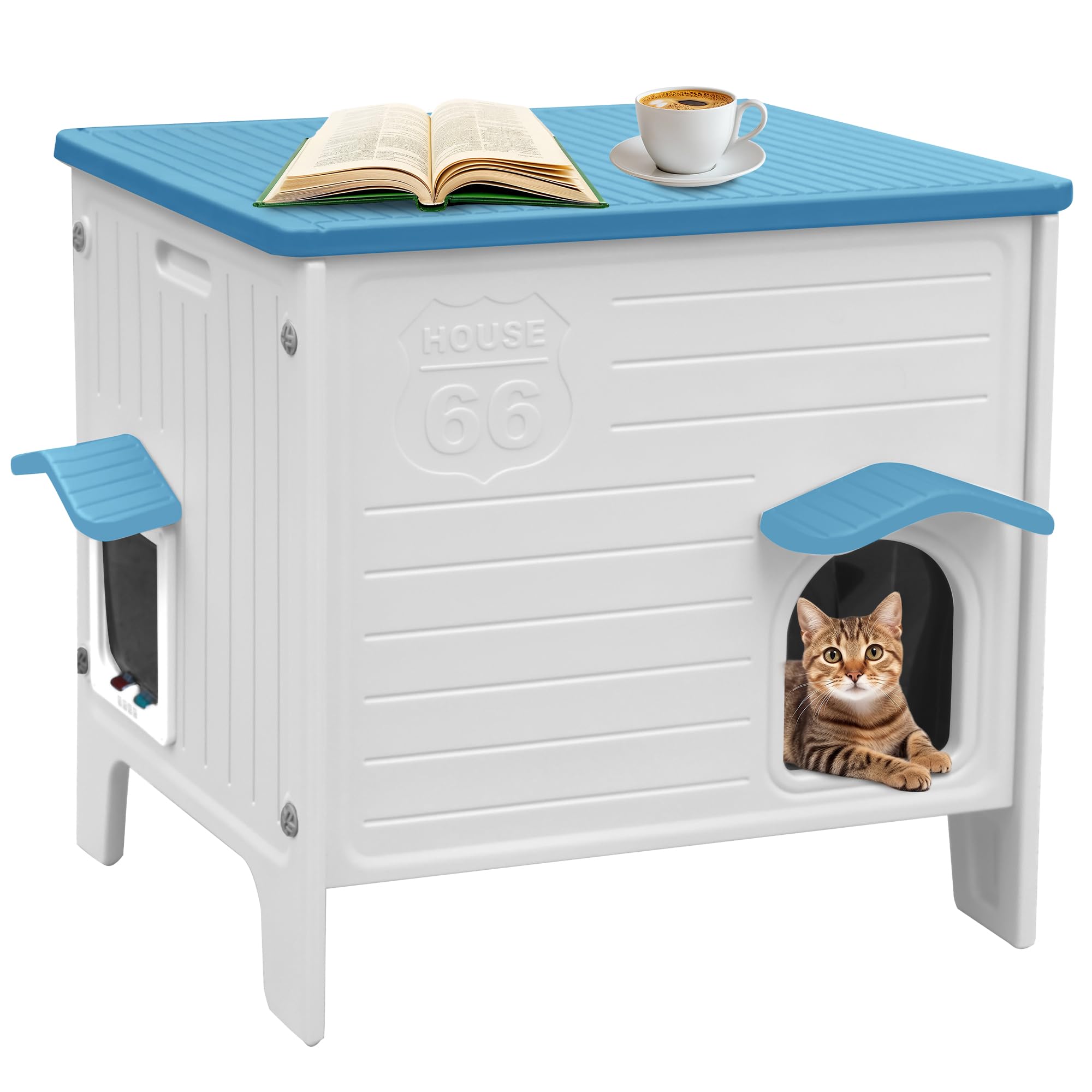
This large blue HDPE shelter brings the most robust insulation package we evaluated. The double-wall design creates a thermal air cavity that single-layer plastic shelters simply lack, and the extra-wide rain-shielding eaves over both doors prevent water from seeping into the interior during heavy storms. At 22.1 inches long and 16.1 inches wide, it offers generous floor space for one large cat or two smaller ones without forcing them to crowd.
The 4-way locking front door gives you control over access, while the rear escape exit ensures a nervous cat never feels trapped. The detachable roof makes deep cleaning as simple as lifting the top and rinsing the non-porous interior — no scrubbing wood crevices or dealing with lingering odors. The elevated legs lift the entire structure off the ground, creating an air gap that fights moisture wicking from below.
Assembly takes under five minutes with zero tools, which is a welcome relief compared to the hour-long wood house builds. The HDPE material also resists scratching and fading, so this house stays looking sharp season after season. Owners report feral cats accepting it immediately, especially after adding a bit of straw insulation to the floor cavity.
Why we love it
- True double-wall thermal insulation without electricity
- 5-minute tool-free assembly with precision interlocking parts
- Escape door and 4-way locking front door for safety
Good to know
- Interior floor is smooth HDPE; add straw or a mat for traction
- Blue color may stand out in natural settings if camouflage is desired
2. Pawtners Heated Outdoor Cat House (XL)
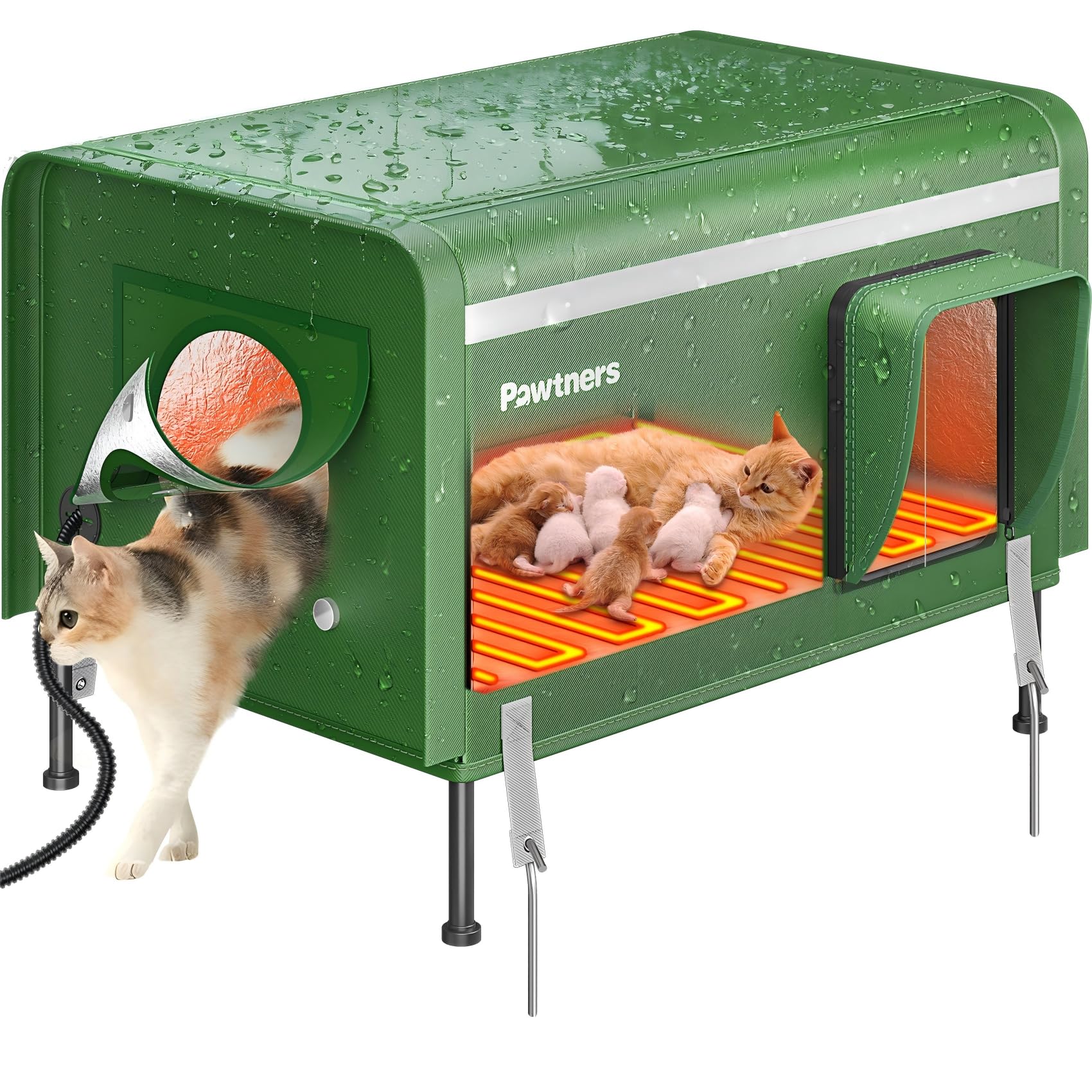
If your winters routinely drop below freezing, the Pawtners XL delivers the most complete heated solution in this lineup. The included UL-listed 30-watt heating pad spreads across the entire floor, and the thermostat kicks in automatically when the cat enters — no manual switching. The 26-inch width is genuinely spacious: two adult ferals can curl up side by side without touching the walls.
The outer shell uses a weatherproof PVC mesh fabric stretched over an all-metal frame, and the aluminum foil inner layer reflects body heat back toward the cat. Windproof ground stakes anchor the house against storm gusts, and the adjustable feet level the shelter on uneven ground. The side escape door zips closed for cold nights but stays functional as an emergency exit — just show the cat that it opens.
Assembly takes about 10 minutes with no tools, and the heated pad cover is machine-washable. The main door flap handles heavy traffic, though some owners with large multi-cat colonies found that constant in-and-out eventually wore the PVC. For one to three cats, this is a winter fortress that keeps the interior bone-dry even during sleet.
Why we love it
- 30W UL-listed heated pad with thermostat control
- XL interior fits multiple cats without crowding
- Windproof ground stakes and adjustable feet for stability
Good to know
- Fabric shell may not hold up as long as HDPE against sharp claws
- Door edging could be tighter to block rain in horizontal storms
3. NAMOTEK Large Heated Cat House
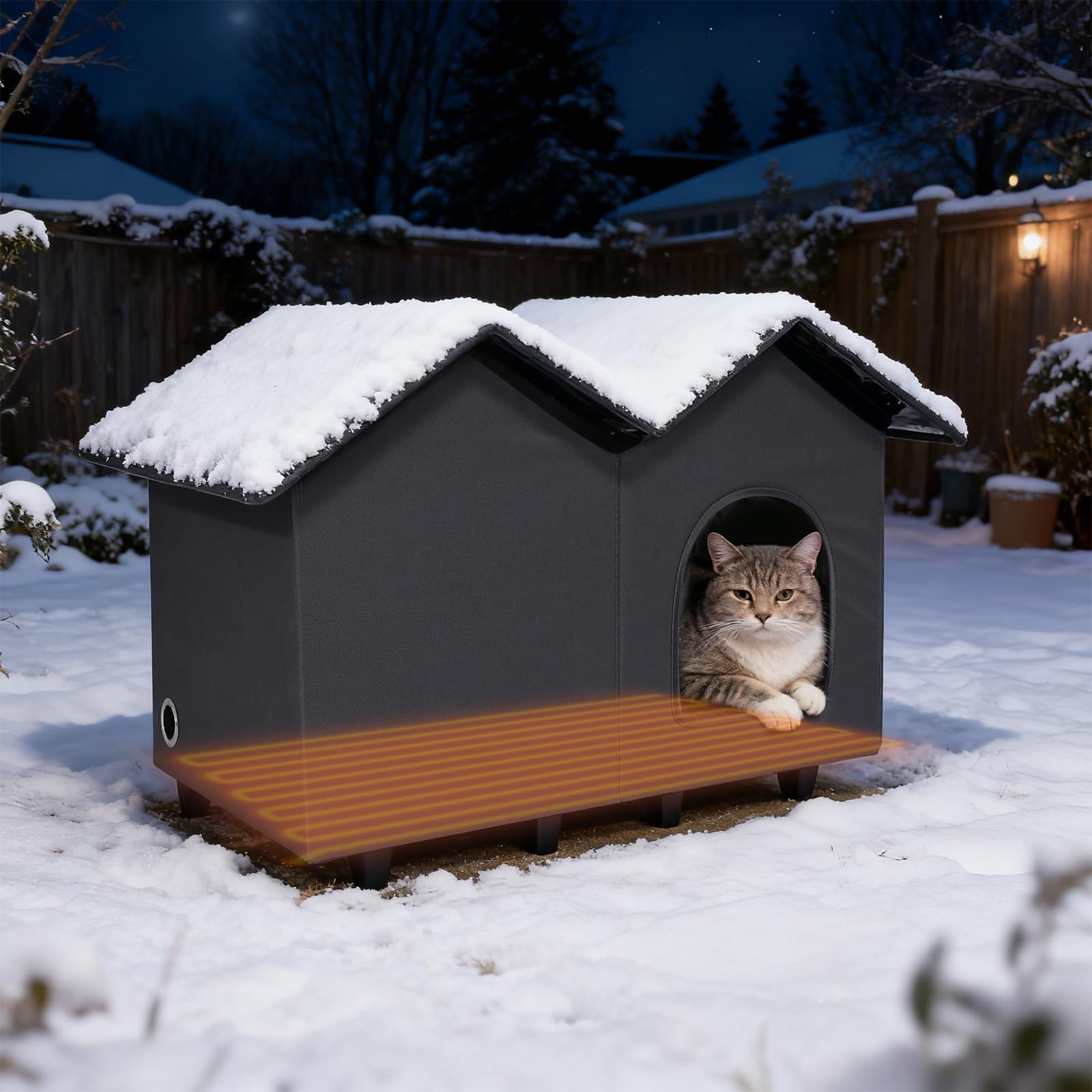
The NAMOTEK is the most straightforward plug-and-play heated shelter on this list. The built-in heated pad uses two bi-metal thermostats to maintain an interior temperature between 95 and 108°F — the range veterinarians recommend for warming outdoor cats without risk of burns. MET Labs certification adds peace of mind that the electrical components won’t fail in damp conditions.
At 23 inches long and 13 inches wide, this house fits two cats comfortably. The nylon outer body is waterproof and stands up to rain, snow, and garage floor dampness. The elevated base keeps the interior off cold cement, and the door flap reduces draft while being light enough for a kitten to push through. Assembly requires just four steps and a few minutes.
Owners consistently report that previously skittish ferals started using this house within 24 hours and stayed through the worst winter nights. The one catch: the door flap can be slightly undersized on some units, and a few owners added a small piece of duct tape to ensure full coverage. For anyone running a heated cat shelter on a covered porch or inside a barn, this is the most energy-efficient option.
Why we love it
- Vet-recommended 95-108°F thermostat range
- MET Labs certified for electrical safety
- Four-step assembly takes minutes
Good to know
- Door flap fit may require minor adjustment
- Nylon body is less rigid than HDPE or wood
4. Rockever Outdoor Cat House with Balcony (Wooden)
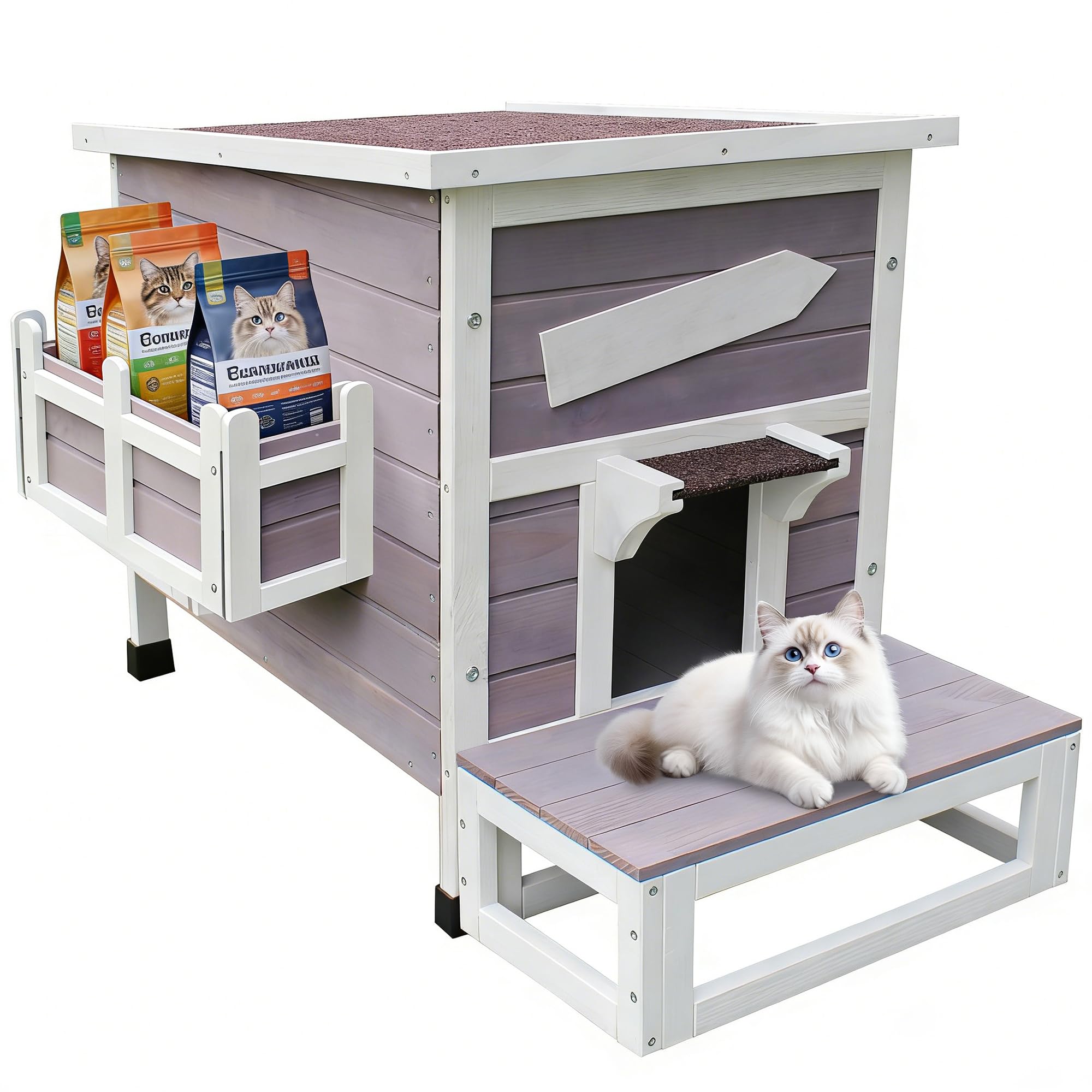
This wooden house from Rockever proves that a feral shelter doesn’t have to look like a utility box. The gray painted exterior, asphalt shingle roof, and front balcony make it blend into a garden or deck setting naturally. The side storage shelf is a smart touch for keeping food bowls or supplies handy, and the window on the right panel doubles as a cable port for running a heating pad cord.
The dual-exit design includes a main front door shielded by an asphalt awning and a rear acrylic escape flap. The roof hinges fully open so you can reach every corner for cleaning, and the removable bottom floor makes quick work of straw replacement. Weighing nearly 27 pounds, this house feels solid once assembled — the pre-drilled parts fit together snugly with just a Phillips screwdriver.
In wet climates like the Pacific Northwest, this shelter stays dry inside thanks to the slanted roof and generous eaves. The included carpeted pad and planter box are nice bonuses, though some owners replace the pad with a self-warming mat for better insulation. This is the best pick for a semi-protected spot — a covered porch or under a patio roof — where aesthetics matter as much as function.
Why we love it
- Real asphalt shingles and balcony for a polished look
- Fully hinged roof and removable floor for easy cleaning
- Cable port allows safe routing for a heated pad cord
Good to know
- Best suited for covered locations; direct heavy rain may leak
- Flower box planter lacks drainage holes
5. PetsCosset Two Story Outdoor Cat House
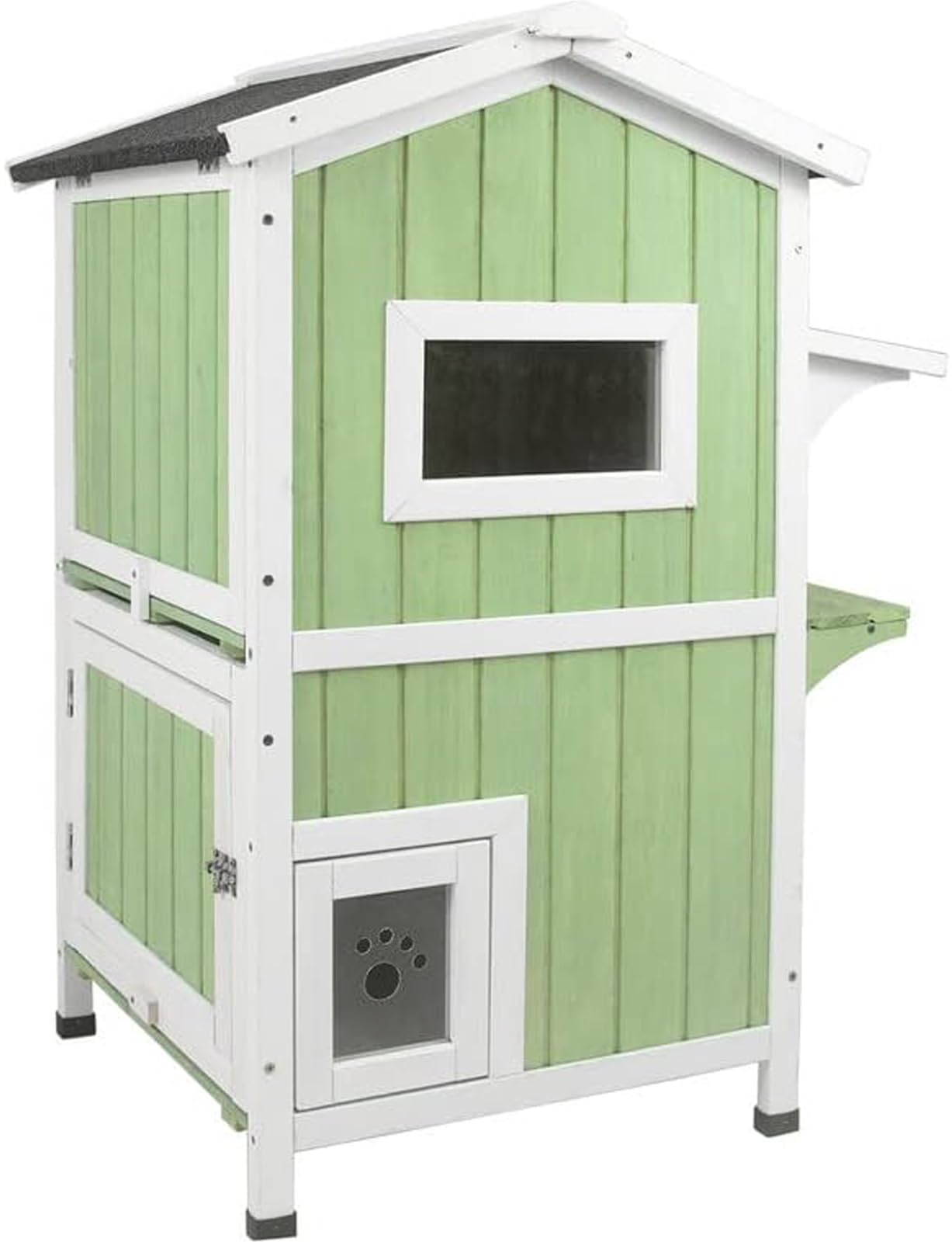
The most space-efficient design among wood shelters, this two-story model lets you keep food and water on the top level while the cat rests below — or remove the internal divider to create one large 4.8-square-foot room. The 37.8-inch total height makes it a vertical presence that fits against a wall or fence without dominating the yard. The asphaltschindles on the sloped roof shed rain effectively.
The dual escape door system includes a main PVC-curtained entry at the front and a rear exit that gives skittish cats a fast retreat. Both floors slide out completely for quick cleaning, and the roof opens wide so you don’t have to bend or reach into a dark space. Pre-drilled holes and clear instructions keep assembly under an hour if you use a hand screwdriver — using a power driver can strip the soft pine.
This house holds up well in Appalachian snow and rain after a full year outdoors, according to multiple owners. The main trade-off is the uninsulated wood panels: without added straw, reflective foil, or foam, the interior won’t hold heat on below-freezing nights. Buyers who plan to winterize it should budget for insulation materials and a self-warming pad.
Why we love it
- Two-level design separates feeding from sleeping zone
- Slide-out floors and openable roof for easy maintenance
- Dual escape exits reduce cat anxiety
Good to know
- No built-in insulation; must add straw or foam for winter
- Wood is soft; use hand tools during assembly to prevent stripping
6. FunXplore Wooden Outdoor Cat House

This mid-range wooden shelter hits a sweet spot for feral cat caregivers who want a proper house without spending more. The solid wood frame and waterproof asphalt roof provide genuine weather resistance, and the four elevated footpads lift the entire structure off damp ground. The hinged roof swings open for feeding access, while the lift-up floor panel makes deep cleaning a 60-second job.
The dual PVC-curtained exits give cats a front and rear escape route, helping wary ferals feel secure enough to enter. Assembly takes about 30 minutes with an electric screwdriver, though owners note that the pinewood edges are soft — it’s worth using a hand screwdriver for the final tightening to avoid splitting. The natural pine smell dissipates within three days of airing out.
At 23.6 inches deep and 20.8 inches wide, this house fits one adult cat or two kittens comfortably. Some owners added Reflectix insulation liner and marine foam to seal gaps, which transformed it into a viable winter shelter for temperatures as low as -30°F. For caregivers in milder climates or those looking for an entry price into wooden houses, this is the best all-around value.
Why we love it
- Solid wood frame with asphalt roof at a very accessible cost
- Hinged roof and lift-up floor for quick feeding and cleaning
- Elevated footpads keep the interior dry and pest-free
Good to know
- Wood is thin and feels less sturdy before assembly
- No insulation included; foam and sealant are needed for serious cold
7. Generic HDPE Outdoor Cat House
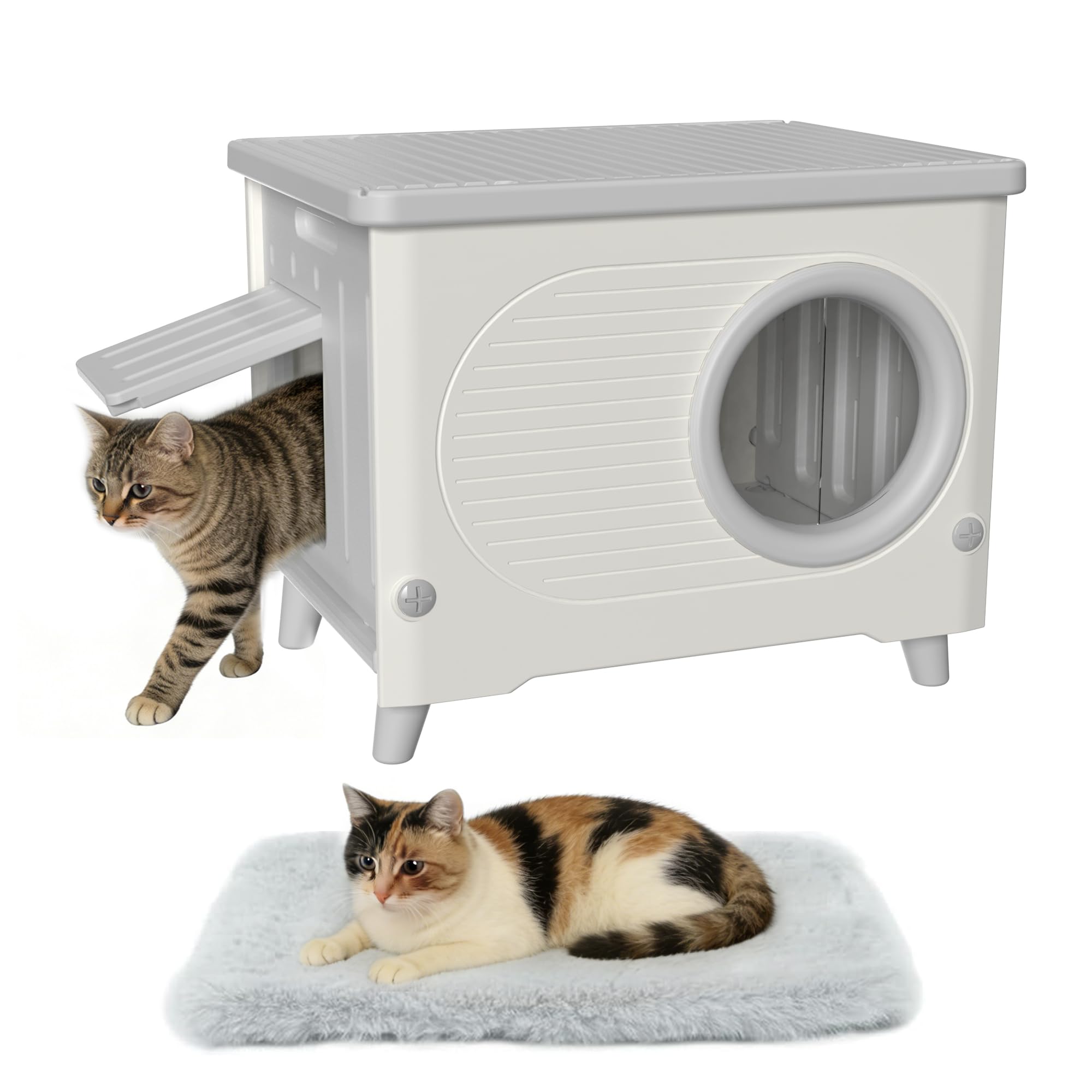
This entry-level HDPE shelter proves that you don’t need to spend heavily to get a weatherproof, easy-to-clean house. The shell is made from thick, scratch-resistant HDPE with a dual-layer hollow structure that provides basic thermal insulation — enough to keep a cat comfortable in moderate cold, especially when combined with the included cushion. The round burrow-style entrance mimics natural hiding spots that feral cats instinctively trust.
The elevated base lifts the shelter off damp ground, and the stackable design means you can place two units side by side or on top of each other for multi-cat colonies. Assembly requires zero tools — the panels interlock like a puzzle in about five minutes. The smooth HDPE surface wipes clean with a damp cloth, and there are no crevices where urine or mud can accumulate.
At 21 inches deep, 15 inches wide, and 16 inches tall, this house fits one adult cat or three kittens. Owners report that cats accept it within a few days, especially when placed in a sheltered spot out of direct wind. The gray color blends into most outdoor settings. For a budget-friendly starter shelter or a supplemental house for a colony, this is the most practical low-fuss option available.
Why we love it
- Rapid tool-free assembly with interlocking HDPE panels
- Stackable design for multi-cat colony management
- Easy to clean with just a damp cloth
Good to know
- Basic insulation; not suitable for extreme cold without modifications
- Small size — best for a single cat or two kittens
FAQ
What is the best material for an outdoor cat house in a rainy climate?
Can outdoor cat houses use heated pads safely in winter?
How many cats can fit in a standard outdoor cat house?
Do outdoor cat houses need an escape door?
Final Thoughts: The Verdict
For most gardeners, the best outdoor cat houses winner is the Rockever Insulated HDPE because it combines the weatherproof longevity of double-wall plastic with a tool-free build and a smart escape door system for under five minutes of assembly. If you need heated protection against sub-freezing winters, grab the Pawtners Heated XL with its UL-certified pad and spacious 26-inch interior. And for a budget-friendly starter or colony supplement, nothing beats the value of the Generic HDPE Shelter — it’s simple, stackable, and keeps rain out reliably.