
Angelfish aren’t just any cichlid — their tall, compressed bodies demand vertical swimming space and broad-leafed plants that serve as both cover and preferred spawning sites. Choose the wrong flora, and your angels may nip leaves to shreds or refuse to breed altogether. The right species transforms a tank into a thriving biotope where pairs feel secure enough to lay eggs on broad blades.
I’m Mo Mahin — the founder and writer behind Furric. I’ve spent years analyzing compatibility data, studying growth patterns under standard aquarium lighting, and cross-referencing thousands of owner experiences to determine which live plants genuinely hold up to angelfish behavior without melting away.
This guide breaks down the top-tier species that satisfy both the aesthetic demands of aquascapers and the biological needs of Pterophyllum scalare, helping you select the best plants for angelfish that thrive in community tanks and breeding setups alike.
How To Choose The Best Plants For Angelfish
Angelfish present unique challenges because they are large, tall cichlids that uproot weakly anchored plants and nip at delicate leaves. Your selection must prioritize leaf toughness, root system strength, and vertical growth habit to match their natural Amazon basin environment.
Leaf Structure and Texture
Broad, leathery leaves like those of Anubias and mature Amazon Sword resist tearing from inquisitive mouths and provide the flat surfaces angelfish prefer for egg deposition. Avoid fine-leaved stem plants like Cabomba or Hornwort, which shred quickly under territorial behavior.
Root System and Anchoring Requirements
Angelfish dig spawning pits and may uproot plants with weak root networks. Swords and Cryptocoryne develop deep root systems that benefit from root tabs, while rhizome plants like Anubias and Java Fern must be tied to driftwood or rock — never buried in substrate — to prevent rhizome rot.
Light and Nutrient Demands
Most angelfish tanks run moderate lighting (0.5–1 watt per gallon) to avoid stressing the fish. Choose plants that thrive under low-to-medium light without requiring injected CO₂. Anubias, Java Fern, and many sword varieties tolerate these conditions, whereas high-light plants like Glossostigma demand intense PAR values that can trigger algae blooms in cichlid tanks.
Growth Rate and Maintenance
Fast-growing stem plants outcompete algae but require weekly trimming that may disturb angelfish during breeding. Slow-growing rosette and rhizome species reduce maintenance windows, making them ideal for dedicated breeding setups where stability is critical.
Quick Comparison
On smaller screens, swipe sideways to see the full table.
| Model | Category | Best For | Key Spec | Amazon |
|---|---|---|---|---|
| Large Amazon Bleheri Sword 18-24 Inches | Single Sword | Spawning site in 55+ gallon tanks | 18-24 inch leaf height | Amazon |
| Mainam 30+ Stems Starter Bundle | Variety Bundle | Fully planted 10-20 gallon tanks | 9 species variety | Amazon |
| Java Fern & Anubias Bundle | Rhizome Duo | Low-tech breeding setups | Shade-tolerant growth | Amazon |
| Marcus 3X Amazon Sword | Multi Sword | Background coverage in 20-40 gallon tanks | 7-12 inch plants (3 count) | Amazon |
| Marcus Anubias Nana Petite | Single Rhizome | Foreground hardscape detailing | 20-30 leaf count | Amazon |
In‑Depth Reviews
1. Large Amazon Bleheri Sword 18-24 Inches Tall
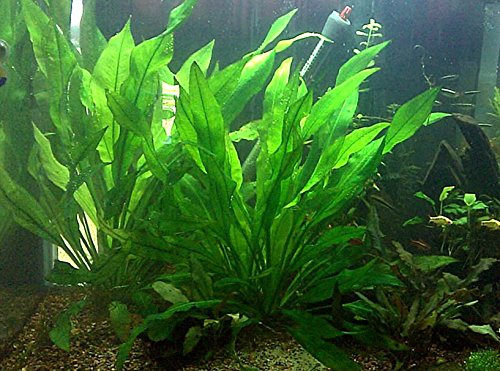
This single specimen from AquaLeaf Aquatics reaches 18 to 24 inches at maturity, providing the tallest leaf canopy in this list — exactly what a breeding pair of angelfish needs for vertical egg deposition. Multiple verified reviews confirm that angels have laid eggs directly on these broad blades, which withstand the constant cleaning and fanning behavior of protective parents without melting or rotting at the rhizome junction.
The plant arrives rooted in a basket with roughly 20 leafy stems, already exhibiting the robust root mass that prevents uprooting even when large blood parrot cichlids share the tank. Owners of 120-gallon setups consistently praise its ability to create a dense background wall that breaks line of sight and reduces territorial aggression among multiple angelfish pairs.
It requires moderate lighting and standard root tabs to sustain that 24-inch growth, but it does not demand injected CO₂. The only trade-off is its size — a 10-gallon tank is the absolute minimum, and anything under 20 gallons will struggle to accommodate its spread. For serious angelfish keepers aiming to trigger natural spawning behavior, this sword is the gold standard.
Why we love it
- Proven spawning surface — owners report egg clusters on leaves
- Massive root system resists uprooting by territorial angels
- Thrives without CO₂ injection under moderate lighting
Good to know
- Requires 20+ gallon tank to accommodate full spread
- May arrive with minor shipping damage to outer leaves
2. Mainam 30+ Stems Package Starter Beginner Set

This bundle from Mainam delivers nine distinct species including Micro Sword, Echinodorus Parviflorus, Anubias barteri Broad Leaf, Java Fern, Cryptocoryne Wendtii Brown, and a Java Moss cup — all packaged into a single order that can fully stock a 10-gallon tank. The variety allows you to test which species your particular angelfish cohort tolerates best before committing to larger single-specimen purchases.
Verified buyers consistently report that plants arrived green, moist, and free of dead tissue, though some noted that the individual stems were on the smaller side and required a few weeks of grow-out time to reach decorative mass. The presence of multiple sword and Cryptocoryne varieties gives angels varied leaf widths to explore, while the Java Moss cup provides a microhabitat for fry should spawning occur.
A minority of owners received fewer stems than the advertised 30-plus count, and a separate batch noted hitchhiker snails emerging after the first week — a common risk with tissue-culture imports. Nevertheless, the sheer diversity and healthy initial condition make this the most economical way to build a planted angelfish biotope from scratch, especially for hobbyists just transitioning from plastic plants to live flora.
Why we love it
- Nine species let you find which plants suit your angels best
- Java Moss cup provides fry refuge in breeding tanks
- Excellent condition on arrival in the majority of shipments
Good to know
- Occasional count discrepancies reported (may receive fewer stems)
- Hitchhiker snails possible from tissue-culture pots
3. Java Fern and Anubias Aquarium Plant Bundle

This two-plant bundle from Greenproaquatic pairs Java Fern with an Anubias species, both of which are rhizome-rooted plants that must never be buried in substrate — instead, they attach to driftwood or rock with fishing line or super glue gel. This characteristic makes them uniquely resistant to angelfish digging behavior because the root structure is fully exposed above the substrate line where angels cannot uproot it.
The contrasting leaf morphology is the real value here: Java Fern produces elongated, undulating fronds that create soft background texture, while Anubias offers the thick, broad leaves angelfish prefer for egg laying. Both tolerate full shade and low light conditions, making them ideal for tanks where floating plants or large swords already block overhead illumination. Owners report that the Anubias leaves, in particular, remain pristine even when angels repeatedly clean them with their mouths.
Some negative reviews mention that the Anubias arrived with leaf melt or a darkened rhizome after shipping — a risk with any mail-order live plant, particularly in winter temperatures below 30°F. Because these are slow-growing species, recovery from shipping stress can take several weeks. For breeders who prioritize leaf surface area over rapid growth, this duo delivers unmatched hardiness once established.
Why we love it
- Anubias broad leaves serve as ideal spawning substrate
- Rhizome attachment prevents uprooting by digging angels
- Thrives in low light without CO₂ or root tabs
Good to know
- Anubias may arrive with leaf melt in cold shipping conditions
- Slow growth means weeks to reach full decorative mass
4. Marcus Fish Tanks 3X Amazon Sword Echinodorus Bleheri

Marcus Fish Tanks offers three separate Amazon Sword plants in a single order, each typically measuring between 7 and 12 inches tall at delivery. This multi-plant format is ideal for creating a dense background hedge in medium-sized tanks (20 to 40 gallons) where a single giant sword would look disproportionately large and leave gaps for angelfish to chase each other through.
Owner feedback across dozens of verified purchases highlights consistently healthy root systems and vibrant green leaves upon arrival. Multiple repeat buyers mention that Marcus Fish Tanks frequently includes bonus fourth plants, and their customer service responds quickly with replacements if any plant arrives damaged. The swords naturally propagate runners, so this three-pack can eventually colonize the entire back wall of a 55-gallon tank without additional purchases.
The main consideration is that these swords require nutrient-rich substrate or root tabs to maintain their color and growth rate — in inert gravel, leaves may yellow within a month. Angels do not typically eat these plants, but their constant sifting can disturb the surrounding substrate and uproot newly planted specimens until roots establish fully, which takes roughly two to three weeks.
Why we love it
- Three plants per order for immediate background density
- Proven customer service with live-arrival replacements
- Runner propagation spreads to fill larger tanks over time
Good to know
- Requires root tabs or nutrient-rich substrate for sustained growth
- Uprooted easily during first weeks before roots anchor deeply
5. Marcus Fish Tanks Anubias Nana Petite Live Aquarium Plant

Anubias Nana Petite is the most compact plant in this lineup, with individual leaves rarely exceeding one inch in width and the entire specimen staying under three inches tall. Marcus Fish Tanks ships each potted rhizome with 20 to 30 leaves already formed, offering immediate foreground coverage without the lengthy establishment period that smaller tissue-culture cups require.
This plant’s small leaf surface area might seem counterintuitive for angelfish, but it serves a distinct purpose: when attached to driftwood branches or arranged around the base of a larger sword, it creates a layered depth that mimics the complex root structures of an Amazonian floodplain. Angelfish explore these tight spaces during courtship and may use the dense clusters to separate competing pairs in community tanks.
Reviewers consistently praise the packaging quality and vibrant arrival condition — plants survived four days in packaging while the owner was on vacation and remained pristine. Because the rhizome is above the substrate line, angelfish cannot uproot it regardless of how aggressively they dig. The only limitation is its slow growth rate, which means you must buy multiple pots if you want a dense carpet rather than isolated clumps.
Why we love it
- Compact size perfect for foreground hardscape detailing
- Rhizome stays above substrate — impossible for angels to uproot
- Exceptional survival in packaging based on verified reviews
Good to know
- Very slow growth requires multiple pots for full coverage
- Small leaves are not suitable as primary spawning surface
FAQ
Do angelfish eat live aquarium plants?
Can I use floating plants in an angelfish tank?
Why are my Amazon Sword leaves turning yellow?
Is Java Fern safe for angelfish fry?
Final Thoughts: The Verdict
For most angelfish keepers, the clear winner among plants for angelfish is the Large Amazon Bleheri Sword because its 18-24 inch leaf height matches the natural vertical swimming preference of angelfish and provides the broad spawning surface that triggers breeding behavior. If you want instant species diversity on a budget, grab the Mainam 30+ Stems Starter Bundle. And for a low-maintenance spawning setup where uprooting is impossible, nothing beats the Java Fern and Anubias Bundle attached to driftwood.