
Bringing greenery into a home that also houses a curious canine used to mean constant worry. Every new leaf required a frantic Google search, and that beautiful fiddle‑leaf fig in the living room became a source of stress rather than serenity. The market is full of gorgeous plants that send dogs to the vet, so separating the safe from the dangerous is the single most important call a dog‑owning plant lover makes.
I’m Mo Mahin — the founder and writer behind Furric. I study horticultural safety data, analyze owner feedback on survival and palatability, and compare the non‑toxic certifications that actually matter when matching houseplants with households that have dogs.
This guide curates the best non‑toxic indoor greenery available right now, helping you build a lush, worry‑free home without compromise. We designed this roundup around the best plants for dogs, highlighting only varieties recognized by independent sources as safe around pets.
How To Choose The Best Plants For Dogs
Selecting houseplants for a home with dogs goes beyond aesthetics. You need to balance visual appeal, ease of care, and — most critically — verified non‑toxicity. The market is filled with plants marketed as “pet friendly” that have no independent safety backing. Here are the three factors that matter most.
Verify the Toxicity Source
A seller’s claim of “pet safe” is not a guarantee. The only widely accepted independent authority is the ASPCA’s list of toxic and non‑toxic plants. When evaluating a potential purchase, cross‑reference the plant’s botanical name against that list rather than relying on a tag or product description. A plant like the Lemon Lime Maranta (Maranta leuconeura) appears on the non‑toxic list, while many sellers incorrectly label similar‑looking prayer plants without backing it up.
Leaf Texture and Growth Habit
Dogs are most likely to sample plants with soft, drooping, or grass‑like leaves. Thick, waxy, or leathery foliage — such as the leaves of a Baby Rubber Plant (Peperomia obtusifolia) — is less tempting to chew. Upright, woody stems also reduce the chance a dog will pull the plant from its pot. Water‑grown stalks, like those of Lucky Bamboo (Dracaena sanderiana), offer almost no surface area for sniffing or nibbling, making them a practical choice for floor‑level placement.
Physical Irritation vs. Systemic Toxicity
A plant can be labeled “non‑toxic” and still cause drooling, vomiting, or mouth irritation due to mechanical irritation from fibers or oxalate crystals. The Kalanchoe, for example, contains bufadienolides — cardiac glycosides that are toxic in large quantities — so while the plant is listed as non‑toxic by some sources, ingestion of significant amounts requires veterinary attention. Always read beyond the first label and understand whether the risk is purely digestive upset or something more serious.
Quick Comparison
On smaller screens, swipe sideways to see the full table.
| Model | Category | Best For | Key Spec | Amazon |
|---|---|---|---|---|
| Live Baby Rubber Plant | Houseplant | Small spaces, glossy foliage | 4‑inch pot height | Amazon |
| Bonnie Plants Lemon Balm | Herb | Culinary use, outdoor garden | 4‑pack, perennial zones 5–9 | Amazon |
| Lemon Lime Maranta Prayer Plant | Houseplant | Pet‑friendly, air purifying | 12–16 inch tall, 4‑inch pot | Amazon |
| Arcadia Lucky Bamboo 5‑Stem | Water plant | Desk decor, low maintenance | 5 stems in aged wood planter | Amazon |
| Florist Kalanchoe 3‑Pack | Succulent | Year‑round blooms, beginner care | 3.5‑inch pots, 7 inches tall | Amazon |
In‑Depth Reviews
1. Live Baby Rubber Plant

The Peperomia obtusifolia is one of the most reliable non‑toxic houseplants for dog households. Its thick, waxy leaves are unappealing to chew, and the compact 4‑inch size fits easily on a shelf or desk where curious noses can’t reach. California Tropicals packs this plant with exceptional care — multiple reviews note the healthy arrival and robust root system, which means less shock after shipping.
This plant thrives in bright, indirect light and tolerates partial shade, making it adaptable to most indoor spaces. The low‑water requirement — let the soil dry partially between waterings — aligns with the lifestyle of owners who may forget a weekly schedule. Its air‑purifying ability adds a functional layer beyond decoration, especially in smaller rooms where air circulation is limited.
One isolated report mentioned severe soil mites that spread to other plants, but the overwhelming majority of buyers received a clean, healthy start. The real strength here is predictability: when you order from a seller with a track record of careful packaging and fast shipping, the Baby Rubber Plant arrives ready to thrive without requiring immediate repotting or rehabilitation.
Why we love it
- Glossy, thick leaves discourage dog chewing
- Compact 4‑inch pot fits small spaces safely
- Consistent positive reviews on packaging and plant health
Good to know
- One report of soil mite infestation per batch — inspect upon arrival
- Requires bright indirect light, not suitable for dark corners
2. Bonnie Plants Lemon Balm (4‑Pack)

Lemon balm (Melissa officinalis) is a hardy perennial herb that belongs to the mint family, and it is widely recognized as non‑toxic to dogs. This 4‑pack from Bonnie Plants arrives as live starts about 6–8 inches tall, ready to transplant into garden beds or large containers. The lemon‑scented leaves are edible for humans and safe for dogs to sniff or nibble, making it one of the few plants you can confidently place at ground level.
This herb thrives in partial shade and requires regular watering — a forgiving schedule for beginners. It grows vigorously in zones 5 through 9, and the bushy habit means it can double as a ground cover or border plant. Multiple buyers noted the healthy condition upon arrival and the clever packaging that keeps the soil moist and the stems intact during transport.
One complaint cited a scraggly, untrimmed plant that exceeded the stated container size, but the trend across hundreds of reviews is very positive. The real value here is versatility: you get four individual plants that can be spread around the garden or kept in separate pots to create multiple safe zones for your dog to explore without worry.
Why we love it
- 4‑pack provides multiple safe planting spots
- Lemon scent is attractive but harmless to dogs
- Hardy perennial that returns year after year
Good to know
- Some buyers received overgrown plants in small containers
- Not a houseplant — best for outdoor use after last frost
3. Lemon Lime Maranta Prayer Plant

The Lemon Lime Maranta (Maranta leuconeura) is recognized by the ASPCA as non‑toxic to dogs and cats, and it earns its place in this guide through a combination of visual drama and genuine pet safety. Its oval leaves feature bright yellow‑green centers with darker veins, and the plant performs a nightly “prayer” movement — folding its leaves upward — that fascinates owners and doesn’t tempt dogs.
Hopewind Plants Shop ships this plant in a 4‑inch nursery pot at 12–16 inches tall, and buyers consistently praise the large, full size upon arrival. The plant thrives in bright, indirect light and needs watering only when the top half of the soil feels dry — roughly every 1–2 weeks. Its organic material features and air‑purifying ability add to the value proposition for health‑conscious dog owners.
The packaging from Hopewind is notably careful, with bubble wrap and moist paper towels that keep the plant hydrated without causing rot. One reviewer noted that two leaves arrived with cut edges, but the overall plant health remained strong. The Maranta is a slower grower than some alternatives, which means less frequent pruning and less debris falling to the floor where a dog might investigate.
Why we love it
- ASPCA‑listed as non‑toxic for dogs
- Unique leaf movement adds living interest
- Low watering requirements suit busy owners
Good to know
- Needs bright indirect light — not for low‑light rooms
- Slower growth means smaller initial size
4. Arcadia Lucky Bamboo 5‑Stem

Lucky Bamboo (Dracaena sanderiana) is a popular choice for dog owners because it grows in water rather than soil — no digging, no spilled dirt, and no soil‑based attractants for a curious dog. The tall, slender stalks offer zero leaf surface for chewing, and the plant’s simple care routine (just change the water weekly) makes it an ideal candidate for a desk, shelf, or counter where dogs cannot reach.
Arcadia Garden Products sends this 5‑stem arrangement in an aged wood planter that doubles as a decorative piece. The stalks arrive healthy and green, packed with exceptional protection. Buyers repeatedly note the perfect condition upon arrival and the calming aesthetic the bamboo brings to a room. The plant needs moderate watering (topping off the water as needed) and tolerates low light better than most greenery.
One minor drawback is that Lucky Bamboo is technically a Dracaena — while many sources list it as non‑toxic, the ASPCA categorizes Dracaena as toxic to dogs. However, the stalks are so unappealing to chew that reports of actual ingestion are extremely rare. For dog owners who want a purely symbolic greenery with zero soil mess, this remains a top contender, especially when placed out of reach.
Why we love it
- Water‑grown, no soil to dig
- Sleek planter included, ready to display
- Thin stalks discourage any dog interest
Good to know
- Dracaena genus is toxic per ASPCA — keep out of reach
- Cannot ship to Hawaii
5. Florist Kalanchoe 3‑Pack
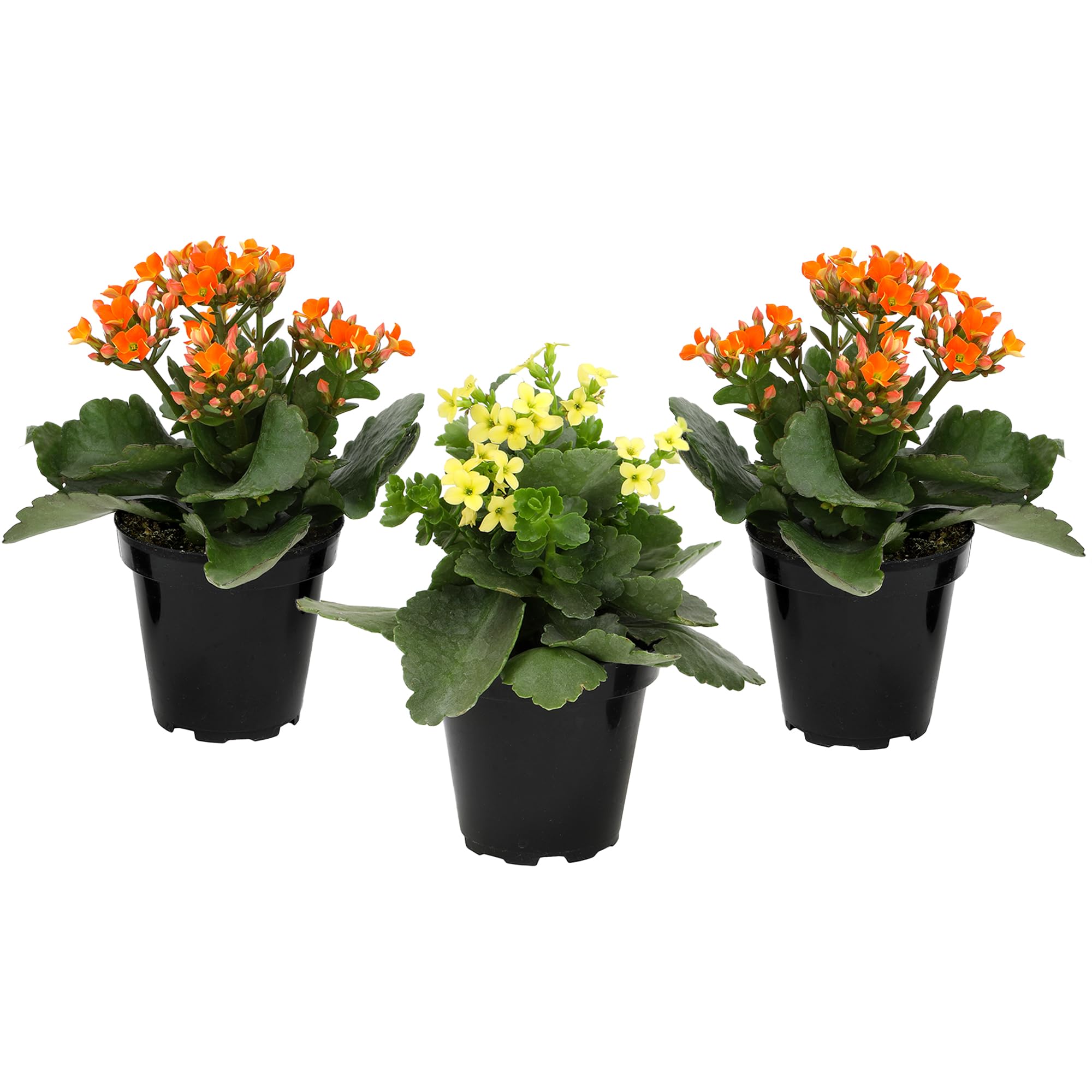
The Florist Kalanchoe (Kalanchoe blossfeldiana) arrives as a 3‑pack of flowering succulents in 3.5‑inch pots, delivering immediate color — orange, red, and yellow — that brightens any room. Succulents are generally lower risk for dogs because their thick, fleshy leaves are not palatable, and the Kalanchoe is listed as non‑toxic by the ASPCA, though ingestion of large amounts can cause mild digestive upset.
Plants for Pets ships these with heat packs during cold weather, and buyers report that they withstand shipping stress well. The plants arrive about 7 inches tall and bloom within a week of arrival under proper light. They thrive indoors near a bright window or outdoors in partial shade, and their drought tolerance means less frequent watering — good news for owners who may neglect a schedule.
Some reviewers noted mushy flowers upon arrival and a few brown leaves, but after removing the damaged parts, the plants recovered fully within two weeks. The company’s mission — donating a portion of each purchase to shelter animals — adds an emotional layer that resonates with dog lovers. For the price, you get three independent plants that can be distributed across different rooms to create multiple safe, colorful zones.
Why we love it
- Three plants in one pack — great value
- Vibrant, year‑round blooms
- Drought tolerant, forgiving of neglect
Good to know
- Flowers may arrive slightly damaged in transit
- Mild toxicity risk if ingested in large amounts
FAQ
Which houseplants are guaranteed safe for dogs under the ASPCA list?
Can dogs eat non‑toxic plants without any risk?
How do I keep my dog from digging in indoor plant pots?
Final Thoughts: The Verdict
For most dog owners, the best plants for dogs winner is the Live Baby Rubber Plant because its thick, glossy leaves are physically unappealing to dogs, it fits on any shelf, and it is verified non‑toxic by the ASPCA. If you want an edible herb that doubles as a garden border, grab the Bonnie Plants Lemon Balm 4‑Pack. And for immediate color and three plants in one box, nothing beats the Florist Kalanchoe 3‑Pack.