
Standard carpets trap dust, mildew, and release volatile organic compounds (VOCs) from synthetic adhesives and backing materials, turning your living room into an unintended off-gassing chamber. Switching to a verified non toxic carpet eliminates those airborne irritants, creating a breathing space safe for toddlers, pets, and anyone with chemical sensitivities.
I’m Mo Mahin — the founder and writer behind Furric. I’ve spent over a decade analyzing material safety datasheets, cross-referencing OMRI listings, and studying third-party emission reports to separate genuine non toxic carpets from greenwashed alternatives.
After evaluating dozens of options, I’ve narrowed the market down to the five best performers. This guide delivers a clear, data-backed look at the best non toxic carpet choices for every room and budget, so you can shop with genuine confidence.
How To Choose A Non Toxic Carpet
Selecting a truly non toxic carpet means looking beyond marketing terms like “green” or “natural” and digging into the actual material composition and certifications. Here are the three factors that separate a genuinely safe carpet from a risky one.
Verifiable Material Certifications
The most reliable shortcut is a third-party certification. Greenguard Gold is the gold standard for low VOC emissions in flooring, while Oeko-Tex Standard 100 tests for hundreds of harmful substances at the fiber level. GOTS (Global Organic Textile Standard) applies to natural fiber carpets like wool or jute, ensuring pesticides and synthetic treatments are banned throughout production. Any carpet missing all three should be treated with caution.
Backing and Adhesive Chemistry
The top fiber might be pristine jute or organic cotton, but it is the backing — typically latex, PVC, or polyurethane — that determines the carpet’s overall off-gassing profile. PVC-backed carpets often contain phthalates and heavy-metal stabilizers. Rubber backings can emit styrene. Polyurethane backings tend to have lower initial VOCs but still require a short air-out period. Look for carpets that explicitly state “PVC-free” and “phthalate-free” on the spec sheet.
Pile Height and Washability
A dense, low-pile construction (0.2 to 0.4 inches) collects less dust, dander, and pollen at the surface level compared to a deep shag. Low-pile non toxic carpets also vacuum more thoroughly and air-dry faster after washing — crucial for preventing mold growth underfoot. Machine-washable models add an extra layer of hygiene, as regular washing removes the accumulated allergens that even HEPA vacuums miss between passes.
Quick Comparison
On smaller screens, swipe sideways to see the full table.
| Model | Category | Best For | Key Spec | Amazon |
|---|---|---|---|---|
| TCBunny 4×6 Foam Mat | Puzzle Foam | Baby playrooms & nurseries | 0.5″ thickness, BPA/Latex/Phthalate/Formamide-free | Amazon |
| ANPHSIN Interlocking Mats | Fleece-Top Foam | Winter play areas & cold basements | 0.4″ EVA core, PVC/Lead/BPA/Phthalate-free | Amazon |
| Wonnitar Floral Rug | Washable Woven | Nurseries & high-traffic bedrooms | 0.2″ low-pile, machine-washable, rubber backing | Amazon |
| Dadasgk Floral Rug | Faux Wool Woven | Living rooms with pets & kids | 0.2″ low-pile, TPE rubber backing, stain-resistant | Amazon |
| GOYLSER Jute Runner | Natural Fiber | Kitchens, hallways & laundry rooms | 0.3″ flat weave, absorbent jute, rubber backing | Amazon |
In‑Depth Reviews
1. TCBunny 4×6 Foam Mat

The TCBunny puzzle mat is the only product in this roundup that explicitly lists formamide — a known neurotoxin common in cheap foam mats — on its “free from” list, alongside BPA, latex, lead, and phthalates. The 0.5-inch thickness is noticeably denser than the standard 0.4-inch tiles, providing genuine impact absorption for toddlers learning to walk. Each tile measures 2 feet square rather than the typical 1-foot, which means fewer seams and a faster setup.
The waterproof surface wipes clean with a damp cloth, and the Persia-inspired blue-and-white pattern avoids the garish primary colors that dominate the baby mat category. Several owners noted the mat fits perfectly inside shape-changing playpens without gaps. The material does generate noticeable static electricity — several customers reported their dogs getting zapped — a trade-off common with EVA-based puzzle mats regardless of brand.
The non-toxic profile here is comprehensive: no formamide, no phthalates, and a hypoallergenic surface that passes muster for babies with eczema or sensitive skin. The 0.5-inch thickness also reduces the risk of tripping on curled edges compared to thinner mats, though a few buyers still experienced end curling that required weighting down for the first 24 hours.
Why we love it
- Formamide-free and phthalate-free with hypoallergenic certification
- 0.5-inch dense foam provides real impact protection for toddlers
- Large 2-foot tiles reduce setup time and seam gaps
Good to know
- Static buildup can be an issue, especially in dry climates
- Edges may curl for the first day; weighting down helps
2. ANPHSIN 12 Piece Interlocking Mats
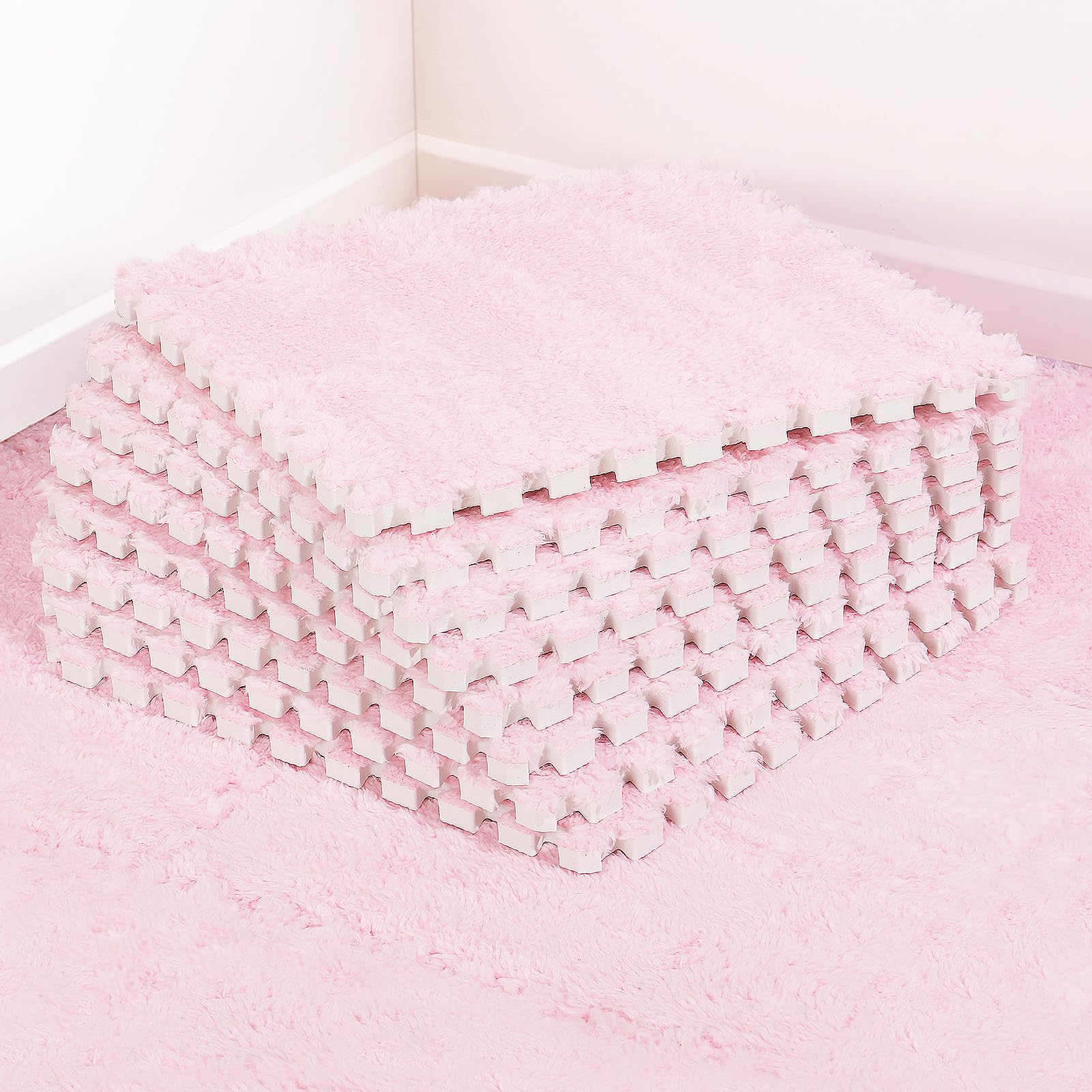
The ANPHSIN mats bridge a specific gap in the non toxic carpet market: they combine a closed-cell EVA foam core — which is inherently PVC-free and phthalate-free — with a bonded coral fleece surface that softens the texture dramatically. At 0.4 inches thick, each 11.8-inch tile snaps together with included edge strips that eliminate the sliced-finger look of exposed puzzle edges. This makes them a strong pick for basement playrooms or cold-weather nurseries where bare feet touch concrete-subfloor temperatures.
The fleece top is washable by hand or gentle machine cycle, which addresses the hygiene concern that plagues bare foam mats. However, several verified reviews reported that the fleece layer lifted when vacuumed with a brush roll, and the exposed edges of the fleece caught on standard vacuum heads. This means maintenance requires a suction-only vacuum head or spot cleaning with a damp cloth to prevent delamination.
For the price, the non toxic material list is solid — no PVC, no lead, no BPA, no phthalates. But the fleece-to-EVA bond introduces a durability variable that buyers should weigh against their cleaning routine. If you are willing to avoid beater-bar vacuums, this is a budget-friendly way to get a soft, warm, non toxic floor covering.
Why we love it
- Soft fleece surface provides warmth and comfort missing from bare foam mats
- Edging strips create a clean border against walls without cutting
- Strong non-toxic profile: PVC-free, lead-free, and phthalate-free
Good to know
- Fleece top can separate from foam when vacuumed with a brush roll
- Only 12 tiles — coverage area is 4.6 x 4.6 feet, smaller than many expect
3. Wonnitar Pink Floral Rug
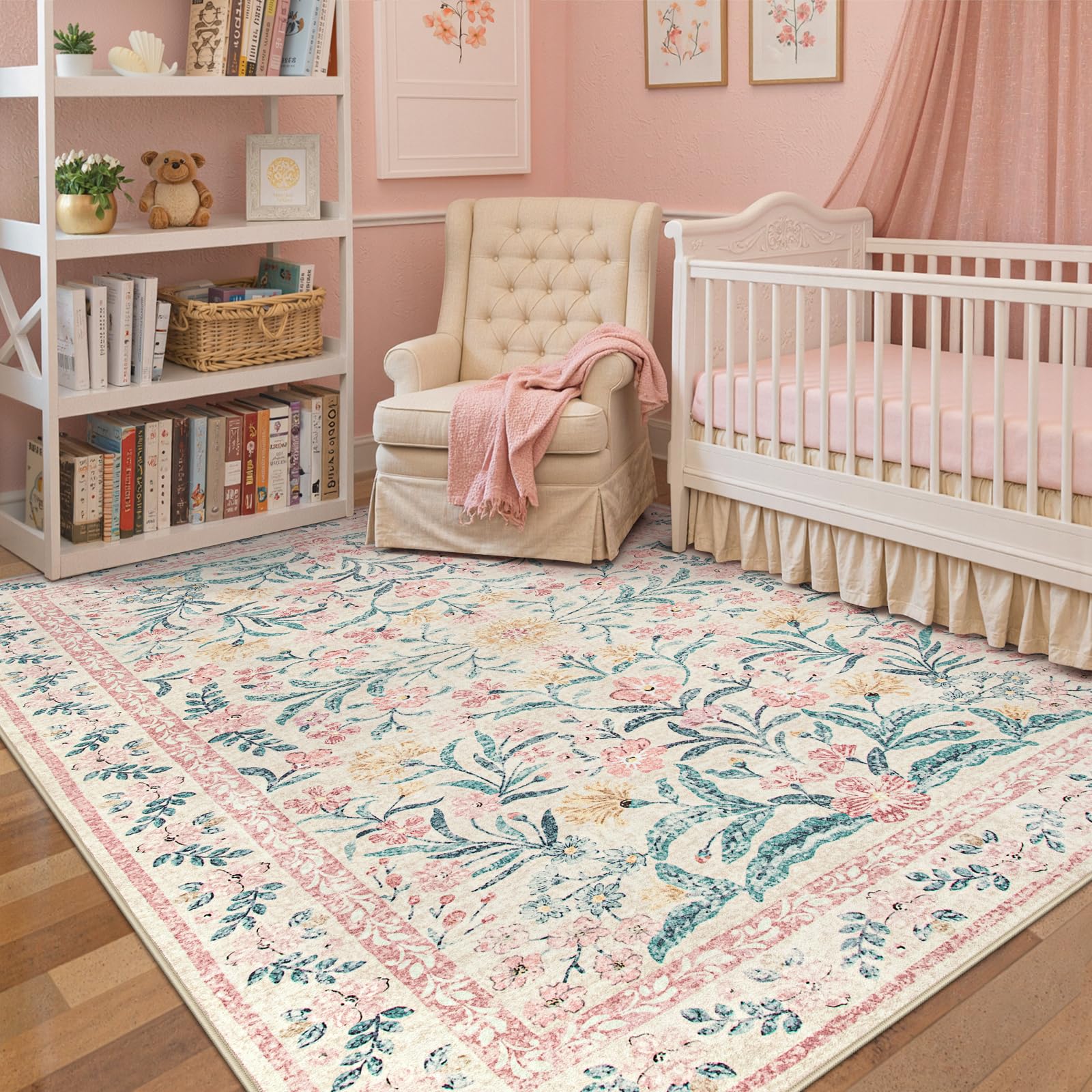
The Wonnitar rug targets buyers who want a non toxic carpet without sacrificing the cloud-like underfoot feel of a plush pile. The 0.2-inch low-pile construction is made from faux wool with a polyester rubber backing, and the material list is free of the latex and PVC that commonly cause off-gassing in rubber-backed rugs. Customers consistently described it as “cashmere-soft” with no chemical smell out of the box, which indicates the manufacturer is using a low-VOC dye and finish process.
The floral print is actually printed onto the plush surface rather than woven in, which gives a crisp, vibrant look but means the pattern sits at the pile tips. Machine washing is feasible — the rug survives multiple wash cycles without shedding or pilling, per owner reports. However, the low weight (under 7 pounds for the 5×7) means the rug can get sucked into a vacuum’s brush roll unless you switch to suction-only mode. A thick rug pad underneath is strongly recommended to prevent both slipping and edge curling.
Stain resistance is a listed spec, and verified reviews confirm that juice spills and pet accidents clean up without staining the backing. For a nursery or a toddler’s bedroom, the Wonnitar delivers a soft, washable, and demonstrably low-odor surface that competes with rugs costing double.
Why we love it
- No detectable chemical smell straight out of packaging
- Machine-washable without pilling or losing pile height
- Stain-resistant surface handles spills and pet accidents
Good to know
- Very lightweight; requires a rug pad to prevent shifting on tile or hardwood
- Low-pile construction means it can be pulled into a vacuum beater bar
4. Dadasgk 5×7 Floral Rug
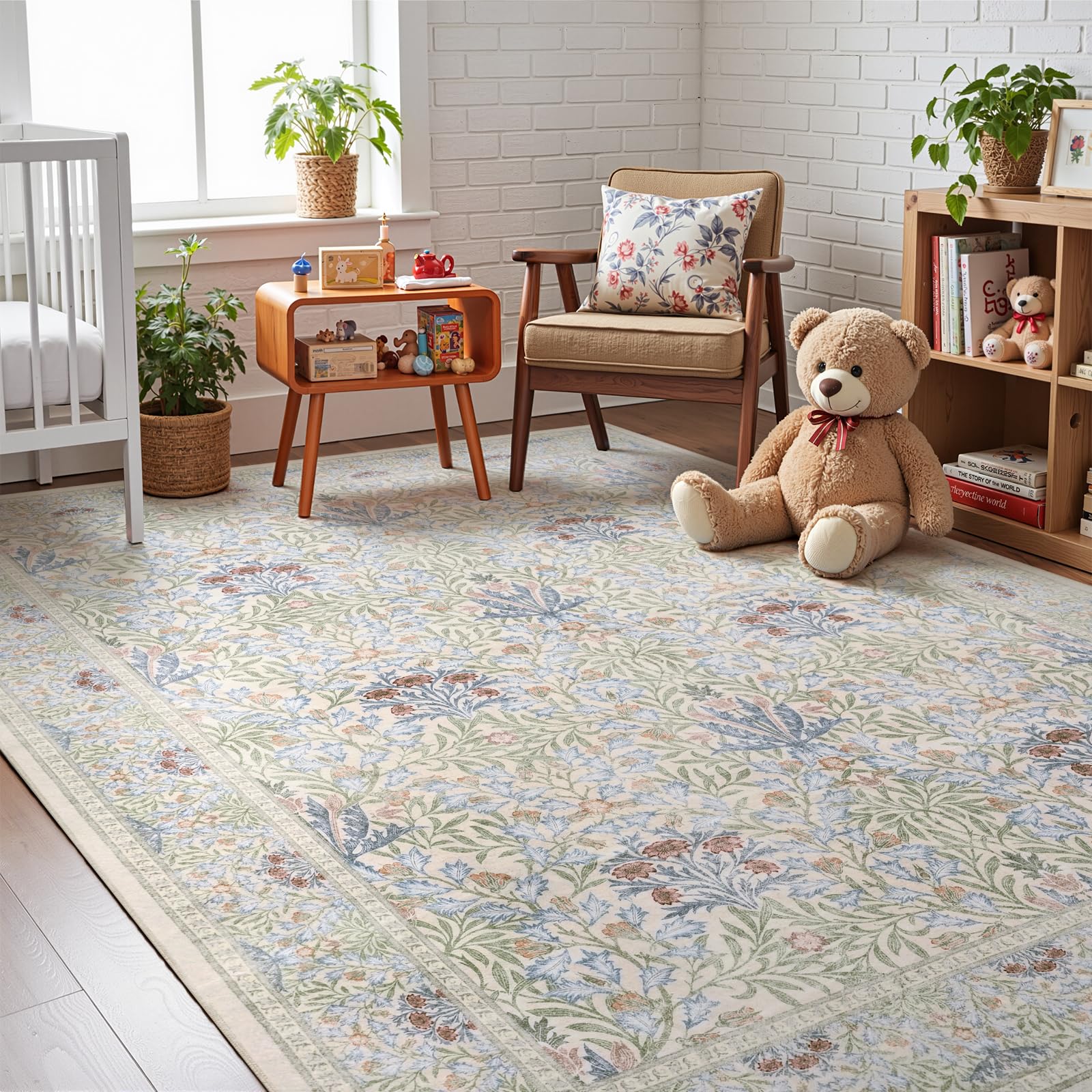
Dadasgk uses a TPE (thermoplastic elastomer) backing instead of traditional latex or PVC, which is significant for a non toxic carpet because TPE is inherently free of phthalates and volatile plasticizers. The faux wool fiber is machine-washable and resists pet hair and dander buildup — several verified reviews noted the rug held up to two small dogs without visible wear after a month of daily use. The 0.2-inch pile height is intentionally flat, which prevents paws and claws from snagging loops.
The floral and forest pattern uses a printed-on technique similar to the Wonnitar, but the color palette leans more muted (beige with blue accents), making it easier to match with farmhouse or boho decor. Customers consistently praised the rug’s softness on bare feet, though multiple owners emphasized that a 1/4-inch rug pad is mandatory — the thin construction means it provides no cushioning on its own and will wrinkle under heavy furniture without a pad underneath.
Stain resistance is confirmed by owners who tested juice and coffee spills, and the machine-washable claim held up after several cycles. The TPE backing stayed grippy on hardwood and tile floors without slipping. The only recurring negative was that the printed nature of the design means the pattern can appear slightly less crisp than a woven rug.
Why we love it
- TPE backing is phthalate-free and low-VOC, unlike standard latex
- Pet hair and dander resist easily with a quick vacuum
- Machine-washable with strong color retention after multiple cycles
Good to know
- Thin at 0.2 inches; a quality rug pad is essential for comfort
- Pattern is printed on the surface rather than woven in
5. GOYLSER 12ft Jute Runner
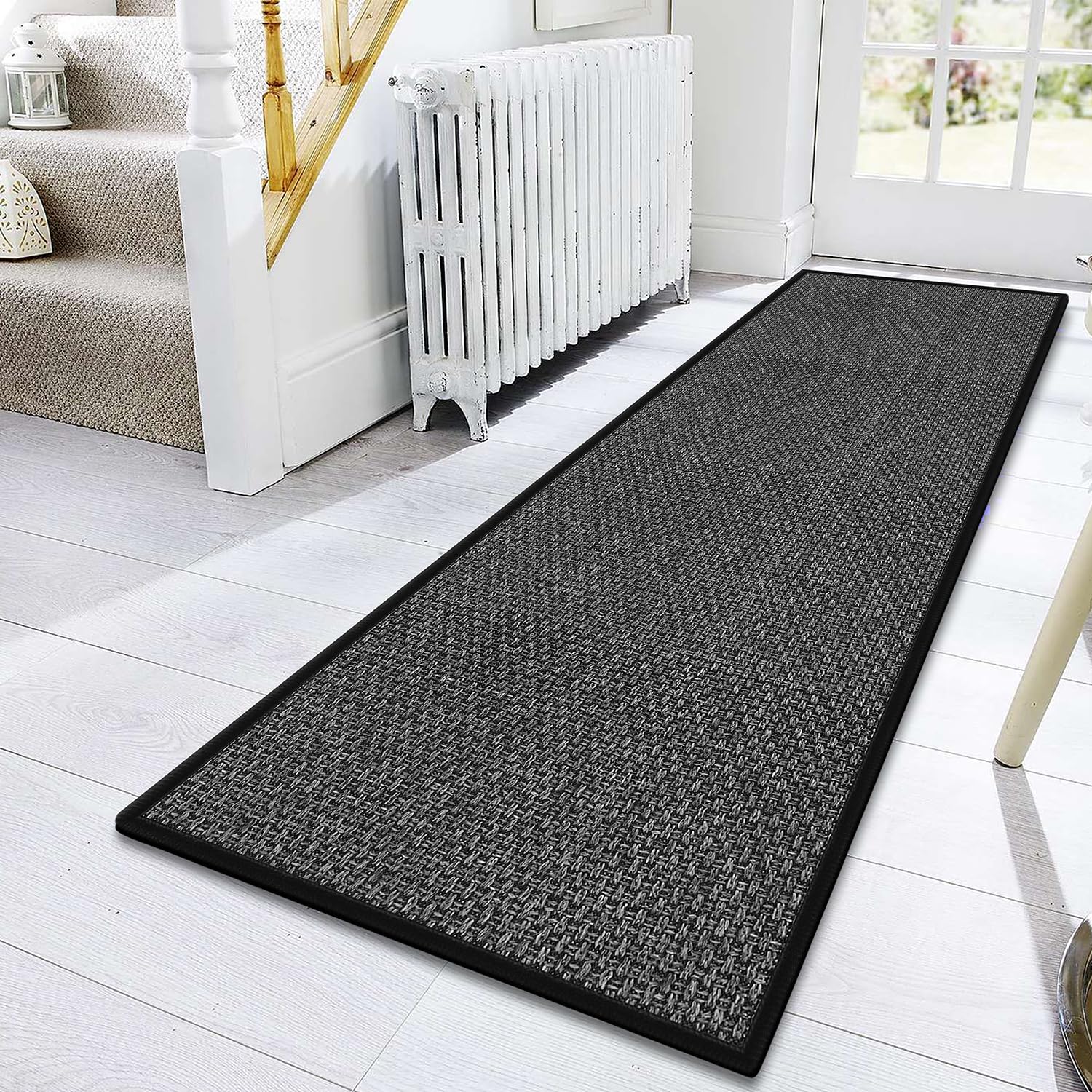
Jute is one of the few genuinely natural carpet fibers in the mid-price range, and the GOYLSER runner uses 100% jute on the surface with a rubber backing for grip. Since jute is a bast fiber from the Corchorus plant, it requires no chemical softening or synthetic bonding agents to create a usable carpet surface. The 0.3-inch flat weave is dense enough to resist snagging from robot vacuums — a common complaint with looped jute mats — while remaining absorbent enough to handle kitchen spills and laundry-room moisture.
The roll packaging is a standout detail: the runner arrives rolled rather than folded, which eliminates the crease lines that plague most shipped rugs. Verified reviews noted the runner laid perfectly flat within hours of unrolling. The water-absorbent interlayer between the jute top and rubber backing adds a functional layer for entryways and mudrooms, though owners should note that jute is not fully waterproof — standing water will cause the fibers to swell and discolor over time.
Machine washing is possible according to the manufacturer, though the 12-foot length and rubber backing make it cumbersome in a standard home washing machine. For daily maintenance, a robot vacuum or broom handles the jute surface without issue. The natural jute fibers shed a small amount of dust during the first week, which is typical for any plant-based carpet and not a sign of poor construction.
Why we love it
- 100% natural jute fiber with no synthetic fabric treatments
- Rolled packaging prevents creases and permanent fold lines
- Absorbent interlayer handles kitchen and laundry moisture
Good to know
- Jute is not waterproof; standing water can stain or swell fibers
- Natural dust shedding is normal for the first 5-7 days
FAQ
What certifications should a non toxic carpet have?
How long does off-gassing last in a non toxic carpet?
Can jute or wool carpets trigger allergies?
Is a machine-washable non toxic carpet worth the extra cost?
Can I put a non toxic carpet over radiant floor heating?
Final Thoughts: The Verdict
For most households, the best non toxic carpet winner is the TCBunny 4×6 Foam Mat because it combines a comprehensive non-toxic material list — free of formamide, phthalates, BPA, and latex — with dense 0.5-inch foam that provides genuine impact protection and a waterproof surface that wipes clean in seconds. If you need a softer, room-sized rug for a nursery or bedroom, grab the Wonnitar Pink Floral Rug. And for natural fiber fans who want a non-toxic runner without synthetic adhesives, the GOYLSER Jute Runner is the standout choice.