
The robot vacuum market under has matured into a battlefield of serious engineering, where LiDAR navigation, self-emptying docks, and pet-hair-specific brush designs are no longer premium luxuries but expected standards. The real challenge for buyers today isn’t finding a vacuum that works—it’s filtering out the models that half-implement features from those that genuinely solve the daily friction of floor cleaning.
I’m Mo Mahin — the founder and writer behind Furric. I’ve spent the last four years analyzing robot vacuum specifications, studying LiDAR mapping algorithms, comparing suction motor efficiencies, and aggregating owner feedback across thousands of real-world households to understand which models deliver on their promises under the ceiling.
When you’re investing in floor-cleaning hardware that will share your living space for years, choosing the right robot vacuum under $1000 means understanding the concrete trade-offs in suction power, mapping precision, and dock intelligence that separate capable tools from frustrating purchases.
How To Choose The Best Robot Vacuum Under $1000
The robot vacuum category under spans from capable entry-level self-emptying units to feature-rich hybrid mopping systems with obstacle avoidance. Understanding the specs that actually impact daily performance saves you from paying for marketing features you won’t use.
LiDAR Navigation Quality
LiDAR-based navigation creates a real-time map of your home using laser ranging, allowing the vacuum to clean in efficient row-by-row patterns rather than random bouncing. The precision of this mapping determines how thoroughly the robot covers your space, how accurately it respects no-go zones, and whether it can reliably return to its dock. Cheaper LiDAR implementations may still get confused in open floor plans or fail to map multi-level homes properly, while premium systems maintain lock even in darker rooms or around glass furniture.
Suction Power and Motor Efficiency
Suction measured in Pascals (Pa) is the most hyped spec, but real-world cleaning effectiveness depends on brush design, airflow path, and motor efficiency just as much. A 5,000 Pa vacuum with a well-sealed floor channel and aggressive brush agitation often outperforms a 10,000 Pa unit with poor brush contact. Carpets require more suction power than hard floors, and pet hair demands both strong airflow and a brush design that doesn’t let hair wrap around the roller.
Self-Emptying Dock Capacity and Bag vs. Bagless
The self-emptying dock is the feature most responsible for the “set and forget” experience. Dock capacity is measured in weeks or days before the bag or bin needs attention. Bagless docks eliminate recurring costs but may expose you to dust during emptying. Sealed bag systems trap allergens more effectively but require purchasing proprietary bags. Under , expect 30 to 75 days of capacity, with larger bags generally correlating to higher price tiers.
Anti-Tangle and Pet Hair Management
For homes with shedding pets or long-haired occupants, the brush roller’s ability to resist hair tangling is critical. Some vacuums use rubber comb-style rollers that passively prevent wrap, while others incorporate active hair-cutting mechanisms that slice hair off the brush during each docking cycle. The difference between these approaches dramatically affects how often you’ll need to manually clean the brush, especially with breeds like Golden Retrievers or Huskies.
Quick Comparison
On smaller screens, swipe sideways to see the full table.
| Model | Category | Best For | Key Spec | Amazon |
|---|---|---|---|---|
| iRobot Roomba Max 705 | Premium Mid-Range | Pet households wanting AI obstacle avoidance | 210 min battery, 75-day auto-empty dock | Amazon |
| Shark PowerDetect AV2820S | Premium Mid-Range | Homes with threshold steps and thick rugs | HEPA sealed, 30-day bagless base | Amazon |
| Bissell FlexClean FurForce 4270L | Premium | Heavy pet shedding with mopping needs | 180 min runtime, 60-day bagless dock | Amazon |
| eufy Robot Vacuum E25 | Premium | Deep mopping with self-washing roller | 20,000 Pa suction, 75-day sealed bag | Amazon |
| DREAME L40 Ultra Gen 2 | Premium | Corner-to-corner cleaning with extendable brush | 25,000 Pa suction, 231 min runtime | Amazon |
| Shark Navigator AV2110S | Mid-Range | Hard floor dominant homes without carpets | LiDAR mapping, 30-day bagless base | Amazon |
| roborock Q10 S5+ | Mid-Range | Mopping enthusiasts with sonic scrubbing | 10,000 Pa suction, 70-day bag dock | Amazon |
| roborock Q7 M5+ | Mid-Range | Budget-conscious buyers wanting LiDAR mapping | 10,000 Pa suction, 49-day bag dock | Amazon |
| eufy L60 with Self-Empty Station | Budget-Friendly | First-time robot vacuum buyers with pets | 5,000 Pa suction, 60-day bag dock | Amazon |
In‑Depth Reviews
1. iRobot Roomba Max 705 Robot Vacuum with AutoEmpty Dock
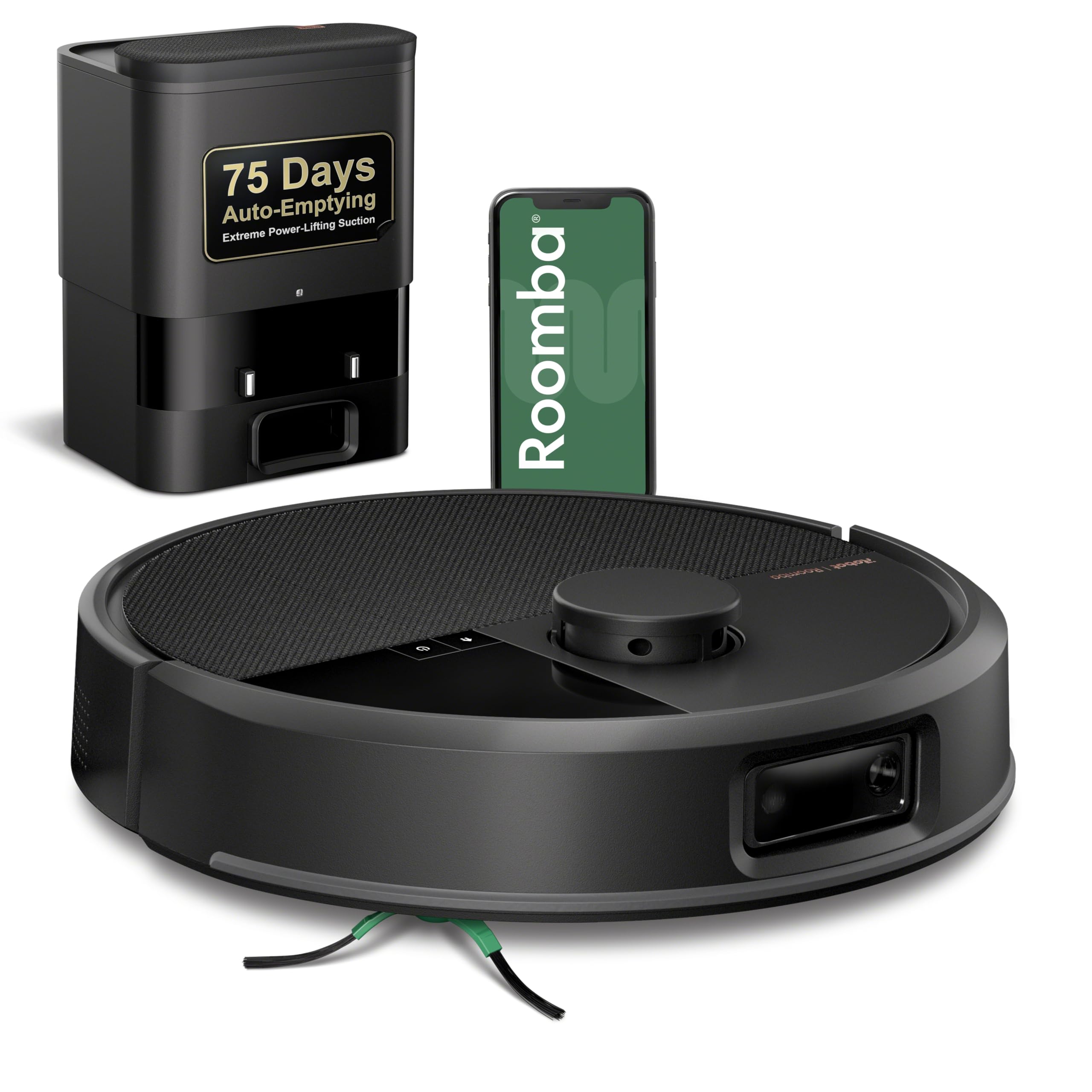
The Roomba Max 705 delivers the most balanced package in the under- tier, combining iRobot’s proven dual rubber brush technology with ClearView Pro LiDAR and PrecisionVision AI for object avoidance. Its 210-minute battery life handles homes up to 2,500 square feet on a single charge, and the AutoEmpty dock traps particles as small as 0.7 microns in a sealed bag that lasts up to 75 days. The rubber brushes flex to maintain contact across transitions from hardwood to thick carpet, while the edge-sweeping brush pulls debris from corners effectively.
Owner feedback consistently praises the Max 705’s ability to handle heavy pet hair without brush tangling—the dual rubber design prevents hair wrap that plagues bristle-based competitors. The Dirt Detect Technology identifies concentrated messes and performs repeated passes without user intervention. However, users report that the feeler brush can detach on carpet-to-tile transitions, and the vacuum’s taller profile struggles to fit under low-clearance furniture. The app setup process has frustrated some owners, particularly those with special characters in their Wi-Fi passwords.
The Max 705’s AutoEmpty dock stores debris effectively, though replacement bags add ongoing cost compared to bagless alternatives. The PrecisionVision AI successfully navigates around cords, socks, and pet waste, reducing the need to pre-clean before each session. For households that value reliable daily cleaning without manual intervention, this Roomba represents the strongest all-rounder in its price bracket.
Why we love it
- Patented rubber dual brushes prevent hair tangling without maintenance
- 210-minute battery covers large homes in one charge cycle
- PrecisionVision AI avoids cords, socks, and pet waste consistently
Good to know
- Taller profile blocks access under low sofas and bed frames
- Replacement dock bags are a recurring purchase expense
- Wi-Fi setup may fail with passwords containing special characters
2. Shark PowerDetect Self-Empty Robot Vacuum AV2820S

Shark’s PowerDetect takes a different approach to navigation by combining DirtDetect, FloorDetect, and EdgeDetect sensors that dynamically adjust suction and brush engagement based on surface type and debris concentration. The NeverStuck Technology lifts and lowers the robot body to climb over thresholds up to 0.8 inches and navigate around rug tassels without getting immobilized. The bagless self-empty base holds 30 days of debris with True HEPA filtration that captures 99.97% of particles down to 0.3 microns, making this a strong choice for allergy-conscious households.
The AV2820S excels on mixed-surface homes with varying rug thicknesses and transition strips. Owners report that the robot rarely needs manual rescue—it climbs over cords, door thresholds, and low furniture with fewer interruption events than competitors. The EdgeDetect system uses targeted air blasts to pull debris from corners and baseboards, delivering noticeably cleaner edges compared to models that rely solely on side brushes. However, the app interface has drawn consistent criticism for its barebones functionality—room-specific scheduling is difficult, and multi-floor mapping support is missing entirely.
Battery life sits at 110 minutes, which covers average-sized homes but falls short of the 150+ minute runtimes offered by competitors at similar price points. The single side brush design works well on hard floors but struggles on carpets. International buyers have reported geo-restricted app functionality that disables mapping features entirely, effectively turning the premium robot into a basic random-navigation unit. Within the US market, however, the PowerDetect’s cleaning effectiveness and self-emptying convenience justify its position.
Why we love it
- NeverStuck Tech handles thick rugs and threshold transitions reliably
- True HEPA sealed system traps allergens for pet-dander reduction
- EdgeDetect air blasts clean corners better than side brushes alone
Good to know
- App lacks room-specific scheduling and multi-floor support
- Battery runtime at 110 minutes is shorter than premium competitors
- International buyers lose mapping access due to geo-restrictions
3. Bissell FlexClean FurForce Robot Vacuum & Mop 4270L
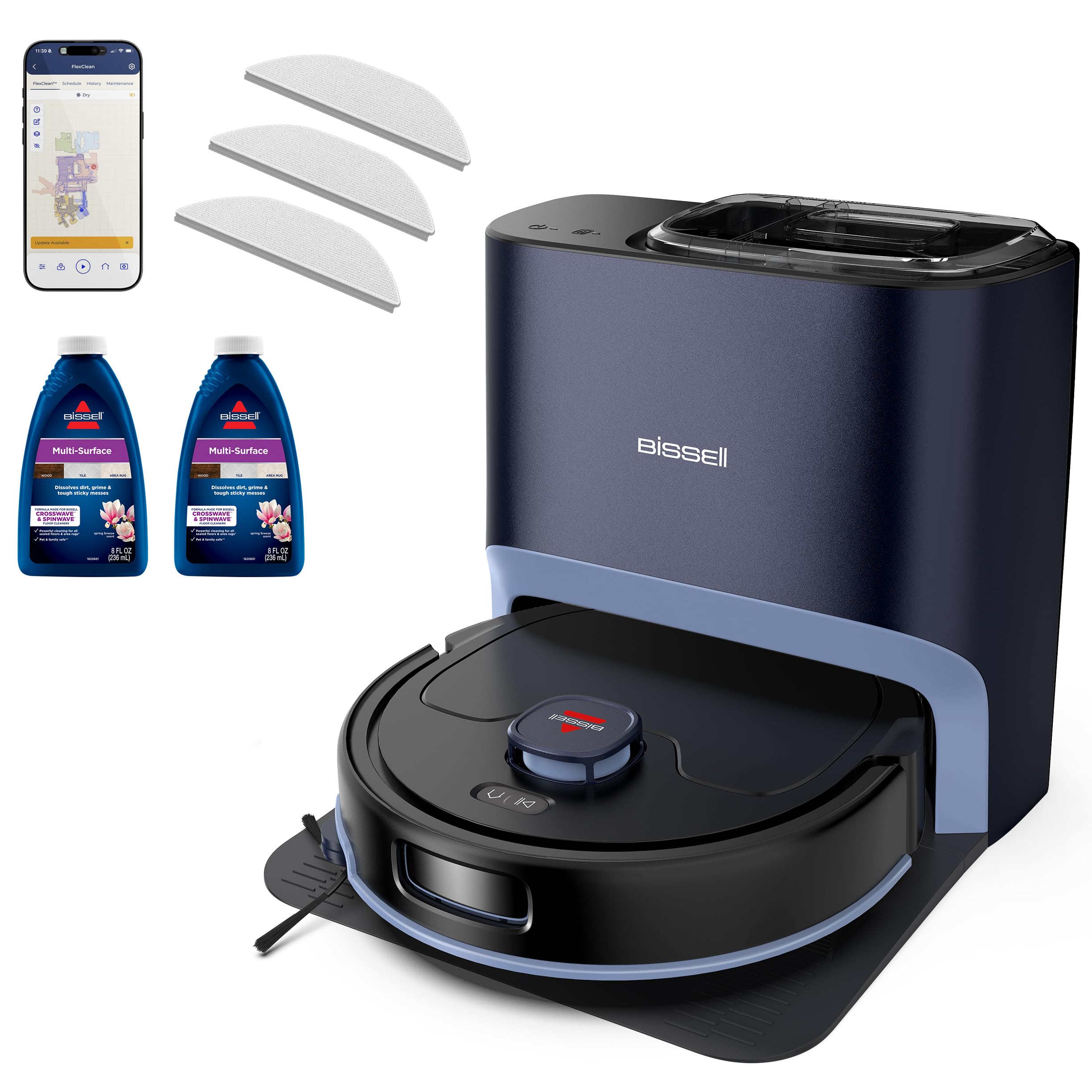
Bissell enters the premium robot vacuum segment with the FlexClean FurForce, designed specifically for pet-heavy households that require both powerful suction and mopping capabilities. The NeverTangle brush roll prevents hair wrap at the brush level, while the 360React LiDAR navigation maps and avoids obstacles for whole-home cleaning. The self-empty base holds up to 8 weeks of debris in a bagless design, eliminating the cost of replacement bags while keeping HEPA filtration active—trapping 99.97% of particles at 0.3 microns.
Owner experiences highlight the FurForce’s ability to handle heavy shedding from two or more dogs without requiring daily brush cleaning. The 180-minute runtime covers larger homes on a single charge, and the vacuum adjusts suction automatically when transitioning from hardwood to carpet. The 2-in-1 mopping function works well for light maintenance, though users note that the water tank requires multiple refills during extended cleaning sessions and that the mop can wet rug edges if not properly configured in the app.
The app-based mapping setup has received mixed feedback, particularly for multi-level homes where map creation and room editing are less intuitive than competing platforms. Some owners report that the vacuum requires supervision because the battery drains mid-task and the robot doesn’t always resume cleaning after recharging. The LiDAR navigation itself performs well, avoiding furniture and walls without collisions, and the NeverTangle brush genuinely reduces the need for manual hair removal—a significant advantage for pet owners.
Why we love it
- NeverTangle brush roll eliminates hair wrap for long-haired breeds
- 180-minute battery covers large homes without mid-charge stops
- HEPA bagless dock saves money on replacement bags long-term
Good to know
- Mop water tank requires frequent refills during larger cleaning runs
- App mapping for multi-level homes is less intuitive than competitors
- Battery may drain mid-task and fail to resume automatically
4. eufy Robot Vacuum E25 with HydroJet System
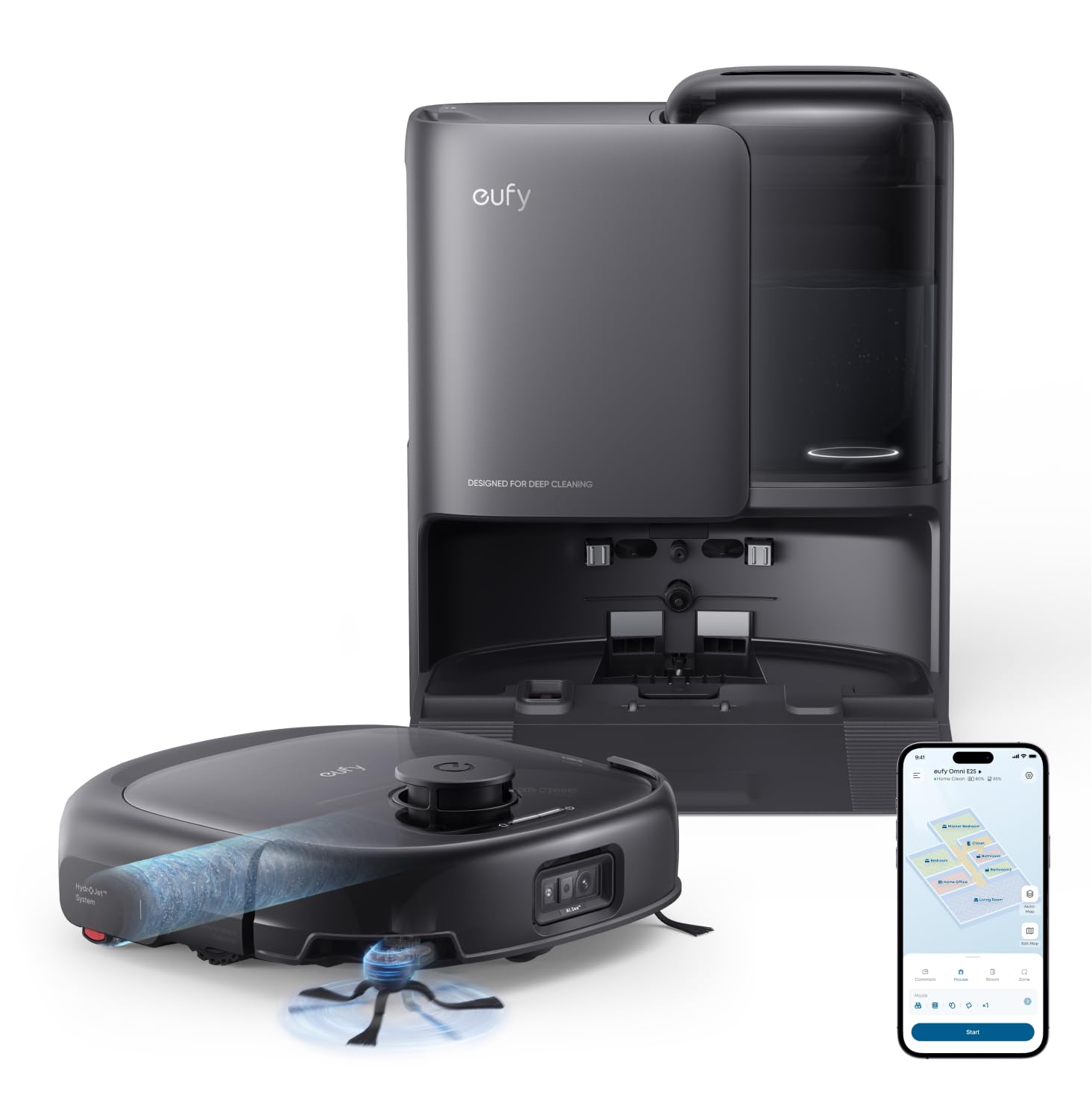
The eufy E25 brings a genuinely different mopping approach to the sub- market with its HydroJet Always-Clean Roller Mop, which refreshes the cleaning surface twice per second with clean water to prevent cross-contamination between rooms. This system avoids the common problem of dragging a dirty mop pad across already-cleaned floors. The 20,000 Pa suction lifts deeply embedded dirt from carpet fibers and captures fine dust from grout lines, while the DuoSpiral anti-tangle brushes manage pet hair without clogs.
Owner feedback emphasizes the E25’s quiet operation—at ≤61 dB in max mode, it operates during calls without disruption. The all-in-one station handles auto-empty, self-washes the roller mop, hot air dries at 50°C, and auto-refills water, making it the most hands-free mopping system in this price tier. The CornerRover arm extends to scrub along baseboards and furniture legs, addressing a common blind spot in robot vacuums. However, some owners report that the vacuum can get stuck on black surfaces due to cliff sensor confusion and that it occasionally eats rug tassels.
The 125-minute runtime in vacuum-plus-mop mode covers medium-sized homes, though larger spaces may require a recharge. The app requires 2.4 GHz Wi-Fi and rejected passwords containing spaces during setup, an issue eufy has addressed with support documentation. While long-term durability remains unproven compared to established brands, the E25’s combination of advanced mopping, strong suction, and comprehensive self-maintenance dock makes it a compelling option for households that prioritize floor hygiene over raw vacuuming time.
Why we love it
- HydroJet roller mop self-cleans twice per second preventing cross-contamination
- Quiet operation at 61 dB works during calls and TV viewing
- CornerRover arm reaches baseboards and tight corners effectively
Good to know
- Cliff sensors may trigger on black rugs and dark surfaces
- App setup rejected passwords containing spaces
- 125-minute runtime requires mid-charge in larger homes
5. DREAME L40 Ultra Gen 2 Robot Vacuum and Mop
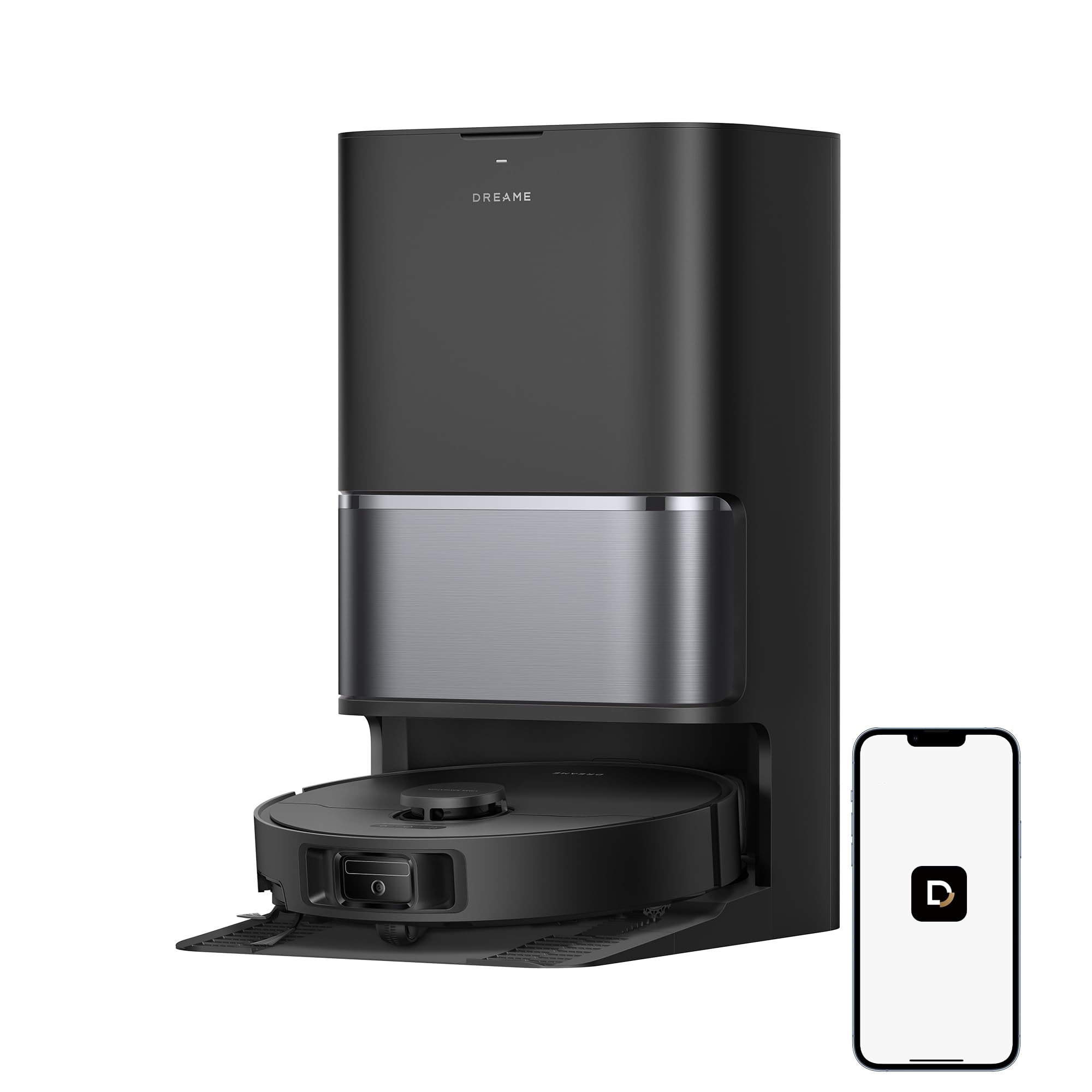
DREAME’s L40 Ultra Gen 2 pushes the boundaries of what a sub- robot vacuum can achieve with 25,000 Pa suction power—the highest in this comparison—and an extendable side brush and mop that reach into corners and under furniture where standard fixed brushes cannot. The all-in-one self-cleaning dock handles auto-emptying, mop washing, and hot air drying, while four tailored carpet modes let you choose between avoidance, suction boost, intensive cleaning, or mop lifting to protect carpet fibers.
Owner reviews consistently praise the L40’s corner-cleaning performance, noting that the extending brush arm retrieves debris from areas previously left untouched by older robot vacuums. The 231-minute runtime in Quiet Mode covers up to 1,679 square feet, making this one of the longest-running options available. The Smart Pathfinder and 3DAdapt technologies provide mapping precision that avoids shoes, cables, and small obstacles. However, the mopping system is best suited for light maintenance—tough stains on hard floors still require manual scrubbing.
The self-cleaning dock drains and washes the mop pad automatically, but the dirty water tank requires regular cleaning to prevent odor buildup. The vacuum handles thick carpets adequately but still needs a traditional upright vacuum for deep-pile or plush carpets. The optional auto-detergent dispenser is sold separately, adding cost for those who want automated cleaning solution dispensing. For buyers who prioritize suction power and advanced navigation features, the L40 Ultra Gen 2 delivers exceptional value at its price tier.
Why we love it
- 25,000 Pa suction is the highest in this sub- roundup
- Extendable brush and mop reach corners standard designs miss
- 231-minute battery runs nearly 4 hours on quiet mode
Good to know
- Dirty water tank needs regular cleaning to prevent odor
- Mopping suited for light maintenance, not heavy stains
- Optional detergent dispenser is a separate purchase
6. Shark Navigator Robot Vacuum AV2110S
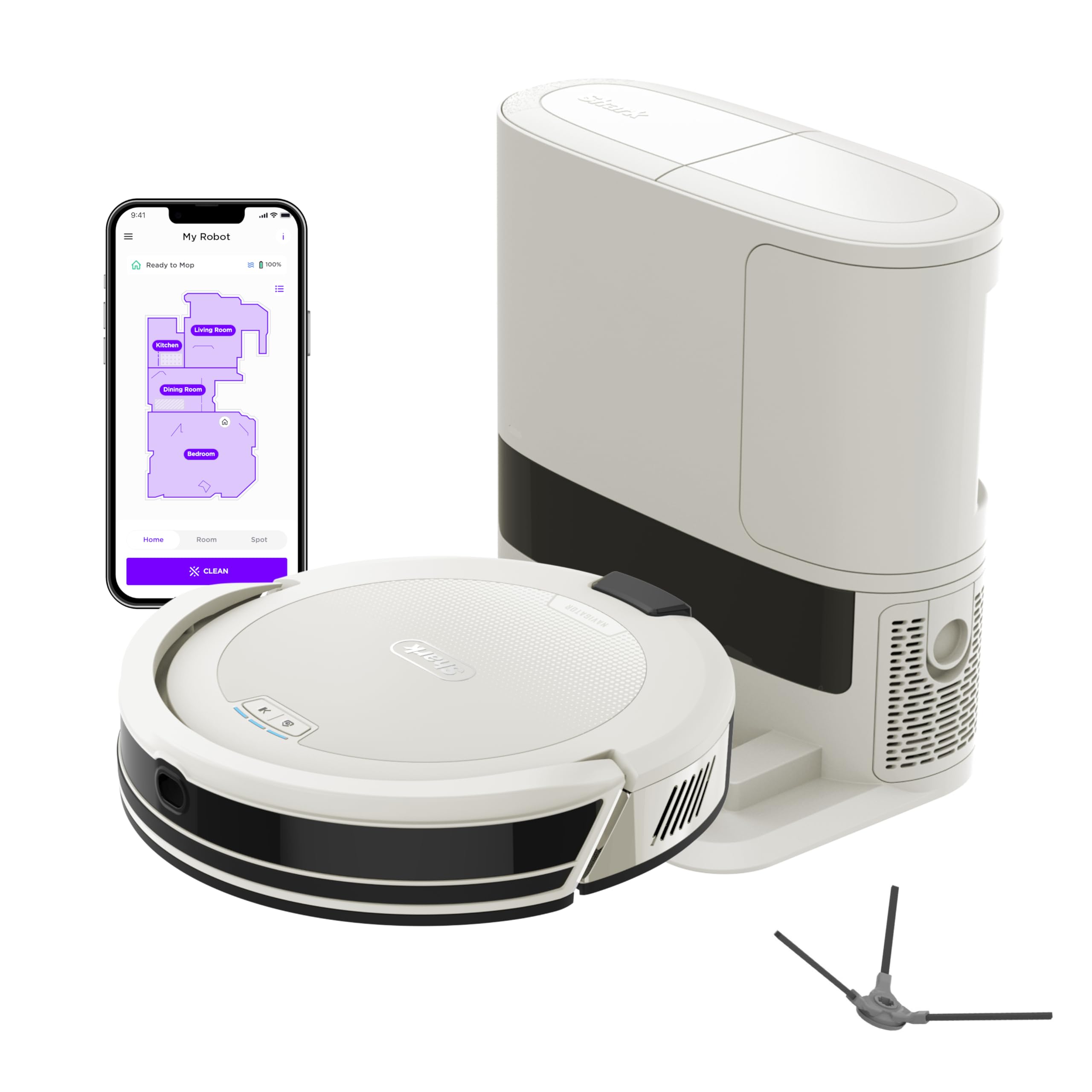
The Shark Navigator AV2110S brings LiDAR-based SmartPath navigation and a bagless self-empty base to the mid-range tier, offering up to 1.5x more coverage compared to Shark’s older ION series. The row-by-row cleaning pattern ensures methodical coverage rather than random bouncing, while the self-cleaning brushroll with Anti-Hair Wrap technology prevents tangles on pet hair and long human hair. The bagless base holds up to 30 days of debris, eliminating the need for replacement bags entirely.
Owner feedback reveals a mixed experience depending on flooring type. On hard floors, the Navigator is excellent—smart navigation, quiet operation, and strong pet hair pickup earn consistent praise. On carpets, however, performance drops significantly. Multiple owners report that the vacuum struggles with all carpet types from low-pile to shag, leaving debris behind that a dedicated upright vacuum would capture. The recharge-and-resume function works reliably, sending the robot back to the dock and returning to the same spot when battery runs low.
The SharkClean app supports scheduling, no-go zones, and suction control, though some users note the interface feels less polished than competing apps from iRobot or Roborock. No cleaning brush is included for maintenance, and owners must manually check the robot bin weekly for clogs. For households with predominantly hard floors who want a bagless, low-maintenance experience, the Navigator AV2110S delivers strong value, but carpet-heavy homes should look at more powerful alternatives.
Why we love it
- Bagless self-empty base eliminates ongoing bag purchase costs
- SmartPath LiDAR navigation cleans in efficient row-by-row patterns
- Self-cleaning brushroll prevents pet hair wrap effectively
Good to know
- Poor suction performance on all carpet types including low-pile
- No cleaning brush included for weekly maintenance
- App interface less polished than main competitors
7. roborock Q10 S5+ Robot Vacuum and Mop
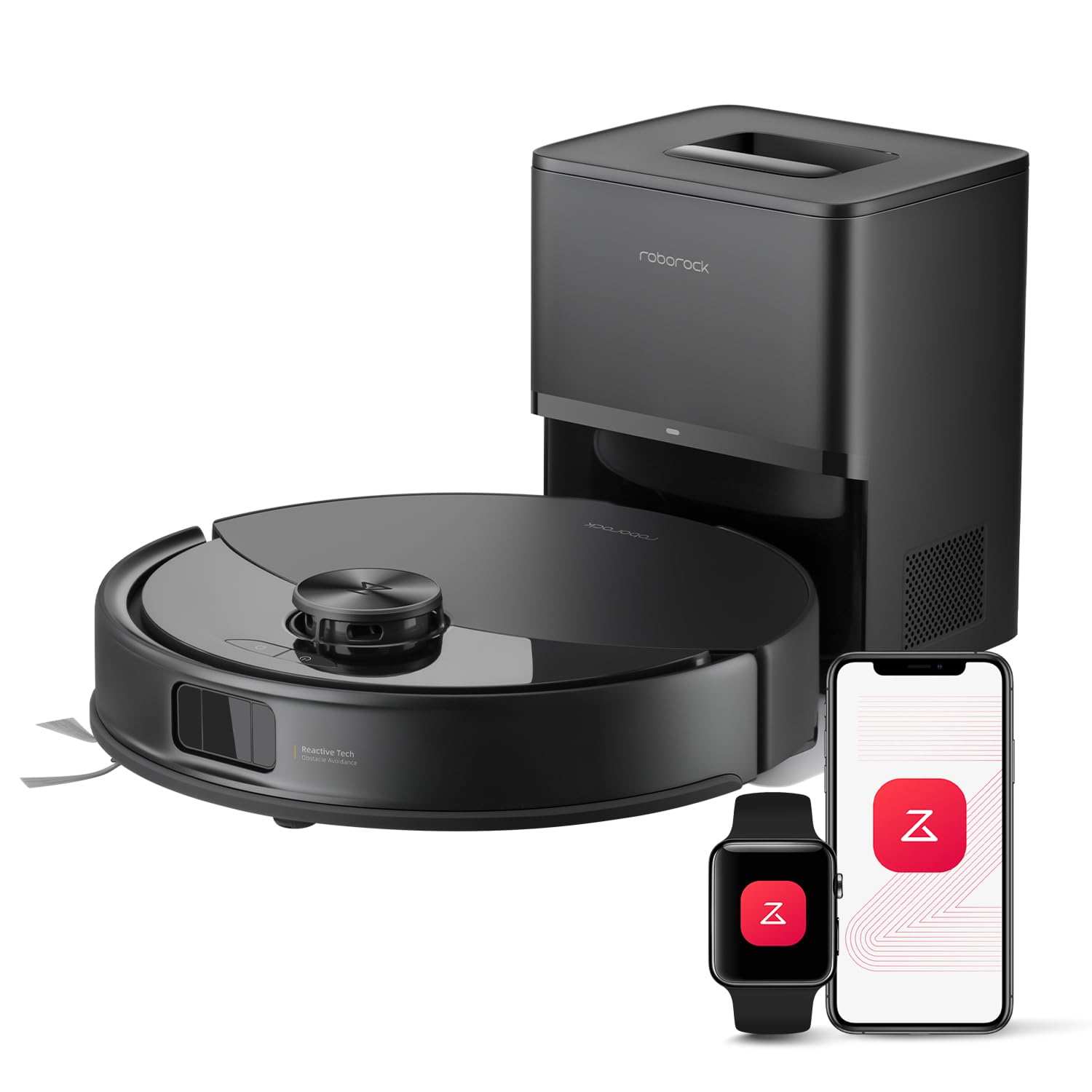
The roborock Q10 S5+ upgrades the Q8 Max+ with a VibraRise 2.0 mopping system that vibrates at 3,000 times per minute to scrub stains, lifting 8 mm to avoid wetting carpets. The 10,000 Pa HyperForce suction handles embedded pet hair and debris across surfaces, while the Dual Anti-Tangle system combines a JawScrapers main brush with a specialized side brush to minimize hair wrap. The self-emptying dock holds a 2.7L sealed bag for up to 70 days of hands-free cleaning.
Owner experiences with the Q10 S5+ are largely positive, particularly for hard floor cleaning and pet hair management. The ultrasonic carpet detection intelligently lifts the mop module when carpets are sensed and boosts suction for deeper cleaning. The Roborock app supports room selection, no-go zones, and multiple suction levels, though some users note the app interface is basic compared to premium models—lacking granular room controls that competing apps offer. The mopping function requires the app to enable all features, including carpet detection.
Some owners report that the sealed bag fills quickly—a 7-week bag lasting only one week in heavy pet households—requiring manual mid-cycle emptying if dust accumulation is high. The roller can clog with hair if the brush cover isn’t installed perfectly, causing the auto-empty to fail and requiring a reset. The Q10 S5+ handles thick carpet and pet furniture bases well, though it can get stuck under low-clearance furniture. For mopping-focused buyers who need a reliable secondary machine for maintenance cleaning, this model offers strong value.
Why we love it
- VibraRise 2.0 sonic mopping scrubs at 3,000 times per minute
- Ultrasonic carpet detection lifts mop 8mm and boosts suction
- 70-day sealed bag dock requires minimal maintenance
Good to know
- Sealed bag fills quickly in heavy pet households—check weekly
- Brush cover must be installed perfectly or auto-empty fails
- App interface lacks granular room controls found on premium models
8. roborock Q7 M5+ Robot Vacuum and Mop

The roborock Q7 M5+ bridges the gap between budget-conscious buyers and performance seekers by offering 10,000 Pa suction, PreciSense LiDAR navigation, and a self-emptying dock that holds up to 49 days of debris in a 2.7L sealed bag. The Dual Anti-Tangle system uses JawScrapers main brush and a zero-hair-tangle side brush to resist pet hair wrap, while the combined vacuuming and mopping system provides three adjustable water flow settings for customized floor care.
Owner feedback highlights the Q7 M5+’s exceptional mapping quality and efficient cleaning path—the LiDAR navigation methodically covers rooms in straight lines rather than random patterns, resulting in thorough coverage with fewer missed spots. The vacuum operates quietly compared to Roomba models, and the app integration with Alexa allows hands-free zone cleaning and scheduling. The mopping function, however, receives less enthusiastic reviews—it essentially drags a wet mop pad rather than scrubbing, and the water flow is too weak for anything beyond light dust mopping.
Some users report that the robot can get stuck on loose rugs, causing mapping glitches that require map resets. The dustbin is small and requires frequent emptying, though the self-emptying dock mitigates this for the main bin. After extended use, some owners note that the charging pins lose contact, causing the battery to discharge overnight. For buyers who prioritize navigation precision and quiet operation over mopping performance, the Q7 M5+ delivers a balanced package at its price point.
Why we love it
- PreciSense LiDAR creates precise maps with efficient cleaning paths
- Quiet operation suitable for overnight cleaning without disturbance
- Alexa and Google Assistant integration for hands-free control
Good to know
- Mopping function is weak—just drags a wet pad without scrubbing
- Can get stuck on loose rugs causing map glitches
- Charging pins may lose contact over extended use periods
9. eufy L60 Robot Vacuum with Self Empty Station
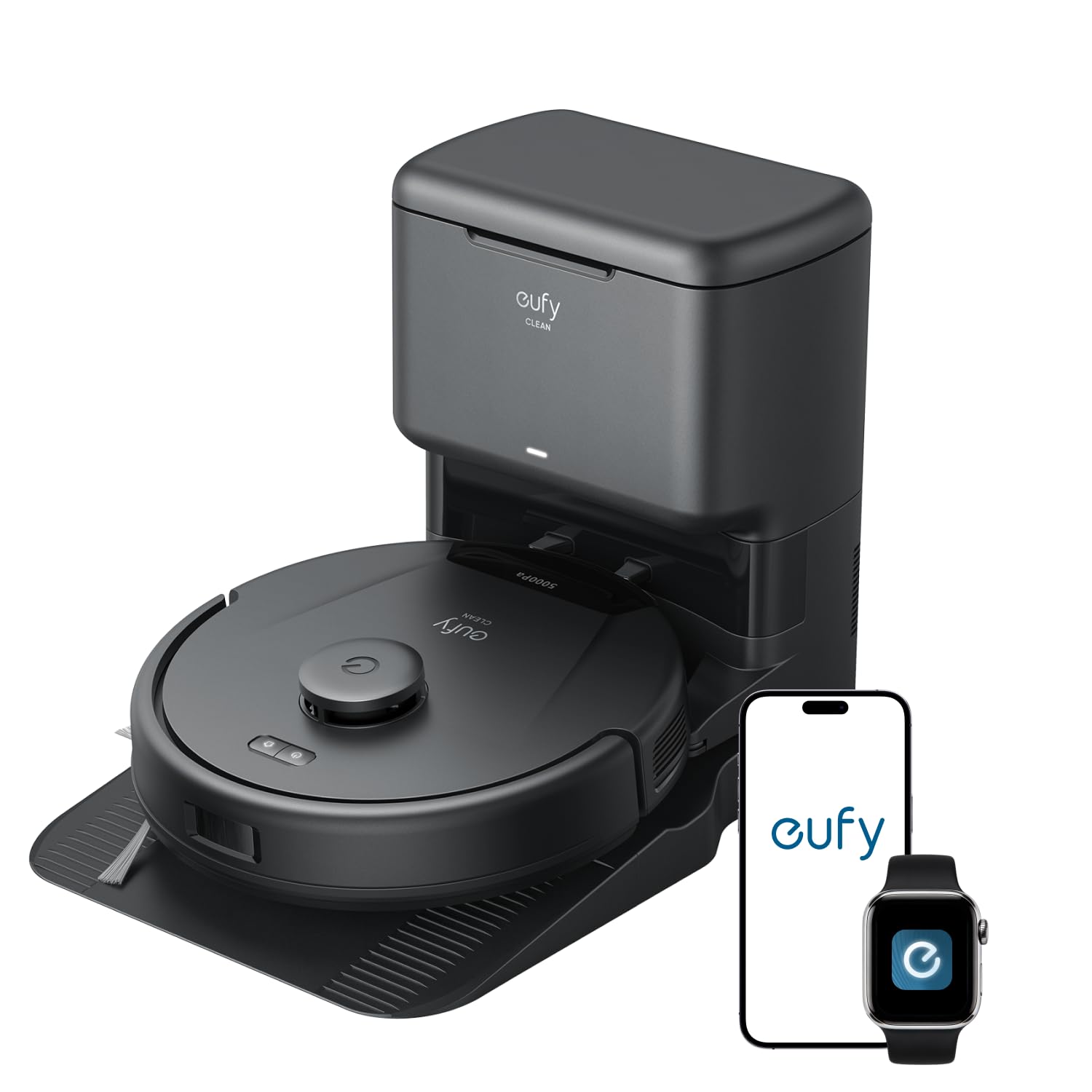
The eufy L60 is the entry-level champion in this roundup, offering a self-emptying dock with a 60-day bag capacity, active hair-cutting technology, and 5,000 Pa suction at a budget-friendly price point. The iPath LiDAR navigation scans rooms to build precise maps and optimizes cleaning paths, while the hair detangling system actively slices hair off the roller brush during each emptying cycle rather than just preventing wrap. The app supports room selection, no-go zones, and multi-floor mapping for up to three levels.
Owner reviews reveal a split between budget-minded users who find the L60 excellent value and power users who encounter reliability issues. Positive reports highlight the self-emptying dock’s effectiveness, the LiDAR mapping quality, and the vacuum’s ability to handle pet hair from shedding breeds like Labradors without brush tangling. Negative experiences, however, mention unreliable scheduling that requires daily app reconfiguration, battery drain that fails to resume after recharging, and customer service that is difficult to reach for replacement parts.
The L60’s 5,000 Pa suction is adequate for hard floors and low-pile carpets but struggles with deep-pile carpets compared to higher-suction models. The 120-minute battery covers medium-sized homes but requires 1-2 recharges for spaces over 1,400 square feet. The edge brush may start squeaking after extended use, and sliding glass doors can cause occasional false LiDAR scans. For first-time robot vacuum buyers on a tight budget who want self-emptying convenience, the L60 offers a compelling entry point, but experienced users may find the trade-offs frustrating.
Why we love it
- Active hair-cutting technology slices hair off brush during each dock cycle
- Self-emptying dock with 60-day bag capacity at entry-level pricing
- iPath LiDAR maps and cleans in efficient row-by-row patterns
Good to know
- Scheduling can be unreliable—app reconfiguration sometimes required
- 5,000 Pa suction struggles on thick or deep-pile carpets
- Customer service difficult to reach for replacement parts
FAQ
What is the minimum Wi-Fi requirement for robot vacuums under $1000?
Can robot vacuums under $1000 handle thick carpets and area rugs?
How often do I need to empty the robot vacuum’s dustbin if I don’t have a self-emptying dock?
What does the “mopping” feature actually do on robot vacuum hybrids?
Do robot vacuums under $1000 work with pet waste and avoid accidents?
Final Thoughts: The Verdict
For most households, the robot vacuum under $1000 winner is the iRobot Roomba Max 705 because it combines the longest battery life in its class, proven dual rubber brush anti-tangle technology, and reliable PrecisionVision AI obstacle avoidance at a price that doesn’t require sacrificing performance features. If you want the best mopping integration with a self-cleaning roller mop, grab the eufy Robot Vacuum E25. And for corner-to-corner cleaning with the highest suction power and longest runtime, nothing beats the DREAME L40 Ultra Gen 2.