
Few things interrupt a peaceful evening faster than the unmistakable sound of a cat hacking up a hairball. While occasional regurgitation is normal, frequent episodes signal that ingested fur is accumulating rather than passing naturally through the digestive tract. The right nutritional approach can shift that dynamic entirely.
I’m Mo Mahin — the founder and writer behind Furric. I’ve spent years analyzing pet nutrition formulas, comparing fiber source efficacy, and cross-referencing thousands of owner experiences to identify which products actually deliver measurable hairball reduction.
Whether you manage a multi-cat household or have a single long-haired breed that struggles with fur, this guide breaks down the most effective commercial options. You’ll find the best treatment for hairballs that fits your cat’s preferences and your feeding routine.
How To Choose The Best Treatment For Hairballs
Hairball treatments fall into two distinct categories: lubricant gels that help swallowed fur slide through the tract, and dietary fiber that binds the fur so it passes with stool rather than accumulating. Your choice depends on your cat’s tolerance for texture, your feeding schedule, and whether you want a daily preventative or an occasional intervention.
Fiber Type and Source
Insoluble fiber — such as beet pulp in IAMS or miscanthus grass in Nulo — bulks up the hair mass and encourages it to move through the intestines. Soluble fiber absorbs water and slows transit. For hairball management, a blend leaning toward insoluble fiber is generally more effective because it physically pushes the fur out rather than relying on lubrication alone.
Form Factor and Palatability
Some cats refuse gels smeared on their paw. Others pick around fiber-rich kibble. The Royal Canin pâté and Inaba Churu purées offer hydration alongside fiber, which appeals to cats that prefer wet textures. Tomlyn Laxatone’s maple flavor taps into a universal sweet affinity, making dosing straightforward. Match the form to your cat’s established preferences to avoid wasted product.
Complementary Nutrients
Omega fatty acids support skin and coat health, reducing the amount of loose fur your cat ingests during grooming. Prebiotics and probiotics (like the BC30 strain in Nulo) stabilize gut flora, which can minimize inflammation if hairballs cause nausea. A treatment that addresses both the symptom and the underlying shedding cycle delivers superior long-term results.
Quick Comparison
On smaller screens, swipe sideways to see the full table.
| Model | Category | Best For | Key Spec | Amazon |
|---|---|---|---|---|
| INAHA Churu | Puréed Treat | Picky cats needing hydration | 88% moisture, 6 cal per tube | Amazon |
| Nulo Freestyle | Dry Kibble | Grain-free, probiotic support | 83% animal protein, miscanthus fiber | Amazon |
| Royal Canin Hairball Care | Wet Pâté | Adult cats needing balanced moisture | Exclusive fiber blend, 3 oz cans | Amazon |
| Tomlyn Laxatone | Oral Gel | Immediate lubrication, multi-pet | Soybean oil base, 4.25 oz tube | Amazon |
| IAMS Proactive Health | Dry Kibble | Weight & hairball dual management | Beet pulp fiber, L-Carnitine | Amazon |
In‑Depth Reviews
1. INABA Churu Functional Hairball Control
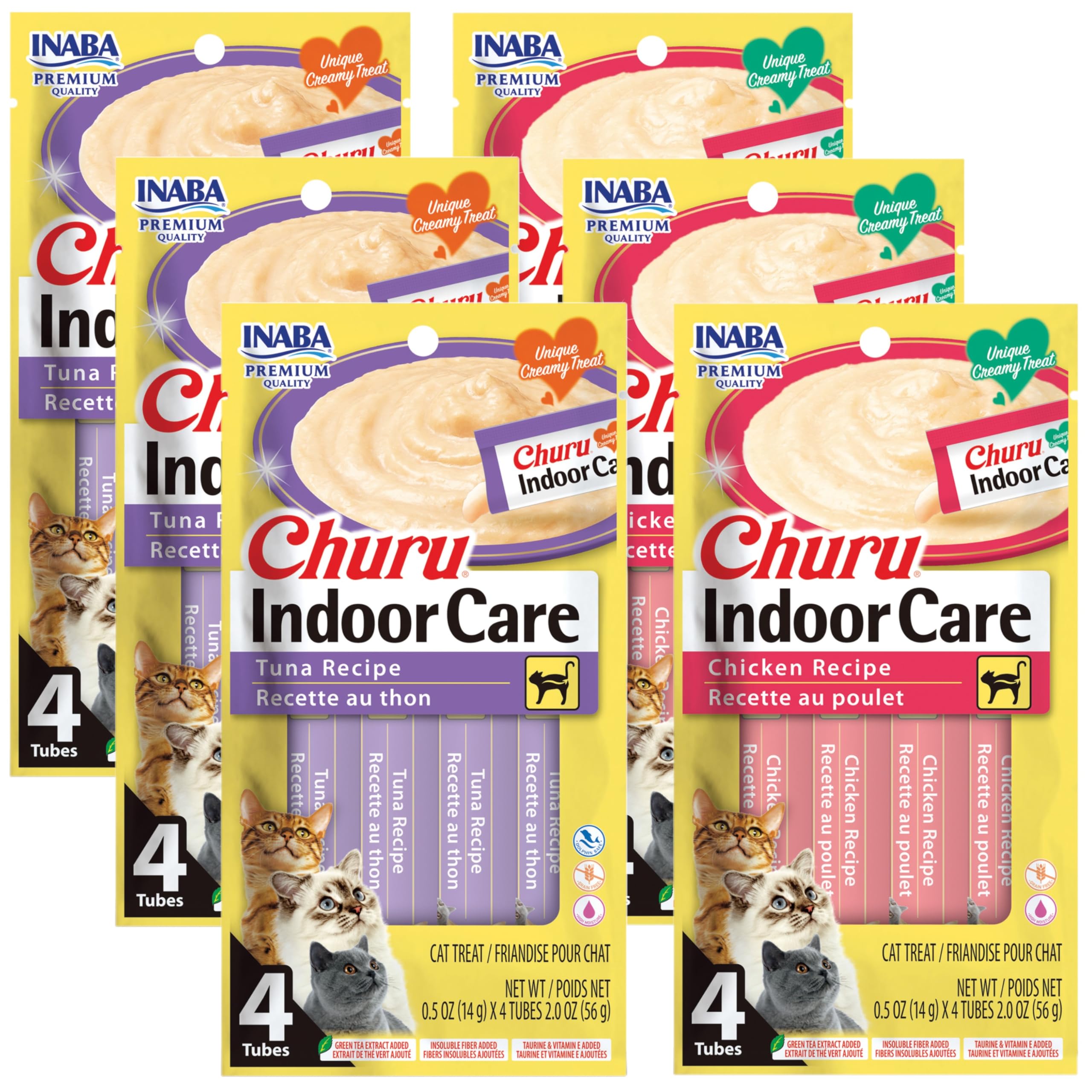
INABA reimagined the hairball treatment as a creamy lickable purée that delivers insoluble vegetable fiber inside a low-calorie, high-moisture vehicle. At only 6 calories per tube, it hydrates without adding weight — a critical advantage for indoor cats that already struggle with portion control. The two-flavor variety pack (tuna and chicken) ensures even the most selective eaters stay engaged.
Real-world feedback from Maine Coon and senior cat owners reports a sharp reduction in regurgitation frequency. The texture allows owners to squeeze the treat onto a plate for slow consumption or use it to disguise medications. Because each tube is individually sealed, freshness stays consistent across the 24-count pack, and the absence of grains, preservatives, and artificial colors aligns with limited-ingredient expectations.
This is a functional treat rather than a complete meal, so it works best as a daily supplement alongside your cat’s regular food. The high moisture content (88%) supports urinary tract health while addressing the hairball problem — a dual benefit that makes it the most versatile option in this lineup.
Why we love it
- Extremely palatable across all life stages
- Low-calorie formula prevents weight gain
- Individual tubes lock in freshness for months
Good to know
- Not a complete food — must pair with balanced diet
- Some cats finish 24 tubes quickly in multi-cat homes
2. Nulo Freestyle Hairball Management Dry Cat Food
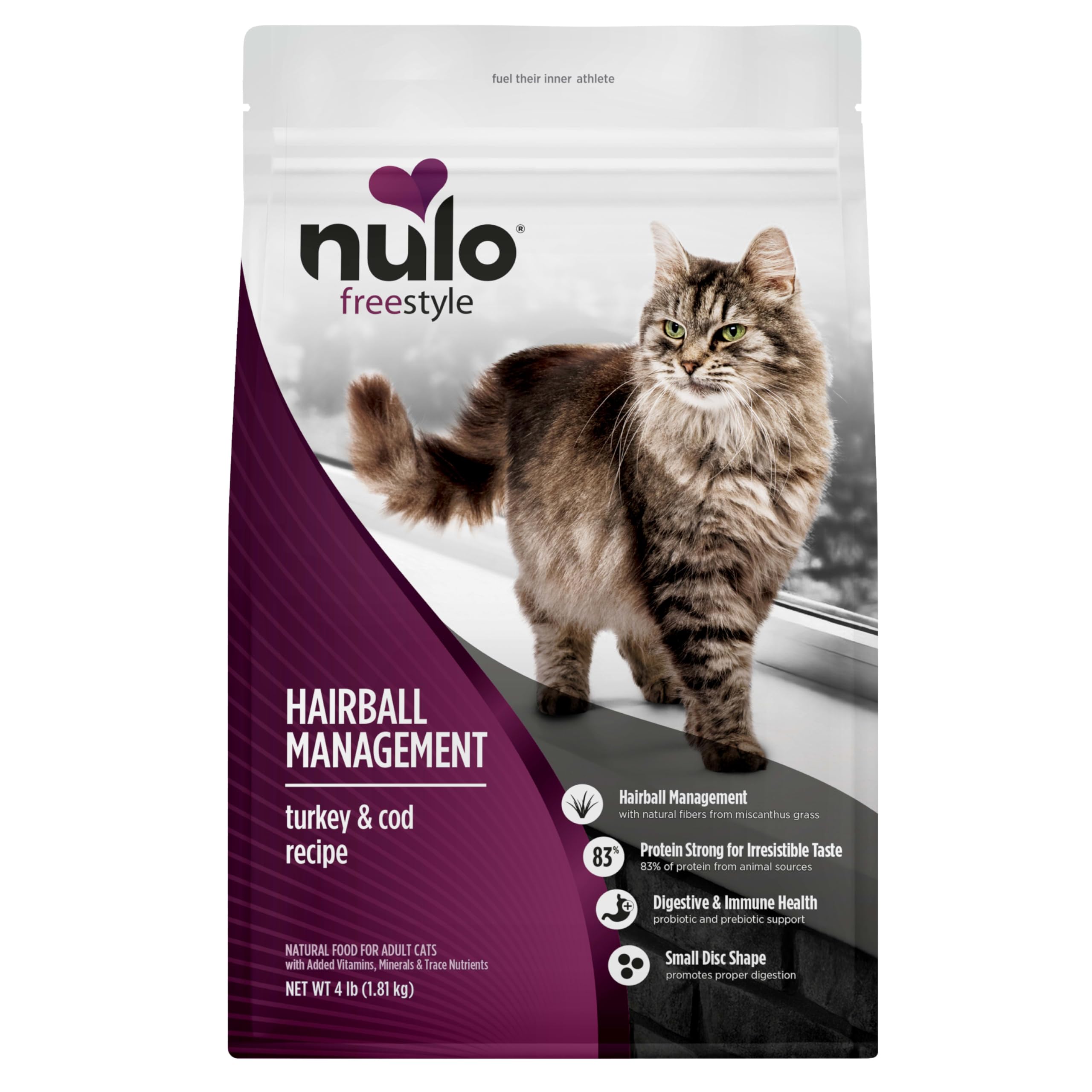
Nulo’s hairball management formula separates itself from the pack with a 83% animal-protein kibble that keeps carbohydrate content low. The fiber source here is miscanthus grass, an insoluble fiber that binds fur without the filler effects of corn or wheat. Each serving also packs BC30 probiotics to stabilize digestive flora, which matters because repeated hairball episodes can irritate the gut lining.
Owner reviews consistently highlight a sharp decline in hacking sounds within the first week of switching. The small-bite kibble size is a thoughtful touch for cats that gulp their food; larger pieces often trigger regurgitation independent of hairballs. The 4 lb bag is a reasonable trial size, and the brand offers complementary flavors (turkey and chicken) for rotation without digestive upset.
Manufactured in the USA with no corn, wheat gluten, soy, or artificial preservatives, this is a strong choice for owners who prioritize ingredient transparency. The primary downside is the price-per-pound relative to mainstream brands, but the high meat content means most cats require smaller portions, partially offsetting the cost.
Why we love it
- High meat content reduces portion size needed
- Miscanthus fiber is effective and natural
- Probiotics support long-term digestive health
Good to know
- Bag size shrunk while price increased recently
- Not ideal for cats with poultry sensitivities
3. Royal Canin Hairball Care Thin Slices in Gravy
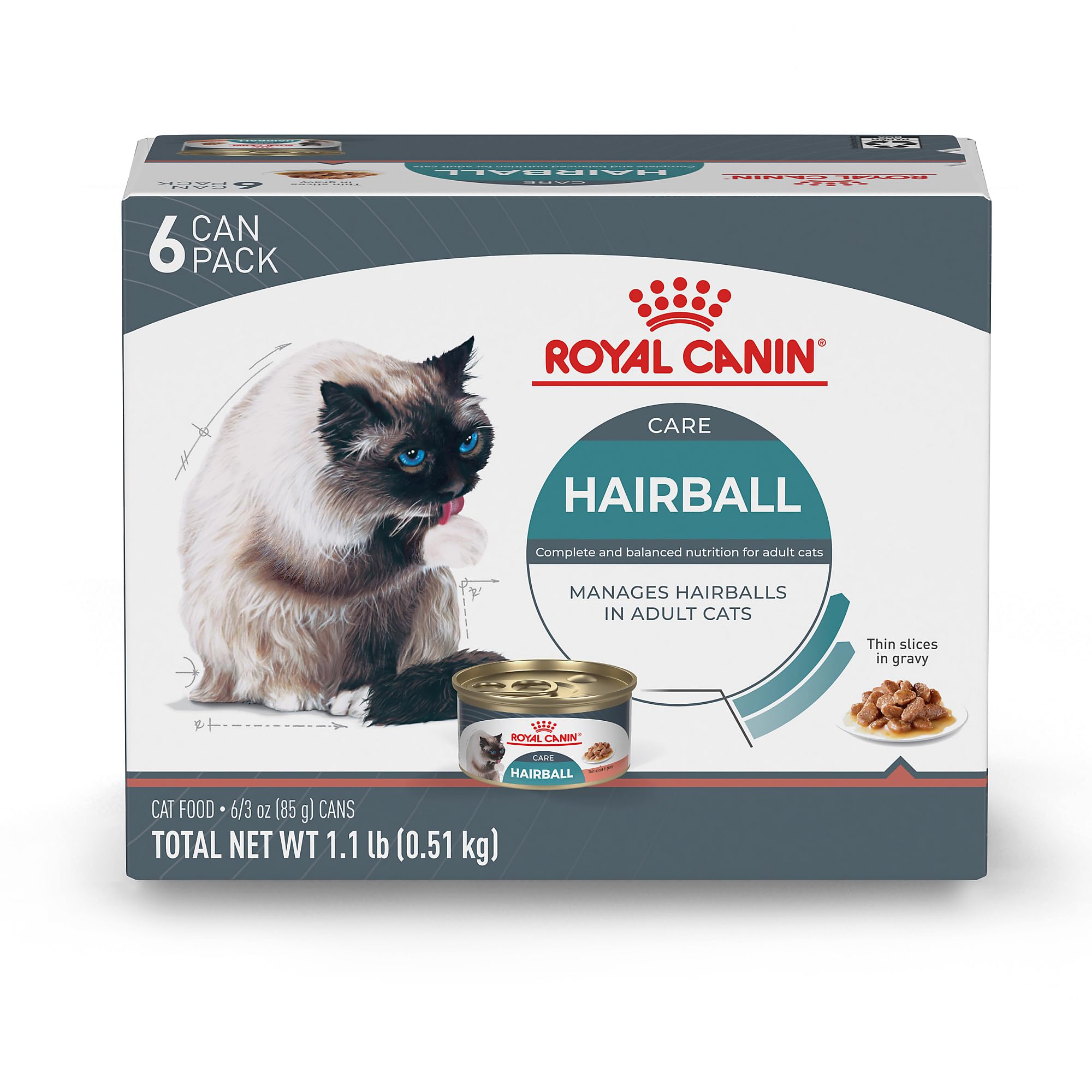
Royal Canin’s Hairball Care wet food uses an exclusive blend of soluble and insoluble fibers to control hairball development, combined with highly digestible proteins that reduce the overall workload on the digestive system. Each 3 oz can provides a balanced calorie count for adult cats, making it easy to portion alongside the brand’s matching dry formula for cats that prefer mixed feeding.
Owner feedback from rescue environments and long-haired breed households confirms that this food, paired with regular brushing, dramatically cuts down floor regurgitations. The thin slices in gravy texture is forgiving for cats with dental sensitivities and provides additional moisture that dry-only diets lack. Multiple reviewers noted that this specific formula was the only Royal Canin variant their picky cats accepted, which speaks to its universal palatability.
The six-pack format is convenient for trial runs, though the per-can cost is higher than generic wet food. Cats that require exclusive wet feeding will need multiple packs per week. Still, the veterinary-backed formulation and consistent texture make it a reliable daily option for adult cats prone to chronic hairballs.
Why we love it
- Veterinary-formulated fiber balance
- Pâté texture works for dental-sensitive cats
- Pairs well with Royal Canin dry kibble
Good to know
- Smaller than a standard tuna can per serving
- Higher cost per ounce than majority of wet foods
4. Tomlyn Laxatone Maple-Flavored Hairball Gel

Tomlyn Laxatone takes a mechanistic approach: lubricate the ingested hair so it slides through the digestive tract and exits in the stool. The soybean oil base is supplemented with Omega-3, -6, and -9 fatty acids that also improve coat condition, reducing loose fur at the source. The maple flavor is unusually effective — owners report cats licking it directly off fingers and even demanding it like a treat.
This product has a cult following among rabbit owners as well, since rabbits cannot vomit and rely entirely on gastrointestinal motility to pass fur. The 4.25 oz tube lasts roughly two months with daily half-teaspoon doses. The main caveat is the inner seal, which several reviewers found frustratingly tough to remove. Also, the gel can ooze in warm temperatures, so storing the tube upside down in a cool place prevents messy leaks.
Unlike fiber-based diets that work preventively over weeks, Laxatone offers immediate relief for cats actively coughing. It’s ideal as a rescue measure during peak shedding seasons or as a weekly maintenance dose for long-haired breeds that produce more fur than they can process naturally.
Why we love it
- Provides rapid relief during active hairball episodes
- High palatability reduces dosing struggles
- Multi-species utility (works for rabbits too)
Good to know
- Inner seal is notoriously difficult to remove
- Tube can leak if stored in warm environment
5. IAMS Proactive Health Hairball Care Dry Cat Food
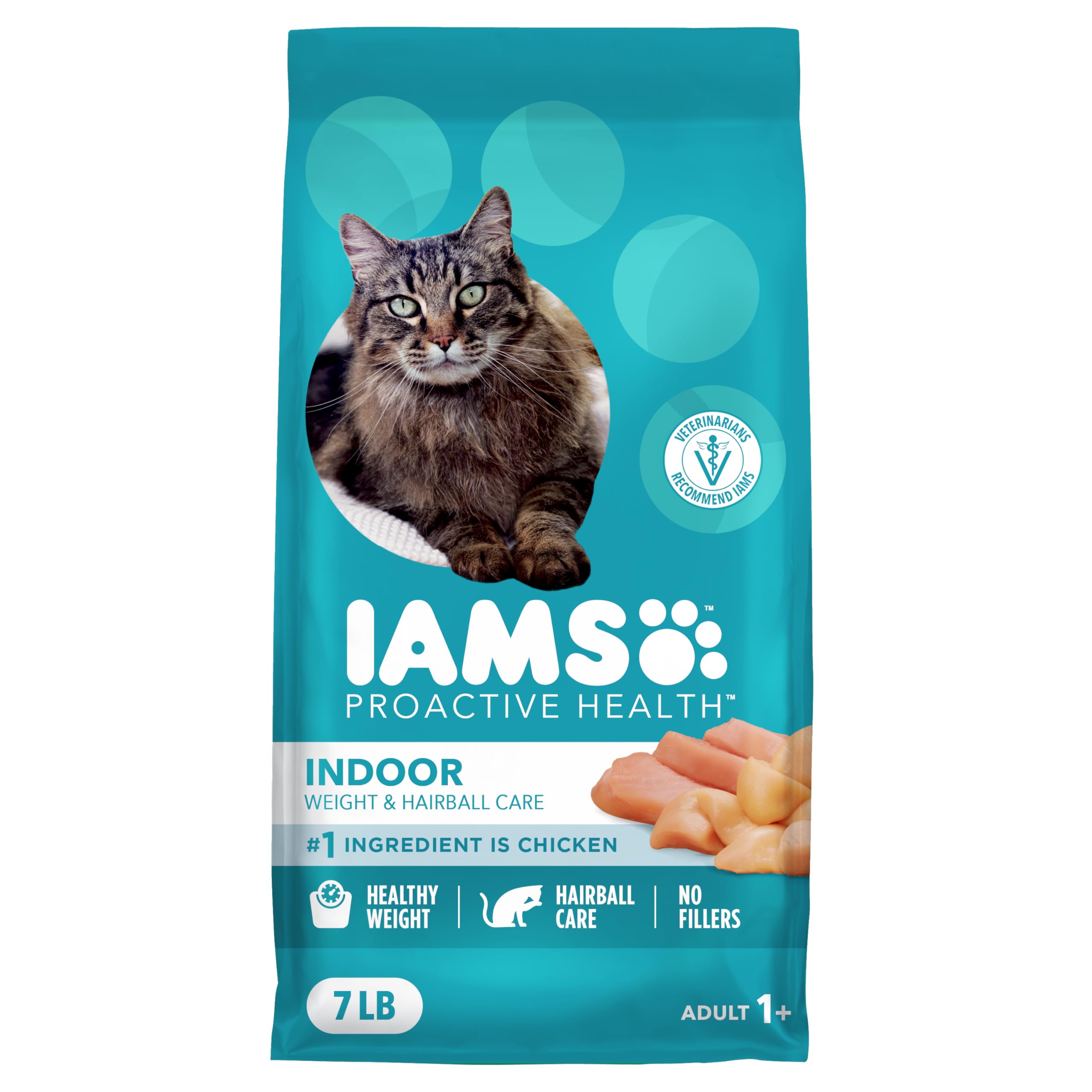
IAMS positions this recipe as a daily maintenance food that handles both weight control and hairball management simultaneously. The proprietary fiber blend features beet pulp as the primary insoluble fiber source, supplemented with L-Carnitine to support lean body mass. Real chicken is the first ingredient, and the kibble size is small enough for cats that prefer to chew without crunching loudly.
Long-term owners report that the 7 lb bag lasts approximately two and a half months for a single cat when fed as the primary diet. The formula has noticeably reduced hairball frequency in multi-cat households, and several reviewers noted softer, shinier coats after switching. The 16 lb bag option offers even better per-pound value for owners with two or more cats.
The biggest trade-off is that this is a dry-only formula, so it doesn’t provide the moisture that wet foods or purées deliver. Cats with a history of urinary issues may need supplemental hydration. For owners looking for an affordable, widely available, and effective dry option, however, this is the most cost-conscious choice in the lineup.
Why we love it
- Proven hairball reduction at a low price point
- Small kibble size suits various jaw sizes
- Dual weight and hairball management in one bag
Good to know
- Dry formula requires monitoring water intake
- Some cats develop slimy texture if kibble gets wet
FAQ
Can hairball treatments cause constipation?
How long does it take for a fiber-based diet to reduce hairballs?
Is a lubricant gel better than a fiber diet for long-haired cats?
Final Thoughts: The Verdict
For most gardeners, the best treatment for hairballs winner is the INABA Churu Functional Hairball Control because it combines palatability, hydration, and effective insoluble fiber in a low-calorie treat format that cats actively seek out. If you want a complete dry food with probiotic support, grab the Nulo Freestyle Hairball Management. And for immediate relief during an active hacking episode, nothing beats the Tomlyn Laxatone gel.