
The air inside your home carries dust, pet dander, pollen, and volatile compounds from cooking and cleaning. A mechanical filter that pulls these particles out without introducing ozone or other chemicals is the core promise of a true natural air purifier. The market offers dozens of boxes with fans, but only a handful deliver measurable reductions in airborne contaminants without adding byproducts themselves.
I’m Mo Mahin — the founder and writer behind Furric. I spend my time cross-referencing independent laboratory CADR scores, analyzing filter media composition, comparing motor efficiency at various room volumes, and scouring thousands of verified owner reports to identify which units actually keep the air clean over years of daily use.
After evaluating nine models on filter density, noise floor, room coverage, and real-world pollutant capture, this guide presents the most dependable choices for a natural air purifier that balances effectiveness with low operating cost and a whisper-quiet footprint.
How To Choose The Best Natural Air Purifier
Selecting the right purifier starts with understanding your room size, the pollutants you want to remove, and the noise level you can tolerate. The wrong choice means either underperforming filtration or unnecessary electricity and filter costs. Focus on these three core areas before looking at extra features.
Room Coverage and CADR — Match the Machine to the Space
Clean Air Delivery Rate (CADR) is the most objective metric for comparing a purifier’s speed. It measures cubic feet per minute (CFM) of air cleaned for smoke, dust, and pollen. A general rule is that the CADR number for smoke should be at least two-thirds of your room’s square footage. For example, a 200 ft² room needs a smoke CADR of at least 133 CFM. A unit rated for 1,000+ ft² may still have a low CADR for a smaller room if its motor and filter design don’t move enough air volume. Always check CADR against the specific room where you plan to run the machine.
Filter Technology — HEPA, Carbon, and Beyond
True HEPA filters capture 99.97% of particles sized 0.3 microns. That covers most pollen, dust mite debris, mold spores, and pet dander. For odors and gases, an activated carbon layer is essential — it adsorbs volatile organic compounds (VOCs) from cooking, smoke, and cleaning products. Some premium units use UltraHEPA media that grabs particles down to 0.003 microns, including some bacteria and viruses. Washable pre-filters extend the life of the main HEPA element by trapping larger hair and lint before they clog the fine media. Avoid units that rely exclusively on ionizers or UV-C without mechanical filtration — these can generate ozone or leave particles floating in the room.
Noise Levels in Real-World Use
A purifier’s decibel rating at its lowest fan speed is the number that matters for sleep or work. Most units advertise a sleep mode between 22 and 30 dB, which is roughly equivalent to a whisper or a quiet library. At maximum speed, even the best-designed machines reach 55–65 dB — comparable to a conversation or background music. If the unit will live in a bedroom or nursery, pay close attention to owner feedback about tonal quality: some fans produce a high-pitched whine that is more intrusive than the dB number suggests. The physical size of the fan blades and the motor type (DC vs AC) both influence how smooth the sound curve is across speeds.
Quick Comparison
On smaller screens, swipe sideways to see the full table.
| Model | Category | Best For | Key Spec | Amazon |
|---|---|---|---|---|
| WINIX 5520 | Premium | Large rooms up to 1882 ft² | AHAM Verified at 392 ft²; 23.5 dB sleep | Amazon |
| BLUEAIR Blue Signature | Premium | Whole-home coverage up to 3385 ft² | HEPASilent; smart WiFi + Auto Mode | Amazon |
| AIRDOCTOR AD3500 | Premium | Hospital-grade filtration up to 2520 ft² | UltraHEPA captures 0.003 micron particles | Amazon |
| Dhyala KJ02 | Mid-Range | Large rooms up to 3620 ft² | 5-stage filter; 271 CFM CADR; 22 dB sleep | Amazon |
| LEVOIT Core 300-P | Mid-Range | Bedrooms up to 1073 ft² (1x/hr) | 56W high-torque motor; 143 CFM CADR | Amazon |
| GermGuardian AC4825E | Mid-Range | Whole-room coverage up to 743 ft² | True HEPA + UV-C + carbon; Zero Ozone | Amazon |
| PuroAir 130i | Mid-Range | Small rooms up to 600 ft² | CarbonTech 3-layer filter; WiFi app | Amazon |
| LEVOIT Core 200S-P | Budget | Compact bedrooms up to 140 ft² | AHAM Verified; 27 dB sleep; Alexa/Google | Amazon |
| Tailulu D10 | Budget | Large room up to 1360 ft² | Washable pre-filter; 15 dB sleep mode | Amazon |
In‑Depth Reviews
1. WINIX 5520 Air Purifier
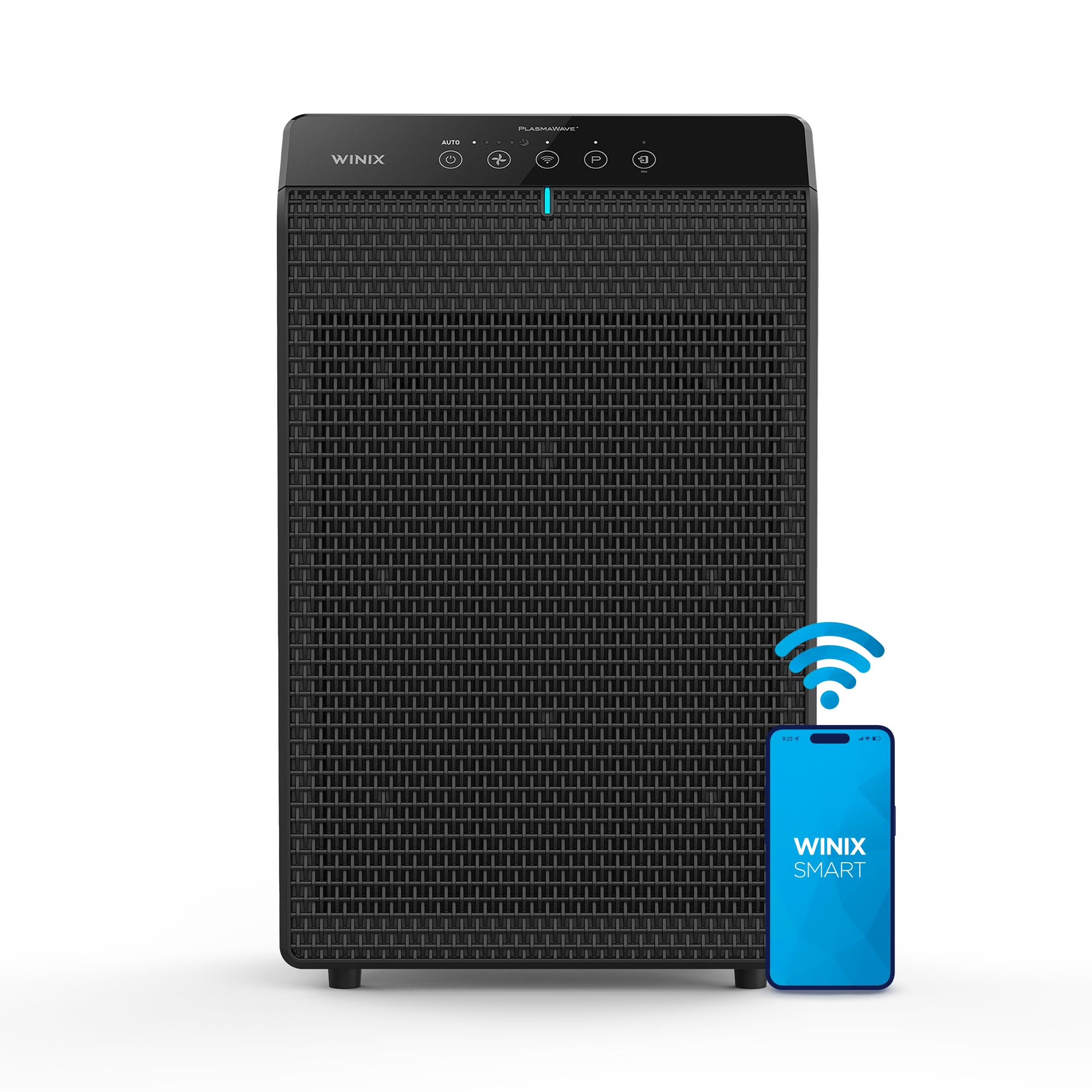
The WINIX 5520 earns the top spot because it delivers verified performance across a wide room range without layering on unnecessary gimmicks. It is AHAM Verified at 392 ft² for smoke, dust, and pollen, yet it can cycle air through rooms up to 1,882 ft² in one hour. The four-stage system — washable pre-filter, advanced odor-control carbon filter, True HEPA, and optional PlasmaWave — gives you flexibility to run it with or without ionization. The carbon filter uses a pellet-based media that traps VOCs and cooking smells more effectively than thin fibrous carbon sheets found in many competitors.
Noise stays at 23.5 dB on the slowest setting, and the sleep mode automatically activates when the room darkens, then returns to auto mode when lights come on. The built-in air quality sensor drives the auto mode fan adjustments. Owners report that the sensor reliably detects stove gas and smoke from five feet away and ramps up speed accordingly. The unit also supports the Winix Smart App, Alexa, and Google Home for remote control. At 13.3 pounds, it has a solid, non-tippable feel on the floor.
The design includes vertical side air intakes that some users note are less efficient than a full 360° wrap, but the trade-off is a slimmer footprint. Replacement filters average around per year, which is well below the category average. The washable pre-filter can be vacuumed or rinsed, extending the HEPA life to roughly 12 months. For anyone needing a trustworthy workhorse for a living room, bedroom, or open-plan space, this is the most balanced choice on the list.
Why we love it
- AHAM Verified CADR with real-world data you can trust
- Pellet-based carbon filter handles VOCs and cooking odors well
- Quiet sleep mode with automated light sensor
Good to know
- Vertical side intakes are less efficient than 360° designs
- Pulse-mode PlasmaWave must be manually turned off if you prefer zero ionization
2. BLUEAIR Blue Signature Air Purifier
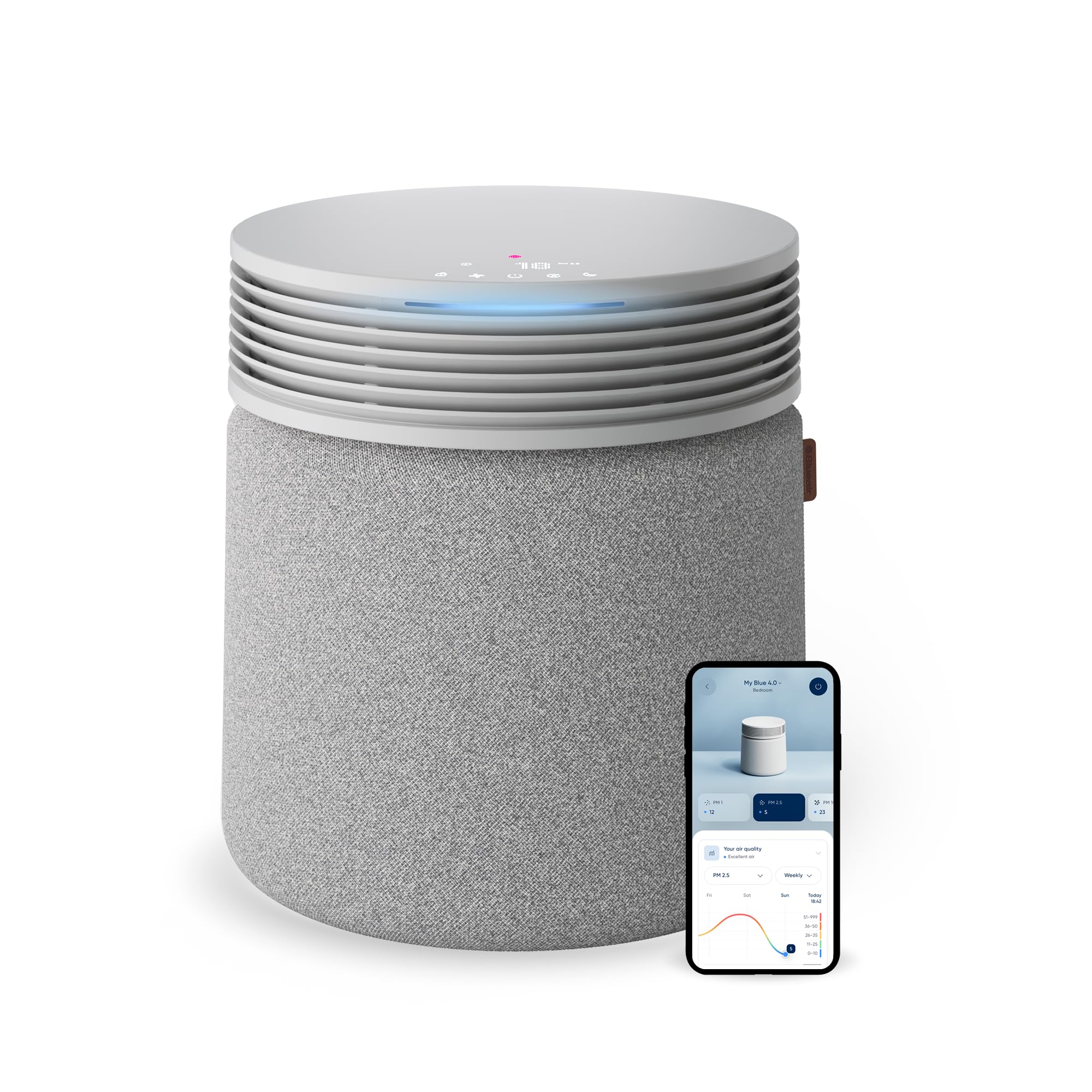
Blueair’s Blue Signature stands apart because it doubles as furniture. The fabric-wrapped body looks like a modern side table rather than a plastic appliance, so it blends into living rooms and bedrooms without shouting “air cleaner.” Beneath the minimal exterior, its HEPASilent technology combines electrostatic charging with mechanical filtration to pull in more air with less resistance. The result is a unit rated for rooms up to 3,385 ft² while producing very little fan noise. At the lowest setting, it is effectively silent in a quiet room.
The built-in smart sensors monitor particle levels and automatically adjust fan speed in auto mode. Owners consistently report that cooking odors from the kitchen are cleared within minutes, and the unit handles pet dander and wildfire smoke effectively. The Blueair app allows remote control and filter life tracking, though some users note occasional app lag. The activated carbon filter handles odors well, but it is a lighter-weight carbon layer compared to the pellet-based carbon blocks found in the WINIX and AirDoctor units. Replacement costs are higher — filters run around to annually, depending on usage.
At 6 kg (13.2 lb), the Blue Signature is light enough to move between rooms, yet stable on the floor. The 360° air intake and top-mounted outlet mean you can place it close to a wall without losing efficiency. Keep in mind that the filter replacement frequency is sensitive to how many hours per day the unit runs — heavy users in dusty or smoky homes may need to swap the filter at the 6-month mark rather than the advertised 12 months. For style-conscious buyers who value quiet operation above raw CADR numbers, this is the premium pick.
Why we love it
- Furniture-grade aesthetic hides the machine in plain sight
- HEPASilent tech delivers high airflow with very low noise
- Smart sensors with auto mode respond quickly to cooking smoke
Good to know
- Replacement filters are more expensive than many competitors
- App connectivity can be slow or unresponsive at times
3. AIRDOCTOR AD3500 Air Purifier
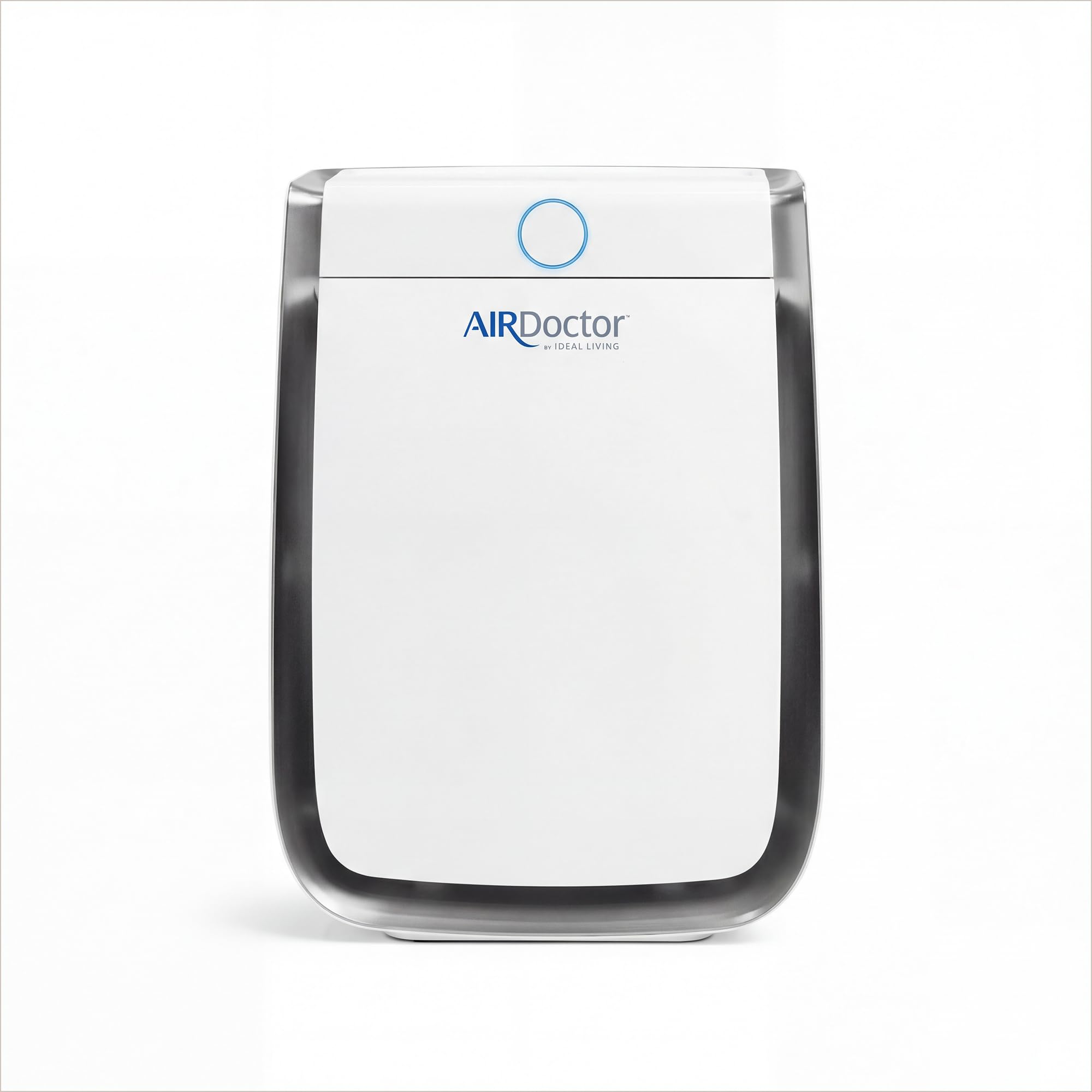
AirDoctor positions the AD3500 as hospital-grade, and the UltraHEPA filter backs up that claim by capturing 99.99% of particles at 0.003 microns — 100 times smaller than the standard HEPA threshold of 0.3 microns. This matters for microscopic irritants like bacteria, virus carriers, and ultra-fine smoke particulates that bypass standard filters. The three-stage filtration includes a washable pre-filter, a premium activated carbon and potassium permanganate layer for gases and VOCs, and the UltraHEPA stage. The carbon section is thick and dense, outperforming thin carbon sheets when dealing with pet odors and gas stove emissions.
The unit cleans rooms up to 2,520 ft² in one hour, with a rapid mode that cycles a 630 ft² space in 15 minutes. Auto mode uses a PM2.5 laser sensor and displays a color-coded halo ring so you can see air quality at a glance. Owners report that the auto mode detects cooking particles, dishwasher steam, and even nebulizer treatments from across the room, ramping fan speed immediately. At 24 lb, it is the heaviest unit in this roundup, but the weight contributes to a stable, vibration-free platform on hardwood or tile floors. Noise on the lowest setting is quiet enough for sleep, and the night mode dims all indicator lights.
The main downside is filter replacement cost. The carbon filter needs changing every 6 months and the UltraHEPA every 12 months, with combined annual costs reaching roughly to . That said, owners with severe allergies, multiple pets, or sensitivity to wildfire smoke consistently say the improvement in breathing and reduced allergy symptoms justifies the expense. The AD3500 is FSA/HSA eligible, which helps offset cost for eligible buyers. This is the best choice for households that need the highest particle capture efficiency and have the budget to maintain it.
Why we love it
- UltraHEPA captures particles down to 0.003 microns
- Thick carbon + potassium permanganate layer neutralizes strong odors and VOCs
- Auto mode with PM2.5 sensor and halo display responds quickly to pollution
Good to know
- Heavy unit at 24 pounds; not easy to move between rooms
- Annual filter replacement cost is significantly higher than mid-range options
4. Dhyala KJ02 Air Purifier
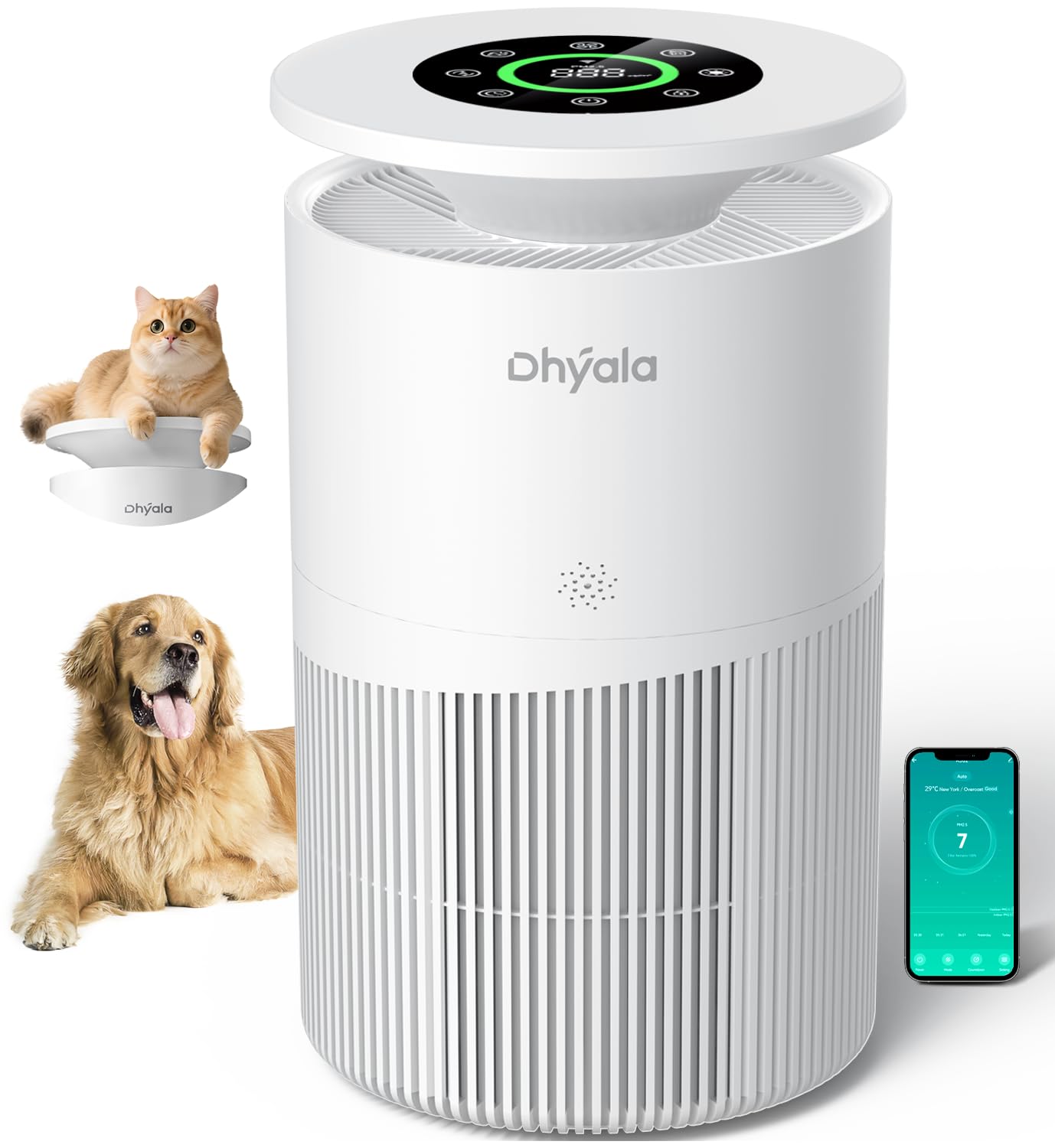
The Dhyala KJ02 punches above its price tier by offering a 5-stage filtration system with an electrostatic pre-filter that captures 40% more pet dander and dust than a standard mesh pre-filter. The 271 CFM CADR gives it strong airflow for a unit rated at 3,620 ft² — one of the highest coverage numbers in this group. The 360° wide-grid air intake ensures the motor pulls air from all sides, making placement against a wall or in a corner perfectly acceptable. Auto mode uses a built-in smart sensor that owners consistently report detects cooking smoke from 20+ feet away and boosts fan speed accordingly.
Sleep mode drops noise to 22 dB, which is essentially a whisper, and the display lights turn off automatically. The pet-friendly design includes a flat platform on top where cats and small dogs can lie, which also helps trap fur before it recirculates. A bite-proof power cord and child/pet lock add practical safety for households with curious animals or toddlers. The unit supports app control, Alexa, and Google Assistant, and the touchscreen panel on the unit is intuitive enough that you may rarely open the app.
At 9 lb and roughly 10 inches square, the Dhyala is compact for its coverage rating. The filter replacement process is tool-free — the front panel pops off with a magnet, and the combined pre-filter and HEPA assembly slides out. Replacement costs are moderate, typically to annually. One minor trade-off: the carbon layer is bonded to the HEPA media rather than being a separate thick pad, so VOC absorption capacity is good but not at the level of the pellet-based filters in the WINIX or AirDoctor. For value-conscious shoppers who want smart features and large-room coverage, this is a strong mid-premium contender.
Why we love it
- High 271 CFM CADR with 360° intake for flexible placement
- Electrostatic pre-filter captures more pet dander than standard mesh
- 22 dB sleep mode with auto light shutoff
Good to know
- Carbon layer is bonded to HEPA, not a separate thick carbon pad
- Some users report app reliability could be improved
5. LEVOIT Core 300-P Air Purifier

The LEVOIT Core 300-P is the mid-range benchmark that others are measured against. Its 56W high-torque motor delivers a CADR of 143 CFM for smoke, 153 CFM for dust, and 167 CFM for pollen. AHAM VERIFIDE certification confirms those numbers are independently tested, not manufacturer estimates. The 3-in-1 filter combines a nylon pre-filter, activated carbon layer, and HEPA-grade media that captures 99.97% of particles at 0.3 microns. A key advantage of this model is its filter ecosystem: you can swap in specialized filters for toxin absorption, smoke removal, or pet allergy control without buying a new machine.
In sleep mode, QuietKEAP technology drops noise to a near-silent 24 dB. The display lights can be turned off completely, which is a simple but important detail for light-sensitive sleepers. The unit refreshes air in a 222 ft² room 4.8 times per hour, and can cycle a 1,073 ft² space once per hour — meaning it works well as a dedicated room purifier or as supplemental whole-home coverage. Owners consistently mention that the low setting is quiet enough for use in a baby’s room and that the reduction in visible dust on surfaces is noticeable within a week.
At 7.9 lb and 8.7 inches square, the Core 300-P is easy to relocate between rooms. The touch controls and 2/4/6/8-hour timer are straightforward. Replacement filters cost around to , depending on which variant you choose, and typically last 6 to 8 months. The only common criticism is that the maximum fan speed is loud — 50+ dB — but that is expected for a unit at this power level. For a dependable, well-tested purifier that balances performance, quiet operation, and reasonable filter costs, the Core 300-P remains a top pick.
Why we love it
- AHAM VERIFIDE CADR provides trustworthy performance data
- Multiple specialized filter options available for specific needs
- Near-silent 24 dB sleep mode with display light shutoff
Good to know
- Maximum fan speed is noticeably loud at 50+ dB
- Best for rooms up to 222 ft² at the recommended 4.8 air changes per hour
6. GermGuardian 4-in-1 AC4825E

The 22-inch tower form factor uses a True HEPA filter that captures 99.97% of particles down to 0.1 microns, an activated carbon layer for odor reduction, and an optional UV-C light that reduces airborne germs and mold spores. Crucially, the UV-C system is Zero Ozone certified, so it will not generate ozone as a byproduct — a concern with some older UV-based purifiers. The washable pre-filter catches larger debris and extends the HEPA replacement interval to about 12 months.
The three-speed rotary dial and separate UV button make controls as simple as possible — no touchscreens, no apps, no unnecessary complexity. Owners report that at the lowest speed the unit produces a gentle white noise that is easy to sleep next to, while the highest speed is loud enough to serve as a conversation-level sound in an open room. The unit cleans 153 ft² in 12.5 minutes and can cover up to 743 ft² in one hour, making it suitable for a master bedroom or combined living-dining area. The angled air outlet directs flow upward rather than straight out, which prevents direct drafts on furniture or people nearby.
Replacement filters are widely available and affordable — HEPA filters cost about to , and the UV-C bulb is a separate to purchase that lasts around 12 months. The main trade-offs are the lack of smart features and the absence of a true auto mode; you must manually select the speed that fits your current air quality. For buyers who prefer a set-and-adjust manual approach and want the extra germ-reduction capability of UV-C without added cost, the AC4825E is a proven, no-nonsense choice.
Why we love it
- Zero Ozone certified UV-C reduces germs without adding chemical byproducts
- Simple rotary controls are easy to operate and rarely fail
- Washable pre-filter cuts down on replacement frequency
Good to know
- No auto mode or smart connectivity — manual speed selection only
- Higher speeds are loud and may be intrusive in quiet rooms
7. PuroAir 130i Smart Air Purifier
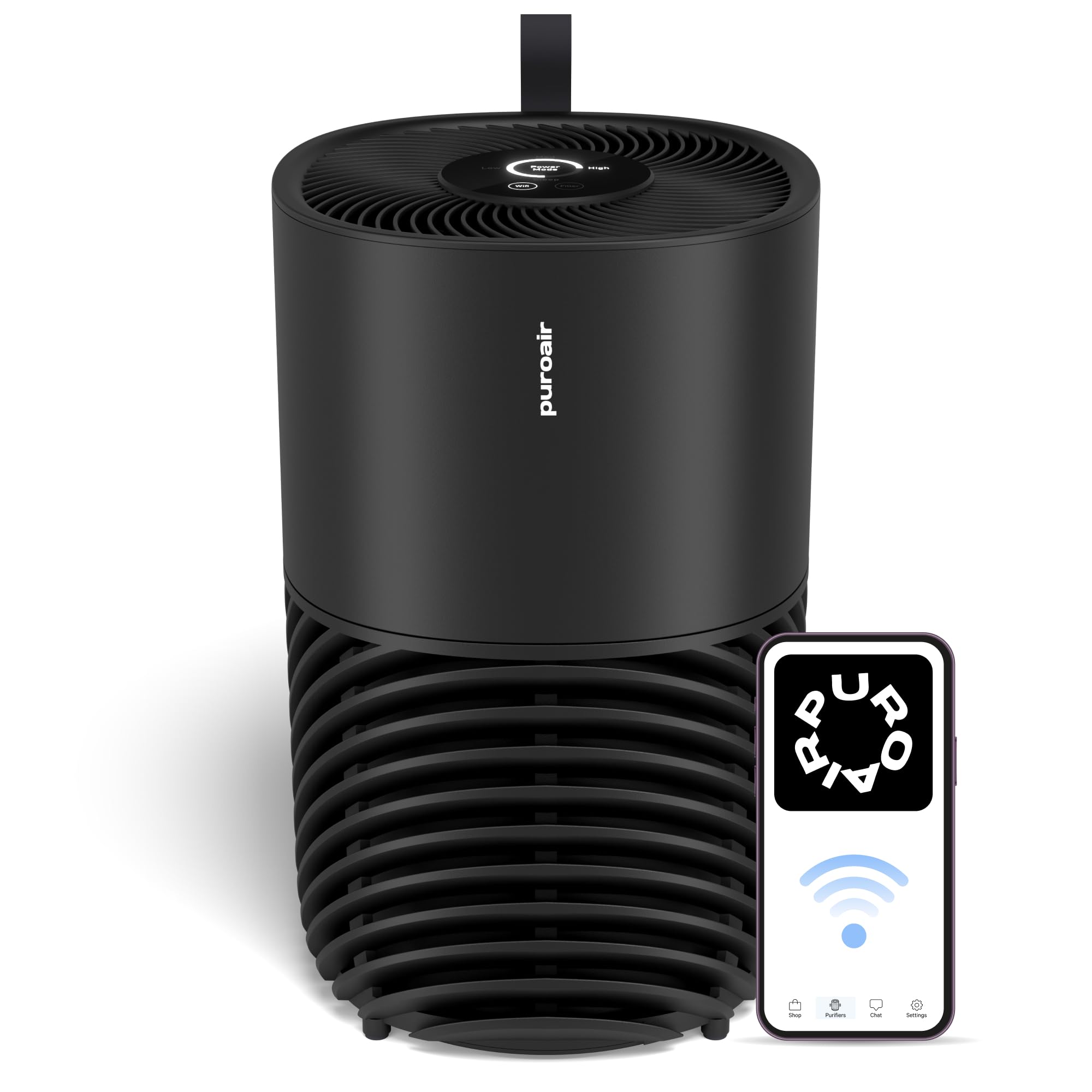
PuroAir’s 130i targets small-room users who want app-based control without paying for a premium unit. The 3-layer filter combines a pre-filter, a HEPA-grade media, and CarbonTech — a bonded carbon layer that the manufacturer claims is up to 500 times stronger at VOC capture than standard carbon filters. Independent lab tests confirm that the filter removes 99.9% of common pollutants including dust, smoke, pet dander, and VOCs. The unit cleans rooms up to 600 ft² in one hour, which places it in the small-to-medium bedroom or home office category.
WiFi connectivity via the PuroAir app gives you remote control of fan speed, sleep mode, and filter life monitoring. The app interface shows filter percentage remaining, a feature that most budget-friendly units lack. Owners report near-silent operation on the low setting and note that mold allergy symptoms (runny nose, itchy eyes, congestion) subsided within three weeks of continuous use in bedroom and living room placements. The compact dimensions — 7.87 inches square and 12.68 inches tall — make it easy to fit on a nightstand or desk without dominating the space.
The biggest long-term cost consideration is the filter. Original PuroAir filters are effective but expensive to replace, reportedly costing or more per swap. Some owners have tried aftermarket filters to save money but found that performance degrades within less than three months. Stick to the genuine filter if you want the 99.9% removal rate the unit is tested for. Also note that the 130i lacks auto mode — you have to manually adjust fan speed or use the app. For a small, connected purifier that genuinely helps allergy sufferers, the 130i delivers solid results if you budget for filter replacements.
Why we love it
- App-based control with filter life percentage tracking
- CarbonTech filter is independently tested for 99.9% pollutant removal
- Compact footprint fits comfortably on small surfaces
Good to know
- Replacement filters are expensive and aftermarket options lose performance quickly
- No auto mode — speed must be selected manually or via app
8. LEVOIT Core 200S-P Air Purifier

The Core 200S-P is the smaller sibling of the Core 300-P, designed specifically for compact rooms up to 140 ft² where 4.8 air changes per hour keep the air fresh. Despite the smaller size, it includes AHAM VERIFIDE certification, voice control via Alexa and Google Assistant, and a 360° air intake that pulls in particles from all directions. The 3-in-1 filter uses a nylon pre-filter, a high-efficiency activated carbon layer for odors, and a main filter that removes 99.97% of particles between 0.1 and 0.3 microns. This includes pollen, dust, smoke, and pet dander.
Noise drops to 27 dB on the sleep setting, and the Display Off button kills all indicator lights for uninterrupted darkness. Owners consistently praise how easy the unit is to set up — remove the filter wrap, plug in, and tap the power button. The air freshening effect in small bedrooms and dorm rooms is noticeable within a few hours, with many users reporting that the lingering smell of pets or cooking disappears quickly. The compact dimensions (8.07 x 8.07 x 4.96 inches) and 6.6 lb weight make it the most portable unit on this list.
Replacement filters are affordable, typically to , and last 6 to 8 months under normal use. The main limitation is room size: pushing it into a space larger than 180 ft² reduces the air change rate below effective levels. Also, the carbon layer is relatively thin, so strong cooking smells or high VOC loads may overwhelm it faster than in units with thicker carbon beds. For a small bedroom, nursery, or office where space is tight and quiet operation is non-negotiable, the Core 200S-P is the best entry-level smart purifier available.
Why we love it
- AHAM VERIFIDE certified even at this compact size
- Voice control via Alexa and Google Assistant works reliably
- Very quiet at 27 dB with full display shutoff for sleep
Good to know
- Only effective in rooms up to about 140 ft² at the recommended air change rate
- Thin carbon layer is less effective against heavy odors or VOCs
9. Tailulu D10 Air Purifier
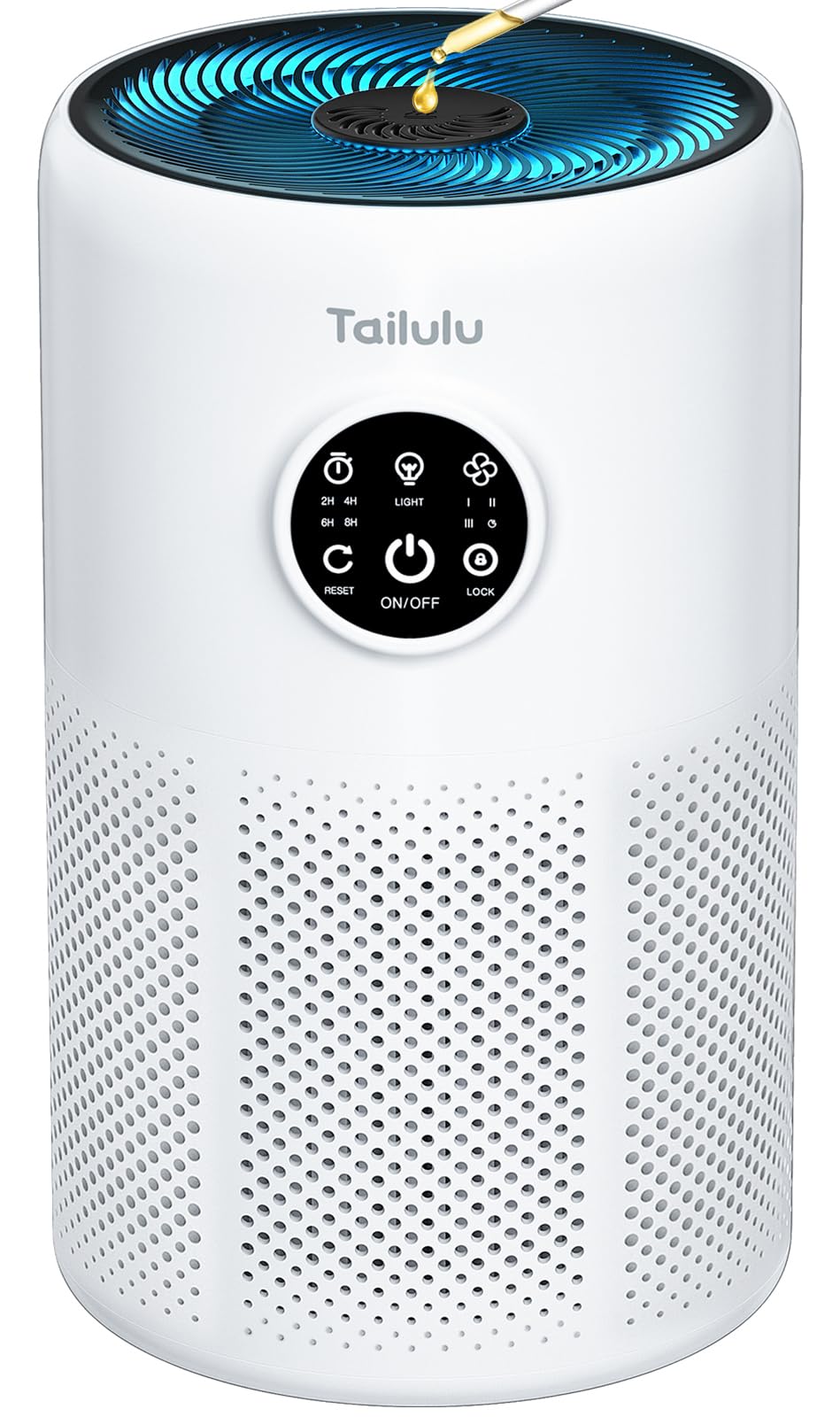
The Tailulu D10 is the most budget-friendly unit that still delivers a genuine H13 HEPA filter and large-room coverage up to 1,360 ft². The 3-stage filtration system — pre-filter, H13 True HEPA, and activated carbon — captures 99.97% of particles at 0.3 microns. The standout feature is the washable pre-filter, which traps pet hair and visible dust and can be cleaned under running water. This extends the life of the main HEPA filter significantly, reducing the long-term replacement cost that often surprises new purifier owners. The 360° air intake design ensures efficient airflow from all sides.
Sleep mode drops noise to an advertised 15 dB, which owners confirm is essentially silent — one reviewer described it as soothing brown noise. The sleep mode also turns off all indicator lights, and an optional warm night light adds a dim glow for safety in a child’s room or hallway. The built-in aroma diffuser sponge lets you add a few drops of essential oil so the purified air carries a light, natural fragrance. Four timer settings (2, 4, 6, 8 hours) and a child lock button provide practical daily control. At 3 lb and 7.7 inches square, the D10 is the lightest and most compact unit in this review.
The trade-offs are in build quality and long-term durability. The plastic housing feels less substantial than the LEVOIT or WINIX units, and some users note that the touch buttons can be unresponsive at times. The carbon layer is thinner than on mid-range units, so odor removal is decent but not on par with the pellet-based carbon filters in the WINIX or AirDoctor. That said, for a tight budget buyer who needs to cover a large room, provide silent sleep operation, and keep filter costs low via the washable pre-filter, the Tailulu D10 delivers surprising value.
Why we love it
- Washable pre-filter dramatically reduces long-term filter costs
- Near-silent sleep mode at 15 dB with optional night light
- Compact and lightweight at just 3 lb for easy relocation
Good to know
- Plastic housing feels less durable than competitors
- Carbon layer is thin, limiting VOC and odor removal capacity
FAQ
What does CADR mean and why should I care?
Can a natural air purifier help with wildfire smoke?
Is UV-C safe to use in a bedroom air purifier?
How often should I replace the filter in my air purifier?
Final Thoughts: The Verdict
For most households, the natural air purifier winner is the WINIX 5520 because it combines AHAM-verified CADR data, a genuine pellet-based carbon filter, and quiet automated operation at a reasonable filter replacement cost. If you need hospital-grade filtration and don’t mind higher filter expenses, grab the AIRDOCTOR AD3500. And for a compact, voice-controlled unit in a small bedroom, nothing beats the LEVOIT Core 200S-P.